

Why a Functional Water Heater is Essential to Your Home’s Comfort
Hot water repairs near me are often searched when homeowners face the immediate frustration of a cold shower, a dishwasher that won’t clean properly, or a washing machine that can’t handle the laundry. A malfunctioning water heater doesn’t just disrupt your morning routine—it affects your entire household’s comfort, hygiene, and daily operations.
Quick Answer: Finding Hot Water Repairs Near You
If you need hot water repairs immediately, here’s what to look for:
- Licensed and insured plumbers with positive local reviews
- 24/7 emergency service availability for urgent issues
- Transparent pricing with upfront estimates ($90-$1,700 typical range)
- Guarantees on parts and workmanship for peace of mind
- Experience with your water heater type (tank, tankless, gas, or electric)
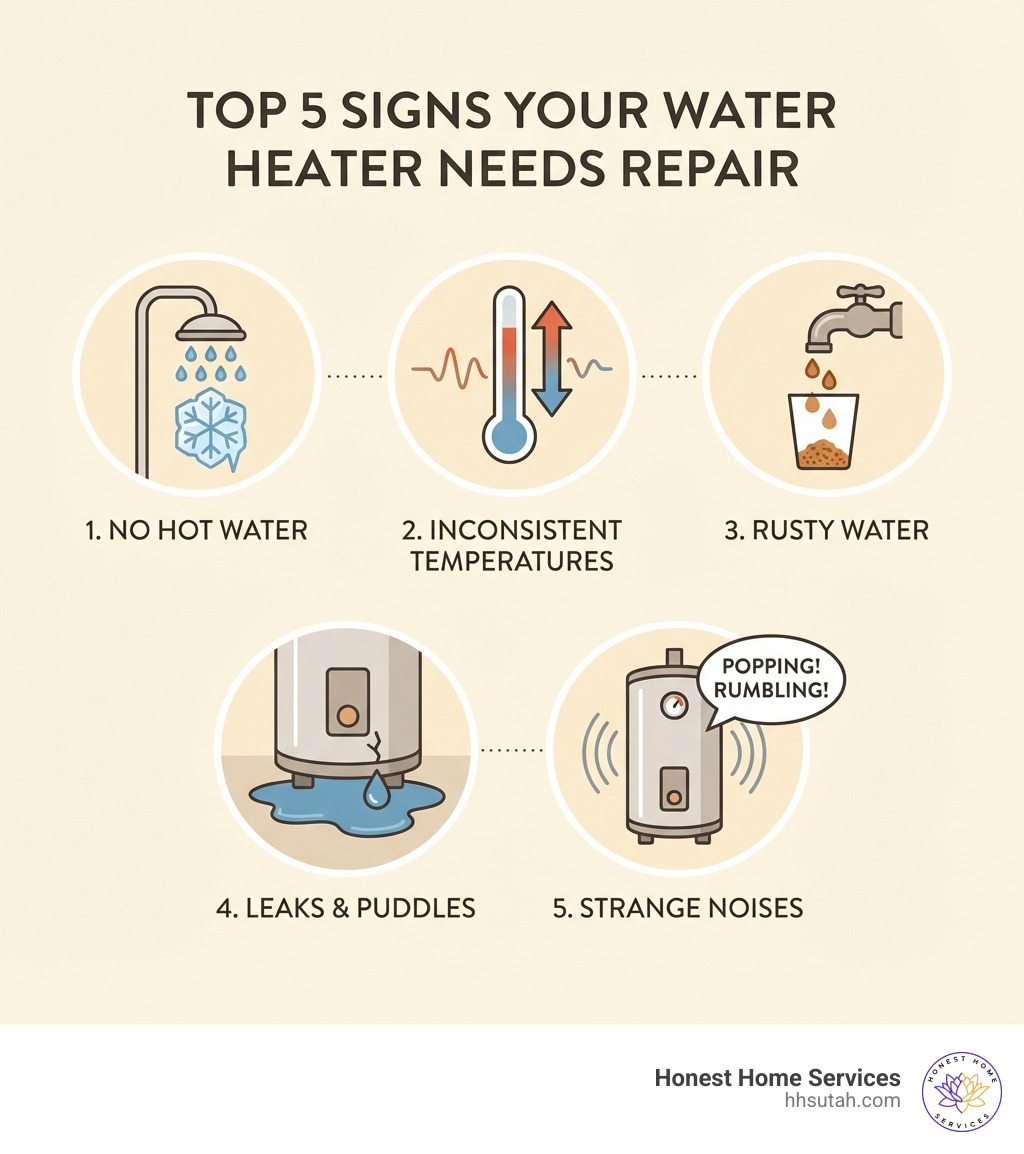
Common signs you need repairs now: no hot water, inconsistent temperatures, strange noises (popping, rumbling, screeching), visible leaks, or discolored water.
The truth is, most people don’t think about their water heater until it stops working. But understanding when to repair versus replace, what different noises mean, and how to maintain your unit can save you hundreds—or even thousands—of dollars in emergency costs and water damage.
This guide walks you through the warning signs of water heater failure, helps you make smart decisions about repair versus replacement, explains typical costs, and shows you how to extend your unit’s lifespan through proper maintenance. Whether your water heater is making strange sounds, leaking, or simply not producing enough hot water, you’ll learn exactly what’s happening and what to do about it.
At Honest Home Services, we’ve been providing expert hot water repairs near me and complete HVAC solutions to Northern Utah homeowners and businesses for over 20 years, delivering the 5-star service and transparent pricing our community trusts. Let’s explore what you need to know to keep your home comfortable and your water hot.
Is Your Water Heater Crying for Help? Common Warning Signs
Imagine stepping into what you expect to be a warm, soothing shower, only to be blasted by icy cold water. Or maybe you’ve noticed a strange smell coming from your utility closet. These aren’t just minor inconveniences; they’re your water heater’s way of telling you it needs attention. Ignoring these signs can lead to more significant problems, costly repairs, or even a complete unit failure.
Here are the most common signs that indicate your water heater needs professional help:
- No Hot Water: This is the most obvious sign. If your water is consistently cold, or you’re running out of hot water much faster than usual, something is definitely amiss. For tank models, it could be a malfunctioning heating element, a failed thermocouple, or a faulty gas control valve. For tankless units, it might be a sensor issue or a blockage.
- Inconsistent Temperatures: Are your showers a rollercoaster of hot and cold? This often points to issues like a failing heating element, a broken dip tube (in tank models), or sediment buildup within the tank, which coats the heating elements and prevents efficient heating.
- Discolored or Rusty Water: If your hot water looks rusty, cloudy, or has a metallic odor, it’s a red flag. This usually means there’s corrosion inside your water tank. While sediment can also cause discoloration, rust is a serious indicator that the tank itself is deteriorating and could lead to a leak.
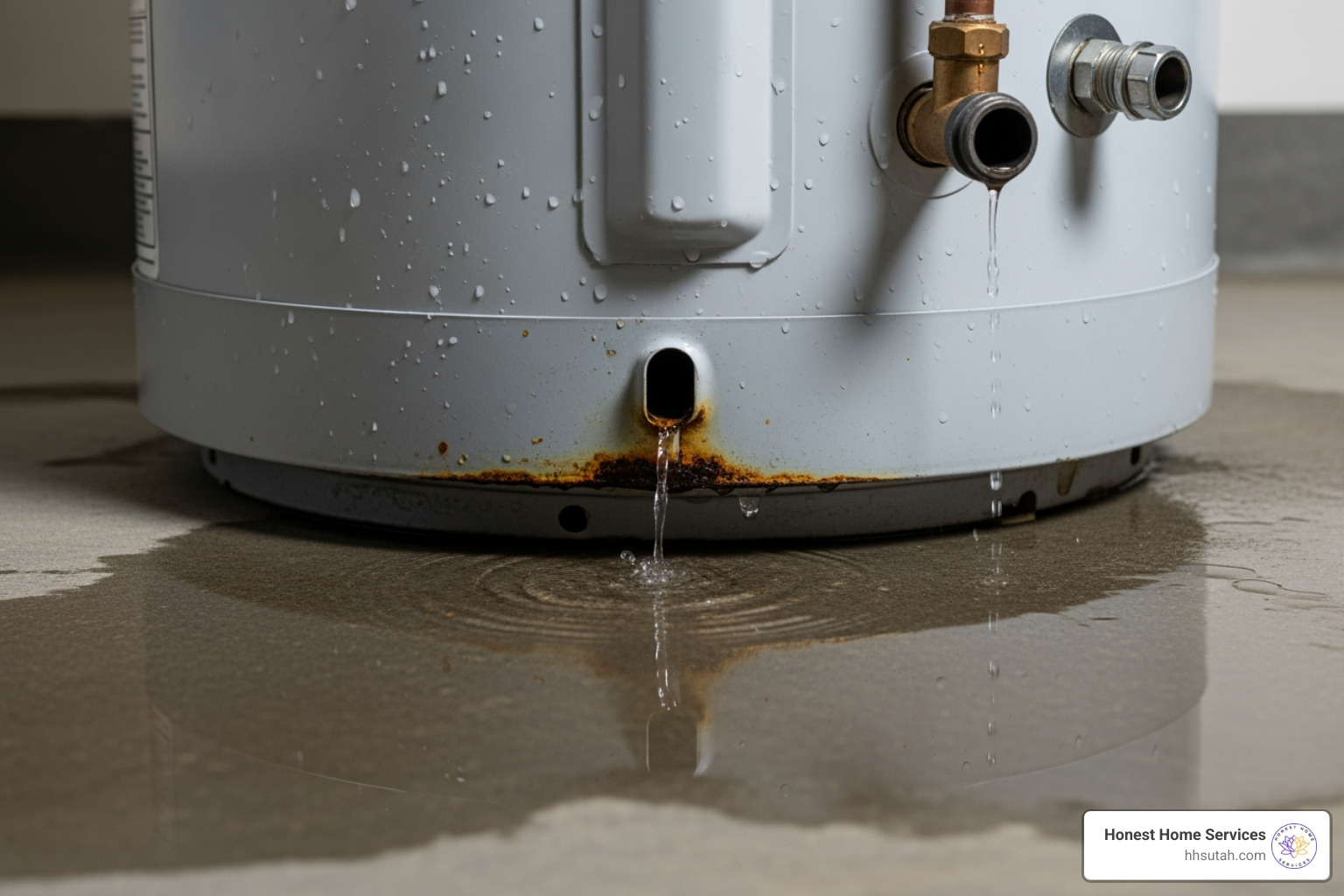
- Leaks and Puddles: Any visible water around the base of your water heater is a cause for immediate concern. Leaks can stem from excessive corrosion, sediment, loose plumbing fittings, or a failing pressure relief valve. Some leaks might be minor and fixable, but a leak from the tank itself usually means it’s time for a replacement.
Common Water Heater Problems
Decoding Strange Noises
Your water heater shouldn’t sound like a monster in the closet. If you’re hearing unusual noises, it’s trying to communicate a problem:
- Popping or Rumbling Sounds: These noises often sound like popcorn popping or a boiling kettle. The most common culprit? Sediment buildup at the bottom of your tank. Minerals from hard water (something we know a lot about here in Northern Utah!) settle and harden, trapping water underneath. When this trapped water heats up, it turns to steam, and the bubbles burst through the sediment, creating that distinctive popping sound. The rumbling is the sediment bed vibrating. This reduces efficiency and can damage the tank over time.
- Whistling or Screeching: If your water heater sounds like a tea kettle at full boil, it usually indicates restricted water flow. This could be due to a partially closed inlet or outlet valve, heavy scale buildup inside the water lines, or a faulty Temperature and Pressure (T&P) Relief Valve. A malfunctioning T&P valve releasing steam or water due to high pressure or temperature inside the tank is a serious safety issue and requires immediate attention. It suggests dangerously high pressure or temperature inside the tank.
Temperature and Pressure (T&P) Relief Valve Faulty T&P Valve:TheTemperature and Pressure (T&P) Relief Valveis a vital safety device. A whistling noise can sometimes indicate that this valve is malfunctioning and releasing steam or water. This is a serious issue, as it suggests dangerouslyhigh pressureor temperature inside the tank. - Clicking or Ticking Noises: A light, intermittent clicking can be normal for gas igniters or electric thermostats. However, a persistent, louder ticking or banging, often called “water hammer,” points to a problem with water flow or pipe pressure outside the tank. Thermal expansion can also cause slight ticking as metal pipes and tank fittings expand and contract.
Signs of an Imminent Failure
Some signs suggest your water heater isn’t just ailing, but on the verge of giving up the ghost entirely. When you see these, it’s time to consider a complete replacement:
- Significant Tank Corrosion or Rust: While rusty water indicates internal corrosion, visible rust on the exterior of your tank, especially around the connections or bottom, means the tank’s integrity is severely compromised. A tank leaking from rust is rarely cost-effective to repair.
- Major Leaks from the Tank Body: If water is actively leaking from the main body of the water heater tank, rather than just a fitting or valve, it’s typically unrepairable. The tank itself has failed, and replacement is the only solution.
- Unit is Older Than 10-12 Years: Traditional tank water heaters generally last 8 to 12 years (gas) or 10 to 15 years (electric). If your unit is approaching or past this age, its components are wearing out, and it’s less efficient. The risk of sudden failure increases significantly.
Broken Water Heater - Frequent Need for Repairs: If you’re constantly calling us out for hot water repairs near me to fix one issue after another, your water heater is trying to tell you it’s tired. Multiple repairs over a short period indicate systemic issues that make replacement a more economical and reliable option in the long run.
The Big Decision: Repair vs. Water Heater Replacement
One of the biggest questions homeowners face when their water heater acts up is whether to repair it or bite the bullet and replace it. It’s a bit like deciding whether to fix an old car or buy a new one – there’s an emotional attachment, but ultimately, it comes down to age, cost, and reliability.
The average lifespan of a traditional water heater is 8 to 12 years for gas models and 10 to 15 years for electric models. Tankless water heaters, with proper maintenance, can last up to 20 years. Knowing your unit’s age is crucial.
A good rule of thumb is the “50% rule”: If the repair cost is more than 50% of the cost of a new water heater replacement (which averages around $1,300), it’s often more cost-effective to replace it. This is especially true if your unit is nearing the end of its typical lifespan. Modern water heaters also offer significant energy efficiency gains, which can save you money on utility bills over time.
Advantages of Water Heater Replacement
When to Repair Your Water Heater
Repairing your water heater can be the smart choice in several scenarios:
- Unit is Less Than 10 Years Old: If your traditional tank water heater is relatively young, a repair is often the most sensible option. It’s likely that a single component has failed rather than the entire system.
- Minor Part Failure: Issues like a faulty thermostat, a broken heating element (for electric units), or a thermocouple problem (for gas units) are usually straightforward and relatively inexpensive to fix. These types of repairs can often extend the life of your unit significantly.
- Repair Cost is Low: If the estimated repair cost is well below 50% of a new unit’s price, and the problem isn’t indicative of a larger systemic failure, a repair is a good investment.
- Leaks from Fittings or Valves: A leak from an inlet or outlet pipe connection, or a faulty temperature and pressure (T&P) relief valve, can often be resolved by tightening connections or replacing the specific valve. These are typically localized issues, not tank failures.
When to Choose a New Water Heater
Sometimes, it’s just time to say goodbye to your old water heater. Here’s when replacement makes more sense:
- Unit is Past Its Average Lifespan: If your water heater is 10-12 years old or older, its components are likely worn out, and its efficiency has declined. You’ll probably face more frequent and costly repairs down the line.
- Repair Costs Exceed 50% of Replacement: As mentioned, if a repair bill is more than half the cost of a brand-new unit, your money is better spent on a new, more reliable, and energy-efficient model.
- Tank is Leaking or Severely Corroded: A leak from the tank itself, or significant rust on the tank’s exterior, is almost always a death knell for a water heater. These issues are generally unrepairable and can lead to serious water damage if ignored.
- Desire for Higher Efficiency or Capacity: Perhaps your family has grown, or you’re tired of high energy bills. New water heaters, especially tankless models, offer superior energy efficiency and can provide endless hot water. If your current unit isn’t meeting your demands, an upgrade is a smart move.
Water Heater Replacement
Comparing Repair vs. Replacement Scenarios
| Factor | Repair | Replacement |
|---|---|---|
| Age of Unit | Under 10 years old (for tank models) | Over 10-12 years old (for tank models), or 15+ for tankless |
| Cost of Repair | Less than 50% of new unit cost ($90-$400 for minor parts) | More than 50% of new unit cost (e.g., $600+ for major components or multiple issues) |
| Type of Issue | Faulty thermostat, heating element, thermocouple, loose fitting, T&P valve leak | Leaking tank, severe corrosion, multiple recurring problems, inefficient operation |
| Warranty | May still be under warranty for parts (check manufacturer) | New unit comes with a fresh warranty (often 6-12 years for tank, 15-20 for tankless) |
| Energy Efficiency | Remains the same (older, less efficient) | Significantly improved with new models, leading to lower utility bills |
| Reliability | Temporary fix; other components may fail soon | High reliability for years to come |
| Home Value | No impact or slight negative if unit is old | Can increase home value, especially with high-efficiency models |
Understanding the Costs and Factors for Hot Water Repairs Near Me
When your water heater acts up, one of the first questions on your mind is undoubtedly, “How much will this cost?” The average cost to repair a water heater nationally is around $600, but this can range significantly from as low as $90 for a simple fix to as much as $1,700 for more complex problems.
Several factors influence the final bill for hot water repairs near me:
- Labor Costs: The hourly rate for plumbers varies, but our local experts at Honest Home Services offer fair and transparent pricing for all our services in Salt Lake City, Davis County, and throughout Northern Utah.
- Part Costs: Simple replacement parts like an anode rod or a dip tube might cost around $25. However, replacing a thermostat could cost up to $400 for the part alone, not including labor. Heating elements or control boards can also be expensive.
- Complexity of the Problem: A minor adjustment or a quick part swap will be less costly than extensive diagnostic work or repairs that require draining and disassembling the unit.
- Emergency Service Fees: If you need immediate assistance outside of regular business hours, emergency service calls may incur additional fees. We offer 24/7 emergency support because we know hot water issues don’t keep banker’s hours!
Water Heater Repairs
How Heater Type Affects Repair Costs
The type of water heater you have plays a significant role in its repair needs and associated costs:
- Tank vs. Tankless Repairs: While traditional tank and tankless water heaters have different internal workings, the average repair cost for either type is quite similar, around $552, ranging from $216 to $903. Tankless units, however, can sometimes have more specialized parts or require specific descaling procedures that impact costs.
- Gas vs. Electric Components:
- Gas Water Heaters: These units rely on a burner, gas valve, and a thermocouple (which senses the pilot light). Issues with the thermocouple or gas control valve are common and require specialized expertise.
- Electric Water Heaters: These units use one or two heating elements and thermostats. Problems often involve a burnt-out element or a faulty thermostat.
- Anode Rod: This sacrificial rod is crucial for preventing corrosion in tank-style water heaters. It needs to be checked and replaced periodically, usually every 1-5 years, depending on water quality. Replacing it is a relatively inexpensive maintenance item that can significantly extend your tank’s life.
Gas Water Heater Anode Guide
What to Expect from Hot Water Repairs Near Me
When you call Honest Home Services for hot water repairs near me in Northern Utah, here’s what our process typically looks like:
- Diagnosis and Inspection: Our certified technician will thoroughly inspect your water heater, asking about the symptoms you’ve observed. We use our expertise and specialized tools to accurately diagnose the root cause of the problem.
- Quote for Parts and Labor: Once diagnosed, we’ll explain the issue in simple terms and provide a clear, upfront quote for the necessary parts and labor. We believe in transparent pricing, so you’ll know exactly what to expect before any work begins.
- Common Fixes: Depending on the diagnosis, common repairs might include flushing the tank to remove sediment, replacing a faulty heating element or thermostat, fixing a leaking valve or connection, or addressing pilot light issues.
- Typical Repair Time: Many common water heater repairs can be completed within 1 to 3 hours. More complex issues or those requiring specialized parts might take longer, but we always strive for efficient service to restore your hot water as quickly as possible.
Proactive Care: Extending Your Water Heater’s Lifespan
Just like your car, your water heater benefits from regular care. A little proactive maintenance can go a long way in preventing unexpected breakdowns, extending its lifespan, and ensuring it runs efficiently. We always recommend professional installation for new units, as proper sizing and setup are crucial for longevity.
New Water Heater
Essential Homeowner Maintenance
While some tasks are best left to professionals, there are a few things you can do as a homeowner to keep your water heater happy:
- Annual Tank Flushing: This is perhaps the most important maintenance task for tank-style water heaters. Over time, sediment (mineral deposits) builds up at the bottom of the tank. Flushing the tank annually helps remove this sediment, which improves efficiency, prevents strange noises, and protects the tank from corrosion.
- Testing the T&P Valve: The Temperature and Pressure (T&P) relief valve is a critical safety device designed to release water if the temperature or pressure inside the tank becomes too high. You should test it annually by gently lifting the lever for a few seconds. If water flows out and stops when you release the lever, it’s working. If not, or if it continues to drip, it needs to be replaced.
- Checking the Anode Rod: The anode rod is a sacrificial metal rod inside your tank that corrodes instead of the tank lining. It should be inspected every few years (and replaced every 1-5 years, depending on water quality) to ensure it’s still doing its job. This is a task often best handled by a professional.
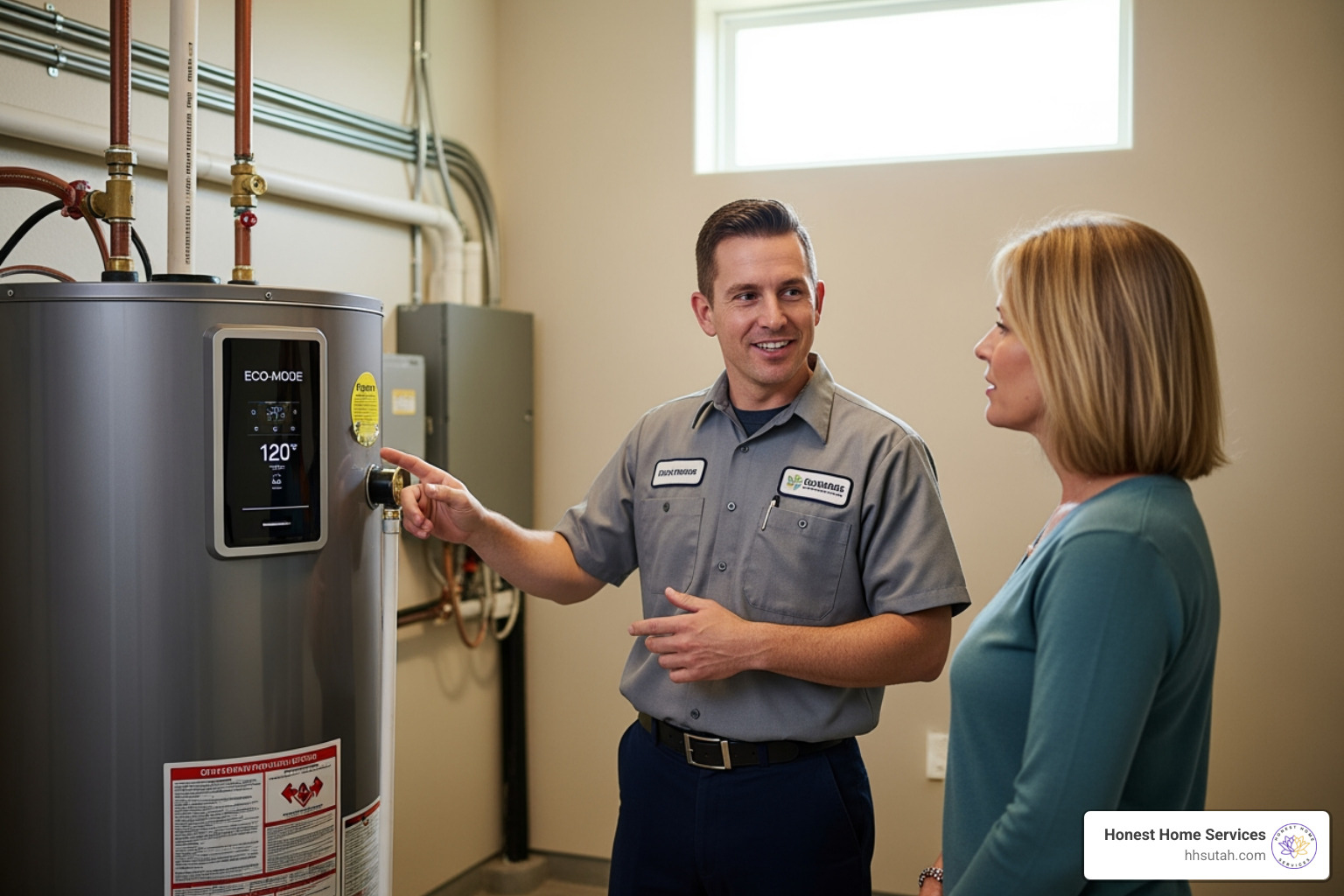
- Adjusting the Thermostat: Setting your water heater’s thermostat to 120°F (about medium-hot) is usually sufficient for most households. This temperature minimizes scalding risk, saves energy, and reduces mineral buildup compared to very high settings.
The Impact of Hard Water
Here in Northern Utah, we often deal with hard water. Hard water contains high concentrations of dissolved minerals like calcium and magnesium. While generally safe to drink, these minerals can wreak havoc on your water heater:
- Sediment Buildup: Hard water accelerates sediment buildup at the bottom of tank water heaters and can cause scale to form in tankless units. This sediment acts as an insulator, forcing your water heater to work harder and consume more energy to heat the water, leading to reduced efficiency and higher utility bills. It’s also the primary cause of those popping and rumbling noises.
- Reduced Efficiency: As sediment layers grow, your water heater’s ability to transfer heat effectively diminishes, making it less efficient.
- Corrosion: Hard water can also contribute to the faster corrosion of internal components, including the anode rod and the tank lining itself, shortening the lifespan of your unit.
- Benefits of Water Softeners: Installing a water softener can significantly mitigate the negative effects of hard water on your water heater and other plumbing fixtures. It removes the minerals that cause scale and sediment, leading to a cleaner, more efficient, and longer-lasting water heater. If you’re experiencing issues like spotting on dishes, reduced water flow, or ineffective detergent use, a water softener might be a worthwhile investment.
More info about water quality services
Frequently Asked Questions about Hot Water Heater Repair
How can I find a reliable professional for hot water repairs near me?
Finding a trustworthy plumber for hot water repairs near me is crucial for quality service and peace of mind. Here’s what we recommend:
- Check for Licensing and Insurance: Always ensure the company and its technicians are fully licensed and insured in Utah. This protects you in case of accidents or improper work.
- Read Online Reviews and Testimonials: Look for companies with consistently high ratings and positive feedback on platforms like Google, Yelp, or Angi. Pay attention to comments about professionalism, communication, and quality of work.
- Ask for Local Recommendations: Word-of-mouth from neighbors, friends, or family in Salt Lake City, Davis County, or other Northern Utah communities is invaluable.
- Ensure They Offer Guarantees on Parts and Workmanship: A reputable company stands behind its work. At Honest Home Services, we guarantee customer satisfaction and the quality of our repairs.
- Transparent Pricing: A reliable professional will provide a clear, upfront estimate before starting any work, with no hidden fees.
Water Heater Repair Company
What are the signs of a water heater emergency?
While many water heater issues can wait for a scheduled appointment, some demand immediate attention:
- Major Leaks or Flooding: Any significant water leak from your water heater, especially if it’s rapidly pooling, requires immediate action to prevent extensive water damage. Turn off the water supply to the unit and call for emergency service right away.
- No Hot Water in Winter: While a lack of hot water is always inconvenient, during the colder months in Northern Utah, it can be a health and safety concern, especially for families with young children or elderly members.
- Strong Gas Smell (for Gas Heaters): If you smell gas near your water heater, this is a dangerous situation. Immediately evacuate your home, do not use any electrical devices or light switches, and call your gas company and 911 from a safe location. Then, call us for emergency repair.
- Loud Screeching or Banging Noises: As discussed earlier, a loud screeching can indicate dangerously high pressure or temperature inside the tank due to a faulty T&P valve. Banging can suggest severe sediment buildup that could compromise the tank’s integrity. These situations warrant urgent professional assessment.
Handling Emergency Water Heater Repairs
How do gas, electric, and tankless water heaters differ in maintenance?
Each type of water heater has unique maintenance needs:
- Gas Water Heaters: Regular maintenance for gas units involves checking the burner assembly for cleanliness and proper ignition, inspecting the vent system for blockages or leaks (which can lead to carbon monoxide buildup), and ensuring the thermocouple and gas control valve are functioning correctly.
- Electric Water Heaters: Maintenance for electric units primarily focuses on inspecting the heating elements for signs of corrosion or failure and checking the thermostats for accurate temperature regulation. Sediment flushing is still crucial for tank-style electric heaters.
- Tankless Water Heaters: These units require regular descaling, especially in hard water areas like ours. Mineral buildup can clog the heat exchanger, severely reducing efficiency and flow. Many tankless units have a built-in flushing port for this purpose, but it’s often best performed by a professional using specialized cleaning solutions. Tankless units also benefit from periodic inspection of their air intake and exhaust vents.
Inspection and Service of Commercial Water Heaters
Conclusion
Understanding the signs your water heater gives you, knowing when to opt for repair versus replacement, and performing basic maintenance can save you from cold showers and unexpected expenses. Whether it’s a mysterious rumble, a pesky leak, or the complete absence of hot water, being informed empowers you to make the best decisions for your home and budget.
Timely repairs and consistent maintenance are key to extending your water heater’s life and ensuring reliable hot water for years to come. Don’t let a malfunctioning unit disrupt your comfort.
For reliable, 24/7 service in Northern Utah, including Salt Lake City, Davis County, and surrounding areas, the local experts at Honest Home Services are always here to help. We provide guaranteed satisfaction, fair pricing, and honest advice for all your hot water repairs near me needs. We’re your neighbors, and we’re committed to keeping your home comfortable.