

The Unsung Hero Inside Your Water Heater
A gas water heater anode is a long metal rod (typically magnesium, aluminum, or zinc alloy) that sits inside your water heater tank and deliberately corrodes to protect the steel tank from rust and premature failure. This “sacrificial” rod attracts corrosive elements in the water, extending your water heater’s lifespan by preventing leaks, rust, and costly tank replacement.
What a Gas Water Heater Anode Does:
- Prevents tank corrosion by attracting corrosive minerals away from the steel tank lining
- Extends water heater lifespan by 5-10 years or more when properly maintained
- Sacrifices itself through electrochemical corrosion so your tank doesn’t rust
- Requires replacement every 3-5 years (or sooner with soft water or water softeners)
- Costs $20-$50 for the part, plus $100-$300 for professional installation
Most homeowners haven’t heard of this critical component, even though it’s protected water heaters for decades. Many catastrophic failures, like ruptures and floods, could have been prevented by this simple $20-$50 part.
Replacing your anode rod on time can double the lifespan of your water heater. The rod fails before the heater, and once it’s gone, your tank rusts from the inside out. In homes with water softeners, the situation is more urgent, as rods can corrode in as little as six months.
For over 20 years, Honest Home Services has maintained and replaced gas water heater anodes for Northern Utah homeowners, helping them avoid expensive replacements and extend the life of their systems. This simple task saves our customers thousands and prevents the stress of sudden water heater failures.
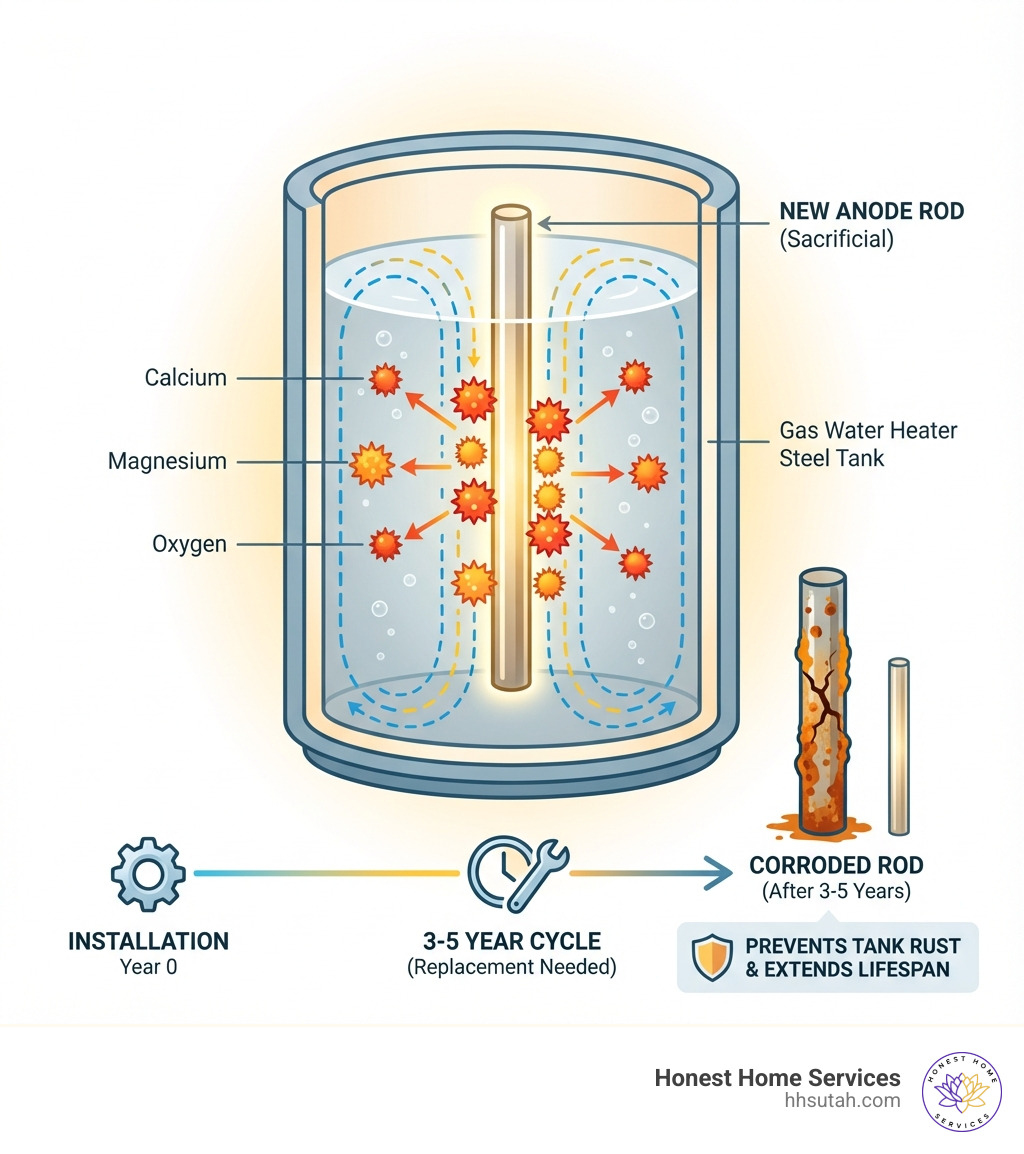
How Anode Rods Protect Your Tank Through Sacrificial Science
The gas water heater anode acts like a loyal squire, sacrificing itself to protect your water heater tank from the relentless dragon of corrosion. This isn’t just a metaphor; it’s a scientific process called galvanic corrosion, where one metal deliberately corrodes to protect another.
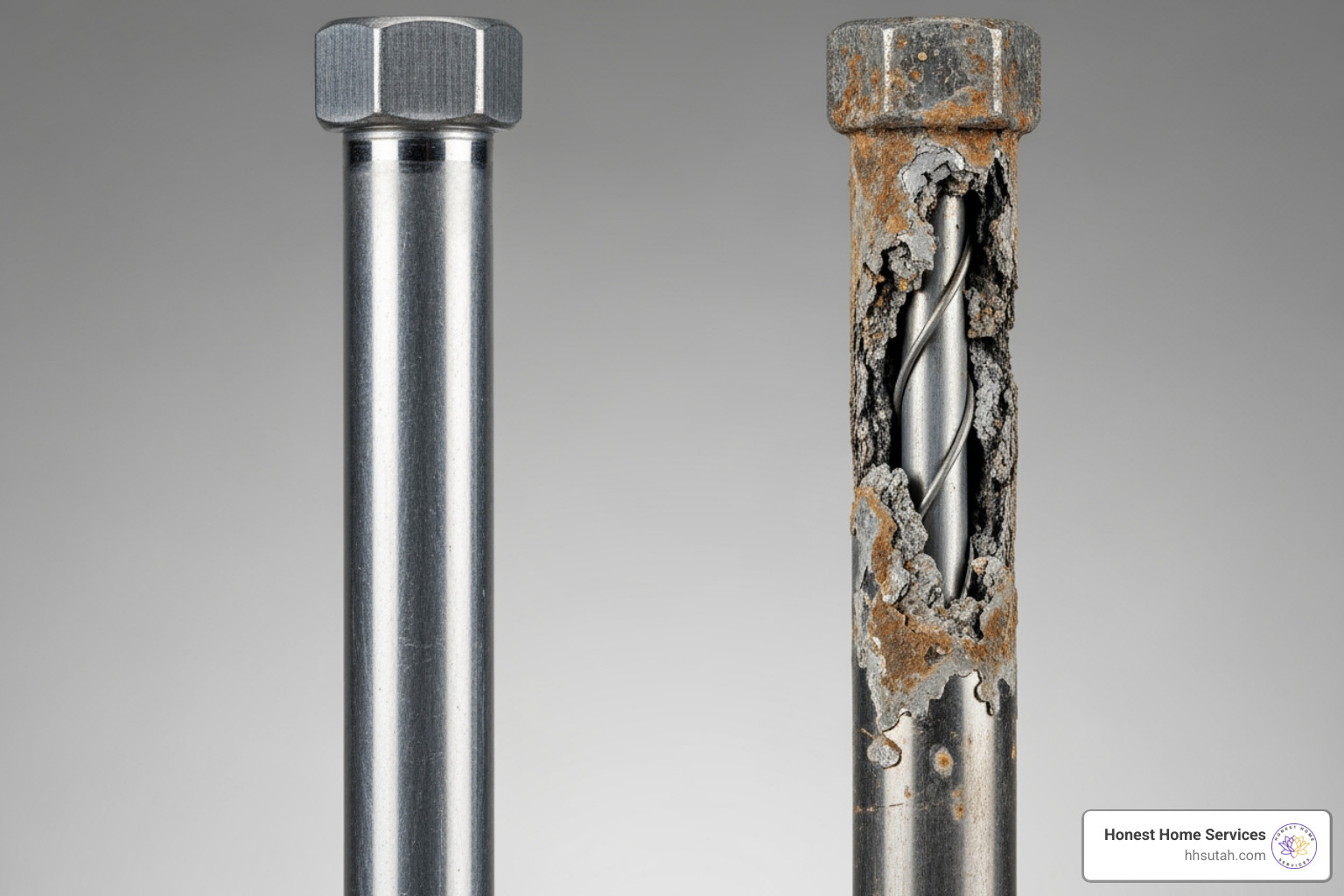
Your water heater’s steel tank is glass-lined, but tiny cracks can expose the steel to water. When the anode rod and exposed steel are in water (an electrolyte), an electrochemical reaction begins. The more “active” anode rod corrodes first, sacrificing itself to protect the steel. This process, known as electrolysis/17%3AElectrochemicalCells/17.02%3A_Electrolysis), prevents rust and extends your tank’s life.
The Primary Function of an Anode Rod
The primary function of a gas water heater anode is simple: to prevent the steel tank from rusting. The tank’s glass lining can develop microscopic cracks, exposing the steel to water and making it vulnerable to corrosion.
As the tank’s first line of defense, the more electrochemically reactive anode rod attracts corrosive elements in the water. These elements attack the anode rod instead of the tank, causing it to corrode over time. This self-sacrifice prevents the tank from rusting, which avoids leaks and costly tank failure.
Beyond preventing rust, a functioning anode rod helps maintain efficiency. A tank free from corrosion and sediment operates more effectively, reducing energy use. The anode rod is crucial for your water heater’s longevity and performance. For more on its importance, check out Why Are Anode Rods Important?.
How Water Conditions Impact Your Anode Rod
The lifespan and effectiveness of your gas water heater anode are heavily influenced by the quality of the water flowing into your home. Water conditions like hardness, pH levels, and the presence of minerals or chemicals can accelerate or decelerate the anode rod’s sacrificial process.
Northern Utah’s water hardness varies. Hard water, rich in minerals like calcium and magnesium, can cause buildup on the anode rod, encasing it and reducing its effectiveness. This hinders its protective function.
Ironically, soft water often poses a greater challenge. While it prevents scale buildup, soft water can be more corrosive, especially from a water softener. Water softeners significantly increase corrosion and can destroy an anode rod in as little as six months if water is over-softened (below 50-120 ppm hardness). Homeowners in Salt Lake City, Layton, or any of our service areas with water softeners must inspect and replace their anode rods more frequently.
Water pH also matters. Acidic water (low pH) is more corrosive and depletes an anode rod faster. Understanding your water conditions is key to planning maintenance. Honest Home Services can help you understand your local water quality’s impact and recommend a maintenance schedule.
Choosing the Right Anode Rod: Materials and Water Quality
Just like choosing the right tool for the job, selecting the correct gas water heater anode material is crucial for optimal protection and longevity. The type of anode rod best suited for your home depends largely on your specific water conditions and any existing water quality issues you might be experiencing.
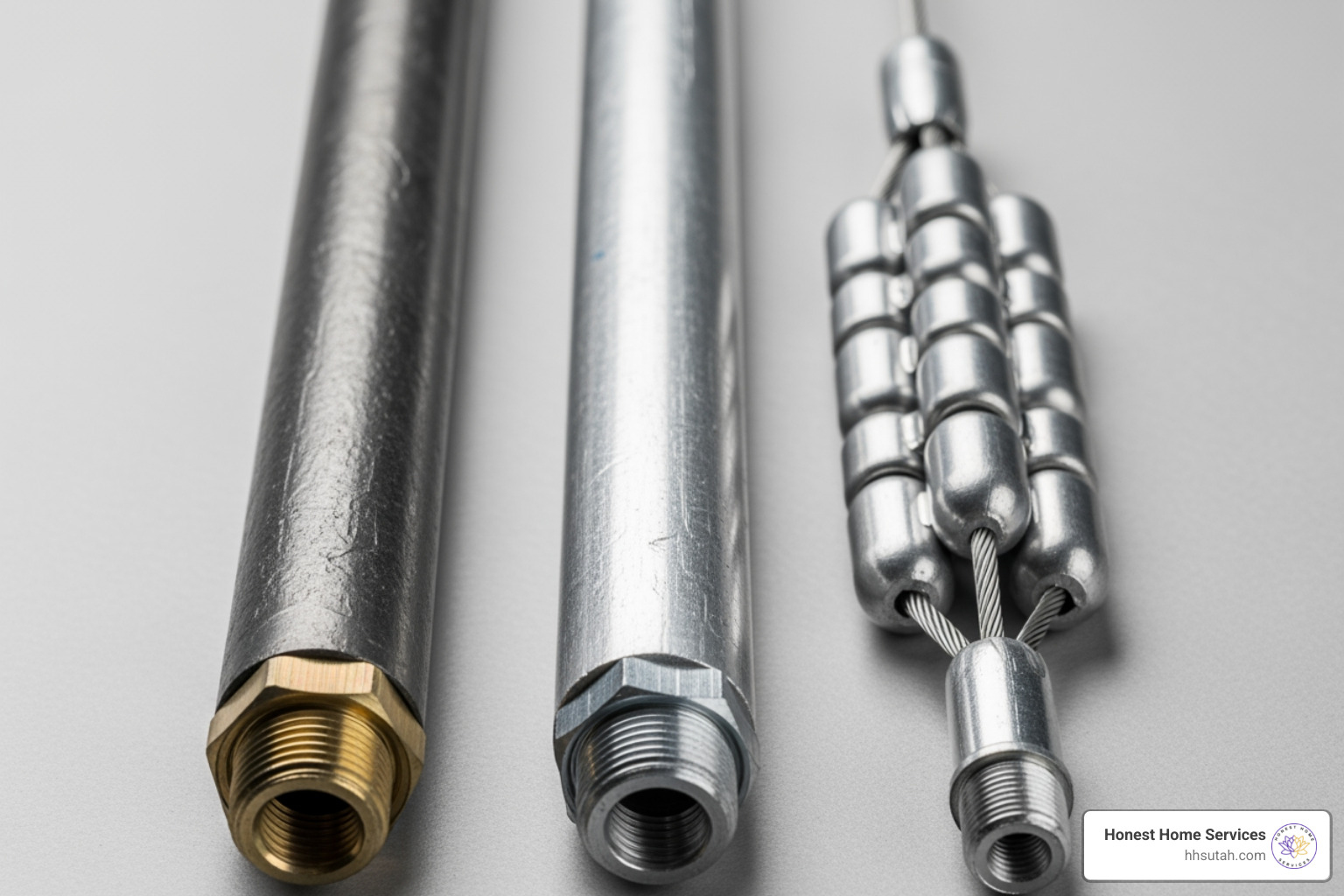
Here’s a quick comparison of the main types of anode rods:
| Anode Rod Type | Water Type Suitability | Lifespan | Cost (Rod Only) | Common Issues/Benefits |
|---|---|---|---|---|
| Magnesium | Most water types, especially softer to moderately hard | Average (3-5 years) | $20-$40 | Excellent protection, corrodes faster, can cause “rotten egg” smell in some water conditions |
| Aluminum/Zinc | Harder water, often recommended for “rotten egg” smell | Longer than magnesium (3-7 years) | $20-$50 | Good for hard water, can help reduce odors, may produce aluminum oxide gel |
| Powered (Titanium) | All water types, ideal for persistent odor issues | Very long (often tank’s lifespan) | $150-$300 | Non-sacrificial, uses electricity, eliminates odors, highest initial cost |
Sacrificial Rods: Magnesium vs. Aluminum/Zinc
The two most common types of sacrificial anode rods are magnesium and aluminum/zinc alloy.
-
Magnesium Anode Rods: Often considered the “gold standard,” magnesium rods offer excellent protection. They are highly reactive and work well in the softer to moderately hard water common in Northern Utah. However, they corrode faster and may need more frequent replacement. In some water, they can react with bacteria to create a “rotten egg” smell (hydrogen sulfide gas).
-
Aluminum/Zinc Alloy Anode Rods: For harder water or a “rotten egg” smell, an aluminum/zinc alloy rod is a good choice. These rods last longer than magnesium in hard water, and the zinc helps combat odors from sulfur-reducing bacteria. Be aware that corroding aluminum can produce a slimy, gel-like substance (aluminum oxide) that may clog faucet aerators. If switching to address odors, consult a water treatment specialist to confirm it’s the right solution for your water.
Powered Anode Rods: The Non-Sacrificial Alternative
For homeowners facing persistent “rotten egg” smells, extremely corrosive water conditions, or simply seeking a long-term, low-maintenance solution, a powered anode rod is an excellent alternative. Unlike sacrificial rods that physically corrode, powered anode rods use a small electrical current to prevent corrosion.
These rods are typically made of titanium and are connected to an electrical outlet. They work by creating an “impressed current” that flows through the water and into the tank, effectively turning the tank itself into the cathodic (protected) element. This means the powered anode rod does not corrode away; instead, it continuously prevents the tank from rusting.
- How they work: The titanium rod acts as an inert electrode. A small, continuous electrical current is passed through it, which then flows through the water to the steel tank. This current interferes with the electrochemical reactions that cause rust, essentially stopping corrosion in its tracks.
- Lifespan: Because they don’t corrode, powered anode rods can last for the entire lifespan of your water heater, making them a “set it and forget it” solution.
- Cost: The initial cost of a powered anode rod is significantly higher than a traditional sacrificial rod (typically $150-$300). However, this cost is often offset by their longevity and the elimination of future replacement expenses.
- Ideal for: Homes with severe water quality issues, persistent “rotten egg” odors that sacrificial anodes can’t resolve, or those who simply want maximum tank protection with minimal maintenance.
Powered anode rods are particularly effective for gas water heaters, including propane models, and can be a game-changer for maintaining water quality and tank integrity. For more insights into corrosion protection, you can refer to resources like Whirlpool Water Heaters’ help page.
Choosing the Right Gas Water Heater Anode for Your Home
Selecting the ideal gas water heater anode for your Northern Utah home requires a bit of detective work. It’s not a one-size-fits-all situation, as several factors come into play:
- Consult Your Water Heater Manual: Your water heater’s manufacturer manual is your best friend here. It will specify the recommended anode rod type, size, and thread. While many anode rods are universal, some models do require a specific thread type or length.
- Understand Your Water Quality: As we discussed, water hardness, pH, and mineral content significantly impact anode rod performance. A simple water test can provide valuable insights and help you decide between magnesium, aluminum/zinc, or even a powered anode rod. For instance, if you have very hard water in areas like Farmington or Lehi, an aluminum/zinc rod might be more durable.
- Check for Overhead Clearance: Anode rods are typically long, often extending almost the full height of your water heater tank. If your water heater is installed in a tight space with limited overhead clearance (e.g., in a closet or under a low ceiling), removing and installing a rigid, full-length anode rod can be challenging. In such cases, a flexible anode rod (also known as a segmented anode rod) is your hero. These rods are made in segments connected by a wire, allowing them to be bent and inserted into tight spaces.
- Know the Thread Size: Most standard water heater anode rods use a 3/4″ NPT (National Pipe Taper) thread. However, it’s always good to confirm this, especially if you have an older or less common model.
By considering these factors, you can make an informed decision to ensure your gas water heater anode provides the best possible protection for your investment. If you’re ever in doubt, our experienced technicians at Honest Home Services are always ready to help assess your needs and recommend the perfect anode rod for your system.
Your Guide to Gas Water Heater Anode Inspection and Replacement
Regular inspection and timely replacement of your gas water heater anode are among the most critical maintenance tasks you can perform to extend the life of your appliance and prevent costly emergencies. Think of it as the routine check-up for your water heater’s immune system.
Many common water heater problems, from rusty water to leaks, can be traced back to a neglected anode rod. Addressing these issues proactively can save you from bigger headaches down the road. For more on common issues, see our article on Common Water Heater Problems.
Signs Your Anode Rod Needs Replacing
Your water heater isn’t shy about telling you when its anode rod is failing, though the signs might be subtle at first. Here are the key indicators that your gas water heater anode needs inspection or replacement:
- Rotten Egg Smell: This is one of the most common and unmistakable signs. If your hot water smells like sulfur or rotten eggs, it’s often due to a reaction between the magnesium or aluminum anode rod and sulfur-reducing bacteria naturally present in some water supplies. The anode rod is essentially producing hydrogen sulfide gas.
- Discolored or Rusty Hot Water: If your hot water appears rusty, brownish, or has a metallic taste, it’s a strong indicator that the steel tank itself is starting to corrode because the anode rod has been depleted. The anode rod is the first line of defense; once it’s gone, the tank is next.
- Loud Popping or Rumbling Noises: While this can also indicate sediment buildup, if combined with other signs, it might mean the anode rod is heavily corroded and contributing to sediment or allowing scale to form on exposed tank surfaces. These noises occur when water gets trapped under sediment and boils, creating steam bubbles that then collapse.
- Reduced Hot Water Output or Inconsistent Temperature: While not a direct sign of anode failure, a severely corroded tank can lead to reduced efficiency and potentially impact hot water performance.
- Visible Corrosion on the Rod or Exposed Core Wire: During an inspection, if you pull out the anode rod and see that a significant portion of the core steel wire is exposed, or if the rod is less than half an inch thick, it’s time for a replacement.
- Slimy Gel-Like Substance in Faucet Aerators: If you have an aluminum anode rod, its corrosion can sometimes produce aluminum oxide, which might appear as a gelatinous substance in your faucet aerators.
If you notice any of these signs, don’t delay. Addressing an anode rod issue quickly can prevent more serious water heater problems and expensive repairs. For more on how to tackle these issues, check out our guide on Water Heater Repair.
Inspection and Replacement Frequency
Knowing when to inspect and replace your gas water heater anode is paramount to maximizing your water heater’s lifespan. We recommend a proactive approach:
- Annual Inspection: Experts generally recommend inspecting the anode rod at least once a year. This check can often be done during routine water heater maintenance, such as flushing the tank. For new water heaters, we often suggest an initial check within the first six months to establish a baseline for its depletion rate in your home’s specific water conditions.
- Replacement Every 3-5 Years: On average, a gas water heater anode should be replaced every three to five years. However, this is a general guideline, and several factors can significantly alter this timeframe.
- Impact of Water Softeners: If your home has a water softener, you’ll need to check and replace the anode rod much more often. As mentioned, over-softened water can accelerate anode corrosion, sometimes depleting a rod in as little as six months. We often advise our customers in areas like Bountiful or Kaysville with water softeners to inspect their anode rods every six months to a year.
- High Water Usage: Homes with higher hot water demand will naturally deplete their anode rods faster, as more fresh water (and thus more corrosive elements) constantly flows through the tank.
- Manufacturer Guidelines: Always consult your water heater’s owner’s manual for specific inspection and replacement recommendations.
By adhering to these guidelines, you’re not just performing maintenance; you’re actively guarding your investment and ensuring a reliable supply of hot water for your family.
DIY vs. Professional Gas Water Heater Anode Replacement
Replacing a gas water heater anode can be a rewarding DIY project for the mechanically inclined, but it also comes with potential risks and challenges. Knowing when to tackle it yourself and when to call in the pros is key.
DIY Steps Overview:
If you’re comfortable with basic plumbing, you can attempt to replace your anode rod. The general steps involve:
- Safety First: Turn off the gas supply to your water heater (set the control valve to “pilot” or “vacation” to avoid relighting the pilot light) and shut off the cold water supply valve to the heater.
- Relieve Pressure: Open a hot water faucet in your home to relieve pressure in the tank and prevent a forceful ejection of the rod.
- Drain Water: Connect a garden hose to the drain valve at the bottom of the water heater and drain a few gallons (if the anode is on top) or enough to be below the anode port (if on the side).
- Locate and Remove: The anode rod is usually located on top of the water heater, often under a hex head bolt (typically 1 1/16-inch). Use a sturdy socket wrench with a breaker bar for leverage, as these can be incredibly tight due to corrosion.
- Install New Rod: Wrap the threads of your new anode rod with PTFE thread sealing tape or apply pipe dope, then carefully screw it into place and tighten it securely.
- Refill and Check: Turn the cold water supply back on, allow the tank to fill completely (keeping the hot water faucet open until water flows steadily to expel air), and then turn the gas supply back to its original setting. Check for leaks around the new anode rod.
Required Tools:
- 1 1/16-inch socket
- Ratchet and breaker bar (often essential!)
- Pipe wrench (for hot water outlet anodes)
- Garden hose
- Bucket
- PTFE thread sealing tape or pipe thread sealant
- Adjustable wrench or channel locks
- Impact wrench (highly recommended for stubborn rods)
Potential Risks of DIY:
- Stuck Rod: Corroded anode rods can be incredibly difficult to remove, sometimes requiring significant force or even an impact wrench. We’ve seen homeowners struggle for hours.
- Cross-threading: Improperly installing the new rod can lead to cross-threading, damaging the tank’s port and creating leaks.
- Leaks: If not sealed correctly, the new anode rod can leak, causing water damage.
- Tank Damage: Applying too much force or improper technique can damage the water heater tank itself or connected pipes.
- Gas Safety: For gas water heaters, there’s the added risk of improperly handling gas lines or pilot lights if you’re not careful.
When to Call a Professional:
If you’re uncomfortable with any of the steps, lack the proper tools, or encounter a stubborn anode rod, it’s always best to call a professional. Our licensed plumbers at Honest Home Services have the expertise, specialized tools (like impact wrenches), and experience to safely and efficiently replace your gas water heater anode. We can prevent potential damage to your water heater and ensure the job is done right, giving you peace of mind.
Cost Associated with Replacement:
The cost of replacing a gas water heater anode is relatively low compared to the price of a new water heater. The anode rod itself typically costs between $20 to $50. If you opt for professional installation, you can expect to pay for labor, which usually ranges from $100 to $300, depending on the complexity and your location. While this might seem like an added expense, it’s a small price to pay to potentially double your water heater’s lifespan and avoid the far greater costs of a Water Heater Replacement or Handling Emergency Water Heater Repairs caused by a corroded tank.
Frequently Asked Questions about Water Heater Anode Rods
How does a failing anode rod affect a propane or natural gas water heater?
A failing gas water heater anode rod affects both propane and natural gas models in fundamentally the same way: it exposes the steel tank to corrosion. Once the anode rod is depleted, the corrosive elements in the water will begin to attack the tank’s steel lining. This leads to rust, which can manifest as discolored water, and eventually, tank leaks.
For gas-fired heaters specifically, this corrosion can also contribute to sediment buildup at the bottom of the tank. Sediment acts as an insulator, making the burner work harder and longer to heat the water. This not only wastes propane or natural gas, reducing your energy efficiency, but it can also cause the tank to overheat in localized areas, stressing the metal and potentially leading to premature failure. So, while the fuel source differs, the protective role of the anode rod and the consequences of its failure remain critically important for both types of gas water heaters.
Do tankless gas water heaters have anode rods?
No, tankless gas water heaters do not have anode rods. The reason is quite simple: tankless water heaters, by their very design, do not have a storage tank. They heat water on demand as it flows through a heat exchanger. Since there’s no large volume of water constantly sitting in a steel tank, there’s no need for an anode rod to protect against galvanic corrosion. This is one of the key differences between traditional tank-style water heaters and their tankless counterparts.
What happens if I never replace my anode rod?
If you never replace your gas water heater anode, you’re essentially signing an early death warrant for your appliance. The anode rod is designed to be sacrificial, meaning it will eventually corrode completely away. Once it’s gone, there’s nothing left to protect the steel tank.
At that point, the corrosive elements in your water will directly attack the exposed steel lining of the tank. This internal corrosion will lead to rust forming within the tank, weakening its structure. Over time, this rust will inevitably cause leaks, which can lead to significant water damage in your home. These leaks typically start small but can quickly escalate into major ruptures, often requiring a costly New Water Heater and potentially extensive property repairs. Ignoring the anode rod is a guaranteed path to premature water heater failure and a much larger, more expensive problem down the road.
Conclusion: Protect Your Investment with Proactive Maintenance
The gas water heater anode may be a hidden component, but its role in the longevity and efficiency of your water heater is anything but small. This “sacrificial” hero works tirelessly behind the scenes, preventing corrosion, extending your appliance’s lifespan, and ultimately saving you from costly repairs and replacements. By understanding its function, knowing the signs of its depletion, and adhering to regular inspection and replacement schedules, you’re not just maintaining a household appliance—you’re protecting a significant investment.
Regular anode rod maintenance is a simple, affordable task that can literally double the life of your water heater, keeping hot water flowing reliably in your Northern Utah home. Don’t wait for the unpleasant smell, discolored water, or worse, a leaky tank, to remind you of its importance. Proactive maintenance is the best defense against unexpected breakdowns and the stress they bring.
For professional inspection, expert advice on selecting the right anode rod for your water conditions, or skilled replacement services in Salt Lake City, Salt Lake County, Davis County, and throughout Northern Utah, trust the experienced team at Honest Home Services. We’re here to ensure your water heater continues to serve you faithfully for years to come. Contact us today for reliable Salt Lake City Water Heater Repair and maintenance.