

What Is AC Service — and Why It Matters for Your Home
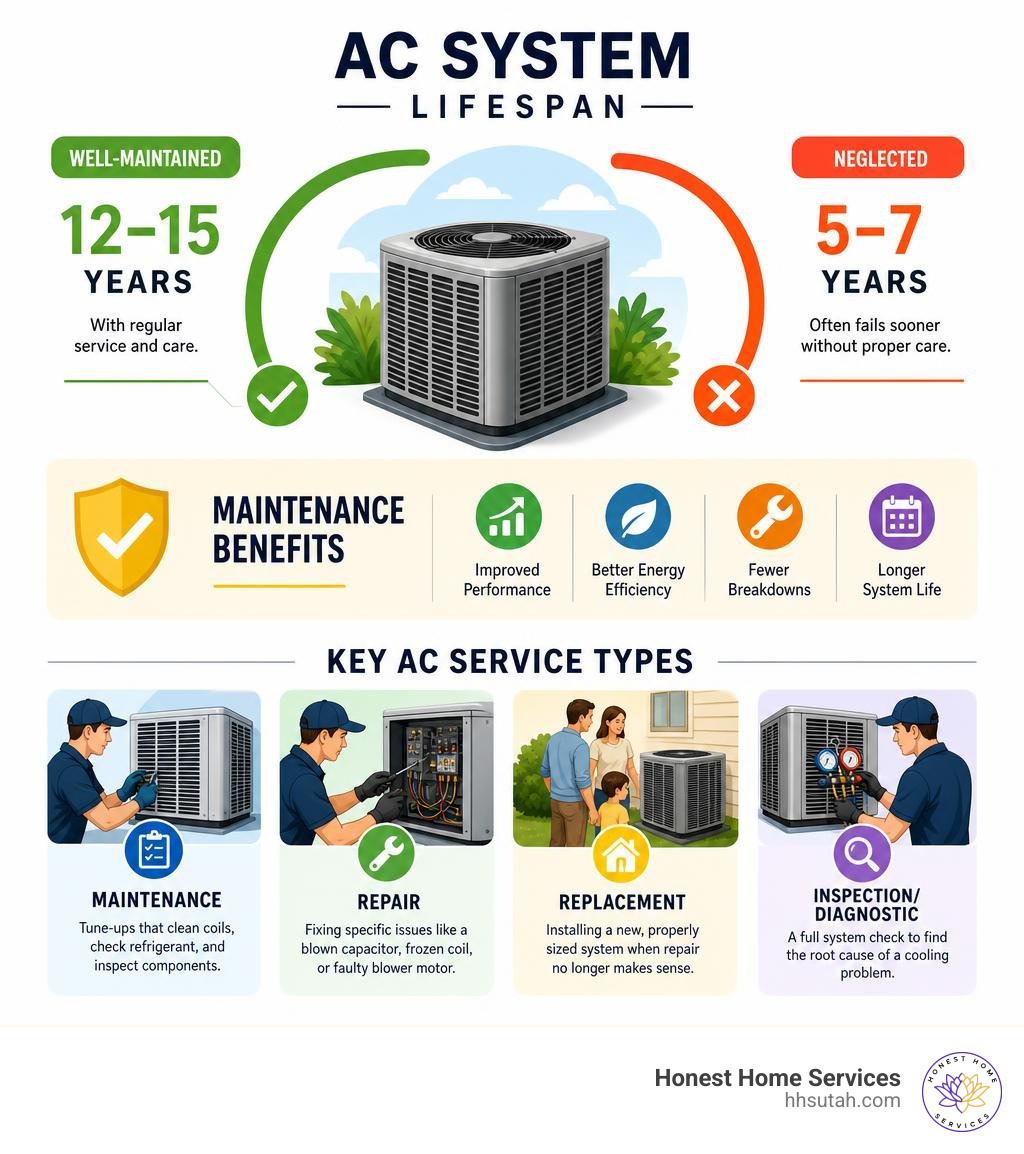
AC service covers everything from routine maintenance and tune-ups to full system repairs and replacements. Here’s a quick look at what that means for you:
- Maintenance — Annual tune-ups that clean coils, check refrigerant, and inspect electrical components
- Repair — Fixing specific failures like a blown capacitor, frozen coil, or faulty blower motor
- Replacement — Installing a new, properly sized system when repair no longer makes sense
- Inspection/Diagnostic — A full system check to find the root cause of a cooling problem
A well-maintained AC system can last 12–15 years. One that’s ignored — or installed poorly — often fails within 5–7 years. Regular service is the single biggest factor in how long your system lasts and how much it costs to run.
In Northern Utah, summers can push your AC hard. When a system breaks down, comfort and air quality drop fast. Knowing what to expect from professional AC service helps you make smarter decisions — whether you’re dealing with warm air from the vents, rising energy bills, or planning a full replacement.
At Honest Home Services, we’ve spent over 20 years providing trusted AC service to homeowners and small businesses across Northern Utah — from quick repairs to full system installations. We’ll walk you through everything you need to know in this guide.
How Air Conditioning Systems Work
Understanding how your central cooling system operates helps demystify what technicians do during a routine visit. Air conditioning doesn’t actually “create cold.” Instead, it pulls thermal energy out of your home’s indoor air and dumps it outside, leaving behind cool, dehumidified air.
Essential Components of Home Cooling
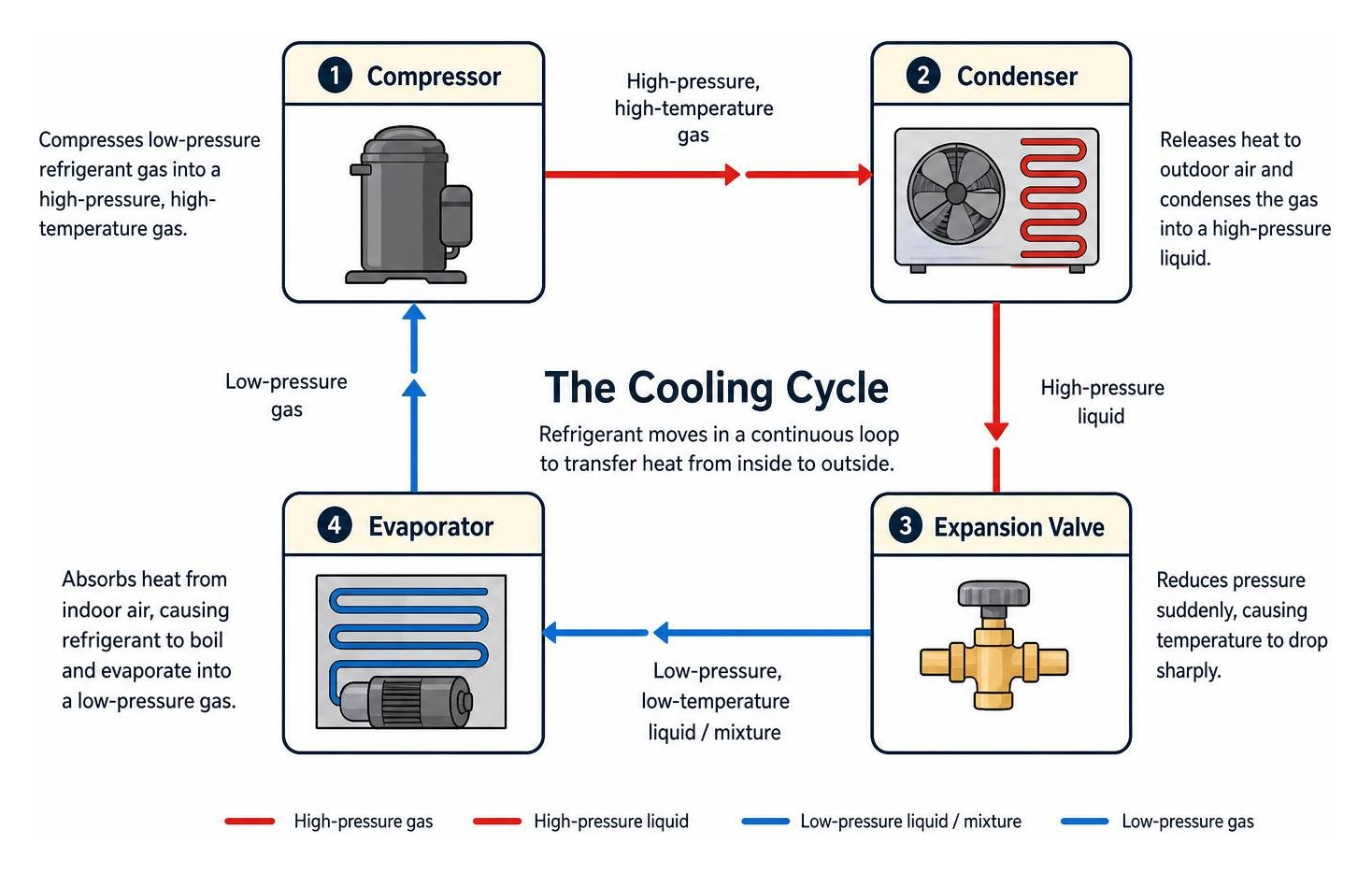
A modern central air conditioner relies on four main physical components connected by sealed copper tubing that circulates chemical refrigerant gas:
- The Compressor: Located inside the outdoor condenser unit, the compressor acts as the heart of the system. It squeezes low-pressure refrigerant gas into a high-pressure, high-temperature gas, forcing it to move through the system.
- The Condenser Coil: Surrounding the compressor outside, this coil receives hot refrigerant gas. A heavy-duty exhaust fan draws outside air across the aluminum fins, dissipating indoor heat into the exterior atmosphere and condensing the gas into a liquid.
- The Expansion Valve: This metering device sits between the outdoor and indoor units. It rapidly depresses the pressure of the liquid refrigerant, causing its temperature to plummet before entering your home.
- The Evaporator Coil: Situated inside your home (typically mounted above or inside the furnace or air handler), this freezing-cold coil absorbs heat from indoor air pulled across it by the blower fan. As air passes over the chilled metal fins, humidity condenses into liquid water and drains away, while chilled air recirculates back into your rooms.
To learn more about how your furnace and cooling systems interact seamlessly, check out our guide on Demystifying Your HVAC How AC and Heating Actually Work.
How Residential Climate Control Functions
When your thermostat senses the indoor temperature rising above your set point, it completes a low-voltage circuit that signals your air conditioner to turn on. The sequence happens swiftly:
- The indoor blower motor engages, drawing warm household air through return air ducts and air filters.
- Simultaneously, the outdoor compressor and condenser fan start cycling refrigerant through the closed loop.
- Warm indoor air passes across the evaporator coil. Refrigerant absorbs heat and moisture, instantly changing state from liquid back into vapor.
- Chilled, filtered, and dehumidified air gets pushed back into your living spaces through supply duct vents.
- Meanwhile, the outdoor fan blows away the heat collected inside, repeating the loop until your thermostat is satisfied.
During professional ac service, our certified technicians complete detailed airflow management checks, conduct system seal inspections, perform precise digital pressure testing, and evaluate whether a refrigerant recharge is necessary to keep central air systems operating at peak energy efficiency.
Common Signs Your Air Conditioner Needs Repair
Air conditioning systems rarely fail without offering advance warning signs. Catching small mechanical mechanical hiccups early prevents catastrophic component failures on the hottest days of summer.
Key Warning Indicators of AC Breakdown
Keep an eye and ear out for these critical signs that indicate your system requires prompt professional attention:
- Warm or Tepid Vent Air: If air blowing from supply vents feels warm or lukewarm while the outdoor compressor is running, your system may suffer from low refrigerant levels, a failed compressor valve, or severe air duct leakage.
- Weak Airflow: Restricted airflow points to clogged air filters, a failing blower motor, disconnected ductwork, or a heavily frozen indoor coil.
- Squealing, Grinding, or Rattling Noises: Unusual mechanical sounds usually herald impending component failure. Metal-on-metal grinding suggests worn motor bearings, squealing indicates slipping belts or bearing friction, and clicking or buzzing points to electrical control board faults or failing relays.
- Frozen Evaporator Coils: Frost or ice accumulating on refrigerant lines or the indoor coil indicates restricted airflow (such as dirty filters) or a refrigerant leak starving the coil of pressure.
- Frequent System Cycling: If your unit turns on and off every few minutes (short-cycling), it may be suffering from severe electrical problems, incorrect system sizing, or sensor failures.
If you notice odd noises from outdoor fan assemblies or blower modules, consult our comprehensive guide on AC Fan Repair Complete Guide. When immediate mechanical failures happen, our local team is ready to deliver fast, reliable AC Repair across Salt Lake, Davis, and Utah counties.
Understanding AC Repair Costs and Diagnostic Expectations
When an air conditioner breaks down, homeowners want clarity on what happens during a repair call. A standard service visit begins with a diagnostic evaluation:
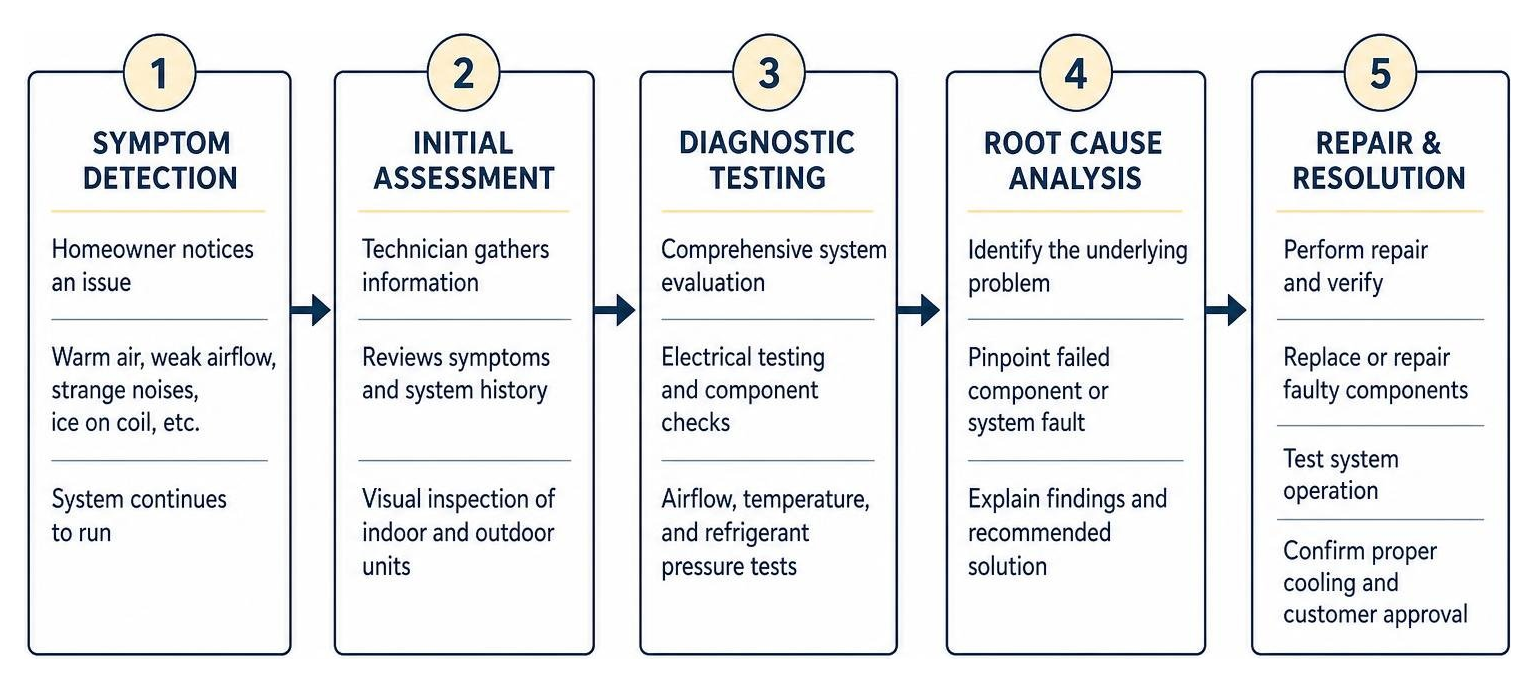
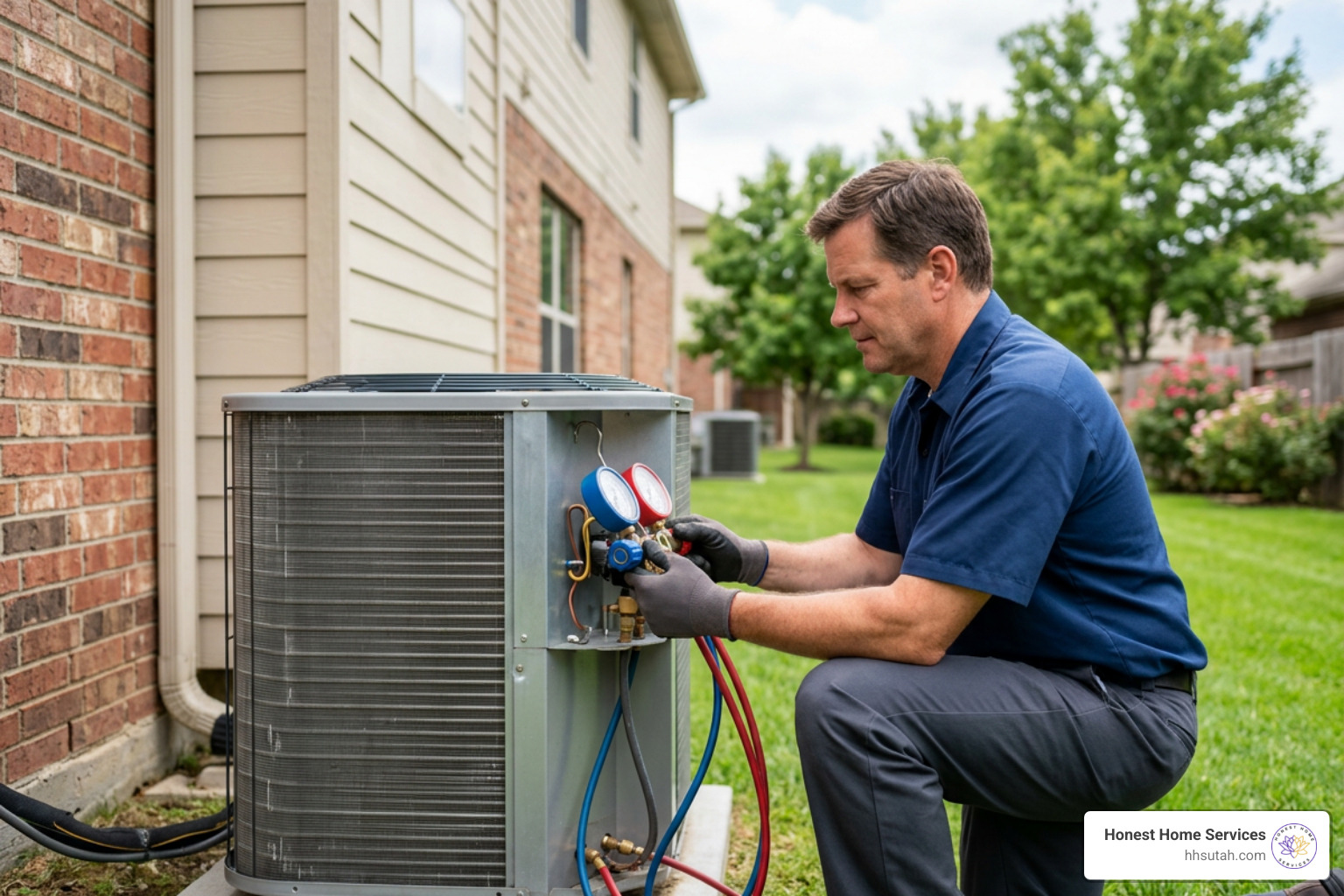
- Diagnostic Visit: A licensed technician connects manifold gauges, tests electrical loads with a multimeter, checks airflow static pressure, and inspects electrical components to pinpoint the precise failure point.
- Standard Component Repairs: Common, straightforward issues—such as replacing a failed run capacitor, clearing a backed-up condensate drain, or replacing a burnt relay switch—are resolved quickly during the initial call.
- Major Component Repairs: Severe mechanical issues like a seized compressor motor, burnt control boards, or reversing valve failures require specialized repair procedures and factory-original OEM parts.
Rather than taking chances with mystery repair quotes, review our helpful advice on The Best AC Repair Services on a Budget to ensure you get transparent, fair options every time.
What to Expect During Professional AC Service and Maintenance
Preventive care is the easiest way to preserve home comfort, control operating costs, and prevent unexpected breakdown emergencies when summer temperatures peak across Northern Utah.
Routine Maintenance to Prevent Costly Breakdowns
Skipping annual ac service takes a heavy toll on your system. Studies show that roughly half of all emergency service calls stem directly from neglect or improper installation issues that preventive care easily prevents.
- Extended Lifespan: A properly maintained air conditioner operates for 12–15 years, whereas ignored units frequently fail within 5–7 years.
- Preserved Energy Efficiency: Dust build-up on coils restricts heat exchange, making your unit run up to 30% longer to cool your home. Regular cleaning keeps utility bills manageable.
- Warranty Compliance: Almost all major equipment manufacturers explicitly require documented annual tune-ups to keep factory warranties valid.
To keep your equipment running reliably year after year, explore our detailed advice on Air Conditioning Maintenance and Repairs Your Total Guide and learn how to protect yourself with our guide on Don’t Get Fooled What to Look For in an AC Maintenance Plan.
What to Expect During a Professional AC Service Inspection
When our experienced technicians perform a comprehensive seasonal tune-up, we don’t just glance at your unit. A thorough professional inspection covers every critical mechanical and electrical system:
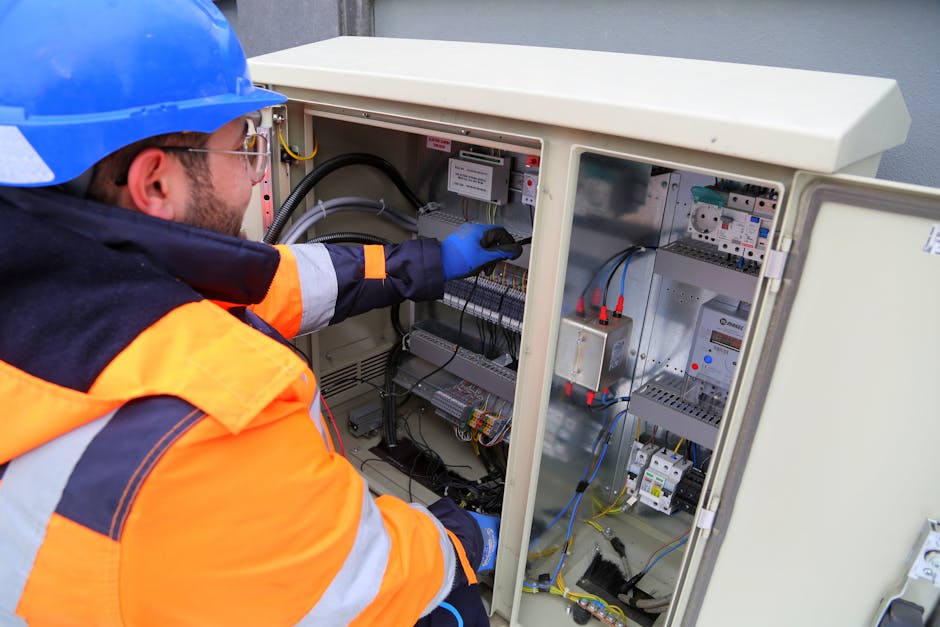
- Electrical Component Testing: Measuring voltage draw, inspecting wiring connections, and checking start/run capacitors for bulging or electrical decay.
- Blower Motor & Airflow Check: Inspecting fan blades, measuring amp draw, checking motor bearings, and evaluating total system airflow.
- Coil Inspection & Cleaning: Removing dirt, leaves, and debris from outdoor condenser fins and checking indoor evaporator coils for restriction.
- Condensate Drain Flush: Clearing algae, sludge, and debris from drain pans and condensate lines to prevent costly indoor water damage.
- Refrigerant Level Evaluation: Connecting digital gauges to verify proper operating pressure and temperature differentials without releasing gases.
- Safety Controls Check: Verifying that high-pressure safety switches and thermostat signals function perfectly.
All handling of chemical cooling agents must be performed by certified technicians holding EPA Section 608 certification. Ready to schedule your seasonal service? Learn more about our thorough Air Conditioning Tune Up process.
Sizing, Repair vs. Replacement, and Choosing a Contractor
Whether you need a simple fix or a full cooling upgrade, making educated decisions about equipment sizing and contractor selection guarantees better long-term comfort and value.
Why Proper System Sizing Matters
When it comes to air conditioning, bigger is definitely not better. Roughly 60% of homes have oversized cooling systems installed. Oversized units cool indoor space so fast that they turn off before removing indoor humidity, causing a clammy indoor climate and frequent short-cycling that wears out components rapidly.
| Feature | Properly Sized AC System | Oversized AC System |
|---|---|---|
| Cooling Cycle | Long, steady cycles for even temperature | Short, abrupt cycles (short-cycling) |
| Humidity Control | Excellent moisture removal | Poor (leaves home clammy) |
| Energy Usage | Optimized monthly power bills | High energy spikes during start-ups |
| System Lifespan | Long (12–15 years) | Reduced (5–7 years) |
| Component Wear | Low, steady operation | High strain on capacitors & compressor |
Professional contractors calculate exact cooling loads using detailed calculations considering square footage, wall insulation, window orientation, ceiling height, and local climate data. Proper load sizing yields dramatic monthly utility bill savings while keeping indoor temperatures stable throughout every room.
If you are planning to install or upgrade your cooling unit, see our complete guide on AC Installation to ensure your home gets the right fit from day one.
Deciding Between AC Repair and System Replacement
When your air conditioner experiences major trouble, deciding whether to fix it or upgrade can feel overwhelming. Homeowners can rely on a simple rule of thumb:
The 50% Rule: If a major repair costs more than 50% of the cost of a new replacement unit, and your system is over 8 years old, replacement is almost always the smarter financial choice.
System efficiency declines continuously over time. Older units operating on phased-out refrigerants cost significantly more to power every summer compared to modern high-efficiency SEER2-rated systems. Moving to a new energy-efficient system not only slashes monthly electric bills but also eliminates unexpected summer breakdown stress.
For an in-depth look at managing equipment upgrades smoothly, read our guide on How to Survive Replacing Your AC Unit Without Losing Your Cool. You can also learn about energy efficiency rebates in our article on Breathe Easy The Ultimate Guide to Energy Efficient AC Repair and Tax Credits.
Questions to Ask Before Hiring an HVAC Contractor
Selecting the right technician is just as important as choosing high-quality cooling equipment. Poor installation quality accounts for about half of all recurring operational problems and premature equipment failures.
Before signing an agreement for ac service or installation, ask prospective contractors these vital questions:
- Are your technicians state-licensed, insured, and EPA 608 certified?
- Do you perform formal heat gain load calculations before recommending replacement sizing?
- Do you provide transparent, written quotes before starting work?
- What warranties do you offer on labor and factory-original OEM parts?
- Will your team test airflow, static pressure, and refrigerant charge upon completion?
To help guide your search, explore our tips on How to Choose the Best HVAC Repair Without Sweating It and Beat the Heat How to Locate Certified HVAC Dealers in Your Area.
Frequently Asked Questions About AC Service
How often should I schedule professional AC service?
You should schedule professional ac service at least once per year—ideally in early spring before hot weather arrives. Annual tune-ups prepare your unit for peak summer performance, clear accumulated dust from coils, ensure electrical systems are safe, and catch minor wear items before they trigger mid-season breakdowns. In addition, homeowners should inspect and replace standard disposable air filters every 30 to 90 days.
What is included in a free estimate for a new system?
A free in-home estimate for a new air conditioning system includes a comprehensive home cooling evaluation. A qualified specialist measures your home’s square footage, evaluates ductwork integrity and layout, checks insulation levels, and completes a heat load calculation. You will receive clear, written system options detailing energy efficiency ratings (SEER2), ductwork adjustments if needed, and warranty coverage options.
How do I know if my AC issue is just a blown capacitor?
A blown start or run capacitor is one of the most frequent cooling failures. Classic symptoms include a loud humming sound coming from the outdoor condenser unit while the fan motor or compressor struggles to start up. You may also notice the outdoor fan blades spinning slowly or stopping entirely, or the system tripping circuit breakers when trying to start. Replacing a capacitor is a quick, straightforward repair for a qualified HVAC technician.
Conclusion
Taking care of your air conditioner doesn’t have to be confusing or stressful. By scheduling annual tune-ups, paying attention to early warning signs like warm air or strange sounds, and choosing properly sized equipment, you ensure reliable performance and lower energy costs all summer long.
When you need local expertise, fair pricing, and guaranteed customer satisfaction across Salt Lake County, Davis County, or surrounding Northern Utah communities, trust the experienced local team at Honest Home Services.
Explore our full range of solutions by visiting our central Air Conditioning Services page today to keep your home cool, comfortable, and efficient all summer long!