
How to Spot a Hidden Plumbing Leak
Start hidden plumbing leak detection at the pressure gauge. If water pressure drops unexpectedly, check exposed pipe joints, shutoff valves, and nearby supply lines for drips. Look for damp floors or walls, too. If water is spreading, isolate the water supply if you can do so safely. Keep clear of wet electrical outlets and call a plumber.
A slow pressure drop may come from a small leak you cannot see. These first checks can help you describe the problem, but they cannot rule out a leak beneath a floor or inside a wall.
We’re Honest Home Services, serving Northern Utah with over 20 years of plumbing repair experience. That hands-on work helps us take a careful approach to hidden plumbing leak detection and pipe repairs.
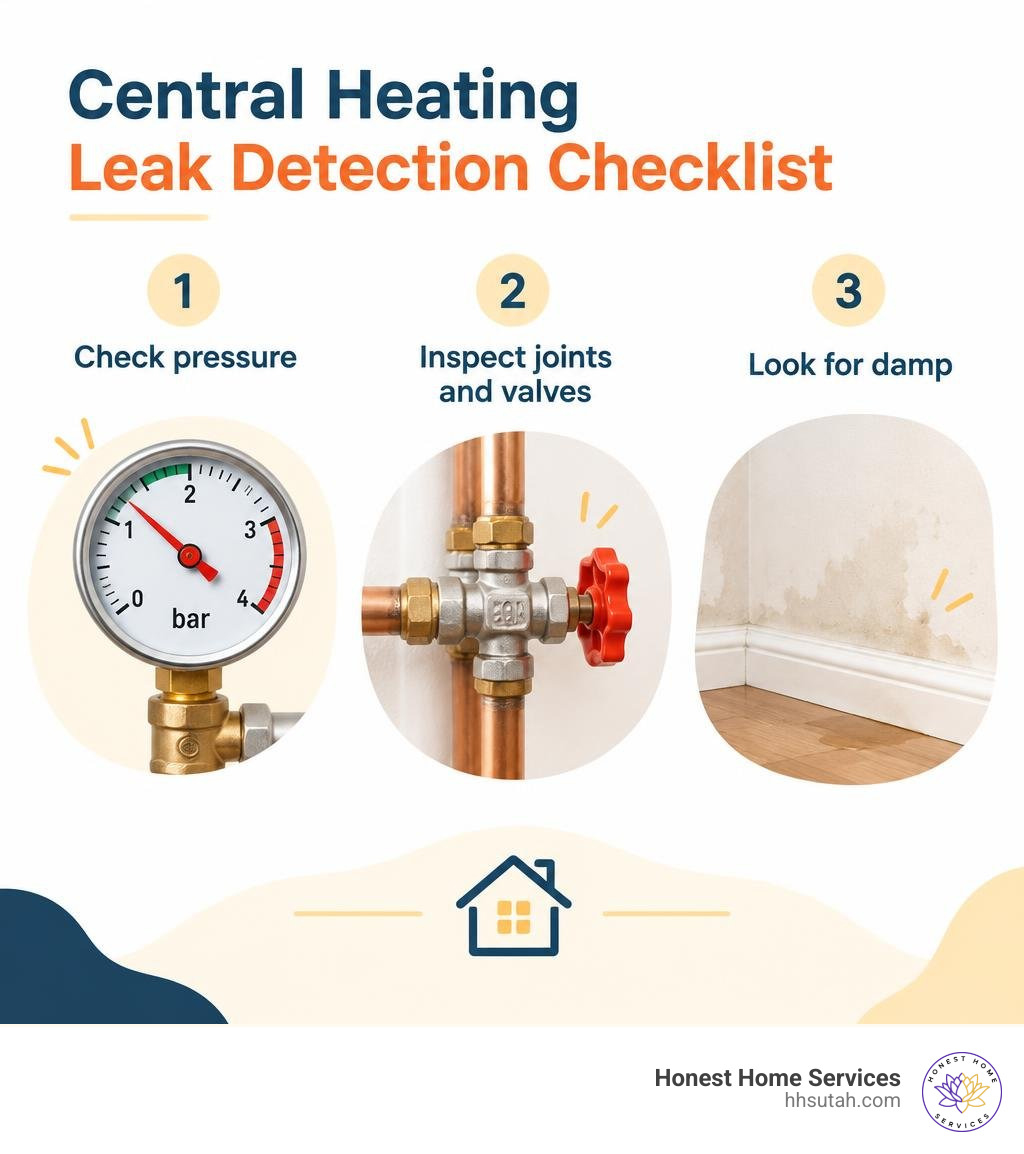
Hidden plumbing leak detection terms to learn:
Signs of Plumbing Pressure Loss and Pipe Leaks
A plumbing leak can start as a slow pressure change, a damp cabinet floor, or a faint mineral stain around a connection. Check for changes at fixtures, exposed supply lines, shutoff valves, and appliance connections before the damage spreads.
| Characteristic | Slow Leak | Major Pipe Failure |
|---|---|---|
| Pressure Change | Gradual or intermittent | Sudden and severe |
| Visible Moisture | Staining, mineral buildup, or a small drip | Pooling water, wet drywall, or active flooding |
| Typical Location | Valve packing, fittings, or pinholes | Split pipes, failed elbows, or damaged supply lines |
| Recommended Response | Arrange a professional inspection | Shut off water and request emergency plumbing help |
Identifying Slow Leaks vs Major Failures
A slow leak may leave little more than recurring moisture, a musty odor, or an unexplained increase in water use. Even without a visible puddle, moisture can damage cabinets, flooring, and wall materials over time. For a step-by-step overview, read our guide to finding water leaks in residential systems.
A major plumbing failure is more obvious. A broken supply line or failed fitting can release water quickly and threaten floors, ceilings, and nearby belongings. Shut off the main water supply when it is safe to do so, then contact a plumber.
Inspecting Common Plumbing Leak Points
Before assuming a pipe is leaking behind a wall or beneath a floor, inspect common plumbing connections:
- Shutoff valves: Look for moisture around valve stems, compression nuts, and supply connections.
- Fixture supply lines: Check the lines serving sinks, toilets, and appliances for corrosion, kinks, or drips.
- Exposed pipe joints: Look for staining, mineral buildup, or dampness around joints and fittings.
Advanced Plumbing Leak Detection Methods
When a visual inspection does not reveal the source of a leak, professional plumbing diagnostics can locate hidden moisture with minimal disruption to walls, floors, and cabinets.
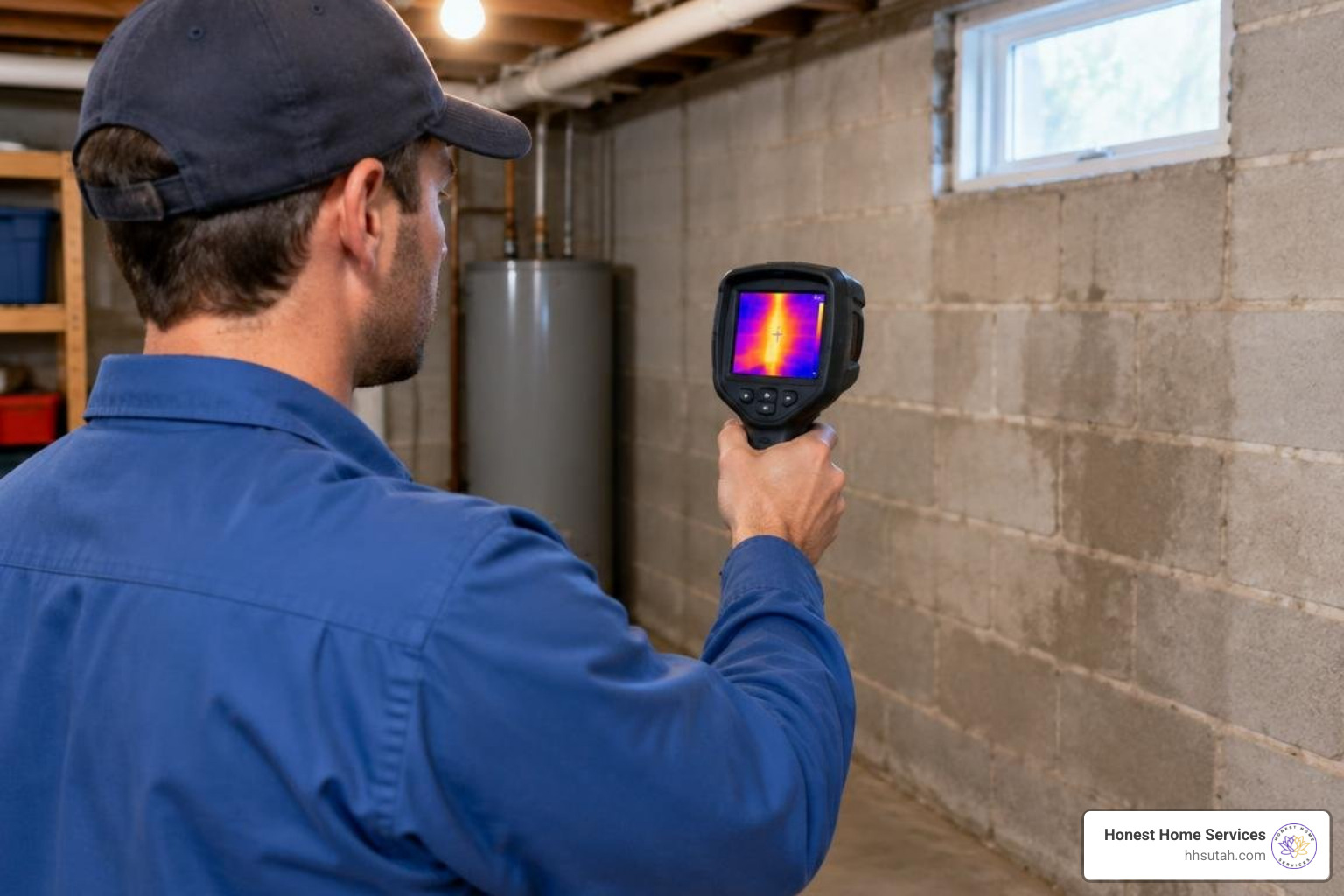
Modern diagnostic equipment reduces destructive guesswork. For more information, see our overview of modern pipe leak detectors.
Professional Plumbing Leak Inspections
A professional plumbing inspection can help narrow down the source of hidden moisture and identify the most appropriate repair approach.
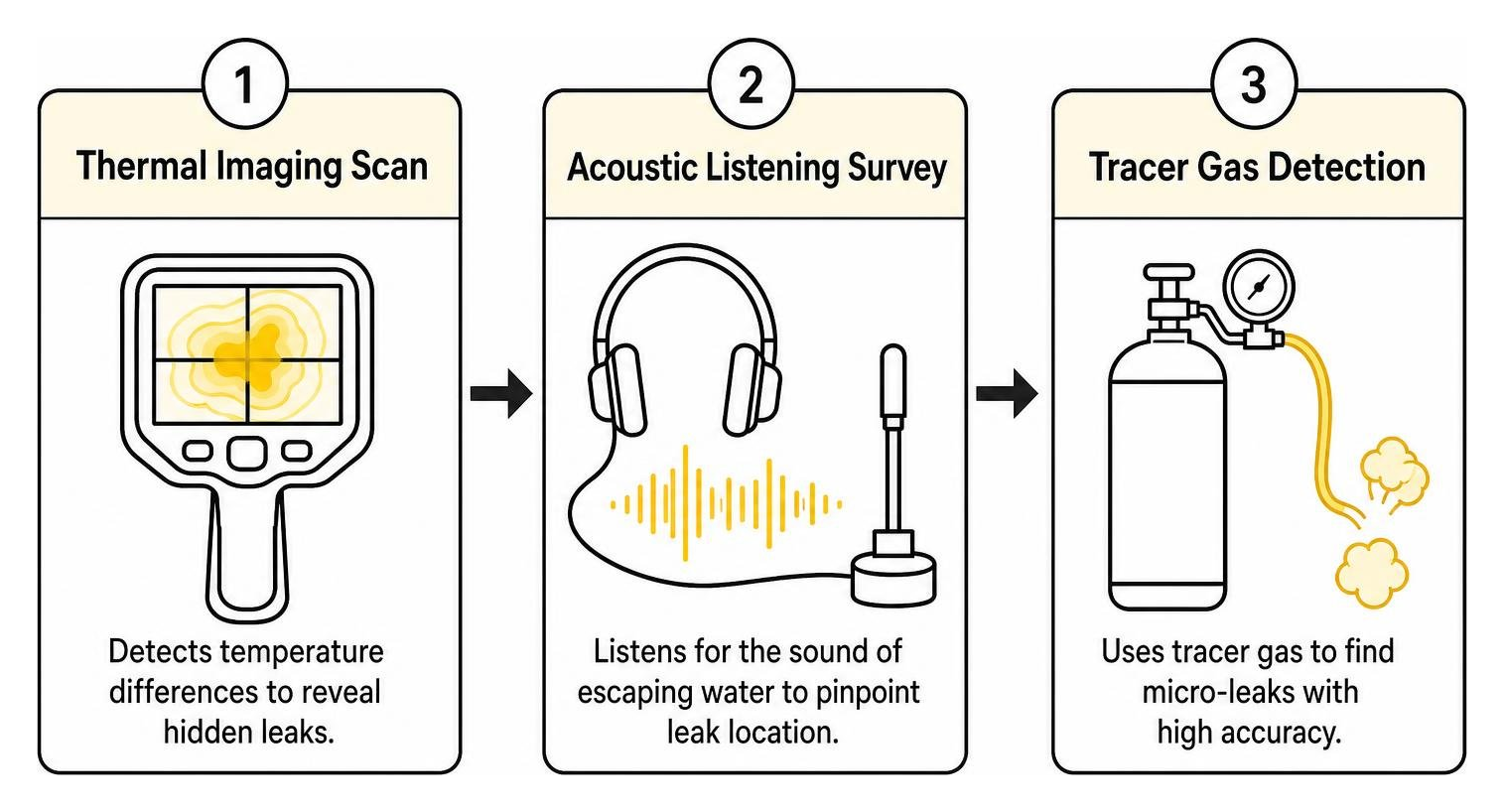
A careful inspection of accessible pipes, fixtures, and surrounding surfaces can help determine where further investigation is needed.
Confirming the Source of a Hidden Leak
After identifying a likely area, a plumber may isolate accessible plumbing sections and inspect nearby connections to confirm the source. The right approach depends on the pipe material, the location of the suspected leak, and the condition of the surrounding surfaces.
Professional Repairs for Plumbing Leaks
Once non-invasive leak detection pinpoints the breach, you need to decide on the most effective, lasting repair strategy.

Evaluating Professional Leak Repairs
Targeted mechanical repairs are the gold standard for localized damage. Technicians open a small, precise access window directly over the mapped leak, cut out the degraded pipe section, and splice in durable copper or PEX lines using commercial-grade press fittings.
A durable repair addresses the damaged pipe or fitting directly. Professional plumbing repairs can help reduce the chance of recurring leaks and further water damage.
When to Repair or Replace Aging Plumbing
If your home’s pipework is several decades old, one localized leak often signals broader systemic decay. Internal corrosion, scale accumulation, and thinning pipe walls mean fixing one joint today may simply push pressure down the line, causing another failure next month.
When corrosion or repeated leaks affect multiple areas, a plumber can assess the condition of the plumbing system and recommend an appropriate repair plan.
Emergency Actions for Plumbing Leaks
When you discover an active plumbing leak, acting fast limits structural water damage and protects your property.
Immediate Steps to Prevent Water Damage
- Shut Off the Water Source: Immediately isolate the supply line or close your home’s main water shutoff valve to stop incoming flow.
- Keep the area clear: Avoid standing water and keep children and pets away from the affected area.
- Stop using nearby fixtures: Do not run water through nearby sinks, toilets, or appliances until the source has been identified.
- Contain the water: Use buckets and towels to limit spreading water where it is safe to do so.
- Call a plumber: Request professional help promptly if the leak is active, hidden, or causing damage.
Frequently Asked Questions about Plumbing Leaks
Why might household water pressure drop without warning?
A sudden drop can point to an active break in a supply pipe, a loose connection, a failing shutoff valve, or water escaping near an appliance hookup. A plumber can identify the source before it causes more damage.
What affects the scope of a plumbing leak inspection?
The inspection approach depends on where moisture appears, how accessible the pipes are, and whether the leak is visible or concealed. Early professional attention can help limit water damage and avoid unnecessary disruption.
What should I do after finding an active plumbing leak?
When water is pooling or spreading, turn off the main water supply if it is safe, keep clear of the affected area, and contact a plumber for help locating and repairing the leak.
Conclusion
Unexplained moisture, damp surfaces, or a continuing loss of water pressure can signal a hidden plumbing problem. Addressing those warning signs promptly helps protect cabinets, flooring, framing, and subfloors from water damage.
By catching small drips early with professional plumbing leak detection methods, you can resolve plumbing problems cleanly and accurately.
At Honest Home Services, our licensed technicians bring over two decades of local expertise to every call. Whether you need immediate emergency mitigation or precise diagnostics, schedule our expert Salt Lake City leak detection services today to protect your home with lasting, guaranteed repairs.