

Why a Furnace Tune-Up Protects Your Comfort and Budget
A professional furnace tune-up is a yearly inspection, cleaning, and safety check that helps your heating system run reliably before Northern Utah’s cold weather arrives. Schedule service before heavy winter use, replace your filter regularly, and ask for a written checklist showing that the technician checked combustion safety, airflow, electrical connections, and operating controls.
Annual maintenance can catch small issues before they become an expensive no-heat call. It also helps identify serious risks, including a damaged heat exchanger or venting problem that could allow carbon monoxide into the home. Proper maintenance may reduce heating costs by 5% to 15% while helping your furnace last longer.
Honest Home Services has more than 20 years of experience serving Utah homes and businesses with heating repairs, replacements, and professional furnace tune-up service. We help customers understand their system’s condition, prioritize safety, and make practical decisions that fit their budget.
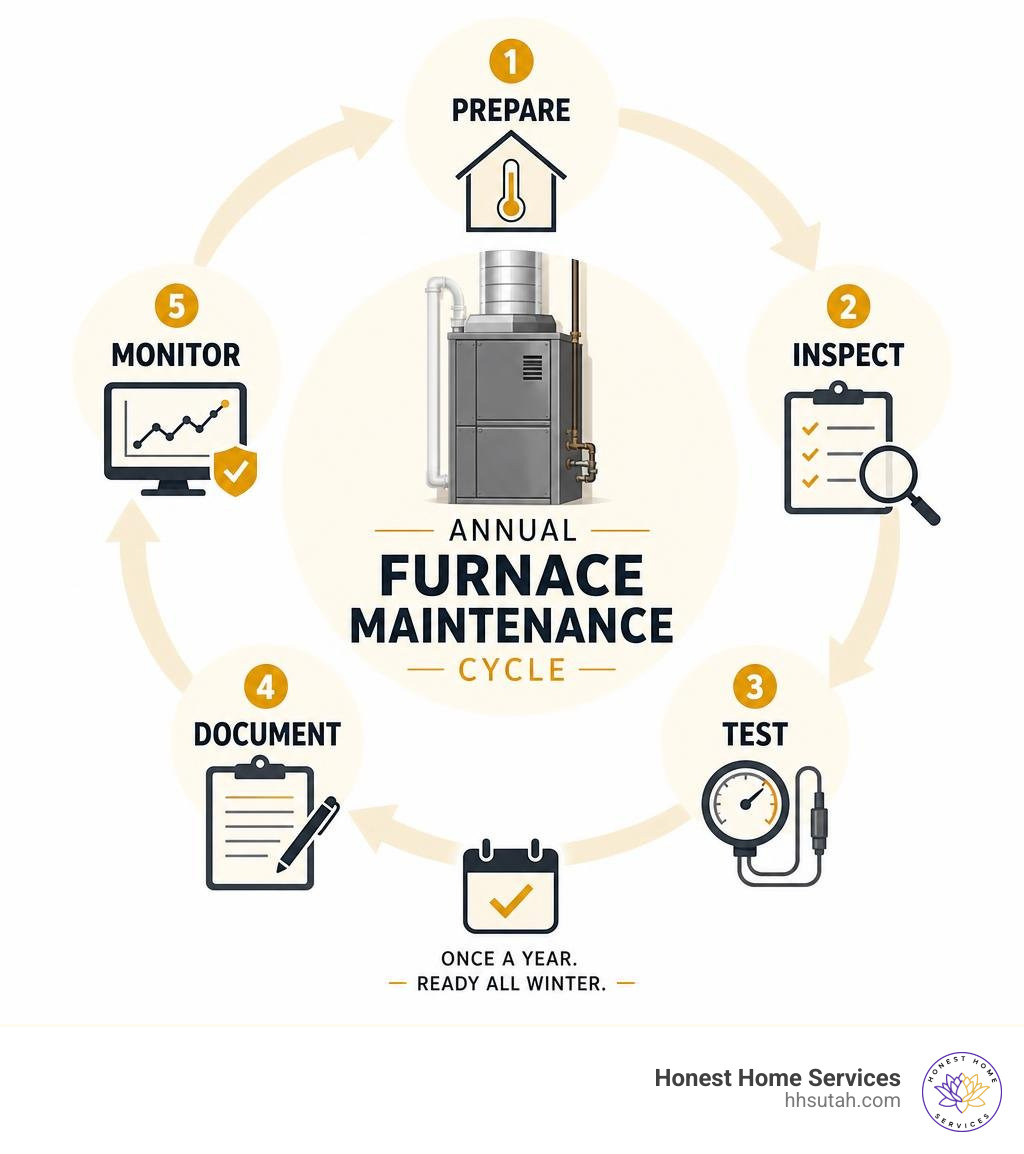
What Is Included in a Professional Furnace Tune-Up?
When winter blankets the Wasatch Front in snow, your heating system transforms from a background appliance into the most critical piece of equipment in your home. A professional inspection goes far deeper than simply replacing a dirty filter or vacuuming visible dust. It involves a systematic examination of the mechanical, electrical, and combustion assemblies to ensure each component operates within original manufacturer tolerances.
Our technicians begin by evaluating the fuel delivery and ignition stages. In a natural gas or propane furnace, we inspect the burner assembly, remove combustion scale, clean the flame sensor, and calibrate the electronic ignition system. We test gas manifold pressure to ensure clean, complete combustion without fuel waste or soot buildup.
Next, we move to the air distribution components. The blower motor and blower wheel are inspected, cleaned, and lubricated where applicable. A buildup of grime on blower blades restricts total airflow across the system, causing heat to build up inside the cabinet and stressing sensitive internal parts. Following a comprehensive routine maintenance inspection guide helps guarantee that every electrical terminal, contactor, and wire harness is tightened and inspected for signs of oxidation, wear, or heat fatigue. Understanding how to get your furnace prepped for the colder months ensures your heating equipment remains reliable throughout freezing temperatures.
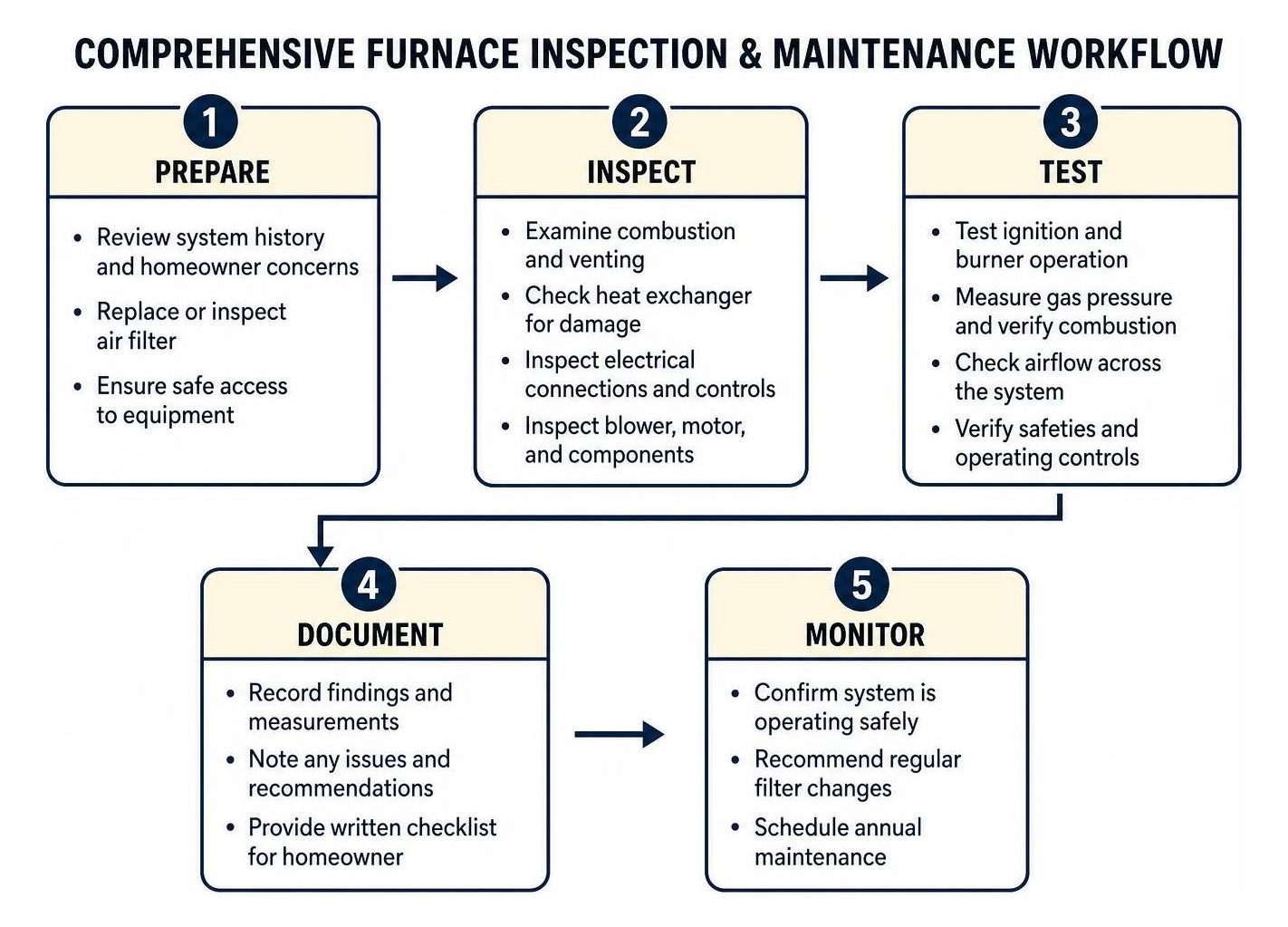
Critical Safety Inspections vs. Mechanical Performance Checks
Safety inspections protect your household from severe operational hazards, while performance checks focus on fuel efficiency, heating comfort, and mechanical longevity. Both are mandatory elements of a thorough service call.
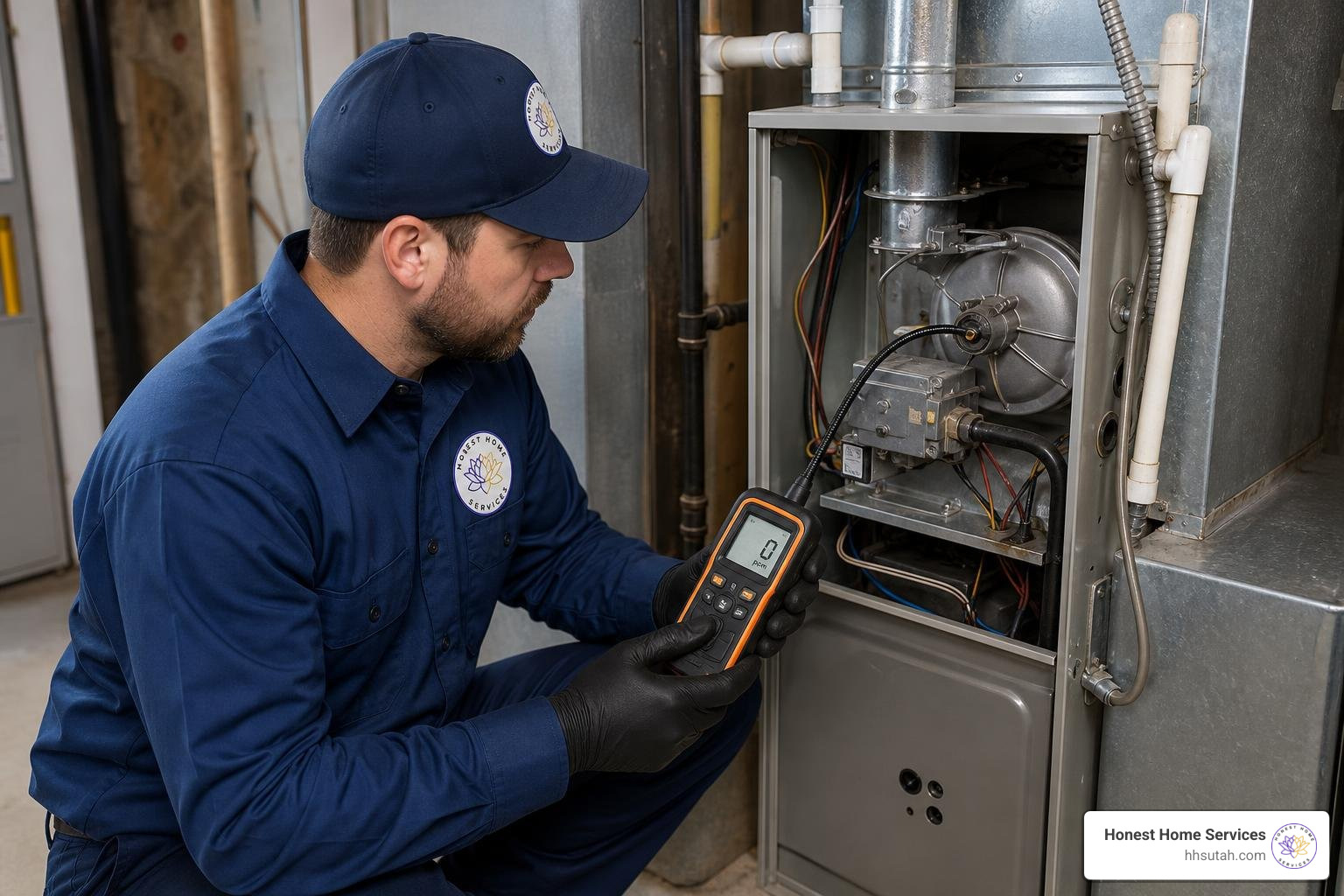
Safety checks concentrate heavily on combustion containment and venting. The primary component evaluated is the heat exchanger. This metal chamber separates the toxic exhaust gases generated by the burners from the clean breathable air circulating through your living spaces. If a heat exchanger corrodes or cracks, dangerous carbon monoxide (CO) can enter the ductwork and spread into bedrooms and living rooms. During safety testing, we perform:
- Combustion analysis and CO testing: Measuring exhaust gases and ambient air levels around the furnace cabinet to verify complete fuel combustion and zero gas leakage.
- Flue draft and venting verification: Inspecting the flue pipe, draft inducer fan, and chimney connections to guarantee exhaust fumes vent freely outdoors.
- Limit switch and safety control verification: Testing the high-limit switch, roll-out switches, and door interlocks to ensure the furnace automatically shuts down if internal temperatures exceed safe operating thresholds.
Mechanical performance checks evaluate how effectively the unit converts fuel into heat. We measure the blower motor’s amp draw against its nameplate rating to detect early motor bearing failure. We calibrate your thermostat to guarantee accurate temperature cycling, inspect ductwork connections near the plenum for air loss, clean the condensate drain lines on high-efficiency condensing furnaces, and calculate the temperature rise—the exact temperature difference between the return air entering the unit and the heated air leaving it.
How Long a Comprehensive Service Appointment Takes
A legitimate, comprehensive heating tune-up cannot be completed in fifteen or twenty minutes. Rushed service calls often mean a technician merely changed an air filter, performed a quick visual glance, and moved on without conducting necessary combustion tests or electrical measurements.
A thorough professional service appointment for a single furnace typically takes between 60 and 90 minutes. Homes with multiple heating units require approximately 45 additional minutes per supplemental system. During this window, our technicians meticulously work through an exhaustive checklist, test safety cutoffs, measure operational metrics, and run a complete heating cycle from startup to shutdown. Investing this focused time is the most effective approach for avoiding winter heating emergencies that leave families without heat during sub-zero cold snaps.
Understanding Heating Costs, Pricing, and Budget Planning
Managing a household budget requires planning for recurring seasonal expenses. Preventive maintenance is one of the most cost-effective investments you can make in your home’s infrastructure. Heating and cooling equipment accounts for roughly half of a home’s total energy consumption, meaning small operational inefficiencies quickly accumulate on monthly utility bills.
Planning your maintenance ahead of time allows you to take advantage of off-season appointment slots, multi-unit household discounts, and seasonal service promotions.
| Service Category | Typical Investment Scope | Primary Objective | Risk of Neglect |
|---|---|---|---|
| Preventive Tune-Up | Standard seasonal service | Cleaning, safety testing, calibration, and early wear detection | Progressive efficiency loss, safety hazards, warranty voidance |
| Minor Mechanical Repair | Moderate component service | Replacing worn flame sensors, igniters, switches, or capacitors | Complete furnace ignition failure and unheated living spaces |
| Major Emergency Repair | Substantial emergency callout | Replacing failed blower motors, cracked heat exchangers, or gas valves | Sudden mid-winter freeze, pipe bursts, emergency labor surcharges |
How Much Does a Furnace Tune-Up Cost in 2026?
In 2026, standard seasonal heating maintenance represents a modest, predictable household expense compared to the steep costs of emergency heating repairs. The exact service investment depends on several practical factors:
- System Fuel Type: Standard natural gas and propane systems require burner tuning, gas pressure calibration, and flue draft analysis. High-efficiency condensing units require additional condensate trap clearing and secondary heat exchanger inspection.
- Number of Units: Multi-story homes in areas like Salt Lake County, Davis County, or Draper often utilize zoned dual furnaces, where technicians can tune secondary units during the same appointment.
- Accessibility and Condition: Systems located in clean utility rooms require standard inspection time, whereas units that have suffered years of deferred maintenance require intensive scale removal and deep cleaning.
Taking advantage of proactive seasonal maintenance savings helps homeowners protect their heating investment while keeping upfront maintenance costs within a clear, manageable family budget.
Preventive Tune-Ups vs. Emergency Heating Repairs
The financial logic of preventative maintenance becomes clear when comparing routine service costs against reactive breakdown calls. Home heating and air conditioning systems are among the most breakdown-prone mechanical assets in a residence. Survey data indicates that over a quarter of homeowners face an unexpected HVAC repair every single year.
An unexpected mid-winter breakdown often involves emergency after-hours dispatch, specialized replacement parts, and substantial disruption to your daily life. Discovering how regular tune-ups save money highlights why catching an out-of-spec capacitor or a soot-covered igniter during an inspection is vastly more economical than dealing with a sudden shutdown in sub-freezing weather. For situations where a component has already failed, accessing affordable heating repair options ensures your home returns to safe operating condition without surprise fees.
Key Benefits and ROI of Annual Heating Maintenance
Scheduling routine heating maintenance delivers measurable returns across safety, energy conservation, equipment longevity, and warranty protection. Rather than viewing seasonal maintenance as an optional luxury, industry guidelines from the U.S. Department of Energy and leading furnace manufacturers demonstrate that regular maintenance is essential for responsible homeownership.
Restoring your heating equipment to peak operating condition allows the system to burn fuel cleanly and transfer warmth into your living spaces without restriction. Reviewing a complete safety and maintenance guide underscores how a well-maintained furnace regularly delivers 15 to 20 years of dependable service. In contrast, neglected systems frequently suffer catastrophic component failure after just 10 to 12 years. Implementing practical strategies for extending equipment lifespan delays expensive full-system replacements and preserves your household capital.
Preserving Manufacturer Warranty Coverage
A critical detail overlooked by many homeowners is the fine print inside their furnace warranty documentation. Almost all major HVAC equipment manufacturers state that the ongoing validity of their parts warranty—which covers high-cost components such as the heat exchanger, blower motor, and electronic control board—depends on regular annual maintenance performed by a licensed professional.
If a major component fails during the warranty term, the manufacturer may request documented proof of seasonal maintenance before approving the warranty claim. Without formal service invoices showing regular safety and operational inspections, homeowners risk paying entirely out of pocket for major repairs. When systems reach advanced age, understanding the factors for evaluating furnace replacement timing helps you determine whether repair or replacement makes the best financial sense.
Signs Your Heating System Needs an Immediate Furnace Tune-Up
While we advise scheduling heating service ahead of the winter rush, your furnace will often display clear physical symptoms if it is struggling with mechanical wear or combustion issues:
- Yellow or Flickering Burner Flames: A healthy gas furnace flame burns a crisp, steady blue. A lazy yellow or orange flame indicates incomplete combustion, dirty burner orifices, or dangerous carbon monoxide creation.
- Short Cycling: If your furnace turns on, runs for two or three minutes, and abruptly shuts down before reaching the set temperature, it may be overheating due to restricted airflow or a failing flame sensor.
- Unusual Mechanical Noises: Squealing, screeching, rattling, or metallic banging sounds point toward failing blower motor bearings, loose fan belts, or misaligned blower wheels.
- Weak Airflow or Cold Air from Supply Registers: If your vents blow lukewarm or chilly air while the unit runs continuously, refer to our guide on troubleshooting cold air from vents to diagnose airflow restrictions and limit switch trips.
- Persistent Dust and Unexplained Energy Spikes: A sudden spike in monthly fuel consumption without a corresponding drop in outdoor temperatures indicates that your equipment is working harder to deliver the same amount of heat.
Reviewing these 5 signs your furnace needs attention allows you to call for professional service before minor operational friction escalates into total system failure.
DIY Maintenance vs. Professional Heating Service
Maintaining a dependable heating system on a budget involves knowing which maintenance tasks you can safely manage yourself and which procedures require licensed technicians with specialized diagnostic instruments.
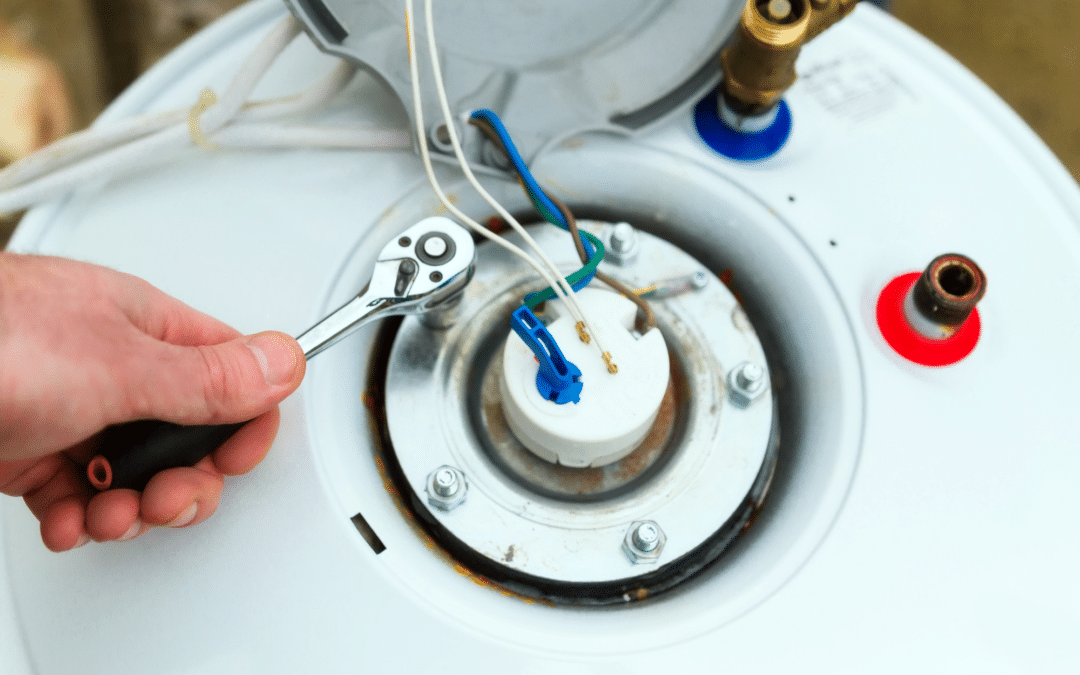
Homeowners can easily handle basic exterior care and routine filter changes. Checking your air filter every 30 to 90 days is the single most impactful maintenance task you can perform. A dirty, clogged filter chokes return airflow, forcing the blower motor to draw excessive electrical current and causing the heat exchanger to overheat. Following essential furnace maintenance tips keeps your system running smoothly between annual professional tune-ups.
Safe Homeowner Preparation Tasks on a Budget
Before your technician arrives for your annual appointment, you can complete several simple, cost-free preparation steps:
- Clear the Utility Perimeter: Keep a minimum three-foot clearance around your furnace cabinet. Remove stored boxes, paint cans, cleaning chemicals, and holiday decorations that pose fire hazards or block access.
- Inspect Supply and Return Vents: Walk through your home in Salt Lake City, West Jordan, Layton, or Lehi to ensure that furniture, rugs, and drapes are not blocking floor or wall registers.
- Replace Thermostat Batteries: Install fresh alkaline batteries in your digital thermostat to eliminate erratic signal issues and screen blanking.
- Conduct a Pre-Season Test Run: Turn your thermostat to heat mode in early autumn for fifteen minutes. Confirm that the burners ignite, the blower engages, and warm air circulates before freezing weather arrives.
- Examine Exterior Vent Terminals: Check outside intake and exhaust pipes to clear away bird nests, leaves, spider webs, or overhanging shrubs.
Completing these straightforward tasks streamlines the professional appointment, helping you maintain a clear understanding of your equipment and spotting honest heating technicians who value transparent, thorough service.
High-Risk Tasks That Require Certified Technicians
While basic housekeeping is safe for homeowners, attempting internal mechanical, gas, or electrical repairs carries severe safety risks. Tasks that must always be left to certified HVAC professionals include:
- Gas Manifold Pressure Adjustments: Incorrect gas pressure can crack the heat exchanger, produce excessive carbon monoxide, or cause explosive ignition.
- Combustion Gas and Flue Analysis: Measuring oxygen, carbon dioxide, and CO ratios requires calibrated electronic combustion analyzers.
- High-Voltage Electrical Diagnostics: Testing capacitors, transformer voltage, and wiring harnesses involves live electrical currents that risk severe shock.
- Control Board Diagnostics: Inspecting microprocessor circuits and relays requires specialized diagnostic tools. Our guide on furnace control board diagnosis explains why electronic troubleshooting requires professional training.
- Internal Heat Exchanger Scoping: Inspecting internal metal curves for microscopic stress fractures requires specialized cameras and infrared diagnostic equipment.
Frequently Asked Questions About Heating Maintenance
When is the best time of year to schedule heating maintenance?
The ideal window for scheduling a heating tune-up is late summer to early fall (between late August and October). Booking during this period offers several distinct advantages:
- Flexible Scheduling: HVAC technicians have open appointment availability before the emergency winter rush begins.
- Pre-Season Readiness: Any worn components or deferred repairs discovered during the inspection can be resolved before freezing winter weather arrives.
- Maximum Efficiency from Day One: Your furnace will operate at peak efficiency from the very first cold night of the season, preventing wasted fuel on early autumn heating cycles.
What should you do if the technician finds a major mechanical defect?
If a technician identifies a serious issue—such as a cracked heat exchanger, failing blower motor, or leaking gas valve—always take the following steps:
- Request Written Documentation: Ask for a detailed, written diagnostic report outlining the exact part failure, operational readings (such as carbon monoxide levels or amp draw overages), and clear photographic evidence of internal damage.
- Weigh Repair vs. Replacement Costs: If your furnace is over 15 years old and the repair estimate represents a significant portion of a new system, replacement is often the more cost-effective long-term option.
- Seek a Reputable Second Opinion: For costly repairs or red-tagged safety shutoffs, consult a licensed contractor familiar with regional furnace repair considerations across Northern Utah communities to confirm the diagnosis.
How can you verify that a technician performed a thorough inspection?
To ensure you received a thorough service call rather than a rushed visual check, look for these quality indicators:
- Time on Site: A comprehensive inspection on a single furnace takes between 60 and 90 minutes.
- Specific Numerical Readings: The completed service invoice should document specific metrics, including temperature rise across the heat exchanger, blower motor operating amps, manifold gas pressure, and flue draft measurements.
- Physical Cleanliness: The burner compartment, flame sensor, and blower housing should be visibly cleaned of dust, lint, and combustion scale.
- Safety Testing Confirmation: The technician should explicitly verify that all safety switches were tested and that ambient and exhaust carbon monoxide levels are within safe operating limits.
Conclusion
Proactive furnace care is the foundation of a safe, energy-efficient, and comfortable home. By investing in regular seasonal maintenance, you protect your family from carbon monoxide hazards, lower your monthly winter heating bills by 5% to 15%, preserve your manufacturer’s warranty, and significantly extend the operating life of your equipment.
Honest Home Services provides honest, reliable, and affordable heating, AC, and plumbing solutions to communities throughout Salt Lake County, Davis County, and Northern Utah—including Salt Lake City, Layton, Bountiful, West Jordan, South Jordan, Draper, Park City, and Lehi. Whether you need routine pre-season maintenance, emergency diagnostic repairs, or a complete heating system upgrade, our licensed technicians deliver guaranteed customer satisfaction with straightforward, transparent pricing.
Take control of your home’s comfort and winter budget today. Schedule a professional furnace tune-up with Honest Home Services and enjoy complete peace of mind all winter long.