

When Your Sewer Line Fails: What Northern Utah Homeowners Need to Know
Underground sewer line repair is something most homeowners never think about — until raw sewage backs up into a basement or a mysterious soggy patch appears in the yard.
Here’s a quick overview of how it works:
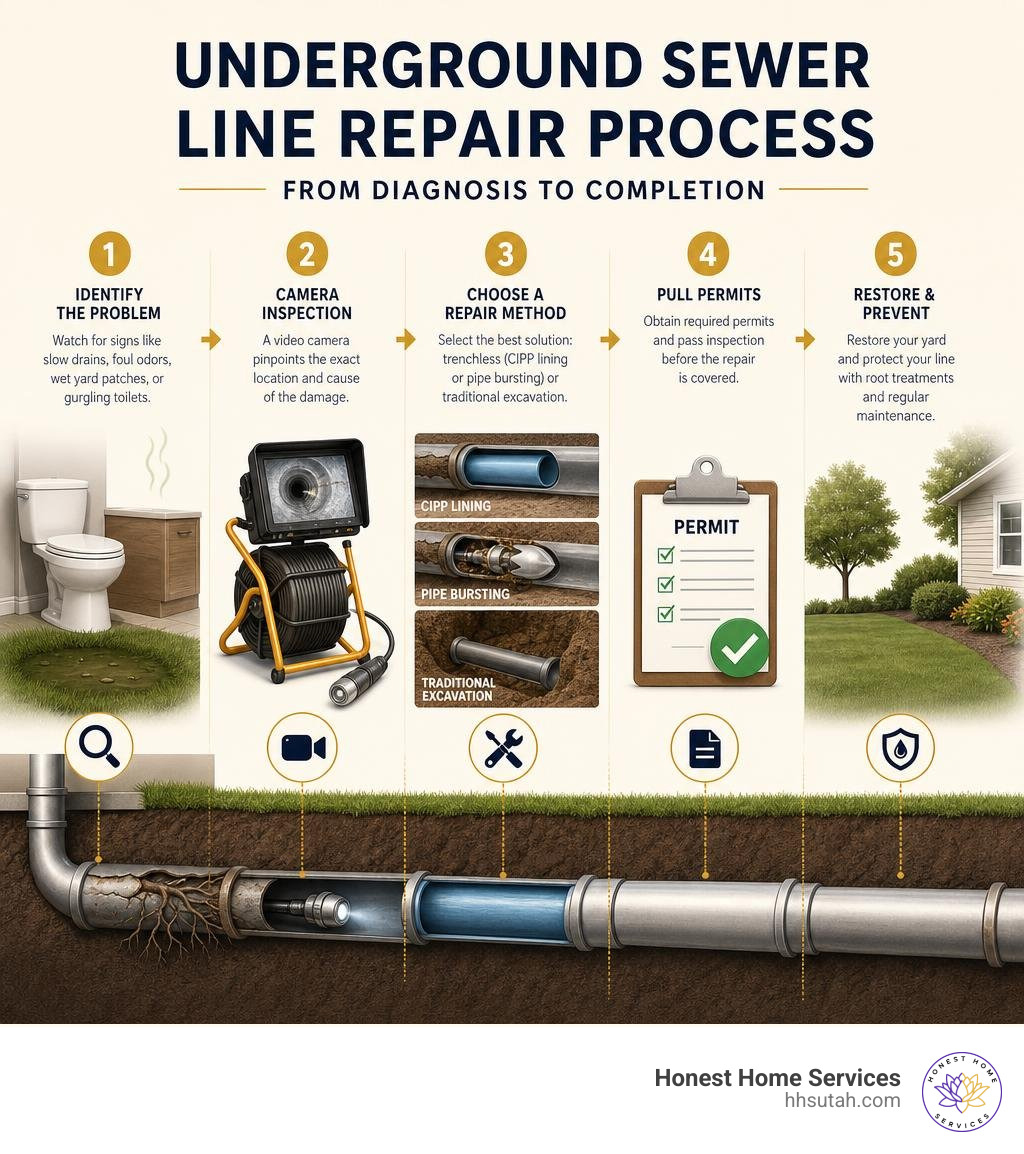
How to handle underground sewer line repair:
- Identify the problem — slow drains, foul odors, wet yard patches, or gurgling toilets are the most common warning signs
- Get a camera inspection — a professional runs a video camera through your line to pinpoint the damage
- Choose a repair method — trenchless methods (CIPP lining or pipe bursting) work for most damaged pipes; traditional excavation is needed for fully collapsed lines
- Pull permits — most sewer repairs require a local plumbing permit and inspection before the pipe is covered
- Restore and prevent — after repair, protect your line with root treatments and regular maintenance
The problem is stressful. But it’s almost always fixable — and often without tearing up your yard.
Sewer issues tend to sneak up on you. One week you’re plunging a slow toilet, the next you’re getting quotes to dig up your driveway. Knowing what you’re dealing with early makes a huge difference — both for your sanity and your wallet.
At Honest Home Services, we’ve spent over 20 years helping Utah homeowners and businesses diagnose and fix underground sewer line repair problems of every size, from minor root intrusion to full lateral replacements. Whether your line runs under a concrete driveway or a landscaped backyard, we’ll walk you through your options clearly and honestly.
Underground sewer line repair word guide:
Identifying the Problem: Causes and Warning Signs
Sewer lines are “out of sight, out of mind” until they suddenly demand your full attention. Understanding what causes subsurface pipe damage and learning to spot the warning signs early can save you from a full-blown plumbing emergency.
Common Causes of Subsurface Pipe Damage
Underground pipes endure constant stress from the environment. In Northern Utah, our unique soil conditions and distinct seasonal shifts play a major role in pipe deterioration.
Here are the primary culprits behind sewer line failures:
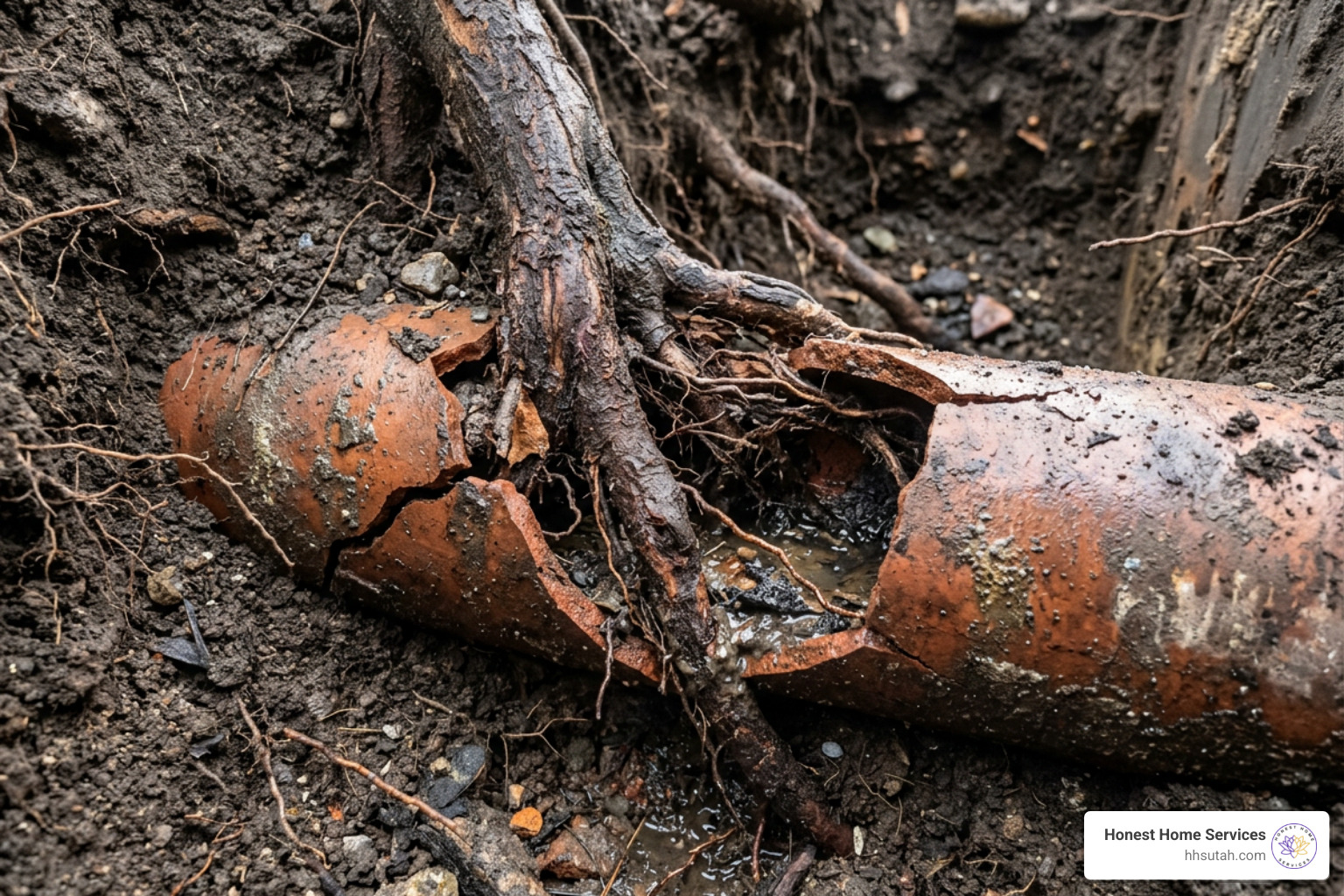
- Tree Root Intrusion: Tree roots are incredibly smart. They seek out moisture and nutrients, which are abundant inside your sewer line. Even the microscopic hairline cracks in older pipe joints are enough for a tiny root to wiggle its way inside. Once inside, the root grows rapidly, creating a dense web that catches grease and debris, eventually cracking the pipe open.
- Outdated Pipe Materials: If your home was built before the mid-1970s, your sewer lateral might be constructed of clay, cast iron, or even Orangeburg (a bituminized fiber pipe made of wood pulp and coal tar). Clay pipes are brittle and highly susceptible to root intrusion. Cast iron eventually rusts from the inside out, causing a rough interior that catches waste. Orangeburg pipes are notorious for flattening and collapsing over time.
- Shifting Soil and Freeze-Thaw Cycles: Northern Utah’s dramatic temperature swings from freezing winters to hot summers cause the ground to expand and contract. This shifting soil puts immense physical pressure on buried lines, leading to bellied (sagging) pipes or completely broken joints.
- Soil Erosion and Sinkholes: Leaking joints slowly wash away the surrounding soil supporting the pipe. Without proper structural support, the pipe sags, cracks, or collapses entirely.
When a crisis strikes, acting quickly is key. Check out our Emergency guide for main line breaks to learn exactly what steps to take during an active sewer emergency.
Warning Signs You Need Underground Sewer Line Repair
Your home will usually try to warn you before a complete sewer collapse occurs. Keep an eye (and nose) out for these telltale signs:
- Frequent or Multiple Clogged Drains: If a single sink is backed up, it’s a localized clog. But if your kitchen sink, shower, and toilet are all draining slowly at the same time, the bottleneck is deep in your main sewer lateral.
- Gurgling Toilets: If you flush the toilet and hear a bubbling or gurgling sound coming from your bathtub or shower drain, air is trapped in the system due to a main line blockage.
- Foul Sewage Odors: A healthy sewer system keeps sewer gases contained. If you smell rotten eggs or raw sewage in your basement, yard, or around your floor drains, you likely have a cracked sewer line.
- Unusually Lush, Green Grass Patches: If one section of your lawn is suddenly greener, taller, and much healthier than the rest of your yard, it’s not a miracle of nature. It’s highly likely that your sewer line is leaking nutrient-rich wastewater beneath the surface.
- Soggy Spots or Sinkholes: Persistent wet patches in your yard during dry weather indicate a significant underground leak. Over time, this water can erode the soil and cause the ground above to sink.
- Foundation Cracks: In extreme cases, a long-term underground sewer leak can wash away the soil underneath your home’s foundation, leading to structural cracking and shifting.
- Recurring Rat Holes: Rats love sewer lines. If you notice small, clean-cut holes in your yard that keep reappearing after you fill them, it could mean pests are escaping through a broken sewer pipe underground.
For localized tips on handling these issues in our area, consult our guide on Sewer line repair tips for Salt Lake City.
Choosing the Right Method for Underground Sewer Line Repair
Deciding how to tackle a broken sewer line used to be simple: you hired a crew, they brought in a backhoe, and they dug a massive trench through your yard, driveway, and landscaping. Thankfully, modern plumbing technology offers highly effective “no-dig” alternatives.
To help you decide which route is best for your property, read our breakdown on Trenchless vs traditional drain replacement options.
| Feature | Traditional Excavation | Trenchless Sewer Repair |
|---|---|---|
| Excavation Level | Large, deep trenches across the property | 1 or 2 small access pits |
| Landscaping Impact | High (destroys lawns, driveways, patios) | Minimal (preserves hardscaping and gardens) |
| Project Timeline | 3 to 7+ days (plus weeks of yard restoration) | 1 to 2 days |
| Pipe Longevity | 75 to 100 years (new PVC) | 50 to 100 years (CIPP or HDPE) |
| Overall Cost | Lower upfront pipe cost; high restoration costs | Higher upfront pipe cost; near-zero restoration costs |
Traditional Excavation: When Is It Necessary?
Traditional sewer excavation involves physically digging up the earth to expose the damaged pipe, removing the broken sections, and laying down new PVC pipe. While invasive, there are specific scenarios where traditional excavation remains the only viable option:
- Fully Collapsed Pipes: If a pipe has completely pancaked or collapsed, there is no open pathway left to run a trenchless liner or pull a bursting head through.
- Severe Pipe Misalignment or Back-Pitch: If the ground has shifted so severely that the pipe is sloping backward (preventing gravity from carrying waste away), the line must be physically dug up and graded correctly.
- Complex Utility Rerouting: When a sewer line is tangled with other buried utility lines (like gas or water), careful hand-digging is required to prevent catastrophic damage to other services.
When excavation is required, hiring licensed professionals who follow strict safety guidelines is non-negotiable. Our team at Honest Home Services maintains the highest professional standards for excavation and utility repairs across Davis and Salt Lake County.
Trenchless Sewer Repair: The Modern Gold Standard
For the vast majority of homeowners, trenchless sewer repair is the preferred choice. Because it avoids heavy machinery and massive trenches, it preserves mature trees, expensive driveways, and carefully manicured lawns.
Trenchless methods are incredibly efficient, typically wrapping up in just one or two days. Instead of paying thousands of dollars to rebuild your yard after the plumbers leave, trenchless repairs keep your property intact while providing a permanent, durable fix.
Deep Dive into Trenchless Repair Techniques
Trenchless technology isn’t just a single method; it’s a suite of advanced engineering solutions tailored to different pipe problems.

Before choosing a route, check out our guide on Sewer pipe repair sleeves and underground solutions to understand how these modern fixes function beneath the surface.
Cured-in-Place Pipe (CIPP) Lining
Cured-in-Place Pipe (CIPP) lining, often called pipe relining, is essentially creating a brand-new, seamless pipe inside your old, damaged one.
Here is how the CIPP process works:
- Camera Inspection & Cleaning: We run a high-definition camera down the line to locate the damage, then use a hydro-jetter to blast away tree roots, scale, and grease.
- Liner Insertion: A flexible felt tube saturated with a high-strength epoxy resin is pulled or blown into the existing pipe.
- Curing: The liner is inflated so it presses tightly against the inner walls of the old pipe. We then cure the resin using hot air, steam, or advanced UV light technology.
- Final Verification: Once cured, the tube hardens into a smooth, jointless, and structurally sound pipe. A final camera inspection ensures a perfect seal.
Because CIPP lining eliminates joints, it completely locks out future tree root intrusion. A lined pipe can last up to 50 years, providing a durable, long-term solution to cracks and leaks.
Pipe Bursting and Slip Lining
When a pipe is too heavily corroded or fractured to support a liner, but hasn’t fully collapsed, pipe bursting is the ultimate solution.
During pipe bursting, we dig two small access points at either end of the sewer line. We then pull a heavy steel, cone-shaped bursting head through the old pipe using a hydraulic winch. As the bursting head is pulled through, it physically shatters the old, fragile pipe (like clay or cast iron) and pushes the fragments into the surrounding soil. Simultaneously, it pulls a brand-new, highly durable High-Density Polyethylene (HDPE) pipe directly into the newly created space.
Newly installed plastic sewer pipes via pipe bursting can survive up to 100 years. Best of all, because HDPE is flexible, it easily resists ground movement and freeze-thaw cycles.
For residents looking for localized trenchless experts, Honest Home Services provides reliable, high-quality trenchless sewer and drain services throughout Salt Lake County, Davis County, and surrounding Northern Utah communities.
Navigating Costs, Timelines, and Responsibilities
Sewer line repairs are a significant investment. Understanding the financial breakdown, project timelines, and legal boundaries will help you plan your budget without any nasty surprises.
To start planning, read our comprehensive Breakdown of sewer replacement costs.
The Cost of Underground Sewer Line Repair
The total cost of your sewer repair depends heavily on the method you choose, the depth of the pipe, and the location of the break.
- Trenchless Sewer Repair Costs: Trenchless repairs typically range from $80 to $250 per foot. While the plumbing work itself carries a higher upfront cost due to the specialized equipment and resins used, your post-project restoration costs are virtually zero.
- Traditional Excavation Costs: Traditional repairs typically cost between $50 and $150 per foot for the pipe work alone. However, this does not include the cost of rebuilding your property.
- The Hidden Cost of Landscaping Restoration: Excavation often requires tearing up lawns, driveways, sidewalks, or porches. Restoring a beautifully landscaped yard, repaving a driveway, or replacing concrete can easily add an extra $2,000 to $10,000+ to your final bill.
When you factor in these hidden restoration expenses, trenchless solutions are almost always the most cost-effective choice. If you’re in the Salt Lake area or further north in Layton, you can learn more about local pricing and repair procedures by visiting our Sewer line repair in Salt Lake City page or contacting our local team for a customized estimate.
Determining Repair Responsibility and Permits
A common question homeowners ask is: Where does my responsibility end and the city’s begin?
In most Northern Utah municipalities (including Salt Lake City, Layton, and Bountiful), the homeowner is responsible for the lateral sewer line from the house all the way to where it connects to the municipal main sewer line under the street. This means even the section of the pipe running under the public sidewalk and parkway is typically your financial responsibility.
Because sewer lines carry hazardous waste, any repair or replacement requires strict adherence to local building codes:
- Plumbing Permits: You must pull a local plumbing permit before starting any major repair.
- Inspections: A city inspector must examine and sign off on the work (especially if using traditional excavation) before the trench can be backfilled.
- Right-of-Way Permits: If the repair extends into the street or sidewalk, specialized right-of-way permits and traffic control plans are required.
- Utility Locates: Before any digging begins, underground utilities should be marked through Blue Stakes of Utah 811 to reduce the risk of damaging gas, water, power, or communication lines.
At Honest Home Services, we handle the entire permitting and inspection process for you, ensuring your project is fully compliant with local Utah regulations.
Frequently Asked Questions about Sewer Line Repair
Dealing with sewer issues can bring up plenty of questions. Here are the answers to the most common concerns we hear from homeowners.
Can I perform DIY underground sewer line repair?
We strongly advise against attempting a DIY underground sewer line repair. While home improvement shows make trench digging look simple, sewer work is highly complex and carries significant risks:
- Safety Hazards: Trench cave-ins are incredibly dangerous and can be fatal without professional shoring equipment. Additionally, exposure to raw sewage exposes you to harmful pathogens and hazardous sewer gases.
- Permitting & Legal Issues: Most cities in Utah do not allow unlicensed individuals to perform work on sewer laterals, especially within the public right-of-way.
- Expensive Mistakes: Misaligning a pipe by even a fraction of an inch can cause chronic backups, and damaging a nearby gas or water line can result in catastrophic utility bills.
Instead of risking your safety and property value, check out our guide on Finding a trustworthy sewer repair service to find a reliable, licensed team.
How long do trenchless sewer repairs last?
Trenchless sewer repairs are designed to be permanent, long-term structural solutions, not temporary patches:
- CIPP Lining Lifespan: A properly installed epoxy liner has a lifespan of 50 years or more.
- Pipe Bursting HDPE Lifespan: High-Density Polyethylene (HDPE) pipes are incredibly tough and can easily last up to 100 years.
For an in-depth look at how these modern materials protect your home’s value, check out our Mainline sewer upgrades guide as well as The Ultimate Guide To Pipe Repair Salt Lake City.
How can I prevent future sewer line damage?
Once your sewer line is restored, you’ll want to keep it running smoothly for decades. Here are our top prevention tips:
- Schedule Annual Inspections: A quick camera inspection every few years catches minor root intrusions or settling before they turn into major blockages.
- Use RootX Treatments: If you have mature trees near your sewer line, applying an annual RootX treatment kills off invading tree roots without damaging your pipes or killing the tree.
- Watch What Goes Down the Drain: Never flush “flushable” wipes, paper towels, feminine hygiene products, or dental floss. In the kitchen, keep cooking grease, oils, and fibrous food scraps out of your garbage disposal.
For professional preventative care, explore our Mainline plumbing services to keep your home’s drainage system in pristine condition.
Conclusion
Dealing with a damaged underground sewer line is undeniably stressful, but with modern trenchless technology, it doesn’t have to ruin your yard, your schedule, or your sanity. By acting fast at the first sign of slow drains or unusual odors, you can often opt for a clean, non-invasive “no-dig” solution that protects your landscaping and resolves the issue in just a day or two.
At Honest Home Services, we are proud to serve communities across Northern Utah—from Salt Lake City and West Valley to Layton, Bountiful, and Farmington. We deliver fair pricing, expert local technicians, and a 100% customer satisfaction guarantee.
Don’t let sewer problems disrupt your life. Contact us today to schedule a professional high-definition camera inspection, and let us restore your peace of mind. For reliable sewer mainline care, visit our Salt Lake City Sewer Mainline Repair service page.