

Why Hiring the Right Furnace Tune-Up Technician Matters This Winter
A furnace tune-up technician is a licensed HVAC professional who inspects, cleans, and optimizes your heating system to keep it running safely and efficiently. Here’s what you need to know at a glance:
- What they do: Inspect components, test safety systems, clean burners, and calibrate performance
- When to book: Annually, ideally before winter — but furnace tune-ups can be done any time of year
- Who to hire: Look for licensed, insured technicians with verifiable reviews and transparent pricing
- Why it matters: Prevents breakdowns, lowers energy bills, protects your warranty, and keeps your family safe
Your furnace works hardest when temperatures drop — and that’s the worst time to discover it has a problem. A small issue ignored in October can turn into a no-heat emergency in January. In Northern Utah, where winters hit hard and fast, that’s not a risk worth taking.
Dirty filters restrict airflow and force your system to work overtime. Worn parts quietly degrade efficiency. And a cracked heat exchanger can leak carbon monoxide into your home without a single obvious warning sign. Regular professional maintenance catches all of this before it becomes a crisis.
At Honest Home Services, we’ve spent over 20 years helping Northern Utah homeowners and businesses stay warm with reliable, affordable HVAC care — including professional furnace tune-up technician services backed by a 5-star reputation. We’re licensed, insured, and built on doing the job right the first time.
What is a Furnace Tune-Up and Why Do You Need One?
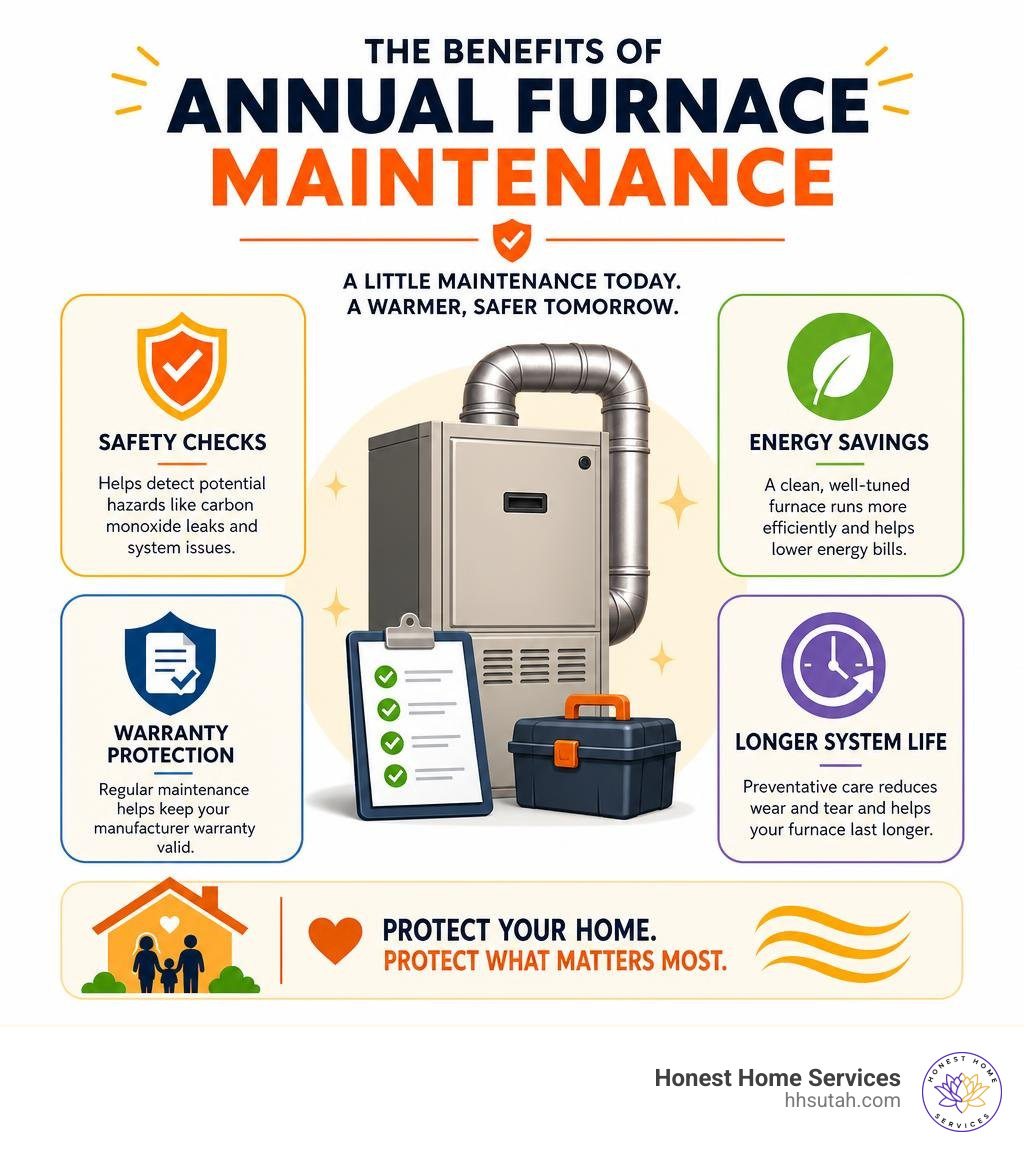
A furnace tune-up is a comprehensive preventative maintenance service designed to restore your heating system to its optimal operating condition. Think of it as a detailed health check and oil change for your home’s heating system. Just as you wouldn’t drive your car for years without changing the oil or checking the brakes, you shouldn’t run your furnace year after year without professional attention.
One of the most overlooked reasons to schedule regular maintenance is manufacturer warranty compliance. Most major heating brand warranties explicitly state that coverage is only valid if the system receives annual professional maintenance. If a major component like your compressor or heat exchanger fails, the manufacturer may require documented proof of yearly tune-ups before they honor a parts warranty.
Beyond keeping your warranty intact, learning how regular furnace tune ups save you money is a great motivator. Over time, soot, dust, and grime build up on internal components. This buildup acts as an insulating blanket, forcing your furnace to run longer and consume more fuel to reach your desired thermostat setting. By having a technician thoroughly clean the system, you maximize fuel efficiency and significantly lower your monthly utility bills.
Furthermore, a professional tune-up directly improves indoor air quality. Dust, dander, and pollen naturally settle inside the furnace cabinet. When the blower motor kicks on, these allergens are circulated throughout your living spaces. A deep cleaning of the internal components, paired with strategic filtration advice, dramatically reduces airborne allergens.
To keep your family comfortable and safe, it is crucial to understand how to get your furnace prepped for the colder months. Implementing basic 5 furnace maintenance tips to keep your home warm this winter—such as replacing dirty air filters and keeping vents unblocked—complements professional care perfectly.
What Does a Professional Technician Do During a Visit?
When a professional furnace tune-up technician arrives at your home, they don’t just glance at the unit and dust off the cover. They perform a methodical, highly technical inspection of the entire system.
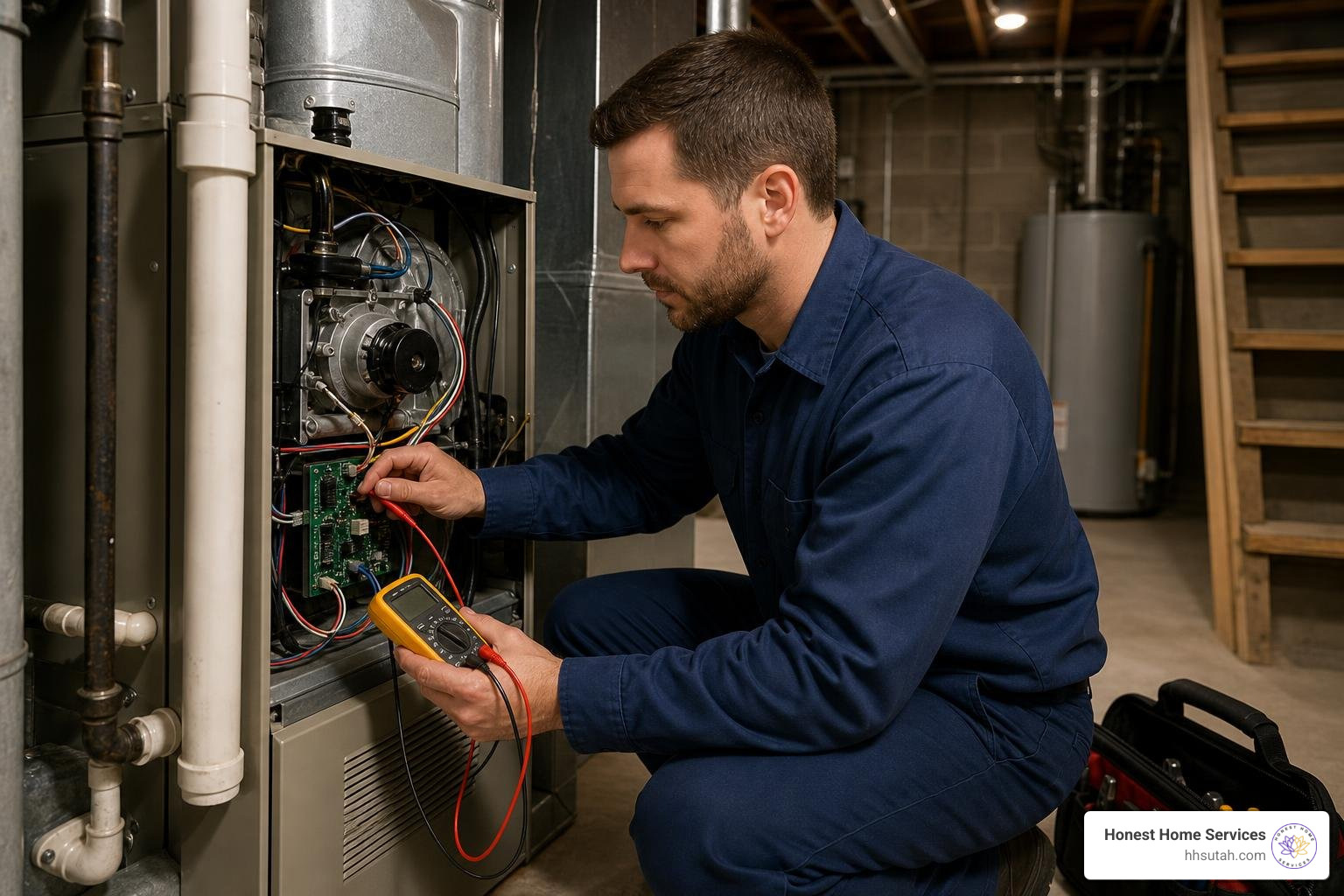
A comprehensive service includes a detailed multi-point safety and performance evaluation. The technician will systematically test every critical mechanical and electrical component, verifying that they operate within the manufacturer’s specified ranges.
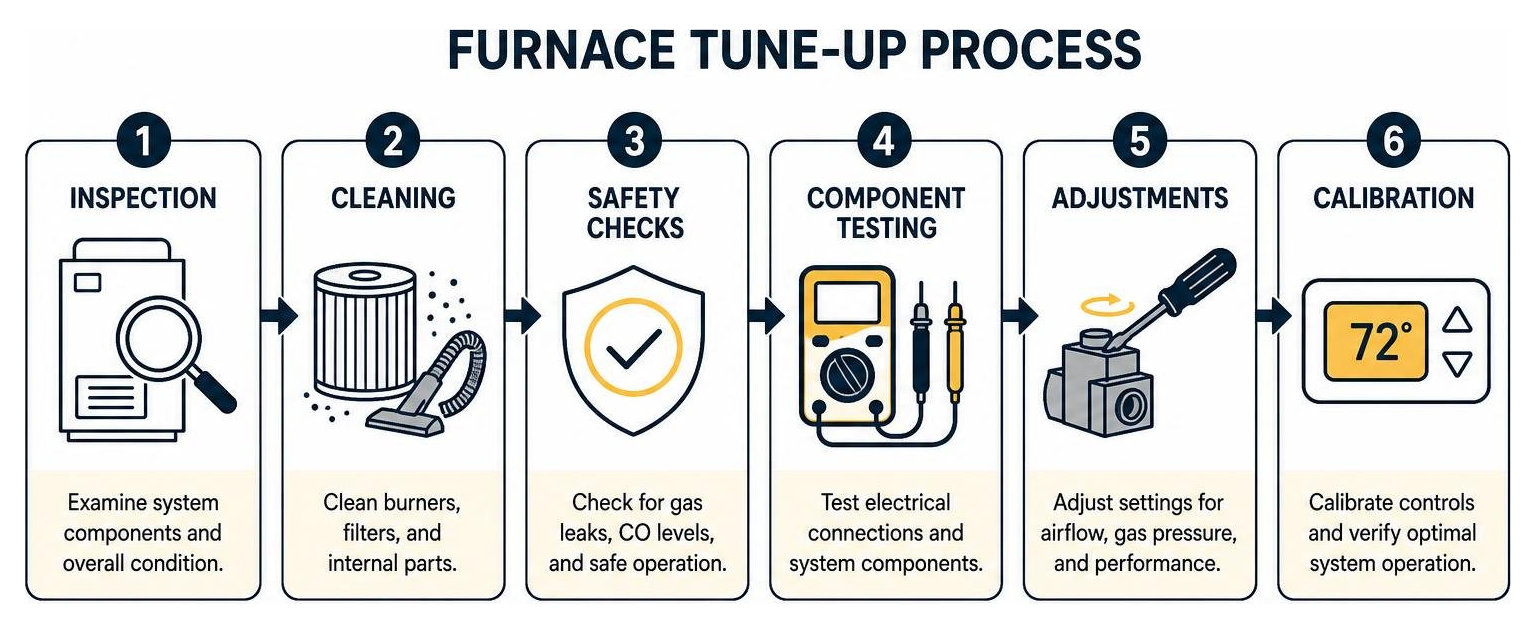
During this process, the technician checks the exact sequence of operation. This ensures that the thermostat communicates properly with the system, the draft inducer motor vents exhaust gases correctly, the igniter lights the fuel safely, and the blower motor distributes warm air evenly.
A key focus of this visit is optimizing the system’s electrical brain. Modern furnaces rely heavily on electronic circuitry, making it vital to understand everything you need to know about your furnace control board. A technician will inspect this board for signs of overheating, loose wiring, or failing relays. By catching these issues early during a scheduled furnace tune up, you avoid sudden, inconvenient system failures in the middle of a freezing Utah night.
Safety Checks and Carbon Monoxide Testing
The primary reason to prioritize a professional tune-up is safety. Furnaces generate heat by burning fuel—whether natural gas, propane, or fuel oil. This combustion process naturally produces toxic byproducts, including carbon monoxide (CO).
To keep these gases separate from the air you breathe, furnaces utilize a metal component called a heat exchanger. Over time, the constant heating and cooling causes the metal of the heat exchanger to expand and contract. This thermal stress can eventually lead to microscopic cracks. A certified technician uses specialized diagnostic tools, including combustion analyzers and specialized mirrors, to inspect the heat exchanger for any compromises.
In addition to heat exchanger inspections, the technician conducts rigorous gas leak detection around all connection points, tests the carbon monoxide levels in your home’s exhaust stream, and verifies that all safety limit switches are functioning. These safety switches are designed to shut the furnace down automatically if it overheats or if exhaust gases back up. Testing these limits is essential to avoid a winter emergency common furnace problems that could threaten your family’s health.
Cleaning, Lubrication, and System Calibration
Once safety checks are completed, the technician focuses on physical restoration and calibration.
- Blower Motor Lubrication: Technicians lubricate all moving parts, including the blower motor bearings (if applicable), to eliminate friction, reduce electrical draw, and prevent premature motor burnout.
- Burner Cleaning: Burners must be cleaned of rust and soot to ensure a clean, efficient blue flame. A yellow or flickering flame indicates poor combustion, which wastes fuel and produces higher levels of carbon monoxide.
- Flame Sensor Calibration: The flame sensor is a tiny metal rod that detects whether a flame is present when the gas valve is open. If it is dirty, it won’t detect the flame, causing the furnace to shut down repeatedly. Cleaning and calibrating this sensor prevents annoying cycling issues.
- Thermostat Calibration: The technician verifies that your thermostat is reading the room temperature accurately, ensuring your system doesn’t run longer than necessary.
Taking these preventative steps helps you learn how to handle ac furnace maintenance without losing your mind by outsourcing the highly technical, dirty work to an expert.
How to Choose the Right Furnace Tune Up Technician for Your Home
Not all heating contractors are created equal. When you invite a technician into your home, you are trusting them with your family’s safety and comfort. It is important to distinguish between a certified, professional technician and an uncertified handyman who might cut corners.
| Feature / Qualification | Certified HVAC Technician | Uncertified Handyman / Scammer |
|---|---|---|
| Licensing & Insurance | Fully licensed by the state; carries comprehensive liability insurance | Often lacks proper licensing; limited or no liability coverage |
| Specialized Training | NATE and EPA certifications; continuous factory training | General knowledge; relies on DIY videos or basic experience |
| Diagnostic Tools | Uses calibrated combustion analyzers, gas sniffers, and electrical meters | Relies on basic visual inspections and guesswork |
| Pricing Transparency | Upfront, written estimates with no hidden fees | Vague verbal quotes; high-pressure sales pitches for extra parts |
| Warranty Protection | Provides official documentation to keep manufacturer warranties valid | Work is unrecorded, which can void your manufacturer warranty |
Hiring a professional ensures your system is evaluated thoroughly. To protect your pocketbook and your home, read up on the truth about heating spotting honest furnace repair technicians before making your choice.
Essential Qualifications of a Certified Furnace Tune Up Technician
When vetting a local HVAC service provider, look for these industry-standard credentials:
- NATE Certification: North American Technician Excellence (NATE) is the gold standard for HVAC certification. It requires passing rigorous, specialty-specific exams that prove a deep understanding of heating and cooling systems.
- EPA Certification: Technicians who handle refrigerants or work around combustion systems should hold appropriate EPA certifications.
- Industry Experience: Look for companies with established roots in your community. Experienced technicians, like those in the broader professional networks of Paul Kohn, Lester Schoonover, and ken paciga, have spent years mastering diverse furnace brands and complex system configurations.
- Ongoing Training: Heating technology changes rapidly. Certified technicians undergo regular training to stay updated on the latest smart thermostats, variable-speed blowers, and high-efficiency heat exchangers.
Red Flags to Avoid When Hiring a Heating Contractor
Protect yourself from unscrupulous contractors by watching out for these warning signs:
- High-Pressure Sales Tactics: If a technician spends more time trying to sell you a brand-new system than inspecting your current one, be cautious. Honest technicians focus on maintenance first and only recommend replacement when it is truly necessary.
- Lack of Written Estimates: Never allow work to begin without a clear, written description of the services included and the total cost.
- Uncertified Subcontractors: Some larger companies win your business but send unvetted, third-party subcontractors to your home. Ensure the company you hire uses their own background-checked, certified employees.
- Out-of-Area Providers: Choose a company with a physical local address. If a company doesn’t have a local presence, getting them to honor a service warranty can be incredibly difficult.
Preparing for Your Maintenance Visit and Recognizing Warning Signs
A little preparation goes a long way. By taking a few simple steps before your furnace tune-up technician arrives, you can ensure a smooth, efficient appointment.
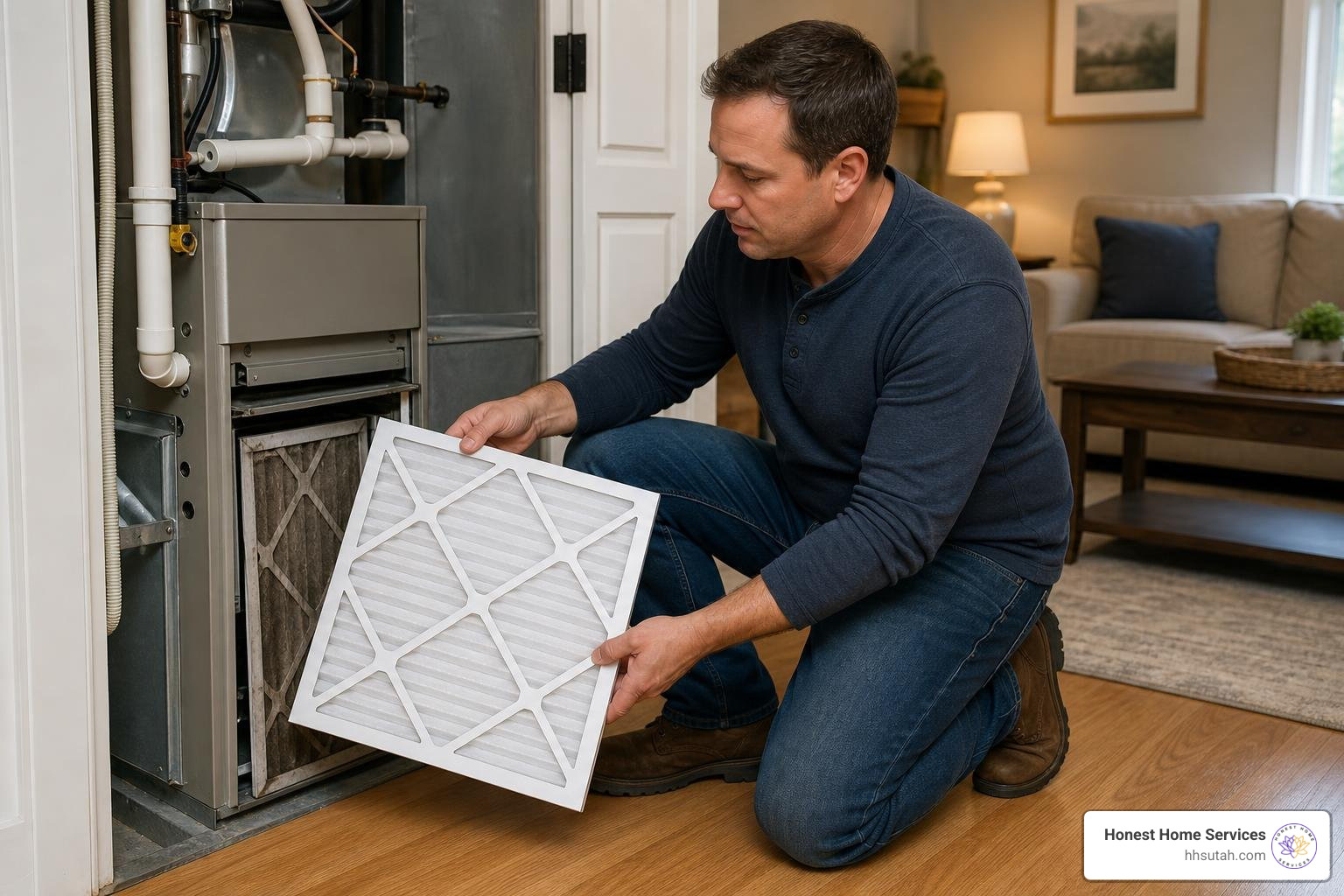
Before the appointment, it is highly beneficial to check your air filter. While the technician will inspect it, knowing the ultimate guide to finding local hvac and furnace air filters ensures you always have the right replacements on hand to maintain peak airflow between service visits.
How to Prepare Your Home for a Furnace Tune Up Technician
To make the most of your technician’s time, follow this quick checklist:
- Clear Physical Access: Clear a path to your furnace. Remove any storage boxes, seasonal decorations, or cleaning supplies stored within three to five feet of the unit. This gives the technician a safe workspace.
- Prepare a List of Questions: Note any odd noises, uneven heating in specific rooms, or sudden changes in your utility bills.
- Ensure Thermostat Accessibility: The technician will need to cycle the system on and off multiple times. Make sure the thermostat is easily accessible and not blocked by furniture.
- Secure Your Pets: The loud noises of a furnace cycling and the presence of a stranger can stress pets. Keep them safe and comfortable in a separate room.
Signs Your Heating System Needs Immediate Attention
Do not wait for a scheduled annual visit if your furnace is displaying any of these warning signs:
- Strange Noises: Squealing, banging, rattling, or clicking sounds indicate loose components, failing bearings, or ignition issues.
- Yellow Burner Flame: As mentioned earlier, a healthy burner flame is crisp and blue. A yellow, dancing flame is a sign of incomplete combustion and potential carbon monoxide production.
- Rising Utility Bills: A sudden spike in heating costs without a corresponding drop in outdoor temperatures means your system’s efficiency has tanked.
If you observe any of these issues, consult the 5 signs your furnace needs immediate attention before winter guide. If your system is already malfunctioning or furnace blowing cold air, you need to schedule a prompt furnace repair to restore comfort and safety.
Frequently Asked Questions About Furnace Maintenance
How much does a furnace tune-up typically cost?
On average, a professional furnace tune-up costs between $80 and $200, depending on your location, the complexity of your system, and the time of year. Many reputable companies offer seasonal promotions or discounted rates during the spring and late summer.
While paying for preventative maintenance might seem like an unnecessary expense when your furnace is working fine, it is incredibly cost-effective. A single emergency repair call on a freezing winter weekend can easily cost three to four times the price of an annual tune-up. To keep your maintenance costs manageable, check out chill out with savings your top furnace repair coupons await for current deals and discounts.
How does a furnace tune-up differ from a full HVAC system tune-up?
A furnace-specific tune-up focuses exclusively on your heating equipment. Because it is self-contained and operates entirely indoors, a furnace tune-up can be performed at any time of year, regardless of the outdoor temperature.
In contrast, a full HVAC system tune-up covers both your heating and cooling equipment. Testing a central air conditioning system or an air-source heat pump requires specific outdoor temperatures. For example, central AC systems can generally only be tested when outdoor temperatures are above 60°F, and heat pumps require temperatures above 35°F to test heating performance accurately.
How often should I schedule furnace maintenance?
You should schedule a professional furnace tune-up once a year. The ideal time is in the late summer or early fall, before you need to turn the system on for the first cold snap. This timing allows you to beat the winter rush and ensures your system is ready to run safely from day one.
Additionally, if you have just installed a brand-new heating system, it is highly recommended to schedule a professional tune-up within the first year of operation. This first-year visit allows a technician to verify that the system was installed correctly, calibrate it to your home’s unique airflow requirements, and ensure no components have settled or loosened during initial use. For more professional insights, explore this guide on how to stay warm expert advice on furnace maintenance and repair.
Conclusion
A reliable furnace is the heart of a comfortable home during Utah’s freezing winters. Investing in an annual visit from a certified furnace tune-up technician is the single best step you can take to protect your family’s safety, lower your energy bills, and avoid the headache of a mid-winter breakdown.
At Honest Home Services, we are proud to serve communities across Northern Utah, including Salt Lake City, Salt Lake County, Davis County, Clearfield, Layton, Kaysville, Farmington, Bountiful, West Valley, Murray, West Jordan, South Jordan, Bluffdale, Herriman, Draper, Park City, Tooele, Lehi, and Saratoga Springs. Our highly trained, local technicians are committed to providing honest, transparent, and affordable heating care with guaranteed customer satisfaction.
Don’t wait until the first major snowstorm to test your heating system. Contact us today to schedule your professional furnace tune up and ensure your home stays cozy and warm all winter long.