
Why the Air Filter in Your Furnace Matters
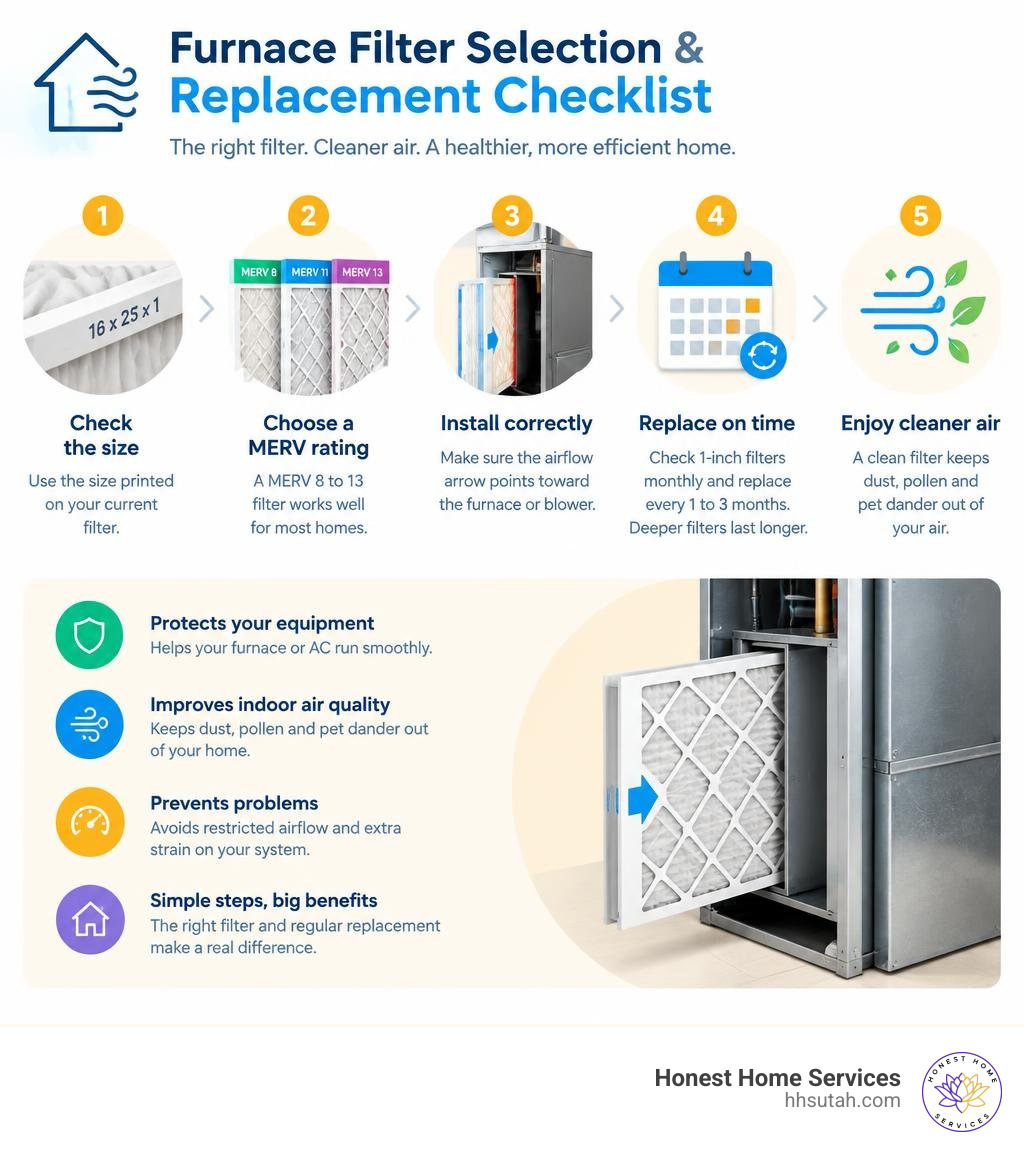
A clean, correctly sized air filter in furnace systems protects the equipment and helps keep dust, pollen, and pet dander out of the air you breathe. Start by checking the size printed on your current filter, choose a MERV rating your HVAC system can handle, install it with the airflow arrow pointing toward the furnace or blower, and replace it before it becomes heavily coated with debris.
For most homes, a pleated MERV 8 to 13 filter offers a practical balance of particle capture and airflow. Check 1-inch filters monthly and plan to replace them about every 1 to 3 months; deeper 4- or 5-inch filters often last longer. A clogged or poorly fitted filter can restrict airflow, raise system strain, and contribute to heating or cooling problems.
At Honest Home Services, we bring more than 20 years of plumbing, heating, and air-conditioning experience to Northern Utah homes and businesses, including troubleshooting issues tied to an air filter in furnace equipment. Use this guide to make filter changes simple, then call our licensed and insured team when your system needs professional help.
Discover more about air filter in furnace:
Understanding the Role of the Air Filter in Furnace Performance
Many homeowners assume that a furnace filter exists purely to purify the air they breathe. While indoor air quality is a significant benefit, the primary mechanical purpose of an air filter is actually to protect the internal components of your heating and cooling system.
As air circulates through your home, your return ducts draw in floating debris, including pet hair, carpet fibers, skin flakes, and household dust. Without a reliable filter standing guard at the intake, these contaminants pass straight into the furnace cabinet. Over time, dust coats the delicate blower motor assembly, insulates the heat exchanger, and settles on sensitive electronic sensors.
By understanding how air filtration systems improve indoor air quality while safeguarding equipment, you can extend the operating lifespan of your entire HVAC setup.
Why Clean Airflow Matters for Your Heating System
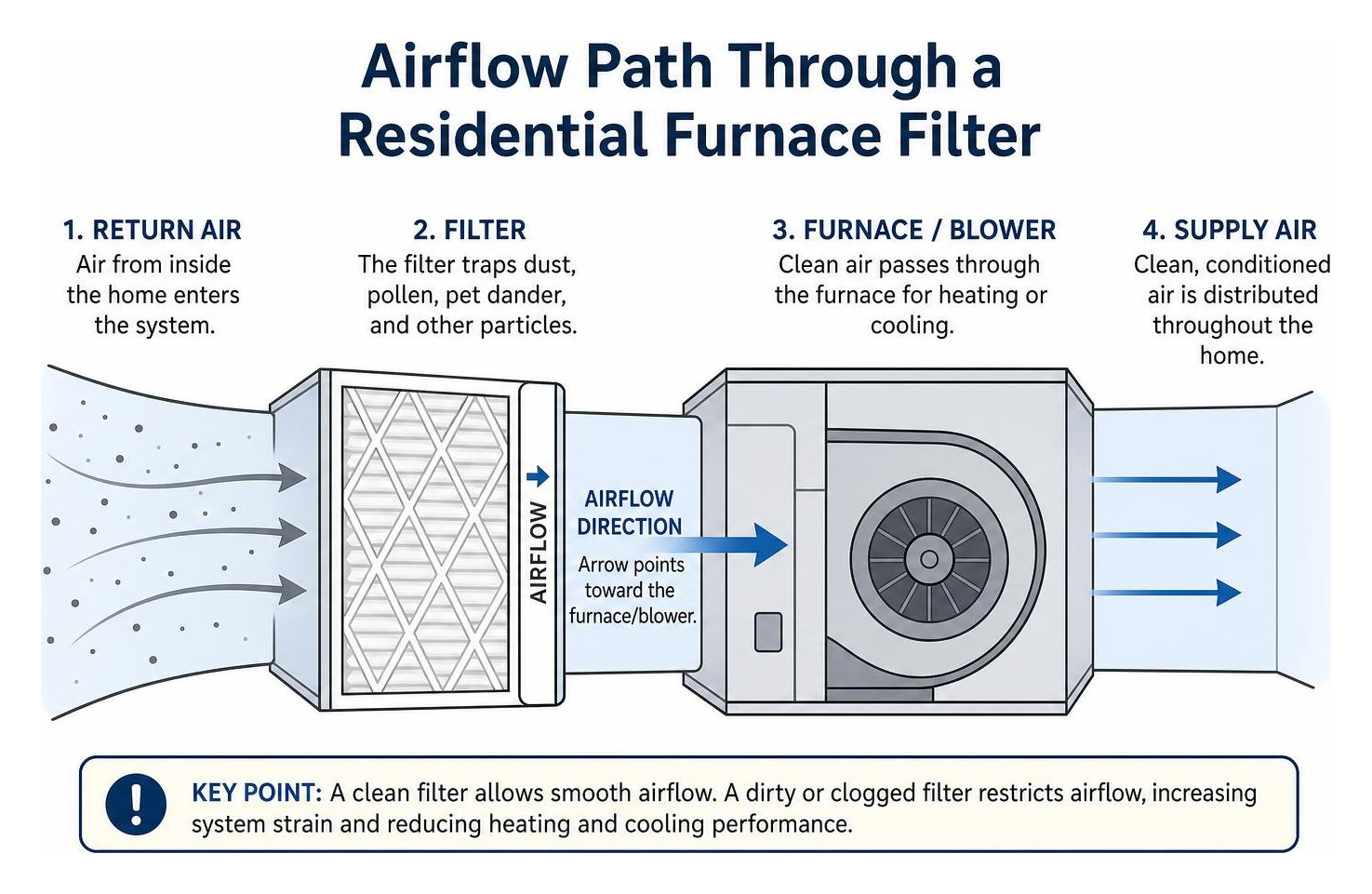
Your furnace is engineered to operate within a specific range of internal air resistance, known in the HVAC trade as static pressure. When air moves smoothly through clean ductwork and a fresh filter, heat transfers efficiently from the heat exchanger into the circulating air stream.
When a filter is clean:
- The blower motor runs cooler: Proper airflow keeps the motor within its intended operating temperature, preventing electrical windings from degrading prematurely.
- Energy consumption stays low: The system reaches the target temperature on your thermostat quickly, minimizing overall runtime.
- Temperature distribution remains even: Adequate static pressure ensures that warm air reaches the furthest supply registers in your house, eliminating cold spots in finished basements or upper-level bedrooms.
Hazards of a Clogged or Mismatched Filter
When a filter becomes choked with dirt or when someone installs an overly restrictive media type not rated for the furnace, static pressure spikes dramatically. This creates a cascade of mechanical problems throughout the system.
A clogged filter restricts convective cooling across the heat exchanger. The metal surface heats up past safe operational limits, triggering the primary high limit safety switch to cut off the gas burners. If this occurs repeatedly—a cycle known as short cycling—the excessive thermal expansion and contraction will eventually crack the heat exchanger. A cracked heat exchanger poses severe safety hazards, including carbon monoxide leaks.
During transitional seasons when the same air handler runs central air conditioning, restricted airflow causes moisture on the evaporator coil to freeze solid into a block of ice, potentially destroying the outdoor compressor. Learning how to prevent these pitfalls is a cornerstone of preventing common furnace problems across Northern Utah homes.
Types and MERV Ratings: Choosing the Right Filter Media
Air filters are evaluated using the Minimum Efficiency Reporting Value (MERV) scale, which ranges from 1 to 16 for standard residential and commercial systems (with specialized HEPA filters rating higher). This rating reflects the filter’s ability to trap airborne particles ranging from 0.3 to 10 microns in diameter.
| Filter Type | Typical MERV Range | Target Particles Captured | Expected Lifespan | Best Application |
|---|---|---|---|---|
| Fiberglass (Flat Panel) | MERV 1–4 | Large lint, carpet fibers, heavy dust | 30 Days | Equipment protection only; older furnaces |
| Standard Pleated | MERV 6–8 | Dust mites, mold spores, pollen (3–10 µm) | 60–90 Days | Standard residential baseline |
| High-Efficiency Pleated | MERV 11–13 | Pet dander, fine dust, auto emissions, smoke (0.3–3 µm) | 60–90 Days (1″) / 6–9 Months (4-5″) | Allergy relief, pet owners, wildfire regions |
| Antimicrobial Treated | MERV 8–11 equivalent | Traps particles and inhibits microbial/fungal growth | 60–90 Days | Damp environments, odor reduction |
Comparing Fiberglass, Pleated, and Antimicrobial Options
Understanding the physical construction of these media types helps you choose the best match for your household:
- Fiberglass Filters: These are the inexpensive, see-through blue or spun-glass panels housed in lightweight cardboard frames. They capture large debris to keep the furnace fan clean, but let microscopic allergens pass through freely. They provide minimal air resistance, making them useful for older equipment, but they do very little to improve indoor air quality.
- Synthetic Pleated Filters: Made from layered polyester or polypropylene fibers woven into tight pleats, these filters vastly increase the functional surface area compared to flat panels. Pleated media utilizes depth loading, capturing larger particles on outer layers while trapping finer dust deep inside the fabric matrix. Many pleated options incorporate an electrostatic charge to attract floating debris like a magnet.
- Antimicrobial Media: These filters feature chemical agents bonded directly to the fibers. When fungal spores or bacteria become trapped on the filter surface, the antimicrobial treatment prevents them from colonizing the damp filter media, eliminating musty odors before air enters your living spaces.
Matching MERV Ratings to Household Pets and Allergy Needs
Selecting the ideal MERV rating requires balancing air cleanliness against blower motor resistance:
- MERV 8: Excellent entry-point protection for standard homes without pets or severe environmental allergies. A MERV 8 filter captures particles between 3 and 10 microns, including basic dust mites and plant spores.
- MERV 11: Ideal for households with one or two shedding pets. It traps smaller particles between 1 and 3 microns, capturing pet dander, aerosol sprays, and localized pollen.
- MERV 13: Highly recommended for residents suffering from seasonal asthma or living in areas prone to seasonal inversions or summer wildfire smoke. A MERV 13 filter captures fine particulate matter down to 0.3 to 1 micron, intercepting bacteria, microscopic droplets, and fine smoke residue.
If you are exploring comprehensive filtration upgrades for your ductwork, check out this guide on how to choose the best air filtration system for modern homes. For a broader technical overview of filter efficiency standards, the Minimum Efficiency Reporting Value entry provides additional context on how MERV ratings are tested and applied.
Sizing and Compatibility for Residential Furnaces
An ill-fitting filter allows air to bypass the media entirely. If there is even a half-inch gap around the edges of the filter track, circulating air will take the path of least resistance, carrying unconditioned dust around the filter frame and straight into your furnace cabinet.
How to Measure and Fit the Air Filter in Furnace Slots
Furnace filters are labeled with two different measurement specifications: Nominal Size and Actual Size.
- Nominal Size: The rounded dimension printed in large text on the cardboard casing (e.g.,
16 x 25 x 1). - Actual Size: The precise, true dimensions measured with a tape measure, which are typically 1/8 to 1/2 inch smaller than the nominal label (e.g.,
15.75 x 24.75 x 0.75). This intentional undersizing ensures the filter slides smoothly into standard sheet-metal tracks without buckling.
If the markings on your existing filter are missing or illegible, grab a tape measure and gauge the internal width, length, and depth of the filter channel or drop-box slot. Look for a replacement filter whose nominal size closely matches those channel dimensions while maintaining a snug, friction-fit seal.
Can You Substitute a 1-Inch Filter in a 4-Inch or 5-Inch Media Cabinet?
Many modern heating installations include an expanded 4-inch or 5-inch media cabinet installed between the return drop and the furnace cabinet. Homeowners sometimes wonder if they can temporarily slide an inexpensive 1-inch filter into this 5-inch slot.
We strongly advise against this practice.
A 1-inch filter placed in a 5-inch track will rattle, tilt sideways under the pull of the blower motor, and leave massive open gaps along the top and bottom. This bypass allows untreated dust to coat your equipment. Furthermore, deep pleated 5-inch media filters provide significantly more surface area than thin 1-inch models, allowing them to capture microscopic particles with much less static pressure resistance. If you must use a thinner filter in an emergency, install a manufacturer-approved adapter frame to seal the perimeter completely.
Step-by-Step Filter Replacement Instructions
Replacing an air filter is one of the easiest and most impactful DIY maintenance tasks you can perform on your heating system.
Determining Proper Airflow Direction and Orientation
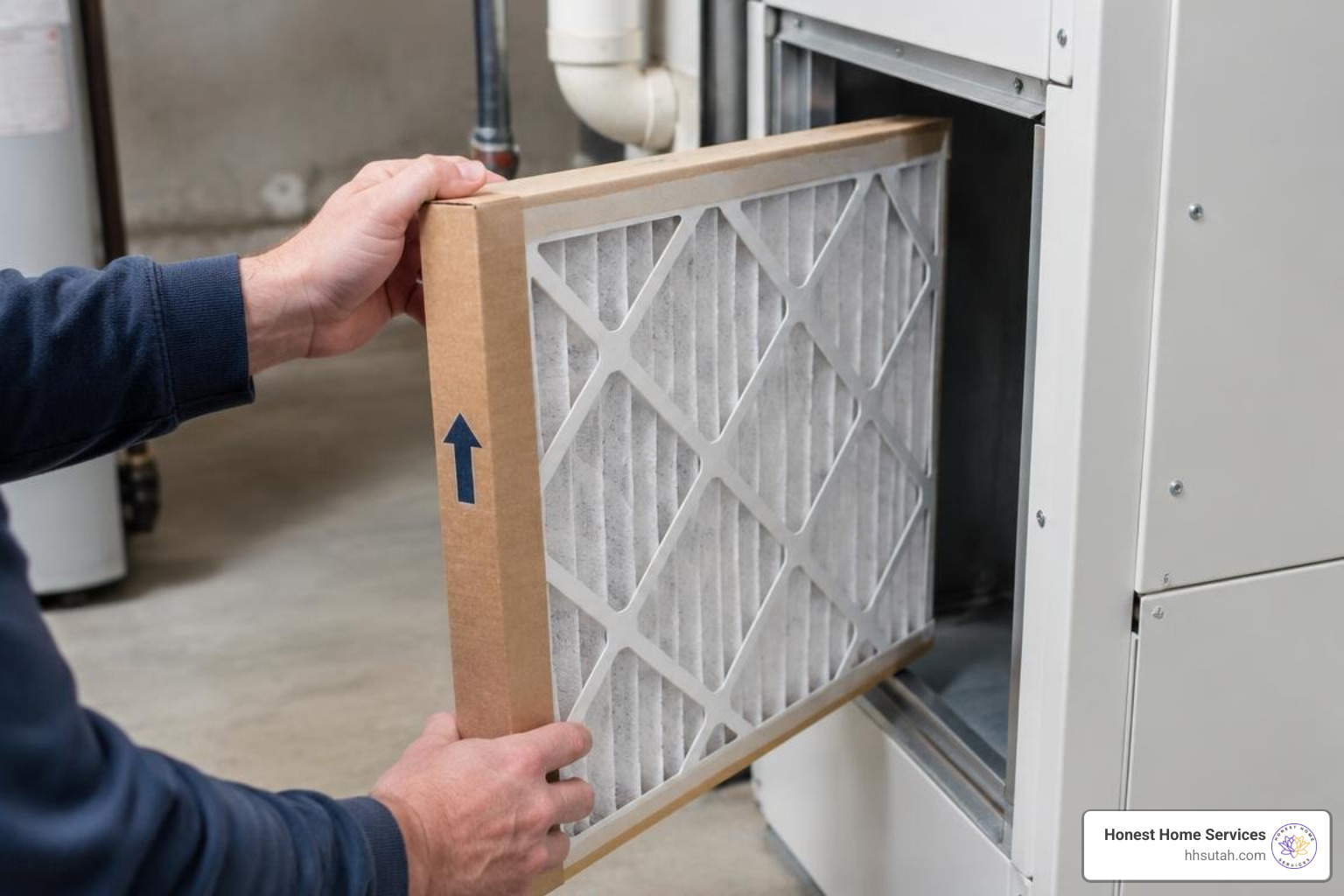
Every pleated filter has an arrow printed on its outer cardboard frame indicating the intended direction of airflow. Installing a filter backward reduces its structural integrity, increases resistance, and risks pulling the media out of its frame and into the spinning blower wheel.
To verify proper alignment:
- Identify the Return Duct (the large sheet-metal duct bringing cool air back to the furnace) and the Furnace Cabinet (housing the burner assembly and blower).
- The airflow always travels out of the return duct and into the furnace.
- Point the printed arrow on the filter frame toward the furnace blower compartment, away from the return ductwork.
Step-by-Step Guide to Replacing the Air Filter in Furnace Units
Follow these practical steps to complete a clean, safe filter swap:
- Shut off power to the furnace: Flip the furnace service switch (which looks like a standard light switch on or near the unit) or toggle the dedicated breaker on your electrical panel. This stops the blower fan from turning on while the slot is exposed.
- Open the access door or slot cover: Remove the metal slide cover or unlatch the access door on the return air drop.
- Slide out the old filter: Pull the dirty filter straight out. Handle it gently to prevent accumulated dust, pet hair, and particulate matter from spilling onto the floor.
- Inspect and vacuum the slot: Take a flashlight and look inside the filter rack. Use a shop vacuum with a brush attachment to remove any loose debris, spiderwebs, or dust settled in the housing.
- Check arrow alignment on the new filter: Confirm the airflow arrow points toward the furnace blower motor.
- Seat the new filter firmly: Slide the new filter smoothly into the channel tracks. Ensure the frame sits flat without bending, crushing, or leaving open perimeter gaps.
- Replace the access cover: Reinstall the metal slot cover or latch the cabinet door securely to prevent unfiltered basement air from being sucked into the blower.
- Restore power and test: Turn the power switch back on. Listen for unusual whistling noises that might indicate air leaks around the newly seated filter frame.
Pairing your seasonal filter swaps with comprehensive routine furnace maintenance ensures dependable warmth throughout freezing weather.
Maintenance Schedules and Warning Signs You Need a Replacement
How often you should swap out your filter depends on household occupancy, pet activity, filter thickness, and daily HVAC runtime.
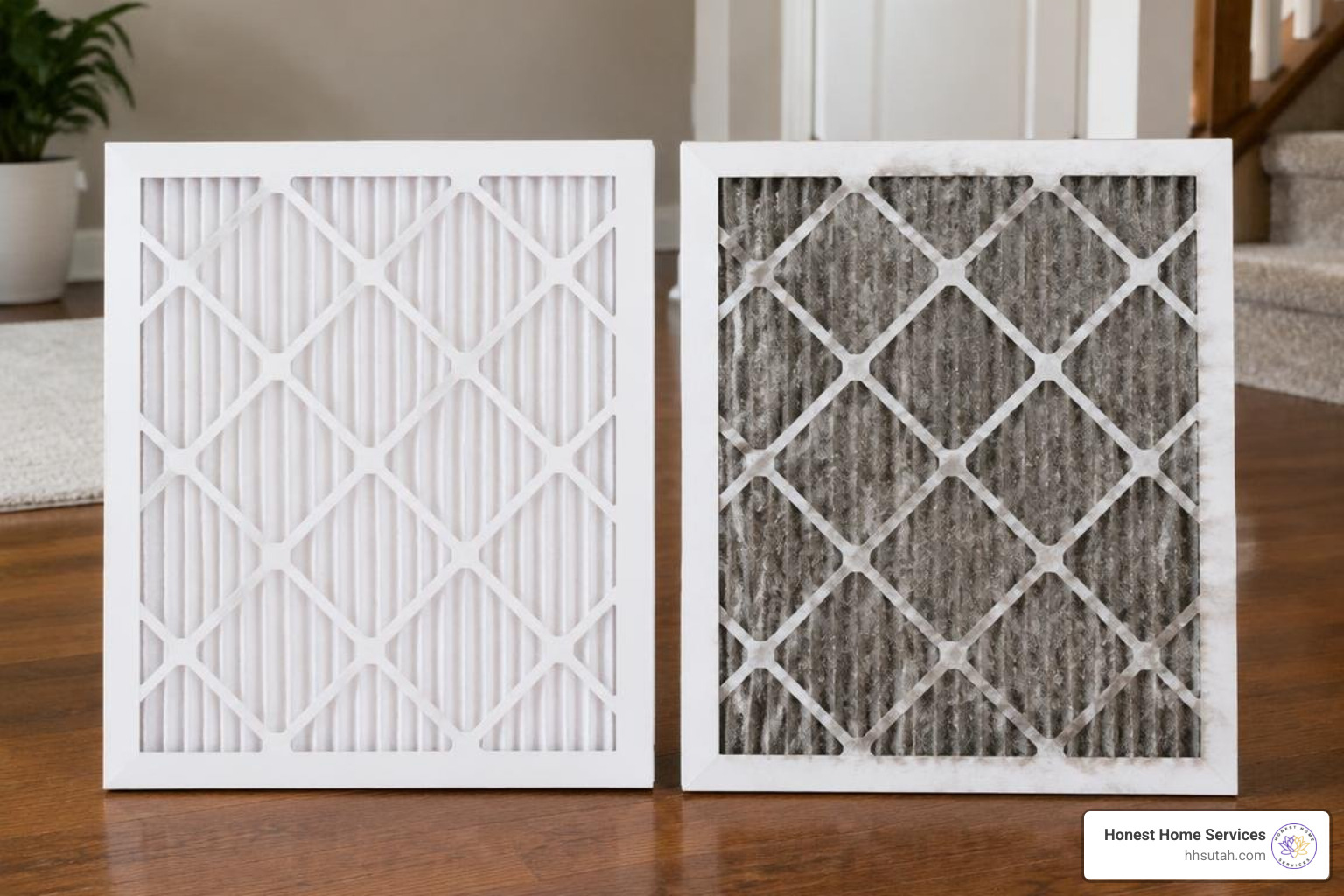
Recommended Filter Replacement Frequency
Use the following operational guidelines to set your replacement schedule:
- Standard 1-inch to 2-inch filters: Check every 30 days. Replace every 30 to 90 days in typical homes; every 60 days if you have dogs or cats; and every 45 days if family members suffer from seasonal allergies.
- Deep 4-inch to 5-inch media filters: Inspect every 3 months. Replace every 6 to 9 months under regular use, or up to 12 months in single-occupant, pet-free homes.
- High-demand winter and summer months: When your furnace or AC runs continuously during extreme weather, filters load up twice as fast. Check the media monthly regardless of filter depth.
Visual and Operational Warning Signs of a Failing Filter
Do not wait for a set calendar date if your home or heating system shows any of these warning signs:
- The Flashlight Test fails: Remove your filter and hold a bright flashlight behind the back of the media. If no light passes through the pleats, the filter is completely saturated and choking your system.
- Dust accumulating on furniture: A sudden, visible increase in dust settling on table surfaces indicates that the filter is full and air is bypassing the perimeter seals.
- Burning or metallic odors: When air is restricted, the furnace interior runs abnormally hot, causing dust baking on the heat exchanger to emit a distinct burning smell.
- Weak airflow at vents: If supply registers feel faint despite the fan running at full speed, check for a clogged filter immediately.
- System short cycling or lukewarm air: A tripped high-limit switch shuts down the burners while keeping the blower running, leading to situations where you notice your furnace blowing cold air.
Frequently Asked Questions About Furnace Air Filters
How do I know if my furnace filter is installed backwards?
If a filter is installed backward, the wire reinforcement mesh—designed to prevent the media from collapsing under pressure—will be on the wrong side. You may hear loud whistling, buzzing, or vibrating noises as air forces the pleats against the return duct instead of resting securely against the internal support frame. Over time, backward filters can warp, tear, or get pulled directly into the blower wheel.
Can a dirty filter cause my furnace to blow cold air or shut off?
Yes. When a clogged filter starves the system of air, heat builds up rapidly within the heat exchanger. The furnace’s internal high-limit safety sensor detects excessive temperatures and automatically shuts off the gas burners to prevent the metal from cracking or catching fire. However, the blower fan continues to run in an attempt to cool down the exchanger, blowing unheated, cool air through your vents before shutting down on an error code.
Where should I purchase reliable replacement filters?
You can purchase reliable replacement filters from home improvement centers, specialized online HVAC suppliers, or directly through your local heating contractor. For convenience and cost savings, order multipacks of 4 to 6 filters online or set up an automated delivery subscription so you always have a fresh filter ready each season.
Keep Your Home Warm and Air Clean with Honest Home Services
Regularly changing the air filter in your furnace is one of the most effective ways to preserve your heating equipment, lower utility bills, and maintain clean indoor air for your family.
When simple filter replacements are not enough to resolve weak airflow, unusual noises, or uneven heating, our experienced team at Honest Home Services is ready to help. We provide 24/7 emergency support, seasonal system tune-ups, ductwork modifications, and whole-house IAQ upgrades throughout Salt Lake City, Davis County, and surrounding communities.
Contact Honest Home Services today to schedule an inspection or explore our comprehensive professional air filtration and HVAC services to keep your heating system running at peak performance all winter long.