

How an Activated Charcoal Cabin Air Filter Works
To understand why an activated charcoal cabin air filter outperforms a standard paper unit, it helps to look at the chemistry of carbon. Charcoal becomes “activated” when it is treated with high heat and chemical processes, opening up millions of microscopic pores. This dramatically expands its internal surface area. A single gram of high-iodine activated carbon can have a surface area exceeding 10,000 square feet!
When polluted air passes through your vehicle’s heating, ventilation, and air conditioning (HVAC) system, gaseous molecules enter these microscopic pores and are trapped through a chemical bonding process called adsorption. Unlike absorption (where a liquid soaked into a sponge becomes part of the sponge’s volume), adsorption causes gas and odor molecules to stick tightly to the vast surface of the carbon.
This process is essential for trapping Volatile Organic Compounds (VOCs) and dangerous exhaust gases. To learn more about how similar carbon technologies purify residential environments, check out our A Comprehensive Guide to Air Filtration Options.
Adsorption Science Behind Activated Carbon
The primary advantage of an activated charcoal cabin air filter is its ability to bind invisible, gaseous pollutants that pass right through basic paper filters.
When you are stuck in bumper-to-bumper traffic along I-15 or driving near industrial centers in Salt Lake County, your engine blower pulls in toxic emissions from surrounding tailpipes. The activated carbon layer acts as a chemical sponge, effectively trapping:
- Sulfur Dioxide ($SO_2$): A pungent gas created by burning fossil fuels that irritates the upper respiratory tract.
- Nitrogen Dioxide ($NO_2$): A toxic chemical compound found in diesel exhaust that contributes to smog and lung inflammation.
- Hydrocarbons and Ozone ($O_3$): Smog-forming compounds that trigger coughing, headaches, and chest tightness.
Particle and Gas Dual-Stage Defense
Modern activated carbon cabin filters don’t just rely on chemical gas absorption; they feature a multi-layer design to manage both physical debris and airborne chemicals simultaneously.
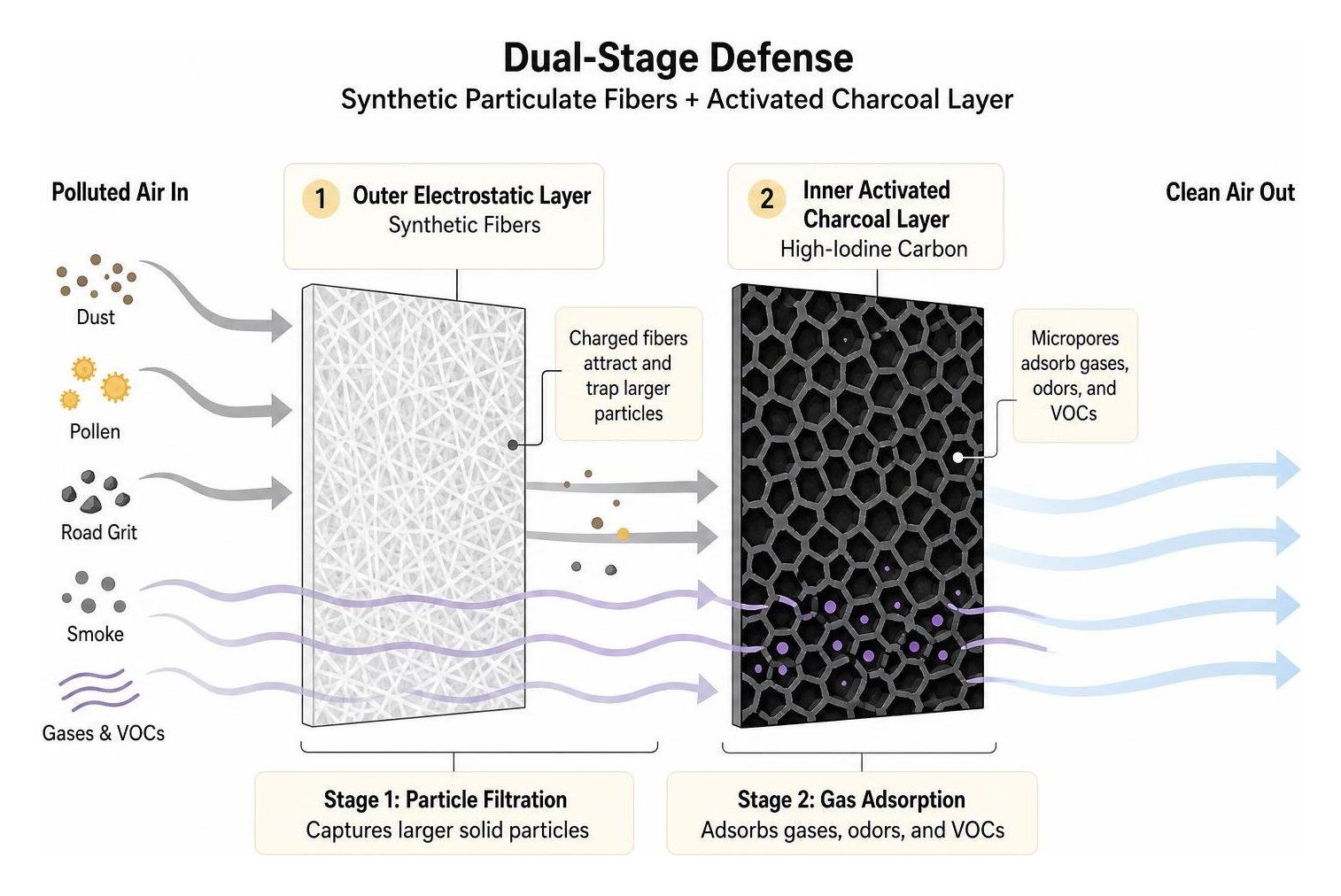
- Outer Electrostatic Layer: Made of non-woven synthetic fibers charged with static electricity, this layer mechanically catches larger solid pollutants like dirt, leaves, road grit, and heavy pollen.
- Inner Activated Carbon Layer: As air moves through the pre-filtered fiber mesh, it hits the carbon matrix where gases, smoke odors, and chemical VOCs stick to the high-iodine carbon granules.
High-quality aftermarket options, such as a Bosch Activated Charcoal Cabin Air Filter C3723WS, combine these dual defense systems to stop particles as small as 1 micron—roughly 70 times smaller than the width of a human hair—while keeping traffic smells out of the passenger compartment.
Comparing Cabin Air Filter Types: Standard, Charcoal, Advanced, and HEPA
Choosing the right cabin filter requires balancing filtration strength, airflow efficiency, and replacement costs. The table below breaks down how the four main cabin filter categories stack up:
| Feature / Filter Category | Standard Particulate | Activated Charcoal | Advanced Multi-Layer | HEPA Filter |
|---|---|---|---|---|
| Primary Media | Electrostatic Paper / Synthetic | Synthetic Fibers + Carbon Layer | Multi-stage Carbon + Anti-microbial | High-density Glass / Synthetic Fibers |
| Particle Filtration Size | ~5 to 10 microns | Down to 1 micron | Down to 1 micron | Down to 0.3 microns (99.97% efficiency) |
| Odor & Fume Protection | Minimal to None | Moderate to High | High | Minimal (unless combined with carbon) |
| HVAC Airflow Impact | Very Low | Minimal / Negligible | Low | Moderate to Noticeable |
| Ideal Driver Profile | Highway commuters in clean environments | Daily commuters, urban drivers | RV drivers, pet owners, commuters | Severe allergy and asthma sufferers |
Standard Particulate vs. Activated Charcoal Cabin Air Filter
Standard particulate filters are the baseline option installed in many factory vehicles. Constructed from electrostatically charged paper or synthetic textiles, they perform one core job: keeping solid debris out of your vehicle’s HVAC housing. They successfully capture dust, pollen, soot, and road dirt, preventing the A/C evaporator coil from clogging up.
However, standard filters do not capture gases. Tailpipe exhaust, diesel odors, wildfire smoke, and agricultural smells blow right through paper media without resistance. Upgrading to an activated charcoal cabin air filter adds a chemical filtration layer. While the synthetic backing traps dust and pollen, the carbon media adsorbs the volatile fumes, keeping roadside stenches out of your interior.
Advanced Multi-Layer vs. HEPA Cabin Filters
For drivers who want even higher levels of protection, the market offers two advanced alternatives:
- Advanced Multi-Layer Filters: Often designed in a “sandwich” style, these filters combine synthetic particulate layers, heavy-mass carbon granules, and an anti-microbial nano-coating. This added treatment stops mold spores, fungi, and bacteria from growing on the damp filter surface inside your air ducts.
- HEPA Cabin Filters: High-Efficiency Particulate Air (HEPA) cabin filters provide maximum particulate control, capturing 99.97% of particles down to 0.3 microns in size. This makes them ideal for severe allergy or asthma sufferers reacting to microscopic spores, dander, and fine dust.
To explore how HEPA and carbon filtration work together in home environments, read our guide on how to Breathe Easy: How to Choose the Best Air Filtration System.
Key Benefits of Upgrade Options for Vehicle Occupants

Whether you are navigating stop-and-go traffic along the Wasatch Front or driving past agricultural areas in Davis and Weber counties, investing in an upgraded cabin air filter delivers immediate comfort and health benefits.
Odor and Toxic Fume Neutralization
Vehicle cabins accumulate elevated levels of urban air pollutants. When idling behind heavy diesel trucks or sitting in traffic, gas concentrations inside a car interior can quickly exceed outdoor ambient levels.
An activated charcoal cabin air filter neutralizes harmful gases before you breathe them in:
- Carbon Monoxide & Hydrocarbons: Absorbs partially burned fuel emissions to help prevent driver fatigue and headaches.
- Ozone & Smog Compounds: Neutralizes reactive oxygen species that irritate sensitive lung tissues during summer inversions.
- Agricultural & Environmental Smells: Significantly dulls manure odors, skunk smells, and wildfire smoke during seasonal blooms and fire seasons.
For a deeper dive into charcoal filtration science, check out our In-Depth Guide to Air Purifier with Charcoal Filter Comparisons.
HVAC Protection and Mold Prevention
Beyond passenger health, high-grade cabin filters safeguard your car’s climate control hardware. Your vehicle’s A/C evaporator coil operates in a dark, cold, and humid environment—creating ideal conditions for mold, mildew, and bacteria to flourish.
When organic dirt and leaves pass a low-quality or damaged filter, they stick to the wet evaporator fins, producing a damp, sour odor every time you turn on the air conditioner. High-performance filters—like an Anti-Microbial Sandwich Carbon Cabin Filter for RV & Auto—use sealed edges and anti-fungal coatings to shield the HVAC system from moisture-loving microbes.
Filter Maintenance, Lifespan, and Airflow Trade-Offs
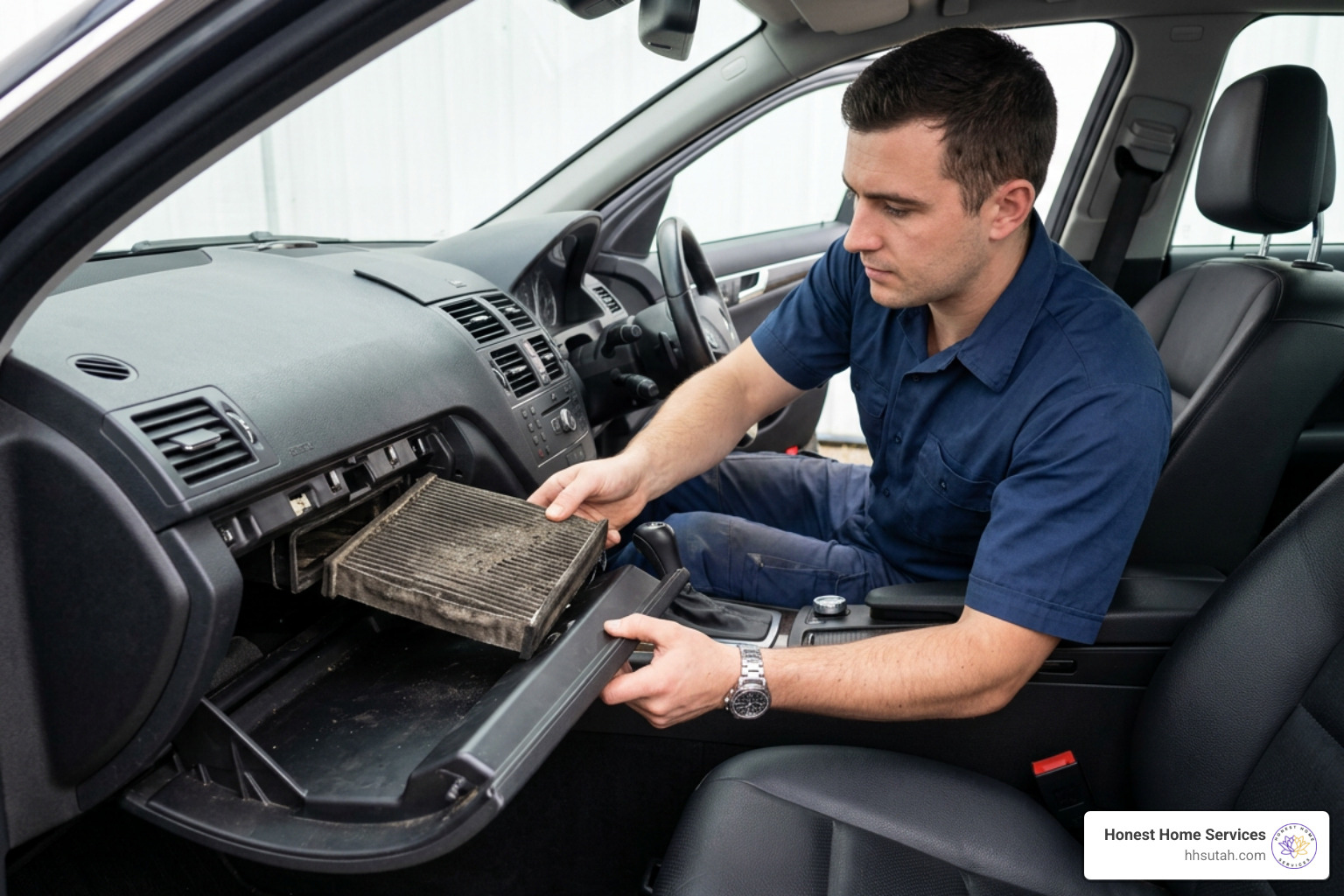
While activated carbon filters offer superior air quality, they don’t last forever. Understanding how carbon degrades helps you replace them before your cabin air quality drops.
Maintaining an Activated Charcoal Cabin Air Filter for Peak Performance
Unlike standard particulate filters—which only clog when they physically fill up with dirt—activated carbon filters degrade through both physical debris accumulation and passive chemical saturation.
Because carbon adsorbs gases continuously, it actively attracts ambient VOCs and moisture even when your car is parked with the engine off. Over time, the carbon reaches its saturation threshold, meaning it can no longer hold additional gas molecules.
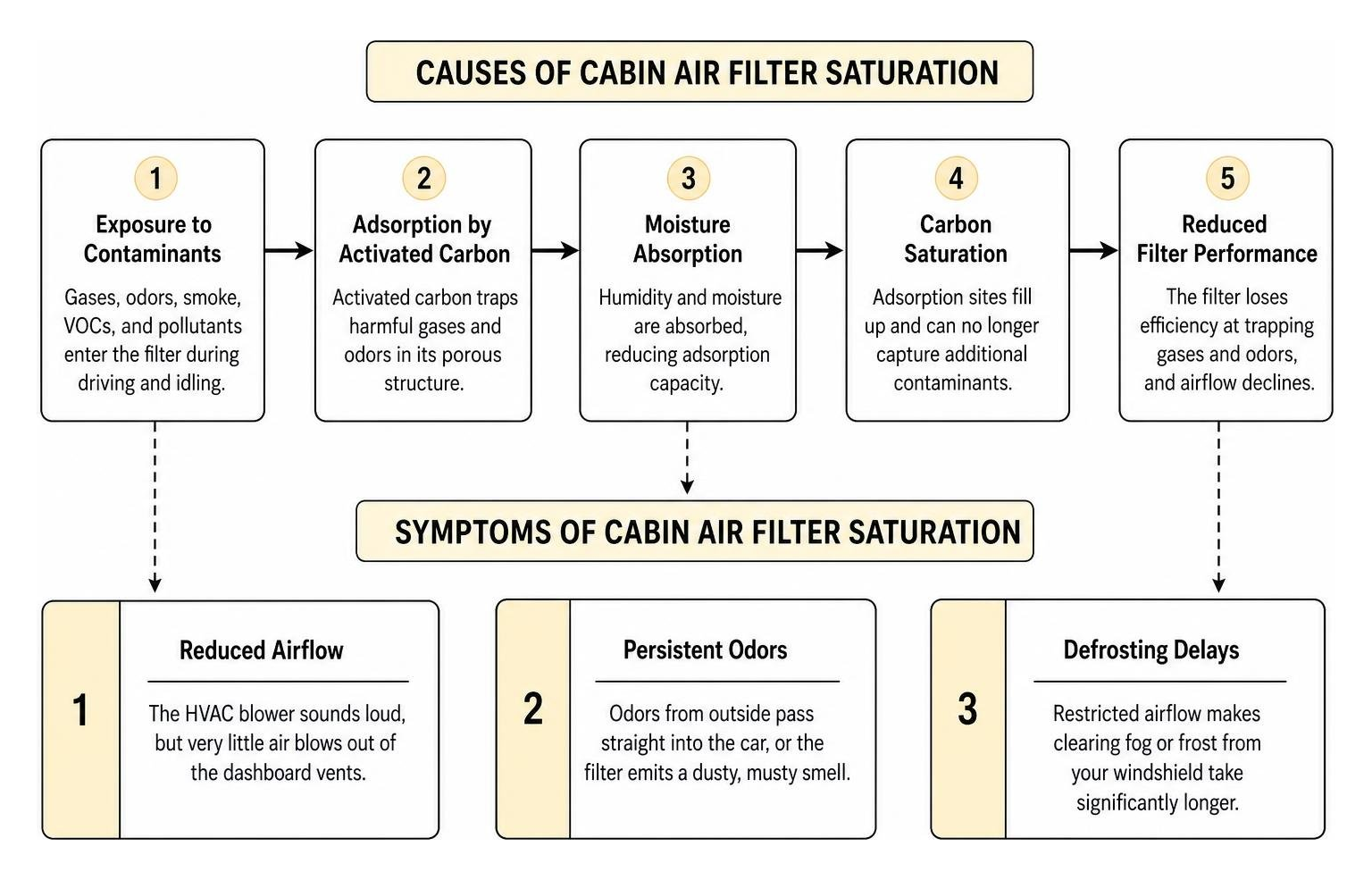
When an activated charcoal filter becomes saturated or clogged, you will notice:
- Reduced Airflow: The HVAC blower fan sounds loud, but very little air blows out of the dashboard vents.
- Persistent Odors: Odors from outside pass straight into the car, or the filter itself emits a dusty, musty smell.
- Defrosting Delays: Restricted airflow makes clearing fog or frost from your windshield take significantly longer.
DIY Replacement Guidelines and Best Practices
Replacing a cabin air filter is one of the easiest routine maintenance tasks you can complete yourself in under 10 minutes.
- Locate the Filter Housing: On over 90% of modern cars, the filter housing sits behind the glove box. Squeeze the side tabs of the glove box inward to drop it down and expose the filter access door. (On some vehicles, the filter panel sits under the plastic cowl trim at the base of the windshield).
- Note Airflow Direction: Before removing the old filter, look at the printed arrows on its edge indicating airflow direction (usually pointing downward toward the floorboards).
- Inspect and Clean: Remove the old filter carefully so trapped leaves and debris don’t drop into the blower motor fan wheel. Wipe out the housing with a clean microfiber cloth.
- Install the New Filter: Insert the fresh activated charcoal cabin air filter with the airflow arrows pointing the correct direction. Ensure the flexible rubber or EPDM edges seal tightly around the frame to prevent unfiltered air from bypassing the media.
To discover how maintaining proper filtration habits protects your home and family, review our list of the Top 5 Benefits of High-Quality Air Filtration Systems.
Frequently Asked Questions About Cabin Air Filtration
Do activated charcoal cabin air filters reduce HVAC airflow significantly?
A clean, high-quality activated charcoal cabin air filter does not noticeably restrict airflow compared to a standard paper filter. Premium manufacturers select lightweight synthetic backing materials and evenly spaced carbon granules to keep the air pressure drop very low (typically under 30 Pascals).
However, ultra-dense HEPA cabin filters or neglected, heavily clogged carbon filters will increase strain on your HVAC blower motor, noticeably reducing vent air velocity. Replacing your filter on schedule prevents this issue entirely.
How long does the carbon in a cabin air filter remain effective?
Most auto manufacturers and filter engineers recommend replacing an activated charcoal cabin air filter every 12,000 to 15,000 miles, or at least once every 12 months.
If you regularly commute through heavy urban traffic, drive along dusty dirt roads, or live in areas prone to seasonal wildfire smoke, the carbon layer can reach saturation in as little as 6 to 9 months. Inspecting the filter twice a year ensures peak performance.
Can an activated charcoal filter help with severe allergies and asthma?
Yes, but it depends on your specific triggers. Activated charcoal targets gaseous irritants, chemical fumes, volatile organic compounds, and smog—all of which inflame sensitive airways and worsen asthma symptoms.
However, if your respiratory issues are triggered primarily by physical airborne particulates like fine pollen, mold spores, and dust mite debris, you should choose a filter that combines a true HEPA or high-efficiency particle layer alongside activated carbon.
Conclusion
Upgrading to an activated charcoal cabin air filter is a cost-effective way to make your daily drives healthier and more comfortable. By combining mechanical synthetic fibers to catch solid pollen and dust with an activated carbon layer to adsorb traffic fumes and harsh smells, a charcoal filter offers balanced protection without overloading your vehicle’s HVAC blower.
Whether you’re concerned about breathing clean air during your daily commute or looking to improve indoor air quality inside your home, clean filtration is essential. At Honest Home Services, we’ve helped homeowners across Salt Lake County, Davis County, and Northern Utah maintain healthy indoor environments for over two decades.
To learn more about residential air purifiers, duct cleanings, and filtration upgrades, explore our complete guide to home Air Filtration today!