
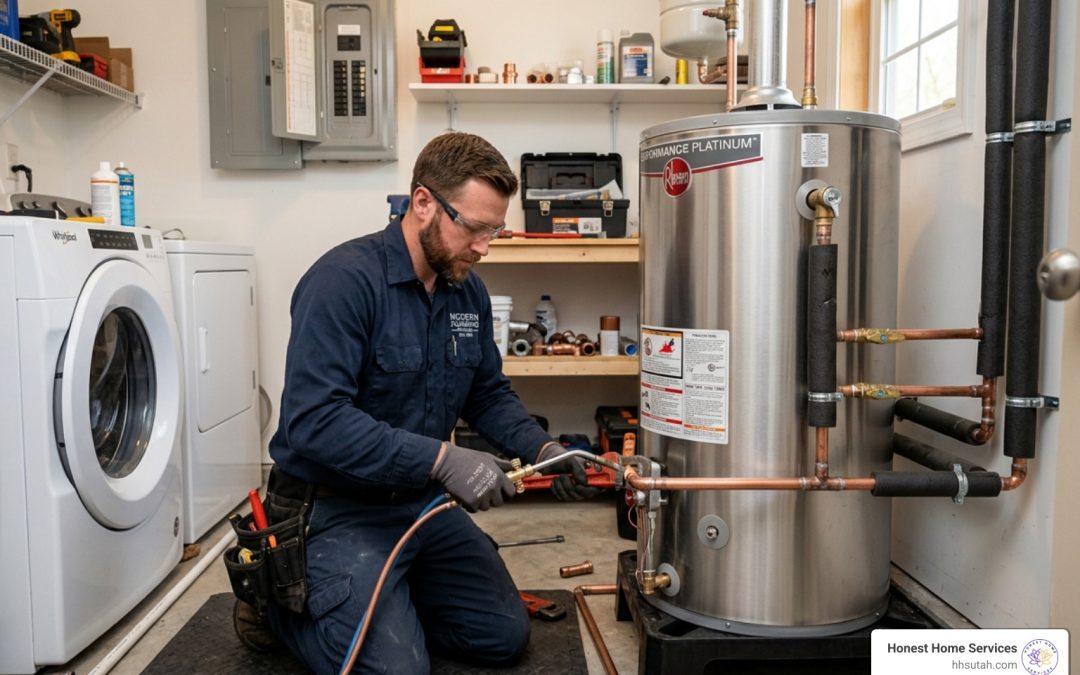
What Does Hot Water Cylinder Replacement Cost?
Hot water cylinder replacement cost typically ranges from $800 to $3,500 for standard units in the US, including the unit and professional installation. Costs vary widely based on cylinder type, size, and your location.
Here’s a quick snapshot to help you budget:
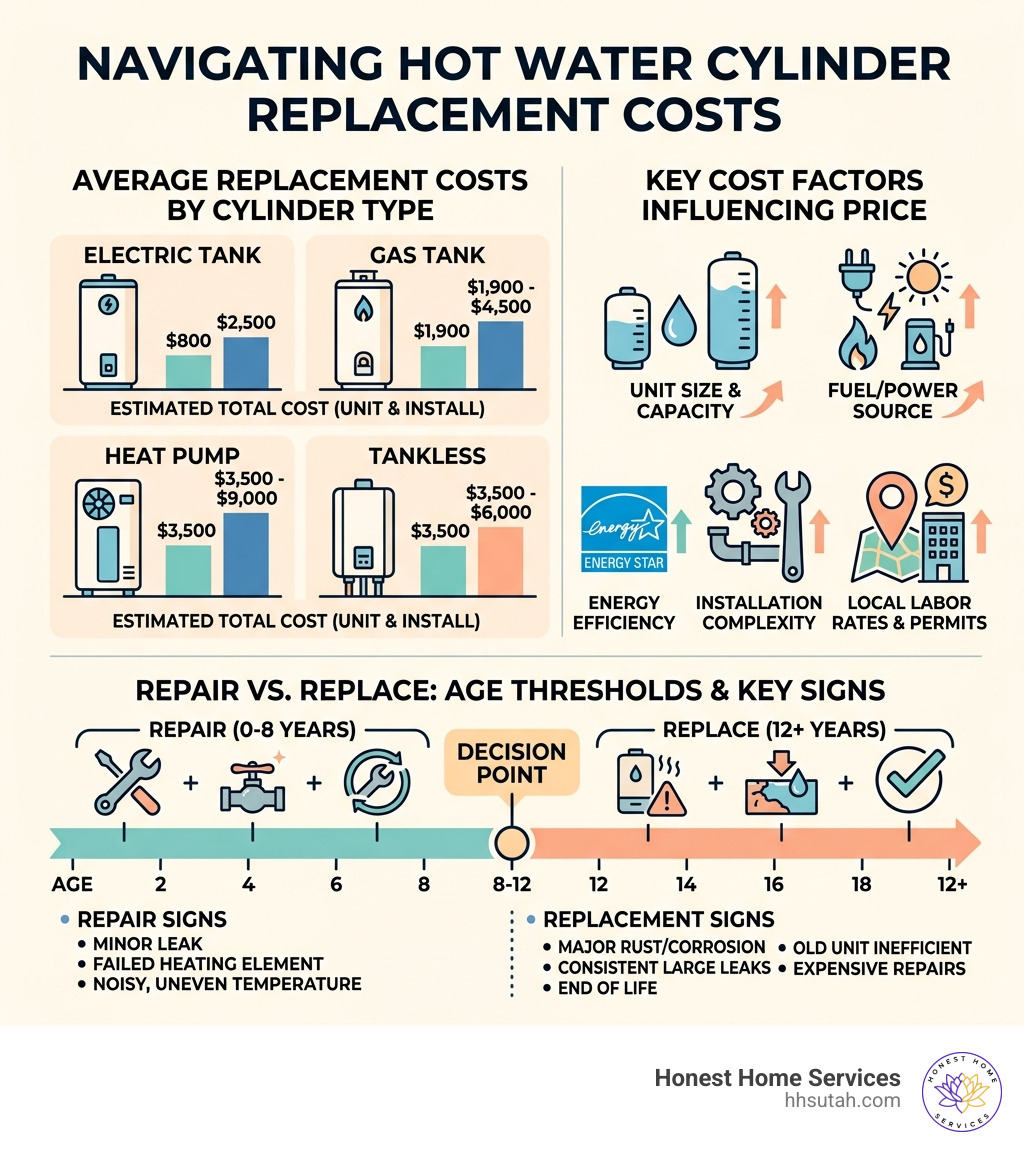
| Cylinder Type | Typical Total Cost (US) |
|---|---|
| Standard electric tank | $800 – $2,500 |
| Natural gas tank | $1,900 – $4,500 |
| Heat pump water heater | $3,500 – $9,000 |
| Tankless (gas or electric) | $3,500 – $6,000 |
Labor alone typically runs $300 – $800 for a standard swap, with hourly rates between $45 and $200 depending on your area and job complexity.
Most homeowners don’t think about their hot water cylinder until something goes wrong — a cold shower, a puddle on the floor, or a water bill that suddenly jumps. When that moment hits, you need clear answers fast: How much will this cost? Can I repair it or do I need a full replacement? Are there hidden fees?
This guide breaks it all down so you can budget with confidence and make the right call for your home.
At Honest Home Services, we’ve spent over 20 years helping Northern Utah homeowners navigate exactly these situations — from straightforward cylinder swaps to complex system upgrades — and we understand that hot water cylinder replacement cost shouldn’t come with surprises. We’ll walk you through everything you need to know so you’re fully prepared before the work begins.
Hot water cylinder replacement cost glossary:
Understanding Your Total Hot Water Cylinder Replacement Cost
When we talk about the hot water cylinder replacement cost, we aren’t just looking at the price tag on the tank at a big-box store. A successful installation involves a “total project cost” that includes the unit itself, the specialized labor required to install it safely, and the materials needed to bring everything up to current safety codes.
For most homeowners in Northern Utah, the total investment falls between $1,900 and $4,500 for a standard-sized gas or electric tank. However, if you are looking to upgrade to a high-efficiency heat pump or a tankless system, that number can climb toward $6,000 or even $9,000 depending on the electrical or gas line modifications required.
How Cylinder Type Impacts Hot Water Cylinder Replacement Cost
The technology inside your cylinder is the biggest driver of the price. Here is how the different types stack up:
- Electric Storage Tanks: These are often the most affordable upfront. They are simpler to install because they don’t require venting. However, they can be more expensive to run over time compared to gas. You can find more details on hot water repair costs for these units if yours is currently acting up.
- Gas Storage Tanks: These units typically cost a bit more than electric ones due to the complexity of the burner and the need for proper venting. In Salt Lake City, natural gas is a popular choice because it often results in lower monthly utility bills.
- Tankless (On-Demand) Systems: These systems eliminate the tank entirely, heating water as it flows through the unit. While the units themselves are pricey, the main cost driver is the installation—often requiring larger gas lines or significant electrical upgrades.
- Heat Pump (Hybrid) Water Heaters: These are the “Teslas” of the water heating world. They pull heat from the surrounding air to warm your water. While they have a high initial hot water cylinder replacement cost ($3,500–$9,000), they are incredibly efficient and often qualify for significant rebates.
- Material Matters: Stainless steel cylinders generally last longer and handle modern water conditions better than copper, though they come with a higher price tag. In the UK, you might see a cost breakdown for vented vs. unvented systems, but here in Utah, we almost exclusively deal with pressurized (unvented) systems that provide excellent shower pressure.
Regional Variations in Hot Water Cylinder Replacement Cost
Where you live matters just as much as what you buy. Labor rates in Salt Lake City or Park City may differ from more rural parts of the state due to demand and travel time.
Looking globally, a hot water cylinder replacement cost guide in New Zealand might quote $2,000 to $4,000 NZD, while the UK averages £500 to £2,000. For our local neighbors in Davis County or Salt Lake County, we focus on providing fair, transparent pricing that reflects the specific plumbing codes and hard water challenges of the Wasatch Front.
Key Factors That Influence Installation Pricing
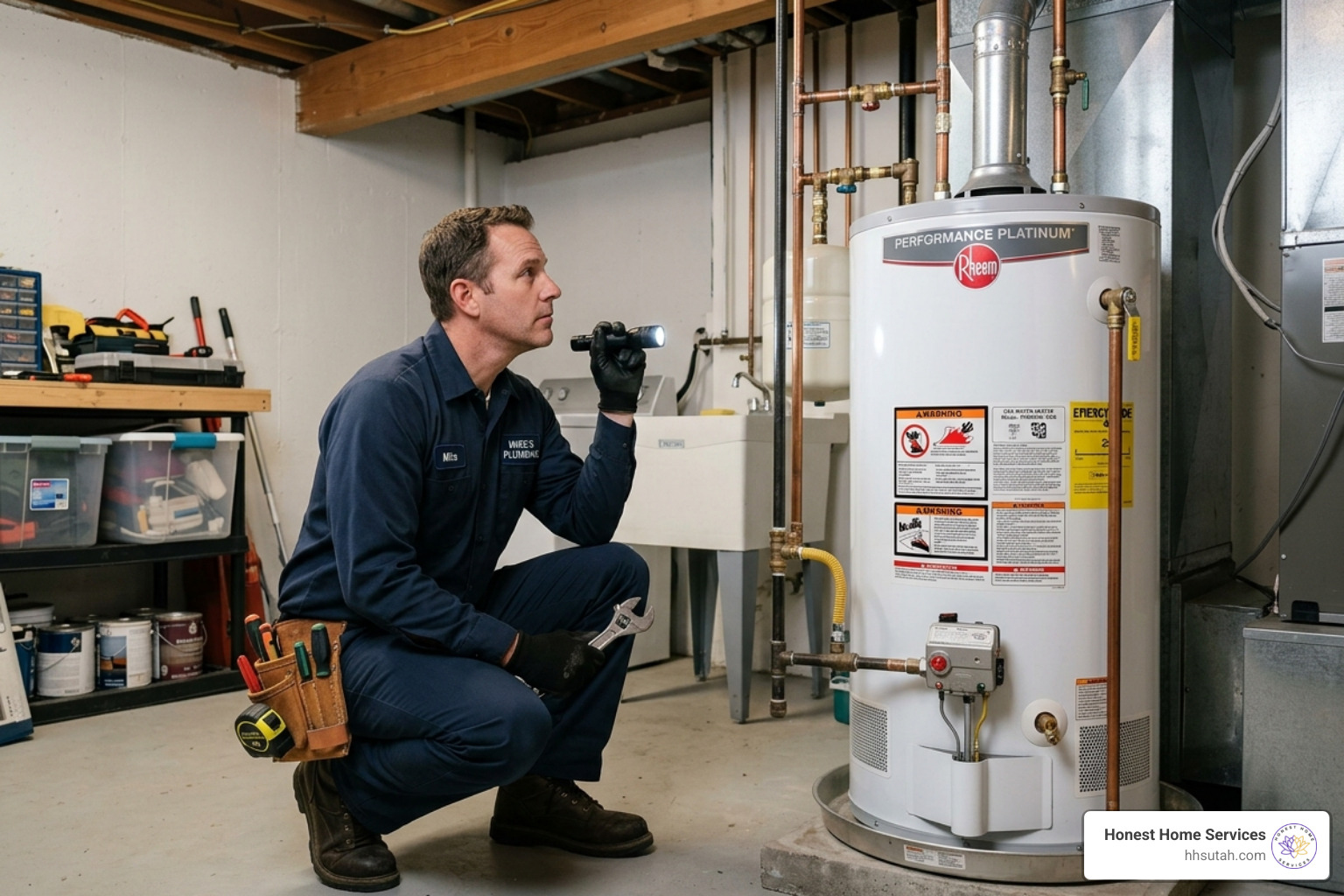
Beyond the type of unit, several logistical factors will sway your final quote. Understanding these water heater replacement advantages helps in choosing the right setup for your home’s future.
- Capacity and Household Size: A 30-gallon tank might work for a single person, but a family of four usually needs at least a 50-gallon unit. Larger tanks (75+ gallons) cost more for the unit itself and require more labor to move and install.
- Fuel Conversion: Switching from electric to gas (or vice versa) adds significant cost. You’ll need a plumber to run new gas lines and an electrician to handle the wiring.
- Venting Requirements: If you’re upgrading to a high-efficiency gas model, your old chimney vent might not cut it. You may need new PVC power-venting installed through a side wall.
- Access and Location: Is your cylinder in a spacious basement or tucked into a tight attic crawlspace? If we have to navigate three flights of stairs or remove a door frame to get the old unit out, the labor time will increase.
Labor Costs and Professional Installation Time
Labor typically accounts for 30% to 50% of the total hot water cylinder replacement cost. In Northern Utah, professional plumber hourly rates generally range from $45 to $200 per hour.
A straightforward “like-for-like” replacement usually takes between 2 and 4 hours. However, if we encounter rusted-out valves, need to upgrade your electrical panel, or have to modify the plumbing to meet new codes, the job can take up to 6 hours or more. Handling professional water heater repairs requires specialized knowledge of gas pressures and electrical safety—this isn’t a job where you want to cut corners.
Material Quality and Lifespan Expectations
When you pay for a higher-quality cylinder, you’re often paying for better “internal armor.”
- Anode Rods: These are “sacrificial” rods that attract corrosion so the tank doesn’t rust. High-end units often have larger or dual anode rods.
- Insulation: Modern cylinders feature thick foam insulation to prevent “standby heat loss,” which keeps your water hot for longer without the burner kicking on.
- Warranty: A unit with a 12-year warranty will cost more than one with a 6-year warranty, but it offers peace of mind and usually indicates higher-quality internal components. You can expect a well-maintained tank to last 10 to 15 years.
Deciding Between Repair and Full Replacement
One of the most common questions we get at Honest Home Services is: “Do I really need a new one, or can you just fix this?”
We use a few “rules of thumb” to help you decide:
- The 10-Year Rule: If your heater is under 10 years old, a repair is usually the way to go. If it’s over 15, you’re on borrowed time.
- The 50% Rule: If the repair cost is more than 50% of a new hot water cylinder replacement cost, it’s time to upgrade.
- The “Tank vs. Part” Rule: If a valve, heating element, or thermostat is broken, we can fix it! If the tank itself is leaking or rusted through, there is no way to “patch” it—you need a replacement.
If you are wondering why your water heater is failing, it’s often due to sediment buildup or a depleted anode rod. You can learn more about common water heater problems to see if your issue is a quick fix or a major red flag.
Signs Your Cylinder Needs Immediate Attention
Don’t wait for a flood to take action. Keep an eye out for these warning signs:
- Rusty Water: This indicates the inside of your tank is corroding.
- Strange Noises: Popping or banging sounds are caused by sediment at the bottom of the tank “boiling” and hardening.
- Frequent Pilot Light Issues: This could be a failing thermocouple or a venting problem.
- Puddles: Any moisture around the base of the tank is a sign of a slow leak that could turn into a burst at any moment.
If you see these, it’s time to call for emergency repair services before a small leak becomes a big basement renovation.
Additional Expenses and Hidden Budget Items
When budgeting for your hot water cylinder replacement cost, make sure to set aside a little extra for the “hidden” items that often pop up:
- Removal and Disposal: Getting that heavy, sediment-filled old tank out of your house and to a recycling center usually costs between $100 and $500.
- Permits: Most cities in Utah, from Clearfield to Draper, require a plumbing permit for water heater replacements. These fees typically range from $25 to $300.
- Code Upgrades: If your home was built 20 years ago, codes have changed. You might need to add an expansion tank (to handle water pressure), seismic restraints (straps to prevent the tank from tipping in an earthquake), or a discharge pipe for the pressure relief valve.
- Water Damage: If your unit has already been leaking, you might have subfloor damage that needs addressing.
Knowing what to do when your heater quits can save you hundreds in emergency restoration costs.
Frequently Asked Questions About Cylinder Replacement
What size hot water cylinder do I need for a family of four?
For a typical family of four, a 50-gallon tank is the industry standard. This size provides enough “first-hour rating” to handle two back-to-back showers and a load of laundry. If you have teenagers who take 20-minute showers or a giant soaking tub, you might want to consider a 75-gallon unit or a tankless system that provides endless hot water.
Can I save money by installing a hot water cylinder myself?
While it’s tempting to DIY to save on labor, we strongly advise against it. Water heaters involve high-voltage electricity or combustible gas, both of which can be deadly if mishandled. Additionally, a DIY install often voids the manufacturer’s warranty and may not meet local building codes, which can cause major headaches when you try to sell your home later. Fixing the flow professionally ensures your family stays safe and your warranty remains intact.
How can I reduce my long-term water heating bills?
Water heating accounts for about 17% to 20% of your total energy bill. To save money:
- Set the Temp to 120°F: This is hot enough for comfort but prevents scalding and saves 6-10% on energy.
- Insulate Your Pipes: Foam sleeves on the first six feet of hot water pipe reduce heat loss.
- Check for Rebates: Programs like Utah ThermWise offer up to $350 in rebates for high-efficiency models.
- Flush the Tank: Annual flushing removes sediment, which keeps the heater efficient. You can see the Salt Lake City utility bill impact of a poorly maintained heater on our service page.
Conclusion
Budgeting for a new hot water cylinder doesn’t have to be a guessing game. While the hot water cylinder replacement cost can seem significant, investing in a high-quality unit and professional installation pays off in lower energy bills, better performance, and the peace of mind that comes with a warm shower every morning.
At Honest Home Services, we pride ourselves on being the local experts Northern Utah trusts. Whether you’re in Salt Lake City, Layton, or Saratoga Springs, our team is dedicated to fair pricing, expert craftsmanship, and guaranteed customer satisfaction. We don’t just swap tanks; we make sure your home’s entire hot water system is safe, efficient, and ready for years of service.
Ready for a quote that’s actually honest? Schedule your Salt Lake City water heater service with us today, and let’s get the hot water flowing again!