

What to Do When Your Water Heater Breaks
If you need to fix broken water heater problems fast, here are the most common issues and where to start:
Quick fixes by symptom:
| Symptom | First Step |
|---|---|
| No hot water (electric) | Check and reset the circuit breaker |
| No hot water (gas) | Check if the pilot light is out |
| Water too hot | Adjust thermostat to 120°F or lower |
| Rumbling or popping noises | Flush the tank to remove sediment |
| Leaking from top | Tighten inlet/outlet fittings |
| Leaking from bottom | Turn off power and water — likely needs replacement |
| Rusty or smelly water | Inspect and replace the anode rod |
Most water heater problems fall into a few categories: power or ignition failure, temperature issues, sediment buildup, or leaks. Many can be handled at home with basic tools. Some — especially those involving gas lines, internal tank damage, or electrical components — need a licensed professional.
You step into the shower expecting hot water. Instead, you get a blast of cold. It’s one of the most frustrating moments a homeowner can face — and it almost always happens at the worst possible time.
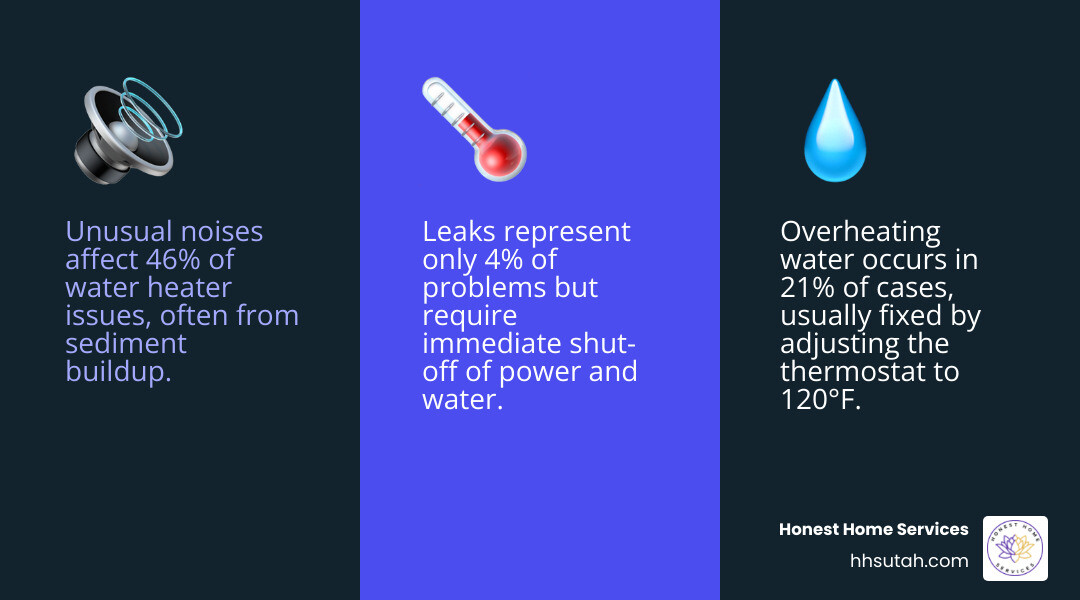
The good news? Many water heater problems have simple fixes. According to repair data, the most common complaints are unusual noises (46% of cases), water that’s too hot (21%), units that won’t stay lit (21%), and water that won’t heat at all (11%). Leaks account for only about 4% of reported issues. That means the majority of problems are diagnosable — and often fixable — without a full replacement.
At Honest Home Services, we’ve spent over 20 years helping Northern Utah homeowners fix broken water heater problems of every kind, from tripped breakers to full tank failures. We’ll walk you through each issue step by step so you know exactly what you’re dealing with — and when to call in a pro.
Basic fix broken water heater vocab:
Immediate Safety Steps and Signs of Failure
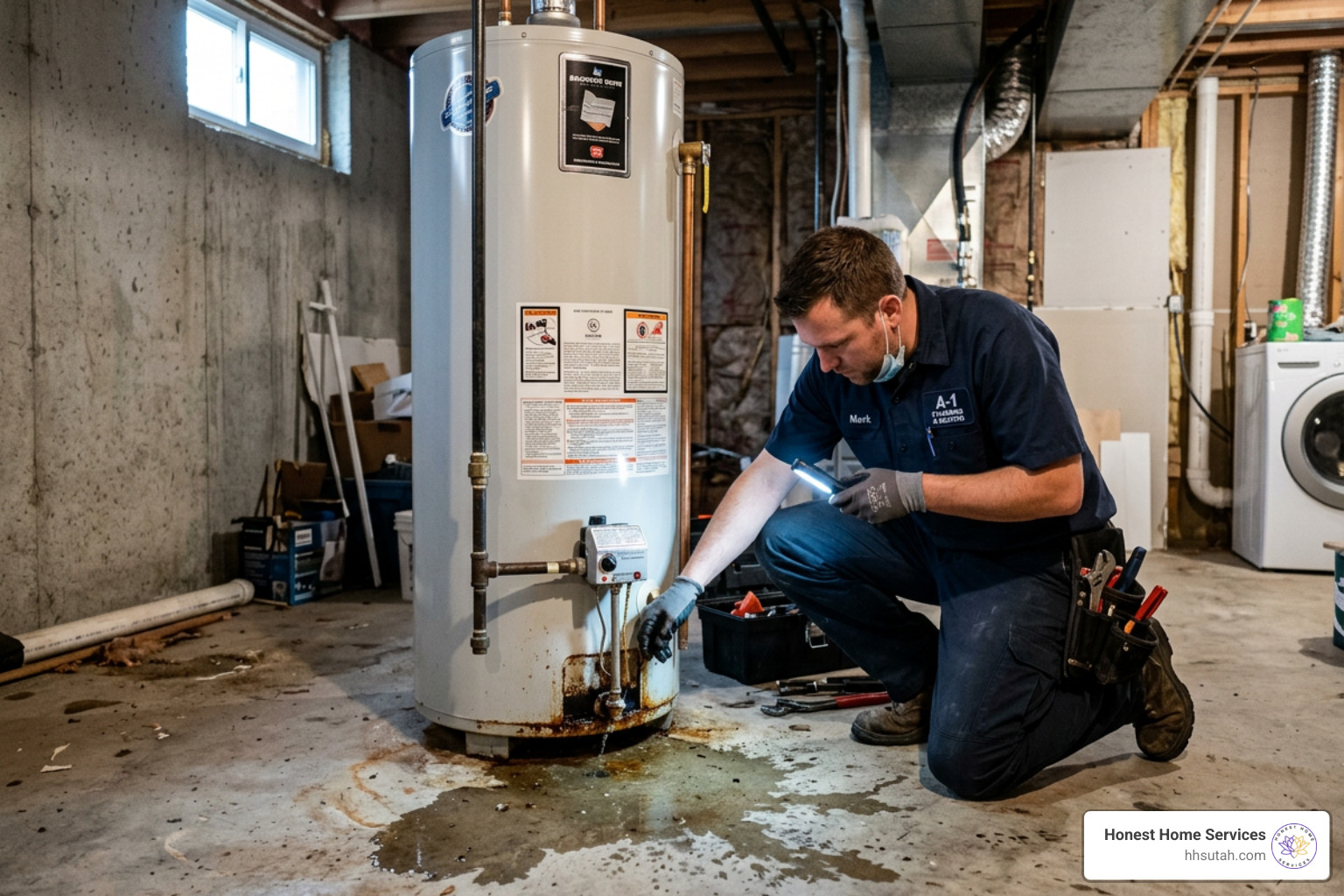
When you realize you need to fix broken water heater units, your first priority isn’t the hot water—it’s safety. A malfunctioning water heater can be more than just an inconvenience; it can be a hazard.
If you notice a large puddle forming at the base of your tank, or if you hear the sound of rushing water, immediately turn off the water supply. You can usually find a dedicated shut-off valve on the cold water inlet pipe (the one going into the top of the tank). Turn it clockwise to stop the flow.
Next, disconnect the power. For electric models, flip the dedicated switch in your breaker panel. For gas models, turn the dial on the gas control valve to “Off.”
Warning Signs You Can’t Ignore
How do you know your water heater is on its last legs? Keep an eye—and ear—out for these statistics-backed symptoms:
- Unusual Noises (46% frequency): If your tank sounds like it’s boiling marbles or popping popcorn, that’s a major sign of sediment buildup.
- Water Too Hot (21% frequency): This often points to a malfunctioning thermostat or a high-temperature limit switch that has failed to trip.
- The “Rotten Egg” Smell: If you smell gas, leave your home immediately and call your gas provider. However, if the water itself smells like sulfur, it’s likely a chemical reaction with a corroded sacrificial anode rod.
- Visible Leaks (4% frequency): While less common than noise, a leak from the tank itself is often a terminal diagnosis.
Especially during the winter months in places like Salt Lake City or Layton, losing your heating source can be dangerous. Be sure to check the NHS cold weather advice to stay safe while waiting for a repair. If the situation is urgent, you can find more info about handling emergency water heater repairs to get your home back to normal quickly.
How to Fix Broken Water Heater Power and Temperature Issues
If your water is lukewarm or completely cold, the problem is usually related to the power source or the thermostat settings. Before you panic and assume you need a new unit, check the temperature dial.
The Department of Energy suggests that 120°F is the “sweet spot” for most households. It’s hot enough to kill bacteria but low enough to prevent scalding and save on energy bills. If your water is consistently too hot or too cold, the thermostat might just need a small adjustment with a screwdriver.
Troubleshooting an Electric Water Heater
Electric heaters rely on two heating elements and a series of electrical connections. If the water is totally cold, follow these steps:
- Check the Breaker: Locate your home’s main electrical panel. Look for a double-pole breaker labeled “Water Heater.” If it’s in the middle position, flip it all the way off and then back on.
- Reset the High-Temperature Limit Switch: If the breaker is fine, the “ECO” (Emergency Cut Off) switch might have tripped. Turn off the power at the breaker, remove the upper access panel on the side of the heater, and push the red reset button. If you hear a “click,” you’ve restored power.
- Test the Elements: If you have some hot water but it runs out quickly, your lower heating element has likely failed. This is a common water heater problem that requires a professional with a multimeter to diagnose safely.
How to Fix Broken Water Heater Gas Supply Issues
Gas water heaters are a bit more complex because they involve a flame and an exhaust system.
- Check the Pilot Light: Look through the small viewport at the bottom of the tank. If you don’t see a blue flame, your pilot light is out. Follow the instructions on the tank’s label to relight it.
- Inspect the Thermocouple: If the pilot light lights but goes out as soon as you let go of the knob, you likely have a faulty thermocouple. This small copper rod tells the gas valve that it’s safe to stay open. You can often fix your hot water with thermocouple replacement for a relatively low cost.
- Burner Issues: If the pilot is on but the main burner won’t ignite, the gas control valve may be faulty.
Troubleshooting Common Water Heater Problems
Sometimes the water is hot, but everything else feels wrong. Maybe it’s the color, the smell, or the terrifying sounds coming from the basement. These are usually maintenance issues rather than total mechanical failures.
Dealing with Sediment and Noisy Tanks
In Northern Utah, we deal with hard water. Over time, minerals like calcium and magnesium settle at the bottom of the tank, forming a thick layer of “scale.”
When the burner or heating element turns on, it has to heat through that rock-like layer. This causes water trapped underneath to boil and turn into steam bubbles, which burst through the sediment—creating that distinct rumbling or popping noise. This makes your heater work harder, drives up your energy bills, and eventually causes the tank bottom to overheat and crack.
To fix this, you need to perform an annual flush.
- Turn off the power and water.
- Attach a garden hose to the drain valve at the bottom.
- Run the hose to a floor drain or outside.
- Open the valve and let the water run until it comes out clear.
While you’re at it, check your anode rod. This “sacrificial” rod is designed to rust so your tank doesn’t. If your water is rusty or smells like eggs, check out this info about gas water heater anode rods to see if a swap is necessary. Regularly extending water heater life with an anode rod swap is the single best thing you can do for your appliance.
How to Fix Broken Water Heater Leaks
Not all leaks mean the tank is dead. Here is how to play detective:
- Leaks from the Top: Check the cold water inlet and hot water outlet pipes. Often, these are flexible lines that just need to be tightened with a wrench.
- The T&P Valve: The Temperature and Pressure Relief valve is a safety device. If it’s dripping, it could be faulty, or it could be doing its job because your water is too hot or your home’s water pressure is too high (over 80 psi).
- The Drain Valve: If the plastic valve at the bottom is dripping, you can often replace it with a high-quality brass version.
If you are struggling to find the source, our guide to fixing your leaky water heater can help you narrow it down.
Maintenance and When to Call a Professional
Most water heaters have a lifespan of 8 to 12 years. If your unit is in that age range and starts acting up, you have to decide: repair or replace?
We recommend the 50% Rule: If the cost to fix broken water heater components is more than half the cost of a brand-new, high-efficiency unit, it’s time to upgrade. Newer models are significantly more energy-efficient and can save you hundreds of dollars in utility costs over their lifespan. You can find more details on hot water repair costs to help you make an informed choice.
Routine Maintenance Checklist
To avoid a 2:00 AM emergency, follow this simple yearly checklist:
- Test the T&P Valve: Lift the lever slightly to ensure water flows out, then let it snap back. If it doesn’t stop dripping, replace the valve.
- Check the Anode Rod: If it’s thinner than a pencil or heavily corroded, replace it.
- Flush the Sediment: Drain the tank at least once a year to keep it quiet and efficient.
- Insulate the Pipes: Adding foam insulation to the first few feet of hot water pipe can reduce heat loss.
For a deeper dive, read our guide on how to service your gas water heater to keep it running smoothly for years.
Professional Repair vs. DIY Safety
While we love a good DIY project, some things are simply too dangerous for an amateur.
- Gas Leaks: If you smell gas or suspect a leak in the fuel line, do not touch it.
- Electrical Wiring: Water and electricity are a deadly combination. If you aren’t comfortable with a multimeter and high-voltage circuits, call us.
- Carbon Monoxide: Improperly vented gas heaters can leak odorless, deadly CO into your home.
- Warranty Issues: Many manufacturers will void your warranty if repairs aren’t performed by a licensed professional.
Knowing who to call for water heater repairs ensures the job is done to code and your family stays safe.
Frequently Asked Questions about Water Heater Repair
How do I reset my electric water heater?
First, turn off the power at the circuit breaker. Remove the upper access panel on the side of the tank and pull back the insulation. You will see a red button on the high-temperature limit switch. Press it until it clicks. Replace the panel and turn the power back on. It usually takes about an hour for the water to heat back up.
What is the most common cause of water heater failure?
Sediment buildup is the #1 killer of water heaters. As minerals settle at the bottom, they create “hot spots” that cause the steel tank to overheat, lose efficiency, and eventually rust through or crack.
How long does a typical water heater last?
A standard tank water heater usually lasts between 8 and 12 years. Tankless models can last 15 to 20 years with proper maintenance. If your tank is over 10 years old and starts leaking from the bottom, replacement is almost always the better investment.
Conclusion
Trying to fix broken water heater issues on your own can be empowering, but you don’t have to do it alone. Whether you’re in Salt Lake City, Clearfield, or Draper, Honest Home Services is here to provide the expert help you need.
We pride ourselves on being Northern Utah’s most reliable team, offering fair pricing and 24/7 emergency support for those times when a cold shower just isn’t an option. From simple sediment flushes to complex gas valve replacements, our local technicians are ready to restore your home’s comfort.
If you’re tired of troubleshooting and want a guaranteed fix, contact us today for Salt Lake City Water Heater Repair and experience the Honest Home Services difference.