

When Your Kitchen Sink Is Clogged in the Main Line
A kitchen sink clogged main line is more than a slow drain — it means wastewater from your entire home has nowhere to go. And in Utah homes, it can escalate fast.
Here’s what to do right now:
- Stop using water in your home immediately to prevent sewage backup into other fixtures.
- Check other drains — if your toilet gurgles or your tub backs up when you run the kitchen sink, it’s a main line issue, not just a kitchen clog.
- Locate your sewer cleanout (usually outside near the foundation or in the basement) and remove the cap to relieve pressure.
- Try a plumbing snake through the cleanout if you’re comfortable doing so — push, rotate clockwise, and pull back to break up the blockage.
- Call a licensed plumber if multiple fixtures are backing up, you smell sewage, or snaking doesn’t clear it.
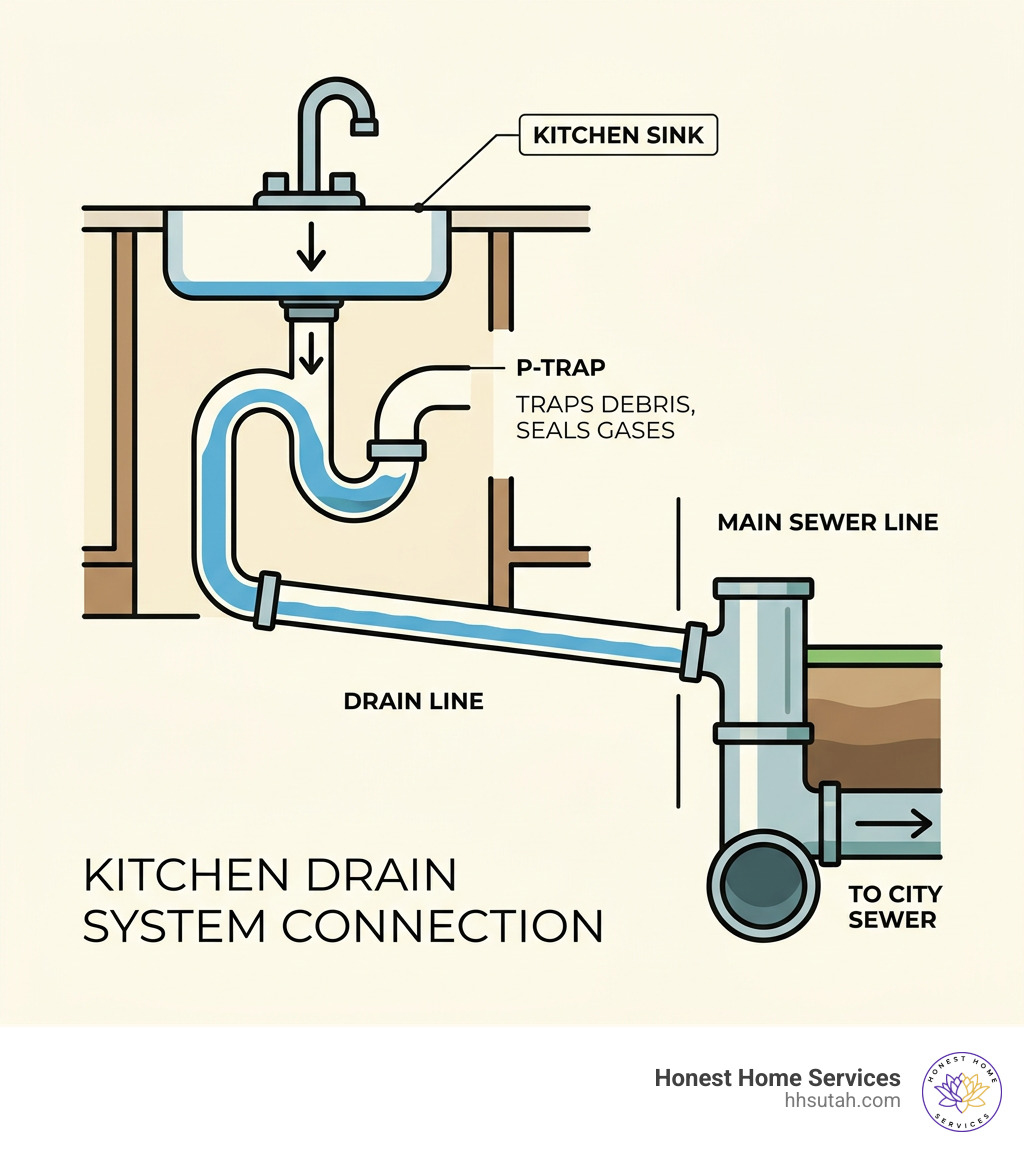
The difference matters. A localized kitchen clog sits in your P-trap or drain line. A main line blockage affects every drain in the house — and ignoring it can mean raw sewage on your floor.
At Honest Home Services, we’ve spent over 20 years diagnosing and clearing kitchen sink clogged main line issues for homeowners and businesses across Northern Utah — and we know how quickly a backed-up kitchen drain can turn into a whole-home plumbing emergency. Read on for everything you need to know to diagnose, fix, and prevent it.
Learn more about kitchen sink clogged main line:
Identifying a Kitchen Sink Clogged Main Line vs. Localized Clogs
When your kitchen sink starts acting up, your first instinct might be to reach for a plunger or a bottle of vinegar. However, if the problem is deeper in the system, those quick fixes won’t do much. Identifying a kitchen sink clogged main line early is the best way to prevent a minor annoyance from turning into a flooded basement.
The main sewer line is the “trunk” of your plumbing tree. Every drain in your house—from the upstairs shower in Bountiful to the basement floor drain in Salt Lake City—eventually feeds into this one large pipe. If that pipe is blocked, the water has nowhere to go but back up into your home.
Warning Signs of a Kitchen Sink Clogged Main Line
A main line blockage rarely stays quiet. Because all your fixtures are connected, you’ll notice “cross-talk” between them. Here are the most common red flags:
- Multiple Backups: If your kitchen sink is backed up and your washing machine causes the floor drain to overflow, you aren’t dealing with two separate clogs. You have one big problem in the main line.
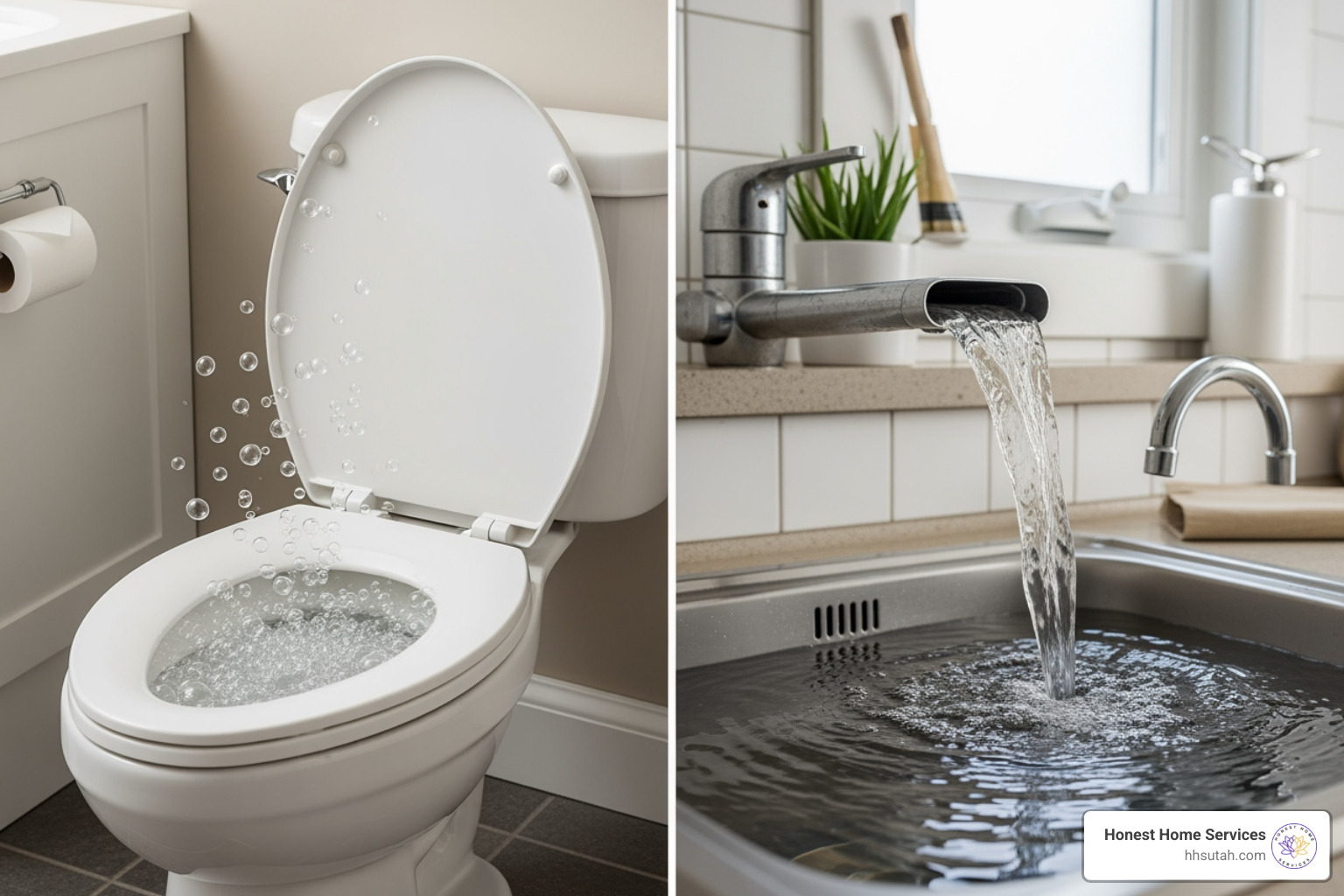
- Gurgling Sounds: Have you ever heard a strange “glug-glug” sound from the toilet when you drain the kitchen sink? This happens because air is trapped in the pipes and is trying to escape through the nearest opening.
- Sewage Odors: A foul, rotten-egg smell wafting from your drains is a sign that sewer gases are being pushed back into the house.
- Water in Unexpected Places: Running the kitchen faucet shouldn’t make water rise in your bathtub. If it does, the main line is likely the culprit.
To help you stay ahead of the mess, check out our guide on what to do when your main line backs up.
Differentiating Between Simple Clogs and Sewer Issues
How do you know if you just need to clean the P-trap or if you need a sewer rod? Use this comparison table to triage your plumbing:
| Feature | Localized Kitchen Clog | Main Line Blockage |
|---|---|---|
| Affected Fixtures | Only the kitchen sink | Multiple fixtures (toilets, tubs, sinks) |
| Reaction | Water stays in the sink bowl | Water backs up in low-level drains (showers/tubs) |
| Gurgling | May gurgle at the sink only | Toilets bubble or gurgle when other drains run |
| Odors | Food-like rot at the sink | Pervasive sewage smell throughout the home |
| DIY Fix | Plunger or P-trap cleaning | Requires cleanout access and heavy-duty auger |
If you suspect a main line issue, it is vital to act quickly. Standing sewage isn’t just gross; it’s a severe health hazard that can carry harmful bacteria and parasites into your living space.
Common Causes of Main Sewer Line Blockages
In Northern Utah, we see a variety of factors that lead to a kitchen sink clogged main line. From the older clay pipes in parts of Murray to the shifting soils in Draper, your main line is constantly under pressure.
Why Kitchen Waste is a Main Line Threat
The kitchen is often the “patient zero” for main line clogs. While toilets handle organic waste and paper, the kitchen sink deals with much stickier substances.
- FOG (Fats, Oils, and Grease): This is the leading cause of kitchen-related sewer clogs. When warm grease goes down the drain, it eventually cools and solidifies. Over time, it creates a “fatberg” that catches food particles and hair, eventually sealing the pipe shut.
- Food Particles: Even with a garbage disposal, items like coffee grounds, eggshells, and fibrous vegetables (celery, potato peels) don’t fully dissolve. They settle in the main line and create a sludge.
- Soap Scum: When combined with grease, soap residue creates a hard, waxy buildup that narrows the diameter of your sewer pipe.
To keep your pipes flowing, it is essential to be mindful of watching what you pour down the drain. For more preventative advice, read our effective drain cleaning tips.
Structural Issues and External Factors
Sometimes, the clog isn’t your fault at all. External forces can damage your plumbing regardless of how careful you are.
- Tree Roots: This is the #1 cause of sewer clogs worldwide. Roots are drawn to the moisture and nutrients inside your pipes. They can enter through tiny cracks or loose joints, growing into a massive “root ball” that acts like a filter, catching everything you flush.
- Pipe Bellies (Sagging): As the ground settles—common in areas like Saratoga Springs or Lehi—sections of your sewer pipe can sink. These “bellies” create standing pools of water where debris collects rather than flowing to the city main.
- Pipe Age: Older homes in Salt Lake City often have cast iron or clay pipes. These materials eventually corrode, scale, or crack, making them much more prone to catching waste.
Structural failures require more than just a snake. You can learn more about mainline mayhem and sewage repairs to see what long-term solutions look like.
How to Unclog a Main Line from Kitchen Sink Issues
If you’ve confirmed a kitchen sink clogged main line, you can attempt a DIY fix if you have access to a sewer cleanout. However, safety is paramount. Always wear heavy-duty gloves and eye protection, as sewer lines are under pressure and contain bacteria.
Step-by-Step: Using the Sewer Cleanout
The cleanout is a capped pipe (usually 3-4 inches wide) that provides direct access to your main sewer line. It’s often located near the foundation of your house or in the basement.
- Locate the Cleanout: Look for a plastic or iron cap in your yard or near the main water shutoff.
- Loosen the Cap: Use a pipe wrench to slowly unscrew the cap. Warning: If water starts spraying out as you loosen it, stop! This means the line is under intense pressure. Let it drain slowly or call a pro.
- Insert the Snake: Use a motorized plumbing auger (you can rent these at most hardware stores in Layton or West Valley). Feed the cable into the pipe toward the street.
- Rotate and Push: When you feel resistance, you’ve hit the clog. Rotate the cable clockwise to “bite” into the blockage. Push and pull the cable to break it apart.
- Flush the Line: Once the water in the cleanout drops, run a garden hose into the pipe to flush out the remaining debris.
For a deeper dive into this process, check out our guide on unclogging the mystery of your home’s drain cleanout or our tips on drain blockage removal.
Safe DIY Methods for a Kitchen Sink Clogged Main Line
If the clog is partial, you might be able to clear it without heavy machinery:
- Hot Water Flush: For grease-heavy clogs, pouring several gallons of very hot (not boiling, if you have PVC) water down the drain can help soften the buildup.
- Enzyme Cleaners: Unlike harsh chemicals, enzyme cleaners use bacteria to “eat” organic waste. These are great for maintenance but won’t clear a total blockage or tree roots.
- The Baking Soda & Vinegar Trick: While better for minor sink clogs, the fizzing action can sometimes help loosen soft debris in the upper parts of the main line.
For more DIY inspiration, see our article from gurgles to gushers: your guide to main line clogs.
Professional Solutions for Stubborn Main Line Clogs
When a snake isn’t enough, it’s time to bring in the big guns. At Honest Home Services, we use advanced technology to ensure the clog is gone for good, not just poked through.
When to Call a Professional Plumber
DIY attempts have their limits. You should stop and call us if:
- The Clog Returns: If you clear the line and it clogs again within a week, you likely have a structural issue like a pipe belly or tree roots.
- Raw Sewage is Backing Up: This is a health emergency.
- You Can’t Find the Cleanout: Some older Utah homes don’t have an accessible cleanout, requiring us to pull a toilet to gain access.
- The Auger Gets Stuck: If your rented snake gets caught on a root or a broken pipe, don’t force it—you could snap the cable.
Recognizing the signs you need professional drain cleaning can save you thousands in avoided water damage.
Advanced Techniques and Costs
We offer several high-tech solutions for a kitchen sink clogged main line:
- Sewer Camera Inspection: We feed a waterproof camera into your line to see exactly what’s causing the problem. This eliminates guesswork.
- Hydro-Jetting: Think of this as a pressure washer for your pipes. It uses up to 4,000 PSI to blast away grease, scale, and even small tree roots, scouring the pipe walls clean. Check out these 5 signs you need hydro-jetting.
- Trenchless Repair: If the pipe is broken, we can often “reline” it from the inside without digging up your entire yard.
Wondering about the investment? You can find a breakdown of main sewer line clog repair costs on our site.
Frequently Asked Questions about Main Line Clogs
Why are chemical drain cleaners risky for main sewer lines?
Chemical cleaners are often ineffective against the heavy grease and roots found in main lines. More importantly, they generate intense heat that can soften PVC pipes or corrode older metal ones. If the cleaner doesn’t clear the clog, you’re left with a pipe full of toxic acid that makes it dangerous for a plumber to work on later.
How much does it typically cost to clear a main line?
Costs vary based on the severity and location. A basic snaking might range from $200 to $400, while professional hydro-jetting typically costs between $350 and $600. Camera inspections are usually around $200 to $300 but can save you money by preventing unnecessary repairs. For local Salt Lake City residents, we offer competitive Salt Lake City drain cleaning rates.
How often should I have my main line inspected?
We recommend a professional inspection every two years. If you live in an older neighborhood with mature trees (like parts of Kaysville or Farmington), an annual checkup is even better. Regular maintenance is the only way to catch tree roots before they cause a total collapse. Learn more about Salt Lake City sewer mainline repair and maintenance schedules.
Conclusion
A kitchen sink clogged main line is a stressful situation, but it doesn’t have to be a disaster. By recognizing the warning signs—like gurgling toilets and multiple backed-up drains—you can take action before your home is flooded with sewage. Whether you’re trying to snake the line yourself or you need the power of hydro-jetting, the key is to act fast.
At Honest Home Services, we pride ourselves on being the reliable choice for Northern Utah. From Clearfield to Draper, our local, expert technicians are ready to provide the honest and affordable service you deserve. We offer 24/7 emergency support because we know plumbing emergencies don’t wait for business hours.
Don’t let a clog ruin your week. Schedule your Salt Lake City Sewer Mainline Repair today and let us get your home flowing smoothly again!