

What Does It Cost to Replace a Hot Water Tank in 2026?
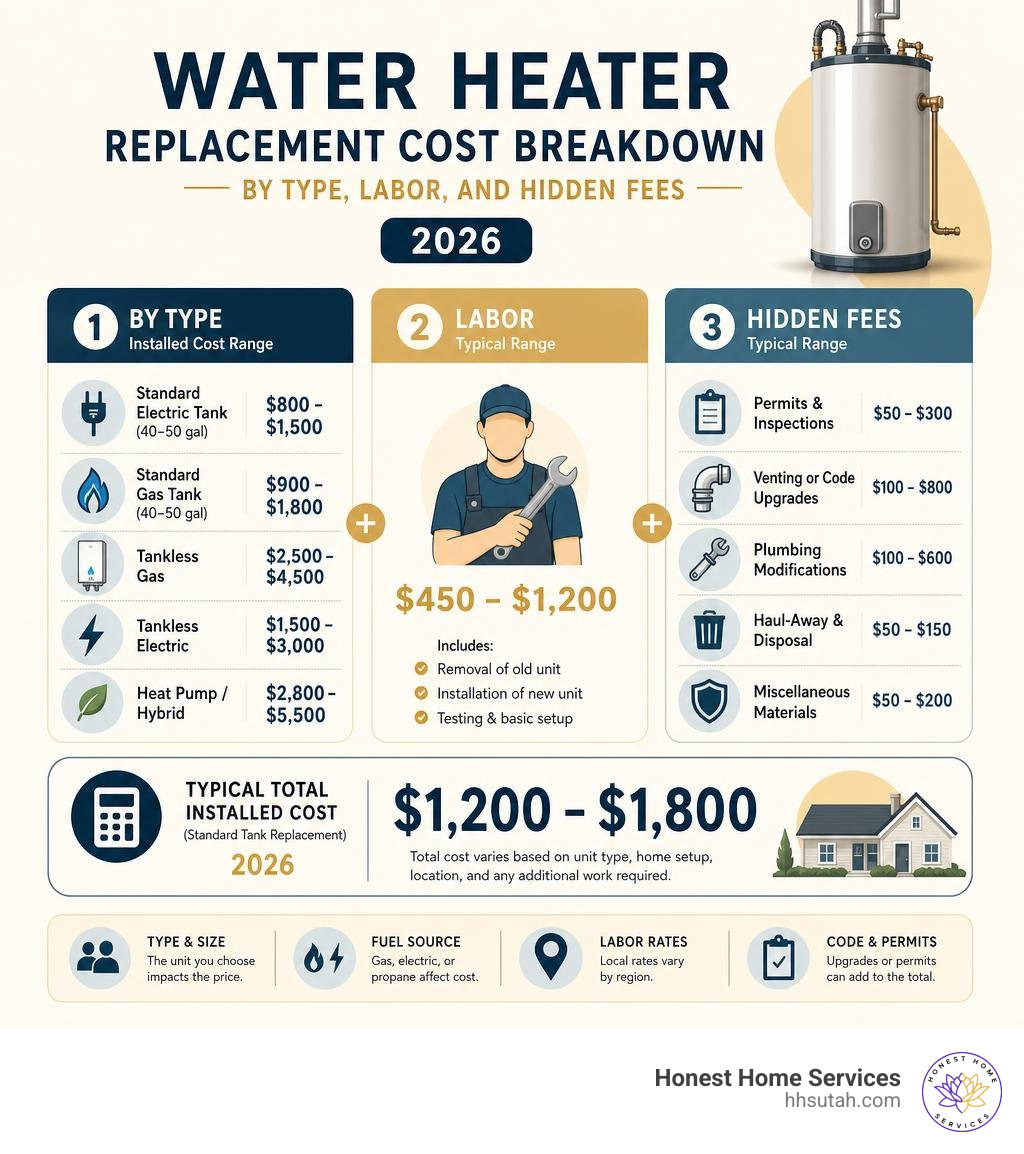
The cost to replace a hot water tank in 2026 typically falls somewhere between $600 and $4,500 — but most homeowners pay around $1,200 to $1,800 for a standard tank replacement, fully installed.
Here’s a quick breakdown to answer your question right away:
| Water Heater Type | Installed Cost Range (2026) |
|---|---|
| Standard electric tank (40-50 gal) | $800 – $1,500 |
| Standard gas tank (40-50 gal) | $900 – $1,800 |
| Tankless gas | $2,500 – $4,500 |
| Tankless electric | $1,500 – $3,000 |
| Heat pump / hybrid | $2,800 – $5,500 |
The national average for a like-for-like 50-gallon tank replacement is approximately $1,800 installed, including the unit, labor, materials, and haul-away of the old heater.
Your actual cost depends on a few key things:
- The type and size of water heater you choose
- Your fuel source (gas, electric, or propane)
- Labor rates in your area
- Any required permits, venting upgrades, or code work
Most water heaters fail without much warning — often at the worst possible moment. Knowing what to expect before that happens puts you in a much stronger position when it’s time to act.
At Honest Home Services, we’ve spent over 20 years replacing water heaters for homeowners and small businesses across Northern Utah, and we know what drives the cost to replace a hot water tank up or down in this region. In this guide, we’ll walk you through everything you need to budget confidently and make the right call for your home.
Average Cost to Replace a Hot Water Tank in 2026
When calculating the total cost to replace a hot water tank, it helps to look at the project as a sum of three distinct parts: the equipment, the professional labor to install it, and the miscellaneous job supplies required to meet modern safety codes.
In May 2026, the national average cost to replace a hot water heater starts at $1,586 to $1,843 per heater. However, standard like-for-like swaps in mid-cost markets can sometimes be completed for slightly less, while complex upgrades can easily push past those averages. If you want to estimate your exact project based on your home’s setup, you can play around with this Water Heater Cost Calculator (2026) | Tank & Tankless to see how different choices impact the bottom line.
Equipment Cost to Replace a Hot Water Tank
The equipment itself — the physical metal tank or sleek wall-mounted tankless box — represents a significant chunk of your budget. Tank water heater equipment costs usually range from $350 to $1,500 for traditional models, depending on the tank size and the chosen fuel source.
If you are replacing a standard tank model, your primary options are electric or gas. Electric models are generally cheaper to purchase upfront, with a basic 40-gallon electric tank costing between $350 and $700. Gas units, which require more complex combustion chambers and gas valves, typically run between $500 and $1,200 for the unit alone.
If you are stepping up to a massive 75-gallon or 80-gallon tank to supply a home with multiple teenagers and a giant soaking tub, expect the equipment cost to jump to $1,100 to $3,100. For a deeper look at planning these equipment expenses, check out our guide on Budgeting for a New Hot Water Cylinder.
Labor and Installation Fees
Labor costs represent the other major half of your total invoice, typically accounting for 30% to 50% of the total bill. Professional plumbing labor rates generally range from $45 to $200 per hour, depending on the complexity of the job and the credentials of the technician.
A standard like-for-like swap (for instance, taking out an old 40-gallon gas tank and putting a new 40-gallon gas tank in the exact same spot) is a highly efficient process. A skilled team can usually complete this in 2 to 3 hours, keeping labor costs in a manageable $300 to $600 range.
However, installation complexity can quickly drive labor fees up. If your plumbing team has to relocate the water heater from a tight crawlspace to a garage, run new gas lines, upsize your electrical panel, or install advanced venting systems, the installation time can stretch to a full day or more, pushing labor fees up to $1,000 or even $2,500.
Comparing Costs by Water Heater Type and Fuel Source
The technology you choose to heat your water is the single biggest factor in determining your final price tag. While a traditional tank remains the most budget-friendly option upfront, tankless and hybrid systems offer incredible energy efficiency that can save you thousands of dollars over their lifespans.
To help you compare your options at a glance, we’ve broken down the average installed costs of various systems:
| System Type | Upfront Installed Cost | Estimated Lifespan | Average Annual Operating Cost |
|---|---|---|---|
| Standard Electric Tank | $800 – $1,500 | 10 – 15 Years | $668 |
| Standard Gas Tank | $900 – $1,800 | 10 – 15 Years | $202 – $315 |
| Tankless Electric | $1,500 – $3,000 | 20+ Years | $500 – $600 |
| Tankless Gas | $2,500 – $4,500 | 20+ Years | $150 – $250 |
| Hybrid Heat Pump | $2,800 – $5,500 | 13 – 18 Years | $176 |
For a comprehensive breakdown of how these technologies compare over the long haul, you can read the Water Heater Replacement Cost 2026: Tank vs Tankless Guide | Ecostify.
Traditional Storage Tank Systems
Traditional storage tanks are the classic choice for a reason: they are reliable, simple to understand, and cost-effective to install. These units work by keeping a large volume of water (usually 40 to 50 gallons) hot and ready 24/7.
Electric storage tanks are the cheapest to install but the most expensive to run, as they rely on electric resistance elements to keep the water hot. Gas-fueled tanks (which can run on natural gas or propane) cost slightly more upfront due to venting and gas line requirements, but they boast much faster recovery times and are significantly cheaper to operate in areas with low natural gas rates.
If you’re currently using or considering a gas model, you’ll want to understand the ongoing maintenance and service requirements. You can learn more about these variables in our detailed breakdown of Don’t Get Burned: Understanding Gas Water Heater Service Costs.
Tankless and Hybrid Heat Pump Upgrades
If you’re tired of running out of hot water during the morning rush or want to slash your monthly utility bills, upgrading to a high-efficiency system is an excellent move.
Tankless water heaters, often called “on-demand” systems, do away with the storage tank entirely. Instead, they use powerful burners or heating elements to heat water instantly as it flows through the unit. Because they don’t suffer from “standby heat loss” (energy wasted keeping a giant tank of water hot when nobody is home), they are up to 34% more energy-efficient than traditional tanks. However, switching from a tank to a tankless system requires significant installation upgrades, including specialized Category III or IV stainless steel venting for gas models, or heavy-duty electrical upgrades (often requiring 100 to 140 amps of dedicated power) for electric models.
Hybrid heat pump water heaters are another incredible option, especially for homes looking to go all-electric. These systems work like a refrigerator in reverse: they pull heat from the surrounding air and use it to heat the water. They are the absolute champions of efficiency, costing an average of just $176 per year to run. Even better, they produce a pleasant cooling and dehumidifying effect in the room where they are installed.
To explore these modern options and see which one fits your household’s lifestyle, take a look at Everything You Need to Know About New Water Heaters.
Key Factors Influencing Your Replacement Budget
If you’ve ever received a plumbing quote that was higher than the “starting at” prices you saw online, it’s likely because of the unique physical and structural requirements of your home. No two water heater installations are exactly alike.
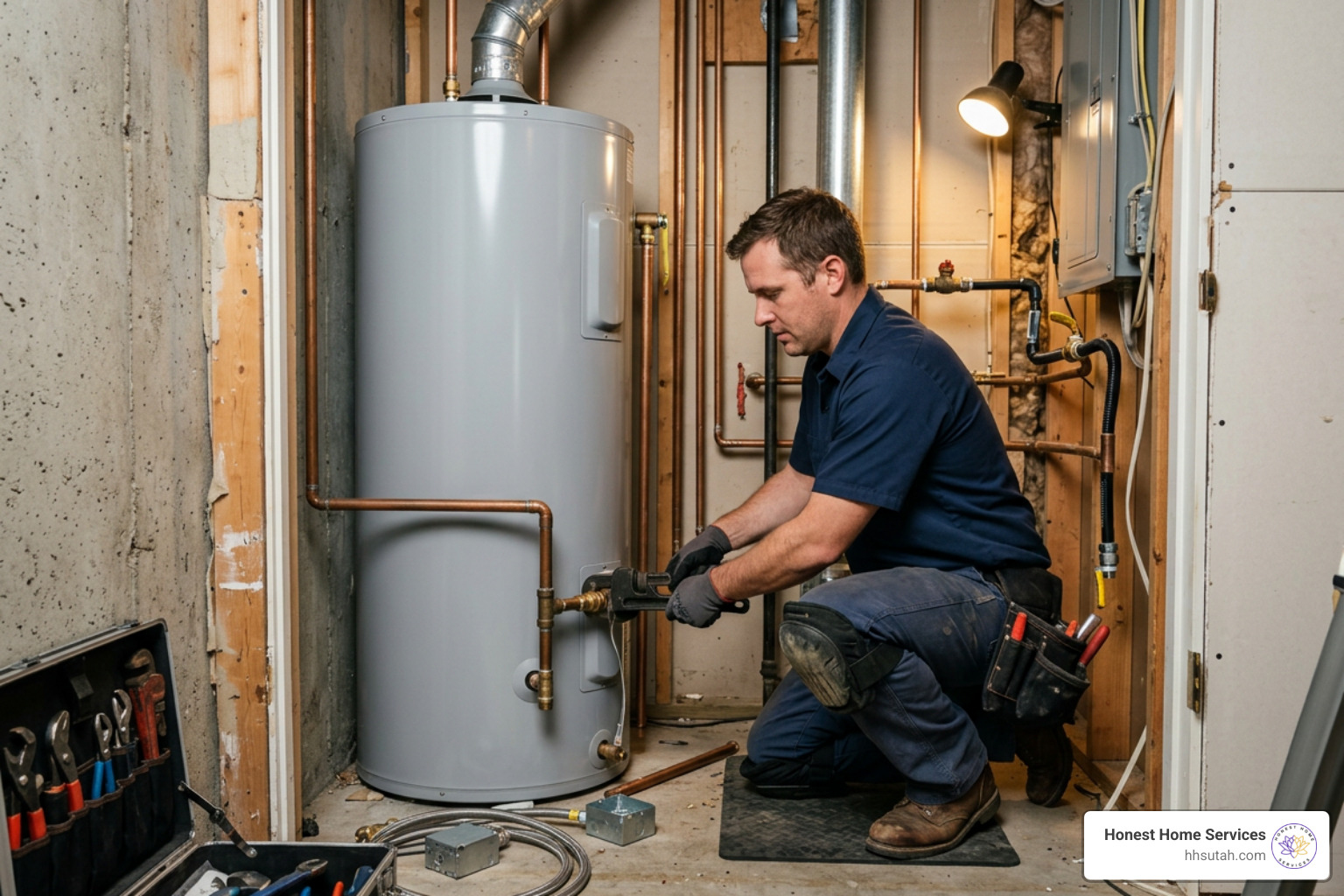
Here are the primary variables that will shape your final estimate:
- Tank Size and Capacity: Sizing your water heater correctly is crucial. A 30-to-40-gallon tank is typically plenty for a 1-to-2-person household, but a family of 4 or 5 will require a 50-to-75-gallon tank to avoid cold showers.
- Physical Location: Is your water heater easily accessible in an open garage or basement, or is it tucked away in a tight attic, crawlspace, or closet? Difficult-to-reach locations require extra physical labor, specialized rigging, and more time, which increases the labor cost.
- Venting Requirements: Gas water heaters must vent their combustion gases safely outside. Traditional atmospheric vents use a simple metal pipe up a chimney, but high-efficiency power-vent models require PVC venting run through an exterior wall, which can add $500 to $1,000 to the installation cost.
- Seismic Strapping: Here in Northern Utah, we live in an active seismic zone. Local building codes require water heaters to be securely strapped to the wall studs to prevent them from tipping over and rupturing gas or water lines during an earthquake.
Regional Labor Rates and Permit Fees
Where you live plays a major role in what you will pay. Labor rates, permit fees, and local energy codes vary widely across the country. For example, a standard water heater replacement that costs $1,350 in Mississippi can easily exceed $2,520 in Hawaii or California due to local cost-of-living differences and strict regulatory requirements.
For a complete state-by-state breakdown of these geographic differences, check out the Average Water Heater Cost by State in 2026 (All 50 States Compared) | UseCalcPro.
In our local Northern Utah service areas — from Salt Lake City and West Valley to Layton, Kaysville, and down to Lehi — we fall right around the national average. However, municipal permits are strictly enforced across Salt Lake, Davis, and Utah counties. Pulling a permit and scheduling a professional inspection typically costs between $50 and $250, but it is an absolute necessity to ensure your home remains safe and your homeowner’s insurance policy stays valid.
Hidden Costs to Replace a Hot Water Tank
When budgeting for a water heater replacement, it’s easy to focus solely on the unit and the labor. However, there are several “hidden” costs that frequently pop up on professional estimates to ensure the system is safe and code-compliant:
- Thermal Expansion Tanks: When water is heated, it expands. If you have a “closed” plumbing system (which is common in modern Utah homes with backflow preventers), this expanding water has nowhere to go, creating dangerous pressure spikes. An expansion tank (typically costing $90 to $350 installed) absorbs this pressure and protects your pipes and water heater from premature failure.
- Removal and Disposal Fees: Getting a heavy, sediment-filled, 150-pound old water heater out of your basement and safely disposed of isn’t easy. Most professional plumbing companies charge a disposal fee of $100 to $400 to haul away and recycle your old unit.
- Gas Line and Electrical Upgrades: If you are switching from a tank to a tankless unit, your existing gas line may not be large enough to supply the massive amount of fuel the burner needs instantly. Upsizing a gas line or upgrading an electrical panel can add $500 to $2,500 to your total project cost.
If you are dealing with a sudden water heater breakdown and want to understand how these individual repair and upgrade costs stack up, read our guide: How Much Will Your Broken Water Heater Cost to Fix?.
When to Repair vs. Replace Your Water Heater
If your water heater is acting up, you might be wondering if you can get away with a simple, affordable repair rather than shell out the money for a complete replacement.

To make the right choice, we recommend following the 50% Rule: if your water heater is over 8 years old, and the cost of the repair exceeds 50% of the cost of a brand-new unit, replacement is almost always the smarter financial move.
Here are the telltale signs that it is time to say goodbye to your old water heater and plan for a replacement:
- Active Tank Leaks: If water is pooling around the base of your heater and it is dripping directly from the steel body of the tank itself, the inner lining has failed. A leaking tank cannot be repaired; it must be replaced immediately to prevent catastrophic water damage.
- Rusty or Discolored Water: If your hot water looks rusty or smells metallic, it’s a sign that the sacrificial anode rod has fully depleted and the steel tank itself is beginning to rust from the inside out.
- Age: Traditional tank water heaters have an average lifespan of 8 to 12 years. If your unit is celebrating its 10th birthday, it is living on borrowed time. Replacing it on your own schedule is much cheaper and less stressful than dealing with a flooded basement at 3:00 AM.
For a deeper dive into diagnosing your system and weighing your repair options, check out our article on From Cold Showers to Comfort: Understanding Hot Water Heater Repair Replacement.
DIY vs. Professional Installation
With so many home improvement tutorials online, it can be tempting to try to replace a water heater yourself to save on labor costs. However, we strongly advise against DIY water heater installation.
Water heaters are complex appliances that sit at the intersection of high-voltage electricity, high-pressure water, and highly flammable natural gas or propane. An improper installation can lead to devastating consequences:
- Carbon Monoxide Poisoning: If a gas water heater’s vent is not drafted perfectly, lethal carbon monoxide gas can backdraft into your home’s living spaces.
- Gas Leaks and Explosions: A minor error while connecting a gas line can lead to slow leaks that pose a massive fire and explosion hazard.
- Voided Warranties: Almost all major water heater manufacturers (including A.O. Smith and Bradford White) will immediately void your equipment warranty if the unit is not installed by a licensed professional.
- Insurance Denials: If a DIY-installed water heater leaks and floods your basement, your homeowner’s insurance company may deny your claim if they discover the work was done without a license or permit.
If you want to understand the exact steps involved and see why this job is best left to the pros, you can read The Ultimate DIY Guide to Change Out Your Water Heater Successfully.
Frequently Asked Questions about Water Heater Replacement
How long does a standard water heater last?
A standard storage tank water heater typically lasts 8 to 12 years. High-quality tankless water heaters can last 20 to 25 years or longer because they don’t store water constantly. You can maximize your system’s lifespan by scheduling annual professional flushes and having your sacrificial anode rod inspected and replaced every 3 to 5 years.
Are there tax credits or rebates available in 2026?
Yes! Under the federal Section 25C tax credit program, homeowners can claim a tax credit of up to $2,000 for installing highly efficient ENERGY STAR certified hybrid heat pump water heaters. Additionally, local Utah utility companies (like Rocky Mountain Power and Dominion Energy) frequently offer cash-back rebates for upgrading to high-efficiency gas tankless or electric hybrid systems.
Why is my water heater making a rumbling noise?
If your tank is making a loud rumbling, popping, or banging noise, it is a classic sign of heavy sediment buildup. Over time, the hard water minerals common in Northern Utah settle to the bottom of the tank, forming a thick crust. When the burner fires up, it boils the water trapped beneath this sediment layer, causing it to pop and rumble. An annual professional flush can help clear this out and restore quiet, efficient operation.
Conclusion
Replacing a water heater is a significant home investment, but keeping your household’s hot water running safely and efficiently is essential for your daily comfort. By understanding the equipment options, installation factors, and hidden costs, you can make an informed decision that fits both your budget and your family’s needs.
At Honest Home Services, we are proud to provide honest, reliable, and affordable plumbing, heating, and AC services to homeowners across Northern Utah — including Salt Lake City, Davis County, and Utah County. Our team of local, expert technicians is committed to fair pricing, guaranteed customer satisfaction, and 24/7 emergency support when you need us most.
Ready to explore your options and experience the peace of mind that comes with a professional installation? Read more about the Advantages of Water Heater Replacement or contact our friendly team today to schedule your free, straightforward quote!