
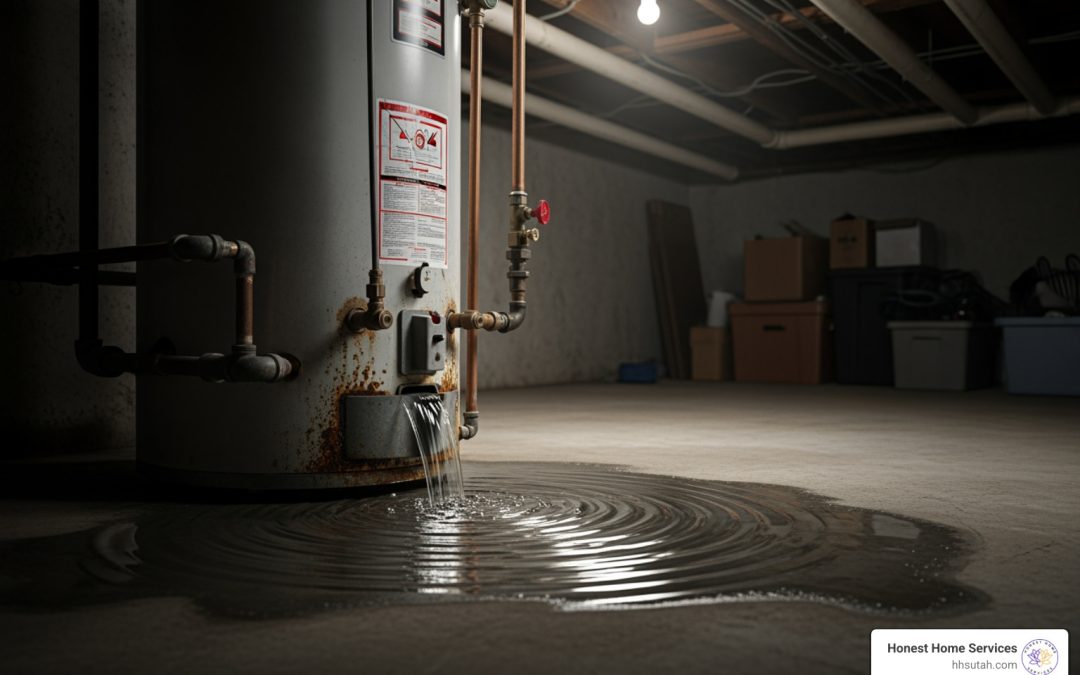
Why You Need to Fix Leaking Water Heater Issues Immediately
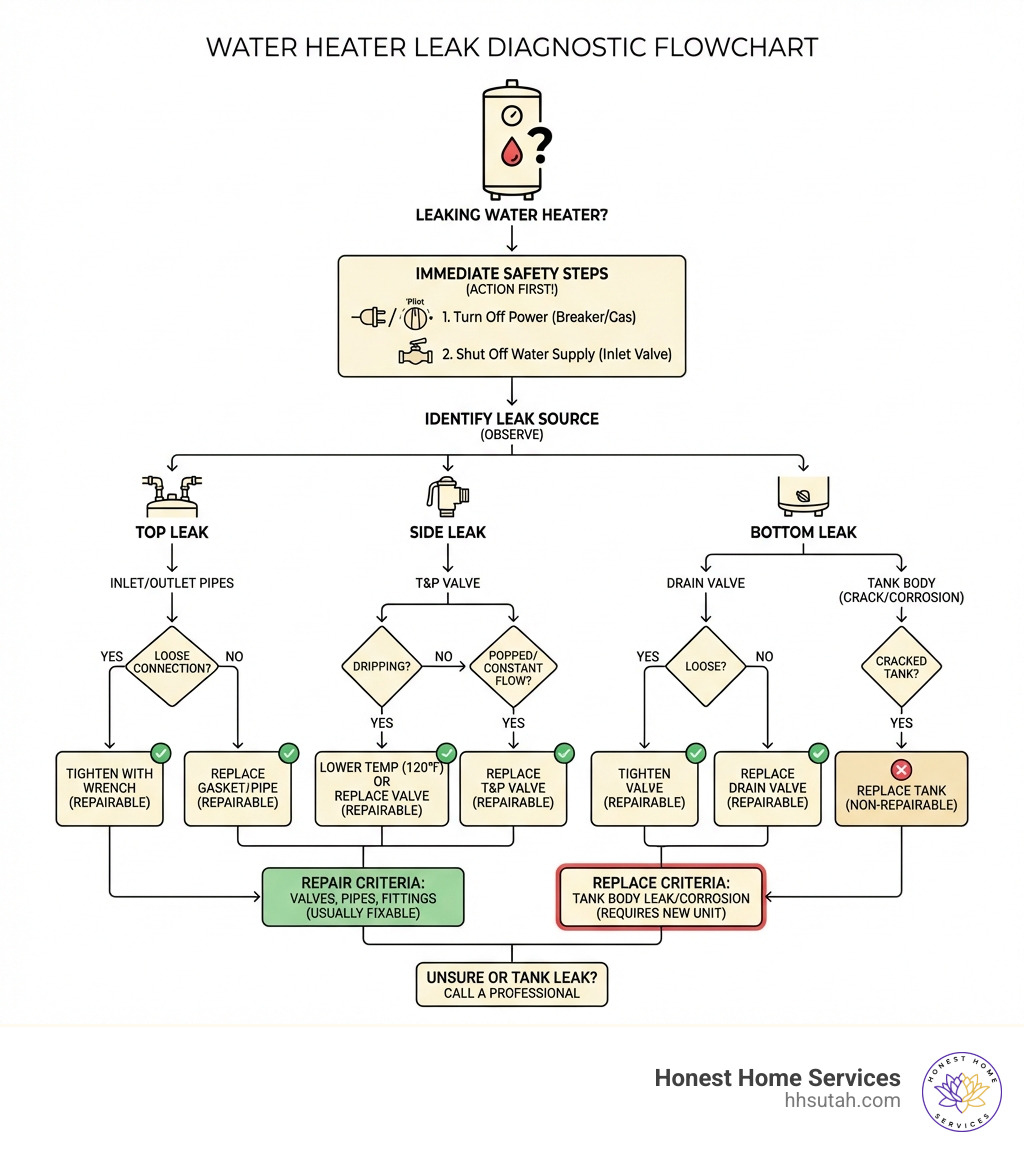
If you need to fix leaking water heater problems, here’s what to do right now:
- Turn off the power – Flip the breaker for electric heaters or set the gas valve to “pilot”
- Shut off the water supply – Close the cold water inlet valve at the top of the tank
- Identify the leak source – Check the top (inlet/outlet pipes), side (T&P valve), or bottom (drain valve or tank)
- Take action based on location:
- Top leaks: Tighten loose pipe connections with a wrench
- Side leaks: Lower temperature to 120°F or replace the T&P valve
- Bottom leaks: Tighten or replace the drain valve, or replace the tank if cracked
- Call a professional if the tank itself is leaking or you’re unsure about the repair
Walking into your utility room and stepping into a cold puddle of water is every homeowner’s nightmare. A leaking water heater can waste nearly 1,660 gallons of water per year from just a single drip, costing you $35 annually in wasted water alone. But the real danger isn’t just your water bill—it’s the potential for flooding, electrical shock hazards, and thousands of dollars in water damage to your home.
The good news? Not every leak means you need a full replacement. Many water heater leaks come from loose connections, faulty valves, or worn gaskets that you can fix yourself or have repaired affordably. However, some leaks—especially those from a corroded tank—signal it’s time for a new unit.
At Honest Home Services, we’ve helped Northern Utah homeowners fix leaking water heater problems for over 20 years, from simple valve replacements to full system installations. Our licensed technicians respond quickly to water heater emergencies, providing transparent pricing and guaranteed repairs to restore your hot water and peace of mind.
Explore more about fix leaking water heater:
Identifying the Source: Is Your Water Heater Actually Leaking?
Before you fix leaking water heater issues, confirm it’s a leak and not condensation. Condensation forms on the tank or cold pipes during high humidity or when incoming water is very cold.
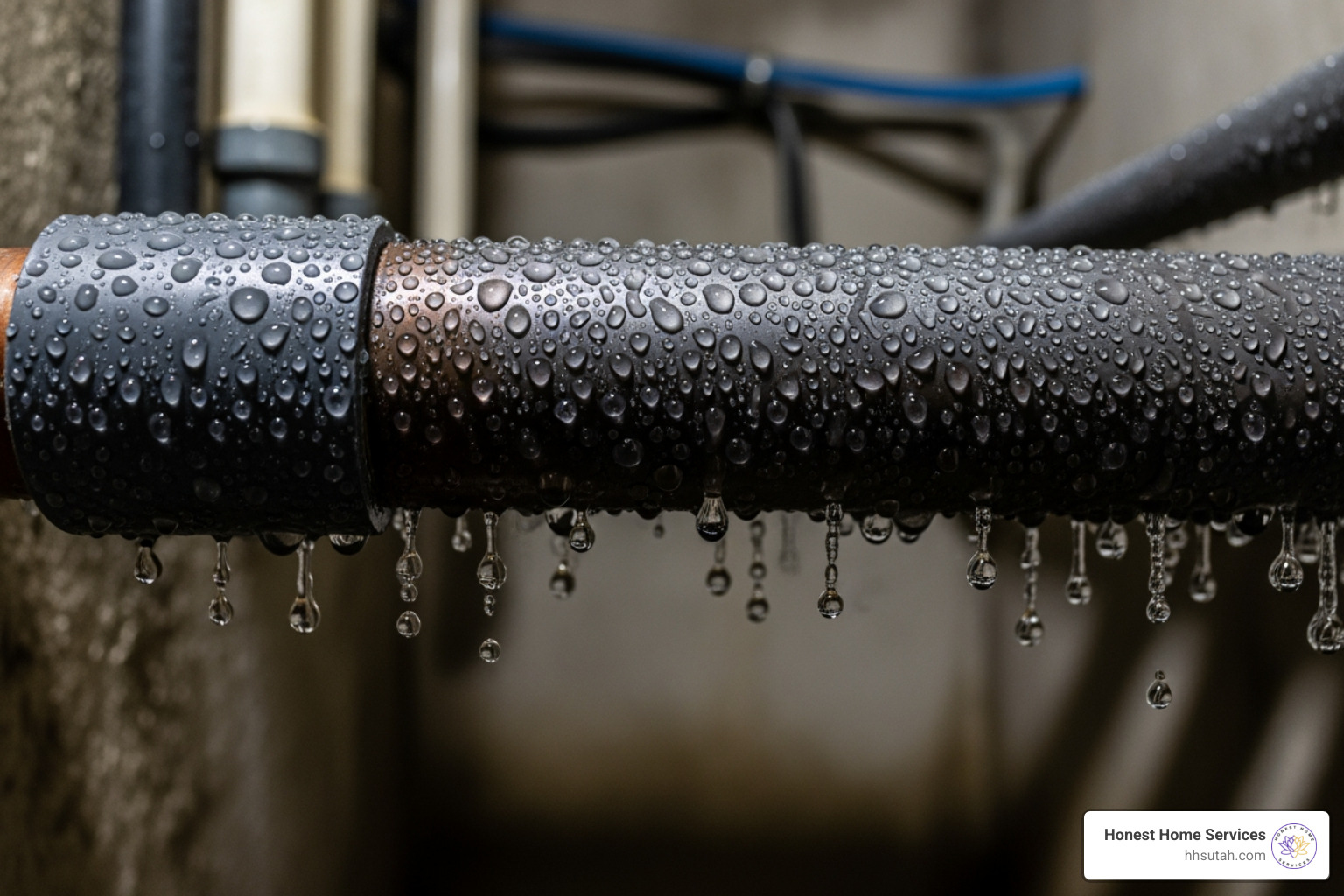
- The Condensation Test: Wipe the area dry. If wetness returns quickly, it’s a leak. If it’s a slow dampness after a long shower, it’s condensation.
- Puddles: Persistent puddles waste nearly 1,660 gallons of water a year.
- Hissing/Noises: Hissing or rumbling (sediment) often precedes leaks.
- Discolored Water: Rusty water indicates internal corrosion.
- High Bills: Spikes in water or energy bills suggest a hidden leak.
Common Leak Signs:
- Water pooling at the base.
- Visible rust on the tank or fittings.
- Drop in hot water pressure or inconsistent supply.
Recognizing these signs early can save you from a plumbing disaster. For more, see our guide on Common Water Heater Problems.
Immediate Steps to Fix Leaking Water Heater Safely
Finding a leaking water heater is alarming. Acting quickly is paramount to prevent damage and ensure safety.
- Turn Off the Power (or Gas):
- Electric: Flip the circuit breaker to “OFF”.
- Gas: Turn the gas shut-off valve to “OFF” or the control knob to “PILOT”.
- Shut Off the Water Supply: Close the cold water inlet valve at the top of the tank (turn clockwise). If it’s stuck, turn off the main water supply to the home.
- Depressurize the Tank: Attach a garden hose to the drain valve and direct it to a drain. Open a hot water faucet in the house and carefully lift the T&P valve lever to release pressure.
Safety Hazards:
- Electrical Shock: Water and electricity are dangerous. Always cut power first.
- Mold Growth: Persistent leaks create damp environments for mold.
- Explosion Risk: A malfunctioning T&P valve can allow dangerous pressure buildup.
For urgent help, see our guide on Handling Emergency Water Heater Repairs.
| Feature | Electric Water Heater | Gas Water Heater |
|---|---|---|
| Power/Gas Shut-off | Flip breaker to “OFF” | Turn gas valve to “OFF” |
| Water Shut-off | Turn inlet valve clockwise | Turn inlet valve clockwise |
| Depressurization | Open hot faucet & T&P valve | Open hot faucet & T&P valve |
Troubleshooting Leaks by Location: Top, Side, and Bottom
The location of the leak is the biggest clue in understanding how to fix leaking water heater problems. Many leaks are fixable, but a cracked tank signals it’s time for a new unit. If you’re in Salt Lake City, our team specializes in Salt Lake City Water Heater Repair.
How to Fix Leaking Water Heater Connections at the Top
Leaks from the top usually involve the cold water inlet and hot water outlet pipes. – Loose Nipples or Flex Pipes: These connections can loosen or corrode over time. How to Fix It: 1. Tighten Connections: Use a pipe wrench to gently tighten loose fittings. 2. Apply Teflon Tape: If tightening fails, disconnect the pipe and re-apply plumber’s tape to the threads. 3. Inspect for Damage: Replace nipples or flex pipes if they show visible cracks or heavy corrosion.
How to Fix Leaking Water Heater Valves on the Side
The Temperature and Pressure Relief (T&P) valve is the most common side-leak culprit. It discharges water if the tank’s temperature or pressure becomes unsafe.
- High Temperature: The Department of Energy suggests 120°F is sufficient for most homes.
- High Pressure: Home pressure above 80 psi can force the valve open. How to Fix It:
- Lower Temperature: Set your thermostat to 120-125°F.
- Test Pressure: Use a gauge to check your home’s water pressure. You may need a pressure-reducing valve or expansion tank.
- Replace the T&P Valve: If temperature and pressure are normal but the valve still drips, it’s likely faulty and needs replacement.
How to Fix Leaking Water Heater Issues at the Bottom
- The Drain Valve: These can leak if loose or if sediment is trapped in the mechanism. Try tightening it first; if it still leaks, replace it with a durable brass valve.
- Cracked Tank: If the leak comes from the tank body or bottom seam, it’s usually due to internal corrosion. A cracked tank cannot be safely repaired and requires a full replacement.
When to Repair vs. Replace Your Water Heater
Deciding whether to repair or replace depends on the unit’s age and the leak’s severity. Water heaters typically last 8 to 13 years. If your unit is in this range, a leak might signal the end of its lifespan.
- Repair vs. Replacement Cost: If repairs exceed 50% of the cost of a new unit, replacement is usually the smarter investment.
- Tank Failure: A leak from the tank body itself cannot be repaired safely.
- Energy Efficiency: Newer models are significantly more efficient, offering long-term utility savings.
Signs You Need a New Water Heater:
- Age (10+ years).
- Leaks from the tank body or seams.
- Frequent, costly repairs.
- Persistent rusty water or loud rumbling noises.
- Inadequate hot water supply.
Explore the Advantages of Water Heater Replacement to see if it’s right for your home.
Preventative Maintenance to Avoid Future Leaks
Regular maintenance can significantly extend your unit’s lifespan and prevent leaks.
- Annual Flushing: Flush the tank once a year to remove sediment buildup, a primary cause of corrosion.
- Replace the Anode Rod: Check this “sacrificial rod” every 3-5 years. It protects the steel tank from rusting. Learn more in our Gas Water Heater: Anode Guide.
- Test the T&P Valve: Briefly lift the lever annually to ensure it’s not stuck.
- Check Water Pressure: Maintain pressure between 50-80 psi to avoid stressing the tank.
- Expansion Tank: Consider adding one to absorb thermal expansion in closed-loop systems.
- Professional Tune-Ups: An annual inspection by experts can catch worn gaskets or early corrosion.
Following these steps reduces the need to fix leaking water heater issues. For more advice, see Don’t Get Left in the Cold: How to Service Your Gas Water Heater.
Frequently Asked Questions about Water Heater Leaks
Is a leaking water heater an emergency?
Yes. A leaking water heater requires immediate attention due to:
- Flooding: A standard tank holds 40-50 gallons that can quickly damage your home.
- Water Damage: Even slow drips cause mold and structural rot.
- Electrical/Gas Hazards: Water near electrical components or gas lines creates fire and shock risks.
Can I still shower if my water heater is leaking?
We advise against it. A leak indicates a system breach that can lead to scalding risks, pressure issues, or complete system failure. Plus, the leak will likely deplete your hot water quickly.
How much does it cost to fix a leaking water heater?
Costs vary based on the severity:
- Minor Fixes: Tightening connections is often free (DIY). Replacing a drain or T&P valve typically costs $100-$300 professionally.
- Major Replacement: A leaking tank requires a new unit, costing between $1,000 and $2,500 for professional installation.
Our technicians provide transparent, upfront pricing. For more details, visit our Water Heater Repair Cost page.
Conclusion
A leaking water heater can be a homeowner’s headache, but with the right knowledge and quick action, you can often mitigate damage and resolve the issue. Whether it’s a simple loose connection or a sign of an aging tank, addressing the problem promptly is key to protecting your home and ensuring a consistent supply of hot water.
We hope this guide empowers you to understand and potentially fix leaking water heater issues. However, we understand that not everyone is comfortable with DIY plumbing, and some problems simply require professional expertise. When in doubt, or if the leak is severe, don’t hesitate to call the experts.
At Honest Home Services, we’re proud to provide honest, reliable, and affordable plumbing, heating, and AC services across Northern Utah, including Salt Lake City, Davis County, and surrounding areas. Our local, expert technicians are available for 24/7 emergency support, offering guaranteed customer satisfaction and fair pricing on all water heater repairs and replacements.
If you’re dealing with a leaking water heater and need professional assistance, contact us today. We’re here to help you stop the drip and get your home back to normal.
For all your water heater needs, including emergency repairs, trust Honest Home Services. Visit our Salt Lake City Water Heater Repair page to learn more or schedule a service.