

The Pipe on Your Roof Is Doing More Work Than You Think
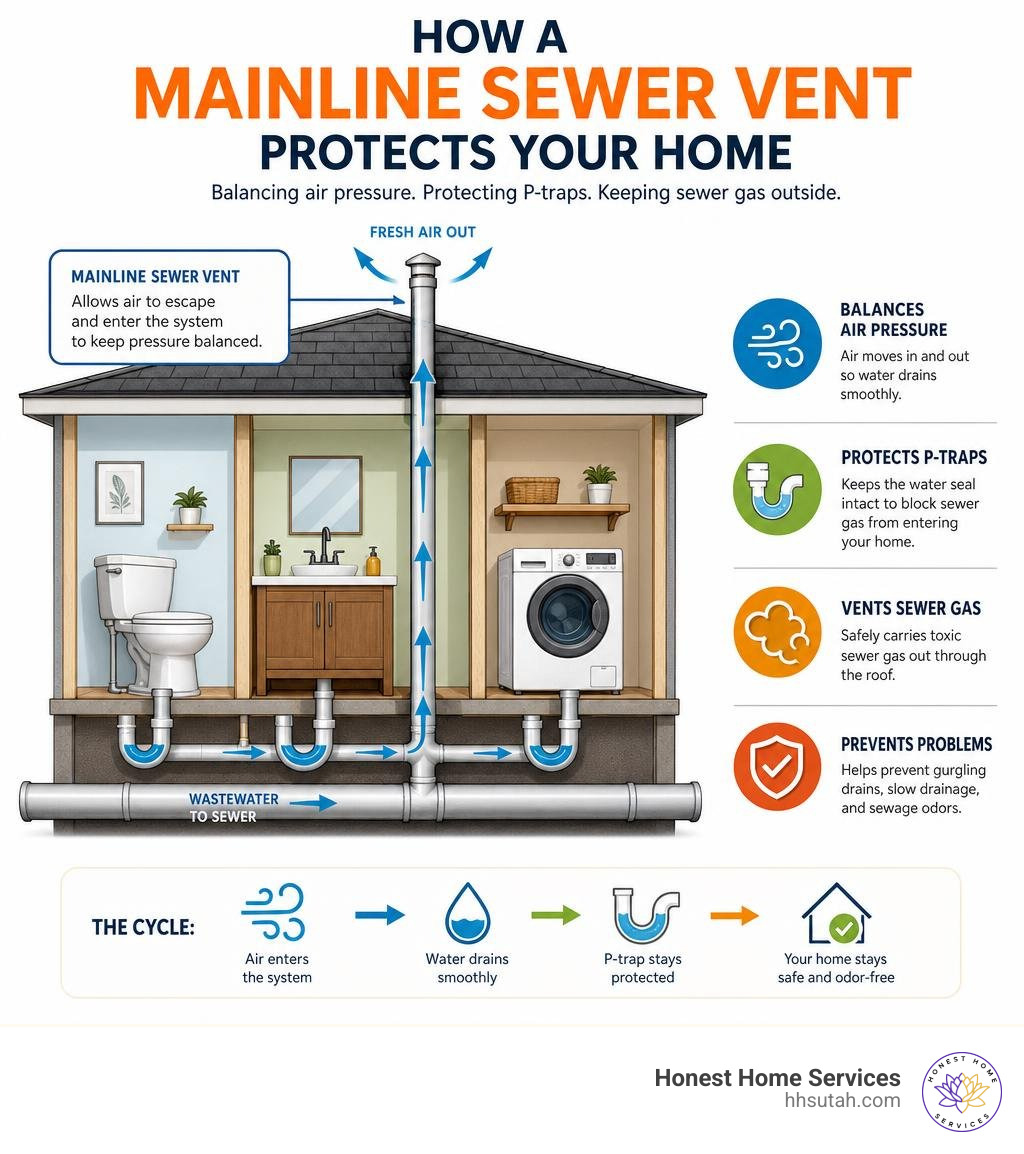
Your mainline sewer vent is a vertical pipe that runs from your home’s drain system up through the roof. It keeps air pressure balanced inside your pipes so water drains freely and sewer gas escapes safely outside — not into your home.
Here’s what it does at a glance:
- Balances air pressure so drains flow at the right speed
- Protects P-traps from being siphoned dry (P-traps are the curved pipes under sinks that block sewer gas)
- Vents toxic sewer gas — including hydrogen sulfide — safely out through the roofline
- Prevents gurgling drains, slow drainage, and sewage smells inside your home
Think of it like the tiny hole in a coffee cup lid. Without that opening, liquid won’t flow smoothly. Your drains work the same way — they need air coming in to let water go out.
When the vent works, you never notice it. When it’s blocked, cracked, or missing, you’ll know fast: toilets gurgle, drains crawl, and your home may start to smell like a sewer.
At Honest Home Services, we’ve spent over 20 years diagnosing and repairing mainline sewer vent problems for homeowners and businesses across Northern Utah. Whether it’s a blocked vent stack or a full system inspection, our licensed team has seen it all.
Mainline sewer vent word roundup:
What is a Mainline Sewer Vent and How Does It Work?
To understand your home’s plumbing, you have to look at it as a complete system. This is known as the Drain-Waste-Vent (DWV) system. While the drain and waste pipes carry wastewater away from your sinks, showers, and toilets, the vent system operates in the background to make that gravity-fed flow possible.
The vertical pipe that extends up through your roof is the heart of this system. As explained in Main Vent 101: What It Does and Why It Matters, the main vent acts as a pressure equalizer. When a large volume of water rushes down your drain line, it pushes the air ahead of it and pulls a vacuum behind it. Without a steady supply of air from the vent, this vacuum would siphon the standing water right out of your plumbing P-traps.
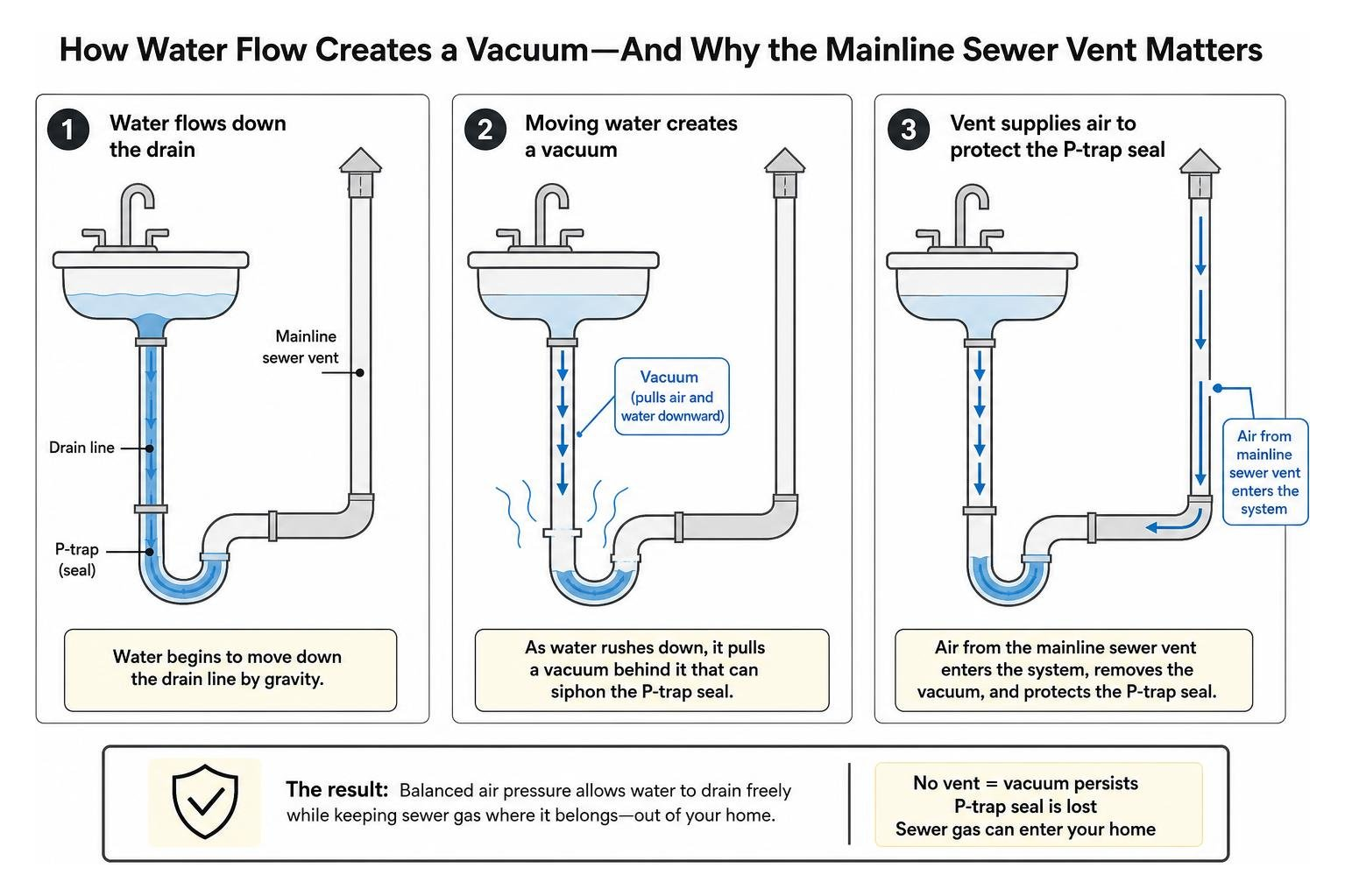
The P-trap is the U-shaped pipe beneath your fixtures. It holds a small pool of water that acts as a physical barrier against sewer gas. If the vacuum siphons this water away, toxic and foul-smelling gases like hydrogen sulfide can freely migrate from The Plumbing Pipeline A Guide To Your Homes Drain Main Line directly into your living spaces.
Traditional Roof Vents vs. Air Admittance Valves (AAVs)
For decades, the only way to vent plumbing was to run a solid pipe from every fixture up through the roof. Today, modern plumbing technology offers an alternative: the Air Admittance Valve (AAV).
An AAV is a mechanical, one-way valve that opens to let air into the plumbing system when negative pressure (a vacuum) occurs. Once the water drains and the pressure equalizes, gravity and a spring-loaded seal pull the valve shut. This prevents sewer gases from escaping into the room.
While traditional roof vents are completely passive, open-air pipes, AAVs are mechanical devices. Below is a comparison of how they stack up against each other:
| Feature | Traditional Roof Vent | Air Admittance Valve (AAV) |
|---|---|---|
| Airflow Direction | Two-way (admits air and vents gas out) | One-way (only admits air in) |
| Installation Location | Terminates outdoors above the roofline | Indoors, near the fixture (must be accessible) |
| Roof Penetrations | Required (increases potential for roof leaks) | Not required (uses localized venting) |
| Design Flexibility | Limited (must route pipes to the roof) | High (ideal for kitchen islands and remodels) |
| Lifespan | Long-term (lasts as long as the pipe material) | Temporary (mechanical seals wear out over time) |
| Cost to Install | Higher (requires extensive piping and labor) | Lower (saves 30% to 50% on labor and materials) |
AAVs offer great design flexibility, especially when addressing Common Plumbing Problems In Older Homes And How To Fix Them. For example, if you are remodeling a kitchen in an older Salt Lake City home and want to install a central kitchen island sink, running a traditional vent pipe up through a finished ceiling can be extremely difficult. An AAV solves this by allowing localized venting right under the sink cabinet, saving you significant construction costs.
Code Compliance and Installation Rules for Sewer Venting
Plumbing codes exist to keep your household safe from hazardous sewer gases and system backups. In Northern Utah, plumbing installations must comply with the adopted versions of the International Plumbing Code (IPC) or Uniform Plumbing Code (UPC), along with local municipal amendments.
If you look at strict regional regulations, such as 248 CMR, § 10.16 – Vents and Venting, you can see how detailed venting rules can get. To ensure your system is compliant and operates safely, keep these standard installation rules in mind:
- Vertical Orientation: AAVs must be installed vertically (within 15 degrees of plumb) so gravity can properly close the seal.
- Height Requirements: The valve must be installed at least 4 inches above the horizontal branch drain or fixture drain being served, and always above the flood-level rim of the highest fixture.
- Accessibility: You can never seal an AAV inside a drywall cavity. It must remain accessible in an under-sink cabinet, a wall access box, or an open attic space so it can be inspected and replaced.
- Ventilation: The space housing the AAV must have adequate air circulation. A closed cabinet door usually provides enough clearance, but a completely sealed, airtight wall pocket will prevent the valve from drawing in air.

Sizing Your Mainline Sewer Vent Correctly
Sizing your vent pipe is not a guessing game. It is calculated based on Drainage Fixture Units (DFUs), which measure the waste load of different fixtures. According to Plumbing Vent Sizes a MA Contractor’s Code Guide, your drain pipe size sets the baseline for your vent size.
For example, a standard residential toilet typically drains into a 3-inch pipe, which requires at least a 1.5-inch vent pipe. However, if the “developed length” (the actual physical length of the pipe run, including all elbows and horizontal offsets) exceeds 40 feet, friction loss will restrict airflow. In these situations, the vent pipe diameter must be increased by one nominal size to maintain proper pressure balance.
Can an AAV Completely Replace a Mainline Sewer Vent?
The short answer is no. While AAVs are highly effective for individual fixtures or branch lines, they cannot completely replace your home’s primary vent stack.
Under the International Residential Code (IRC Section P3102.1), as detailed in At Least One Plumbing Vent Must Terminate Outdoors, every building drainage system must have at least one primary vent stack that terminates outdoors. This is because AAVs are strictly one-way valves. They only solve negative pressure issues. If your main sewer line experiences positive pressure (which can happen during municipal sewer flushing or heavy storm surges), a main roof vent is required to release that pressure safely into the atmosphere.
Furthermore, venting a pipe directly into an attic space is a major code violation. It releases moisture and toxic sewer gases into your attic, leading to wood rot, mold growth, and health hazards.
Troubleshooting and Maintaining Your Sewer Vent System
A compromised mainline sewer vent will quickly show warning signs. If you ignore these symptoms, you risk experiencing a major backup or breathing in sewer gas.
Here are the most common issues that affect sewer vents:
- Ice Capping: In cold climates like Park City, Salt Lake County, and Davis County, warm sewer gas rises and meets freezing outdoor air at the roofline. This moisture can freeze, creating an ice cap that completely seals the vent stack.
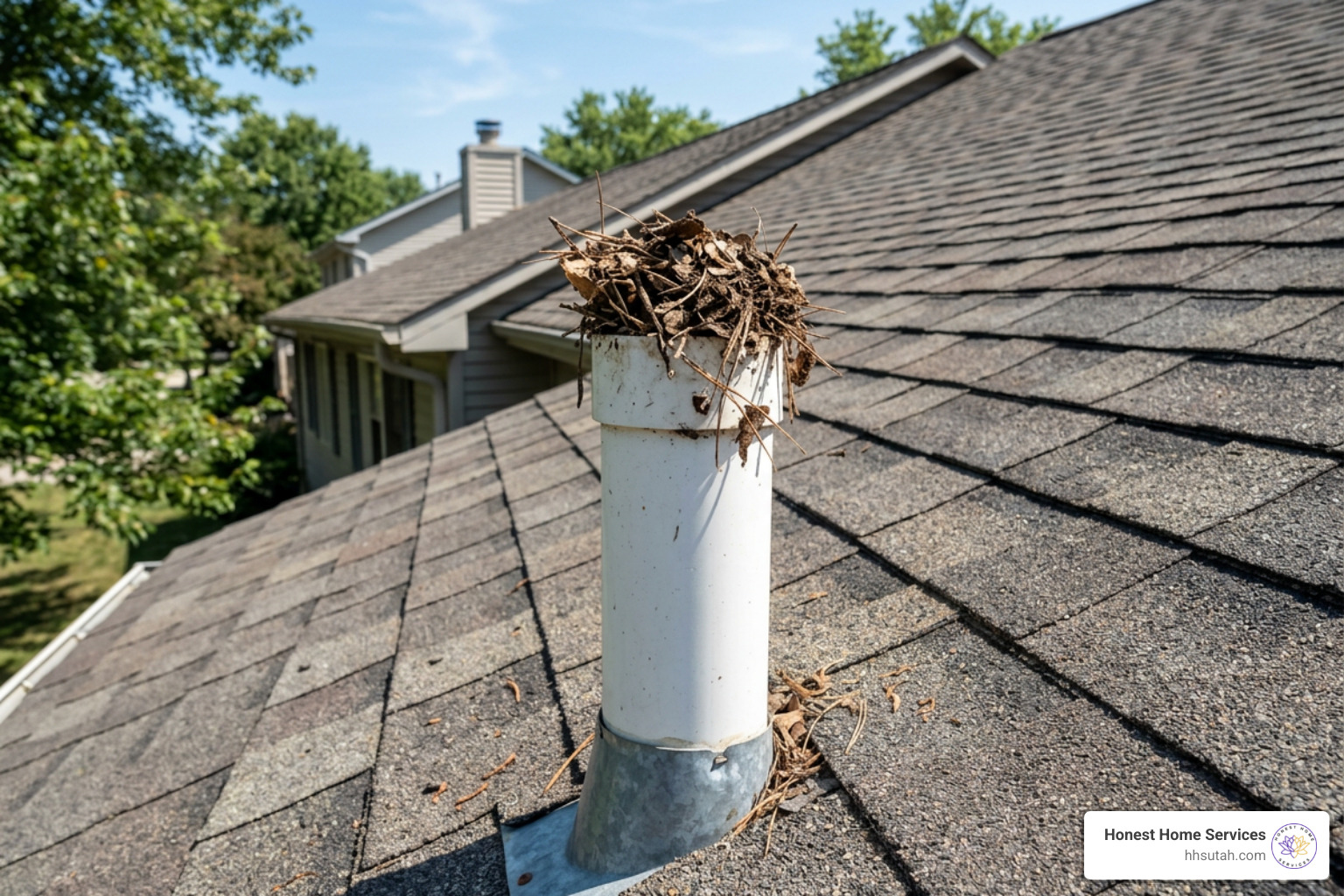
- Debris and Bird Nests: Autumn leaves, twigs, and birds seeking warmth frequently block uncovered roof vents.
- Sewer Odors: If you smell rotten eggs (hydrogen sulfide) in your bathrooms or laundry room, a blocked vent has likely siphoned your P-traps dry. You can find detailed steps on how to resolve this in The Secret To A Fresh Smelling Home Drain Odor Elimination.
- Gurgling and Slow Drains: When a toilet flush causes your sink or bathtub drain to gurgle, it means the system is desperate for air and is pulling it through the nearest open fixture. If the problem persists, check out From Gurgles To Gushers Your Guide To Main Line Clogs to determine if the blockage is in the vent or the main lateral.
Frequently Asked Questions About Sewer Venting
How long do air admittance valves last?
Quality AAVs typically last between 10 and 20 years. Because they are mechanical devices, the rubber seals and internal spring mechanisms will eventually wear out. If you notice sewer odors returning under your sink or hear your drains gurgling, it is likely time to unscrew the old valve and install a replacement.
Can you use an AAV to vent a toilet?
Yes, in most jurisdictions that follow the IPC, you can use an AAV to vent a toilet, provided it is sized correctly for the toilet’s DFU rating. A standard residential toilet is rated at 3 or 4 DFUs. You must ensure the AAV model you select is rated to handle this load and is installed higher than the flood-level rim of the toilet bowl.
What are the signs of a clogged sewer vent?
The most common signs include:
- Multiple slow-draining fixtures throughout the home.
- A distinct “glug-glug” gurgling sound coming from sinks or tubs when you flush the toilet.
- Persistent sewer gas smells indoors.
- Bubbles rising in the toilet bowl when a nearby sink or washing machine drains.
Conclusion
Your plumbing vent system is essential for keeping your home’s drainage smooth and your indoor air clean. While Air Admittance Valves offer great flexibility for remodels and additions, they must be installed alongside a primary, outdoor-terminating vent stack to remain safe and code-compliant.
If you are dealing with persistent sewer odors, gurgling toilets, or need to verify your system’s venting during a remodel, we are here to help. At Honest Home Services, we provide professional, code-compliant plumbing maintenance and inspections throughout Northern Utah, including Salt Lake City, West Valley, Draper, and Park City.
Don’t let a stinky sewer vent disrupt your home’s comfort. Contact us today for reliable, guaranteed service, or visit our Salt Lake City Sewer Mainline Repair page to schedule an inspection with our expert local technicians.