

What You Need to Know About Heating System Repair
Heating system repair covers everything from simple fixes like replacing a dirty air filter to complex jobs like replacing a cracked heat exchanger. Here’s a quick overview of what most homeowners need to know:
| Topic | Quick Answer |
|---|---|
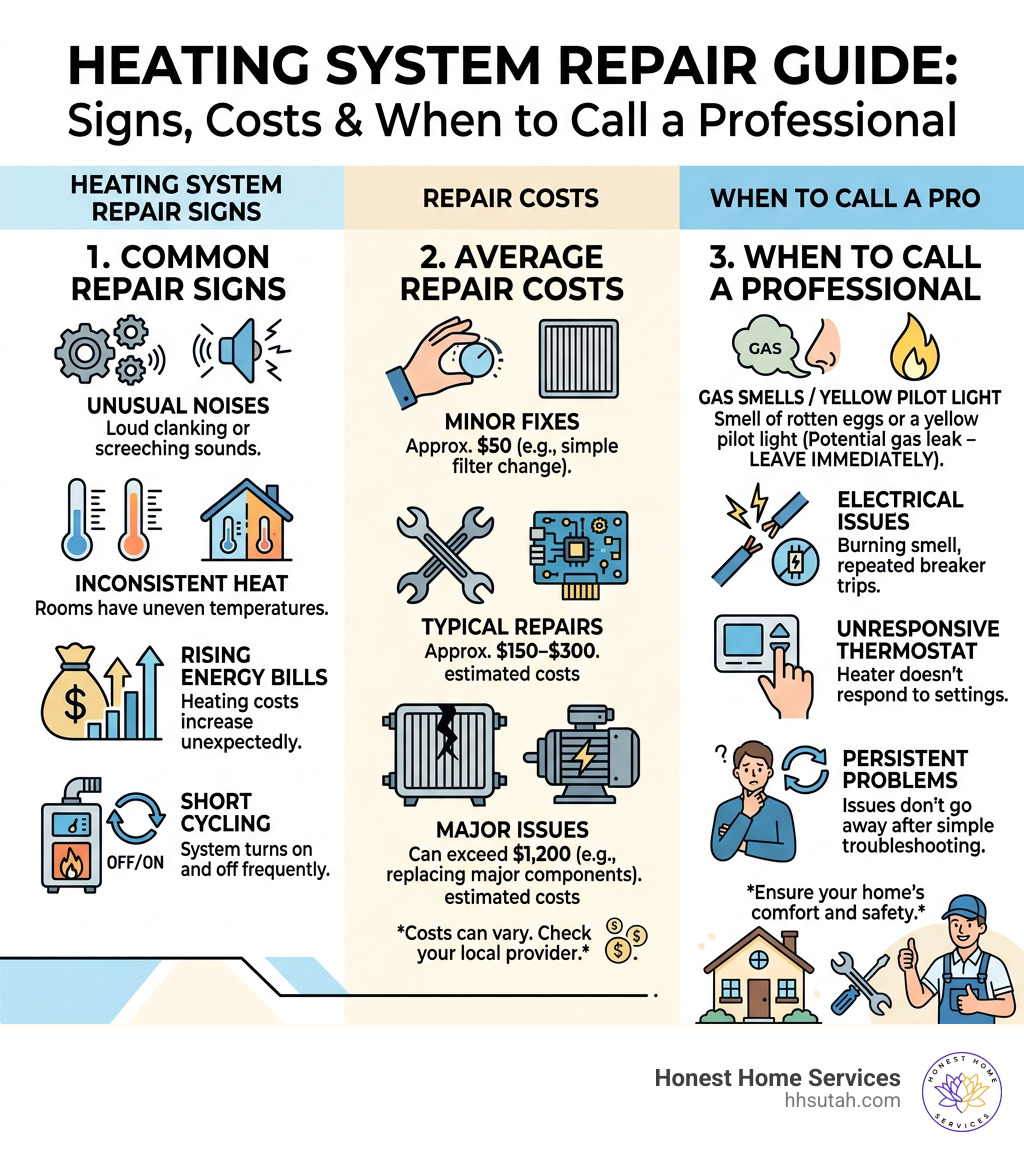
| Most common signs | Unusual noises, inconsistent heat, rising energy bills, short cycling |
| Easy DIY checks | Replace air filter, check thermostat batteries, inspect vents |
| When to call a pro | Gas smells, yellow pilot light, electrical issues, persistent problems |
| Average repair cost | $150-$300 typical; $50 for minor fixes; $1,200+ for major issues |
| Repair vs. replace | Replace if system is 15+ years old or repair costs 50%+ of replacement |
| How often to service | Once per year, ideally in the fall before heating season |
A heating system that runs well is easy to ignore — until it doesn’t. And when it fails, it usually picks the worst possible moment: the coldest night of the year, a holiday weekend, or right before guests arrive.
The good news? Most heating problems give warning signs before a full breakdown. Knowing what to look for — and what to do about it — can save you money, stress, and a very cold night.
At Honest Home Services, we’ve spent over 20 years helping Northern Utah homeowners and businesses with heating system repair, tune-ups, and full system replacements. We know what it takes to keep your home warm when temperatures drop — and we’re here to walk you through everything you need to know.
Key heating system repair vocabulary:
Recognizing the Signs You Need Heating System Repair
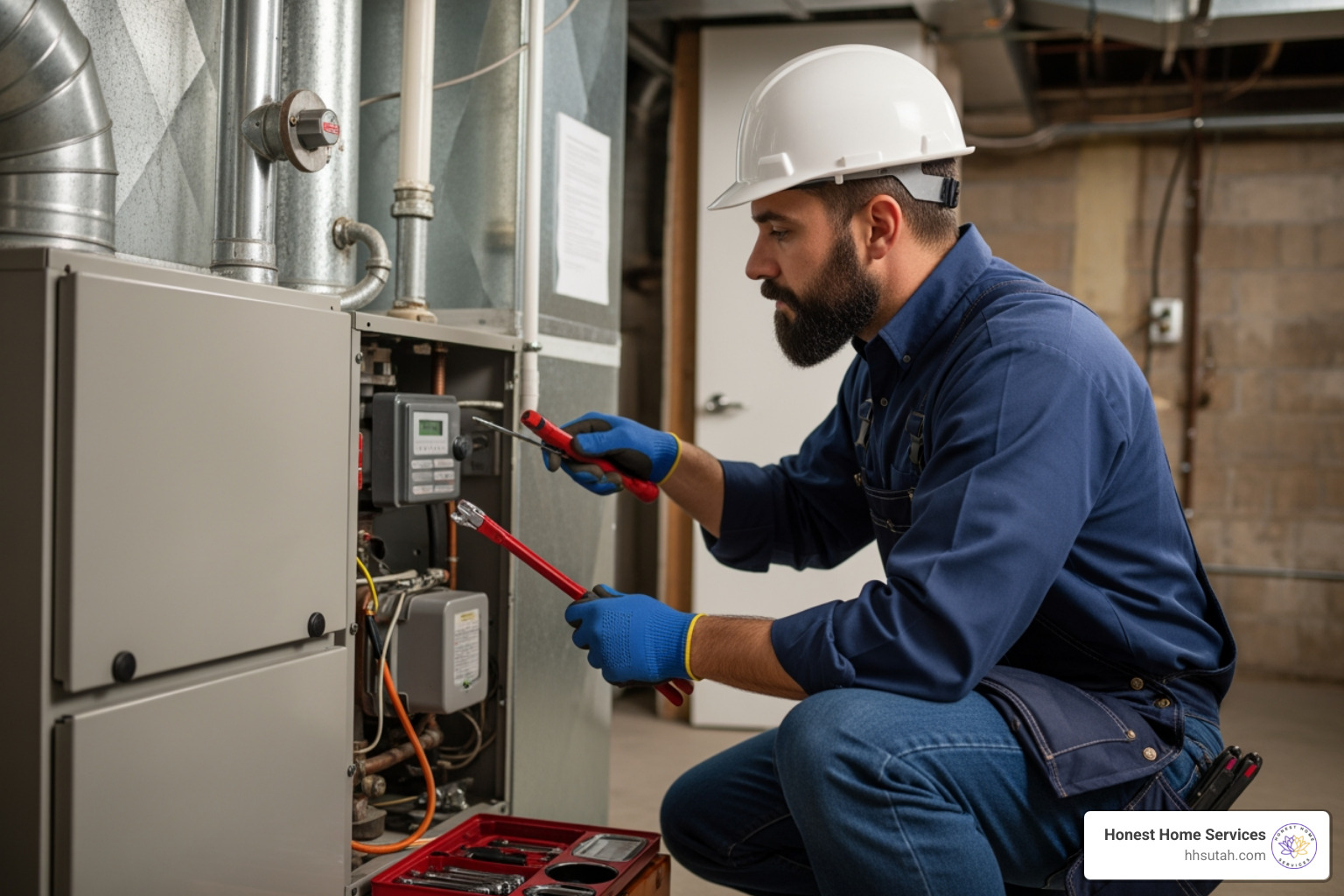
Your heating system is a bit like a car; it rarely stops working without trying to tell you something first. In Northern Utah, where our winters can be brutal from Salt Lake City to Park City, listening to these warning signs is the difference between a quick fix and a frozen pipe disaster.
One of the most obvious red flags is unusual noises. While most systems emit a low hum, you should never hear banging, whistling, or screeching. Banging often indicates a delayed ignition issue or expanding metal ducts, while whistling could mean there’s a restriction in airflow or a leak in the ductwork. If your furnace sounds like a dryer full of sneakers, it’s time to look into avoiding a winter emergency.
Another common symptom is inconsistent heat. If your living room feels like a sauna but your bedroom feels like the Great Salt Lake in January, your system is struggling. This “hot and cold” behavior often points to a failing blower motor or aging ductwork. Similarly, short cycling—where the furnace turns on and off rapidly—is a major cry for help. It places immense stress on internal components and is one of the 5 signs your furnace needs immediate attention.
Lastly, keep an eye on your mailbox. A sudden, unexplained spike in your energy bills usually means your system is working twice as hard to produce the same amount of heat. Efficiency drops as parts wear out, and those extra dollars on your utility bill are often better spent on a professional heating system repair.
Common Causes of System Inefficiency
Why does a perfectly good heater start acting up? Often, the culprit is simpler than you think. Dirty filters are the number one cause of service calls. When a filter is clogged with dust and pet dander, the blower motor has to work overtime to pull air through, leading to overheating and system shutdowns.
Thermostat malfunctions are another frequent offender. Sometimes the “broken” heater is actually just a thermostat that has lost its calibration or needs new batteries. Additionally, duct leaks are a silent efficiency killer. Research from the U.S. Department of Energy shows that up to 30% of heated air can be lost in systems with poorly sealed ducts. That’s nearly a third of your money literally vanishing into your attic or crawlspace before it ever reaches your vents.
Identifying Safety Hazards
While a cold house is uncomfortable, a malfunctioning heating system can also be dangerous. Safety is our top priority at Honest Home Services, and every homeowner should know the signs of a hazardous furnace situation.
- Carbon Monoxide (CO): This “silent killer” is colorless and odorless. Ensure you have working CO detectors on every floor. If you or your family experience unexplained flu-like symptoms, headaches, or nausea, evacuate and call for help.
- Yellow Pilot Light: A healthy pilot light or burner flame should always be crisp blue. A yellow or orange flame indicates incomplete combustion, which is a primary source of carbon monoxide.
- Rotten Egg Smell: Natural gas is naturally odorless, but utilities add a chemical called mercaptan to make it smell like sulfur or rotten eggs. If you smell this, do not flip any light switches or use your phone inside. Leave the house immediately and call the gas company from a safe distance.
Troubleshooting and Initial Assessments
Before you pick up the phone to schedule a heating system repair, there are a few “sanity checks” you can perform. We love seeing our neighbors in Layton and Kaysville save money by catching simple issues themselves.
Start with a visual inspection. Look for any obvious signs of wear, rust, or soot around the furnace cabinet. Check your power supply—it sounds silly, but sometimes the furnace switch (which looks like a regular light switch) was accidentally flipped off, or a circuit breaker has tripped.
For more detailed guidance, check out these furnace repair tips to save money or our list of 10 common furnace problems and how to fix them.
Basic Steps for Heating System Repair
If your heat isn’t kicking on, follow this quick DIY checklist:
- Check the Thermostat: Ensure it is set to “Heat” and the temperature is at least 5 degrees above the current room temperature. If the screen is blank, replace the batteries.
- Inspect the Air Filter: Hold your filter up to a light. If you can’t see light through it, it’s blocked. A fresh filter can solve many airflow and overheating issues instantly.
- Clear the Vents: Make sure furniture, curtains, or rugs aren’t blocking your return or supply vents.
- Check the Pilot Light: If you have an older furnace with a standing pilot, check if it has gone out. Follow the manufacturer’s instructions on the cabinet to safely relight it.
When to Call a Professional
While we encourage basic troubleshooting, some things are best left to the experts. You should call for 24/7 heating repair if you encounter:
- Electrical Issues: Flickering lights when the furnace starts or visible scorched wiring.
- Ignition Failure: If you hear the furnace trying to click on multiple times without fire, the ignition or flame sensor is likely faulty.
- Persistent Noises: If the noises continue after you’ve checked the basics, there may be a mechanical failure in the motor or bearings.
Repair vs. Replacement: Making the Right Investment
Deciding whether to sink more money into an old unit or invest in a new one is a tough call. In places like Salt Lake City and Bountiful, a reliable heater isn’t a luxury—it’s a necessity. We generally recommend the “50% Rule”: if the cost of a single repair is 50% or more of the cost of a new system, it’s usually time to replace.
| Factor | Repair It | Replace It |
|---|---|---|
| Age | Under 10-12 years | Over 15 years |
| Repair Cost | Less than 1/3 of new unit | More than 50% of new unit |
| Frequency | First or second repair | Constant “nickle and diming” |
| Efficiency | Bills are stable | Bills are skyrocketing |
If you are facing a cracked heat exchanger, replacement is almost always the safer and more cost-effective choice. A cracked exchanger can leak carbon monoxide and is an expensive part to replace. You can learn more about how to know if it’s time for a replacement and why an upgraded furnace is essential for winter comfort.
Evaluating Your Heating System Repair Costs
The cost of heating system repair can vary widely based on the severity of the issue. On average, a typical furnace repair costs between $150 and $300.
- Minor Fixes ($50 – $200): This includes things like replacing a thermostat, cleaning a flame sensor, or replacing a blower belt.
- Moderate Repairs ($300 – $600): Replacing a blower motor, circuit board, or igniter falls into this range.
- Major Overhauls ($600 – $1,500+): Replacing a heat exchanger or a smart-variable speed motor can be quite costly.
Factors influencing these prices include the age of the system (older parts can be harder to find) and the time of the service call. You can compare local rates with national averages by reviewing typical furnace repair costs and factors. We also provide a detailed Salt Lake City furnace repair guide to help you budget for these surprises.
Lifespan Expectations by System Type
Knowing how long your system should last helps you plan for the future.
- Gas Furnaces: Typically last 15–20 years.
- Electric Furnaces: Can last up to 30 years because they have fewer moving parts and no combustion.
- Air-Source Heat Pumps: Usually last about 15 years.
- Geothermal Systems: The indoor components last 25 years, while the underground loops can last 50+.
If your system is nearing these milestones, it might be time to browse our furnace installation options to see how much more efficient modern units have become.
The Importance of Routine Maintenance
The best heating system repair is the one you never have to make. We can’t stress enough how much a regular furnace tune-up can save you in the long run. Think of it like an oil change for your home.
A well-maintained furnace can retain up to 95% of its original efficiency, while a neglected one can drop below 75%. That 20% difference shows up directly on your monthly gas or electric bill. Furthermore, most manufacturers actually require proof of annual professional maintenance to keep your warranty valid. If a major part fails and you haven’t had your annual service, you might be stuck paying the full bill. Regular tune-ups save you money by catching small issues before they become $1,000 headaches.
What a Professional Tune-Up Includes
When we come to your home in Farmington or West Valley for a maintenance visit, we don’t just kick the tires. A professional tune-up involves:
- Burner Cleaning: Ensuring the fuel is burning cleanly and efficiently.
- Safety Control Testing: Checking the limit switches that prevent the furnace from overheating.
- Gas Pressure Adjustment: Making sure your system isn’t “over-firing” or “under-firing.”
- Electrical Connections: Tightening wires that can vibrate loose over time.
- Heat Exchanger Inspection: Checking for tiny cracks that could leak carbon monoxide.
Getting your furnace prepped for the colder months is the smartest move you can make in the fall.
Preventing Emergency Heating System Repair
Proactive care is all about airflow and lubrication. When a system is clean, air flows freely, and parts move without friction. This reduces the mechanical stress that causes components to snap on the coldest night of the year. By following a few furnace maintenance tips, you can extend the life of your equipment by several years.
Frequently Asked Questions about Heating Repair
How often should I service my heating system?
You should have your system professionally serviced once per year. The best time is during the fall, before you need to turn the heat on for the first time. This ensures that any spiders, dust, or mechanical issues that developed over the summer are cleared out before the system is under heavy load.
What is the average cost of a furnace repair?
Most homeowners pay between $150 and $300 for a standard repair. Minor issues like a sensor cleaning might be as low as $50-$100, while severe problems like a failed motor can exceed $1,200. We always provide up-front, fair pricing so there are no surprises when the bill arrives.
What should I do if I smell gas or a burning odor?
If you smell gas (rotten eggs), evacuate immediately and call your gas provider and 911. If you smell a burning electrical odor, turn the furnace off at the thermostat and the breaker, then call for professional heating repair. Note: A slight “dusty” burning smell is normal the very first time you turn your heater on for the season, as it burns off settled dust, but it should dissipate within 20-30 minutes.
Conclusion
Don’t let a failing heater turn your home into an icebox. Whether you’re in the heart of Salt Lake City, the quiet streets of Draper, or the snowy hills of Park City, Honest Home Services is here to help. We pride ourselves on providing honest, reliable, and affordable heating system repair to our Northern Utah neighbors.
Our expert technicians are trained to handle all makes and models, and we stand behind our work with a guaranteed customer satisfaction promise. From emergency middle-of-the-night repairs to routine annual maintenance, we have the tools and experience to keep you cozy.
If your heater is acting up, making strange noises, or just isn’t keeping you as warm as it used to, don’t wait for it to quit entirely. Contact us today for professional furnace repair and experience the peace of mind that comes with an Honest Home.