
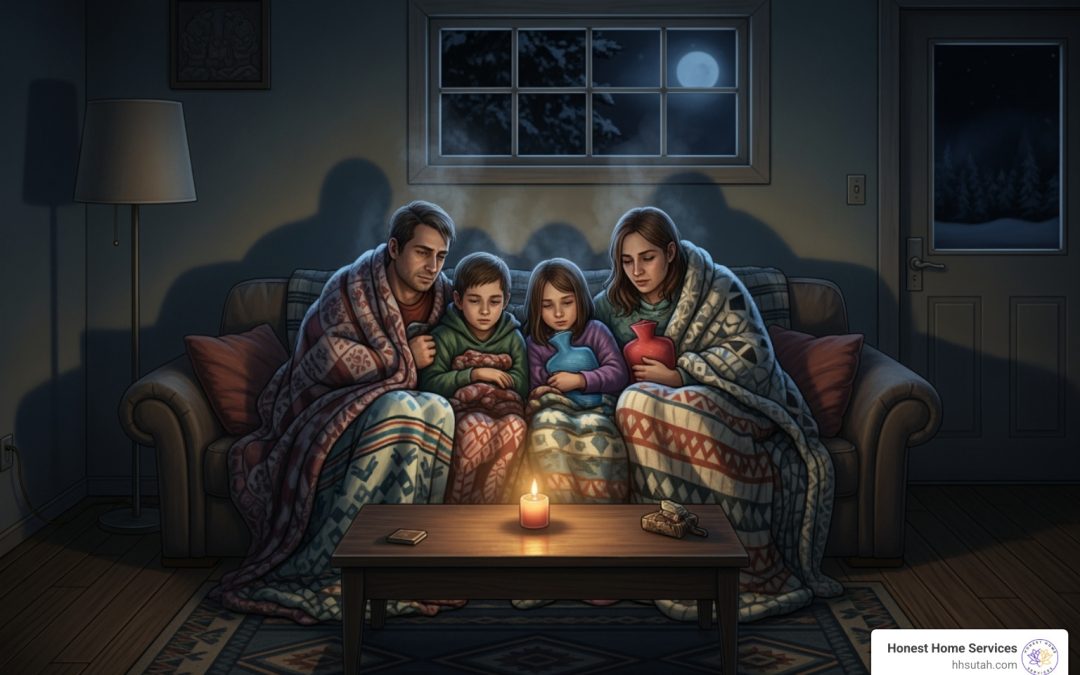
When Your Furnace Fails: Understanding Emergency Heating Repair
Emergency heating repair becomes critical when your heating system fails during cold weather, leaving your home without warmth. If you’re experiencing a heating crisis right now, here’s what you need to know:
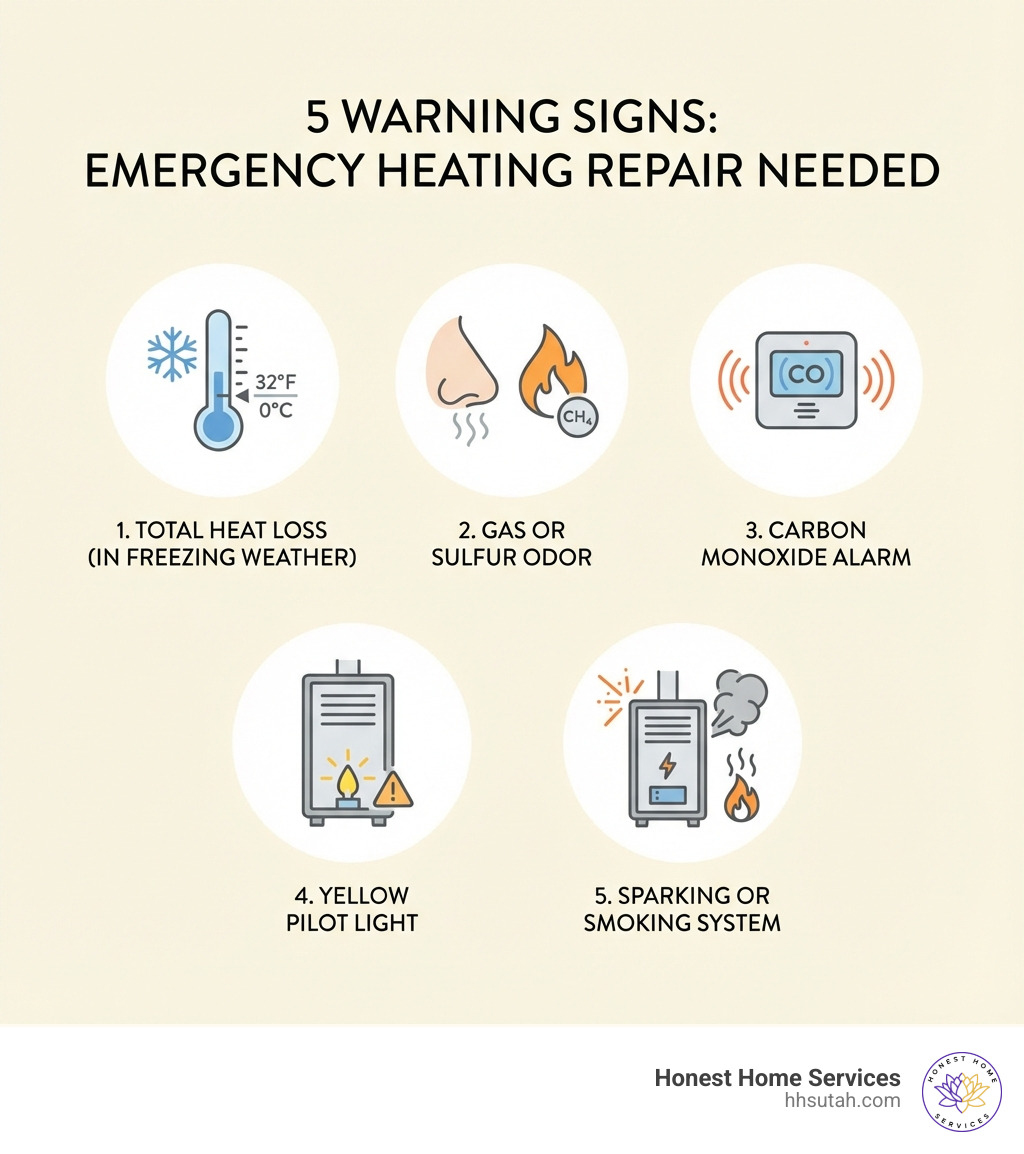
Immediate Action Required If You Experience:
- Complete loss of heat during freezing temperatures (especially below 32°F)
- Gas or sulfur smell near your furnace (evacuate and call your gas company immediately)
- Carbon monoxide detector alarm (leave your home and call 911)
- Yellow pilot light instead of blue (indicates potential carbon monoxide risk)
- Sparking, smoking, or burning plastic smell from your heating system
Quick Self-Check Before Calling:
- Verify thermostat is set to “heat” and temperature is higher than room temp
- Check circuit breakers and replace thermostat batteries
- Inspect air filter for clogs
- Ensure gas valve is open (parallel to gas line)
When It’s a True Emergency:
Contact a professional immediately if you have vulnerable occupants (children, elderly, pets), temperatures are dropping below freezing, or you notice any safety concerns like gas leaks or electrical issues.
Most emergency heating repair services in Northern Utah respond within a few hours, with costs typically ranging from $150 to $400 for common repairs—though complex issues can exceed $1,000.
At Honest Home Services, we’ve provided emergency heating repair throughout Northern Utah for over 20 years, responding 24/7 to furnace failures, heat pump breakdowns, and boiler emergencies. Our licensed technicians understand that heating emergencies can’t wait, which is why we prioritize rapid response and transparent pricing when your comfort and safety are on the line.
Is It a Real Emergency? Key Signs Your Furnace Needs Urgent Help
In Northern Utah’s cold, a functioning heating system is about safety, not just comfort. A true emergency heating repair situation involves a complete loss of heat during extreme cold or presents significant safety risks to your household.
If your heating system shuts down when it’s freezing outside, it’s an emergency. This is especially true if you have vulnerable occupants like children or the elderly, as a home in our region can become dangerously cold without heat. Beyond discomfort, HVAC emergencies can involve safety hazards like gas leaks or electrical issues that threaten life and property. Understanding these signs is the first step in protecting your family. For more insights, read our guide on 5 Signs Your Furnace Needs Immediate Attention Before Winter. When it comes to your home’s Heating, we believe in being proactive.
Strange Noises or Smells
Your furnace should run quietly. When it starts making strange noises or smelling odd, it’s time to pay attention. These are common indicators that your system needs immediate attention.
- Banging or Screeching: Loud banging, screeching, or grinding noises often signal a mechanical breakdown. This could be anything from a worn-out motor bearing to a loose component rattling around inside. Ignoring these sounds can lead to more extensive and costly damage.
- Whistling Sounds: A high-pitched whistle might indicate airflow blockages, such as a clogged filter or issues with the blower motor.
- Gas or Sulfur Smell: This is arguably the most critical and dangerous smell. If you detect a distinct rotten egg or sulfur-like odor near your furnace, it could indicate a natural gas leak. Do not ignore this. Your immediate action should be to evacuate everyone from your home, move to a safe distance, and call your gas company and then 911. Never try to find the source or fix it yourself.
- Burning Plastic or Electrical Odor: The smell of burning plastic or ozone (a sharp, metallic scent) could point to an electrical issue, such as overheating wires or a malfunctioning component. This is a fire hazard and requires immediate professional assessment.
- Musty Smells: While not as immediately dangerous, a musty smell might indicate mold growth within your ductwork or a clogged condensate drain, impacting your indoor air quality.
These unusual sensory cues are your furnace’s way of calling for backup. They are clear signs that your system is struggling and likely requires emergency heating repair.
System Malfunctions and Performance Issues
Performance issues can also signal a need for immediate attention:
- Blowing Cold Air: If your furnace is running but only circulating cold air, it’s failing to produce heat. Common culprits include a dirty air filter, a malfunctioning igniter, or a problem with the gas supply.
- Yellow Pilot Light: For older furnaces with a pilot light, its color is crucial. A healthy pilot light should burn with a strong, steady blue flame. If you see a yellow or orange flame, it indicates incomplete combustion, which can produce dangerous carbon monoxide. This is a serious safety concern and warrants immediate professional inspection.
- System Won’t Turn On: If your furnace refuses to kick on at all, even after checking basic troubleshooting steps (which we’ll cover next), it’s time to call for help.
- Frequent Cycling (Short-Cycling): If your heating unit turns on and off too frequently, it’s called short-cycling. This suggests it isn’t completing a full heating cycle, which can be due to an improperly sized system, a clogged filter, or a faulty thermostat. Not only is it inefficient, but it also puts excessive wear and tear on components.
- Thermostat Issues: If you’re constantly adjusting your thermostat to get comfortable, or if the thermostat display is blank, it could indicate problems with the thermostat itself or an underlying issue with the furnace’s control circuit. An inaccurate thermostat can lead to your furnace working harder than necessary or not at all.
Recognizing these signs early can prevent a minor issue from escalating into a full-blown emergency heating repair. For more detailed advice on keeping your system running smoothly, check out our Stay Warm: Expert Advice on Furnace Maintenance and Repair.
Before You Call: Quick Troubleshooting Steps for Homeowners
When your heat goes out, it’s easy to panic. But before calling for help, a few simple troubleshooting steps can often resolve common furnace problems, saving you the cost and time of an emergency heating repair visit. For a deeper dive into common issues, read our article on how to Avoid a Winter Emergency: Common Furnace Problems.
Check Power and Settings
Many furnace “emergencies” are actually quite simple to fix with a quick check of your system’s power and settings.
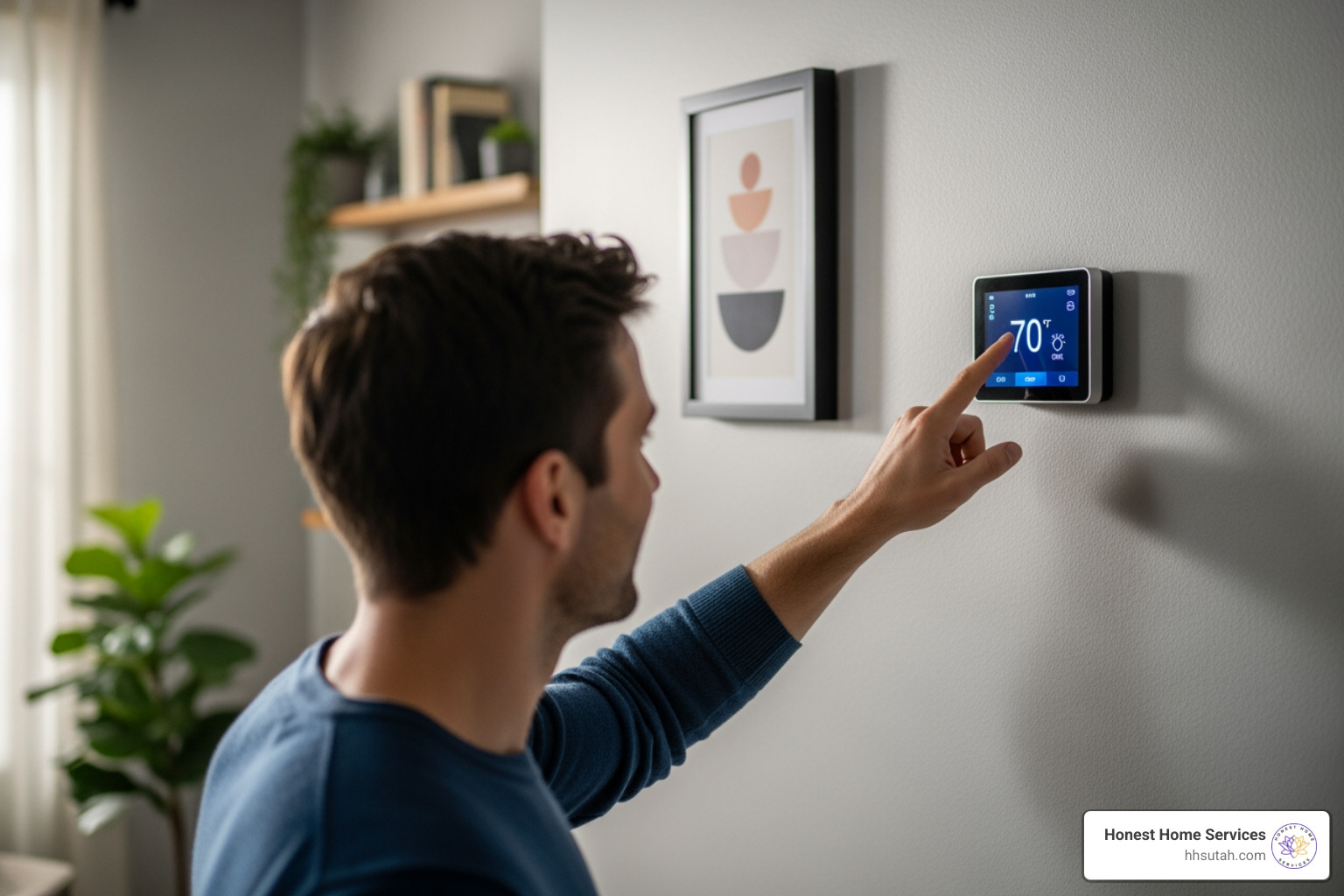
- Thermostat Batteries: It sounds obvious, but a dead thermostat battery is a surprisingly common culprit for a seemingly dead furnace. Replace the batteries and see if that brings your system back to life.
- Heat Mode Setting: Ensure your thermostat is set to “Heat” and that the desired temperature is set higher than the current room temperature. If it’s set to “Auto” or “Fan Only,” your furnace won’t respond to heating demands.
- Circuit Breakers: Head to your electrical panel. Look for the circuit breaker labeled “Furnace” or “HVAC.” If it’s tripped (usually halfway between “on” and “off”), simply flip it completely off, then back on. A tripped breaker means your furnace isn’t getting power.
- Fuse Box: If you have an older home with a fuse box instead of circuit breakers, check for a blown fuse. Replace it if necessary.
- Emergency Shutoff Switch: Many furnaces have a separate emergency shutoff switch, often located on a wall near the furnace (sometimes resembling a light switch). Ensure it’s in the “on” position. Sometimes, it gets accidentally flipped.
Inspect Basic Components
Once you’ve confirmed power and settings are correct, a few basic component inspections can reveal other straightforward issues.
- Clogged Air Filter: A dirty or clogged air filter restricts airflow, forcing your furnace to work harder and potentially causing it to overheat and shut down. Check your filter; if it’s dark and grimy, replace it. We recommend checking your air filter monthly, especially during peak heating seasons.
- Blocked Vents: Ensure all your supply and return air vents throughout your home are open and not blocked by furniture, rugs, or drapes. Restricted airflow can cause your system to operate inefficiently or even trip safety switches.
- Pilot Light Status: For older gas furnaces that use a pilot light, check if it’s lit. If it’s out, you might be able to relight it by following the instructions usually found on a label inside the furnace’s access panel. However, if it repeatedly goes out, it’s a sign of a deeper problem.
- Condensate Drain Line: High-efficiency furnaces produce condensate (water) that drains away through a PVC pipe. If this line gets clogged, a safety switch can shut down the furnace to prevent water overflow. You might see standing water in the drain pan. A gentle clearing of the clog might resolve this, but if you’re unsure, it’s best to call a professional.
By taking these steps, you might just solve your heating problem yourself, saving you both time and money. For more valuable tips on how to keep your heating costs down, check out our guide on Save Money This Winter with These Furnace Repair Tips.
Staying Safe During a Heating Emergency
When your furnace acts up, especially in cold Northern Utah weather, safety is paramount. A malfunctioning heating system isn’t just an inconvenience; it can pose serious risks, including carbon monoxide poisoning, gas leaks, electrical fires, and even frozen pipes. We always emphasize that your safety comes first during an emergency heating repair situation.
Immediate Safety Protocols
Knowing what to do immediately can prevent serious harm.
- Evacuating for Gas Leaks: If you smell natural gas (often described as rotten eggs or sulfur), or if your carbon monoxide detector goes off, do not hesitate. Get everyone, including pets, out of the house immediately. Once you are safely outside and away from the building, call your gas company and then 911. Do not re-enter your home until emergency personnel have deemed it safe.
- Turning Off Gas Supply: If you suspect a gas leak and can safely access your main gas shut-off valve, turn it off. However, prioritize evacuating first.
- Using CO Detectors: Carbon monoxide is a colorless, odorless gas produced by incomplete combustion. It’s deadly. Ensure you have working carbon monoxide detectors on every level of your home, especially near sleeping areas. If one alarms, treat it as a medical emergency and evacuate.
- Professional Diagnosis Importance: Never attempt to repair gas lines or complex electrical components yourself. These systems are inherently dangerous, and improper handling can lead to severe injury, fire, or explosions. Always defer to licensed professionals for diagnosis and repair of such issues. We are trained to handle these situations safely.
Alternative Heating Methods
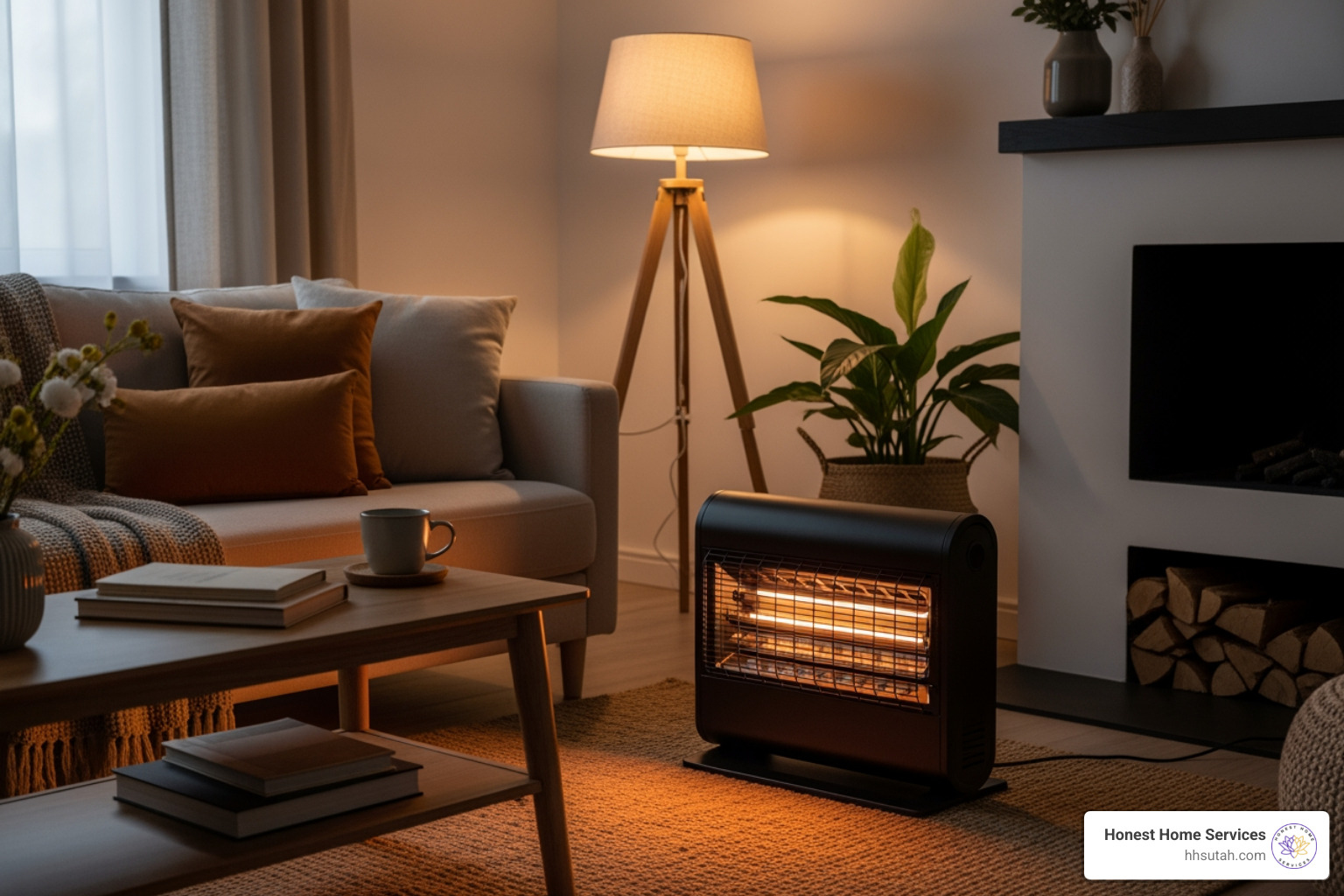
While waiting for our team to arrive for your emergency heating repair, you might need to find temporary ways to stay warm. Here are some safer alternatives, along with crucial safety precautions:
- Electric Space Heaters: These can provide localized warmth.
- Safety Tip: Always plug space heaters directly into a wall outlet; never use extension cords. Ensure they have a thermostat control and a tip-over shut-off safeguard. Keep them away from flammable materials like curtains and bedding.
- Fireplaces: A cozy fire can offer significant warmth.
- Safety Tip: Ensure your chimney is inspected and cleaned annually to prevent creosote buildup and blockages. Always use a sturdy screen to prevent embers from escaping. Extinguish fires completely before leaving the room or going to bed.
- Wood Stoves: Similar to fireplaces, wood stoves are effective for heating.
- Safety Tip: Like fireplaces, ensure the chimney and stovepipe are clean and in good repair. Use only seasoned wood.
- Kerosene Heaters: These can be effective but require careful handling.
- Safety Tip: Only use K-1 kerosene. Refuel outdoors after the unit has cooled completely. Ensure adequate ventilation to prevent carbon monoxide buildup. Keep away from flammable materials.
- Heat Pump “Emergency Heat” Mode: If you have a heat pump, it likely has an “Emergency Heat” or “Auxiliary Heat” setting. While less efficient, this engages supplemental electric resistance heaters to provide warmth until your primary system can be repaired. This is particularly useful for all-electric systems.
These are temporary solutions. Our goal is to get your main heating system back online safely and efficiently. For more tips on preparing for winter, including plumbing emergencies, visit our page on Emergency Plumbing Solutions for Winter Weather Disasters.
What to Expect from Professional Emergency Heating Repair
When you’re facing a heating emergency in Northern Utah, you need reliable help, and you need it fast. You might be wondering how quickly we can respond, what kind of expertise our technicians bring, and what the repair process will look like, especially regarding costs. At Honest Home Services, we pride ourselves on being transparent and efficient, helping you get your home back to comfortable as quickly as possible. For any heating repair needs, big or small, our Furnace Repair services are here for you.
The Emergency Heating Repair Process
When you call us for an emergency heating repair, here’s what you can typically expect:
- 24/7 Availability: We know emergencies don’t keep business hours. That’s why we offer 24/7 emergency services throughout Salt Lake City, Salt Lake County, Davis County, Clearfield, Layton, Kaysville, Farmington, Bountiful, West Valley, Murray, West Jordan, South Jordan, Bluffdale, Herriman, Draper, Park City, Tooele, Lehi, and Saratoga Springs. When your furnace fails on a frigid night, we’re here for you.
- Typical Response Time: We understand the urgency. Our goal is to respond to your location within a few hours of your call. We prioritize emergency situations to ensure your comfort and safety are restored as quickly as possible.
- On-Site Diagnosis: Once our licensed and experienced technician arrives, they’ll perform a thorough diagnosis of your heating system. They’ll pinpoint the exact cause of the problem, whether it’s a mechanical breakdown, an electrical issue, or something else entirely. Our technicians are NATE-certified and equipped to handle all types of heating systems, including furnaces, heat pumps, and boilers.
- Transparent Pricing: After diagnosing the issue, our technician will explain the problem to you in clear, simple terms. They’ll then provide you with a comprehensive, upfront estimate for the repair, including both parts and labor, before any work begins. We believe in honest service at fair prices, with no hidden fees.
- Repair vs. Replacement Advice: Sometimes, especially with older units, a repair might not be the most cost-effective long-term solution. Our technician will provide honest advice on whether a repair is viable or if a replacement would be more beneficial in terms of efficiency and longevity. We’ll never push for a replacement if a repair makes more sense for your situation. While we can’t speak for other companies, some manufacturers, like Comfortmaker, offer extensive warranty details on their products, which you can often find information on, such as their SEE WARRANTY DETAILS FOR MORE INFORMATION page.
What Information to Have for Your Emergency Heating Repair Call
To help us serve you more efficiently during an emergency heating repair, having some key information ready when you call can make a big difference:
- Heating System Type: Is it a furnace (gas, electric, oil), a heat pump, or a boiler? Knowing this helps us dispatch the right specialist and prepare for the specific components involved.
- Brand and Model: If you know the brand (e.g., Carrier, Lennox, Goodman, Trane, Rheem) and model number of your unit, that can be helpful. This information is usually found on a label inside the furnace or on the outdoor unit for heat pumps.
- Age of Unit: The approximate age of your heating system can give us an idea of potential wear and tear issues or if parts might be harder to find.
- Specific Symptoms: Describe exactly what’s happening. Is it making a strange noise? Blowing cold air? Not turning on at all? When did the problem start? The more details you provide, the better our technicians can anticipate the issue.
- Your Contact Information: Your full name, address, and a reliable phone number are essential so our team can reach you and steer to your location quickly.
Having this information at hand allows our team to respond more effectively and get your heating system back up and running with minimal delay.
Preventing Future Crises: The Role of Regular Furnace Maintenance
Nobody enjoys an emergency heating repair in Northern Utah’s freezing temperatures. The good news is that many of these urgent situations are preventable with regular, professional furnace maintenance.
Think of it like this: You wouldn’t drive your car for years without an oil change or check-up, right? Your furnace works hard, often for six months out of the year or more, to keep your home warm and cozy. Just like your car, it needs routine care to perform its best.
Regular maintenance offers a wealth of benefits:
- System Efficiency: A well-maintained furnace runs more efficiently. Our technicians will clean components, lubricate moving parts, and make minor adjustments that ensure your system isn’t wasting energy. This translates directly into lower utility bills for you.
- Longevity: By addressing small issues before they become big problems, maintenance helps extend the overall lifespan of your heating system. It’s an investment that helps you get the most out of your furnace for years to come. For tips on how to keep your system running longer, check out our guide on how to Extend Your Furnace’s Lifespan with These Furnace Repair Tips.
- Cost Savings: While there’s an upfront cost for a tune-up, it pales in comparison to the average cost of an emergency heating repair, which can range from $150 to $400, or even upwards of $1,000 for complex issues. Regular maintenance helps you avoid these costly, unexpected breakdowns.
- Peace of Mind: Knowing your furnace has been thoroughly inspected and is in top condition provides invaluable peace of mind, especially as winter approaches. You can relax, knowing your system is less likely to surprise you with a breakdown on the coldest night of the year.
During a professional Furnace Tune-Up, our technicians will:
- Inspect and clean burners, heat exchanger, and other critical components.
- Check electrical connections and controls.
- Test safety controls and starting capabilities.
- Lubricate all moving parts.
- Check and adjust the thermostat.
- Inspect the flue pipe for proper venting.
- Measure airflow and temperature rise.
- Perform a carbon monoxide test.
Regular maintenance isn’t just a recommendation; it’s a proactive strategy to ensure your home stays warm, your energy bills stay manageable, and you avoid the stress of a heating emergency.
Frequently Asked Questions about Emergency Heating Repair
We get a lot of questions when homeowners are facing a heating crisis. Here are some of the most common ones we hear regarding emergency heating repair:
How much does emergency heating repair cost?
The cost of emergency heating repair can vary significantly depending on several factors. On average, homeowners in Northern Utah can expect to pay between $150 and $400 for a typical emergency furnace repair. However, more complex issues, specialized parts, or repairs required during holidays or late-night hours can push costs upwards of $1,000.
Factors influencing the cost include:
- Complexity of the Issue: A simple fix like replacing a thermostat or a clogged filter will be less expensive than a major component replacement like a heat exchanger or blower motor.
- Parts Needed: The cost of replacement parts varies widely.
- Time of Day/Week: Emergency services often come with an additional fee for after-hours, weekend, or holiday calls due to the immediate response required.
- Labor Rates: Our technicians provide transparent, upfront pricing, so you’ll know the cost before any work begins.
We always provide a clear estimate, ensuring you understand the costs involved before we proceed with any emergency heating repair.
Can any type of heating system be repaired in an emergency?
Yes, absolutely! Our skilled and licensed technicians are equipped and trained to perform emergency heating repair on a wide range of heating systems commonly found in Northern Utah homes. This includes:
- Furnaces: Whether you have a gas, electric, or oil furnace, our team has the expertise to diagnose and repair it.
- Boilers: For homes with radiant heating systems, we can service and repair boilers.
- Heat Pumps: These versatile systems provide both heating and cooling, and we can address their unique emergency repair needs.
- Ductless Systems: Mini-split systems also fall within our expertise for emergency servicing.
We service all major brands and models, so you can rest assured that no matter what type of heating system you have, we’re ready to help.
How can I tell if I need a repair or a full replacement?
This is a critical question, especially when facing an emergency heating repair. Our technicians will provide honest advice, but here are some general guidelines to consider:
- Age of System: If your furnace is 15-20 years old or more, it’s likely nearing the end of its lifespan. Frequent breakdowns at this age often make replacement a more cost-effective option in the long run.
- Frequency of Repairs: If you’re calling for repairs every winter, the cumulative cost can quickly add up, making a new, more reliable system a smarter investment.
- Energy Efficiency: Older systems are notoriously less efficient. If your energy bills have been steadily climbing, a new, high-efficiency furnace can provide significant long-term savings.
- Cost of Repair vs. Replacement: If the cost of an emergency heating repair is more than 30-50% of the cost of a new unit, replacement is usually the better choice.
- Technician Recommendation: Our expert technicians will give you a professional assessment based on the condition of your specific unit. We’ll explain the pros and cons of both repair and replacement, helping you make the best decision for your home and budget.
For more information on the benefits of upgrading your system, consider reading our insights on Why an Upgraded Furnace is Essential for Winter Comfort.
Conclusion
Facing a heating emergency can be stressful, especially when the cold bites hard here in Northern Utah. But remembering the key signs of trouble, knowing some basic troubleshooting steps, and prioritizing safety can make all the difference. From strange noises and smells to complete system malfunctions, your furnace often gives clear warnings when it needs help.
While a few simple checks can sometimes resolve minor issues, don’t hesitate to call the professionals for any serious concerns, especially those involving gas, electrical components, or a complete loss of heat in freezing temperatures. Your safety and comfort are always our top priority.
We’ve seen countless emergencies that could have been prevented with a little proactive care. That’s why we can’t stress enough the value of regular furnace maintenance. It’s an investment in your system’s efficiency, longevity, and your family’s peace of mind, helping you avoid those inconvenient and often costly emergency calls.
At Honest Home Services, we are committed to providing honest, reliable, and affordable plumbing, heating, and AC services. Our local, expert technicians offer 24/7 emergency heating repair support across Northern Utah, including Salt Lake City, Salt Lake County, Davis County, Clearfield, Layton, Kaysville, Farmington, Bountiful, West Valley, Murray, West Jordan, South Jordan, Bluffdale, Herriman, Draper, Park City, Tooele, Lehi, and Saratoga Springs. When your furnace calls for backup, we guarantee customer satisfaction, fair pricing, and expert service. For immediate, reliable service from local experts, contact us for your furnace repair needs.