

Why Salt Lake City Homeowners Can’t Afford to Ignore Toilet Problems
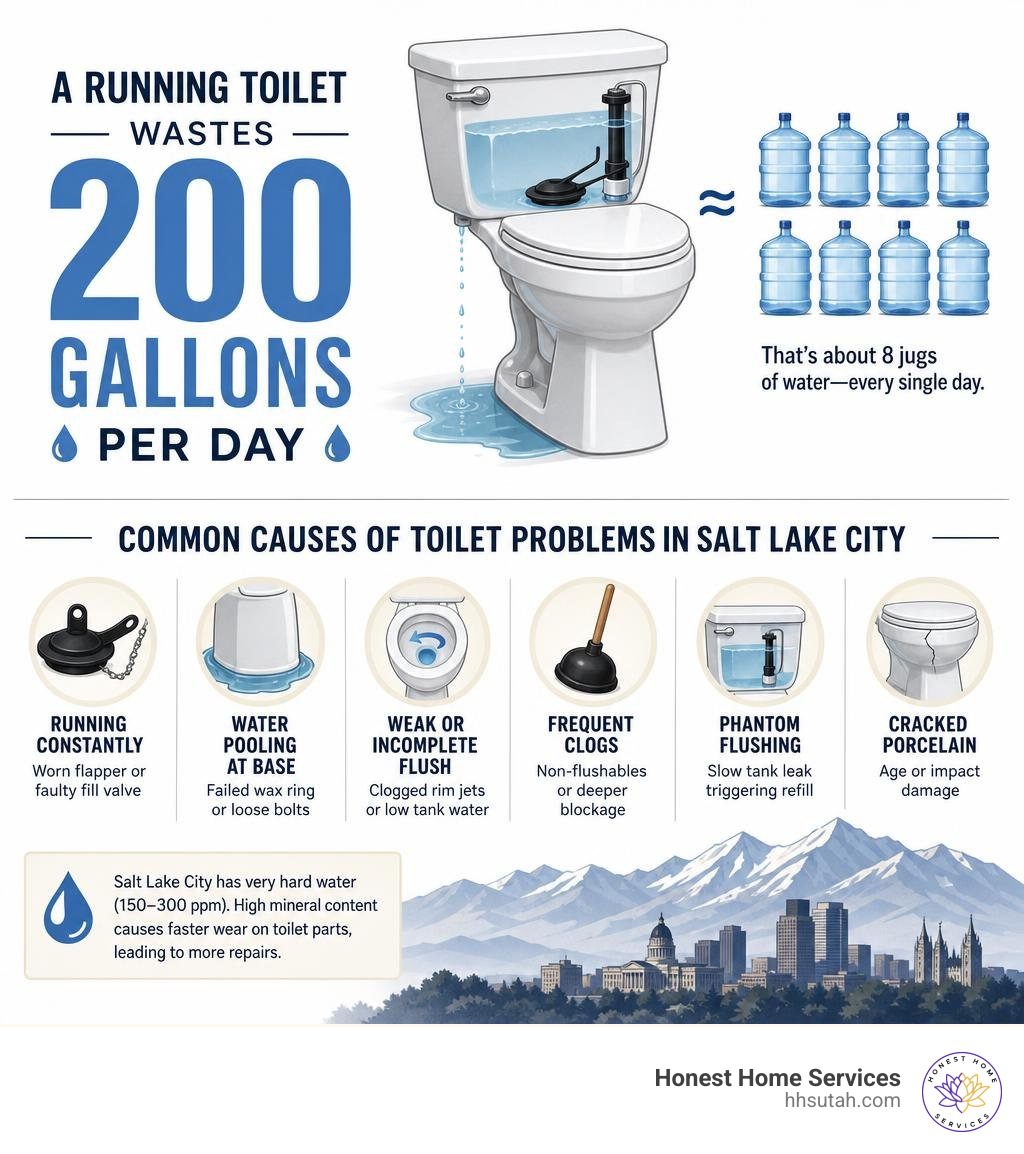
Toilet repair in Salt Lake City is something most homeowners deal with sooner or later — and putting it off almost always makes things worse. A running toilet can waste up to 200 gallons of water per day. That’s not just an inconvenience. It’s money draining out of your wallet with every passing hour.
Here’s a quick overview of the most common toilet problems and what to do about them:
| Problem | Likely Cause | Action |
|---|---|---|
| Toilet running constantly | Worn flapper or faulty fill valve | Replace flapper or fill valve |
| Water pooling at base | Failed wax ring or loose bolts | Call a plumber for pull-and-reset |
| Weak or incomplete flush | Clogged rim jets or low tank water | Clear jets or adjust water level |
| Frequent clogs | Non-flushables or deeper blockage | Plunge, snake, or call a pro |
| Phantom flushing | Slow tank leak triggering refill | Test with dye tablet; replace flapper |
| Cracked porcelain | Age or impact damage | Replace the toilet |
Salt Lake City has a specific challenge that makes toilet problems more common here than in many other cities: very hard water. With mineral concentrations between 150 and 300 ppm, the local water supply accelerates wear on internal toilet components — meaning parts fail faster and repairs come more often than homeowners expect.
At Honest Home Services, we’ve spent over 20 years helping Utah homeowners and businesses solve exactly these kinds of toilet repair Salt Lake City problems, from simple flapper swaps to full toilet replacements. We’re licensed, insured, and built on the kind of straightforward service and transparent pricing that keeps our customers coming back.
Simple guide to toilet repair salt lake city terms:
The Hard Truth About Salt Lake City’s Water and Your Toilet
If you live in the Salt Lake Valley, you already know we have hard water. You see it as white, crusty spots on your showerheads, glass doors, and faucets. But what you don’t see is the quiet, destructive work those same minerals are doing inside your toilet tank.
Salt Lake City’s municipal water supply carries an average of 12 to 15 grains per gallon of dissolved calcium and magnesium. This makes our water “very hard” by scientific standards. While these minerals are perfectly safe to drink, they are incredibly tough on plumbing fixtures.
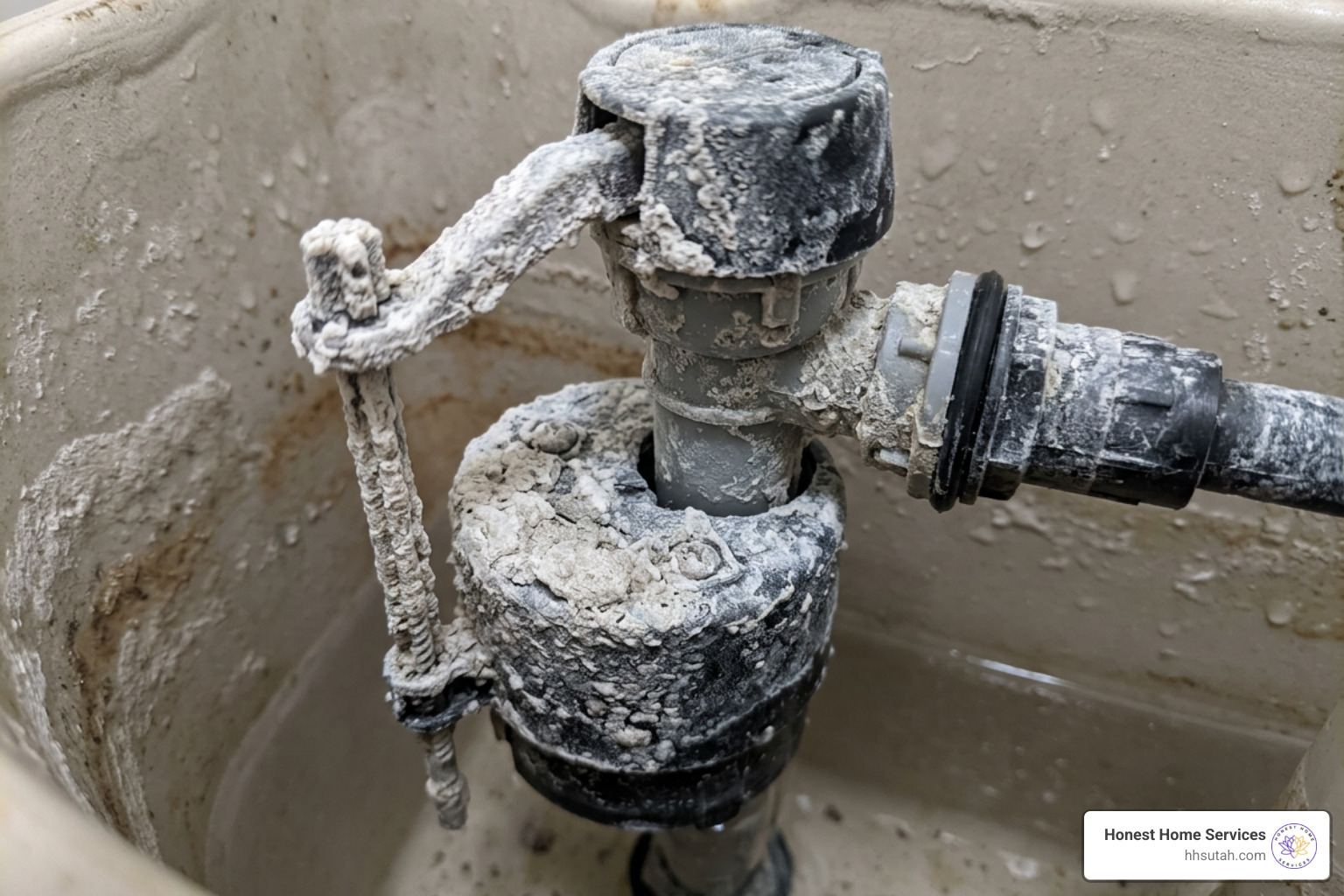
Inside your toilet tank, these minerals constantly precipitate out of the water, forming a rough, chalky scale. This scale acts like sandpaper on the moving parts of your toilet, slowly grinding away at seals, valves, and connections until they fail.
How Hard Water Accelerates Toilet Repair in Salt Lake City
The two components most vulnerable to our hard water are the fill valve and the flapper.
The fill valve is responsible for refilling your toilet tank after every flush. When calcium deposits build up inside the valve’s delicate internal seals, the valve can get stuck open. When this happens, water continues to run into the overflow tube indefinitely, leading to a massive spike in your monthly utility bill.
The flapper is the rubber seal at the bottom of the tank that lifts when you push the flush lever. In areas with soft water, a high-quality rubber flapper can easily last five years or more. In Salt Lake City, however, the rough mineral scale coats the rim of the flush valve seat. This prevents the flapper from forming a watertight seal. Furthermore, the minerals react with the rubber itself, causing it to become brittle, warped, or gummy in as little as 18 months.
When the flapper fails to seal, water constantly trickles from the tank into the bowl. This is what causes “phantom flushing”—that spooky sound of your toilet suddenly refilling itself in the middle of the night when no one has used it.
If you are dealing with mineral-damaged fixtures throughout your bathroom, you might also want to check out our guide on how to Fix Your Faucet Salt Lake City’s Premier Repair Services to keep your entire home’s plumbing in top shape.
Common Toilet Troubles and When to Call a Professional
Some toilet issues are minor annoyances you can easily resolve with a standard plunger. Others are early warnings of major water damage that could rot your subfloor, ruin your ceiling, and cost thousands of dollars to remediate.
Let’s break down the most common toilet issues Salt Lake City homeowners face and how to tell the difference between a quick DIY project and an emergency that requires professional help.
Recognizing the Signs of a Failing Toilet
How do you know when a toilet has crossed the line from “needs a quick adjustment” to “needs a professional plumber”? Keep an eye out for these critical warning signs:
- Water Pooling Around the Base: If you notice water seeping out from under the toilet bowl, this is a major red flag. It almost always means the wax ring seal beneath the toilet has failed. Every time you flush, dirty water is leaking onto your bathroom floor and soaking into the subfloor. Over time, this leads to structural rot and dangerous mold growth.
- A Wobbly or Rocking Toilet: If your toilet moves, shifts, or wobbles when you sit down, do not ignore it. This movement puts constant stress on the wax ring, virtually guaranteeing a leak will develop. It also indicates that the floor flange is broken or the closet bolts have rusted away.
- Persistent Gurgling Noises: If your toilet gurgles when you run the bathroom sink or take a shower, your plumbing system has a venting issue or a deep main line blockage. This is not a toilet problem—it’s a system-wide drainage issue.
- Cracked Porcelain: A hairline crack in the toilet tank or bowl might look harmless, but porcelain is highly unpredictable. Under the pressure of holding gallons of water, a small crack can suddenly give way, causing a catastrophic flood in your home.
If you notice any of these signs, it’s time to call in the experts. For more details on diagnosing plumbing red flags, take a look at the Top 5 Signs You Need to Call an Experienced Plumber and read through When to Call a Professional Plumber The Ultimate Guide to protect your property.
Preventing Clogs, Leaks, and Running Water
Most toilet emergencies are entirely preventable. By practicing good toilet habits, you can extend the lifespan of your fixtures and avoid midnight plumbing disasters.
First, treat your toilet like a waste disposal system, not a trash can. The only things that should ever be flushed down a toilet are human waste and toilet paper.
Avoid flushing:
- “Flushable” Wipes: Despite what the packaging claims, these wipes do not break down in water. They are a primary cause of severe clogs in older sewer lines across Salt Lake City, especially in historic neighborhoods like the Avenues, Sugar House, and Harvard-Yale.
- Feminine Hygiene Products: Tampons and pads are designed to absorb liquid and expand—which is exactly what you don’t want happening inside a narrow drainpipe.
- Paper Towels and Facial Tissues: These materials are engineered to stay strong when wet, unlike toilet paper, which is designed to dissolve rapidly.
- Cotton Swabs, Dental Floss, and Hair: These items do not degrade and easily snag on pipe imperfections, forming a net that catches other debris and creates massive blockages.
Additionally, avoid using harsh chemical drain cleaners. While they might temporarily clear a minor clog, these highly corrosive chemicals generate extreme heat inside your pipes. This heat can actually melt plastic PVC pipes or crack the delicate porcelain of your toilet bowl.
Instead, keep a high-quality flange plunger nearby. If you want to learn how to tackle blockages safely without damaging your plumbing, check out our guide on Toilet Trouble Fix That Clog Like a Pro.
Repair vs. Replacement: Making the Cost-Effective Choice
When your toilet starts acting up, you have a choice to make: do you keep patching it up with new parts, or is it time to replace it entirely?
While a high-quality porcelain toilet bowl can physically last for 30 years or more, the mechanical parts inside the tank rarely last longer than 5 to 10 years — especially under the assault of Northern Utah’s hard water.
Here is a quick comparison to help you decide which path makes the most financial sense for your home:
| Factor | When to Repair | When to Replace |
|---|---|---|
| Age of Toilet | Under 10–12 years old | Over 15–20 years old |
| Water Usage | Already uses 1.6 GPF or less | Uses 3.5 to 7.0 GPF (pre-1994 models) |
| Porcelain Condition | Perfect, no chips or cracks | Hairline cracks, deep stains, or scratches |
| Frequency of Issues | First time dealing with a minor leak or run | Constantly calling a plumber for clogs or leaks |
| Cost of Action | $99 – $175 for basic parts or seal reset | $519+ for a brand-new, highly efficient unit |
Evaluating Toilet Repair Salt Lake City Costs and Lifespan
If your toilet is relatively new (under 10 years old) and structurally sound, repairing it is almost always the most cost-effective choice.
Minor repairs, such as replacing a worn-out flapper, a sticky fill valve, or a broken handle, are quick and affordable. At Honest Home Services, we offer flat-rate pricing for these standard repairs, usually running between $99 and $149.
If the toilet is leaking around the base, we perform a “pull-and-reset” service for around $175. This involves shutting off the water, draining and removing the toilet, cleaning the floor flange, installing a fresh, commercial-grade wax ring, and securing the toilet back to the floor with new brass bolts.
However, if your toilet is older, constantly clogging, or has a cracked bowl, the cost of multiple repairs can quickly add up to more than the price of a brand-new toilet. For older homes in Salt Lake City, we often run into degraded cast iron flanges beneath the toilet. Replacing a corroded flange and rebuilding an outdated connection can be complex, making it the perfect time to upgrade to a modern, reliable fixture.
Upgrading to Modern Low-Flow Fixtures
If your home was built before 1994 and still has its original toilets, you are flushing money down the drain with every single use.
Older toilets use anywhere from 3.5 to 7 gallons of water per flush (GPF). In contrast, modern high-efficiency toilets are designed to use just 1.28 GPF while providing a much stronger, more reliable flush.
By upgrading to an EPA WaterSense-certified model, the average household can cut its toilet water usage by over 60%. This translates to saving up to 13,000 gallons of water per year, which will make a noticeable dent in your Salt Lake City utility bills.
Modern toilets also come in “comfort height” designs (which sit slightly higher, making them easier on the knees and compliant with ADA standards) and offer elongated bowls for added comfort. When we install a new toilet, we handle everything: removing and hauling away your old unit, prepping the floor, replacing the supply line with durable braided stainless steel, installing a fresh wax ring, and testing the new system thoroughly to ensure zero leaks.
Choosing the Right Toilet Repair Salt Lake City Experts
Plumbing repairs might look simple on DIY videos, but a single mistake can lead to major water damage. A poorly installed wax ring can slowly leak under your flooring for months before you notice the soft spots on your floor or water stains on the ceiling below.
That is why it is always smartest to work with licensed professionals who know the unique plumbing challenges of Northern Utah.
What to Look for in a Local Plumber
When searching for a company to handle your toilet repair in Salt Lake City, don’t just hire the cheapest handyman you find online. Look for these essential qualifications to protect your home:
- State Licensing and Insurance: Ensure the company’s plumbers are fully licensed through the Utah Division of Professional Licensing (DOPL). They should also carry robust liability insurance to protect your property in the rare event of an accident.
- Upfront, Transparent Pricing: A reputable plumber will never give you a vague estimate and then hit you with surprise fees once the job is finished. Look for companies that provide clear, flat-rate pricing before any work begins.
- Local Experience: Salt Lake City’s historic homes (like those in Bountiful, Murray, and the Avenues) have unique architectural features and aging pipe systems that require specialized knowledge.
At Honest Home Services, we check all of these boxes. We bring over two decades of local experience to every job, and we back our work with a 100% customer satisfaction guarantee.
If you want more tips on how to find a trustworthy service provider, read our guides on What to Look for in a Reliable Salt Lake City Plumber and How to Find a Reliable Plumber in Salt Lake City.
Frequently Asked Questions About Salt Lake City Toilet Repair
How long does a typical toilet repair or installation take?
Most standard toilet repairs—such as replacing a fill valve, flapper, or flush lever—take between 45 and 90 minutes to complete.
If you are replacing your toilet entirely, a professional installation typically takes 1 to 2 hours. This includes shutting off the water, removing and hauling away the old toilet, cleaning and inspecting the floor flange, installing the new wax ring, setting and leveling the new toilet, connecting the new supply line, and conducting rigorous leak tests.
If we discover hidden damage, such as a cracked cast iron flange or rotted subflooring beneath the old toilet, the process may take a bit longer to ensure the repair is done correctly and safely.
Are there local plumbing codes for toilet installation in Salt Lake City?
Yes. All toilet installations in Salt Lake City and surrounding Utah counties must comply with the International Plumbing Code (IPC) as amended by the state of Utah.
Key code requirements include:
- Clearance Space: There must be at least 15 inches of clearance from the center of the toilet to any side wall, vanity, or other fixture, and at least 21 inches of clear space in front of the toilet bowl.
- Air Gaps and Backflow Prevention: The fill valve inside the tank must feature an approved air gap or backflow prevention mechanism to ensure toilet tank water can never siphon back into your home’s clean drinking water supply.
- Commercial Accessibility: For commercial properties and public spaces, toilets must meet strict ADA (Americans with Disabilities Act) guidelines, including specific seat heights (17 to 19 inches) and grab bar placements.
Our technicians are fully trained in all local Utah building codes, ensuring your new installation is completely compliant and safe.
Do Salt Lake City plumbers offer same-day or emergency toilet repair?
Absolutely. We know that a broken or overflowing toilet isn’t something that can wait until next week—especially if you only have one bathroom in your home.
At Honest Home Services, we offer 24/7 emergency support and rapid-response dispatch across Salt Lake County, Davis County, and surrounding areas. Whether you are dealing with a toilet that is actively flooding your bathroom at midnight or a severe clog on a holiday weekend, our local technicians are always ready to help.
Conclusion
Your toilets are some of the most hard-working fixtures in your home. When they start running constantly, leaking around the base, or clogging repeatedly, they aren’t just wasting water—they are putting your home at risk for expensive water damage.
Don’t let a minor toilet issue turn into a major home disaster. Whether you need a quick flapper replacement to stop a noisy leak or want to upgrade your home with modern, water-saving toilets, the team at Honest Home Services is here to deliver honest, reliable, and affordable solutions.
We proudly serve homeowners and businesses throughout Salt Lake City, West Valley, Murray, Sandy, Draper, Park City, and across Northern Utah.
Ready to get your plumbing back in perfect working order? Schedule Salt Lake City Plumbing Services with us today, or give us a call to experience the honest, high-quality service you deserve!