
Commercial Water Heater Repair: What to Check First
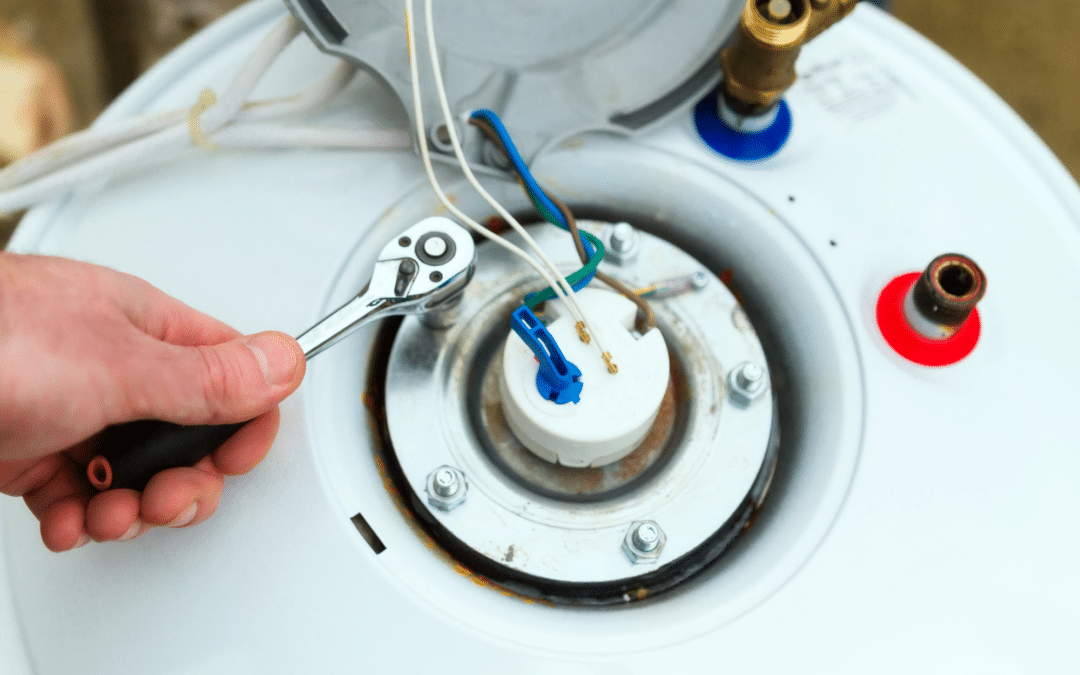
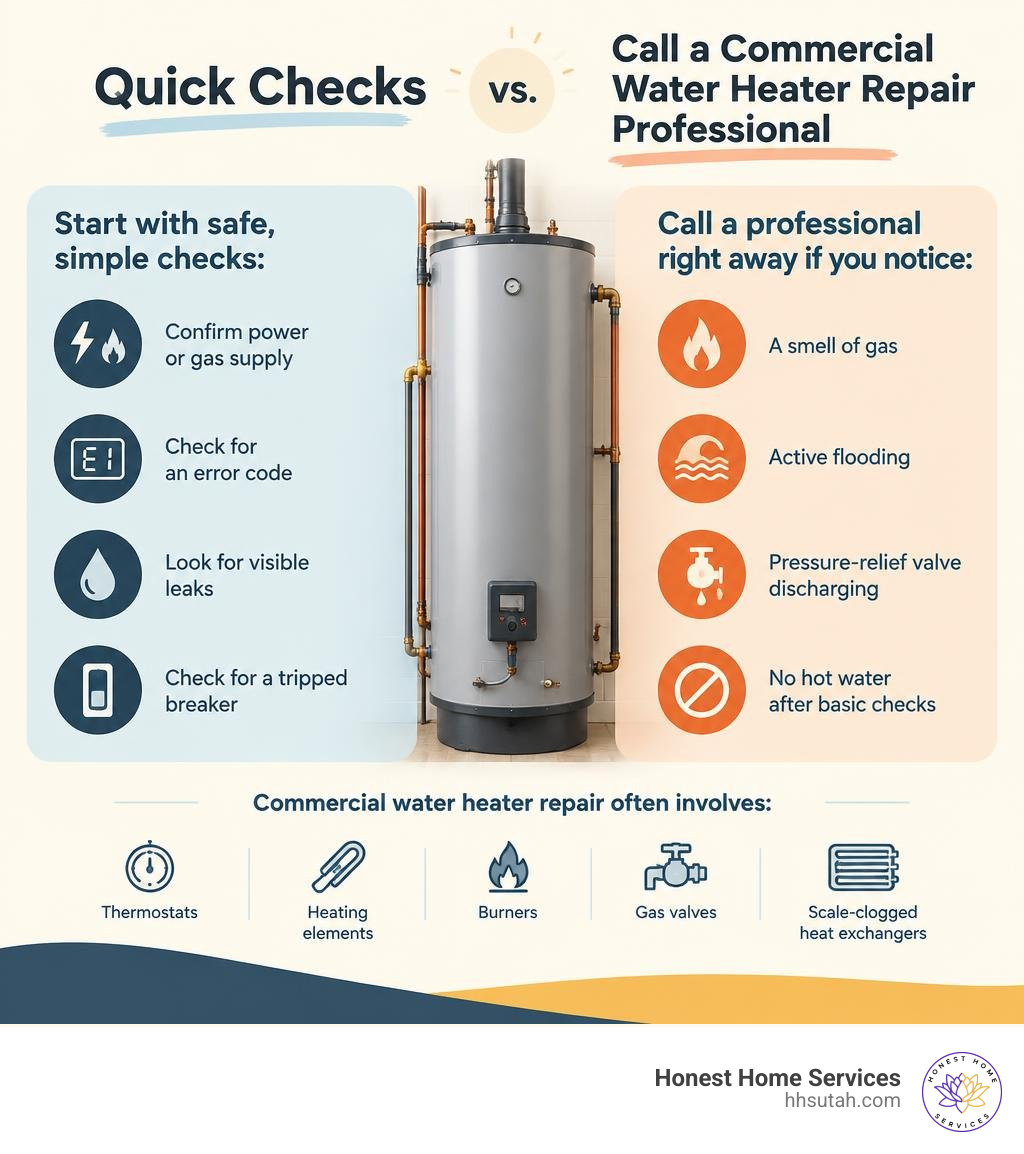
When hot water becomes unreliable, start with safe, simple checks: confirm the unit has power or gas, check for an error code, and look for visible leaks or a tripped breaker. Call a licensed commercial plumber right away if you smell gas, see active flooding, notice the pressure-relief valve discharging, or cannot restore hot water after basic checks. Commercial water heater repair often involves components such as thermostats, heating elements, burners, gas valves, or scale-clogged heat exchangers, and those repairs require the right tools and safety testing. For broader context on how these systems work, see water heating.
For a restaurant, office, salon, or other business, a water-heater outage can quickly disrupt normal work. Avoid removing access panels, resetting a unit repeatedly, or working on gas, high-voltage electrical, or pressure-related parts yourself. Shut off the fuel or power and water supply if there is an immediate hazard, then document the symptoms for the technician.
Honest Home Services brings more than 20 years of plumbing and HVAC experience to commercial water heater repair for Utah businesses. Our licensed and insured team helps identify urgent failures, make reliable repairs, and keep hot-water systems operating safely.
Simple commercial water heater repair word guide:
Identifying Common Commercial Water Heater Problems
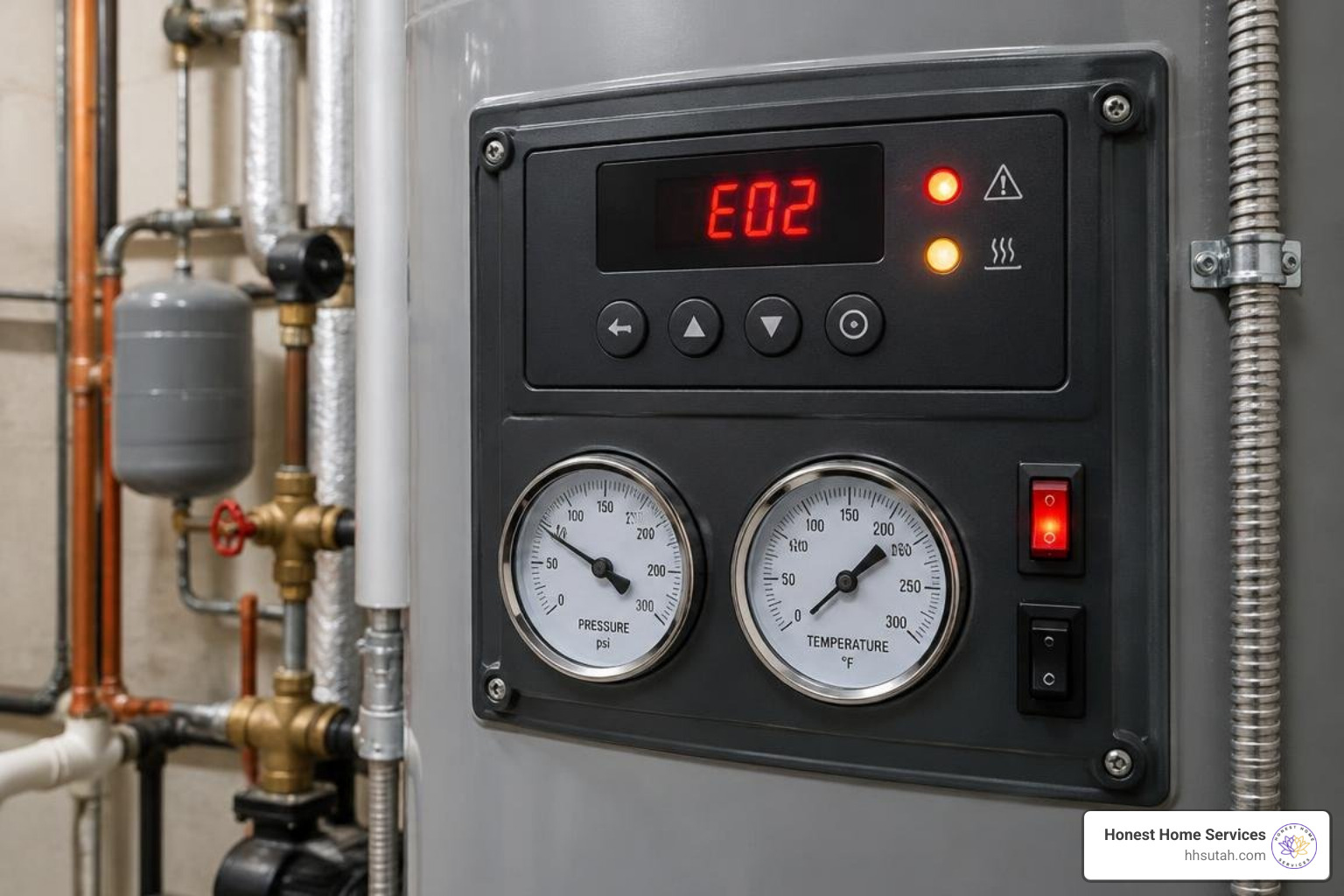
A malfunctioning commercial water heating unit rarely fails without giving off a few warning signals first. In high-demand environments like kitchens, health clinics, and apartment complexes across Salt Lake County and Davis County, catching these early indicators makes the difference between a minor component replacement and thousands of dollars in lost revenue due to unplanned downtime.
Temperature Fluctuations and Inconsistent Hot Water
If your building experiences sudden cold spikes during peak operating hours, your system is struggling with its recovery rate. This issue often points to failing electrical heating elements, uncalibrated thermostats, or clogged burner assemblies on gas units. In direct-fired gas water heaters, burner fouling disrupts proper combustion, leading to delayed ignition or insufficient heat output.
When you notice inconsistent water delivery, reviewing how our team approaches diagnosing gas water heater problems can help facility managers understand whether the issue stems from a faulty thermocouple, a malfunctioning mixing valve, or severe sediment buildup insulating the bottom of the tank.
Strange Noises, Leaks, and Valve Failures
Loud popping, rumbling, or knocking sounds coming from a commercial boiler or storage unit are typically caused by heavy mineral scaling. As water gets trapped beneath layers of sediment at the bottom of the tank, it boils and violently erupts through the mineral layer. If left unchecked, this localized overheating weakens the steel tank lining and leads to permanent tank corrosion.
External issues like active pooling around the base often point to a failed internal tank bladder, worn pipe fittings, or a weeping temperature and pressure relief (TPR) valve. A continuously discharging TPR valve indicates dangerous thermal expansion or over-pressurization within the system, requiring immediate intervention to prevent system failure.
Step-by-Step Guide to Commercial Water Heater Repair and Troubleshooting
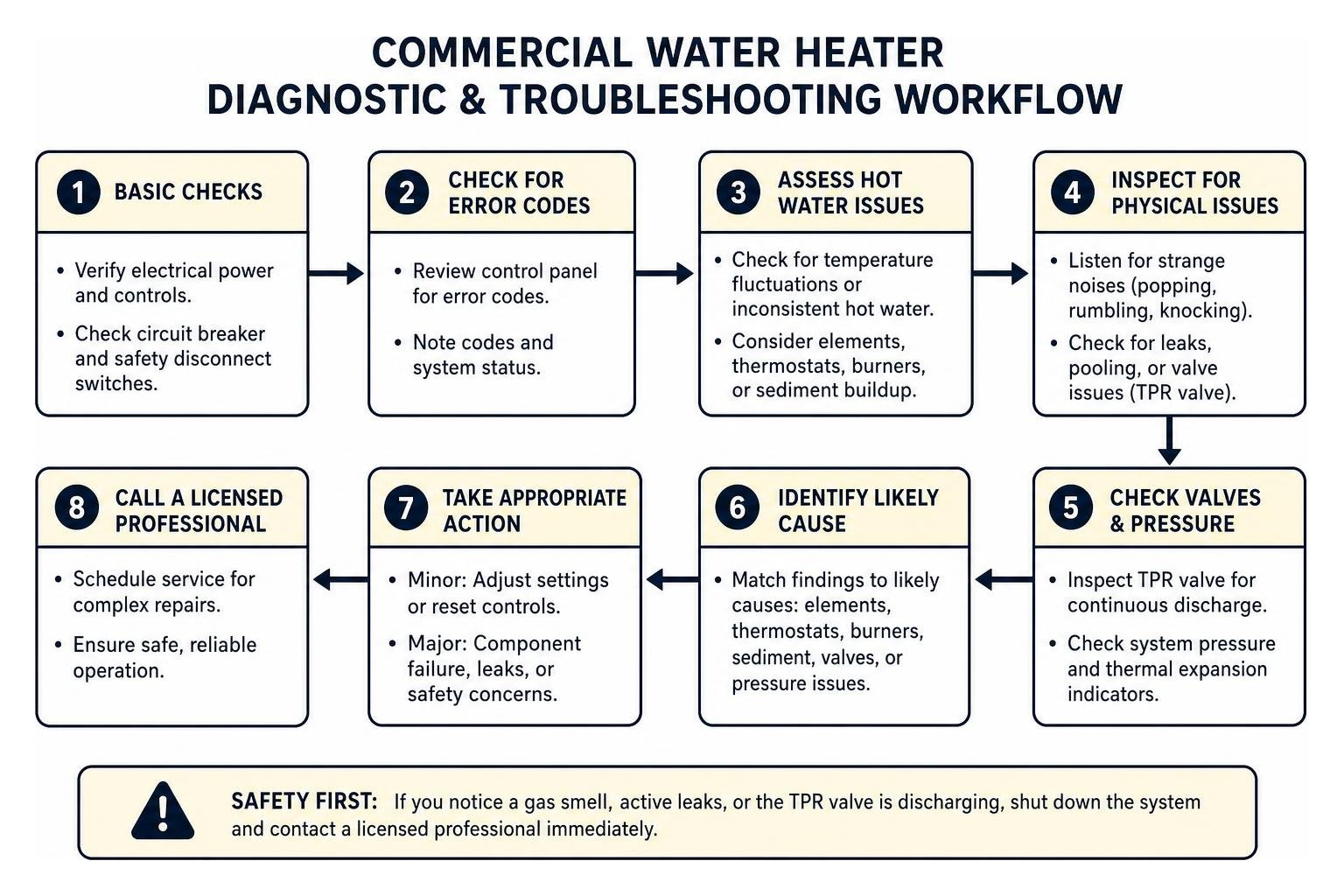
When an issue arises, commercial operators must balance fast action with facility safety. Below is a safe, structured troubleshooting workflow designed to help you determine if an issue is a minor setting error or requires a licensed professional.
Basic Checks Before Requesting Commercial Water Heater Repair
Before picking up the phone for emergency dispatch, run through these foundational system checks:
- Verify Electrical Power & Controls: Check your facility’s main electrical panel to see if the dedicated circuit breaker has tripped. Ensure all external safety disconnect switches near the unit are turned to the “ON” position.
- Inspect Fuel Supply Lines: For natural gas units, ensure the manual gas shutoff valve is parallel to the pipe. Check if other gas appliances in the building are receiving fuel.
- Review Digital Diagnostics: Modern commercial systems feature digital control modules. Record any active alphanumeric fault or error codes displayed on the LCD panel so you can report them directly to your technician.
- Examine External Water Valves: Ensure the cold water inlet supply valve and external thermostatic mixing valves have not been accidentally closed or restricted.
- Check High-Limit Reset Switches: If your electric system has an accessible external high-limit reset button, press it once. If it immediately trips again, stop and call a professional to prevent electrical component damage.
Troubleshooting Tank vs Tankless and Heat Pump Units
Different equipment designs fail in unique ways. The table below outlines how common commercial configurations vary across failure points and technical fixes:
| System Type | Primary Failure Points | Typical Diagnostic Procedure | Required Technical Fix |
|---|---|---|---|
| Commercial Tank-Style | Burner fouling, heating element burnout, anode exhaustion, sediment accumulation | Element resistance testing, combustion gas pressure verification, tank bottom sediment sampling | Element replacement, burner orifice cleaning, mechanical tank descaling |
| Commercial Tankless | Scale buildup in heat exchangers, flow sensor failure, vent blockages, ignition error codes | Flow rate measurement, differential temperature checks, vent draft inspection | Recirculation descaling flush, flow sensor recalibration, intake/exhaust clearing |
| Commercial Heat Pump | Refrigerant leaks, evaporator coil freezing, compressor relay failure, fan motor burnout | Refrigerant pressure manifold testing, compressor amp draw checks, airflow analysis | Coil defrosting and cleaning, compressor capacitor replacement, refrigerant recharge |
Commercial Water Heater Repair Costs and When to Replace
Facility managers must weigh ongoing maintenance expenses against operational reliability. Frequent repairs on an aging machine drain operating budgets and introduce the risk of sudden operational shutdowns.
Estimating Commercial Repair Expenses
Routine service and diagnostic visits allow a technician to perform electrical continuity checks, gas pressure testing, and component inspections. Smaller fixes—such as swapping a thermocouple, replacing a high-limit thermostat, or installing a new thermostatic mixing valve—are straightforward procedures. Major overhauls, such as replacing multi-element assemblies or heavy-duty electronic gas control valves, carry higher parts and labor requirements. Reviewing comprehensive water heater repair cost estimates can give you a better framework for evaluating individual mechanical bids.
When to Choose Replacement Over Commercial Water Heater Repair
Repairing your commercial unit is not always the most cost-effective path forward. When making the call between repairing or upgrading, keep these factors in mind:
- Tank Shell Compromise: If an internal storage vessel is actively weeping or rusted through, the unit cannot be welded or patched safely. Immediate replacement is required.
- The 50% Rule: If a quoted repair exceeds 50% of the cost of a brand-new system, replacement provides better long-term value.
- System Age: Most commercial water heaters endure intense, continuous duty cycles and have an operational lifespan of 8 to 12 years. Units operating beyond this window that require recurring repairs are best replaced.
- Capacity Sizing Issues: If your business has expanded its fixtures, seating capacity, or production volume, replacing your current unit with an upgraded system resolves chronic hot water shortages.
Understanding the real cost of water heater replacement with labor helps businesses budget for high-efficiency commercial upgrades that deliver dependable uptime and lower utility bills.
Preventive Maintenance and Emergency Safety Protocols
Proactive maintenance programs are the most effective way to protect commercial mechanical rooms from sudden failures and maintain compliance with local health and safety regulations.
Essential Maintenance and Regional Hard Water Management
In regions throughout Utah—such as Salt Lake City, Layton, West Jordan, and Draper—municipal water sources carry high concentrations of dissolved calcium and magnesium. When heated, these minerals precipitate out of the water and coat heating elements, heat exchanger tubing, and tank bottoms.
To keep your equipment operating efficiently, implement our gas water heater maintenance checklist:
- Bi-Annual Tank Flushing: Drain sediment reserves out of storage tanks every six months (or quarterly for heavy-use kitchens and laundromats).
- Sacrificial Anode Rod Inspection: Check core anode rods annually and replace them once they show more than 75% degradation to prevent internal rust.
- Tankless Descaling Cycles: Run a specialized food-grade descaling solution through commercial tankless heat exchangers every 6 to 12 months to eliminate mineral deposits.
- Safety Valve Testing: Manually trip and test the temperature and pressure relief valve to confirm it seats and discharges properly without sticking.
Managing Commercial Water Heating Emergencies
When a mechanical failure presents an immediate safety risk, facility personnel must follow strict safety steps:
- Gas Leaks: If anyone notices a sulfur or rotten-egg odor, immediately evacuate the mechanical room and building. Do not operate light switches or electrical tools. Shut off the main external gas valve if it is safe to do so.
- Major Water Ruptures: Locate the dedicated cold-water shutoff valve upstream of the heater and turn it clockwise until fully closed. If the valve is inaccessible due to standing water, shut off the building’s main water meter valve.
- Electrical Sparking or Arcing: De-energize the unit directly from the building’s main distribution breaker box; never touch wet electrical disconnects on the unit itself.
- Emergency Plumber Dispatch: Once the utility feeds are isolated, immediately contact a licensed team experienced in handling emergency water heater repairs for 24/7 priority response.
Frequently Asked Questions About Commercial Water Heating
How fast should a commercial water heater repair technician respond to an outage?
A dedicated commercial repair service should offer 24/7 emergency dispatch with rapid response windows—ideally arriving within 1 to 4 hours for priority commercial outages. Because health codes mandate hot water for sanitation in commercial kitchens, medical centers, and care facilities, our priority dispatch protocols are designed to minimize business downtime and prevent forced closures.
How does hard water accelerate commercial water heater damage?
Hard water deposits create a calcified barrier between the heat source (such as an open gas flame or electric element) and the water supply. This mineral blanket forces the heating system to run significantly longer cycles to reach target temperatures. The resulting thermal stress causes premature element burnout, cracked heat exchangers, and localized hotspots that rapidly degrade the vessel’s protective glass lining.
What credentials should a business verify before hiring a commercial repair contractor?
Always verify that the contractor holds an active state commercial plumbing license, comprehensive general liability coverage, and worker’s compensation insurance. Additionally, confirm their technicians have factory certifications for commercial brands, carry a full inventory of commercial replacement parts on their service vehicles, and offer clear labor warranties on completed repairs.
Keep Your Business Running with Dependable Commercial Water Heating
Hot water is a critical utility for your daily commercial operations. Understanding basic system checks helps you troubleshoot minor issues quickly, while knowing when to isolate your utilities protects your staff and facility from hazardous conditions. For complex diagnostics, component replacements, routine descaling, and emergency repairs, trust a licensed team that understands commercial code compliance.
When your system shows signs of wear, contact our experienced Salt Lake City water heater repair experts at Honest Home Services. We provide fair pricing, high-quality commercial parts, and 24/7 emergency support across Northern Utah to keep your business running smoothly.