
Why a Clogged Shower Drain Is More Than Just a Minor Annoyance
A clogged shower drain is one of the most common plumbing problems homeowners face — and one of the easiest to fix when you catch it early.
Quick answer: How to unclog a shower drain
- Remove visible hair — pull out any hair at the drain opening by hand (wear gloves)
- Pour boiling water — slowly pour boiling water down the drain to loosen soap scum (skip this if you have PVC pipes)
- Use baking soda and vinegar — pour ½ cup baking soda, then 1 cup vinegar; wait 15 minutes; flush with hot water
- Use a drain snake or zip-it tool — insert, twist, and pull out the clog
- Call a plumber — if water backs up in multiple drains, or the clog keeps coming back
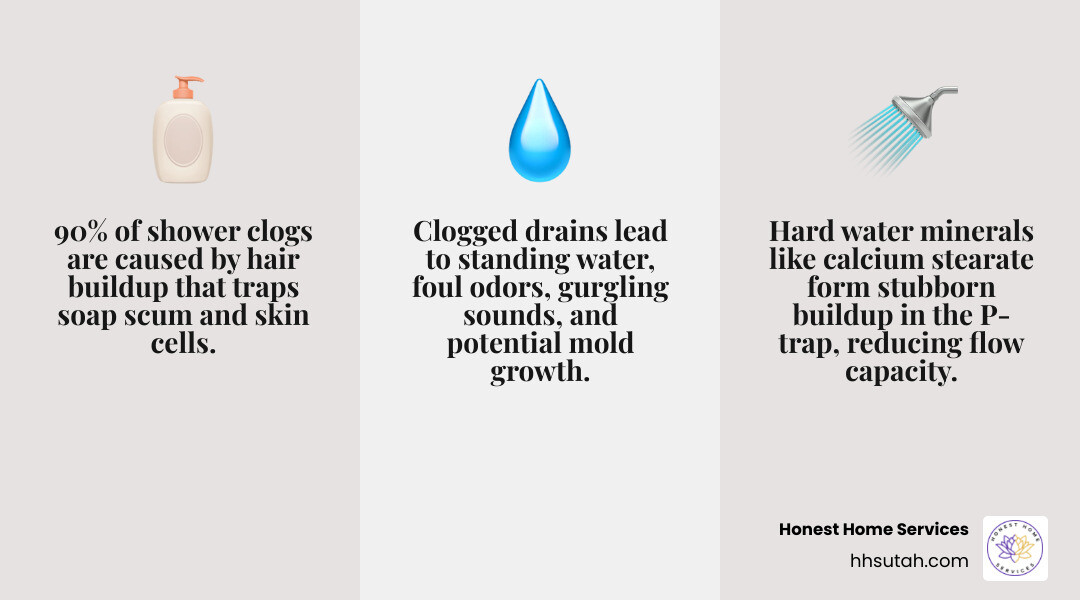
Most shower clogs start with something simple: hair. In fact, 90% of shower clogs trace back to hair buildup in the drain. That hair catches soap scum, skin cells, and minerals from your water — and before long, your shower starts feeling more like a foot bath.
Left untreated, a clogged drain can lead to standing water, foul odors, mold growth, and even damage to your pipes.
At Honest Home Services, we’ve spent over 20 years helping Northern Utah homeowners tackle clogged shower drains and all kinds of drain cleaning challenges — so you can trust you’re getting practical, proven advice. Keep reading for everything you need to know, from quick DIY fixes to when it’s time to call in the pros.
Know your Clogged shower drain terms:
- Hair clog removal
- Drain pipe inspection
- The Secret Life Of Leaks Expert Drain And Pipe Leak Detection
Common Causes of a Clogged Shower Drain
Understanding what is happening beneath your shower floor is the first step to a permanent fix. While it might seem like a mystery why your water has stopped flowing, the culprits are usually quite predictable.
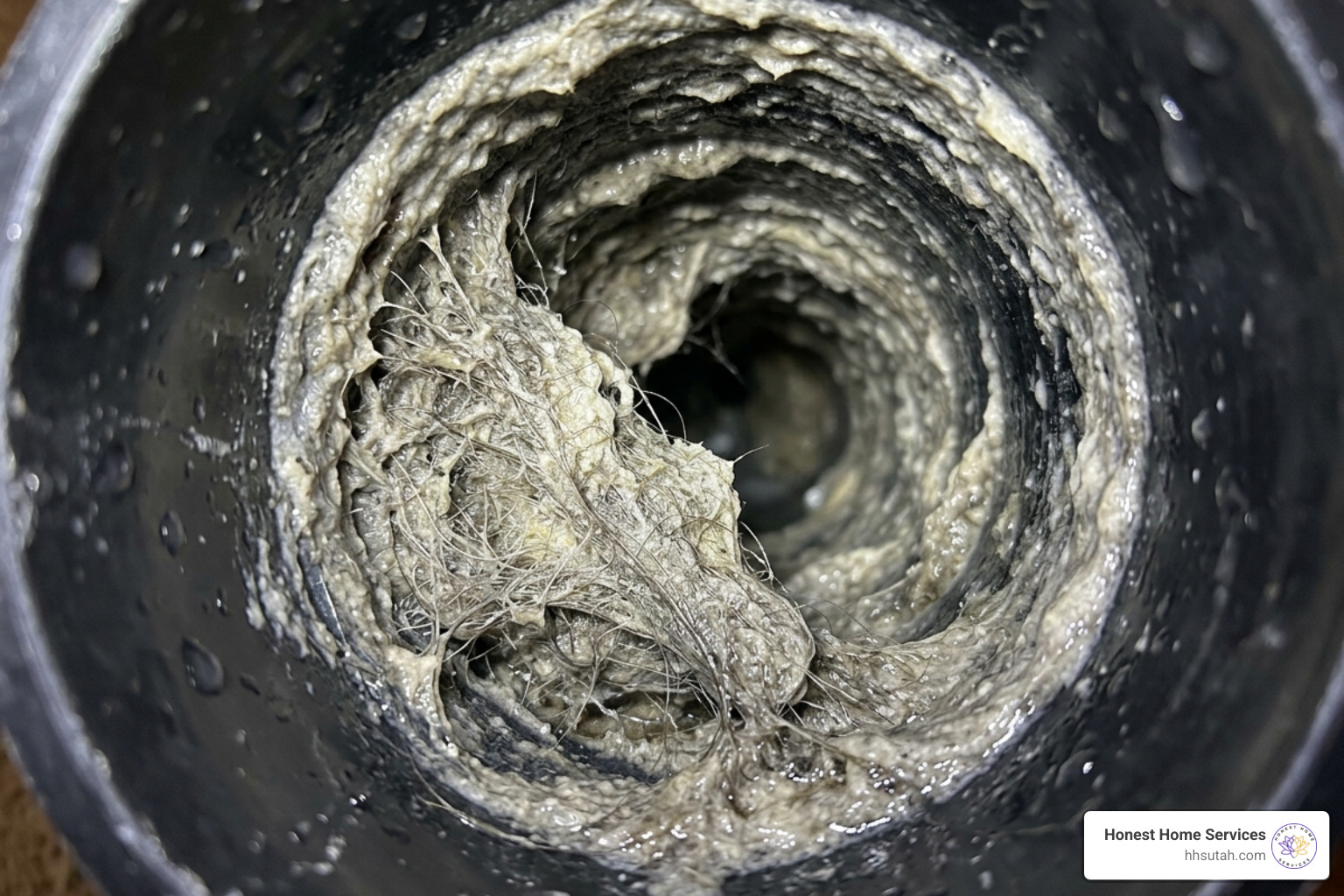
The primary architect of most blockages is the “hair-mesh matrix.” As we shower, shed hair enters the drain and snag on the edges of the strainer or the internal pipe walls. This creates a literal net that captures everything else passing through. According to experts at The Spruce, hair is the foundation for nearly all shower-specific clogs.
Once that hair net is in place, soap scum acts as the “glue.” Soap scum is actually a chemical compound known as calcium stearate. It forms when the fatty acids in your bar soap react with the minerals in our Utah water. This waxy substance coats the hair-mesh, narrowing the pipe’s diameter. In fact, a 50% reduction in the effective diameter of a standard 2-inch residential drain can reduce its flow capacity by a staggering 75%.
Other common contributors include:
- Shampoo and Conditioners: Modern products often contain waxes and oils that solidify inside cool pipes.
- Skin Cells and Dirt: These bind to the soap scum, adding bulk to the hair clog removal process.
- Small Objects: Bottle caps, razor plastic guards, and even bits of loofah sponges frequently find their way into the P-trap.
Identifying a Clogged Shower Drain
You don’t always need to wait for a “lake” in your shower to know you have a problem. Early detection can save you from a messy overflow. Watch for these signs:
- Slow Drainage: If water reaches your ankles before you’ve finished rinsing your hair, a clog is forming.
- Foul Odors: Stagnant water and decomposing organic matter trapped in the drain produce a distinct “rotten egg” or musty smell.
- Gurgling Sounds: If you hear a “glug-glug” sound from the drain, it means air is struggling to pass through a partial blockage.
- Fruit Flies or Drain Flies: These pests are attracted to the organic slime that builds up in a Clogged shower drain.
If you notice these signs across multiple fixtures, it might be time for 6 Telltale Signs You Need A Camera Drain Inspection to ensure the issue isn’t deeper in your main sewer line.
The Impact of Hard Water in May 2026
As of May 2026, hard water remains a significant challenge for homeowners in Salt Lake City and the surrounding Davis County areas. Approximately 85% of US households deal with hard water, but Utah’s levels are often classified as “very hard” (exceeding 180 milligrams per liter).
This high mineral content accelerates scale buildup. Over time, calcium and magnesium deposits harden into a rock-like crust inside your pipes. This rough surface makes it even easier for hair and soap scum to snag, leading to recurring clogs that DIY methods struggle to clear. If you suspect mineral scale is the issue, The Secret Life Of Leaks Expert Drain And Pipe Leak Detection can help identify if your pipes are narrowing from the inside out.
Effective DIY Methods to Clear Your Pipes
Before you call us out to your home in Layton or Kaysville, there are several safe, effective methods you can try yourself.
How to Unclog a Clogged Shower Drain with Baking Soda and Vinegar
This is the “science fair volcano” method, and it is surprisingly effective for minor clogs caused by soap scum.
- Prep the drain: Remove any standing water and take off the drain cover.
- The Base: Pour 1/2 cup of baking soda directly down the drain.
- The Acid: Follow it with 1 cup of white vinegar.
- The Reaction: You’ll hear it fizzing. This chemical reaction helps break down the waxy calcium stearate (soap scum) holding the hair together.
- The Wait: Let it sit for at least 15 minutes.
- The Flush: Pour a kettle of hot water down the drain to wash away the loosened debris.
For more detailed strategies, check out these effective drain cleaning tips.
Using a Plumber’s Snake or Drain Auger
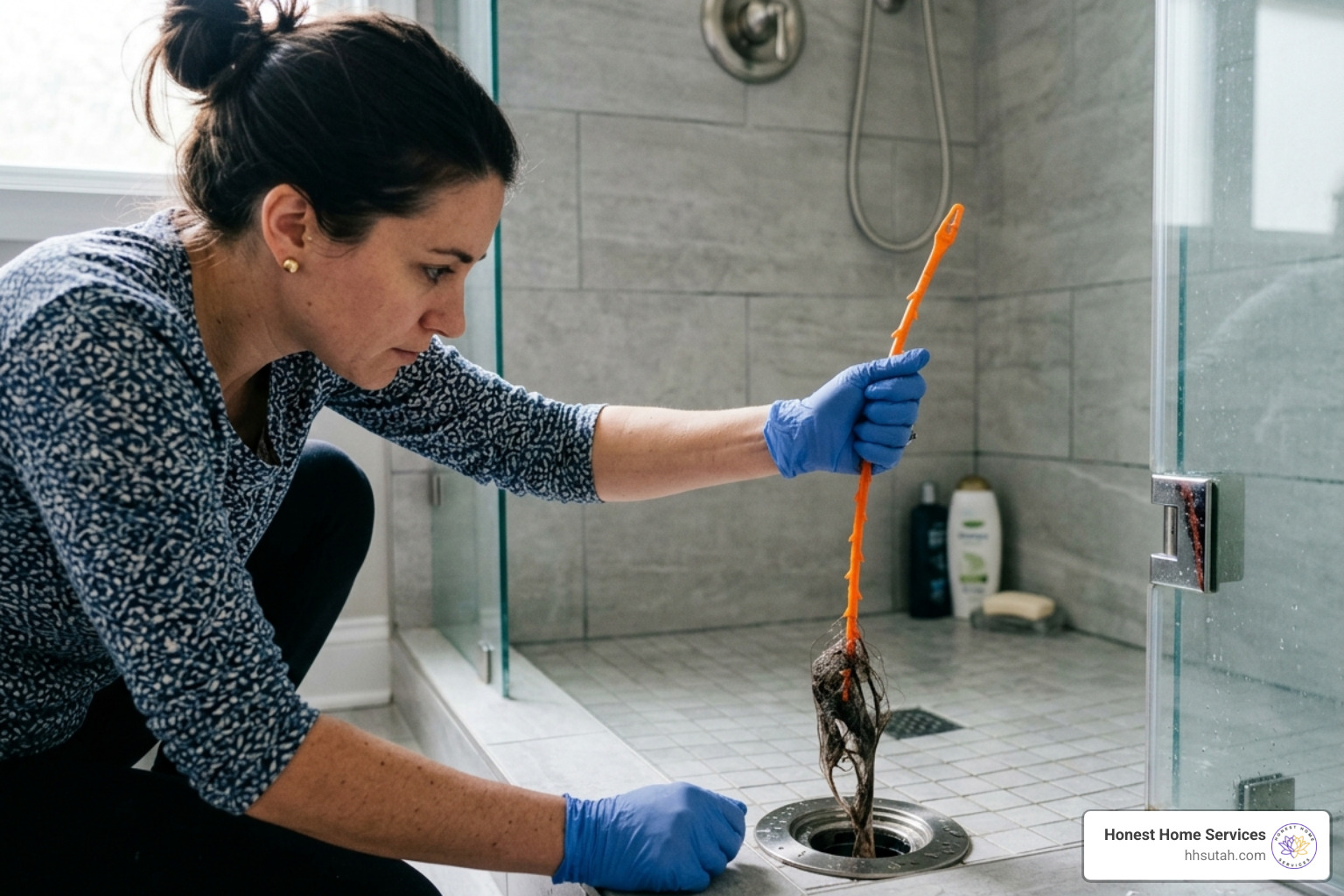
When natural cleaners don’t cut it, you need mechanical force. A “zip-it” tool (a barbed plastic wand) is great for surface hair, but a plumber’s snake is needed for deeper issues.
- Manual Snake: Feed the cable into the drain until you feel resistance.
- Crank it: Rotate the handle to hook the hair-mesh matrix.
- Retrieve: Pull the cable back slowly. Be prepared—what comes out is rarely pretty!
- Flush: Run hot water for several minutes to ensure the path is clear.
According to Good Housekeeping, keeping a small hand-crank auger in your tool kit can resolve about 80% of common household clogs without professional help.
When to Call a Professional Plumber
Sometimes, a Clogged shower drain is just the tip of the iceberg. If you’ve tried snaking and the baking soda trick with no luck, the problem might be further down the line.
You should stop DIY efforts and call Honest Home Services if:
- Multiple drains are slow: If your shower and your toilet are acting up, the clog is in a branch line or the main sewer.
- The clog recurs: If you clear it and it returns within a week, you likely have a deep obstruction or a pipe grade issue.
- You smell sewage: This indicates a dried-out P-trap or a venting issue that requires professional diagnostic tools.
- Water backs up elsewhere: If running the shower causes water to rise in the sink, you have a serious blockage.
Knowing the signs you need professional drain cleaning can prevent a minor clog from turning into a basement flood.
Advanced Solutions: Hydro Jetting and Camera Inspections
For stubborn clogs in older Bountiful or Salt Lake City homes, standard snaking might not be enough. We use high-tech solutions to get your pipes back to “like-new” condition.
- Camera Inspections: We feed a waterproof camera into your lines to see exactly what’s causing the trouble—whether it’s a toy, a massive hairball, or tree roots. Dont Get Drained Understanding The Benefits Of A Drain Pipe Camera Inspection is the best way to stop guessing.
- Hydro Jetting: This uses ultra-high-pressure water (up to 4,000 PSI) to blast away mineral scale, grease, and even tree roots. It’s essentially a pressure washer for the inside of your pipes. Learn about the 5 signs you need hydro jetting.
Risks of Chemical Drain Cleaners
We strongly advise against using harsh, store-bought chemical cleaners. While they promise a quick fix, they often do more harm than good:
- Pipe Damage: The heat generated by these chemicals can soften PVC pipes and corrode older metal ones.
- Safety Hazards: They produce toxic fumes and can cause severe chemical burns if they splash back.
- Environment: These chemicals eventually end up in our local Utah water systems.
Instead of toxic chemicals, consider enzyme-based cleaners that use natural bacteria to “eat” organic buildup over time. For more on the costs of professional vs. DIY, see our guide on drain cleaning near me prices.
Long-Term Prevention and Maintenance
The best way to deal with a Clogged shower drain is to never have one in the first place. Prevention is simpler (and cheaper) than repair.
- Install a Hair Catcher: A simple mesh screen or “troom” can catch 90% of the hair before it ever enters the pipe.
- Brush Before You Wash: Brushing your hair before getting in the shower removes loose strands that would otherwise end up in the drain.
- Switch to Liquid Soap: Bar soaps contribute heavily to soap scum buildup. Liquid body washes are much easier on your plumbing.
- The Weekly Flush: Once a week, pour a gallon of very hot water (not boiling for PVC) down the drain to melt away any fresh soap residue.
For a deeper dive into protecting your home, read our preventative drain cleaning tips.
Routine Maintenance Schedule for May 2026
In May 2026, we recommend the following schedule for Northern Utah residents to combat our local hard water issues:
| Task | Frequency | DIY or Pro? |
|---|---|---|
| Clean drain strainer/hair catcher | After every shower | DIY |
| Hot water flush | Weekly | DIY |
| Baking soda and vinegar refresh | Monthly | DIY |
| Professional camera inspection | Every 2 years | Professional |
| Main line hydro jetting | Every 3-5 years | Professional |
Frequently Asked Questions about Shower Clogs
Is boiling water safe for all shower drains?
No. While boiling water (212°F) is great for melting soap scum in metal pipes, it can be dangerous for PVC (plastic) pipes. Most modern homes in Salt Lake County use PVC, which can soften or even leak if exposed to boiling temperatures. Use “hot” tap water instead if you have plastic pipes.
Why does my shower drain keep clogging every few weeks?
This usually points to one of three things:
- A partial clog: Your DIY method only poked a hole in the hairball rather than removing it.
- Venting issues: If your plumbing vent on the roof is blocked (by a bird’s nest, for example), the drain won’t have the air pressure it needs to flow.
- Hard water scale: Rough mineral deposits inside the pipe are catching hair as soon as it enters. This Old House notes that recurring clogs often require professional descaling.
How do I handle a clog if there is standing water?
When you’re standing ankle-deep in water, the baking soda method won’t work because it can’t reach the clog.
- Bail the water: Use a bucket to remove as much water as possible.
- Manual removal: Use a wire hanger or zip-it tool to feel for hair near the surface.
- Plunge: Ensure there is enough water to cover the cup of the plunger, create a tight seal, and use quick, forceful strokes.
- Wet/Dry Vac: A shop vac can sometimes suck a clog right out of the pipe if you can get a good seal over the drain.
Conclusion
A Clogged shower drain doesn’t have to ruin your day. By catching the signs early and using the right DIY tools, you can keep your water flowing freely. However, when the “hair monsters” win or the hard water scale becomes too much to handle, you don’t have to tackle it alone.
Honest Home Services provides expert Salt Lake City drain cleaning and plumbing support to communities across Northern Utah, including Clearfield, Layton, and Saratoga Springs. We pride ourselves on fair pricing, local expertise, and a commitment to getting the job done right the first time.
If your shower is still draining slowly, give us a call today. We’ll bring the “big drain snake cavalry” and the latest camera tech to make sure your pipes are clear and your home stays dry!