

What Does It Really Cost to Install a Hot Water Tank?
The cost to install a hot water tank catches most homeowners off guard — especially when the old one fails without warning and you need answers fast.
Here’s a quick look at what you can expect to pay in 2026:
| Water Heater Type | Typical Installed Cost |
|---|---|
| Electric tank (40-50 gal) | $920 – $2,200 |
| Gas tank (40-50 gal) | $1,200 – $3,000 |
| Tankless (gas or electric) | $1,400 – $6,500 |
| Heat pump / hybrid | $3,000 – $6,000 |
| Solar system | $5,500 – $13,000 |
Most homeowners in 2026 pay between $900 and $3,000 for a standard tank replacement, with a national average around $1,400 to $1,800 all-in.
Those numbers include the unit and labor. But your final bill depends on several things: the type of heater, your home’s existing infrastructure, local permit requirements, and how easy it is for a plumber to access the unit.
This guide breaks it all down so you know exactly what to expect before you pick up the phone.
At Honest Home Services, we’ve spent over 20 years helping Northern Utah homeowners and businesses navigate the real cost to install a hot water tank — from straightforward swaps to complex tankless conversions. We’ll walk you through every factor that affects your price so there are no surprises on your invoice.
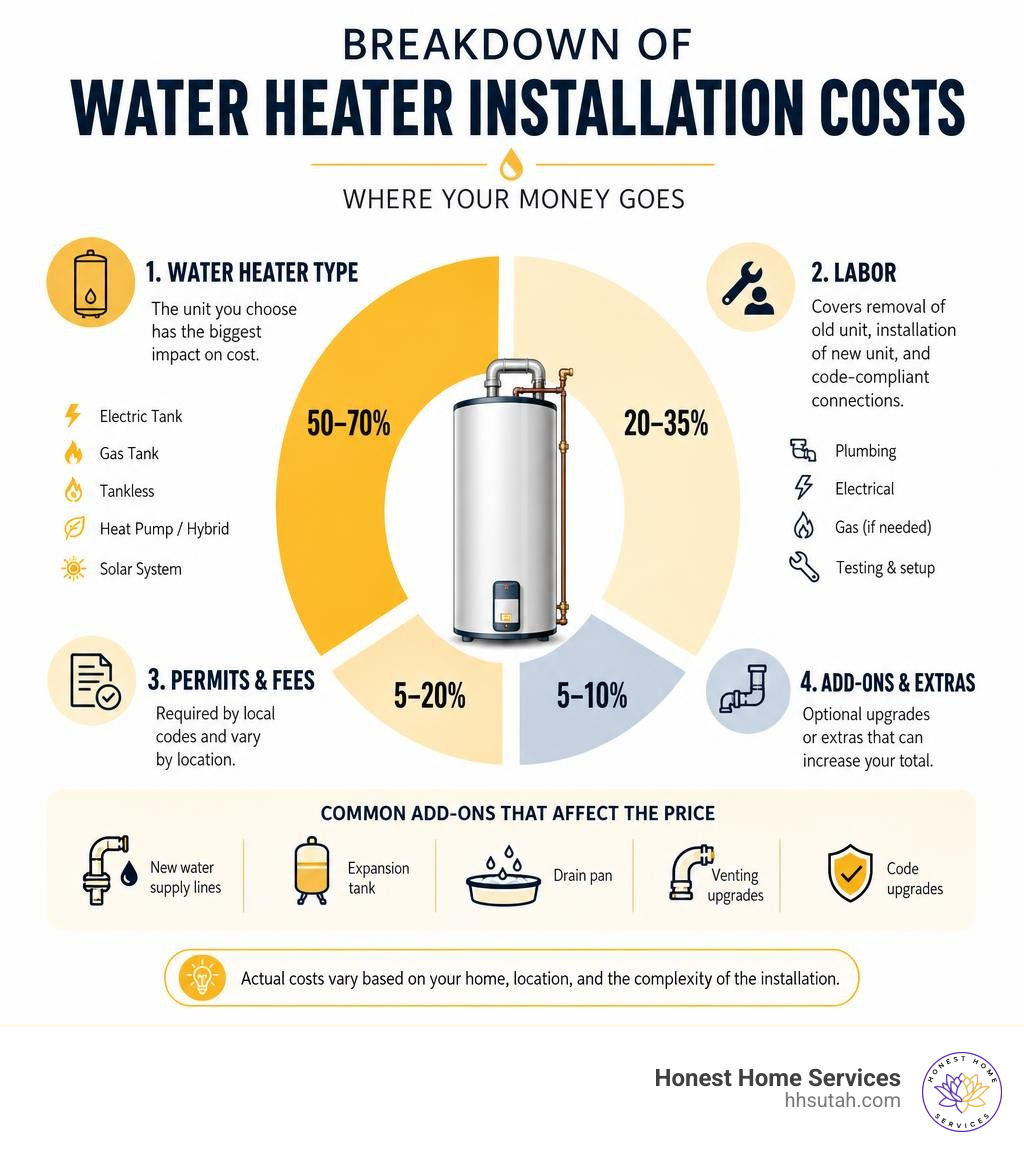
Average Cost to Install a Hot Water Tank in 2026
When budgeting for this essential home improvement, it helps to understand the big picture. According to the comprehensive How Much Does Water Heater Installation Cost in 2026? | Fixr.com , the national average cost to install a water heater ranges between $1,600 and $5,800.
While that wide spread might seem daunting, the vast majority of standard, like-for-like tank replacements land on the lower end of that spectrum. In fact, a basic 50-gallon tank swap usually hovers around $1,400 to $1,800.
However, the final invoice is rarely just the price tag on the cardboard box at a home improvement store. Equipment retail pricing makes up only about one-third to one-half of the total project cost. The rest is comprised of professional labor, code-required safety upgrades, specialized fittings, permit fees, and the disposal of your heavy, sediment-filled old unit.
If you are planning a system upgrade or relocating your system, we highly recommend reading our detailed guide on budgeting for a new hot water cylinder to understand how these hidden factors accumulate.
Cost Breakdown by Water Heater Type
The technology you choose to heat your water is the single largest variable in your overall budget. Let’s look at how traditional systems stack up against modern, high-efficiency options in 2026.
Traditional Tank-Style Water Heaters
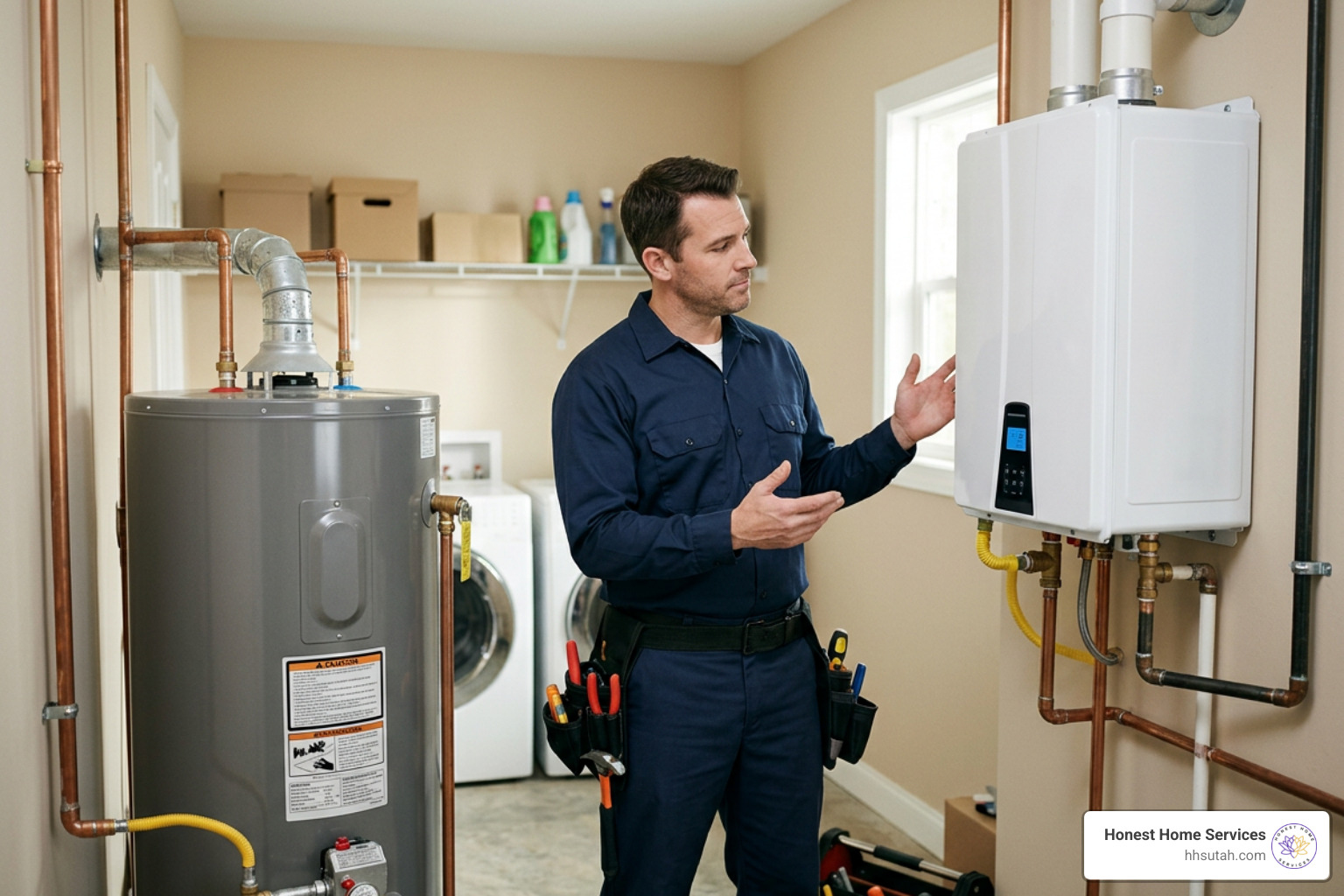
Traditional tank-style water heaters remain the budget-friendly standard for American homes. These units work by keeping a designated volume of water (usually 40 to 80 gallons) constantly heated so it is ready when you turn on the tap.
The primary drawback of this design is standby energy loss—your system must cycle on periodically to keep that water warm, even when you are asleep or away at work.
A new traditional tank typically costs between $600 and $2,500 installed. Because they are the most common units in Northern Utah, replacing an old tank with a similar model is usually a quick, straightforward job. To learn more about selecting the right tank model for your property, check out our guide on everything you need to know about new water heaters.
Tankless Water Heaters: The Cost to Install a Hot Water Tank Alternative
If you are tired of running out of hot water during back-to-back morning showers, a tankless system might be your perfect match. Instead of storing hot water, these compact units use high-powered burners or electric elements to heat water instantly as it flows through the system.
While a tankless system offers endless hot water and eliminates standby energy loss, it requires a larger upfront investment. The Cost to Install a Tankless Water Heater 2026 ranges from $1,400 to $3,900 for standard installations, but converting from a tank to a tankless setup can easily push costs to $2,500–$6,500 due to required upgrades to gas lines, venting, and electrical systems.
Heat Pump (Hybrid) and Solar Systems
For the environmentally conscious homeowner looking to slash monthly utility bills, heat pump (hybrid) and solar systems represent the cutting edge of water heating technology.
Hybrid heat pumps pull warmth from the surrounding air and transfer it into the water tank, using up to 70% less electricity than standard resistance tanks. These systems generally cost between $3,000 and $6,000 to install.
Solar water heaters, which utilize roof-mounted collectors, are the most expensive upfront option, ranging from $5,500 to $13,000. However, as detailed in The Layperson’s Guide to Residential Water Heaters – Utah Clean … , these high-efficiency systems drastically lower long-term operating costs and often qualify for substantial local utility rebates and federal tax incentives.
Key Factors Influencing Your Total Installation Bill
Every home is unique, and several physical and structural variables will determine where your final invoice lands.
Tank Size and Capacity Sizing
Sizing a water heater is not just about choosing the biggest tank on the shelf; it is about matching your household’s peak water usage. Sizing is measured by “first-hour rating” (FHR) for tanks and “gallons per minute” (GPM) for tankless units.
To estimate your household’s specific requirements, you can use the interactive Water Heater Cost Calculator (2026) | Tank & Tankless .
As a general rule, here is how tank sizes and average installation costs align with household needs:
- 30 to 40 Gallons (1-2 people): $600 to $1,200 installed.
- 50 Gallons (3-4 people): $700 to $1,800 installed. This is the most common size for residential homes.
- 75 to 80 Gallons (5+ people): $1,000 to $3,000 installed.
Fuel Source: Gas vs. Electric
Your home’s existing fuel infrastructure plays a major role in the cost to install a hot water tank.
- Electric Water Heaters: Generally cheaper to purchase and install, with standard installation costs ranging from $920 to $1,177. They do not require venting, making placement more flexible.
- Gas Water Heaters: Usually cost more upfront, with gas water heater installations averaging around $2,607. However, natural gas is often cheaper than electricity in Northern Utah, meaning lower monthly operating costs.
If you are thinking about switching from electric to gas (or vice versa), expect to budget an additional $1,500 to $2,300 to run new gas lines or upgrade your electrical panel. For a deeper look at gas-specific expenses, read our breakdown of understanding gas water heater service costs.
Location, Accessibility, and Code Upgrades
If your water heater is easily accessible in an unfinished basement or garage, labor costs will remain low. However, if our technicians have to navigate tight crawlspaces, steep attic stairs, or narrow closets, the extra time and effort will increase the labor bill.
Furthermore, building codes change over time. If your old water heater was installed ten years ago, your new installation will likely require code upgrades to protect your home. Along the Wasatch Front, this includes:
- Seismic Strapping: Utah is active earthquake country. Building codes require two heavy-duty metal straps securing your tank to the wall studs to prevent gas lines from rupturing during a tremor.
- Thermal Expansion Tanks: Essential for closed plumbing systems, these small tanks absorb excess water pressure created during the heating cycle, protecting your pipes and extending your water heater’s lifespan.
Labor Costs, Permits, and Additional Expenses
Understanding the specialized labor and legal requirements of plumbing work will help you make sense of your professional installation quotes.
Professional Plumber Labor Rates and Timelines
Professional labor typically accounts for 25% to 50% of the total installation bill. Plumber labor rates generally range from $45 to $200 per hour, depending on whether the job requires a journeyman or a master plumber.
According to the Water Heater Replacement Cost: Complete Price Guide 2026 , a standard like-for-like tank replacement takes about 1 to 3 hours of on-site labor. A tankless installation or a complex fuel conversion is a much larger project, typically requiring 4 to 10 hours of precision work.
Permits, Inspections, and Disposal Fees
Most municipalities across Salt Lake County and Davis County require a building permit and a subsequent safety inspection for water heater replacements. Permit fees typically range from $50 to $300. Skipping a permit might save a few dollars upfront, but it can void your manufacturer’s warranty and create major headaches when you try to sell your home.
Additionally, disposing of an old, heavy water heater is no easy task. Professional disposal and environmental recycling fees usually add $75 to $500 to the job, covering the heavy lifting, transportation, and proper recycling of the metal tank.
Hidden Infrastructure Upgrades
When upgrading your water heating system, keep an eye out for these potential infrastructure expenses:
- Venting Upgrades: Upgrading to a high-efficiency gas unit may require installing a power vent system, which uses PVC pipe to vent exhaust horizontally through an exterior wall rather than up a traditional metal chimney flue, adding $300 to $1,000.
- Water Softeners: Northern Utah is notorious for extremely hard municipal water. If you are investing in a tankless system, installing a water softener ($500 to $2,500) is highly recommended to prevent rapid scale buildup from ruining the heat exchanger.
Repair vs. Replacement: Making the Smart Choice
Before committing to the full cost to install a hot water tank, it is wise to determine if your existing unit has a few good years left.
Warning Signs of Water Heater Failure
Keep an eye out for these common warning signs that indicate your water heater is struggling:
- Rusty Water: If red or brown water is coming out of your hot water taps, your tank’s internal lining may be corroding.
- Loud Popping or Rumbling: This is the sound of boiling water pockets bursting through a thick layer of mineral sediment at the bottom of the tank.
- Frequent Minor Leaks: Water pooling around the base of the tank is often a sign of micro-fractures in the steel cylinder.
- Lack of Hot Water: If your showers are turning cold faster than they used to, your heating elements or gas burner are likely failing.
For a lighthearted yet highly practical guide to diagnosing these issues, take a look at why your water heater is giving you the cold shoulder.
Calculating the Cost to Install a Hot Water Tank vs. Repairing It
To decide whether to repair or replace, we recommend using the 50% rule: if your water heater is more than 8 years old and the estimated repair cost is more than 50% of the price of a brand-new unit, replacement is almost always the smarter financial decision.
Standard tank water heaters are designed to last about 8 to 12 years. Sinking hundreds of dollars into an aging tank is often just a temporary band-aid on an inevitable replacement. To help you weigh your options and compare actual repair prices, read our expert breakdown on how much your broken water heater will cost to fix.
Frequently Asked Questions About Water Heater Installation
Can I install a hot water tank myself?
While a highly skilled DIYer might successfully complete a like-for-like electric tank swap, we strongly discourage DIY water heater installations.
Water heaters deal with high-voltage electricity, pressurized water, explosive natural gas, and toxic carbon monoxide exhaust. A single mistake can lead to catastrophic house fires, gas leaks, carbon monoxide poisoning, or severe water damage that can cost tens of thousands of dollars to remediate.
Furthermore, almost all major manufacturers will void their equipment warranty if the system was not installed by a licensed professional. If you want to see what is actually involved in the process before making up your mind, you can review the ultimate DIY guide to change out your water heater.
Are there tax credits or rebates available for new water heaters in 2026?
Yes! Under the Federal Inflation Reduction Act (IRA), homeowners can claim a 25C tax credit of up to 30% of the total cost (up to $2,000) for qualifying energy-efficient heat pump water heaters. High-efficiency gas tankless units also qualify for credits up to $600.
Additionally, local Utah utility providers like Rocky Mountain Power and Dominion Energy frequently offer cash-back rebates for installing ENERGY STAR certified appliances. Be sure to save your professional installation invoice and model numbers to claim these savings on your tax return.
How long does a new hot water tank typically last?
A standard traditional tank-style water heater typically lasts 8 to 12 years, while hybrid heat pumps usually last 10 to 15 years. Tankless water heaters are the champions of longevity, frequently lasting 20 years or more because they do not store standing water and are not prone to tank rust.
To maximize your system’s lifespan, we recommend replacing your sacrificial anode rod every 3 to 5 years and flushing the tank annually to clear out efficiency-robbing sediment.
Conclusion
The cost to install a hot water tank represents a significant investment in your home’s comfort, efficiency, and safety. While the upfront pricing can feel intimidating, choosing the right system and having it installed by a licensed professional guarantees reliable hot water for years to come.
At Honest Home Services, we are proud to provide honest, reliable, and affordable plumbing and HVAC services to our neighbors across Northern Utah. Whether you are in Salt Lake City, Layton, Bountiful, Draper, or Park City, our local expert technicians are ready to help. We offer guaranteed customer satisfaction, transparent, fair pricing, and 24/7 emergency support when you need us most.
Ready to upgrade your home comfort and start saving on your monthly utility bills? Learn more about the long-term benefits of upgrading your system by reading our guide on the advantages of water heater replacement, or contact our friendly team today to schedule your expert consultation!