
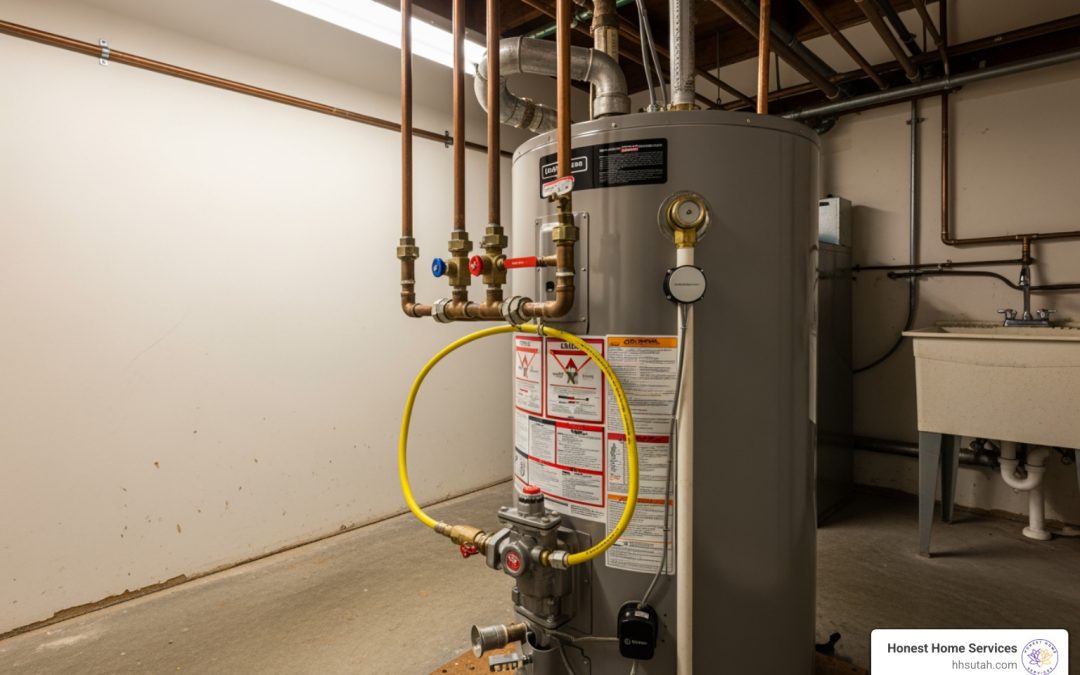
Why Gas Hot Water Heater Repair Matters for Every Utah Homeowner
Gas hot water heater repair is essential when your unit fails, leaks, makes strange noises, or won’t stay lit. Here are the most common repair scenarios:
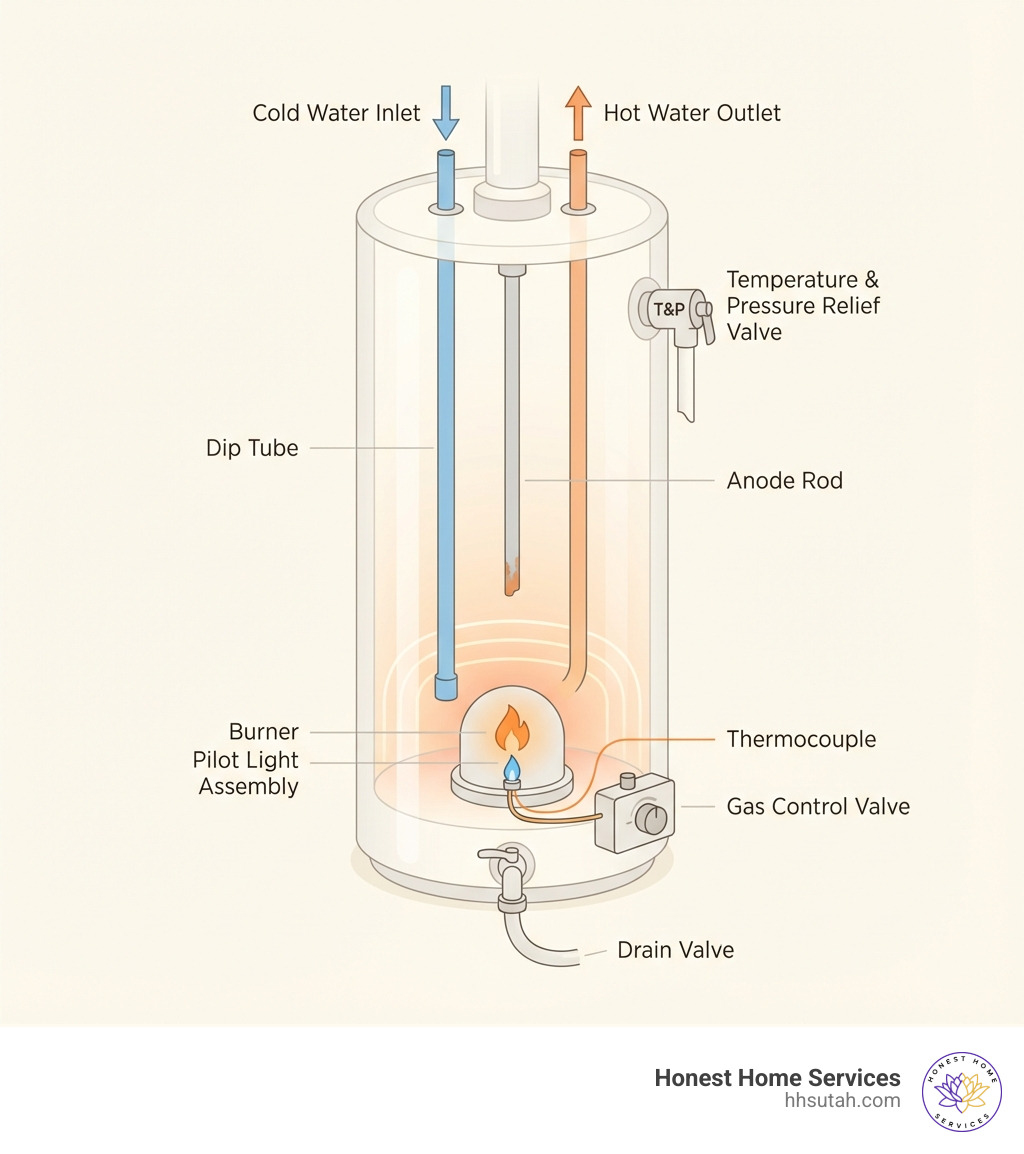
- Pilot light won’t stay lit – Usually a faulty thermocouple or gas valve issue
- No hot water – Check the pilot light, thermostat settings, or sediment buildup
- Popping or rumbling noises – Indicates sediment accumulation at the tank bottom
- Leaking water – Inspect the T&P valve, drain valve, or check for tank corrosion
- Rusty or discolored water – Sign of a deteriorating anode rod or internal tank rust
Imagine a cold Utah morning shower turning icy, or finding your basement flooded from a failed water heater. Industry data shows the average water heater lasts about 10 years. The most common issue for gas models is insufficient hot water from thermostat problems or sediment buildup. About 46% of homeowners first notice unusual noises, while 21% face pilot light failures, leaving them without hot water.
Basic gas hot water heater repair knowledge can save you money and prevent emergencies. However, gas appliances pose serious safety risks, from gas leaks to high-pressure steam, that demand caution.
At Honest Home Services, with over 20 years of experience in Northern Utah, we’ve seen how timely repairs extend a unit’s life. Our licensed technicians know that whether you’re attempting a DIY fix or calling for help, understanding the signs and safety measures is crucial.
Recognizing the Signs: Is Your Water Heater Failing?
Before diving into gas hot water heater repair, you need to spot the trouble signs. Your water heater gives hints that it’s struggling, and recognizing them early can prevent minor issues from becoming major emergencies.
Noises: Popping, Rumbling, and Whistling
If your water heater is making strange noises, it’s trying to tell you something. Unusual noises are reported by 46% of customers as a primary symptom.
- Popping or Rumbling: This is often the sound of sediment from Utah’s hard water settling at the bottom of your tank. The minerals harden, trapping water underneath. When heated, this water turns to steam, and the bubbles burst through the sediment, creating popping sounds. This process reduces efficiency and can damage the tank.
- Hissing or Sizzling: In gas units, this might indicate condensation, a small leak dripping onto the burner, or an external leak from the tank or a valve.
- Whistling or Screeching: This sound usually signals restricted water flow from a partially closed valve or a malfunctioning Temperature and Pressure (T&P) Relief Valve. A faulty T&P valve is a serious safety hazard, as it prevents explosions by releasing excess pressure.
Water Troubles: No Hot Water, Lukewarm Temps, and Discoloration
The most frequent issue with gas water heaters is typically insufficient hot water.
- No Hot Water at All: This indicates a serious problem, like a tripped pilot light, a faulty thermostat, or a gas supply issue.
- Lukewarm or Inconsistent Hot Water: If your water never gets truly hot or quickly turns cold, it could be a thermostat issue, a broken dip tube (which directs cold water to the bottom), or sediment buildup.
- Rusty or Gritty Water: Rusty, brownish, or gritty hot water is a strong sign of internal corrosion. This usually means the anode rod, which protects the tank, has deteriorated. Without it, the steel tank will rust, leading to leaks and failure. For more insights on this, check our guide on the Gas Water Heater Anode Guide.
Visible Clues: Leaks and Pilot Light Problems
Sometimes, the signs are obvious.
- Leaks Around the Unit: Water pooling around your water heater is a red flag. It could be a faulty T&P valve, a loose drain valve, or a tank leak due to corrosion. Even a small leak can cause significant water damage.
- Pilot Light Issues: The pilot light is crucial for gas water heaters. If it won’t stay lit (a problem reported by 21% of homeowners), you won’t get hot water. This often points to a faulty thermocouple or gas control valve.
If you’re noticing any of these symptoms, it’s time to investigate. Ignoring them can lead to more expensive repairs or even a full water heater replacement. For more on common issues, see our page on Common Water Heater Problem.
Safety First: Your Pre-Repair Checklist
Working with a gas appliance like a water heater demands utmost respect for safety. Before you even think about picking up a wrench, we cannot stress enough the importance of preparation and caution. Your safety, and that of your family and home, is our top priority.
How to Safely Shut Off the Gas and Water Supply
This is step one for any gas hot water heater repair. Always remember to disconnect the gas line and turn off the control valve before dismantling any connections.
- Shut Off the Gas Supply: Locate the gas control valve on the gas line leading to your water heater. This is typically a lever or knob. Turn it to the “OFF” position. This will stop the flow of natural gas to the unit. If you’re unsure, or if the valve is stuck, do not force it.
- Shut Off the Cold Water Inlet: Find the cold water inlet pipe (usually on the right side, at the top of the tank) and turn the shut-off valve clockwise until it’s completely closed. This prevents new water from entering the tank.
- Turn Off Power (if applicable): While primarily a gas appliance, some water heaters have electrical components. If yours does, locate the circuit breaker for the water heater in your home’s electrical panel and switch it off.
- Drain the Tank (if necessary): If your repair requires draining the tank (e.g., for sediment flushing or replacing certain parts), connect a garden hose to the drain valve located at the bottom of the water heater. Route the hose to a floor drain or outside area where hot water can safely discharge. Open the drain valve and open a hot water faucet inside your home to break the vacuum and allow the tank to drain faster.
General Safety Precautions for Gas Appliances
When tackling gas hot water heater repair, safety isn’t just a suggestion; it’s a requirement.
- No Open Flames or Sparks: This is critical. Absolutely no smoking, candles, lighters, or anything that could create a spark near the water heater. Gas leaks are a serious fire and explosion hazard.
- Good Ventilation: Ensure the area around your water heater is well-ventilated. Open windows and doors if possible to allow any potential gas fumes to dissipate.
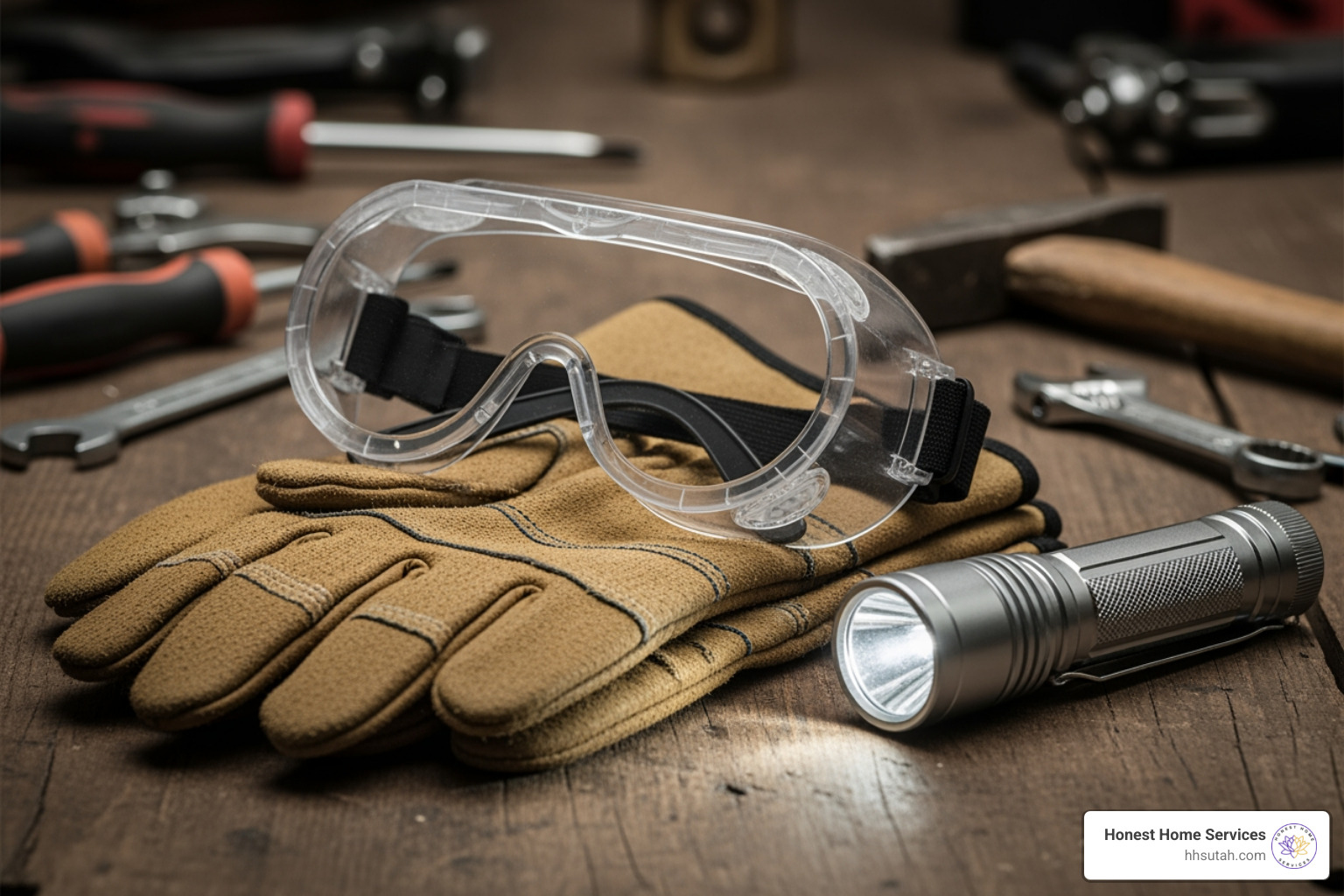
- Wear Protective Gear: Always wear gloves and safety glasses to protect yourself from hot water, sharp edges, or debris.
- Use a Flashlight, Not a Flame: When inspecting dark areas, use a reliable LED flashlight. Never use a match or lighter.
- Check for Gas Smell: If at any point you smell natural gas (often described as rotten eggs), stop immediately. Do not attempt any repair. Evacuate everyone from the building and call your gas utility company from a safe distance. Do not operate light switches or anything that could create a spark.
- Know Your Limits: If you feel uncomfortable, unsure, or encounter resistance when trying to loosen a connection, stop and call a professional. It’s better to be safe than sorry.
Tackling a gas water heater repair? Remember to prioritize safety: disconnect the gas line, wear protective gear, and ensure good ventilation. Don’t forget to turn off the control valve before dismantling connections! #DIYRepair #HomeMaintenance
Click to Tweet
A Step-by-Step Guide to Common Gas Hot Water Heater Repair
With safety firmly established, let’s get into some common gas hot water heater repair tasks you might tackle. Many issues can be resolved with a bit of knowledge and the right tools.
Troubleshooting the Pilot Light and Thermocouple
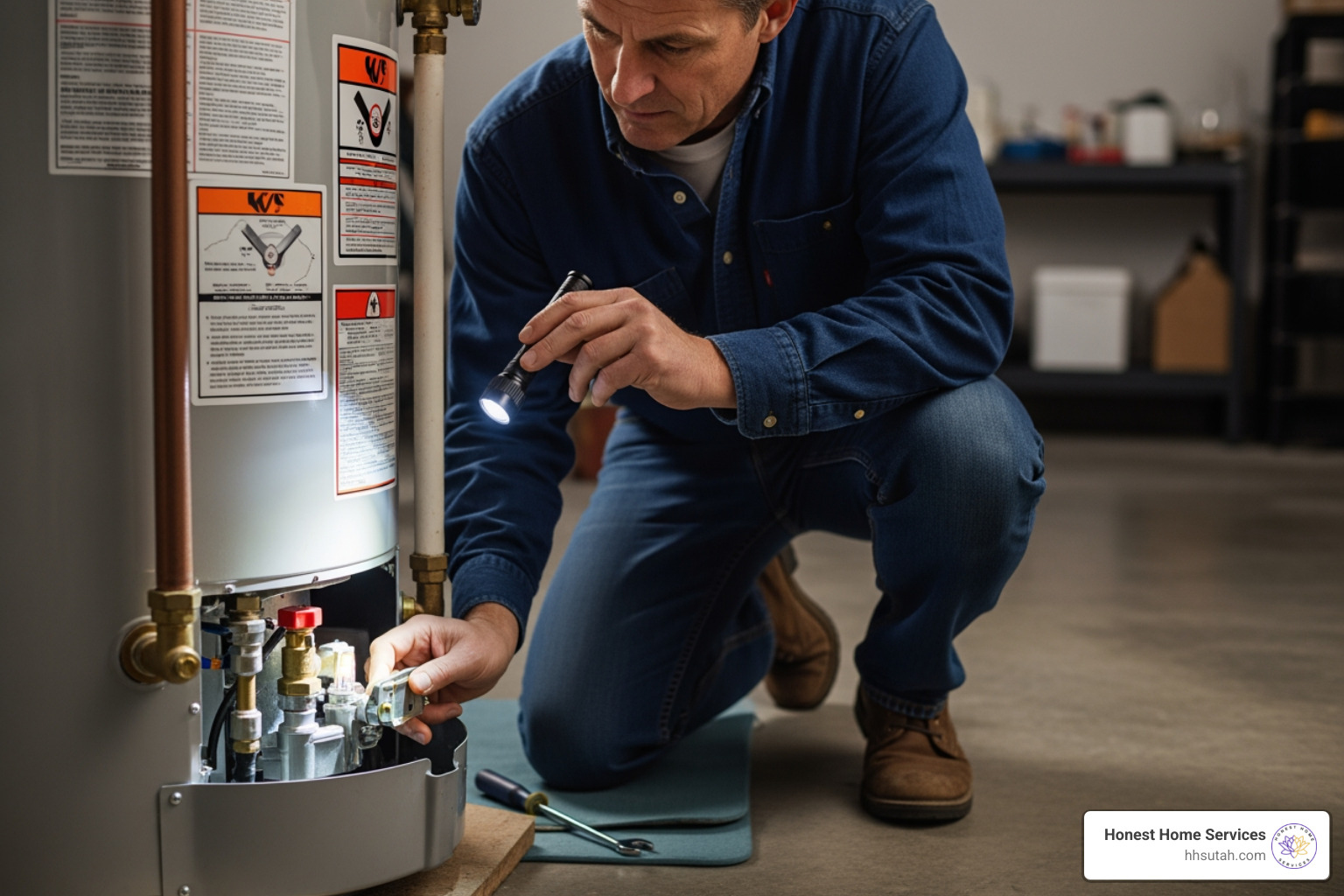
A pilot light that won’t light or won’t stay lit is one of the most common reasons for no hot water. This often points to the thermocouple, a small safety device that tells the gas control valve to stay open when the pilot is lit.
- Relighting the Pilot: Most gas water heaters have instructions printed on the unit. Generally, you’ll turn the gas control knob to “Pilot,” press and hold it, and then push the igniter button (or use a long lighter) to light the pilot flame. Hold the knob down for about 30-60 seconds to allow the thermocouple to heat up. Release the knob and turn it to “On.”
- Pilot Light Won’t Stay Lit: If the pilot lights but goes out when you release the knob, the thermocouple is likely faulty or dirty. It might not be sensing the heat from the pilot flame, so it’s shutting off the gas supply as a safety measure.
- Cleaning the Pilot Orifice: Sometimes, a clogged pilot orifice can cause a weak or inconsistent flame. You can try carefully cleaning around the pilot assembly with a soft brush or compressed air, but be gentle.
- Inspecting and Replacing the Thermocouple: The thermocouple is a thin copper rod positioned in the pilot flame. If it’s discolored, bent, or simply old, it might need replacement. This typically involves disconnecting it from the gas control valve and removing it from its mounting bracket. When reconnecting, ensure the gas pipe fits snugly into place without requiring excessive force. For more in-depth guidance on these repairs, you can refer to our resources on Water Heater Repairs.
How to Inspect the Gas Line for Your Gas Hot Water Heater Repair
A damaged or corroded gas line is a serious concern. Regular inspection is vital.
- Visual Inspection: Carefully examine the entire length of the gas line leading to your water heater. Look for any visible signs of damage, such as kinks, cracks, holes, or excessive wear. Pay close attention to connections and bends.
- Evaluating Corrosion Levels: Check for rust or corrosion, especially on older metal lines. While minor surface rust might not be immediately critical, significant corrosion can weaken the line and lead to leaks.
- The Soapy Water Test: This is a simple yet effective way to detect small gas leaks. Mix a solution of dish soap and water. With the gas supply on (but the water heater pilot and burner off), apply the soapy solution generously to all gas line connections and joints. If you see bubbles forming, you have a gas leak. Immediately shut off the gas supply and call a professional. This test is crucial after disconnecting and reconnecting the gas line to ensure a tight seal. Aligning the gas pipe correctly with the inlet on your water heater unit is key, as is ensuring it fits snugly. More information on proper gas pipe connections can be found here: Information on gas pipe connections.
Flushing the Tank to Remove Sediment
Sediment buildup is a silent killer of water heater efficiency and lifespan, especially with the mineral content in Northern Utah’s water. Flushing the tank regularly is a crucial maintenance step.
- Prepare for Flushing: Ensure the gas supply and cold water inlet are shut off, and the tank is drained as described in the “Safety First” section.
- Connect a Hose: Attach a garden hose to the drain valve at the bottom of the water heater. Direct the other end to a safe drainage area.
- Flush with Cold Water: Once the tank is mostly empty, open the cold water inlet valve briefly, then close it. This will stir up any remaining sediment. Repeat this process until the water coming out of the hose runs clear.
- Close and Refill: Close the drain valve, disconnect the hose, and open the cold water inlet valve fully to refill the tank. It’s vital that the tank is completely full before turning the gas supply back on to prevent damage.
Regular flushing improves heating efficiency, reduces those noisy popping sounds, and extends the life of your water heater. For a comprehensive guide on water heater maintenance, including flushing, refer to the Water Heater Maintenance Guide | A. O. Smith.
Post-Repair Testing and When to Call a Professional
You’ve put in the work, followed the steps, and now it’s time for the moment of truth: testing your gas hot water heater repair. This final stage is crucial to ensure everything is working correctly and, most importantly, safely.
How to Test Your Gas Water Heater After Making Repairs
After any repair, particularly one involving the gas line or pilot assembly, thorough testing is essential.
- Refill the Tank Completely: Ensure the cold water inlet valve is fully open and the tank is completely filled with water before proceeding. Do not turn on the gas or power if the tank is empty.
- Relight the Pilot: Follow the manufacturer’s instructions on your unit to relight the pilot light.
- Turn Gas to “ON”: Once the pilot is stable, turn the gas control knob from “Pilot” to “On.” You should hear the main burner ignite shortly after. Listen for any unusual sounds.
- Check for Hot Water: Run a hot water faucet in your home for several minutes. Confirm that the water heats up consistently and reaches the desired temperature.
- Monitor for Leaks: Perform another soapy water test on all gas line connections you touched to ensure there are no leaks. Also, visually inspect all water connections (inlet, outlet, T&P valve) for any drips or leaks.
- Pressure Relief Valve Test: If you’ve addressed any T&P valve issues, gently lift the lever on the T&P valve to ensure it releases water freely, then snap it shut. This verifies it’s functioning correctly to prevent dangerous pressure buildup.
Just repaired your gas water heater? Test it right with our guide! Ensure heating elements are working, check for hot water consistency and leaks. Safety first! #DIYRepair #GasWaterHeater
Click to Tweet
When to Skip the DIY and Call a Pro for Gas Hot Water Heater Repair
While we encourage informed DIY, there are clear instances when calling a professional is not just recommended, but absolutely necessary. Your safety should always be the deciding factor.
- Strong Gas Smell: If you ever smell natural gas in your home, do not hesitate. Evacuate immediately and call your gas utility company and us. This is not a DIY situation.
- Major Leaks from the Tank Itself: If water is leaking from the body of the water heater tank, especially from the seams, it often indicates internal corrosion and tank failure. This usually means a replacement is needed, not a repair.
- Unit is Over 10 Years Old: The average lifespan of a water heater is about 10 years. If your unit is approaching or past this age and experiencing significant issues, the cost of frequent repairs might outweigh the benefits, making replacement a more economical choice in the long run.
- Complex Gas Control Valve Issues: Problems with the main gas control valve, beyond a simple thermocouple replacement, are best left to licensed professionals. These components are intricate and critical for safe operation.
- Unsure of the Problem or Solution: If you’ve followed troubleshooting steps and still can’t identify the issue, or if a repair seems beyond your comfort level, don’t guess. It’s always better to consult with experts.
- Persistent Issues: If you’re repeatedly fixing the same problem, or new issues keep popping up, it’s a sign that underlying problems might be more complex than they appear.
For any situation that feels unsafe, overwhelming, or requires specialized tools and expertise, don’t hesitate to reach out. We offer reliable and affordable Emergency Water Heater Repairs across Northern Utah. Our licensed technicians are equipped to handle any challenge, from Salt Lake City to Farmington, ensuring your home is safe and your hot water is flowing again. For more on who to call, see Handling Water Heater Repairs: Who to Call for the Job.
The Long Game: Maintenance, Repair, or Replacement?
When your water heater acts up, you’re faced with a choice: fix it, or get a new one? This decision often comes down to balancing immediate costs with long-term savings and reliability. Understanding the lifespan of your unit and the benefits of modern technology can guide you.
Comparing Repair vs. Replacement
The average lifespan of a home water heater is about 10 years. If your unit is more than a few years old, you might consider replacing it with a new, energy-efficient model. Here’s a quick guide to help you decide:
| Factor | Repair | Replacement |
|---|---|---|
| Age of Unit | Less than 7-8 years old | Over 10 years old (average lifespan) |
| Cost of Repair | Minor part replacement (thermocouple, drain valve) | Major component failure (tank leak, gas control valve, multiple issues) |
| Frequency of Problems | Infrequent, isolated incident | Recurring issues, multiple failures within a short period |
| Energy Savings | None, might improve efficiency if a component was faulty | Significant, especially with new energy-efficient models (e.g., ENERGY STAR rated) |
| Warranty | Existing unit warranty may be expired or limited | New unit comes with a full manufacturer’s warranty |
| Safety | Generally safe if minor, but complex issues carry risks | Improved safety features in newer models |
If your water heater is constantly giving you trouble, or if a single repair costs more than half the price of a new unit, replacement is often the more economical and stress-free option in the long run. Tankless water heaters, for example, are known for being significantly less likely to need repairs compared to traditional models, offering a different long-term solution. For more details on the financial aspect, check out Hot Water Repair Cost.
How to Maintain Your Water Heater to Prevent Future Problems
An ounce of prevention is worth a pound of cure, especially with your water heater. Regular maintenance can significantly extend its life and prevent many common issues, saving you money and cold showers.
- Annual Flushing: As we discussed, flushing the tank once a year, or more often in hard water areas like much of Utah, removes sediment buildup. This keeps your unit running efficiently and prevents noises.
- Anode Rod Inspection: The anode rod is your tank’s sacrificial protector. Inspect it annually (or have us do it) and replace it every 3-5 years, or when it’s heavily corroded. This prevents internal tank rust.
- Testing the T&P Valve: Test the Temperature and Pressure Relief Valve annually to ensure it’s not stuck. This is a critical safety device.
- Setting the Correct Temperature: Keep your water heater set to 120 degrees Fahrenheit. This is hot enough for most needs, prevents scalding, and reduces energy consumption and mineral buildup.
- Insulating Pipes: Insulating the first few feet of hot and cold water pipes connected to the water heater can reduce heat loss and improve efficiency.
- Regular Professional Check-ups: Even with DIY maintenance, an annual professional inspection can catch subtle issues before they become major problems. Our team at Honest Home Services can perform these check-ups, ensuring your unit is running optimally.
By staying proactive with maintenance, you can enjoy consistent hot water and avoid unexpected breakdowns. Consider the Advantages of Water Heater Replacement if your unit is old and repairs are mounting. Sometimes, a New Water Heater is simply the best solution.
Frequently Asked Questions about Gas Water Heater Repair
We often get questions from homeowners in Northern Utah about their gas water heaters. Here are some of the most common ones we hear:
What is the most common problem with a gas water heater?
The most frequent issue we see with gas hot water heater repair is typically insufficient hot water. This can be caused by various factors, including thermostat issues, a faulty dip tube, or, very commonly, sediment build-up in the tank. A pilot light that won’t stay lit is also a very frequent culprit, often due to a thermocouple problem.
What causes a gas water heater to stop working?
A variety of factors could cause your gas water heater to stop functioning altogether. The primary reasons include a faulty thermocouple (which prevents the pilot from staying lit), blocked vents (which can lead to a safety shutdown), a pilot light outage (often due to drafts or a weak pilot flame), or a problem with the gas supply itself. A malfunctioning gas control valve can also prevent the unit from heating.
How do you know if your gas hot water heater is broken?
You’ll know your gas hot water heater is broken if you’re not getting any hot water at all, or if the water is only lukewarm. Other clear indications include noticing leaks around your unit, hearing strange noises (like popping, rumbling, or whistling), or if the pilot light consistently won’t stay lit. Discolored or rusty water is also a strong sign of internal problems.
Your Partner for Safe and Reliable Water Heater Service
Becoming a gas hot water heater repair expert from scratch means understanding the signs of trouble, prioritizing safety above all else, and knowing when to confidently tackle a DIY fix versus when to call in the professionals. We’ve walked through common problems, detailed safety precautions, provided step-by-step repair guides for common issues like pilot light troubleshooting and tank flushing, and discussed the crucial decision between repair and replacement.
While some repairs are manageable for the handy homeowner, gas appliances carry inherent risks. If you ever smell gas, have a major leak from the tank, or feel uncomfortable with any repair step, please stop and call for expert help immediately.
At Honest Home Services, we are dedicated to providing honest, reliable, and affordable plumbing, heating, and AC services to our neighbors across Northern Utah, including Salt Lake City, Davis County, Layton, Kaysville, Farmington, and the surrounding areas. Our local, expert technicians are available 24/7 for emergency support, and we back all our work with guaranteed customer satisfaction and fair pricing.
Whether you need a routine inspection, a complex gas hot water heater repair, or advice on replacing an aging unit, we’re here to help. Don’t let a malfunctioning water heater disrupt your comfort or compromise your safety.
For expert gas hot water heater repair in Salt Lake City and surrounding areas, contact our team today!
For expert gas water heater repair in Salt Lake City and surrounding areas, contact our team today!