

Why Your Furnace is Blowing Cold Air (And What to Do About It)
When your furnace blowing cold air happens on a freezing winter night, it’s more than just uncomfortable—it’s urgent. Here’s what you need to know right away:
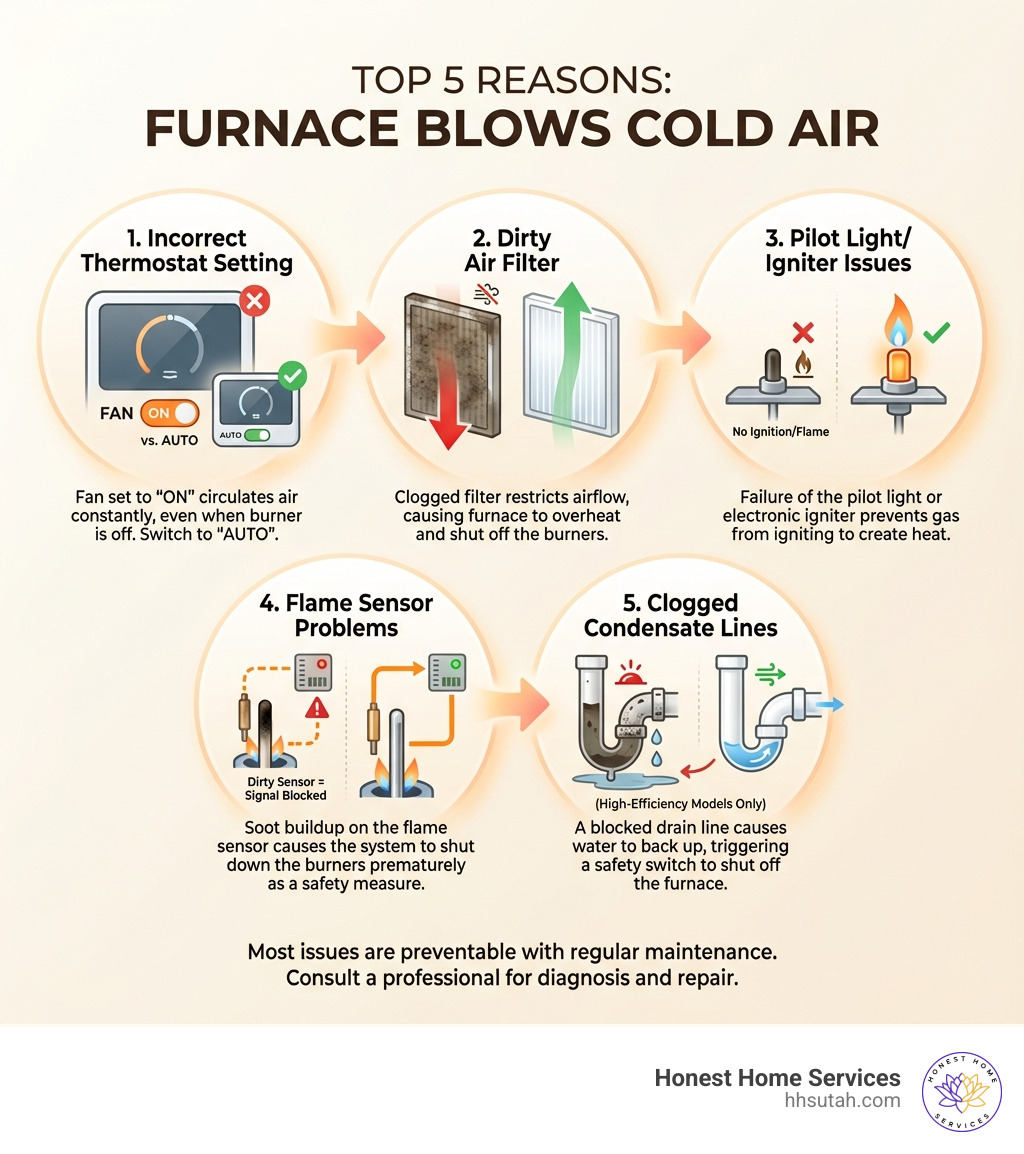
Most Common Causes:
- Thermostat fan set to “ON” instead of “AUTO” (easiest fix)
- Dirty air filter restricting airflow and triggering safety shutoffs
- Pilot light or igniter failure preventing gas from igniting
- Dirty flame sensor causing premature burner shutdown
- Clogged condensate drain (high-efficiency furnaces only)
Many of these issues you can fix yourself, while others require professional help for safety reasons.
Nothing’s worse than cranking up the heat on a cold Northern Utah day, only to feel an icy blast from your vents. The good news is that a furnace blowing cold air usually stems from fixable problems. Some are simple enough to tackle yourself before calling a pro.
At Honest Home Services, we’ve spent over 20 years diagnosing and repairing furnaces across Northern Utah. We’ve seen every reason a furnace might blow cold air—from simple thermostat mistakes to complex component failures—and we know how to get your heat back fast.
Simple DIY Fixes: Your First Steps for a Furnace Blowing Cold Air
When your furnace blowing cold air, it’s easy to panic. Before you call for emergency service, try these simple troubleshooting steps. Many common issues have easy DIY solutions that can get your heat flowing again in minutes. For more general tips, check out our DIY Solutions for Fixing a Furnace Blowing Cold Air and other helpful Furnace Repair Tips.

Check Your Thermostat Settings
An incorrect thermostat setting is one of the most frequent culprits behind a furnace blowing cold air. First, ensure your thermostat is set to “Heat” mode and the temperature is higher than your current indoor temperature. Next, check the fan setting. If it’s on “ON” instead of “AUTO,” the blower will run continuously, circulating unheated air between heating cycles. Switching it to “AUTO” ensures the fan only runs when the furnace is actively producing heat. Finally, if your thermostat is battery-powered, check the batteries, as low batteries can cause communication errors. For programmable thermostats, review your schedule to ensure it hasn’t been unintentionally changed.
Inspect and Replace the Dirty Air Filter
A dirty air filter severely restricts airflow, a major reason a furnace blowing cold air. When the filter gets clogged, your furnace can overheat. A safety mechanism called a “limit switch” will then shut down the heating process, but the blower fan may continue to run, circulating cold air.
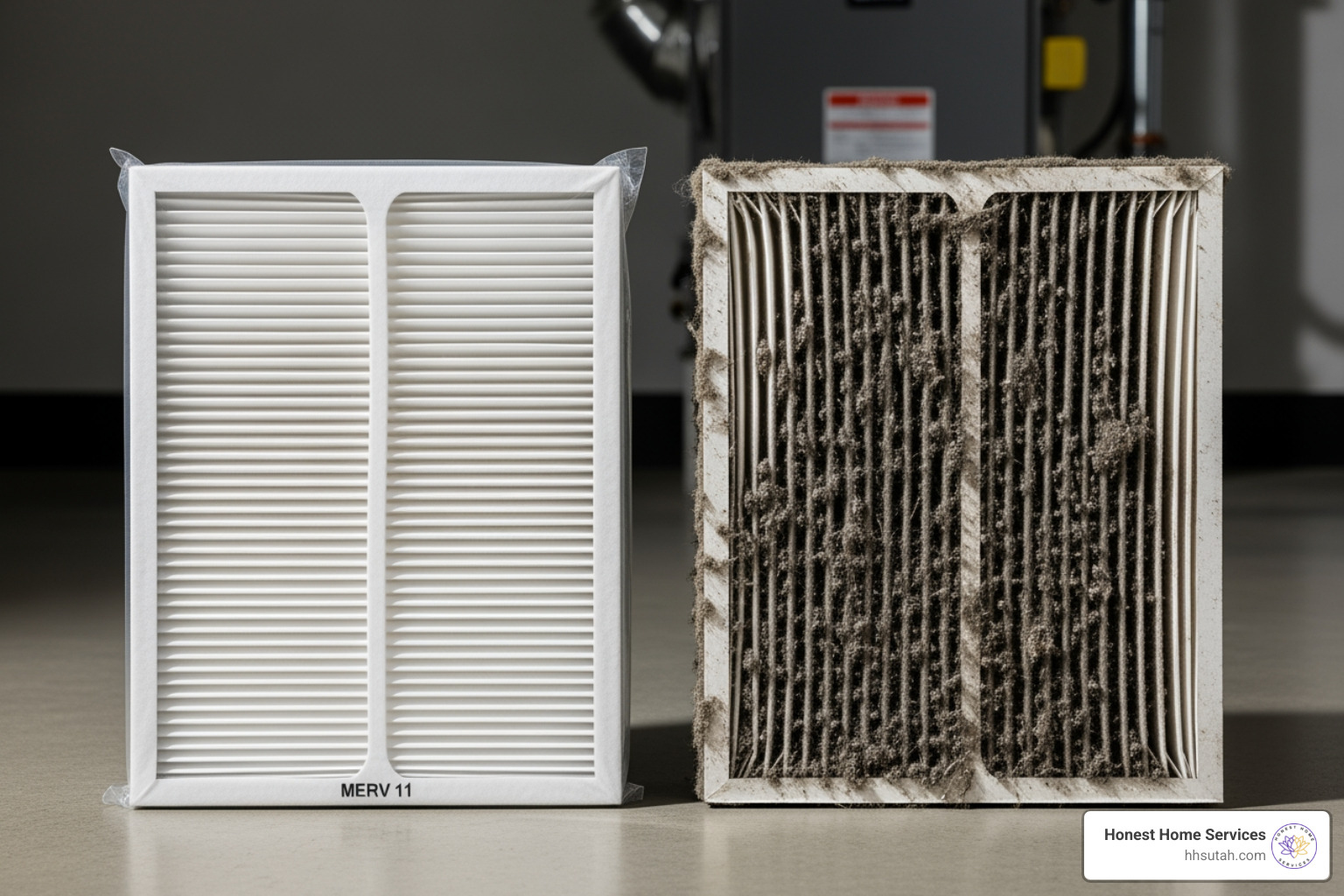
We recommend checking your air filter monthly and replacing it every 1-3 months (more frequently if you have pets or allergies). A clean filter not only prevents your furnace blowing cold air but also improves efficiency and indoor air quality. Learn more about maintaining your furnace with our 5 Furnace Maintenance Tips to Keep Your Home Warm This Winter.
Power Cycle Your Furnace and Check the Breaker
Sometimes, your furnace just needs a reboot to clear a minor glitch. Find the power switch on or near the furnace unit, turn it off, wait 5-10 minutes, and then turn it back on. This can reset the system and resolve the issue. If that doesn’t work, check your home’s electrical panel for a tripped breaker labeled “Furnace” or “HVAC.” Flip it back to the “On” position. If the breaker trips again, it signals a deeper electrical problem that requires professional attention for your safety.
Common Causes: Why Your Furnace is Blowing Cold Air
If the simple DIY fixes didn’t bring back the warmth, it’s time to look at common mechanical reasons your furnace blowing cold air. These often involve specific components failing, which triggers safety shutdowns. Understanding these issues can help you decide whether to call a professional. For a broader overview of problems, check out our guide on 10 Common Furnace Problems and How to Fix Them.
Ignition System Failure: Pilot Light & Electronic Igniters
A failed ignition system means your furnace can’t produce heat, leading to a furnace blowing cold air.
Pilot Light Issues (Older Furnaces):
Many older furnaces use a standing pilot light—a small, continuous flame that ignites the main burners. If this pilot light goes out, your furnace won’t produce heat. Common causes include a strong draft, a dirty pilot orifice, or a faulty thermocouple (a safety sensor that shuts off gas if the flame is out). You might be able to relight it by following the instructions on your furnace’s label, but if you’re uncomfortable or the pilot repeatedly goes out, it’s best to call a professional. For more details on this, you can refer to Why Is My Furnace Blowing Cold Air?.
Electronic Igniter Failure (Modern Furnaces):
Most modern furnaces have replaced pilot lights with electronic ignition systems, like a “hot surface igniter” or an “intermittent pilot.” If the electronic igniter fails, it won’t be able to ignite the gas. Signs of an igniter failure often include the furnace fan running, but no sound of gas ignition or burner flames. This is typically not a DIY repair and requires a professional to diagnose and replace the faulty component.
A Dirty Flame Sensor is a Common Culprit for a furnace blowing cold air
Even if your furnace ignites, a dirty flame sensor can quickly shut down the heating process, causing your furnace blowing cold air. This critical safety device confirms a flame is present after the gas valve opens. If it can’t detect a flame due to carbon buildup, it immediately shuts the gas valve to prevent dangerous gas buildup. This causes the furnace to light, run for a few seconds, and then shut down—a problem called “short cycling.” You can often clean a dirty flame sensor yourself. After turning off the furnace power, carefully locate and remove the thin metal rod in the burner assembly. Gently clean the carbon off with a fine-grit emery cloth or steel wool (not coarse sandpaper). If cleaning doesn’t resolve the issue, the sensor may be faulty and need replacement. This is a common part of Heating System maintenance.
Overheating and Your Furnace’s Safety Switches
Your furnace has a high limit switch to prevent damage from overheating. If the temperature inside the heat exchanger gets too high, this switch shuts off the burners. The blower fan, however, often continues to run to cool down the components, resulting in your furnace blowing cold air.
Why does a furnace overheat?
- Restricted Airflow: As discussed, a dirty air filter is the most common cause. Other culprits include blocked vents or obstructions in your ductwork.
- Blower Motor Issues: If your blower motor is failing or not running at the correct speed, it won’t move enough air, leading to overheating.
- Oversized Furnace: A furnace that’s too large for your home can heat up too quickly and shut down, leading to short cycling.
Signs of an overheating furnace include short cycling (running for short periods, shutting off, and then turning back on). If you suspect overheating, check your air filter first. If it’s clean and the problem persists, call us. Overheating can damage your heat exchanger, a very expensive component. For more on preventing issues, see Avoid a Winter Emergency: Common Furnace Problems.
Clogged Condensate Lines in High-Efficiency Furnaces
If you have a high-efficiency furnace (identifiable by PVC exhaust pipes), a clogged condensate line can cause your furnace blowing cold air. These furnaces produce acidic water vapor (condensate) that drains away through a PVC pipe. If this line clogs with algae or debris, water backs up into a drain pan. A safety switch detects this backup and shuts down the furnace’s burners to prevent water damage. The blower fan might continue to run, circulating cold air. If you see standing water near your furnace, check the condensate line. You might clear a minor clog with a wet/dry vacuum, but if the clog is stubborn, our HVAC System experts can clear it safely.
Fuel Supply Problems (Gas or Oil)
No fuel means no heat. If your furnace blowing cold air and you’ve ruled out other issues, check your fuel supply.
For Gas Furnaces:
- Closed Gas Valve: Ensure the gas shut-off valve near your furnace is open (parallel with the gas pipe).
- Supply Interruption: Check if other gas appliances are working. If not, there may be a utility supply issue. Contact your gas company. Never attempt to repair gas lines yourself.
For Oil Furnaces:
- Low Oil Level: Check your oil tank to see if it’s empty or low.
- Clogged Oil Filter: The fuel filter may be clogged, restricting oil flow. This requires professional replacement.
If you smell gas (rotten eggs), leave your home immediately, call your gas company’s emergency line from a safe distance, and then call 911.
Leaky Ductwork Stealing Your Heat
If your furnace blowing cold air, or some rooms are always cold, leaky ducts could be the reason. Ductwork distributes heated air, but if there are leaks in unconditioned spaces like your attic or crawl space, warm air escapes. These leaks can also pull in cold air, mixing it with your heated air and making it feel cooler at the vents. This reduces efficiency and increases energy bills. You can inspect exposed ductwork for gaps and seal minor leaks with mastic sealant or metallic foil tape (not regular duct tape!). For extensive damage, professional duct sealing is recommended. Properly sealed ducts improve comfort and efficiency. Learn how to minimize energy loss in ducts.
Issues Specific to an Electric Furnace blowing cold air
Electric furnaces have unique components that can cause them to blow cold air. They generate heat using electric heating elements.
If your electric furnace blowing cold air:
- Burnt-Out Heating Elements: If one or more heating elements burn out, the furnace won’t produce enough heat. This requires professional replacement.
- Tripped Circuit Breakers: Heating elements often have their own circuit breakers. Check your electrical panel for any tripped breakers.
- Faulty Sequencers: Sequencers stage the heating elements. If one fails, some or all elements may not activate.
- Control Board Issues: A malfunctioning control board can prevent the heating elements from turning on.
Diagnosing electric furnace issues involves electrical components, so for your safety, we recommend calling a professional HVAC technician.
When to Call a Professional for Furnace Repair
While we encourage homeowners in Salt Lake City and across Northern Utah to try basic troubleshooting, there are definite times when it’s safer and more effective to call in the experts. Ignoring serious issues can lead to more costly repairs down the line or, worse, pose safety risks to your household. If your furnace blowing cold air persists after trying the DIY steps, or if you encounter any of the following, it’s time to give us a call for reliable Furnace Repair.
Here are clear signs you need a professional HVAC technician:
- Gas Smell: If you detect the distinct odor of rotten eggs (natural gas) or oil around your furnace, evacuate your home immediately and contact your gas utility company from a safe distance, then call 911. This is a serious safety hazard.
- Loud Banging, Grinding, or Squealing Noises: Unusual and persistent noises often indicate mechanical failure within the furnace, such as a failing blower motor, a problem with the inducer motor, or issues with other internal components.
- Persistent Issues After DIY Checks: If you’ve checked your thermostat, replaced the filter, reset the breaker, and even cleaned the flame sensor, but your furnace is still blowing cold air, the problem is likely more complex.
- Error Codes on Furnace Panel: Many modern furnaces have diagnostic lights (often blinking LEDs) that display error codes. These codes are specific indicators of internal faults. While your furnace manual might explain them, interpreting and fixing them often requires specialized tools and expertise.
- Cracked Heat Exchanger: If a professional technician diagnoses a cracked heat exchanger, this is an immediate safety concern. A cracked heat exchanger can allow carbon monoxide (a colorless, odorless, and highly toxic gas) to leak into your home’s air supply. This is not a repair to delay.
- Any Electrical Issues Beyond a Tripped Breaker: If you suspect wiring problems, igniter failure, or control board malfunctions, it’s best to leave electrical repairs to certified technicians to avoid injury or further damage.
- Frequent Short Cycling: If your furnace turns on and off too frequently, even with a clean filter, it could indicate an underlying problem that needs professional diagnosis.
Your furnace is a complex appliance. Our local, expert technicians are trained to diagnose these issues accurately and perform repairs safely and efficiently, ensuring your home in Salt Lake City, Davis County, or any of our Northern Utah service areas stays warm.
The Best Defense: Preventing Future Chills with Regular Maintenance
An ounce of prevention is worth a pound of cure, especially when it comes to your furnace. Regular furnace maintenance is the single best way to prevent your furnace blowing cold air and to ensure it runs efficiently and safely throughout the heating season. Think of it as a check-up for your home’s most important winter appliance!
Here’s why prioritizing preventative care and annual tune-ups is so important:
- Early Detection of Problems: During a professional tune-up, our technicians can identify minor issues before they escalate into major, costly breakdowns. This includes spotting worn-out parts, potential electrical problems, or early signs of a clogged condensate line.
- Improved Efficiency: A well-maintained furnace runs more efficiently. Components are clean, lubricated, and calibrated correctly, meaning your furnace uses less energy to heat your home. This translates directly into lower energy bills for you in Salt Lake City and across Northern Utah.
- Extended Lifespan: Just like a car, regular maintenance helps your furnace last longer. By addressing wear and tear proactively, you can delay the need for an expensive Furnace Replacement.
- Improved Safety: Tune-ups include critical safety checks, such as inspecting for gas leaks, verifying proper ventilation, and ensuring all safety controls are functioning correctly. This helps protect your family from hazards like carbon monoxide poisoning.
- Consistent Comfort: With a furnace in top condition, you’re far less likely to experience unexpected breakdowns and the discomfort of a furnace blowing cold air when you need heat the most.
We recommend scheduling annual Furnace Maintenance every fall, before the cold weather truly sets in. This ensures your system is ready for the demands of winter. Regular tune-ups not only provide peace of mind but also save you money in the long run. Find more about How Regular Furnace Tune-Ups Save You Money.
Frequently Asked Questions about Furnace Issues
We hear a lot of questions from homeowners in places like Layton, Kaysville, and Farmington when their furnace blowing cold air. Here are some of the most common ones we get:
Is it normal for my furnace to blow cold air for a minute when it first turns on?
Yes, this can be entirely normal! Many furnaces, especially those with a “blower delay” feature, are designed to allow the heat exchanger to warm up before the blower fan kicks in. This prevents your system from immediately pushing cold air through the vents. You might hear the furnace ignite, then a short pause (typically 30 seconds or so) before the fan starts. If the air quickly turns warm after the fan starts, then there’s likely nothing to worry about. If it continues to blow cold air for several minutes, then you likely have an underlying issue.
Can a dirty flame sensor be cleaned, or does it need to be replaced?
Often, a dirty flame sensor can simply be cleaned! As we discussed, carbon buildup is a common issue. You can carefully remove the sensor (after turning off furnace power!) and gently clean it with a fine-grit emery cloth or steel wool. This often restores its ability to detect the flame. However, if the sensor is damaged, cracked, or if cleaning doesn’t resolve the problem, it will need to be replaced. If you’re unsure or uncomfortable performing this task, it’s always best to call a professional. Regular maintenance can often prevent the sensor from getting excessively dirty in the first place. For tips on maintaining your furnace, check out our guide on how to Extend Your Furnace’s Lifespan with These Furnace Repair Tips.
What does it mean if my furnace is “short cycling”?
“Short cycling” is the term HVAC technicians use when your furnace repeatedly turns on, runs for a very short period (sometimes just a few minutes), and then shuts off, only to turn back on again a short while later. This is not normal operation and is a common sign that your furnace blowing cold air intermittently.
The most common causes of short cycling include:
- Overheating: As mentioned, a dirty air filter or blocked vents can restrict airflow, causing the furnace to overheat and trigger its safety limit switch, leading to a shutdown.
- Faulty Flame Sensor: A dirty or malfunctioning flame sensor can cause the furnace to ignite and then immediately shut down, thinking the flame isn’t present.
- Oversized Furnace: If your furnace is too large for your home’s heating needs, it can heat up the space too quickly, satisfy the thermostat, and shut off before completing a full heating cycle. This can lead to uneven heating and inefficient operation.
- Thermostat Issues: A faulty thermostat or one placed in a drafty location can also cause the furnace to short cycle.
Short cycling puts excessive wear and tear on your furnace components and can lead to premature breakdowns. If your furnace is short cycling, it’s best to have a professional diagnose the root cause.
Stay Warm and Safe This Winter
When your furnace blowing cold air, it’s certainly frustrating, but remember, there’s usually a clear reason why. We’ve walked through many of the common culprits, from simple thermostat adjustments to more complex component failures. Starting with the easy DIY checks can often save you time and money, but knowing when to call in a professional is crucial for both effective repair and, most importantly, your family’s safety.
At Honest Home Services, we’re committed to providing honest, reliable, and affordable plumbing, heating, and AC services across Northern Utah, including Salt Lake City, Davis County, and surrounding areas like Clearfield, Layton, Kaysville, and Farmington. Our expert technicians are ready to provide 24/7 emergency support to get your heat back on, guaranteed. For reliable furnace repair in Salt Lake City, trust our expert technicians.