
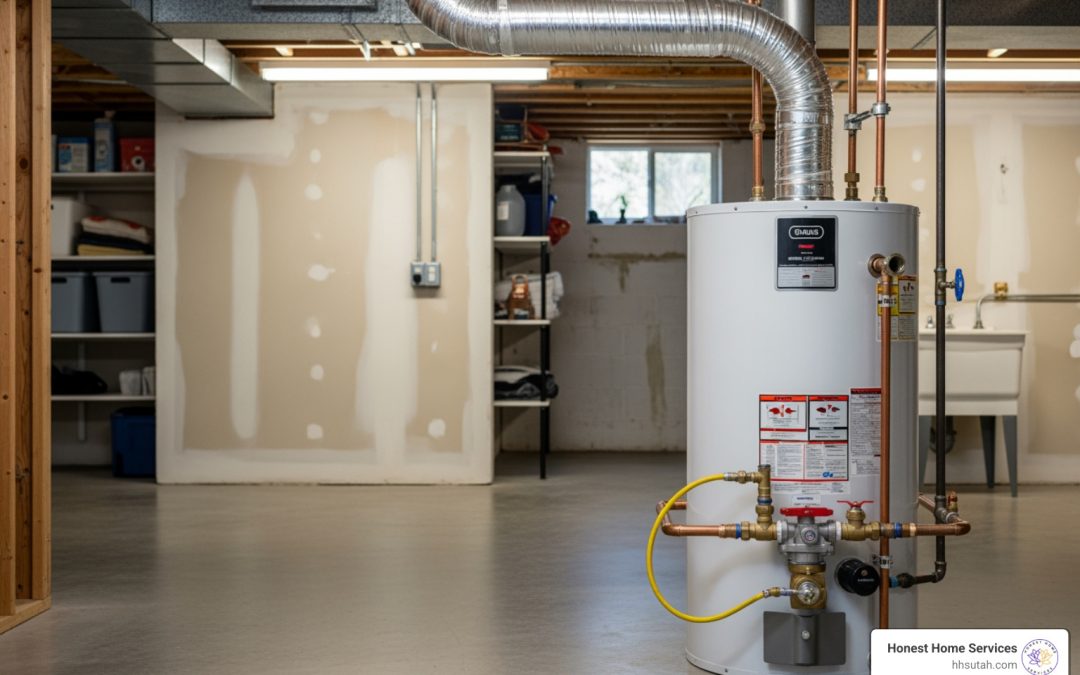
Why Gas Water Heater Service Keeps Your Home Running Smoothly
Gas water heater service is essential maintenance that keeps your hot water flowing, prevents costly breakdowns, and ensures your family’s safety. Regular service includes flushing sediment, inspecting key components like the anode rod and pilot light, testing safety valves, and checking for gas leaks or ventilation issues.
Quick maintenance checklist:
- Annual flushing to remove sediment buildup (every 6 months in hard water areas)
- Pilot light and thermocouple inspection to ensure reliable ignition
- Anode rod check after 3 years, then annually (prevents tank corrosion)
- T&P relief valve test to verify proper pressure release
- Gas connections and vent inspection for safety
- Professional service call if you smell gas, have no hot water, or notice major leaks
Nothing ruins a morning faster than a cold shower. A failing gas water heater can lead to expensive emergency repairs, water damage, or safety hazards like gas leaks. The good news is that most of these problems are preventable with regular maintenance.
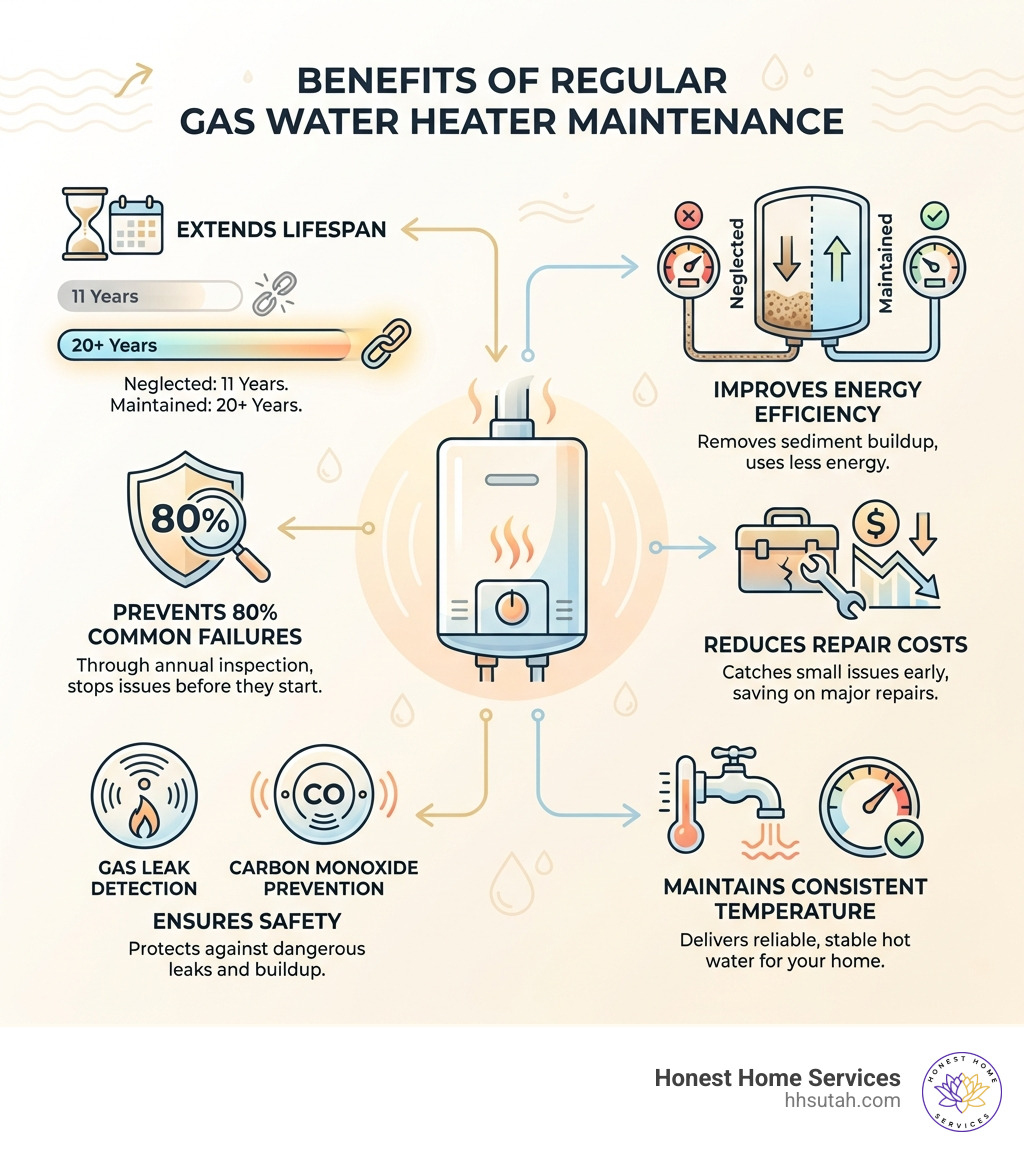
A well-maintained water heater can last 20 years or more—nearly double the average lifespan. Regular service also improves energy efficiency, lowers utility bills, and catches small problems before they become major failures. Understanding gas water heater service helps you make smart decisions, whether you’re hearing strange noises or just want to avoid a breakdown.
At Honest Home Services, we’ve spent over 20 years helping Northern Utah homeowners and businesses maintain reliable hot water through expert gas water heater service, from routine maintenance to emergency repairs. Our licensed technicians understand the unique challenges of Utah’s hard water and are ready to keep your system running efficiently and safely.
Understanding Your Gas Water Heater
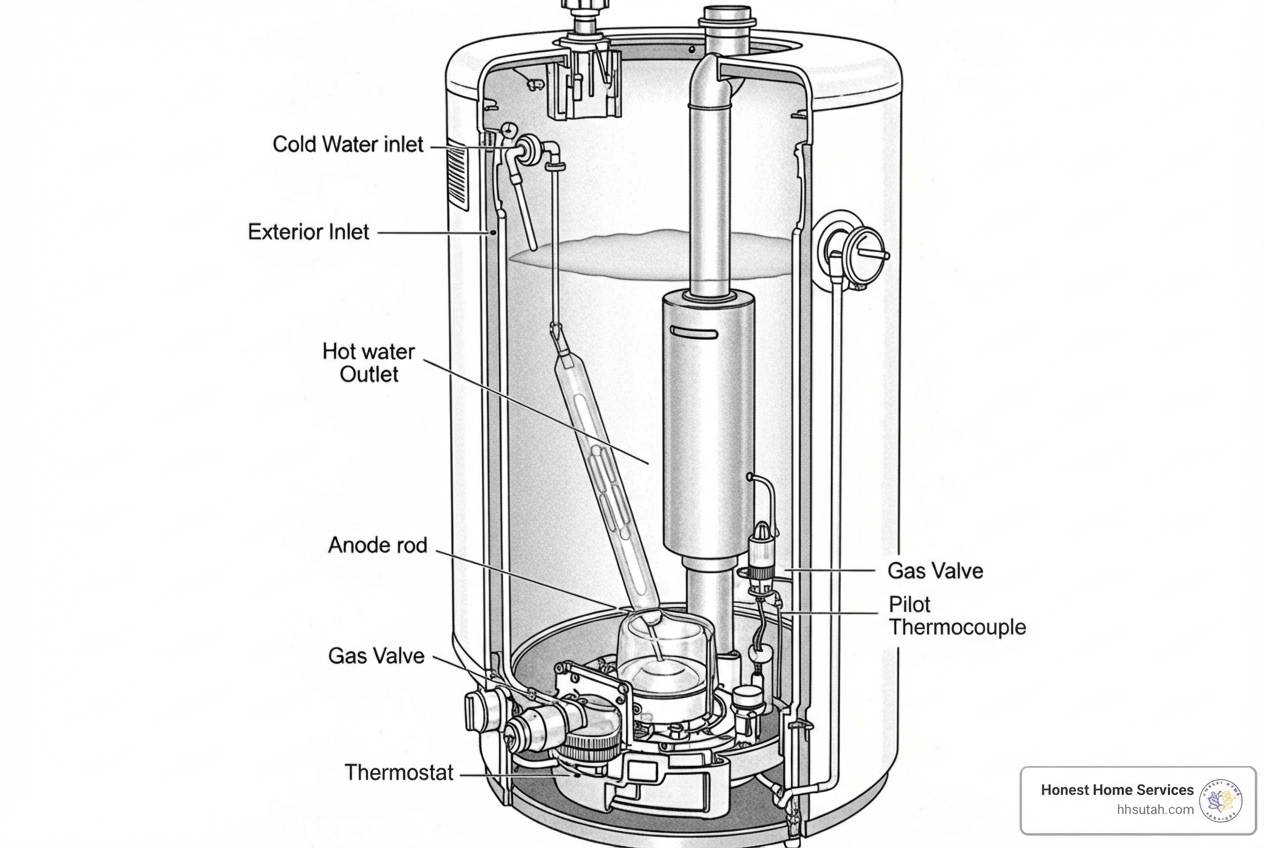
Before diving into gas water heater service, let’s review how these appliances work. A gas water heater uses a burner at the bottom of a storage tank to heat water. When the thermostat detects the water is too cool, it opens a gas valve, ignites the burner, and heats the water. Hot water rises to the top for use, while a dip tube feeds cold water to the bottom. Exhaust gases are safely removed through a vent pipe.
Key Components and Their Roles
Understanding the main parts of your gas water heater is crucial for effective troubleshooting and maintenance:
- Pilot Light: This small, continuous flame ignites the main gas burner when hot water is needed. If it goes out, your water heater won’t produce hot water.
- Thermocouple: A safety device that senses the pilot flame. If the pilot light goes out, the thermocouple cools down and shuts off the gas supply to prevent gas leaks. A faulty thermocouple is a common reason a pilot light won’t stay lit.
- Anode Rod: Often called a “sacrificial rod,” this metal rod (usually magnesium, aluminum, or zinc) is designed to corrode instead of the steel tank lining. It protects the tank from rust and corrosion, significantly extending its lifespan. You can find More info about anode rods here.
- Temperature & Pressure (T&P) Relief Valve: This critical safety device automatically opens to release water and steam if the temperature or pressure inside the tank exceeds safe limits. It prevents dangerous pressure buildup and potential explosions. Never tamper with or block this valve.
- Vent Pipe: Carries combustion byproducts, including carbon monoxide, safely out of your home. Proper venting is essential to prevent dangerous gas accumulation indoors.
- Gas Control Valve/Thermostat: This unit controls the flow of gas to the burner and contains the thermostat, which senses the water temperature and cycles the burner on and off to maintain your desired setting.
How Water Quality Affects Your Heater
Northern Utah’s hard water, high in minerals like calcium and magnesium, is tough on water heaters. These minerals settle at the bottom of the tank as sediment, which acts as an insulator and forces your heater to work harder. This leads to:
- Reduced Efficiency: The burner has to heat through the sediment layer before reaching the water, wasting energy and increasing your utility bills.
- Popping Noises: Trapped water within the sediment layer can boil and create steam bubbles that burst, causing those distinctive popping or rumbling sounds. This isn’t just annoying; it indicates your heater is struggling.
- Shorter Lifespan: Sediment buildup can lead to overheating of the tank’s bottom, causing stress, corrosion, and eventually leaks, drastically shortening your water heater’s life.
- Clogged Lines: In severe cases, sediment can even get into your hot water lines, reducing water flow.
Regular gas water heater service, especially flushing, is vital to combat the effects of hard water. For more insights into common water heater issues related to water quality, visit our Category: Common Water Heater Problems.
DIY Troubleshooting: What to Check Before You Call
Sometimes, a minor issue with your gas water heater can be resolved with a few simple checks. Before you call a professional for gas water heater service, we recommend trying these troubleshooting steps. Safety always comes first! If you ever smell gas, stop immediately and call for professional help.
No Hot Water
This is perhaps the most frustrating water heater problem. Here’s what to look for:
- Check the Pilot Light: For many gas water heaters, the pilot light needs to be lit for the main burner to ignite. If you have no hot water, check the small viewport near the bottom of your water heater. If you don’t see a small flame, your pilot light is out.
- How to Relight (General Steps – ALWAYS consult your owner’s manual for specific instructions):
- Locate the gas control knob on the gas control valve.
- Turn the knob to “Pilot.”
- Press and hold the knob down.
- While holding, press the igniter button repeatedly until you see the pilot flame light through the viewport.
- Continue holding the pilot knob down for about 30-90 seconds (until the thermocouple heats up).
- Release the knob slowly. If the pilot stays lit, turn the gas control knob to your desired temperature setting (e.g., “Hot” or 120°F).
- If it doesn’t light or won’t stay lit after several attempts, you likely have a faulty thermocouple or gas control valve, and it’s time to call us.
- How to Relight (General Steps – ALWAYS consult your owner’s manual for specific instructions):
- Check Thermostat Setting: Ensure your thermostat is set to your desired temperature. Sometimes it can accidentally be turned down. We recommend setting it to 120°F for safety and efficiency.
- Check Gas Supply Valve: Make sure the gas supply valve to the water heater is fully open. It’s usually a yellow or red handle on the gas line leading to the water heater. It should be parallel to the pipe for “open” and perpendicular for “closed.”
- Check for Tripped Thermal Switch: Some newer gas water heaters have a resettable thermal switch or a Flammable Vapor Ignition Resistant (FVIR) system that can shut down the unit for safety. If this has tripped, you may need a professional to diagnose why and reset it.
Decoding Water Heater Noises
Your water heater shouldn’t sound like a rock concert. Strange noises often indicate a need for gas water heater service.
- Popping or Rumbling: This common noise almost always indicates sediment buildup from hard water. Trapped water boils and bursts through the sediment, causing popping sounds. This reduces efficiency and can shorten your tank’s life.
- Hissing or Sizzling: This could be normal condensation dripping on the hot burner. However, it can also indicate a small leak. If you see water, you have a leak.
- Whistling: A whistling sound, often like a tea kettle, typically means water flow is restricted. This could be a partially closed inlet or outlet valve, or a sign that your T&P relief valve is malfunctioning and releasing pressure, which can indicate dangerously high pressure or temperature inside the tank. If you hear persistent whistling, it’s a safety concern and warrants immediate attention.
For more detailed information on common water heater problems, including noises, you can refer to our guide on Common Water Heater Problems.
How to Perform Annual Maintenance
Regular maintenance is the best way to extend the life of your gas water heater, improve its efficiency, and avoid unexpected breakdowns. We recommend performing these steps annually, or even more frequently if you have particularly hard water in your Northern Utah home.
Safety Precautions First:
- Shut off Gas Supply: Locate the gas supply line to your water heater and turn the manual shut-off valve to the “off” position (perpendicular to the pipe).
- Turn off Water Supply: Close the cold water inlet valve to the water heater. This is usually a handle on the pipe leading into the top of the water heater on the right side.
- Allow Water to Cool (Optional but Recommended): For safety, especially if you plan to work near the drain valve, allow the water in the tank to cool for a few hours.
Step 1: Flush the Tank
Flushing your water heater tank is crucial for removing sediment buildup and is a cornerstone of effective gas water heater service.
- Connect and Direct Hose: Attach a garden hose to the drain valve at the bottom of the tank and run it to a safe drainage area (floor drain, outside).
- Prepare for Draining: Open a hot water faucet somewhere in the house to let air into the tank.
- Drain the Tank: Carefully open the drain valve. Let the tank drain completely. Be cautious, as the water will be hot.
- Flush Sediment: With the drain valve still open, briefly turn the cold water supply on and off to stir up and flush out remaining sediment. Repeat until the water runs clear.
- Refill the Tank: Close the drain valve, remove the hose, and close the hot water faucet. Fully open the cold water inlet to refill the tank.
- Purge Air and Restore Power: Open the hot water faucet again to purge air from the system. Once water flows steadily, close it. Follow your manufacturer’s instructions to relight the pilot and restore the gas supply.
Regular flushing improves efficiency, prevents corrosion, and extends your water heater’s life. For a deeper dive into this process, check out A guide to maintaining your water heater.
Step 2: Inspect the Anode Rod
The anode rod is your tank’s unsung hero. It sacrifices itself to protect the steel lining from corrosion. Over time, it gets depleted and needs replacement.
- Checking for Depletion: We recommend inspecting the anode rod after three years of operation, then annually, especially in hard water areas like Salt Lake City. To check it, you’ll need to shut off the gas and water, drain a few gallons from the tank, and then carefully unscrew the anode rod from the top of the heater (it often requires a large socket wrench).
- Replacement Signs: If the rod is less than 3/8″ in diameter, heavily corroded, or has exposed support wire, it’s time for a new one. Replacing a depleted anode rod can add years to your water heater’s life. This simple step is a key part of our comprehensive Water Heater Replacement considerations.
Step 3: Test the T&P Valve and Inspect Vents
These steps are critical for safety and efficiency.
- Test the T&P Valve:
- Place a bucket under the discharge pipe. Briefly lift the test lever; a burst of water should come out.
- Release the lever, and it should snap shut and stop the flow.
- If it doesn’t release water or continues to drip, the valve is faulty and needs immediate professional replacement.
- Caution: Testing an old valve can sometimes cause a permanent leak. If you’re unsure, have a professional perform this check.
- Inspect Vent Pipe:
- Visually inspect the vent pipe for any signs of corrosion, rust, blockages (like bird nests), or disconnected sections.
- Ensure the vent pipe slopes upward towards the chimney or outside vent.
- Check for proper draft: With the main burner on for about five minutes, carefully pass a lit match (or a thin piece of paper) about an inch from the draft hood’s relief opening. The flame or paper should be steadily drawn into the opening, indicating a good draft. If smoke drifts or is blown away, there’s a venting problem that needs immediate professional attention. Improper venting can lead to carbon monoxide buildup.
When to Call for Professional Gas Water Heater Service
While some minor troubleshooting and maintenance can be done by a homeowner, many issues with gas water heaters require the expertise and specialized tools of a licensed professional. Attempting complex repairs without proper training can be dangerous, potentially leading to gas leaks, carbon monoxide poisoning, or property damage. That’s why we at Honest Home Services are always ready to step in. For more on when to call an expert, see our guide on Handling Water Heater Repairs: Who to Call for the Job.

Signs You Need an Expert
Don’t hesitate to call us if you encounter any of these critical issues:
- Gas Smell: This is an emergency. If you smell gas near your water heater, do not try to light any appliance, do not touch any electrical switches, and do not use any phone in your building. Immediately evacuate your home and call your gas supplier and/or the fire department from a neighbor’s phone.
- Pilot Light Won’t Stay Lit: If you’ve tried relighting the pilot and it fails, the thermocouple or gas control valve is likely faulty and needs a pro.
- Major Tank Leak: A leak from the tank body (not a fitting) usually means it has corroded and requires replacement. Turn off the water supply and call for Emergency Water Heater Repairs.
- No Hot Water After Troubleshooting: If you’ve checked the pilot, gas supply, and thermostat, and still have no hot water, a more complex internal component may be failing.
- Error Codes: Many newer water heaters have diagnostic status lights that flash error codes. These codes point to specific internal problems that require professional diagnosis and repair.
- Rusty or Discolored Hot Water: This can indicate internal tank corrosion or a depleted anode rod, suggesting the tank’s integrity may be compromised.
The Importance of Safety During Gas Water Heater Service
Working with natural gas or LP gas appliances carries inherent risks. Our primary concern during any gas water heater service call is safety.
- Gas Leak Detection: We use specialized equipment to detect gas leaks, but a simple homeowner test involves brushing a soap and water mixture (1 part soap to 15 parts water) on gas line connections. Bubbles indicate a leak. If you suspect a leak, call us immediately.
- Carbon Monoxide (CO) Risks: Incomplete combustion or improper venting can produce carbon monoxide, a colorless, odorless, and deadly gas. Proper ventilation is critical. We always ensure your vent pipe is clear and correctly installed. We also recommend installing CO detectors in your home.
- Scald Prevention: Hot water can cause severe burns, especially to children and the elderly. We recommend setting your water heater thermostat to 120°F. Temperatures above 125°F can cause severe burns instantly. We can also install thermostatic mixing valves at points of use to further reduce scald risk.
What to Expect from a Professional Gas Water Heater Service Call
When you call Honest Home Services for gas water heater service, you can expect:
- Thorough Diagnostics: Our technicians inspect all components, gas lines, and safety features to pinpoint the problem.
- On-the-Spot Repairs: We carry common parts to repair or replace faulty components like thermocouples, gas control valves, and T&P valves during the visit.
- Safety Inspection: We verify that all safety mechanisms, including the T&P valve and ventilation, are working correctly.
- Efficiency Check: We assess your heater’s performance and provide recommendations to improve efficiency and lower your bills.
For an understanding of potential costs associated with repairs, you can review our information on Hot Water Repair Cost.
Repair or Replace: Making the Right Choice
Deciding whether to repair your existing gas water heater or invest in a new one can be a tough call. We’re here to help you weigh the options, considering factors like age, repair cost, and efficiency.
| Scenario | Age of Heater | Cost of Repair | Severity of Issue | Recommendation |
|---|---|---|---|---|
| Minor Component | < 6-8 years | Low to Moderate (e.g., thermocouple, anode) | Pilot light out, minor leaks, noisy (sediment) | Repair: Cost-effective, extends life. |
| Major Component | 6-10 years | High (e.g., gas control valve, burner) | Persistent issues, complex part failure | Evaluate: Compare repair cost to 50% of new unit cost; consider remaining lifespan. |
| Leaking Tank | Any age | N/A (tank replacement is needed) | Catastrophic failure, water damage risk | Replace: Tank leaks are typically unrepairable. |
| Frequent Repairs | > 10 years | Accumulating costs | Multiple failures within a short period | Replace: Costly to maintain, nearing end of life. |
| Rusty Water | Any age | N/A (unless anode rod only) | Tank corrosion, health concern | Replace: Indicates internal deterioration. |
| Inefficient Operation | Any age | N/A (unless simple maintenance) | High energy bills, slow recovery, inadequate hot water | Replace: Consider high-efficiency models. |
Average Lifespan and Replacement Indicators
The average conventional gas water heater lasts about 11 years. However, with consistent maintenance, we’ve seen many units in Northern Utah last 20 years or longer. Tankless gas water heaters, with proper maintenance, can typically last around 20 years.
Here are signs that replacement might be a better option than repair:
- Frequent Repairs: If you’re constantly calling us for gas water heater service, the cumulative cost can quickly exceed the value of a new unit.
- Leaking Tank: A leak from the tank itself (not a connection) is almost always a sign that the tank has corroded through, and the entire unit needs to be replaced.
- Rust-Colored Water: If your hot water consistently comes out rusty or discolored, it often indicates internal corrosion of the tank.
- Age: If your conventional water heater is over 10-12 years old, or your tankless unit is approaching 20 years, it’s often more economical in the long run to replace it, especially considering advancements in energy efficiency.
Replacing an old, inefficient water heater can significantly improve your home’s energy efficiency and hot water reliability. Learn more about the Advantages of Water Heater Replacement.
Tank vs. Tankless Maintenance
The type of gas water heater you have affects its gas water heater service requirements:
- Tank Water Heaters: These require annual flushing to remove sediment buildup. The anode rod also needs to be inspected and potentially replaced every 3-5 years (or annually in hard water areas) to prevent tank corrosion.
- Tankless Water Heaters: While they don’t have a tank to flush, tankless units require annual descaling. This process removes mineral deposits from the heat exchanger, which can significantly reduce efficiency and damage components, especially in areas with hard water.
Regardless of type, hard water in Northern Utah means more diligent maintenance is needed to prevent mineral buildup. Considering a Water Heater Upgrade? We can help you choose the right system for your home and advise on its specific maintenance needs.
Frequently Asked Questions about Gas Water Heater Service
How often should a gas water heater be serviced?
We recommend a multi-pronged approach to gas water heater service:
- Annual Professional Inspection: Have a licensed plumber inspect your gas water heater annually to catch potential issues early, perform safety checks, and ensure optimal performance.
- Annual DIY Flushing: You should flush your tank water heater at least once per year. In areas with hard water, like Northern Utah, flushing every six months is better to prevent sediment buildup.
- Tankless Descaling: Tankless water heaters should be descaled annually by a professional to remove mineral deposits from the heat exchanger.
- Manufacturer Recommendations: Always consult your water heater’s owner’s manual for specific maintenance guidelines.
What is the most common repair for a gas water heater?
Based on our experience in Northern Utah, the most common issues that require gas water heater service are:
- Pilot Light Issues: Often caused by a faulty thermocouple that fails to sense the pilot flame, shutting off the gas supply.
- Sediment-Related Problems: These manifest as popping noises, reduced hot water, or discolored water, all stemming from mineral buildup in the tank.
- Gas Control Valve Issues: Problems with the gas control valve can lead to inconsistent water temperature or a complete lack of hot water.
How does regular maintenance affect my energy bills?
Regular gas water heater service has a direct and positive impact on your energy bills:
- Improved Efficiency: Removing sediment from tank heaters allows for more efficient heat transfer, reducing gas consumption. Similarly, descaling a tankless unit restores its optimal heat transfer capabilities.
- Faster Heating: An efficient water heater heats water more quickly, reducing the overall run time of the burner.
- Reduced Gas Consumption: By minimizing wasted energy and ensuring components are working optimally, regular maintenance directly translates to lower gas consumption and monthly utility savings.
Conclusion
Stepping into a cold shower is no fun, but with proper gas water heater service, it’s a scenario you can largely avoid. Regular maintenance, from flushing sediment to inspecting critical components, is key to ensuring your hot water heater operates safely, efficiently, and for many years to come. It’s an investment that pays off in comfort, savings, and peace of mind.
While some troubleshooting and maintenance can be done by a homeowner, knowing when to call a professional for complex repairs or safety-critical issues is essential. Our team at Honest Home Services is dedicated to providing honest, reliable, and affordable plumbing services, including 24/7 emergency support, for all your gas water heater service needs across Northern Utah, including Salt Lake City, Davis County, and surrounding areas. We’re here to ensure your home always has reliable hot water. For expert gas water heater service in Salt Lake City, contact us today!](https://hhsutah.com/salt-lake-city-water-heater-repair/)