
When You Need a Gas Leak Detection Company Near Me Right Now
Finding a reliable gas leak detection company near me fast can feel overwhelming — especially when you’re already stressed about a potential safety emergency in your home or business.
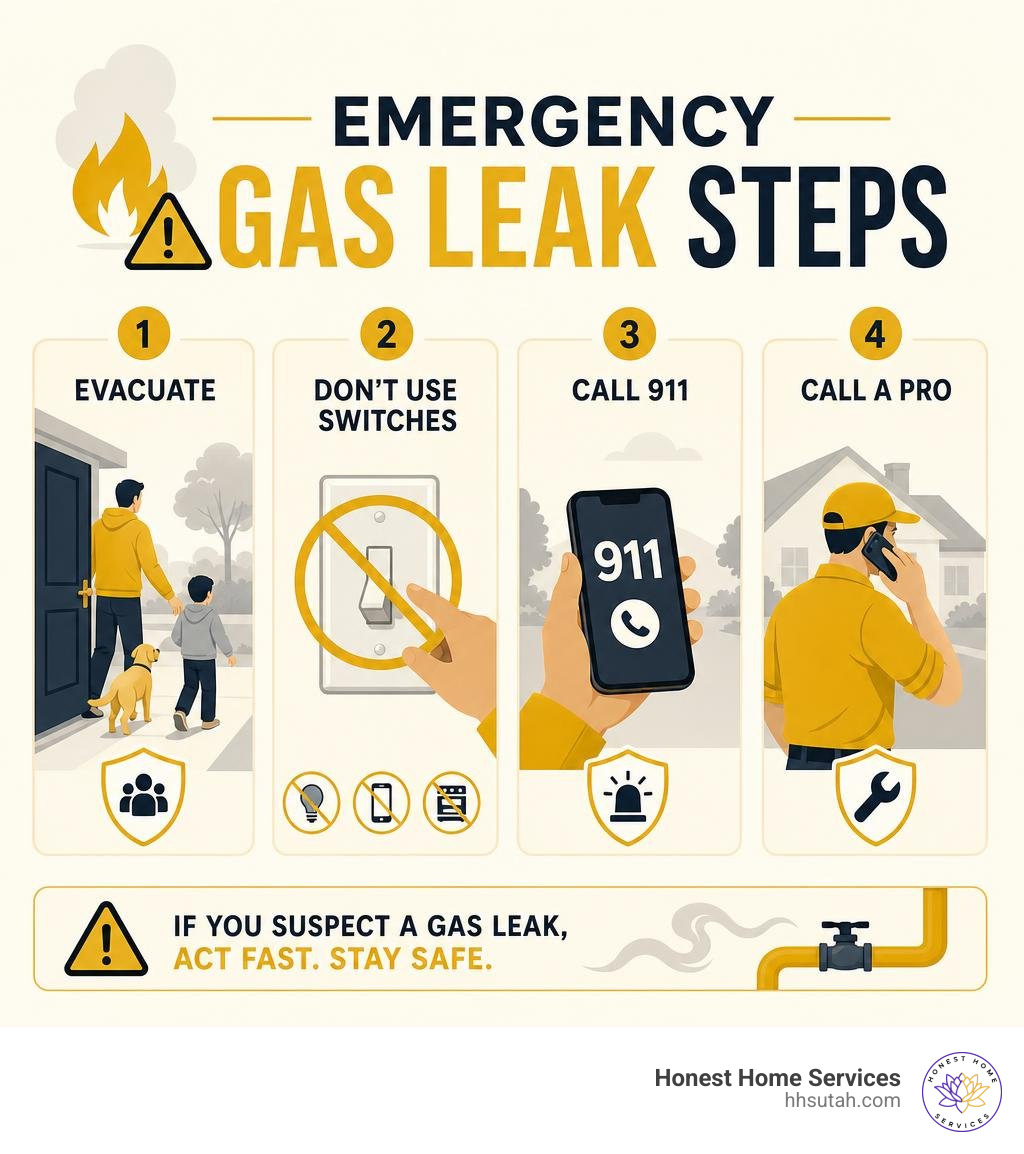
Here’s what to do right now if you suspect a gas leak:
- Leave the building immediately — take all people and pets with you
- Don’t touch any switches — no lights, no phones, no appliances
- Open doors and windows as you exit if you safely can
- Call 911 or your gas utility from outside, at a safe distance
- Call a licensed gas leak detection company once you’re safe
Even a small gas leak can create serious fire hazards or cause health problems like headaches, dizziness, and nausea. Don’t wait to act.
Gas leaks aren’t always obvious. You might smell something like rotten eggs — that’s the chemical mercaptan, added to natural gas specifically so you can detect it. But slow leaks often produce little to no odor at all, making professional detection essential.
At Honest Home Services, we’ve been serving homeowners and small businesses across Northern Utah for over 20 years with licensed, insured plumbing and HVAC services — including gas leak detection. When local residents search for a gas leak detection company near me, our team is ready to respond quickly with transparent pricing and no surprises. Whether it’s an emergency or a routine inspection, we’re here to help you get back to safe and comfortable living.
Gas leak detection company near me terms at a glance:
Recognizing the Danger: Signs and Health Symptoms of a Gas Leak
Detecting a gas leak is not always as simple as sniffing the air. While utility providers inject mercaptan to produce that classic, unmistakable sulfur or rotten egg odor, minor leaks or leaks in well-ventilated areas may not gather enough concentration to trigger your sense of smell. Furthermore, human noses suffer from “olfactory fatigue,” meaning your ability to smell the gas can fade after only a few minutes of exposure.
To protect your household, you must look for a combination of physical, environmental, and auditory clues. Our comprehensive guide to natural gas leak detection details these warning signs, which include:
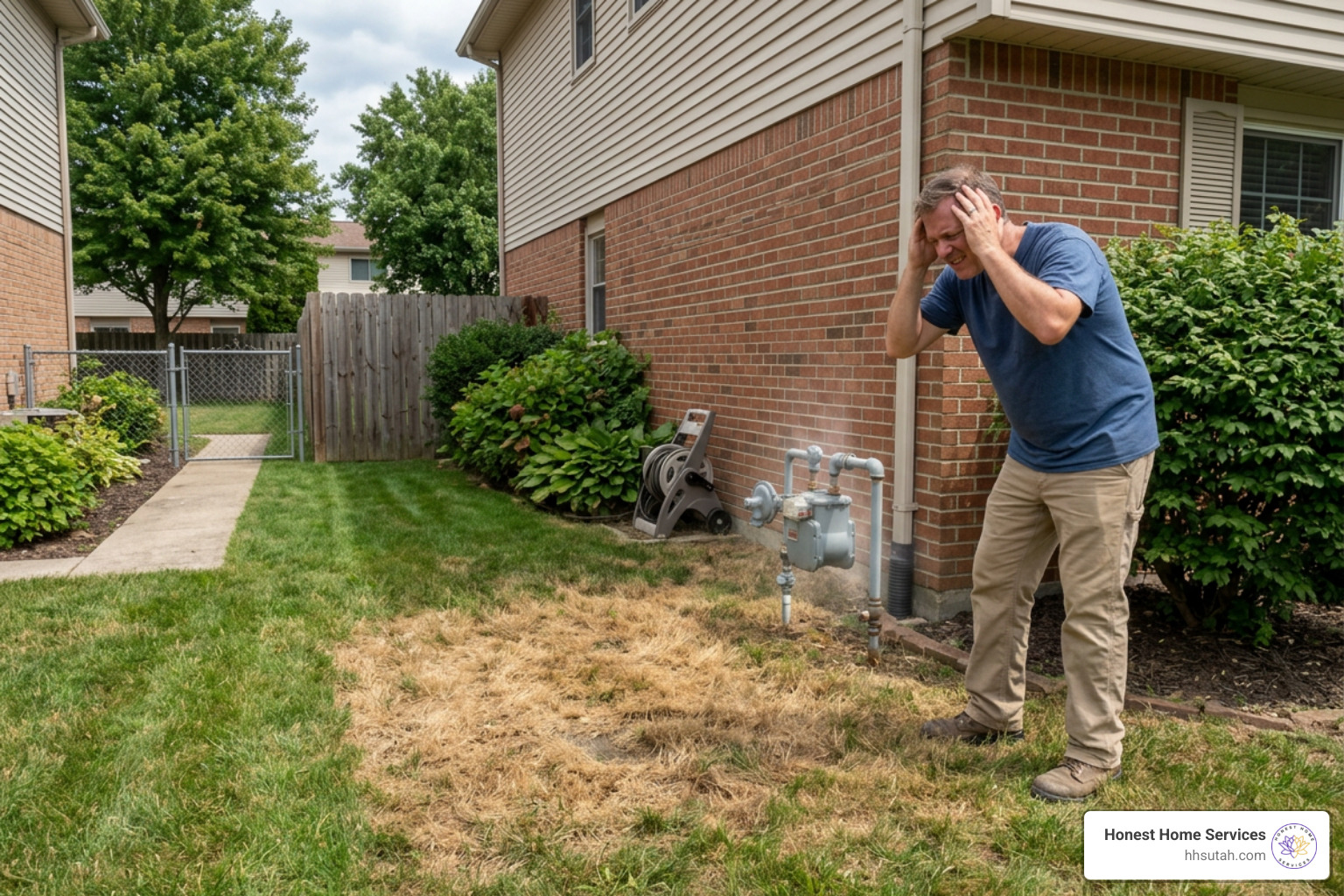
- Hissing or Whistling Noises: A high-pressure gas line that has sustained a crack or a loose fitting will often produce an audible hissing or whistling sound, particularly near your gas meter, outdoor lines, or indoor appliances like your furnace and water heater.
- Dead or Dying Vegetation: If you have an underground gas leak in your yard, the escaping natural gas blocks the roots of grass, plants, and trees from absorbing vital oxygen. This leads to highly localized, unexplained patches of yellowed grass, wilting plants, or stunted tree leaves directly over the buried line.
- Bubbles in Standing Water: If it has recently rained or if you have wet soil in your yard, escaping gas from a buried line will force its way upward, creating visible bubbling in puddles, wet mud, or standing water.
- Physical Health Symptoms: When natural gas leaks into an enclosed space, it displaces oxygen. Occupants may experience sudden, unexplained health symptoms that mysteriously improve when they leave the property. These symptoms include:
- Persistent headaches
- Dizziness or lightheadedness
- Nausea and loss of appetite
- Fatigue or sudden lethargy
- Breathing discomfort or throat irritation
- Unusual Pet Behavior: Pets are often much more sensitive to environmental changes than humans. If your dog or cat suddenly displays lethargy, unexplained vomiting, or a complete lack of appetite, it could be an early indicator of a slow, hidden indoor gas leak.
What to Do Immediately and Why DIY is a Major Risk

If you suspect a gas leak in your home or business, your priority must always be immediate evacuation. Do not attempt to locate the leak yourself, and do not waste time trying to patch a pipe.
Immediate Safety Protocols
- Evacuate Immediately: Gather all family members and pets and exit the building right away.
- Control Ignition Risks: Do not flip any light switches, use your home phone, plug or unplug appliances, or light matches. Even the tiny static spark generated by turning on a light switch or using a garage door opener is enough to ignite concentrated natural gas and trigger a devastating explosion.
- Leave Doors Open: As you exit, leave the doors open to help ventilate the space naturally, but do not linger inside to open windows if the smell is strong.
- Call from a Safe Distance: Once you are safely away from the property, use your cell phone to call 911 or your local gas utility provider. Only after emergency services have secured the area should you contact a professional plumbing and gas company. Learn more about managing these high-stress situations in our guide on how to handle a plumbing emergency.
Why DIY Gas Line Work is a Major Risk
Attempting to locate or repair a gas leak yourself is incredibly dangerous and highly illegal in most municipalities. Natural gas lines operate under continuous pressure, and working on them requires specialized training, diagnostic equipment, and licensing.
A single mistake—such as using the wrong thread sealant, over-tightening a fitting, or failing to properly isolate a line—can lead to catastrophic property damage, severe personal injury, or carbon monoxide poisoning. Furthermore, unauthorized DIY gas repairs will void your homeowner’s insurance policy and violate local building codes, leaving you personally liable for any future issues.
How a Professional Gas Leak Detection Company Near Me Pinpoints Leaks
Professional plumbers and gas technicians do not guess where a leak is located. We combine advanced, non-invasive diagnostic tools with strict testing methodologies to find hidden leaks quickly without causing unnecessary damage to your home’s walls, floors, or landscaping.

1. Pressure Testing (Manometer Test)
The first step in any professional inspection is isolating the gas system and performing a pressure decay test using a highly sensitive digital manometer. By shutting off the main gas valve and pressurizing the system with air or nitrogen to a specific level (typically 3 PSI or higher), we monitor the system for any pressure drops over time. If the pressure drops, it is absolute proof that a leak exists somewhere in the line.
2. Electronic Combustible Gas Sweep
Once a leak is confirmed, our technicians use calibrated, handheld electronic gas detectors (often called “sniffers”). These devices can detect combustible gas concentrations in parts-per-million (PPM), picking up tiny traces of gas far below what the human nose can register. We sweep these sensors along exposed pipes, behind appliance connections, and near valves to pinpoint the exact origin of the leak.
3. Non-Invasive Acoustic Sensors and Tracer Gas
For leaks hidden behind drywall, under concrete slab foundations, or buried deep underground, we use advanced acoustic sensors and tracer gases. By introducing a safe, non-toxic tracer gas into the isolated line, we can detect its escape point using specialized acoustic listening devices that pick up the distinct sound frequency of escaping gas. This allows us to locate the exact leak path without tearing down drywall or digging up your yard.
4. Soap Bubble Confirmation
Once the electronic and acoustic equipment narrows down the leak to a specific joint or fitting, we apply a specialized liquid leak-detection solution. If bubbles begin to form and expand, we have visual confirmation of the leak’s exact location.
How Long Does It Take?
A standard professional gas leak inspection for a typical residential property takes between one to two hours. However, larger commercial properties or homes with complex, multi-appliance gas systems may take longer to thoroughly evaluate.
Gas Leak Detection vs. Gas Line Repair
It is important to understand that leak detection and line repair are two distinct services. Detection involves the diagnostic process of finding the leak, while repair involves physically fixing or replacing the damaged piping.
| Feature | Gas Leak Detection | Gas Line Repair |
|---|---|---|
| Primary Goal | Locate the exact origin and cause of the leak | Safely repair or replace the damaged pipe/fitting |
| Tools Used | Manometers, electronic sniffers, acoustic sensors, tracer gas | Pipe cutters, threaders, wrenches, approved sealants, CSST |
| Duration | 1 to 2 hours | Varies based on accessibility (2 hours to multiple days) |
| Permits Required | Rarely | Yes, usually required for line modifications |
For a complete breakdown of what to expect during a professional diagnostic visit, consult our leak detection company complete guide.
Key Credentials of a Gas Leak Detection Company Near Me
When searching for a local specialist to handle your gas lines, you cannot afford to hire an uncertified handyman. Always verify that the company you choose possesses the following credentials:
- Active Plumbing & Gas Licensing: Ensure their technicians hold specific state certifications for natural gas and propane systems.
- Comprehensive Insurance: The company must carry robust general liability and workers’ compensation insurance to protect your property.
- Upfront Pricing: A reputable company will provide clear, honest pricing before any repair work begins.
- Emergency Availability: Gas emergencies do not wait for business hours. Look for a team that offers 24/7 emergency response.
For more tips on finding a qualified local provider, read our guide on selecting a gas leak detection and repair company.
Root Causes, Cost Factors, and Prevention of Gas Leaks
Understanding why gas leaks occur can help you take proactive steps to prevent them before they turn into emergencies.
Root Causes of Gas Leaks
- Pipe Corrosion: Older properties built before 1970 often rely on original galvanized iron or cast-iron pipes. Over decades of service, these metals corrode internally and externally, thinning the pipe walls until pinhole leaks develop.
- Soil Shifting and Freeze-Thaw Cycles: In Northern Utah, our severe winter freeze-thaw cycles cause the ground to expand and contract significantly. This shifting soil places immense physical stress on buried gas lines, which can pull joints apart or crack rigid piping.
- Seismic Activity: Utah’s Wasatch Fault zone experiences frequent micro-earthquakes and ground tremors. Over time, even minor seismic shifting can loosen pipe connections and fittings behind your walls.
- Improper Installation in Newer Homes: Don’t assume a new home is immune to gas leaks. Newer properties frequently experience leaks due to poor installation practices, loose appliance connectors, or accidental damage caused by contractors during home renovations (such as driving a drywall screw through a flexible gas line).
What Affects the Cost of Gas Leak Detection?
The cost of professional gas leak detection and subsequent repair depends on several key factors:
- Accessibility of the Line: Exposed lines in a basement or utility closet are fast and inexpensive to test. Conversely, lines buried beneath a concrete slab, hidden behind finished drywall, or run through tight crawlspaces require more time and specialized equipment to evaluate.
- Scope of the Leak: A single loose fitting behind a stove is simple to address, while a complex system with multiple leaks across older galvanized pipes may require a full system repiping.
- Building Permits and Inspections: Most municipalities in Northern Utah require official permits and safety inspections for gas line modifications or repairs to ensure full code compliance.
If you are located in Northern Utah, Honest Home Services provides professional gas leak detection and repair services tailored to your specific city, including Salt Lake City, Clearfield, Layton, Kaysville, Farmington, and Bountiful.
How to Prevent Future Gas Leaks
- Schedule Annual Maintenance: Have a licensed professional inspect your gas appliances, connections, and visible piping at least once a year.
- Replace Old Appliance Connectors: Whenever you install a new stove, dryer, or water heater, always replace the flexible brass or stainless steel connector line. Never reuse an old connector.
- Upgrade to CSST: If you are remodeling or replacing old pipes, consider upgrading to Corrugated Stainless Steel Tubing (CSST). CSST is highly flexible, corrosion-resistant, and far better suited to withstand seismic shifting and soil movement than rigid iron pipes.
Frequently Asked Questions About Gas Leaks
Can a high gas bill indicate a hidden leak?
Yes, an unexplained spike in your monthly gas bill is a classic warning sign of a slow, hidden gas leak. If your gas usage has jumped but your heating habits and appliance use have remained the same, you should check your gas meter. Turn off all gas appliances in your home and watch the dials on your outdoor gas meter. If the dials continue to creep forward while everything is shut off, you have a leak and should call a professional immediately.
How does weather affect underground gas lines?
Severe weather and seasonal temperature swings put incredible physical stress on buried gas lines. In cold climates, freeze-thaw cycles cause the surrounding soil to shift and heave, which can shear underground pipe connections. Additionally, extreme temperature changes cause metal pipes to expand and contract, gradually weakening joints and threaded fittings over time.
What is the difference between natural gas and carbon monoxide?
While both are dangerous household gases, they are entirely different:
- Natural Gas is a fossil fuel delivered directly to your home to power appliances. It is naturally odorless but has mercaptan added to give it a rotten egg smell, and it is highly explosive.
- Carbon Monoxide (CO) is a highly toxic, completely odorless, colorless, and tasteless byproduct of incomplete combustion. It is produced when fuel-burning appliances (like your furnace, water heater, or fireplace) malfunction or lack proper ventilation. You cannot smell carbon monoxide, which is why installing active CO detectors on every level of your home is vital.
Conclusion
A gas leak is a serious safety event that requires immediate, professional attention. By understanding the signs of a leak—from rotten egg odors and hissing sounds to dying yard grass and physical symptoms—you can protect your household and take swift, decisive action. Never attempt to locate or repair a gas line yourself; always prioritize evacuation and leave the diagnostics to the experts.
Booking a Gas Leak Detection Company Near Me in Northern Utah
When you need a trusted gas leak detection company near me in Northern Utah, Honest Home Services is here to deliver peace of mind. We provide prompt, reliable, and affordable gas leak detection and repair services across Salt Lake City, Davis County, and the surrounding areas.
Our licensed, expert technicians utilize state-of-the-art electronic sweepers, manometer testing, and non-invasive diagnostics to keep your home safe. Backed by our customer satisfaction guarantee, fair pricing, and 24/7 emergency support, we make sure your gas system is fully secure.
Don’t live with the stress of a suspected leak. Contact us today to schedule your comprehensive Salt Lake City leak detection and protect your home and family.