

What Determines Your Water Heater Repair Price?
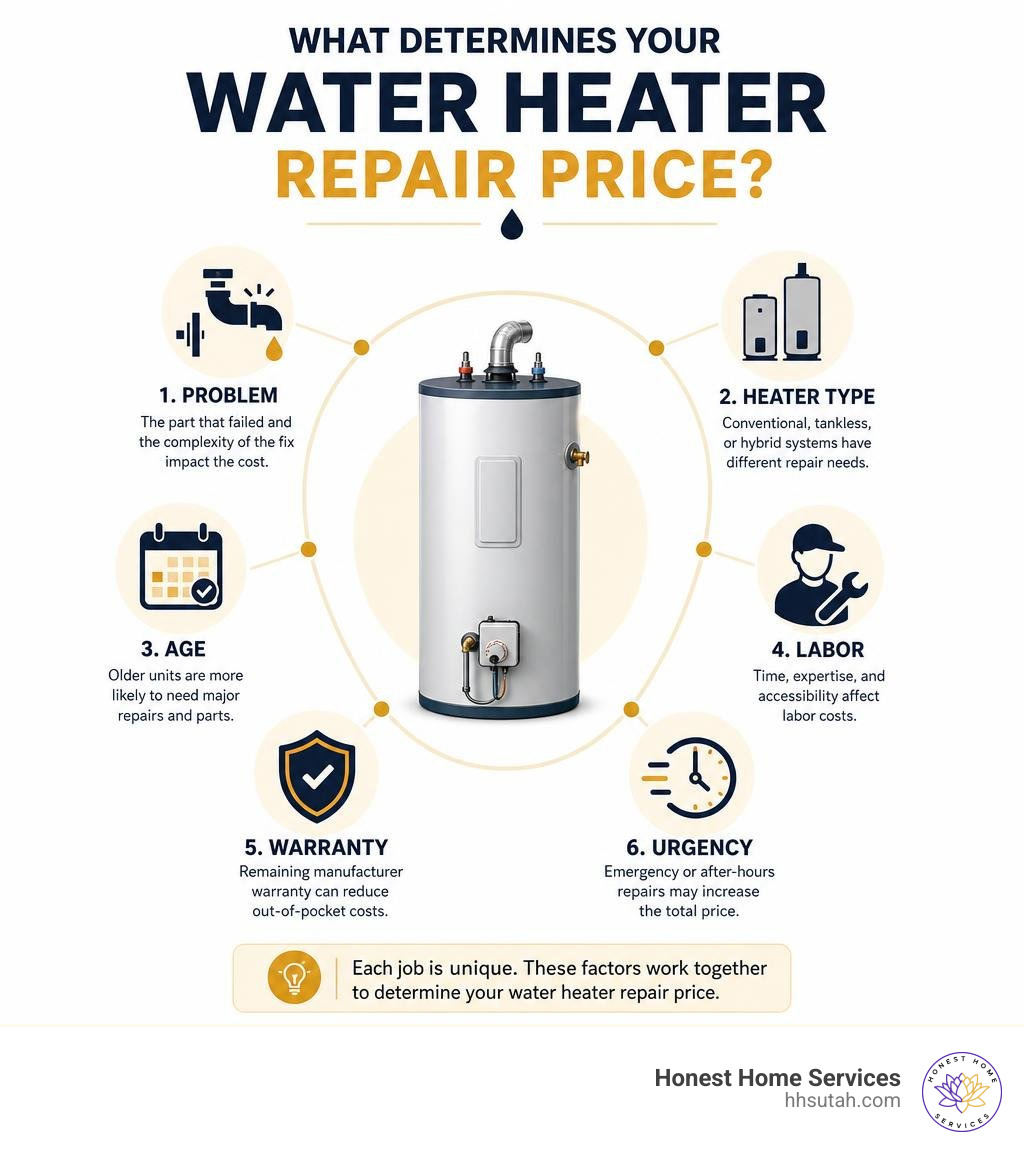
A water heater repair price depends mostly on what failed, your heater’s age and type, and the labor needed to reach and test the unit. A simple replaceable part is often worth fixing, while a corroded tank, repeated failures, or a repair on an older unit may make replacement the better long-term choice.
Before approving work, ask for an itemized estimate that separates the service call, labor, parts, and any emergency charges. Also confirm whether the unit is still under a manufacturer parts warranty and whether the diagnostic fee will be applied to the repair.
We are Honest Home Services, a licensed and insured Utah plumbing and HVAC team with more than 20 years of experience helping homeowners and businesses understand water heater repair price decisions. We focus on clear options, reliable repairs, and restoring hot water without surprises.
Understanding the Average Water Heater Repair Price in 2026
When your morning shower turns ice cold, your primary concern is figuring out what it takes to get the hot water flowing again. In 2026, the overall scope of water heater repairs spans from simple minor fixes to more involved component restorations. Many homeowners consult comprehensive industry benchmarks, such as the Cost to Repair a Hot Water Heater [2026 Data], to understand how common failures are categorized and evaluated across different residential systems.
Repair jobs generally fall into three tiers based on complexity:
- Minor Repairs: Tasks like testing and resetting a thermostat, addressing minor fitting drips, or executing a basic tank flush to clear out light sediment.
- Moderate Repairs: Swapping out mechanical or electrical parts such as heating elements, temperature and pressure relief valves, standard gas thermocouples, or sacrificial anode rods.
- Major Repairs: Replacing complex assemblies including multi-stage gas control valves, specialized electronic circuit boards, or descaling heavily fouled tankless heat exchangers.
| Repair Category | Common Component or Service | Relative Complexity | Typical Labor Time Required |
|---|---|---|---|
| Minor | Tank Flush & Sediment Draining | Low | 1 hour |
| Minor | Electric Thermostat Calibration / Swap | Low to Moderate | 1 to 2 hours |
| Moderate | Electric Upper/Lower Heating Elements | Moderate | 1 to 2 hours |
| Moderate | Temperature & Pressure (T&P) Relief Valve | Moderate | 1 to 2 hours |
| Moderate | Sacrificial Anode Rod Replacement | Moderate | 1 to 2 hours |
| Moderate | Gas Thermocouple or Pilot Assembly | Moderate | 1 to 2 hours |
| Major | Gas Control Valve Assembly | High | 2 to 3 hours |
| Major | Tankless Flow Sensor / Circuit Board | High | 2 to 3 hours |
| Major | Tankless Heat Exchanger Service | High | 2 to 4 hours |
Factors That Influence Your Water Heater Repair Price
The final invoice for any service call reflects multiple practical variables. Understanding how much will your broken water heater cost to fix requires looking at the moving parts behind the quote:
- Diagnostic and Service Call Fees: Most service companies charge a flat diagnostic fee to send a certified technician to inspect the unit, test electrical and mechanical pathways, and identify the root failure. Reputable contractors frequently apply this diagnostic charge directly toward your final bill if you authorize the recommended repair.
- Hourly Labor Rates: Labor charges account for the technician’s technical skill, licensing, and insurance. The total labor time depends entirely on whether the repair involves a quick modular swap or requires fully draining the tank.
- System Accessibility: Water heaters tucked into tight crawlspaces, perched in cramped attics, or walled off inside utility closets require additional setup and maneuvering time compared to units sitting openly in a wide-open basement.
- Manufacturer Warranty Status: If your system is still covered under a limited parts warranty, replacement components may be fully covered by the manufacturer, leaving you responsible only for professional labor and diagnostic testing.
- Scheduling and Dispatch: Standard daytime appointments during regular business hours offer predictable scheduling, whereas late-night, holiday, or weekend emergency calls often carry an after-hours surcharge.
Typical Component Costs and Labor Rates
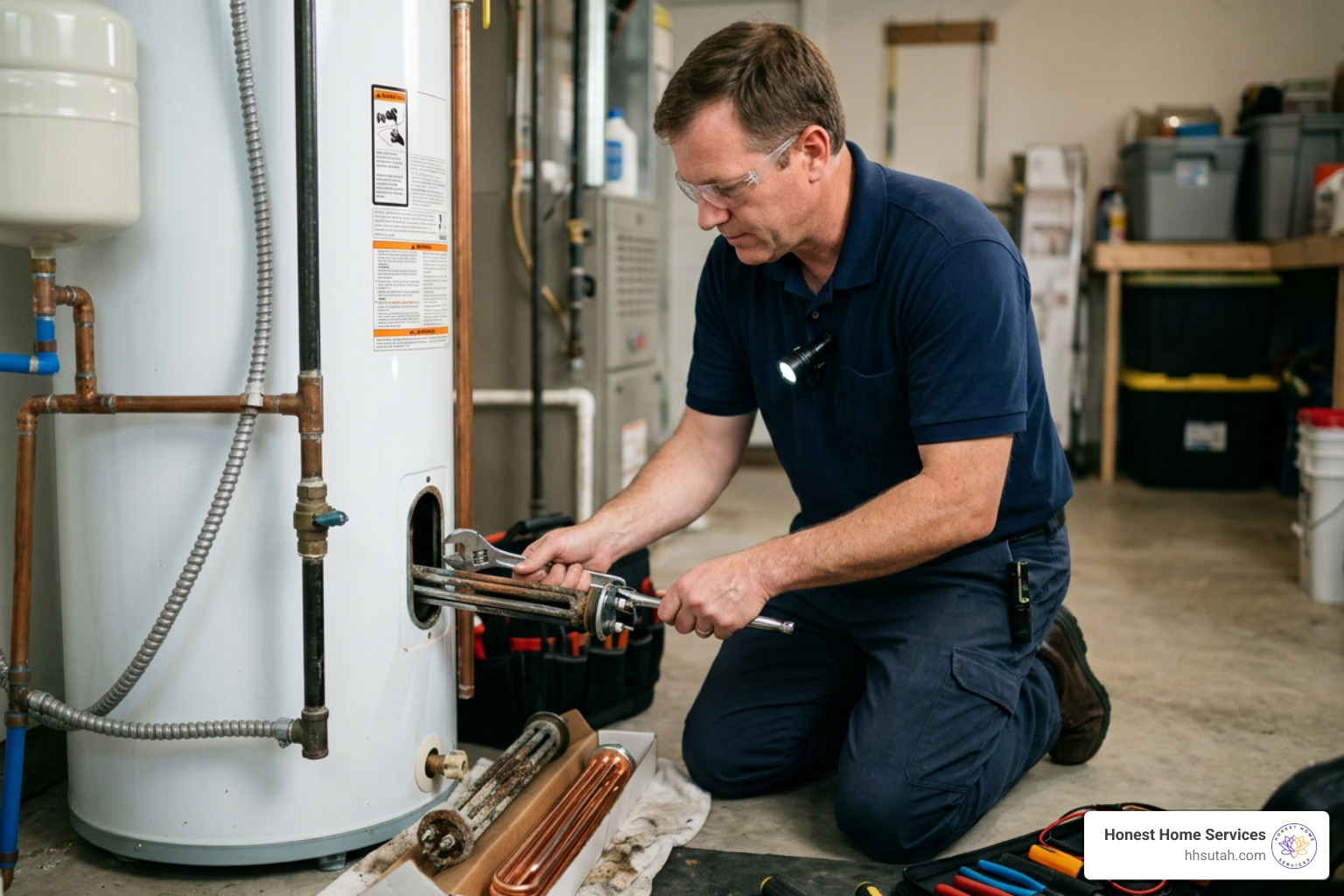
Every component inside your water heating system serves a dedicated purpose, and their replacement requirements vary accordingly. You can use tools like a Water Heater Repair Cost Calculator to evaluate how different hardware pieces impact the total job scope.
- Electric Heating Elements: Electric tanks utilize upper and lower resistance heating elements. If an element burns out or becomes heavily coated in mineral scale, water heating capacity drops instantly. Replacing an element requires isolating the electrical breaker, draining the tank below the element level, unthreading the failed component, and seating a fresh unit with a new gasket.
- Thermostats: Electric units use dual surface-mounted thermostats to regulate temperature across the upper and lower zones. When these fail, they can leave water completely cold or dangerously overheated.
- Temperature and Pressure (T&P) Relief Valves: This crucial safety mechanism releases excess pressure if internal water temperature or pressure exceeds safe operating thresholds. A weeping or stuck valve must be replaced promptly to protect your home’s plumbing integrity.
- Sacrificial Anode Rods: Magnesium or aluminum anode rods hang inside the tank to attract corrosive elements in the water, sacrificing themselves to preserve the interior steel lining. Replacing an anode rod before it completely deteriorates is one of the most effective ways to prolong equipment life.
- Gas Control Valves: Serving as the central brain of a conventional gas water heater, this assembly regulates burner fuel flow, monitors safety sensors, and controls pilot ignition. Because it handles combustible fuel, replacement requires precision calibration and meticulous leak testing.
Repair Costs by Water Heater Type and Fuel Source
The operational framework of your hot water system fundamentally shapes its repair profile. Fuel connections, internal mechanics, and safety controls all differ significantly between electric units, conventional gas systems, and on-demand configurations.
Gas vs. Electric Water Heater Service Costs
Gas water heaters rely on combustible fuel, pilot assemblies, venting flues, and active exhaust mechanisms. When troubleshooting these units, identifying the top 7 gas water heater problems and how to solve them often means focusing on thermocouple wear, dirty pilot orifices, or gas control valve malfunctions. Because working with natural gas or propane involves stringent safety protocols, technicians must perform thorough combustion and draft checks alongside any mechanical repair.
Electric models, by contrast, rely on straightforward high-voltage circuits, dual heating elements, and mechanical thermostats. Common electric failures involve tripped high-limit switches, burned-out resistance elements, or loose terminal wiring. While electric units avoid gas venting and fuel lines, diagnosing them requires calibrated multi-meter testing to verify voltage continuity and resistance ratings.
Tankless vs. Storage Tank Water Heater Repair Price Differences
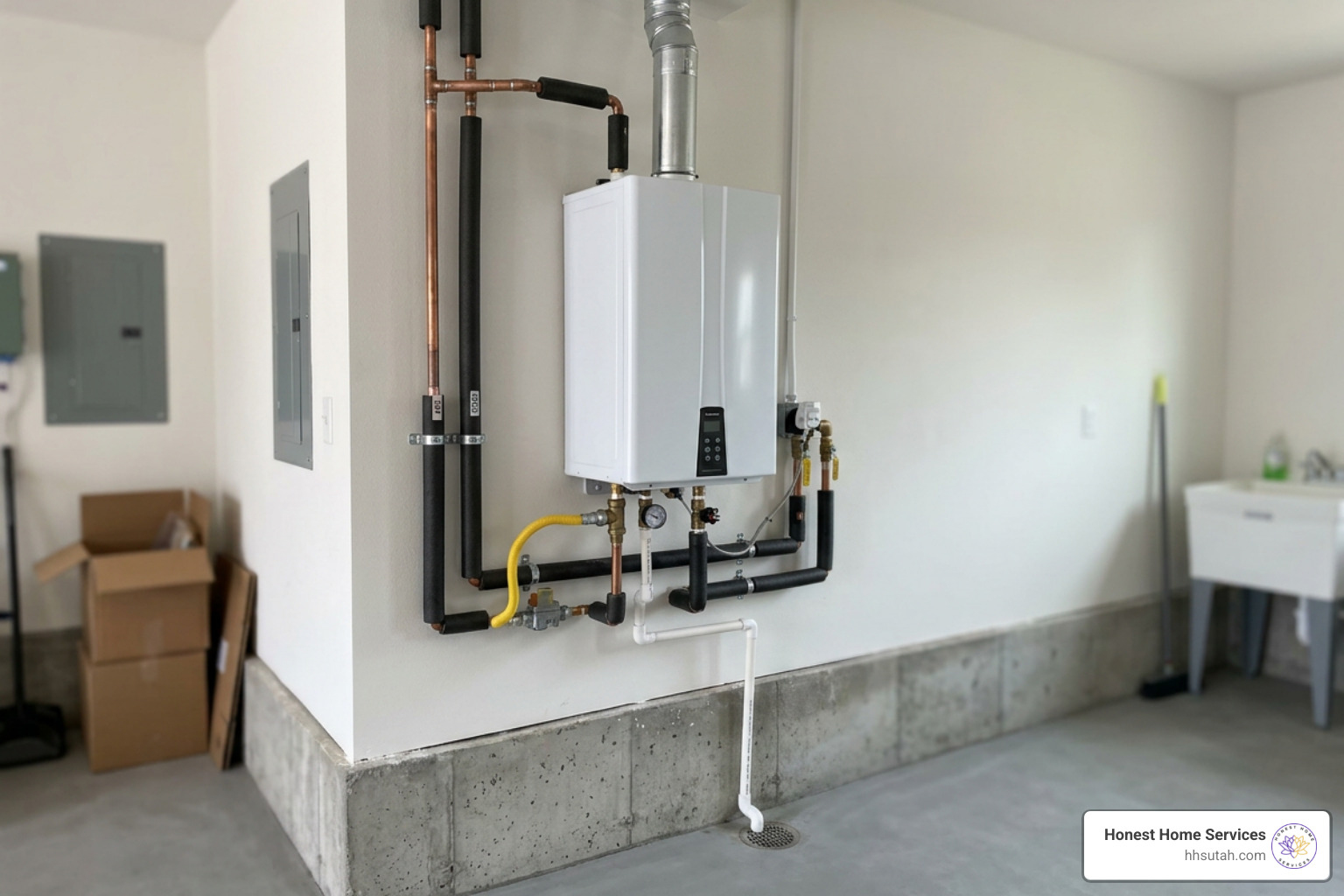
Traditional storage tanks maintain a continuous reservoir of heated water, keeping their mechanical design relatively simple. Tankless units, on the other hand, heat water on demand by passing incoming cold water through high-efficiency heat exchangers instantly.
Because on-demand systems rely on sophisticated microprocessors, electronic water flow sensors, modulate burners, and tight-tolerance copper or stainless steel heat exchangers, diagnosing them requires specialized diagnostic tools. When an error code appears, seeking fast tankless water heater repair ensures a technician certified in modern electronics handles the sensitive circuitry, sensor calibration, or system descaling.
Repair vs. Replace: Making the Right Financial Decision
Homeowners frequently face a critical crossroads when a water heater breaks down: is it wiser to invest in a repair, or should those funds go directly toward installing a modern, high-efficiency replacement?
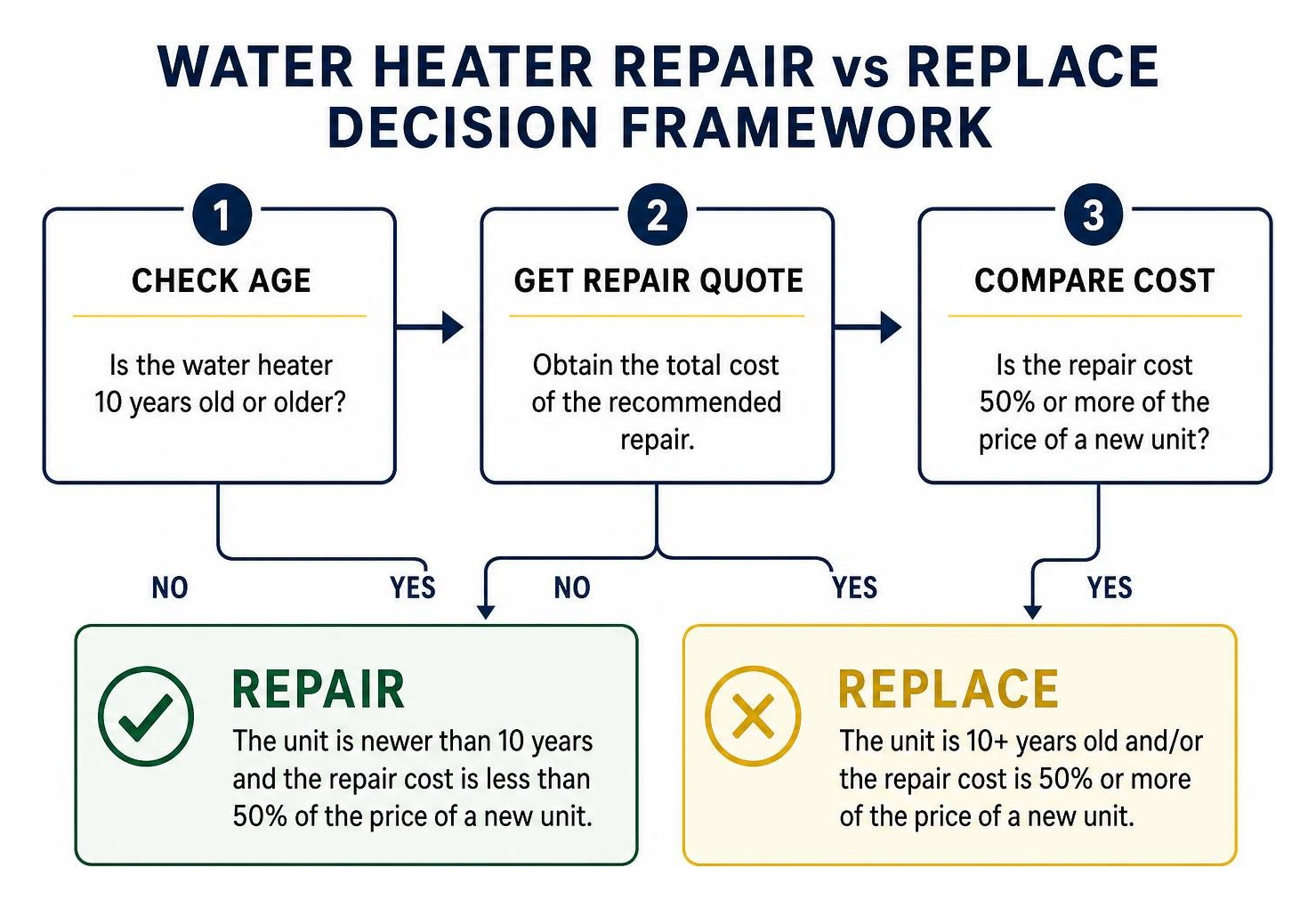
The 10-Year Rule and the 50 Percent Threshold
To make a logical, cost-effective decision, the plumbing industry relies on standard evaluation guidelines based on equipment age and repair quotes:
- The Age Factor (The 10-Year Rule): Conventional storage tank water heaters generally deliver an operational lifespan of 8 to 12 years, while electric tank units average 10 to 15 years. Tankless systems can last 20 years or more with routine maintenance. If a conventional storage unit has surpassed 10 years in service, major components will naturally begin failing in close succession.
- The 50 Percent Rule: If a professional repair quote exceeds 50% of the cost of installing a brand-new unit, replacing the equipment is almost always the smarter financial move.
- Long-Term Reliability: Exploring the practical advantages of water heater replacement becomes especially worthwhile when an older heater requires frequent service calls. Putting money into multiple short-term repairs on an aging system often costs more over two or three years than simply upgrading to a new system covered by a fresh multi-year manufacturer warranty.
Warning Signs That Require Immediate Action
Catching system failures early prevents minor mechanical glitches from escalating into catastrophic property damage:
- Active Water Pooling at the Tank Base: Water leaking directly from the seam or bottom jacket of a storage tank indicates internal tank corrosion. Because the internal glass lining has cracked and the outer steel shell has breached, a leaking tank body cannot be patched and requires immediate replacement.
- Discolored, Rusty, or Metallic-Smelling Water: If hot water runs brown or smells distinctly metallic while cold water remains clear, internal corrosion has taken hold, or the sacrificial anode rod has completely dissolved.
- Popping, Banging, or Rumbling Sounds: Loud popping noises during a heating cycle indicate heavy sediment accumulation at the tank base. Mineral deposits trap water underneath, causing localized boiling and steam bubbles that violently burst against the tank floor.
- Continuous Temperature and Pressure Discharge: A steady drip or heavy discharge from your safety relief pipe signals excessive pressure, overheating, or a failed valve mechanism that demands prompt inspection.
How to Save on Water Heater Repairs and Vet Plumbers
Managing plumbing expenses comes down to preventative care, early detection, and hiring qualified professionals. Here is how you can keep service expenses manageable:
- Stick to Regular Maintenance: Flushing your tank annually clears out destructive sediment deposits before they bake onto heating elements or insulate the tank floor. Following the essential gas water heater maintenance checklist prevents premature burner failures and keeps your system running efficiently.
- Schedule Non-Urgent Work During Standard Hours: If your system is experiencing minor temperature fluctuations but isn’t actively leaking, booking your service during regular weekday hours avoids emergency dispatch premiums.
- Verify Active Warranties: Always check the serial number and manufacturing date on your unit’s data rating plate. If the water heater is within its 6- to 12-year factory warranty window, replacement parts may be covered entirely by the manufacturer.
- Ask the Right Questions Upfront: Before authorizing a technician to begin work, ask:
- Is your diagnostic fee credited toward the repair if I approve the work?
- Can you provide an itemized quote that clearly separates parts from labor?
- What warranty or guarantee do you offer on the installed parts and labor?
- Will this repair genuinely extend the equipment’s operational life, or are we addressing a symptom on an aging unit?
Frequently Asked Questions About Water Heater Repair
What is the typical diagnostic fee for a water heater repair?
A standard diagnostic or service call fee generally covers the technician’s travel time, complete system inspection, electrical testing, and diagnosis of the failure. Most professional plumbing contractors will apply this fee directly toward the total cost of the repair if you choose to move forward with the service during the same visit.
Can a leaking water heater tank body be repaired?
No. If the leak originates from the structural steel tank body itself due to internal corrosion and rust, it cannot be safely patched, welded, or sealed. The high internal pressure and continuous thermal expansion make any structural patch unsafe, meaning the water heater must be completely replaced. However, leaks originating from external plumbing fittings, loose drain valves, or the temperature relief valve can be easily repaired with replacement parts.
How often should a water heater be flushed to prevent costly repairs?
Storage tank water heaters should be completely flushed and drained at least once a year under normal water conditions. In regions with hard water containing high mineral concentrations, flushing the system every six months—or up to several times a year—removes mineral scale, protects heating elements from overheating, and prevents sediment-related tank corrosion.
Conclusion
A malfunctioning water heater does not have to throw your household into chaos. By understanding what drives repair expenses, identifying the key warning signs of equipment wear, and knowing when a simple part fix makes more sense than a complete unit upgrade, you can make confident, cost-effective decisions for your home.
When you need dependable advice, upfront transparent pricing, and guaranteed customer satisfaction across Northern Utah—including Salt Lake City, Davis County, Layton, Murray, Draper, and surrounding communities—our experienced team is ready to help. Schedule your professional evaluation for Salt Lake City water heater repair today to get your hot water running smoothly again.