

Why Choosing the Right Gas Leak Detection Company Could Save Your Life
A gas leak detection company is a professional service that uses specialized equipment and trained technicians to locate, assess, and repair natural gas or propane leaks in homes and businesses. When you suspect a gas leak, these experts provide emergency response, accurate detection using advanced technology, and safe repair procedures that meet regulatory standards.
What to expect when hiring a gas leak detection company:
- Immediate Emergency Response – 24/7 availability for urgent situations
- Professional Detection – Use of electronic sniffers, acoustic devices, or laser technology to pinpoint leaks
- Safety Assessment – Grading of leaks based on hazard level (Grade 1 requires immediate repair, Grade 2 and 3 are scheduled)
- Certified Repairs – Licensed technicians perform code-compliant repairs with upfront pricing
- Post-Repair Verification – Testing to confirm the leak is completely resolved
Warning signs that require immediate professional help:
- Distinctive “rotten egg” smell (added odorant in natural gas)
- Hissing or whistling sounds near gas lines
- Dead or dying vegetation over underground pipes
- Physical symptoms like dizziness, headaches, or nausea
- Pilot lights that frequently blow out
The stakes are high. According to research from multiple utility companies and detection specialists, gas leaks can lead to explosions, fires, carbon monoxide poisoning, and significant property damage if not addressed promptly. Even small leaks that seem minor can decrease your home’s efficiency and cost you money each month, while continuous exposure puts your family’s health at risk.
At Honest Home Services, we’ve been protecting Northern Utah homes and businesses for over 20 years with professional gas leak detection company services that prioritize your safety. Our licensed and insured team responds quickly to emergencies and uses industry-standard equipment to locate and repair leaks correctly the first time.
What to Do Immediately if You Suspect a Gas Leak
The moment you suspect a gas leak, your immediate actions are crucial for your safety and the safety of those around you. We cannot stress enough the importance of acting quickly and calmly. Whether it’s a faint smell or a distinct hissing sound, every second counts. Our priority, and yours, should always be to ensure everyone is out of harm’s way before anything else.

Emergency Action Plan
If you smell natural gas, hear a hissing sound, or notice any other signs of a leak, follow these critical steps:
- DO evacuate immediately: Get everyone, including pets, out of the building. The fastest way out is the best way. Do not delay.
- DO call 911 from a safe distance: Once you are safely outside and away from the building, call 911. Be prepared to provide your address and describe what you observed.
- DO contact your utility company: After calling 911, call your local gas utility company to report the leak. For residents in Northern Utah, this would typically be Dominion Energy. They will dispatch a crew to investigate.
- DON’T use electronics: This includes light switches, phones (until you are safely outside), doorbells, flashlights, or any other electrical appliance. A small spark could ignite the gas.
- DON’T light matches or use lighters: Avoid any open flames.
- DON’T turn appliances on or off: Even turning off an appliance could create a spark.
- DON’T try to fix the leak yourself: Gas leaks are dangerous and require professional expertise. Do not attempt to control the leak or repair a damaged pipe or meter. Your safety is paramount, and our trained professionals are equipped to handle these situations.
- DON’T re-enter the building: Do not go back inside until emergency responders or the utility company have declared it safe.
Even if you are unsure, it’s always better to be safe than sorry. Trust your instincts and follow these steps. Our team at Honest Home Services is always ready to assist after the immediate danger has been addressed by emergency services.
Recognizing the Dangers: Warning Signs and Risks
Gas leaks pose significant risks, ranging from health hazards to catastrophic explosions. Natural gas, primarily methane, is odorless, colorless, and tasteless in its natural state. This is why utility companies add a distinctive odorant, typically mercaptan, which smells like rotten eggs or sulfur, to make leaks easily detectable by smell. However, you should not rely solely on your nose due to a phenomenon called “odor fade,” where the smell can dissipate under certain conditions or if you have a diminished sense of smell.
Propane, another common gas, is heavier than air, meaning it will sink and collect in low-lying areas. This can make it particularly dangerous in basements or enclosed spaces, increasing the risk of explosion. Carbon monoxide, a byproduct of incomplete combustion, is often associated with gas appliance malfunctions. It’s known as the “silent killer” because it’s odorless, colorless, and tasteless, and its symptoms can mimic the flu. All these gases carry inherent risks that demand immediate attention.
Telltale Signs Inside and Outside Your Home
Recognizing the warning signs of a gas leak can literally save lives. Here’s what homeowners and businesses in Northern Utah should be aware of:
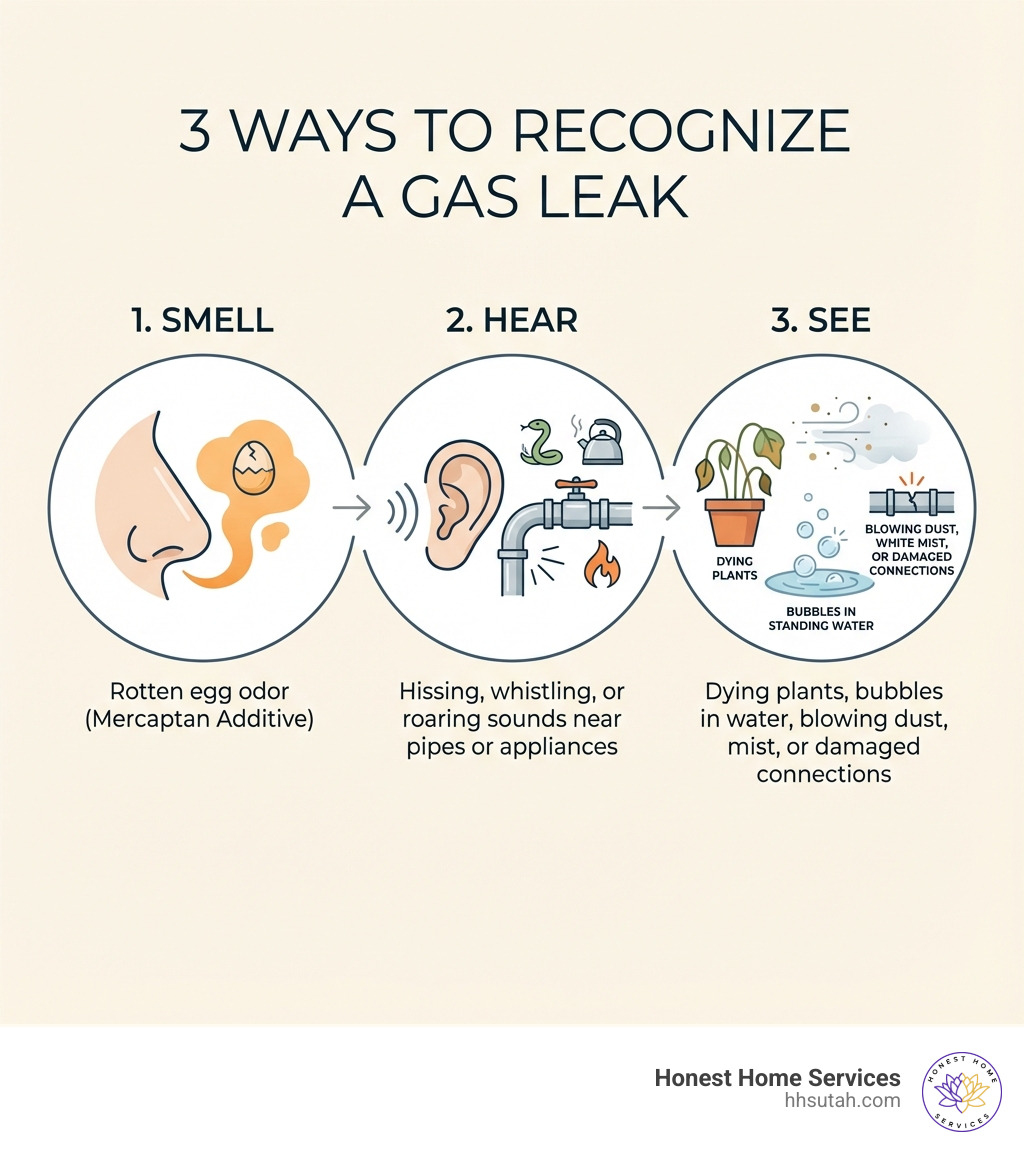
1. The “Rotten Egg” Smell: This is the most common and recognizable sign. The mercaptan additive gives natural gas its distinctive odor. If you smell this, evacuate immediately. However, remember the possibility of odor fade. This phenomenon can occur in new steel pipes, systems with higher gas pressure, or in the presence of rust, moisture, or pipe thread compound. This means that a leak could be present even if the smell is faint or absent.
2. Hissing or Whistling Sounds: If you hear an unusual sound near a gas line or appliance, it could indicate gas escaping under pressure. This sound is often described as a hissing, whistling, or even a roaring noise. Experts note that underground gas leaks generally cannot be located by sound, so this sign is usually for above-ground leaks.
3. Bubbles in Standing Water: If you see bubbles consistently rising through puddles, ponds, or even wet soil, especially near gas lines, it could be gas bubbling up from an underground leak.
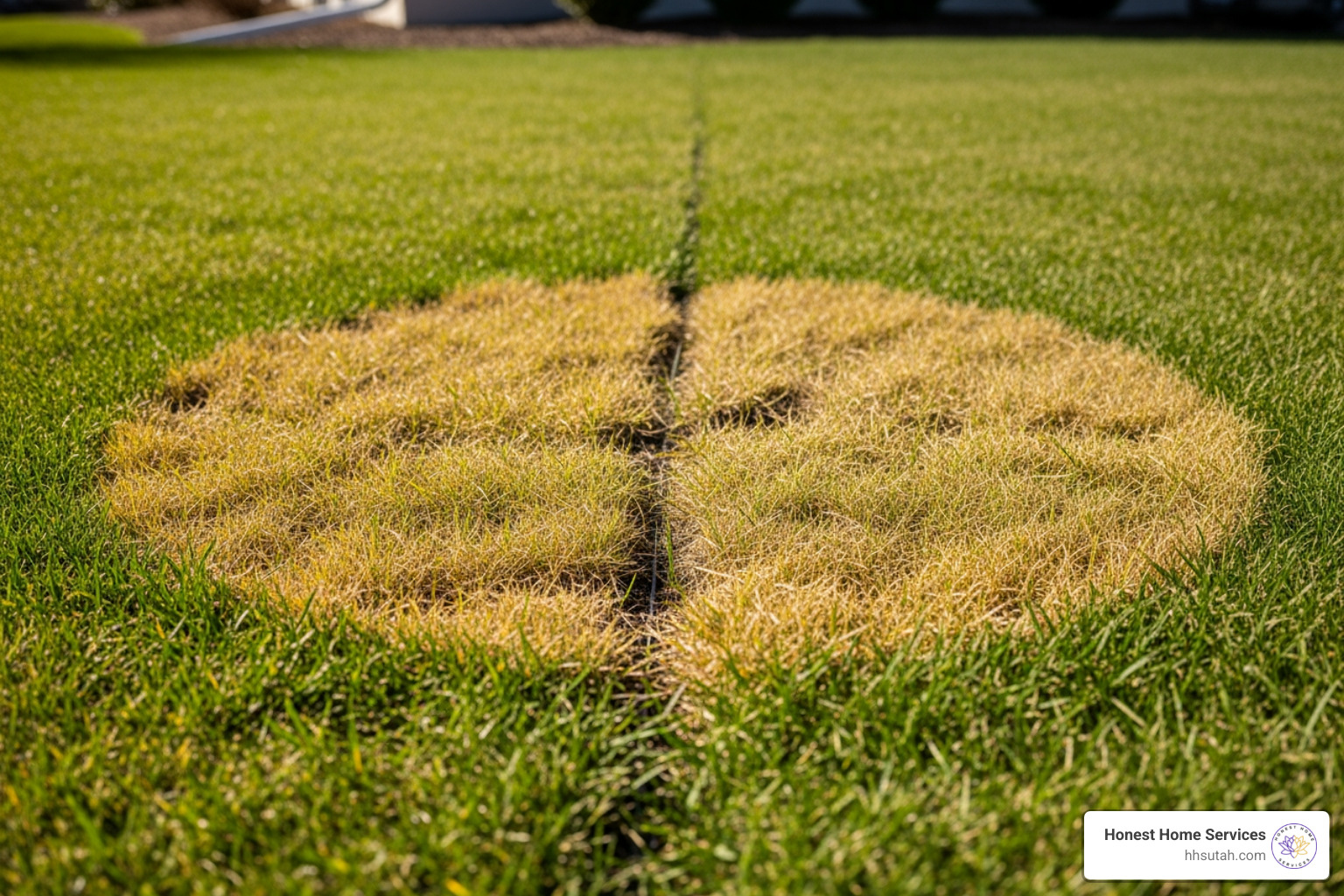
4. Dying Vegetation: Patches of dead or discolored grass, plants, or vegetation, particularly in an otherwise healthy lawn, can be a visual indicator of an underground gas leak. The gas can displace oxygen in the soil, harming plant life. Unhappy houseplants or dead landscaping can also indicate underground leaks.
5. Unexplained Physical Symptoms: Exposure to natural gas, propane, or especially carbon monoxide can cause a range of physical symptoms. These include:
– Dizziness
– Headaches
– Nausea
– Fatigue
– Irritation of the eyes, nose, or throat
– Difficulty breathing
– Changes in mood or confusion
Additionally, a higher gas bill without increased usage could be a sign of a leak. For natural gas specifically, a pilot light that constantly blows out or a change in flame color from blue to orange/yellow could also indicate issues.
To further protect your home, you can also consider installing a natural gas detector, which monitors the air and sends alerts for potential gas leaks. These devices can be crucial, especially given the risks associated with odor fade and carbon monoxide.
How Professionals Use Advanced Technology for Detection
When it comes to pinpointing a gas leak, the days of relying solely on soap and water are long gone. Modern gas leak detection company services, like ours at Honest Home Services, employ a sophisticated array of tools and techniques to ensure accuracy and reliability. These advanced methods allow us to detect even the smallest leaks, whether they’re hidden underground or within the walls of your home in Salt Lake City, Utah.
Comparing Modern Detection Methods
Our research shows that effective gas leak detection relies on a variety of specialized technologies, each suited to different scenarios. Here’s a comparison of some of the most prominent methods used by professionals:
| Technology | How it Works | Best For | Key Advantage |
|---|---|---|---|
| Electronic Gas Analyzers (Sniffers) | Handheld devices that draw in air and use sensors to detect the presence and concentration of gas (e.g., methane). They often provide an audible alarm and a digital readout. | Pinpointing leaks in accessible areas, around appliances, and for general indoor and outdoor surveys. Especially effective for indoor leaks. | Highly portable, quick response, and can detect small leaks not visible or audible. |
| Tunable Diode Laser Absorption Spectroscopy (TDLAS) | Uses a laser beam to detect and measure methane concentration in the air. The laser reflects off a topographic object, and the system analyzes the absorption spectrum to quantify gas levels in ppmxm (parts per million times meter path length). | Remote detection over long distances, aerial surveys (UAVs, aircraft), vehicle-based detection, and stationary monitoring. Used extensively for large-scale surveys. | High sensitivity (down to ppb concentrations), fast detection, and can cover large areas efficiently without direct contact. ABB’s ICOS Analyzer is an example. |
| Acoustic Listening Devices | Specialized microphones (e.g., Model 777A) that amplify the sound of escaping gas. Technicians listen for hissing, whistling, or roaring noises. | Locating above-ground leaks in hard-capped systems where gas can be turned on, or where a leak creates a distinct sound. Commonly used for audible, above-ground leaks. | Effective for audible leaks, especially when gas flow is present. |
| Helium Tracer Gas | When gas meters are off, helium (an inert, non-toxic gas) is injected into the system. A “helium sniffer” then detects where the helium escapes, indicating the leak location. | Locating underground leaks when the primary gas supply is off or difficult to detect directly. This is a preferred method for challenging below-ground leaks. | Highly effective for challenging underground leaks, as helium can penetrate soil and surface at the least point of resistance. |
The Role of AI and Advanced Sensors
The future of gas leak detection is increasingly driven by artificial intelligence (AI) and advanced sensor technology. These innovations are changing how quickly and accurately leaks can be identified, leading to faster repairs and improved safety for communities across Northern Utah.
- AI-Driven Analysis and Continuous Monitoring: Companies like Aclima are leveraging AI and science-driven approaches for next-generation mobile leak detection. Their solutions provide continuous, block-level measurements and can track the full lifecycle of a leak. This means not just finding a leak, but understanding its emergence, duration, and confirming its repair. This continuous monitoring, combined with advanced modeling, helps prioritize repairs more effectively.
- Methane vs. Ethane Measurement for False Positive Elimination: One of the most significant advancements is the ability to differentiate between industrial gas and naturally occurring methane. ABB’s industry-leading ICOS Analyzer, for instance, simultaneously measures both methane and ethane. Since natural gas contains both, detecting both gases helps eliminate false positives from biogenic methane sources (like swamps or landfills) and accurately attributes the leak source. Aclima also uses chemical fingerprinting to eliminate interferences from other methane sources, ensuring that detected leaks are indeed from pipelines.
- Improved Sensitivity and Speed: Modern sensors boast incredible sensitivity, detecting gases at single parts per billion (ppb) concentrations, as seen with ABB’s technology. This allows for detection at distances up to 600 feet, even while driving at speeds up to 55 mph. This speed and range mean that large areas can be surveyed quickly and efficiently.
- Integrated Data and Smart Safety Programs: The integration of advanced sensors with cloud-based data analytics, such as ABB Ability™ Natural Gas Leak Detection Service, provides immediate, cybersecure data to customers. Industrial Scientific emphasizes a “smarter safety program” approach, connecting gas detectors to cloud-based software for real-time site analytics and worker status updates. This kind of platform, like their iNet® Program, offers comprehensive maintenance and proactive risk management. You can explore more about these smart safety programs at Industrial Scientific’s Gas Detectors page.
These technological advancements mean that when we at Honest Home Services respond to a suspected leak, we’re not just looking; we’re deploying precision tools that offer unparalleled insight into the nature and location of the problem.
Choosing a Reliable Gas Leak Detection Company
When your safety, property, and peace of mind are on the line, selecting the right gas leak detection company is a decision that shouldn’t be taken lightly. It’s about more than just finding a leak; it’s about entrusting your home or business to experts who adhere to the highest standards of safety and professionalism. In Northern Utah, we understand that you need a company you can truly count on.
What to Look for in a Gas Leak Detection Company
Here are the key factors we believe you should consider when choosing a gas leak detection and repair service:
- Certified and Experienced Technicians: Look for companies that employ nationally trained and certified technicians. Our team at Honest Home Services consists of local, expert technicians who are licensed and continuously trained to meet state and local requirements, ensuring they are up-to-date with the latest detection and repair methods.
- Years in Business: Longevity in the industry often signifies reliability and a proven track record. Honest Home Services has been serving Northern Utah for over 20 years, building a reputation for honest and reliable service.
- Emergency Response Time: Gas leaks are emergencies, and you need a company that offers 24/7 responsiveness. We at Honest Home Services pride ourselves on prompt emergency support to the Salt Lake City and surrounding areas. The faster a professional can respond, the quicker the potential danger can be mitigated.
- Upfront Pricing and Service Guarantees: Transparency in pricing is crucial. We believe in fair pricing and providing upfront costs before any work begins. Additionally, a company should stand by its work. At Honest Home Services, we offer guaranteed customer satisfaction, meaning we’re not happy until you are. This commitment to quality and customer service is a hallmark of a reliable provider.
- Regulatory Compliance: Ensure the company’s procedures meet or exceed state and federal regulatory requirements. Reputable companies adhere to these standards and the Gas Piping Technology Committee (GPTC) standards for leak classification. This ensures that repairs are not just effective, but also legally compliant and safe.
- Comprehensive Services: A good company should offer a full range of services from detection to repair. Look for expertise in both above-ground and below-ground leak detection, utilizing various tools like electronic sniffers, acoustic devices, and even helium tracer gas for tough underground leaks.
The Professional Repair Process from a Gas Leak Detection Company
Once a gas leak detection company is on-site, a systematic process unfolds to ensure the leak is safely and effectively addressed. Here’s what you can expect:
- Leak Investigation: Our technicians will begin by thoroughly investigating the suspected leak area, both inside and outside your property. This involves using advanced detection equipment to pinpoint the exact source of the leak.
- Leak Grading: Following the investigation, the leak will be graded based on its potential hazard to persons or property. Following industry best practices, gas leaks are typically categorized into three grades:
- Grade 1 Leaks: These represent an existing or probable hazard requiring immediate repair. This means there’s an immediate threat of explosion, fire, or serious injury. These are addressed with the highest urgency.
- Grade 2 Leaks: These are non-hazardous at the time of detection but are scheduled for repair. They don’t pose an immediate threat but could escalate if left unaddressed.
- Grade 3 Leaks: These are non-hazardous and are reasonably expected to remain so, but they are still scheduled for repair. While less critical, they still require attention to prevent future issues and gas loss.
- Hazard Assessment: Beyond grading, a comprehensive hazard assessment is performed to understand any immediate risks to the structure or occupants. This guides the repair strategy and ensures all safety precautions are in place.
- Quoting Repairs: Before any repair work begins, you will receive clear, upfront pricing for the necessary services. This ensures transparency and allows you to understand the costs involved without surprises.
- Repair Execution: Our certified technicians will proceed with the repair using appropriate tools and techniques. This might involve replacing a corroded pipe section, repairing a faulty connection, or addressing damage from external factors. We use non-invasive methods whenever possible to minimize disruption to your property.
- Post-Repair Safety Checks: After the repair is completed, rigorous safety checks are performed to ensure the leak is fully resolved and the gas system is operating safely. This is a critical step to verify the integrity of the repair and provide you with peace of mind.
Our commitment at Honest Home Services is to ensure that every step of this process is handled with the utmost professionalism and care, from the initial detection to the final safety verification.
Frequently Asked Questions about Gas Leak Detection
We often get questions from homeowners and businesses in Northern Utah about gas leaks. Here are some of the most common ones we encounter:
Can I perform a gas leak test myself?
While you can certainly check for obvious signs like the “rotten egg” smell or hissing sounds, precisely locating and safely repairing a gas leak requires professional tools and expertise. Professionals point out that small leaks can be hard to see or smell, even with the added odorant. Attempting to fix a gas line yourself is not only extremely dangerous due to the risk of explosion, fire, or carbon monoxide poisoning, but it is also often illegal and can void your insurance. Our recommendation is always to call a qualified professional immediately if you suspect a leak.
What causes gas leaks?
Gas leaks can stem from a variety of sources, and understanding these can help in prevention:
- Aging or Corroded Pipes: Over time, gas lines, especially older ones, can corrode or degrade, leading to cracks and leaks. Continuous use and environmental factors contribute to this.
- Improper Installation: Faulty installation of gas lines or appliances can create weak points where leaks can develop.
- Damage from Excavation or Landscaping: Digging without knowing the location of underground utility lines is a common cause of gas line damage. Always call 811 before you dig to have lines marked.
- Faulty Appliance Connectors: Worn-out or improperly installed connectors to gas appliances (like stoves, water heaters, and furnaces) can be a source of leaks.
- Poor Ventilation: While not a direct cause of a leak, poor ventilation can exacerbate the dangers of a leak, especially with carbon monoxide build-up.
- Missed Annual Maintenance: Regular maintenance on HVAC systems and gas appliances can help identify potential issues before they become leaks. This preventative measure is an important part of home safety.
How often should I have my gas lines inspected?
It’s a good practice to have your gas lines inspected by a professional every one to two years. This is especially important if your home has older piping, if you’re installing new gas appliances, or if you’ve recently had any construction or landscaping work done near your gas lines. Even without obvious signs, small leaks can develop and go unnoticed, potentially increasing your gas bill and posing long-term health risks. Regular inspections can identify these issues early, ensuring the safety and efficiency of your gas system.
Conclusion: Your Partner in Home Safety
Your safety is our top priority. We’ve explored the critical importance of understanding and responding to gas leaks, from recognizing the subtle warning signs to the advanced technologies professionals use for detection and repair. Choosing a reliable gas leak detection company that prioritizes regulatory compliance, experience, and prompt emergency response is not just a convenience—it’s a necessity.
At Honest Home Services, we are committed to being that trusted partner for homeowners and businesses across Northern Utah, including Salt Lake City, Salt Lake County, Davis County, Clearfield, Layton, Kaysville, Farmington, Bountiful, West Valley, Murray, West Jordan, South Jordan, Bluffdale, Herriman, Draper, Park City, Tooele, Lehi, and Saratoga Springs. We offer honest, reliable, and affordable plumbing, heating, and AC services, backed by 24/7 emergency support and a guarantee of customer satisfaction. Our local, expert technicians are ready to provide the peace of mind you deserve.
Don’t let a suspected gas leak put your home or business at risk. If you have any concerns or require expert assistance, we are here to help. Schedule your professional leak detection service today and let us ensure your safety with our proven expertise.