
Why Your Home’s Air Leaks Are Costing You Money and Comfort
To detect air leaks in house, use these proven methods:
- Visual Inspection – Check for gaps around windows, doors, baseboards, outlets, and where utilities enter your home
- Hand Test – Hold a damp hand near suspected areas to feel for moving air
- Smoke Test – Use an incense stick or smoke pen near potential leaks; watch for disturbed smoke
- Building Pressurization Test – Turn on exhaust fans and use smoke to find where air is being pulled in
- Professional Blower Door Test – Have a certified technician measure your home’s total air leakage and pinpoint problem areas
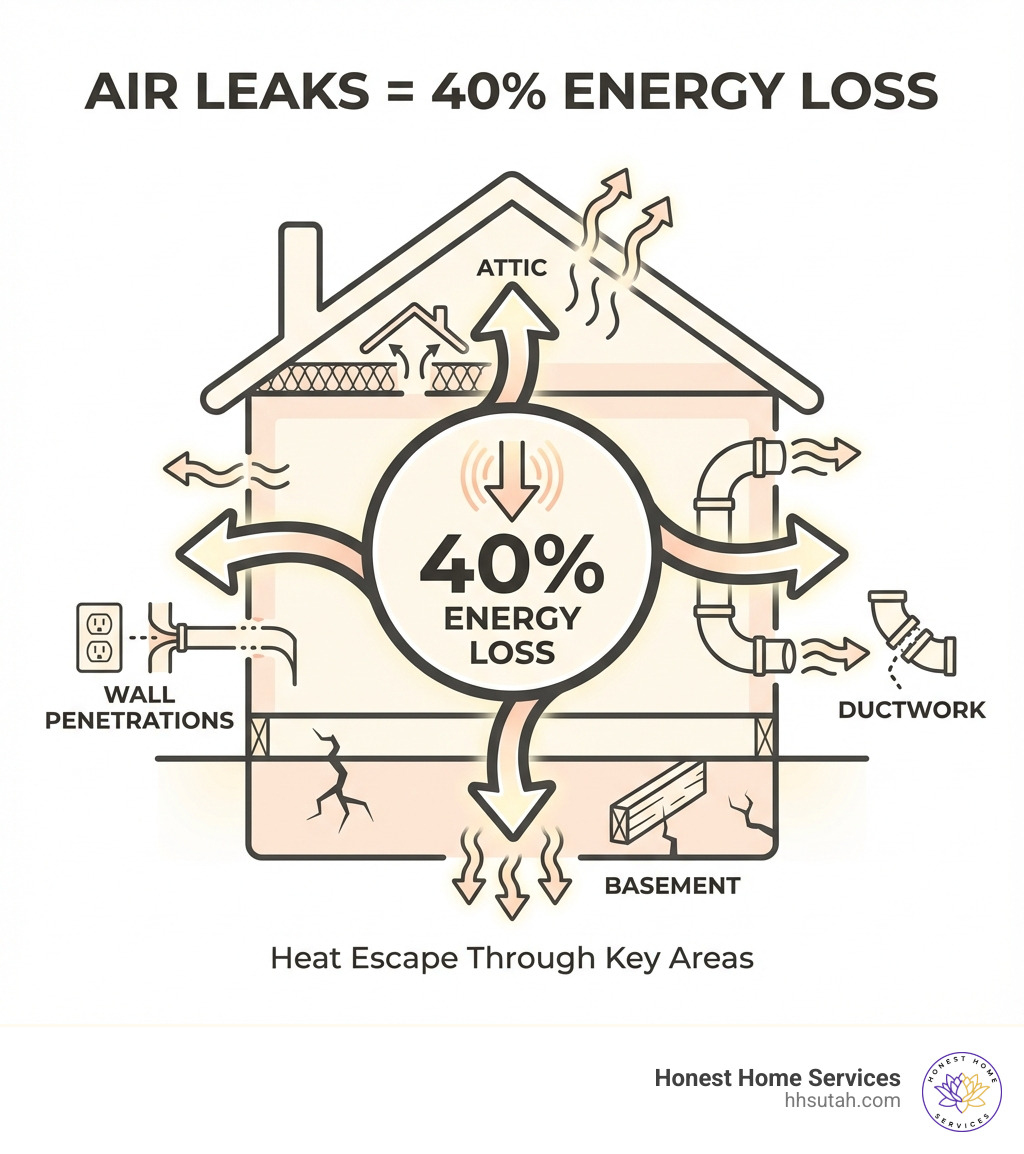
Air leaks are silent budget killers, responsible for up to 40% of energy loss in homes. They force your heating and cooling system to work harder, resulting in higher utility bills, uncomfortable hot/cold spots, and more dust in your living spaces.
While many homeowners blame drafty windows, research shows only 20% of air leaks come from doors and windows. The real culprits are often hidden in your attic, basement, and around ductwork.
The good news is that simple DIY tests can reveal where conditioned air is escaping. Sealing these gaps can save an average of 15% on heating and cooling costs, or about 11% of your total energy bill.
At Honest Home Services, we’ve spent over 20 years helping Northern Utah homeowners detect air leaks in house after house, improving comfort and cutting energy waste. Our team combines professional-grade diagnostics with transparent, budget-friendly solutions that deliver real results.
Why Air Leaks Are a Homeowner’s Nightmare
Air leaks are like leaving a window open during a Northern Utah winter. These invisible gaps in your home’s “envelope” let conditioned air escape and unconditioned air sneak in, creating numerous problems.
Air leaks are an energy-efficiency nightmare, forcing your HVAC system to work overtime. This leads to significant energy waste, adding 5% to 30% to your monthly energy bill. The extra strain also increases wear and tear on your HVAC system, shortening its lifespan and leading to costly repairs.
Beyond the financial drain, air leaks ruin your home’s comfort by creating hot and cold spots. As warm air rises and escapes through attic leaks (the “chimney effect”), cold outside air is pulled in through the basement or around windows. This makes your home drafty and uncomfortable.
Furthermore, air leaks compromise your Indoor Air Quality. Outside air brings in dust, pollen, and pollutants, which can worsen allergies and create musty odors. In fact, indoor air can be two to five times more polluted than outdoor air. Moisture infiltration through leaks can also lead to mold growth, posing health risks and structural damage.
In short, air leaks are a costly and unhealthy problem that undermines your home’s efficiency, comfort, and structural integrity.
Telltale Signs: How to Know if Your Home Has Air Leaks
Before learning how to detect air leaks in house, it’s important to recognize the signs that your home is leaky. Paying attention to these clues can help you find a problem early.
- Unexplained high utility bills: If your energy costs in Northern Utah seem too high or have suddenly increased, air leakage is a likely culprit.
- Uneven temperatures between rooms: If your upstairs is hot while the basement is cold, it suggests conditioned air isn’t staying put, creating uncomfortable hot and cold spots.
- Excessive dust accumulation: Air leaks can pull dusty air from attics and crawl spaces, making it feel like you’re constantly battling dust bunnies.
- Worsening indoor allergies: Worsening respiratory issues can be caused by outdoor allergens being pulled into your home through unsealed gaps.
- Musty odors: These can signal moisture infiltration and potential mold growth due to air leaks.
- Visible cracks or gaps: Check around windows, doors, or where siding meets your foundation. While only part of the problem, they’re easy to spot.
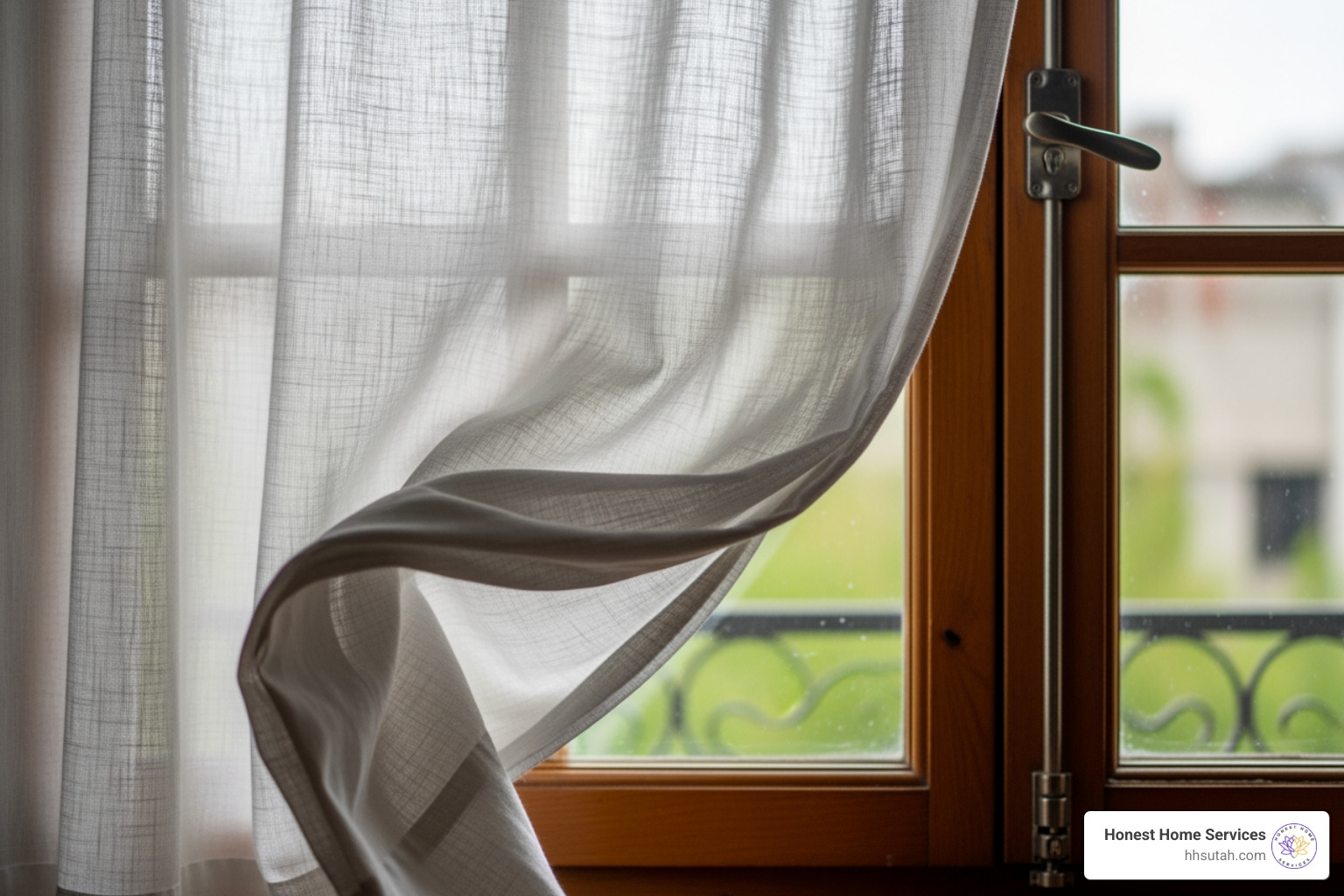
- Feeling drafts: On a windy day, check for subtle breezes near windows, doors, and outlets. Even small openings can contribute to significant energy loss.
If any of these signs sound familiar, it’s time to start investigating.
How to Detect Air Leaks in Your House: From DIY to Pro Tools
Now that you know the signs, you can start finding those pesky leaks. You can begin with simple, budget-friendly DIY methods before considering a professional assessment for a more comprehensive picture.
Simple DIY Methods to Detect Air Leaks in Your House
You can start hunting for air leaks with simple items from around the house. First, turn off fans and the HVAC system, and close all windows and doors to create a still environment.
-
Visual Inspection: Walk through your home and look for visible cracks or gaps. Pay close attention to the perimeters of windows and doors; where walls meet ceilings and floors; around outlets and light fixtures; and where pipes, wires, and vents penetrate walls. In the attic and basement, check around hatches, plumbing stacks, and where utilities enter.
-
The Hand Test: On a cold day, dampen your hand and move it around the edges of windows, doors, and outlets. If you feel a cool breeze, you’ve found a leak.
-
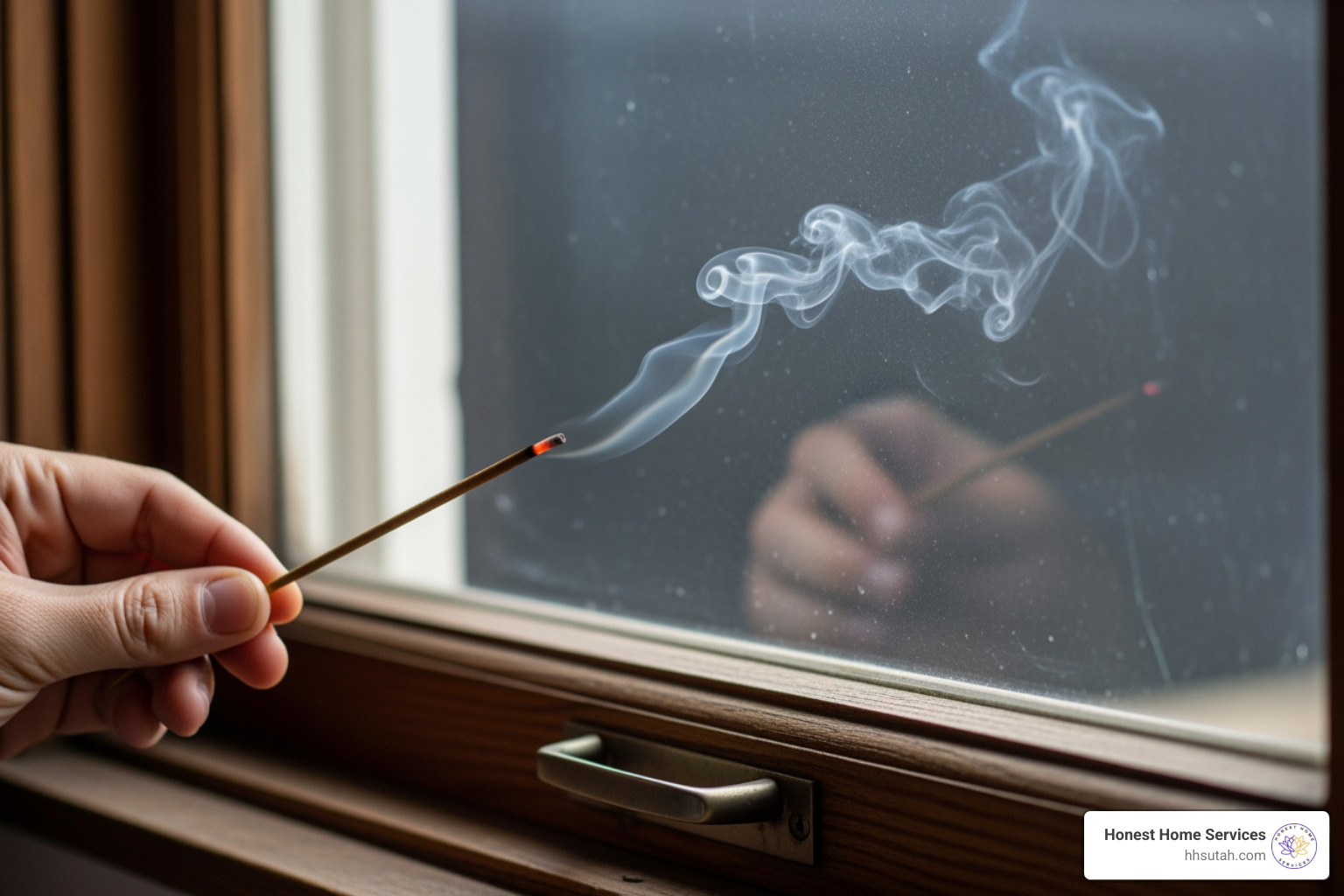
The Smoke Test: This method makes air movement visible. Light an incense stick or use a smoke pen and hold it near suspected leaks. If the smoke wavers, you’ve found a leak. Avoid using an open flame like a candle due to fire risk.
-
The Dollar Bill Test: Close a window or door on a dollar bill. If you can easily pull it out, your weatherstripping isn’t tight enough.
-
DIY Building Pressurization Test: For a more advanced DIY test, depressurize your home. Close all windows and doors, then turn on all kitchen and bathroom exhaust fans. This makes it easier to detect air leaks in house by using a smoke stick or damp hand to find where air is being pulled in.
These methods are a great starting point for any homeowner in Northern Utah looking to improve their home’s efficiency.
Advanced and Professional Detection Methods
While DIY methods find obvious leaks, hidden gaps require a professional approach.
-
Blower Door Test: This is the gold standard. A calibrated fan is placed in a doorway to depressurize the home, which allows a technician to measure the home’s total leakiness. While the fan runs, the technician uses tools like smoke pencils or infrared cameras to pinpoint every leak.
-
Infrared Camera (Thermal Imaging): An infrared camera detects temperature differences on surfaces. Cold spots in winter (or hot spots in summer) can indicate where outside air is infiltrating, providing a visual map of leaks invisible to the naked eye.
-
Thermal Leak Detector: These handheld devices are a more accessible version of thermal cameras for homeowners. They use sensors to detect temperature differences, providing a simpler indication of potential leaks.
-
Professional Energy Audit: This is the most thorough assessment. Certified contractors use advanced tools to detect air leaks in house and evaluate your home’s overall energy performance, providing custom recommendations for the most impactful improvements.
For more information, you can explore the Department of Energy’s guide on Detecting Air Leaks. Our expert team at Honest Home Services regularly performs these comprehensive assessments to find every hidden leak.
The Usual Suspects: Common Air Leak Locations
When we talk about air leaks, most people immediately picture drafty windows and doors. While these are certainly culprits, they’re often not the biggest contributors to energy loss. Research reveals that only about 20% of home air leaks come from windows and doors. The real energy hogs are often found in less obvious places.
Here are the most common places we find air leaks in homes across Northern Utah:
- Attic Floor and Attic Hatch: Believe it or not, the attic floor is often the leakiest surface in a home. Warm air naturally rises, creating a “chimney effect” that pulls air up and out through any gaps in the attic floor. This includes gaps around plumbing vents, electrical wiring holes, furnace flues, and where walls meet the attic floor. An unsealed attic hatch can also be a significant source of leakage.
- Basement Rim Joists: This is a critical area where your home’s foundation meets its wood framing. Cracks and gaps in the rim joist area can allow a significant amount of cold air to infiltrate the basement, especially in older homes.
- Electrical Outlets and Switches: Small gaps around electrical boxes and switch plates on exterior walls can add up, creating noticeable drafts.
- Plumbing Penetrations: Anywhere pipes enter or exit your home (e.g., under sinks, behind toilets, where water lines enter the house) can be a source of leaks. Similarly, plumbing vents that pass through the roof often have unsealed gaps.
- Recessed Lighting: These fixtures are notorious for creating pathways for air to move directly from your conditioned living space into your unconditioned attic.
- Fireplace Dampers: If your fireplace damper doesn’t seal tightly when closed, it’s essentially an open window to the outside, allowing a constant stream of air to escape or enter.
- Leaky Ductwork: Your home’s duct system, which distributes conditioned air, can be a major source of leakage. Leaky ductwork can be responsible for up to 30% of air loss in your HVAC system! This means you’re paying to heat or cool your attic or crawl space instead of your living areas. We often find leaks at joints, seams, and where ducts connect to vents.
- Window and Door Frames: While not the biggest overall culprits, gaps around the frames of windows and doors, as well as deteriorated weatherstripping, still contribute to drafts and energy loss.
- Other Penetrations: Any opening in your home’s exterior that allows utilities, cable lines, or exhaust vents to pass through can be a source of air leakage. This includes areas behind kneewalls, soffits, and where siding meets the foundation.
Understanding these common leak locations is the first step in effectively sealing your home and making it more comfortable and energy-efficient.
Sealing the Gaps and Improving Your HVAC System
Finding air leaks is a huge accomplishment, but the real magic happens when you seal them. Addressing these gaps can significantly improve your home’s comfort, reduce energy bills, and extend the life of your HVAC system.
DIY Sealing Solutions
For many leaks found with DIY methods, you can apply the fix yourself. Here are some essential materials:
- Caulking: Best for stationary gaps and cracks (1/4 inch or less) around window frames, door frames, and where pipes penetrate walls. Use silicone for wet areas and acrylic latex for paintable interior surfaces.
- Weatherstripping: Ideal for moving parts like windows and doors. It creates a seal when closed. Common types include foam, rubber, and vinyl.
- Spray Foam Sealant: Effective for larger gaps (1/4 inch to 3 inches) around pipes and in foundations. Use low-expansion foam around window and door frames to prevent bowing.
- Outlet Gaskets: Inexpensive foam gaskets that fit behind outlet and switch plates on exterior walls to block small drafts.
- Duct Sealant: For leaky ductwork, use special foil-backed tape or mastic sealant on accessible joints and seams. Do not use regular duct tape.
Always prioritize safety when doing DIY sealing, especially around electrical wiring and when using spray foam.
The Bigger Picture: Insulation, Ventilation, and When to Call a Pro
DIY sealing is a great start, but it’s just one piece of the puzzle. For a truly efficient and healthy home, consider the whole system.
Insulation is like a sweater, blocking heat flow, while air sealing is like a windbreaker, stopping air movement. You need both to be effective. Dirty spots on your insulation are often a sign of air leaks.
A tightly sealed home also needs balanced ventilation to ensure a healthy exchange of fresh air and to prevent trapping pollutants and moisture. Without it, you risk poor indoor air quality and even dangerous gas accumulations from combustion appliances (furnaces, water heaters).
When should you hire a professional?
- Complex or Hidden Leaks: For leaks in hard-to-reach areas like behind walls, in attics, or within ductwork.
- Comprehensive Assessment: For a complete picture of your home’s energy performance with a blower door test and infrared imaging.
- Safety Concerns: When sealing around combustion appliances to prevent carbon monoxide hazards.
- Whole-Home Solutions: For a holistic plan that integrates air sealing, insulation, and ventilation to maximize comfort and savings.
Our team at Honest Home Services can help you determine the best approach for your Northern Utah home, from DIY guidance to comprehensive professional services.
Frequently Asked Questions About Air Leak Detection
How much money can I save by sealing air leaks?
Sealing air leaks offers significant savings. Homeowners can save an average of 15% on heating and cooling costs (about 11% of total energy costs), as drafts can add 5-30% to your bill. Air sealing also reduces strain on your HVAC system, extending its lifespan and delaying costly repairs or replacement. It’s a smart investment in both comfort and savings.
What’s the most difficult place to detect air leaks in a house?
While windows and doors are visible, the most difficult and significant air leaks are usually hidden. These include:
- Attic Floors Under Insulation: Leaks are often covered by insulation, making them hard to spot without professional tools.
- Behind Walls: Gaps around wiring, plumbing, or framing are impossible to see without opening walls.
- Ductwork in Crawlspaces or Attics: Leaks in ducts located in unconditioned spaces are hard to access and confirm.
- Chimney Chaseways: The open space around a chimney can be a major pathway for air movement.
- Basement Rim Joists: The numerous small gaps where the foundation meets the wood framing can be extensive.
These hidden leaks are why a professional assessment with a blower door test is so valuable for pinpointing culprits that impact your home’s energy efficiency.
Can sealing air leaks make my indoor air quality worse?
This is an important concern. If done improperly, sealing a home too tightly could trap pollutants. However, when done correctly as part of a whole-home approach, air sealing improves indoor air quality.
Here’s why:
- Reduced Pollutant Entry: Proper air sealing blocks the entry of dust, pollen, and outdoor allergens.
- Controlled Air Exchange: A well-sealed home allows you to manage ventilation with mechanical systems (like exhaust fans or an Air Filtration System) to bring in fresh, filtered air, rather than relying on random, dirty leaks.
- Moisture Control: Sealing leaks gives you better control over humidity, which is crucial for preventing mold.
The key is a balanced approach. Our professionals at Honest Home Services ensure that any air sealing improvements also contribute to a healthy and comfortable indoor environment by considering your home’s ventilation needs.
Conclusion
Detecting and sealing air leaks is one of the most impactful steps you can take to transform your home. It’s about more than just saving a few bucks; it’s about creating a living space that is consistently comfortable, healthier, and more energy-efficient. By understanding what air leaks are, recognizing their signs, and knowing how to detect air leaks in house—whether through simple DIY checks or advanced professional assessments—you empower yourself to take control of your home’s performance.
The benefits are clear: significant energy savings, improved indoor comfort with fewer drafts and hot/cold spots, a healthier living environment due to reduced entry of dust and allergens, and a longer lifespan for your crucial HVAC system. This proactive approach to home maintenance is an investment that pays dividends for years to come.
At Honest Home Services, we’re committed to helping our neighbors in Northern Utah achieve these benefits. Our local, expert technicians are equipped with the knowledge and tools to accurately diagnose your home’s unique air leakage profile and recommend the most effective, honest, and reliable solutions.
For a comprehensive and professional assessment of your home’s air leaks in Northern Utah, contact our expert team for leak detection services. We’re here to help you breathe easier and live more comfortably.