
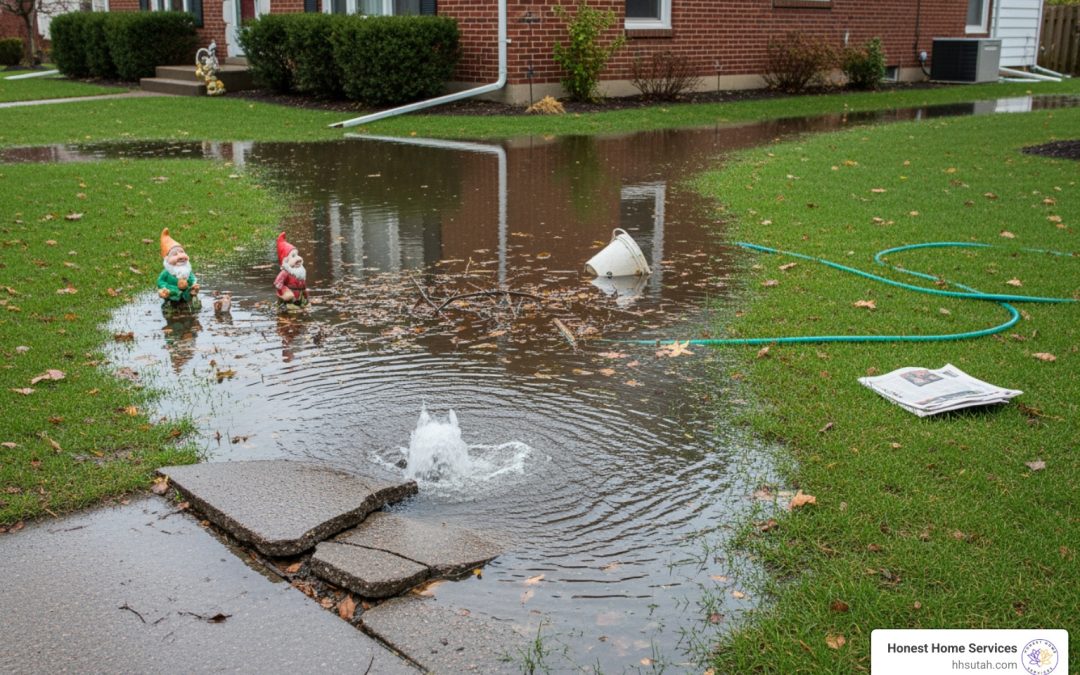
When Every Second Counts: Understanding Main Water Line Emergencies
A main water line break can flood your property, damage your foundation, and disrupt your entire household in a matter of hours. If you’re facing this emergency right now, here’s what you need to know immediately:
Emergency Response for a Main Water Line Break:
- Shut off your main water valve (usually near your water meter or where the line enters your home)
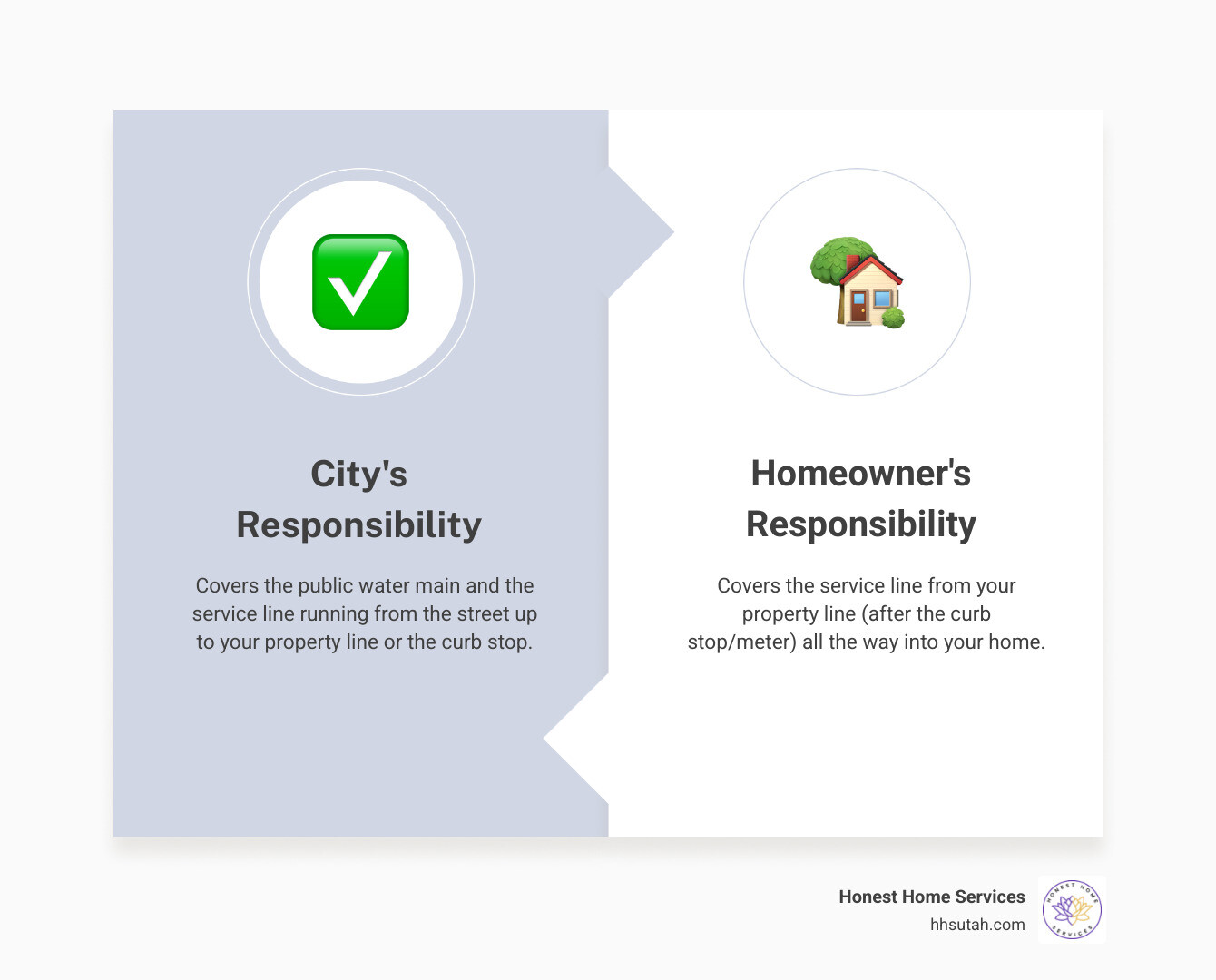
- Check the location: Breaks between the street and your meter are typically the city’s responsibility; breaks from the meter to your house are yours
- Call your city’s water department if the break is on their side, or contact a licensed emergency plumber if it’s on your property
- Document everything with photos and videos for insurance purposes
- Avoid the affected area to prevent injury from sinkholes or contaminated water
Average repair time: 4-12 hours | Average cost: $1,000-$4,000 for homeowner-side repairs
More than 240,000 water mains break across the United States each year. While the dramatic footage of water shooting 30 feet into the air makes the news, most homeowners face a more insidious threat: slow leaks that cause foundation damage, flooding, and skyrocketing water bills before they’re even detected. The difference between minor damage and a financial catastrophe often comes down to how quickly you recognize the warning signs and respond.
At Honest Home Services, we’ve responded to hundreds of main water line break emergencies across Northern Utah over our 20+ years of service, and we know that homeowners who understand their water system and act decisively minimize both damage and repair costs. Whether it’s 2 PM or 2 AM, our licensed technicians are ready to diagnose the problem, determine responsibility, and execute the right repair solution—all with transparent pricing and our signature 5-star service guarantee.
Understanding Your Water System and Why Breaks Happen
Before we dive into the nitty-gritty of main water line breaks, let’s clarify what we’re talking about. Your home’s water supply is a complex system, and understanding its components is key to knowing who is responsible if something goes wrong.
At its core, the main water line is the primary pipeline that delivers fresh water from the municipal supply directly into your home. This vital conduit typically runs underground, connecting your property to the larger city water distribution network.
Within this system, we differentiate between two key parts:
- Water Main: This is the larger, city-installed pipe that carries water for miles beneath our streets, serving entire neighborhoods. These are the pipes that move water around Salt Lake City and other Northern Utah communities. About water main breaks
- Water Service Line: This is the smaller, individual line that branches off the water main and connects directly to your property’s plumbing system. It runs from the city’s water main, across your property line, and into your home. The main water line connects your home to the city water supply
The materials used for these pipes vary, and their age plays a significant role in their susceptibility to damage. Many older homes in Salt Lake City and surrounding areas might still have cast iron pipes, which are known to be brittle and prone to cracking, especially when exposed to temperature fluctuations. Modern installations often use more durable materials like ductile iron or plastic (such as PEX), which are less likely to fail. As pipes age, they naturally weaken, making them more vulnerable to the various stresses they endure underground. Old Plumbing Pipes
Common Causes of Water Main Breaks
While often out of sight, underground water pipes are constantly battling a range of environmental factors and stressors that can lead to a main water line break. Here are some of the most common culprits:
- Ground Settling and Movement: Our ground in Northern Utah can shift due to various reasons, from natural seismic activity to construction vibrations. Over time, this movement can stress buried pipes, causing them to crack or separate at the joints.
- Temperature Changes: Extreme cold and fluctuating temperatures are significant contributors to water main failures. When water inside pipes gets cold, it can make them more brittle. Moreover, the ground above pipes freezes and thaws, increasing stress on the pipes below. This ground shifting can cause older, less flexible pipes to break.
- Corrosive Soils: Not all soil is created equal. Some soils contain corrosive elements that can eat away at metal pipes over time. This is particularly true for older iron pipes that haven’t been properly protected. The corrosion weakens the pipe walls until they eventually give way, often at fittings or joints. Ductile Iron Pipe Research Association (DIPRA) Some soils are corrosive and can eat away at pipes over time. This is especially common in iron and other metal pipes. Eventually the corrosion causes the pipe to break. It happens most often at pipe fittings or in pipes that haven’t been properly protected from corrosion. TheDuctile Iron Pipe Resea…
- High Water Pressure: While necessary for effective water delivery, consistently high water pressure or sudden surges can put immense strain on pipes, particularly those already weakened by age or corrosion.
- Water Hammer: This phenomenon occurs when water flow is abruptly stopped or changed, such as when a faucet is suddenly shut off or a fire hydrant is rapidly operated. The sudden change in momentum creates a pressure wave—a “hammer” effect—that can cause pipes to burst.
- Excavation Damage: Accidents during construction or landscaping projects are unfortunately common. Unintentional strikes from digging equipment can easily rupture buried water lines, leading to immediate and often dramatic breaks.
7 Telltale Signs of a Main Water Line Break
A main water line break doesn’t always announce itself with a geyser in your front yard. Often, the signs are subtle at first, slowly escalating into a major problem. Learning to recognize these early indicators can save you thousands in repairs and prevent extensive damage to your home and property.
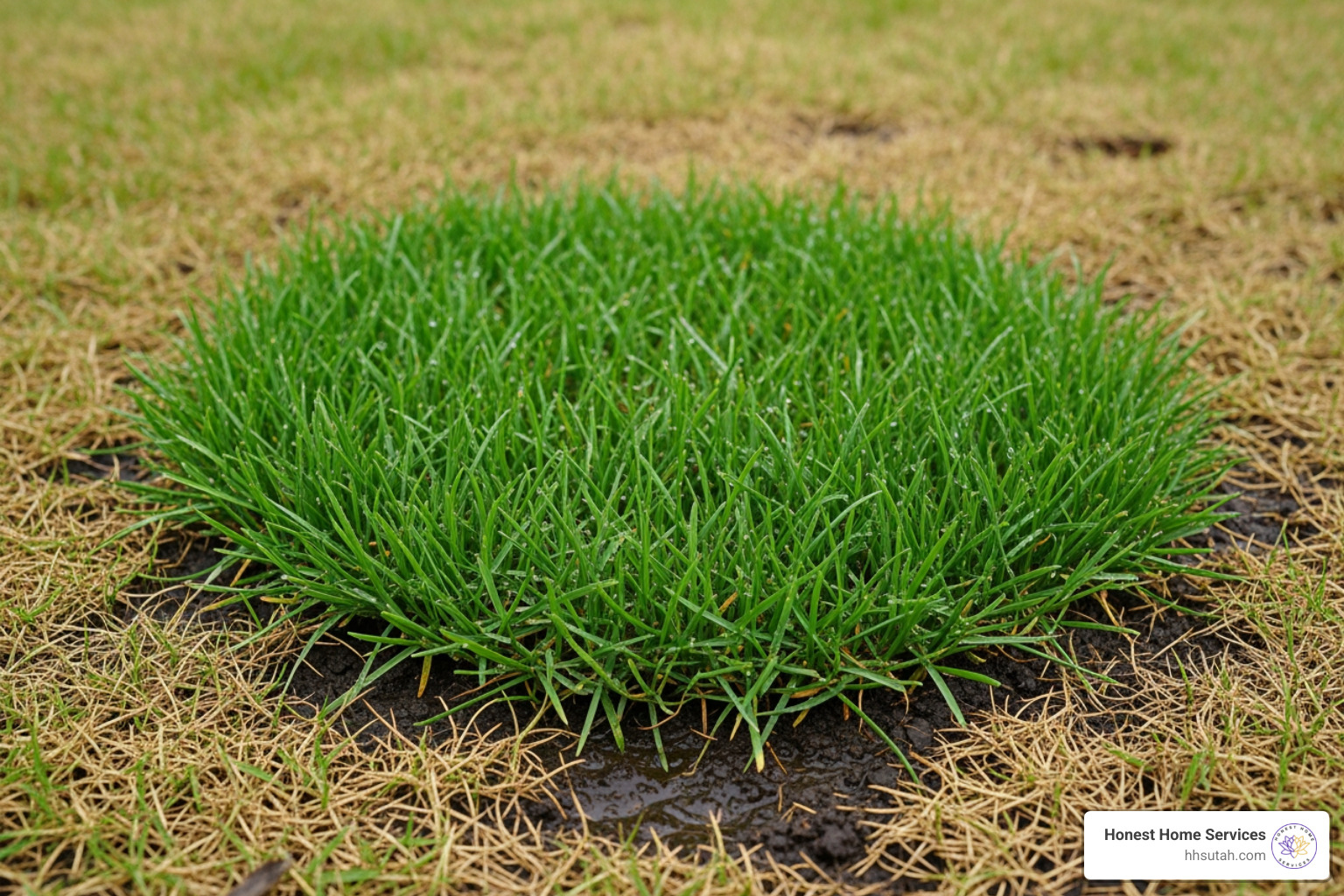
This section explains how to spot a problem before it causes catastrophic damage.
1. Sudden Drop in Water Pressure
If you suddenly notice that your shower is a trickle instead of a steady stream, or your kitchen faucet takes ages to fill a glass, a sudden and unexplained drop in water pressure can be a significant indicator of a main water line break. A leak in your service line allows water to escape before it reaches your home, reducing the overall pressure of your entire Plumbing System.
2. Unexplained Puddles or Sinkholes in Your Yard
This is one of the most visible signs of an underground leak. If you see unusually wet or soggy spots in your lawn, even during dry weather, or if water is actively pooling in areas it shouldn’t, it’s a major red flag. In severe cases, significant water leakage can erode the soil beneath the surface, leading to the formation of sinkholes. These can be dangerous and also indicate a serious foundation risk if the water is undermining your home’s stability.
3. Hissing or Gurgling Sounds Underground
Have you ever heard the distinct sound of running water when all your faucets are off and no appliances are using water? If these sounds seem to be coming from beneath the ground, near your home’s foundation, or even within your walls, it’s a strong indication of an active leak. The sound is caused by water escaping the pressurized pipe. Our advanced Leak Detection Salt Lake City services use specialized equipment to pinpoint these elusive underground leaks.
4. A Spike in Your Water Bill
This is often the first, most frustrating sign of a hidden leak. If your water bill suddenly skyrockets without any change in your household’s water usage, it’s highly likely that water is escaping somewhere in your system. Even a small leak can waste hundreds of gallons of water per day, leading to a shocking bill. The national average cost for a main water line repair is $1,005, but the cost of wasted water can quickly add up. To verify, try checking your water meter when no water is being used in your home; if it’s still running, you likely have a leak. The national average cost for a main water line repair is $1,005
5. Discolored or Murky Water
When a main water line break occurs, it can allow dirt, sediment, and other debris from the surrounding soil to enter your water supply. If you turn on your tap and see water that is cloudy, rusty, brown, or otherwise discolored, it’s a clear sign of sediment intrusion and a potential contamination risk. While often not immediately harmful after a brief period, prolonged consumption or use of such water could pose health concerns.
6. Cracks in Your Home’s Foundation
A persistent underground leak can saturate the soil around and beneath your home’s foundation. This excess moisture can lead to soil expansion or erosion, causing your foundation to shift, settle unevenly, or even crack. These cracks can manifest in your basement walls, exterior brickwork, or even interior drywall. This hydrostatic pressure can compromise the structural integrity of your home, making a main water line break a serious threat to your property’s long-term stability.
7. Water Damage Inside Your Home
While often associated with indoor plumbing failures, a severe main water line break can also cause water damage inside your home, especially if the leak is close to your foundation.
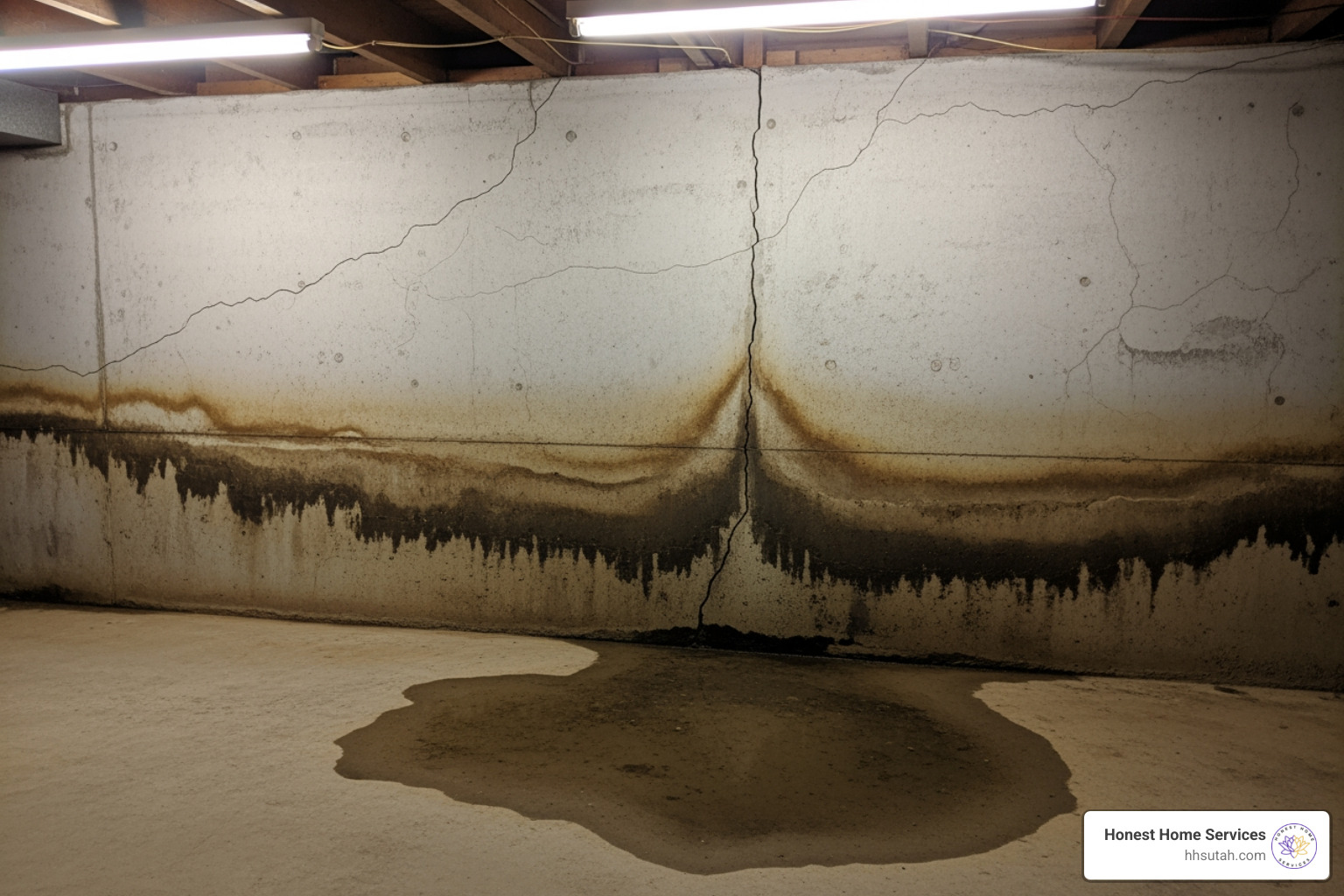
Signs include:
- Flooded Basements: Water seeping in through foundation cracks.
- Damp Drywall: Persistent moisture on basement walls or floors.
- Musty Odors: A telltale sign of hidden moisture and potential mold growth, even if you can’t see the water. Mold produces Volatile Organic Compounds (VOCs) and Microbial Volatile Organic Compounds (MVOCs) that cause this distinct smell.
- Mold Growth: If ignored, prolonged dampness can lead to mold, including species that produce harmful mycotoxins. Mycotoxins
Your Immediate Action Plan: What to Do First
Finding a main water line break can be alarming, but acting quickly and methodically is crucial to minimizing damage and ensuring safety. Here’s your step-by-step guide:
Step 1: Shut Off the Main Water Valve
Your absolute first priority is to stop the flow of water. Locate your home’s main water supply valve, often called a “stop and waste valve.” This valve is typically found on the foundation wall where the drinking water pipe enters your home, usually just before or after your water meter. Turning this valve clockwise will shut off the water supply to your entire house. Once the main valve is off, it’s a good idea to open a few faucets (preferably on lower levels) to help relieve any residual pressure in your pipes. How to Handle a Plumbing Emergency
Step 2: Determine Who Is Responsible
This is a critical step that determines who you’ll need to call for repairs. Responsibility for a main water line break depends on where the break is located relative to your property line and water meter.
| Location of Break | Responsibility | Who to Call |
|---|---|---|
| From the street to your property line/curb stop | City/Municipal Water Department | City Public Works or Water Department |
| From your property line/curb stop to your home | Homeowner (this is your private water service line) | Licensed Plumber (like Honest Home Services) |
| On your side of the water meter | Homeowner | Licensed Plumber |
| On the street side of the water meter | City/Municipal Water Department | City Public Works or Water Department |
In Salt Lake City and other Northern Utah communities, if the break is on the city’s portion of the pipe, they will handle the repairs. If it’s on your private water service line, it’s your responsibility to arrange for repair.
Step 3: Call for Professional Help
Once the water is shut off and you have a clear idea of responsibility, it’s time to call the cavalry.
- For City Responsibility: Contact your local city public works department or water utility. They usually have a 24/7 emergency line for reporting water main breaks.
- For Homeowner Responsibility: Don’t delay! A main water line break is a plumbing emergency that requires immediate attention from a qualified professional. Contact an emergency plumber right away. Our licensed technicians at Honest Home Services are available 24/7 for such emergencies. When to Call an Emergency Plumber: Your Plumbing Guide
- Document Everything: Before repairs begin, take plenty of photos and videos of the damage. This documentation will be invaluable for any potential insurance claims later on.
We are your local experts for Emergency Plumber Salt Lake services.
The Repair Process: Responsibility, Methods, and Costs
Once you’ve identified a main water line break and taken immediate steps, the next phase involves the actual repair. This can be a complex process, often requiring specialized equipment and expertise.
This section details the logistics of the repair itself.
Who Fixes the Break: Plumber vs. The City
As we discussed, the location of the break dictates who is responsible for the repair.
- If the break is on the municipal water main (the large pipes under the street) or on the service line up to your property line/curb stop, it falls under the city’s jurisdiction. Their public works department will dispatch crews to address the issue. While cities like Philadelphia outline their emergency response processes, including identification, containment, and repair, the homeowner typically isn’t directly involved in these repairs. What you need to know about water emergencies:
- If the break is on your private water service line (from your property line/curb stop to your home), then the responsibility, and the cost, falls to you, the homeowner. This is when you’ll need to call a licensed plumbing professional. In Northern Utah, our team at Honest Home Services can quickly diagnose and repair your private service line.
How a Main Water Line Break is Repaired
Repairing a main water line break is not a one-size-fits-all job. The method chosen depends on the severity of the break, the type of pipe, its depth, and the surrounding landscape.
Here are the common repair methods:
- Excavation and Replacement: This is the traditional method. It involves digging a trench to expose the damaged section of the pipe. The broken segment is then cut out and replaced with a new, durable section, typically made of PEX, copper, or ductile iron. Once the new pipe is installed and tested, the trench is backfilled.
- Trenchless Pipe Bursting: For less invasive repairs, trenchless methods are often preferred. In pipe bursting, a new pipe is pulled through the old, damaged pipe. A bursting head simultaneously breaks apart the old pipe while laying the new one in its place. This method requires minimal excavation, usually just two access points.
- Pipe Lining: Another trenchless option, pipe lining involves inserting a flexible, resin-coated tube into the existing damaged pipe. The tube is then inflated and allowed to cure, forming a new, seamless pipe within the old one. This method is excellent for repairing cracks and small leaks without extensive digging.
Our experts at Honest Home Services specialize in efficient and effective Salt Lake City Pipe Repair using the most appropriate method for your specific situation.
Understanding the Cost and Timeline of a Main Water Line Break Repair
The thought of a main water line break often conjures images of massive bills and prolonged disruptions. While it is a significant issue, understanding the typical costs and timelines can help manage expectations.
- Average Cost Range: According to HomeAdvisor, the national average cost for a main water line repair is around $1,005. However, this can vary widely based on the complexity of the break, the chosen repair method (excavation vs. trenchless), the depth of the pipe, and local labor rates. Smaller repairs might only cost a few hundred dollars, while complex issues could total nearly $4,000. Residential water main repairs typically range from $1,000 to $3,500.
- Repair Duration: For homeowner-side repairs, most main water line breaks can be fixed within 4 to 8 hours once our crew begins work. For larger municipal main breaks, the timeline can extend to 8-12 hours or even several days for very complex situations, especially if other utilities need to be marked or significant excavation is required. Factors like weather conditions, pipe material, and accessibility can influence the overall timeline.
At Honest Home Services, we believe in transparent pricing and will provide you with a clear estimate before we begin any work. We also offer Financing options to help make unexpected repairs more manageable.
Prevention, Maintenance, and Financial Protection
While a main water line break can feel like an unpredictable disaster, there are proactive steps you can take to reduce your risk and protect your home and finances. Regular inspections and understanding your home’s unique plumbing system are your best defenses. Plumbing System Maintenance
Proactive Steps to Prevent Breaks
Prevention is always better than cure, especially when it comes to your home’s main water line.
- Regular Plumbing Inspections: Schedule annual plumbing inspections with a trusted professional. These check-ups can identify early signs of wear, corrosion, or potential issues before they escalate into a full-blown break.
- Winterize Your Plumbing: In Northern Utah, harsh winters are a significant factor in pipe breaks. Proper winterization of exterior pipes and ensuring adequate insulation for buried lines can prevent freezing and subsequent damage. Our Winterize Your Home Plumbing System: The Ultimate Checklist provides detailed guidance.
- Install a Pressure Regulator: If your home experiences high water pressure, installing a pressure regulator can significantly reduce stress on your pipes, prolonging their lifespan and preventing bursts.
- Manage Tree Roots: Tree roots are notorious for seeking out water sources and can infiltrate and crush underground pipes. Be mindful of where you plant trees and consider professional root management if you have mature trees near your service line.
- Consider a Re-Pipe: If your home has an older plumbing system with outdated, corroding pipes, a re-pipe might be a wise long-term investment to prevent future breaks and ensure reliable water flow. Does Your Salt Lake Home Need a Re-Pipe?
Does Homeowner’s Insurance Cover Water Main Breaks?
This is a crucial question for many homeowners, and the answer is often not as straightforward as one might hope.
- Standard Policy Exclusions: Most standard homeowner’s insurance policies typically do not cover the cost of repairing or replacing the actual main water line break itself, especially if it’s due to age, wear and tear, or ground movement. They may also exclude damage from gradual leaks.
- Damage vs. Pipe Repair: While the cost to fix the broken pipe might not be covered, your policy might cover the resulting damage caused by the water leak, such as a flooded basement, damaged flooring, or foundation repairs. However, even this coverage often has limitations and deductibles.
- Service Line Coverage Endorsement: To bridge this gap, many insurance providers offer an optional “service line coverage endorsement” or “utility line coverage.” This add-on specifically covers the cost of repairing or replacing damaged service lines (water, sewer, electrical, gas, etc.) on your property. We highly recommend discussing this option with your insurance provider.
- Professional Work Required: Most insurance policies require major plumbing work to be performed by licensed professionals. Attempting DIY repairs on a main water line break could void your coverage. Most policies require licensed professionals for major plumbing work.
Always review your specific policy details or consult with your insurance agent to understand your coverage for a main water line break and the resulting damage.
Frequently Asked Questions about Water Main Breaks
How can I tell if the break is my responsibility or the city’s?
The location of the leak relative to your water meter or property line curb stop is the determining factor. Generally, if the leak is on the street side of your water meter or before your property line, it’s the city’s responsibility. If the leak occurs from your water meter (or property line) into your house, it’s typically your responsibility as the homeowner. When in doubt, it’s always best to contact your local water utility first, and they can help you determine the exact point of responsibility.
How long does a typical water main repair take?
The duration of a repair depends on the type of break and its complexity. A routine residential service line repair, handled by a professional plumber, often takes 4 to 8 hours once work begins. This involves locating the leak, excavating (if necessary), repairing the pipe, and backfilling. A larger municipal main water line break can take 8-12 hours or even longer (several days to a week) depending on factors like pipe size, depth, location on a major road, and the need for utility marking or extensive excavation.
Is the water safe to drink after a main water line break?
Not always. A main water line break can create a vacuum effect, allowing dirt, sediment, and even contaminants from the surrounding soil to enter the water supply. If you notice discolored or murky water, it’s a strong indicator of this. Your local utility may issue a boil water advisory as a precautionary measure, especially after significant breaks or repairs. If you experience discolored water, run a cold water faucet for one to two minutes every hour until it clears. If it persists, use bottled water or boil your tap water before consumption. After repairs, it’s crucial to flush your home’s pipes as instructed by your plumber or local utility to clear any remaining debris.
Don’t Wait for a Disaster—Secure Your Home’s Water Line
A main water line break is a serious Plumbing Emergency that requires a swift and professional response. Understanding the signs, knowing your responsibilities, and having a plan can save you from costly damage and stress. For expert diagnosis and reliable repairs in Northern Utah, the licensed technicians at Honest Home Services are available 24/7 to restore your peace of mind. If you’re dealing with a major underground pipe issue, learn more about our Salt Lake City Sewer Mainline Repair services.