
Why a Fresh-Smelling Drain Matters More Than You Think
How to clean drain smell is a common concern, and the good news is that most odors can be eliminated with simple methods:
- Pour boiling water down the drain to loosen grease and bacteria.
- Use baking soda and vinegar: Pour ½ cup baking soda followed by 1 cup vinegar, wait 30-60 minutes, then flush with hot water.
- Clean the P-trap by removing and rinsing it to eliminate trapped debris.
- Run water regularly in unused drains to prevent the P-trap from drying out.
- Call a professional if smells persist after trying these methods.
A foul odor from your sink is more than just unpleasant—it’s a sign that bacteria are thriving on trapped food, grease, and soap scum in your pipes. The smell is produced by biofilm buildup and bacterial growth, which feeds on organic matter that accumulates over time.
Even the cleanest homes can develop smelly drains. Food debris, hair, soap scum, and fats, oils, and grease (FOG) accumulate in pipes. When the water in your P-trap evaporates, sewer gases can escape into your home, creating a rotten egg smell.
The good news is you don’t need harsh chemicals to tackle most drain odors. Natural ingredients like baking soda, vinegar, and hot water can break down buildup and eliminate bacteria. Regular maintenance is key to preventing odors from returning.
This guide will explain why drains smell, how to identify the source, and provide step-by-step methods to eliminate odors. We’ll cover DIY solutions, when to call a professional, and how to prevent future smells.
At Honest Home Services, we’ve helped Northern Utah homeowners with plumbing challenges for over 20 years, including how to clean drain smell. Our licensed team has seen everything from simple biofilm to complex sewer line issues, and we’re here to share our expertise.
Uncovering the Source: Why Your Drain Smells Bad
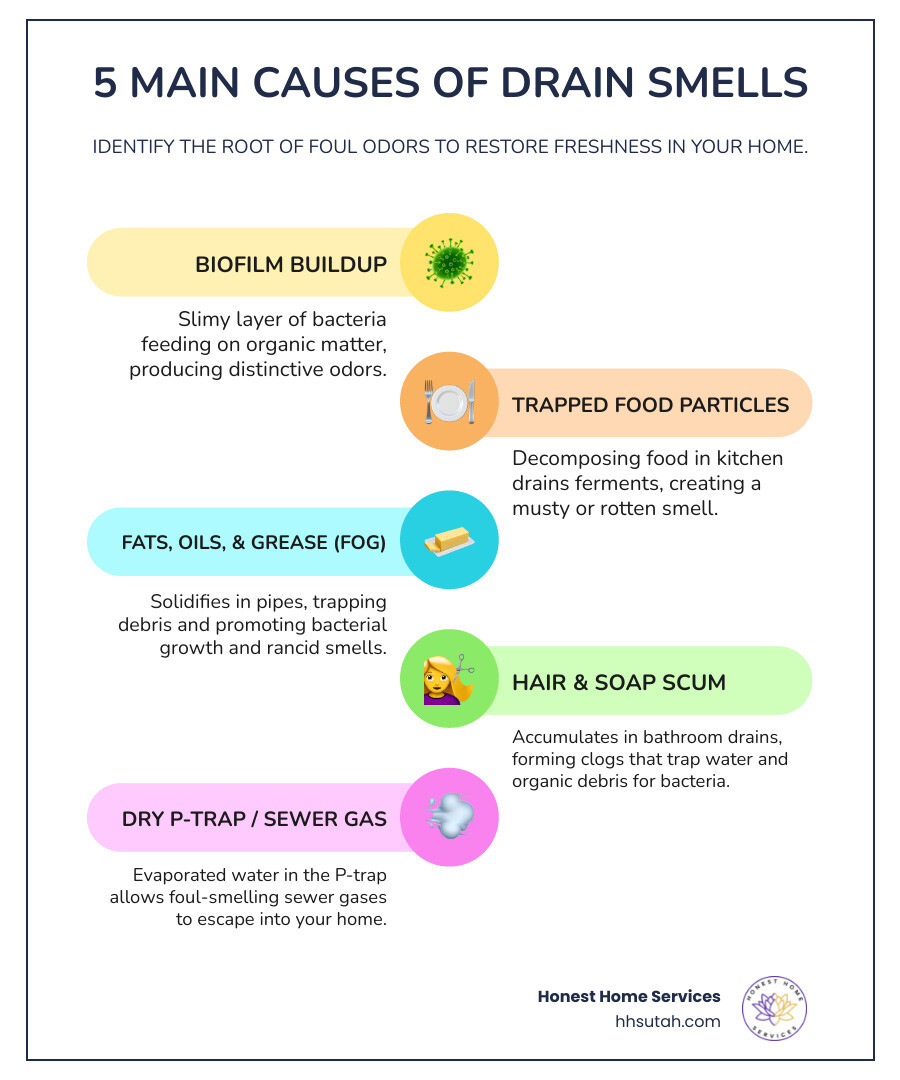
Before you can banish pesky odors, it’s crucial to understand their cause. Bad sink drain odors usually stem from a few common culprits.
One of the primary offenders is biofilm buildup. This slimy layer of bacteria forms inside your pipes, feeding on organic gunk and creating foul odors.
Closely related are trapped food particles. In kitchen sinks, food particles get caught in the P-trap or garbage disposal. As they decompose, they feed odor-producing bacteria.
Then there’s the notorious Fats, Oils, & Grease (FOG). When poured down the drain, FOG clings to pipes, solidifies, and traps other debris. This creates blockages and a food source for smelly bacteria.
In bathroom drains, hair & soap scum are the main villains. Hair mixes with soap scum to form clogs. This mass traps water and organic matter, creating a breeding ground for bacteria and slowing drainage.
Beyond the gunk, P-trap problems are a frequent cause of drain smells. This curved pipe holds a water seal to block unpleasant sewer gases. If the water evaporates from disuse or the trap leaks, sewer gas can enter your home, causing a rotten egg smell.
Speaking of sewer gas, these noxious fumes, primarily hydrogen sulfide, are a natural byproduct of waste decomposition. A blocked sewer vent on your roof can also cause these gases to enter through your drains.
Finally, a dirty garbage disposal is a significant source of kitchen odors. Food and grease get stuck on the grinding parts or under the splash guard, where they decompose and create a stench.
While many causes are similar, the specific culprits often differ between kitchen vs. bathroom drains.
The Role of the P-Trap and Sewer Gases
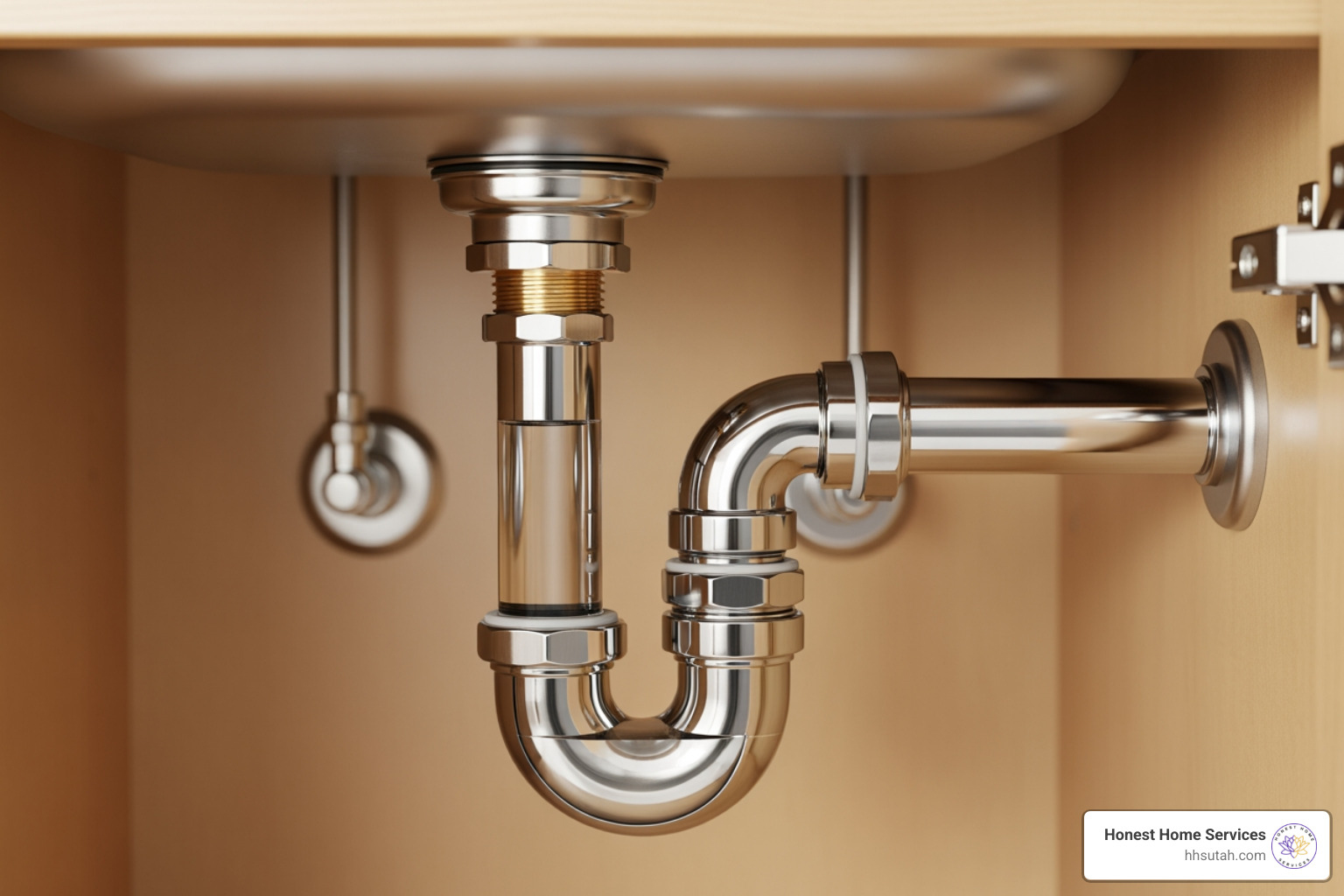
The P-trap’s curved design holds a small amount of water, creating a water seal. This seal is a crucial barrier that blocks sewer gases from entering your home. Sewer gases, like hydrogen sulfide (the rotten egg smell), are produced by decaying waste in sewer lines and can be hazardous in large quantities.
If a sink isn’t used, the water in the P-trap can evaporate, breaking the seal and allowing sewer gases into your home. Regularly running water in unused drains prevents this.
A more serious issue is a blocked vent pipe. These pipes, which extend through your roof, allow air into the plumbing system to prevent vacuums from siphoning water from P-traps. If a vent is blocked, sewer gases can escape through your drains, often causing gurgling sounds. If you hear gurgling, it’s time to call a professional.
Common Culprits in the Kitchen vs. the Bathroom
Understanding the specific sources in different areas helps tailor your cleaning strategy.
In the kitchen, kitchen sink smells are predominantly linked to food prep and dishwashing.
- Food debris: Small food particles and coffee grounds accumulate and decompose, creating a foul, sour odor.
- Grease solidification: Fats, oils, and grease (FOG) cling to pipe walls, solidify, and trap other particles, creating a breeding ground for bacteria.
- Garbage disposal issues: Food scraps can get stuck on the grinding plates or under the rubber splash guard, slowly decomposing and emitting a persistent stench.
Bathroom drains face a different set of challenges.
- Hair clogs: Shed hair combines with other substances to form stubborn clogs.
- Soap scum: Residue from soaps and shampoos coats pipes, providing a surface for hair to cling to and for bacteria to flourish.
- Toothpaste buildup: Toothpaste and other personal care products contribute to the accumulation of organic matter, fueling odor-causing bacteria. This combination often creates a distinct, musty smell.
Your Step-by-Step Guide on How to Clean Drain Smell
Now that we know the causes, let’s get to cleaning. Most drain odors can be tackled with simple DIY methods using common natural ingredients. Before you begin, wear rubber gloves, ensure good ventilation, and never mix different cleaning chemicals.
Here are our step-by-step instructions on how to clean drain smell using methods that are safe for your pipes and septic system.
The Boiling Water Flush
This is the simplest first line of defense, especially for kitchen sinks.
- How it works: Boiling water melts and flushes away grease and organic matter clinging to pipes, and it also helps kill odor-causing bacteria.
- Method: Carefully boil a pot of water and pour it directly down the drain in stages.
- Frequency: For kitchen drains, do this once a week to prevent buildup.
- Caution for PVC pipes: With older PVC pipes, let boiling water cool for a minute or use very hot tap water to avoid potential damage.
The Natural Fizz: How to Clean Drain Smell with Baking Soda and Vinegar
This safe and natural combination creates a chemical reaction that breaks down gunk and neutralizes odors.
- Step-by-step guide:
- Preparation: Remove any visible debris from the drain opening.
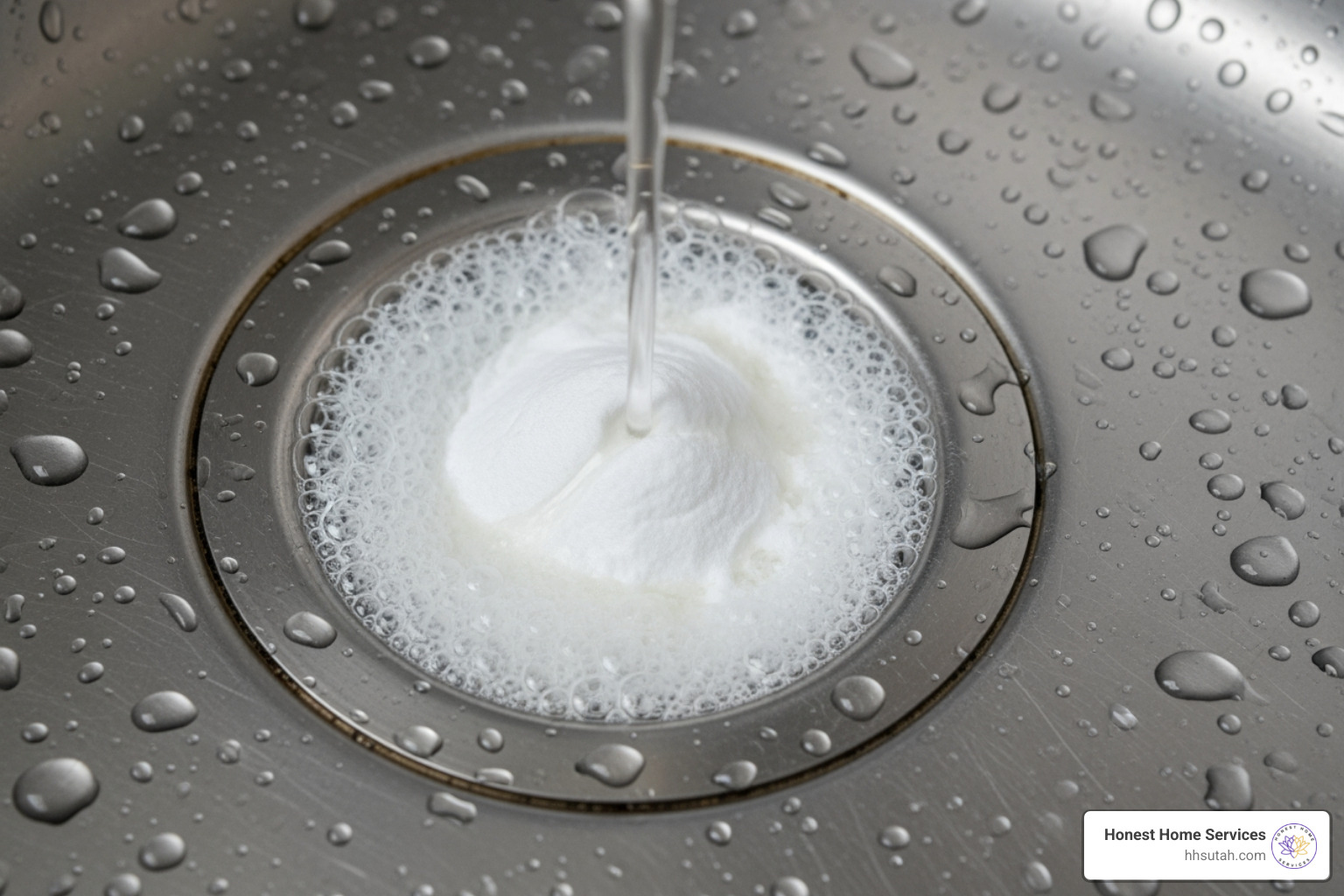
- Baking soda: Pour about 1/2 cup of baking soda directly down the drain.
- White vinegar: Slowly follow with 1 cup of distilled white vinegar. You’ll notice a fizzing reaction.
- Let it sit: Plug the drain to contain the reaction within the pipe. Let it sit for 30 to 60 minutes. For stubborn odors, you can leave it overnight.
- Flushing with hot water: After the waiting period, flush the drain thoroughly with plenty of hot tap water. This rinses away the loosened debris.
This method is effective for both kitchen and bathroom drains and can be used weekly.
Deep Cleaning Your Garbage Disposal
Cleaning a smelly garbage disposal is straightforward and can eliminate a major source of kitchen odors.
- Ice cubes and salt: With the disposal off, pour a handful of ice cubes and 1/2 cup of coarse salt into it. Turn on the cold water, then the disposal. The ice and salt scour the blades and inner walls. Run it for about 30 seconds.
- Scouring and deodorizing: After the ice and salt, add citrus peels (lemon, lime, or orange) and run the disposal again with cold water. The citrus oils will freshen the unit.
- Manual cleaning of rubber gasket: Don’t forget the rubber splash guard. Wear a glove and use a brush with dish soap to wipe down the underside of the guard and the top rim of the disposal.
Regularly cleaning your garbage disposal, ideally once a week, will significantly reduce kitchen sink odors.
Manually Cleaning the P-Trap
If other methods fail, manually cleaning the P-trap is a very effective way to remove stubborn clogs and odors.
- When to clean it: We recommend this step for persistent odors or if you suspect a physical blockage.
- Tools needed:
- A bucket or shallow pan
- Adjustable pliers or a wrench
- Rubber gloves
- A stiff wire brush or old toothbrush
- Step-by-step removal and cleaning:
- Prepare: Place the bucket directly underneath the P-trap.
- Loosen nuts: Loosen the slip nuts on both sides of the P-trap, by hand for PVC or with pliers for metal.
- Remove P-trap: Carefully slide the P-trap off. Water and gunk will spill into your bucket.
- Clean: Use your brush to thoroughly scrub the inside of the trap. Rinse it out with hot water.
- Reassembly: Reattach the P-trap, ensuring the nuts are tightened securely. Run water slowly to check for leaks.
- Rinsing and reassembly: Once reassembled, run hot water through the drain for a few minutes to ensure everything is flowing properly and the P-trap is refilled with clean water.
For more detailed guidance on when to tackle plumbing tasks yourself, check out our guide on DIY Plumbing: When to Tackle It Yourself and When to Call a Pro.
When DIY Isn’t Enough: Harsh Chemicals and Professional Solutions
While DIY methods are often effective for how to clean drain smell, it’s crucial to recognize their limitations. Trying to force a solution with harsh chemicals can do more harm than good. Identifying the signs of serious problems will save you time, money, and potential plumbing headaches.
The Dangers of Using Harsh Chemicals like Bleach
When faced with a stubborn drain smell, the temptation to use a strong chemical cleaner like bleach is high. We strongly advise against this for several reasons:
- Pipe corrosion: Bleach is corrosive and repeated use can damage pipes, especially older metal or PVC, leading to leaks and costly repairs.
- Damage to septic systems: For homes with septic systems, harsh chemicals are a major problem. They kill the beneficial bacteria needed to break down waste, which can lead to system failure and expensive repairs.
- Toxic fumes: Mixing bleach with other chemicals in your drain (like ammonia) can create toxic fumes that are hazardous to breathe. It’s best to avoid using bleach in drains altogether. For more information on indoor air quality, you can refer to resources like More on mold-causing odors from the EPA.
- Ineffective on deep clogs: Chemicals often fail to clear deep blockages. They can even harden in the pipe, making the clog worse and professional removal more difficult.
Harsh chemicals are a risky, short-term solution that rarely addresses the root cause.
Signs You Need Professional Drain Cleaning
If DIY methods fail or you notice other symptoms, it’s time to call a professional. These are the signs you need professional drain cleaning from our expert team at Honest Home Services:
- Persistent odors: If you’ve tried all the DIY methods and the odor keeps returning, it’s time for us to take a look.
- Multiple smelly drains: If more than one drain in your home starts smelling, it often points to a larger issue in your main sewer line or vent system.
- Slow draining or backups: A drain that’s consistently slow or backs up indicates a significant clog that needs professional attention.
- Gurgling noises: Strange gurgling sounds from your drains or toilets can be a sign of a blocked vent pipe or a main line clog.
- Suspected main line issue: Sewage smells, slow drains, or backups across multiple fixtures strongly indicate a main sewer line clog, which requires immediate professional intervention.
Ignoring these signs can lead to severe plumbing emergencies. For a comprehensive list of indicators, consult our article on Signs You Need Professional Drain Cleaning. For severe clogs, you might need advanced solutions like hydro jetting. Learn more in 5 Signs You Need Hydro Jetting for Your Drains.
Long-Term Prevention: Keeping Your Drains Fresh for Good
The best way to deal with a smelly drain is to prevent it. Implementing proactive maintenance and adopting good habits can save you a lot of hassle and keep your plumbing running smoothly.
Here are our top preventative tips to ensure your drains stay fresh and clear:
- Scrape plates before washing: Scrape all food scraps into the trash or compost bin before rinsing plates to reduce the organic matter going down your drain.
- Avoid pouring FOG down the drain: Fats, oils, and grease (FOG) are a drain’s worst enemy. Let them cool in a container, then toss them in the trash.
- Use drain screens or hair catchers: Place these over all your drains to catch food particles, hair, and soap scum. Clean them regularly.
- Run cold water when using the garbage disposal: Always run cold water before, during, and for at least 30 seconds after use. Cold water helps solidify grease so the disposal can grind it effectively.
- Regularly flush drains with hot water: Make it a weekly habit to pour a kettle of hot water down each drain (with caution for PVC pipes) to melt minor grease buildups.
- Run water in infrequently used drains: For guest bathrooms or utility sinks, run water for a minute once a month to keep the P-trap’s water seal intact and block sewer gases.
For more comprehensive advice on keeping your plumbing in top shape, check out our Preventative Drain Cleaning Tips Every Homeowner Should Know.
Frequently Asked Questions about Cleaning Drain Smells
Here are some of the most common questions we get about how to clean drain smell issues:
How do I get rid of a rotten egg smell in my drain?
A rotten egg smell is hydrogen sulfide gas, usually from bacteria breaking down organic matter in your drain. Try the baking soda and vinegar method first, or clean the P-trap. If the smell is widespread or you hear gurgling, it could be a blocked sewer vent or main line issue, which requires a professional. It could also be an issue with your water heater’s anode rod, which we can diagnose.
How to clean drain smell in a bathroom shower?
Shower drains often smell due to hair and soap scum buildup.
- Remove visible debris: Start by removing hair and gunk from the drain cover.
- Use a drain snake: A simple plastic drain snake can be very effective at pulling out hair clogs just below the surface.
- Baking soda and vinegar method: Pour 1/2 cup baking soda, then 1 cup white vinegar, let it sit for 30-60 minutes, and flush with hot water. This breaks down soap scum and biofilm.
- Clean the drain cover: Don’t forget to clean the drain cover itself, as gunk can cling to it.
- Preventative measures: Install a hair catcher and clean it regularly. Flush the drain with hot water after each shower.
Can a smelly drain be a sign of a more serious plumbing issue?
Yes. While many drain smells are easy to fix, a persistent odor can be a sign of a more serious plumbing issue. Look for these signs:
- Persistent smells after multiple cleaning attempts.
- Gurgling sounds from drains or toilets.
- Slow drains or water backing up in one or more fixtures.
- Multiple affected drains (e.g., kitchen and bathroom sinks, or a toilet and a shower).
- Smells that resemble raw sewage.
These could indicate a significant sewer line clog, a broken pipe, or issues with your vent stack. In such cases, professional diagnosis is essential. We use tools like camera drain inspections to pinpoint the exact problem. To understand more, read our guide on 6 Telltale Signs You Need a Camera Drain Inspection.
Banish Drain Odors for Good
Getting rid of drain odors is achievable. By understanding the causes, using effective DIY cleaning methods, and knowing when to call a pro, you can tackle the root of the problem. Following our advice on how to clean drain smell addresses biofilm, food particles, and P-trap issues.
DIY solutions can often restore freshness to your home. However, for complex problems like stubborn clogs or persistent odors in Northern Utah, trust the experts at Honest Home Services. We provide reliable and affordable plumbing services to ensure your drains are clear and your home smells fresh.
For professional assistance with drain odors and blockages, don’t hesitate to contact us for expert Salt Lake City Drain Cleaning services. We guarantee customer satisfaction and are ready to help 24/7.