

Why Every Homeowner Needs to Detect a Leak Early
It’s crucial to detect a leak before it becomes a costly disaster. Here’s how to spot common household water leaks:
- Check your water meter: Turn off all water, note the meter reading, wait 2 hours, and check again. Any change indicates a leak.
- Monitor your water bill: A family of four using over 12,000 gallons per month in winter likely has a serious leak.
- Test your toilet: Add food coloring to the tank. If color appears in the bowl within 10 minutes without flushing, you have a leak.
- Look for visible signs: Watch for water stains, peeling paint, warped floors, mold, or unexplained wet spots.
- Listen carefully: Pay attention to dripping, hissing, or running water sounds when fixtures are off.
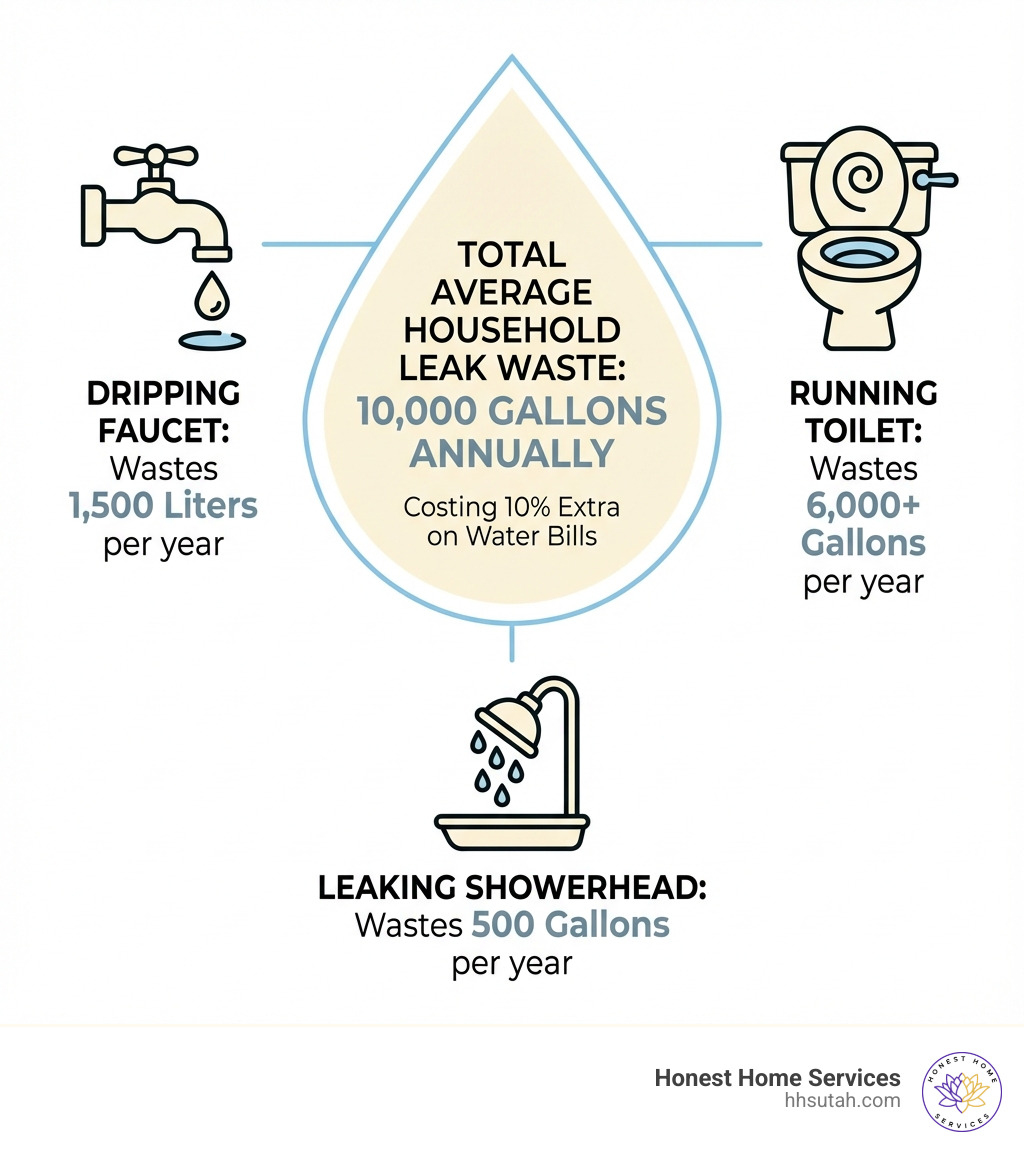
The average household leaks over 10,000 gallons of water per year, adding about 10 percent to water bills. Across the U.S., this waste totals nearly 1 trillion gallons annually.
Early detection is critical. A small leak found today might be a minor fix. Left undetected, it can trigger mold growth in 24-48 hours, rot structural wood, and lead to thousands in repairs.
Many leaks hide behind walls or under floors. A spike in your water bill, phantom dripping sounds, or a musty odor are important clues. Common culprits include toilets, faucets, showerheads, water heaters, and appliance lines. Most are easy to detect with simple DIY tests. For hidden leaks, professionals use tools like acoustic detectors and thermal imaging to find the source without destructive guesswork.
At Honest Home Services, we help Northern Utah homeowners detect a leak before it escalates. Our licensed plumbers use advanced diagnostic tools and provide transparent pricing to find and fix even the most elusive leaks correctly the first time.
First Clues: Recognizing the Obvious Signs of a Water Leak
Your home often provides clues about a water problem. Recognizing these early indicators is the first step to successfully detect a leak before it escalates.

Visual Signs:
- Water Stains: Yellowish or brownish discoloration on walls, ceilings, or floors.
- Peeling Paint or Wallpaper: Moisture can cause surfaces to bubble, crack, or peel.
- Warped Materials: Hardwood floors may cup or buckle, and laminate or vinyl can swell and lift.
- Mold or Mildew: Fuzzy, discolored patches (black, green, or white) on surfaces are a major red flag.
Auditory Signs:
- Dripping Sounds: A persistent drip from behind a wall or under a floor.
- Hissing Noises: A faint hiss can indicate a leak in a pressurized water line.
- Unexplained Running Water: Hearing water flowing when all taps and appliances are off.
Olfactory Signs:
- Musty or Earthy Odors: A persistent damp or moldy smell points to hidden moisture. This can impact The Hidden Dangers of Your Indoor Air Quality due to compounds like What are volatile organic compounds (VOCs)?.
Checking Common Culprits Around the House
Start your search with these common leak-prone areas.
1. Toilets: A running toilet can waste hundreds of gallons daily. Listen for constant running and use the food coloring test (add dye to the tank, wait 10-15 minutes, and see if color appears in the bowl without flushing).
2. Faucets: Check indoor and outdoor faucets for drips and feel for dampness around the base.
3. Showerheads: Look for drips after the shower is off and check for moisture at the connection point.
4. Under Sinks: Look inside cabinets for water stains, warped wood, or mold. Feel pipes and connections for moisture.
5. Water Heaters: Inspect the area around your Water Heater Repair for pooling water, rust on the tank, or corrosion on connections.
6. Appliances: Check supply and drain lines for dishwashers, refrigerators (ice maker lines), and washing machines.
7. Outdoor Spigots & Irrigation: Inspect outdoor spigots for drips and look for wet spots or overly lush grass near irrigation lines.
Top 5 Most Common Leak Locations in a Home:
- Toilets
- Faucets (indoor and outdoor)
- Water Heaters
- Under Sinks (kitchen and bathroom)
- Appliances (dishwashers, refrigerators, washing machines)
Your Home’s Health Monitor: Using DIY Methods to Detect a Leak
Simple DIY methods can help you detect a leak and confirm your suspicions without special tools.
The Water Meter Test: Your Ultimate Leak Detector
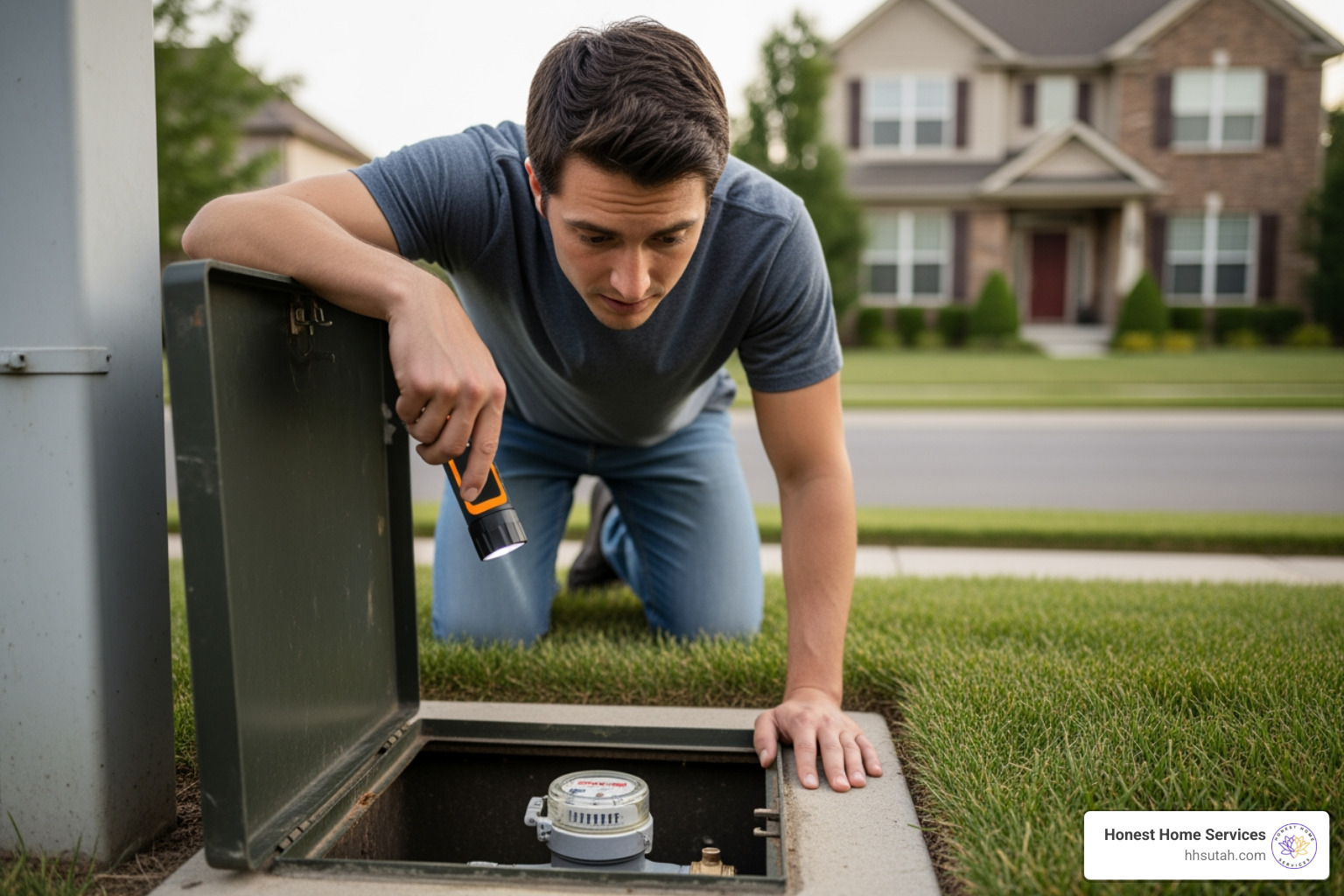
Your water meter is the best DIY tool for finding hidden leaks. It measures all water entering your home.
How to check your water meter for a leak:
- Stop all water use: Turn off all faucets, showers, and water-using appliances.
- Locate and record: Find your water meter (usually near the curb in Northern Utah) and write down the reading.
- Wait: Do not use any water for at least two hours.
- Check for changes: Re-check the meter. If the numbers have changed or the small test dial is spinning, you have a leak. This is a reliable way to find out How can I tell if I have a plumbing leak?.
Utility Bill Monitoring: A sudden, unexplained spike in your water bill is a major red flag. For a family of four, winter water use over 12,000 gallons per month suggests a serious leak.
Simple Tests to Pinpoint Leaks
The Toilet Dye Test:
Toilets are common sources of silent leaks. This simple test is part of the Detect and Chase Down Checklist for homeowners.
- Add a few drops of dark food coloring to the toilet tank.
- Wait 10-15 minutes without flushing.
- If color appears in the bowl, the flapper valve is likely faulty and needs replacing.
Checking for Appliance Leaks:
- Dishwasher: Feel the supply and drain lines under the sink or behind the unit for dampness.
- Refrigerator: Inspect the small water line for the ice maker or dispenser behind the fridge for drips or wet spots.
- Washing Machine: Check the hot and cold water hoses for cracks, bulges, or leaks at the connections.
These checks are especially important for Common Plumbing Issues in Older Homes and How to Address Them.
The Professional’s Toolkit: Uncovering Hidden Leaks
Leaks hiding behind walls, under floors, or underground are the most dangerous, causing silent damage. When you spot the signs, professional expertise and technology are essential.
Signs of Hidden or Underground Water Leaks
Watch for these subtle clues:
- Foundation Cracks: New cracks can signal shifting soil from an underground leak.
- Warm Spots on Floors: A warm area on a concrete slab floor may indicate a hot water line leak.
- Low Water Pressure: A sudden drop in pressure throughout the house.
- Uneven Landscaping: Unusually lush or wet patches in your yard.
- Sounds of Running Water: Hearing water when all fixtures are off.
- High Water Bill: A sudden, unexplained increase.
- Musty Odors: A persistent musty smell from floors or walls.
If you see these signs in Northern Utah, it’s time for professional Pipe Leak Repair Salt Lake City.
Advanced Tools and Technologies
When DIY methods aren’t enough, our plumbers use cutting-edge technology for precise Salt Lake City Leak Detection with minimal disruption.
- Acoustic Leak Detection: Highly sensitive listening devices detect the specific sound of water escaping a pipe, even under concrete or behind walls, pinpointing the leak’s location.
- Thermal Imaging Cameras: These cameras detect temperature differences, allowing us to “see” hot or cold water leaks behind walls and under floors without any demolition.
- Video Pipe Inspection: A small camera on a flexible cable is inserted into drain or sewer lines to visually inspect for cracks, breaks, or blockages. This is a key part of any Camera Drain Inspection.
- Pressure Testing: We isolate sections of your plumbing and apply pressure. A pressure drop indicates a leak within that section, narrowing the search area.
These tools allow us to find leaks accurately, saving you time, money, and the stress of unnecessary demolition.
The Silent Destroyer: Consequences of Undetected Water Leaks
An undetected water leak can silently destroy your home, impacting its structure and your family’s health.
Rapid Mold Growth
Mold is an immediate threat, thriving in damp environments. It can begin to grow within 24 to 48 hours of a material becoming wet. If not addressed, visible colonies can appear in days.
Structural Damage
Water wages a war on your home’s structure:
- Rotted Wood: Moisture rots wooden studs, floor joists, and subflooring, weakening your home.
- Damaged Drywall: Drywall absorbs water, leading to softening, crumbling, and collapse.
- Compromised Foundations: Leaks near the foundation can erode soil, causing cracks and costly structural damage.
Health Risks of Mold
Inhaling mold spores can trigger allergies and respiratory issues like asthma attacks. Some molds produce Toxic Mold Exposure (Mycotoxins), which can lead to more severe health problems. While a Home Air Filtration System helps, fixing the leak is the primary solution.
Condensation vs. A Leak: What’s the Difference?
It’s important to know if you have a leak or just condensation.
- Condensation (“Pipe Sweating”): This occurs when warm, humid air hits cold pipes, causing moisture to form on the surface. It’s common in basements or under sinks and can still lead to mold.
- Active Leak: This is a drip or stream from a specific point on a pipe, joint, or fitting.
Condensation covers the entire pipe surface, while a leak originates from one spot. If you’re unsure, it’s best to consult an expert. Knowing When to Call a Professional Plumber: The Ultimate Guide can prevent further damage. We can diagnose the issue and recommend the right solution, from insulating pipes to repairing a leak.
Proactive Protection: Preventing Future Leaks and Damage
Proactive steps can significantly reduce the risk of future leaks, protecting your home and saving you money.
Regular Maintenance and Inspections
Consistent vigilance is the most effective way to prevent leaks.
- Routine Checks: Regularly inspect visible plumbing fixtures, connections, and appliance hoses for wear, corrosion, or moisture.
- Professional Inspections: Schedule The Benefits of Regularly Scheduled Plumbing Inspections. Our experts can identify weaknesses like corroded pipes or high-pressure issues before they become major leaks, which is especially important for older homes in Northern Utah.
Insulating Pipes
Insulating pipes combats condensation and prevents freezing in cold Utah winters.
- Cold Water Pipes: Insulating these pipes prevents “sweating” and the mold growth it can cause.
- Exposed Pipes: Insulate pipes in unheated areas like basements and crawl spaces to prevent them from freezing and bursting.
Pressure Management
High water pressure stresses your plumbing. Your home’s pressure should be between 40-80 psi. If it’s higher, a pressure reducing valve (PRV) can protect your pipes and fixtures from damage.
Upgrading Materials and Repiping
Older homes in the Salt Lake City area may have outdated pipes prone to failure. Consider repiping if your home has galvanized steel or polybutylene pipes. Replacing them with modern materials like PEX (cross-linked polyethylene) or copper is a durable solution that reduces the risk of hidden leaks.
These practices safeguard your home’s value and your family’s well-being. For a comprehensive approach to Plumbing System Maintenance, contact our team.
Frequently Asked Questions about Water Leak Detection
Here are answers to common questions from Northern Utah homeowners about water leaks.
How can I tell the difference between a minor leak and a major plumbing emergency?
Knowing the difference helps you know when to call for immediate help.
Minor Leak Signs:
- Slow, occasional drips from a faucet or showerhead.
- A small, contained water stain that isn’t growing.
- A toilet that runs intermittently.
Major Issue Signs:
- A significant, sudden drop in water pressure.
- Pooling water on floors or in your yard.
- New cracks in your foundation.
- Warm spots on a slab floor.
- Constant sound of running water when everything is off.
If you experience any major signs, you may need an Emergency Plumber. Our team offers 24/7 support across Northern Utah.
Does homeowners insurance typically cover leak detection and repair costs?
Coverage depends on your policy and the leak’s cause.
- Sudden & Accidental Damage: Most policies cover damage from sudden events like a burst pipe. This usually includes the resulting water damage and sometimes the cost to access the pipe.
- Gradual Damage Exclusion: Damage from slow, long-term leaks is typically not covered, as it’s considered a maintenance issue. Mold damage may also be excluded or have limited coverage.
- Check Your Policy: Coverage for the leak detection service itself varies. Always document the damage and contact your insurance agent immediately to understand your specific coverage for Pipe Repair Salt Lake City.
How quickly can a small leak cause mold and structural problems?
A small leak can cause major issues surprisingly fast.
- Mold Growth: Mold can start growing within 24 to 48 hours on a wet surface. Visible mold can appear within days.
- Structural Damage: Drywall can soften in days or weeks. Wooden structures like joists and studs can begin to rot over weeks or months, compromising your home’s integrity. This makes early detection and Pipe Repair critical.
Never underestimate a small drip; it can quickly become a much larger problem.
Conclusion: Protect Your Home with Early Detection
Detecting a water leak early is a vital skill for protecting your property from costly damage and safeguarding your family’s health. By recognizing visual, auditory, and olfactory signs and using DIY methods like the water meter and toilet dye tests, you can be your home’s first line of defense.
However, hidden leaks behind walls or under floors require professional tools like acoustic detectors and thermal imaging. Ignoring these can lead to rapid mold growth (within 24-48 hours), structural damage, and health risks.
At Honest Home Services, we understand the challenges homeowners in Salt Lake City and Northern Utah face. Our licensed plumbers use the latest equipment to accurately pinpoint leaks with minimal disruption. We provide honest, reliable, and affordable solutions to protect your home. Don’t let a small drip become a disaster. For expert assistance with Salt Lake City Leak Detection, contact our team today to restore your peace of mind.