

When That Sewer Quote Feels Like a Gut Punch
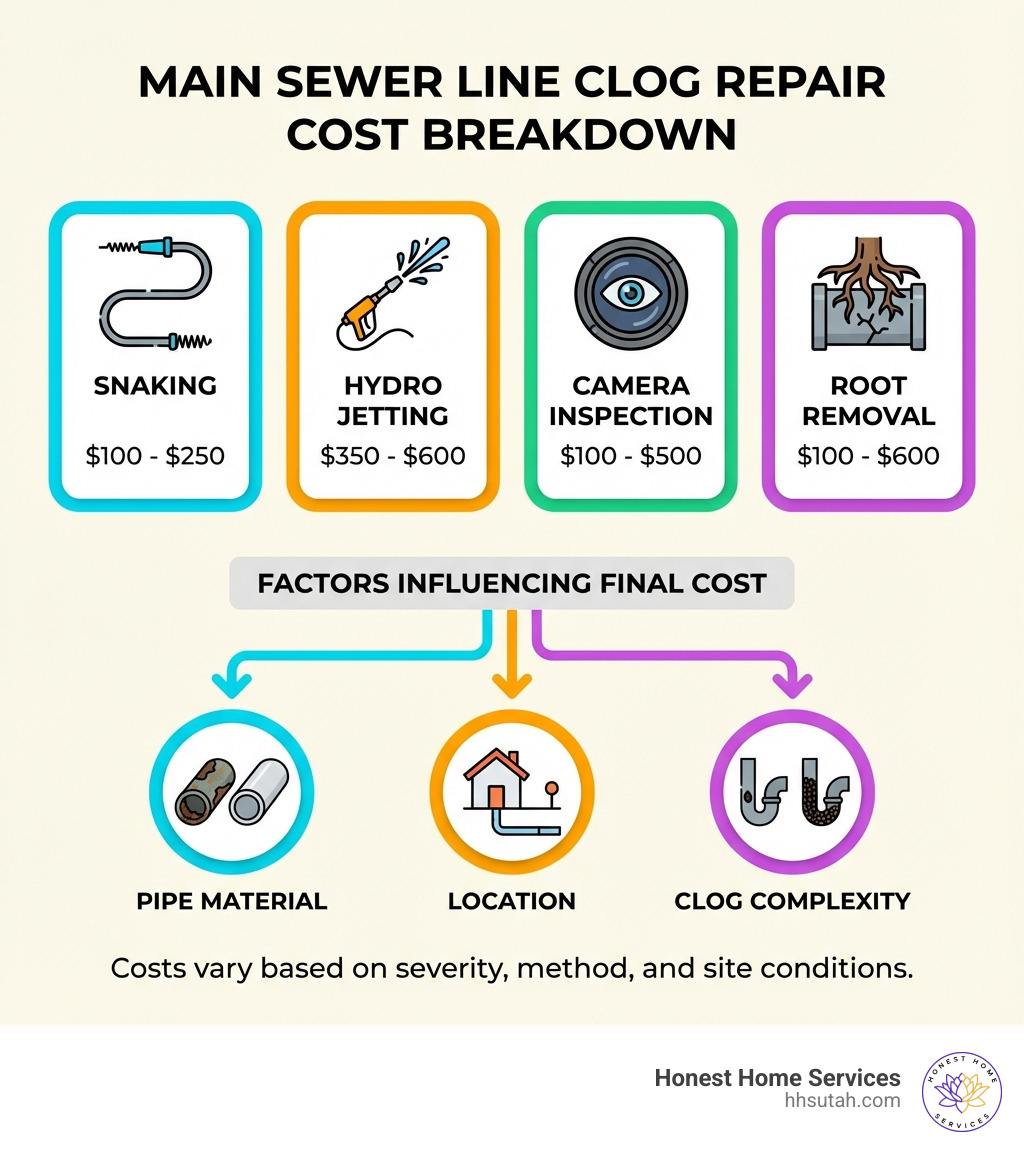
Main sewer line clog repair cost can catch homeowners off guard, but knowing what to expect helps you determine if you’re getting a fair price. Here’s what you should typically pay:
Quick Cost Overview:
| Service Type | Typical Cost Range |
|---|---|
| Simple Snaking | $100 – $250 |
| Hydro Jetting | $350 – $600 |
| Camera Inspection | $100 – $500 |
| Root Removal | $100 – $600 |
| Main Line Cleaning | $200 – $1,000+ |
Most homeowners pay between $200 and $600 for main sewer line clog repair, with the final cost depending on the severity of the blockage, the method required, and your pipe’s location and condition.
Few home emergencies feel as urgent as sewage backing up into your home. When a plumber hands you a quote to fix your main sewer line, you’re stuck wondering: Is this price fair, or am I being taken advantage of?
The truth is, main sewer line clog repair costs vary widely. A simple snaking job might run you $150. A severe blockage requiring hydro jetting and camera inspection could push past $1,000. The difference isn’t always about the plumber’s profit margin—it’s about what’s actually happening in your pipes.
At Honest Home Services, we’ve cleared thousands of main sewer line clogs across Northern Utah over the past 20 years, and we understand that main sewer line clog repair cost transparency matters when you’re facing an unexpected plumbing emergency. We’ve seen homeowners overpay for unnecessary work, and we’ve also seen them delay critical repairs because they didn’t understand the scope of the problem.
This guide breaks down exactly what you should pay for different types of main sewer line repairs, what factors drive those costs up or down, and how to spot a fair quote from an inflated one.
First, Confirm It’s a Main Line Clog: The Telltale Signs
Before diving into costs, confirm you have a main sewer line clog, not just a localized blockage. If you’re experiencing these telltale signs, your main sewer line is the likely culprit:
- Multiple Slow Drains: If several fixtures (sinks, shower) drain slowly at once, it’s a strong sign of a main line issue. The blockage prevents wastewater from leaving your home, affecting all downstream drains.
- Gurgling Toilets: Hearing gurgling from other drains when you flush a toilet is a classic sign. The noise is trapped air being forced back through the plumbing as water struggles past the clog.
- Water Backing Up in Showers or Tubs: If flushing a toilet causes water to back up into your tub or shower, or running the washer makes toilets overflow, you have a significant main line blockage. Wastewater is seeking the easiest escape route.
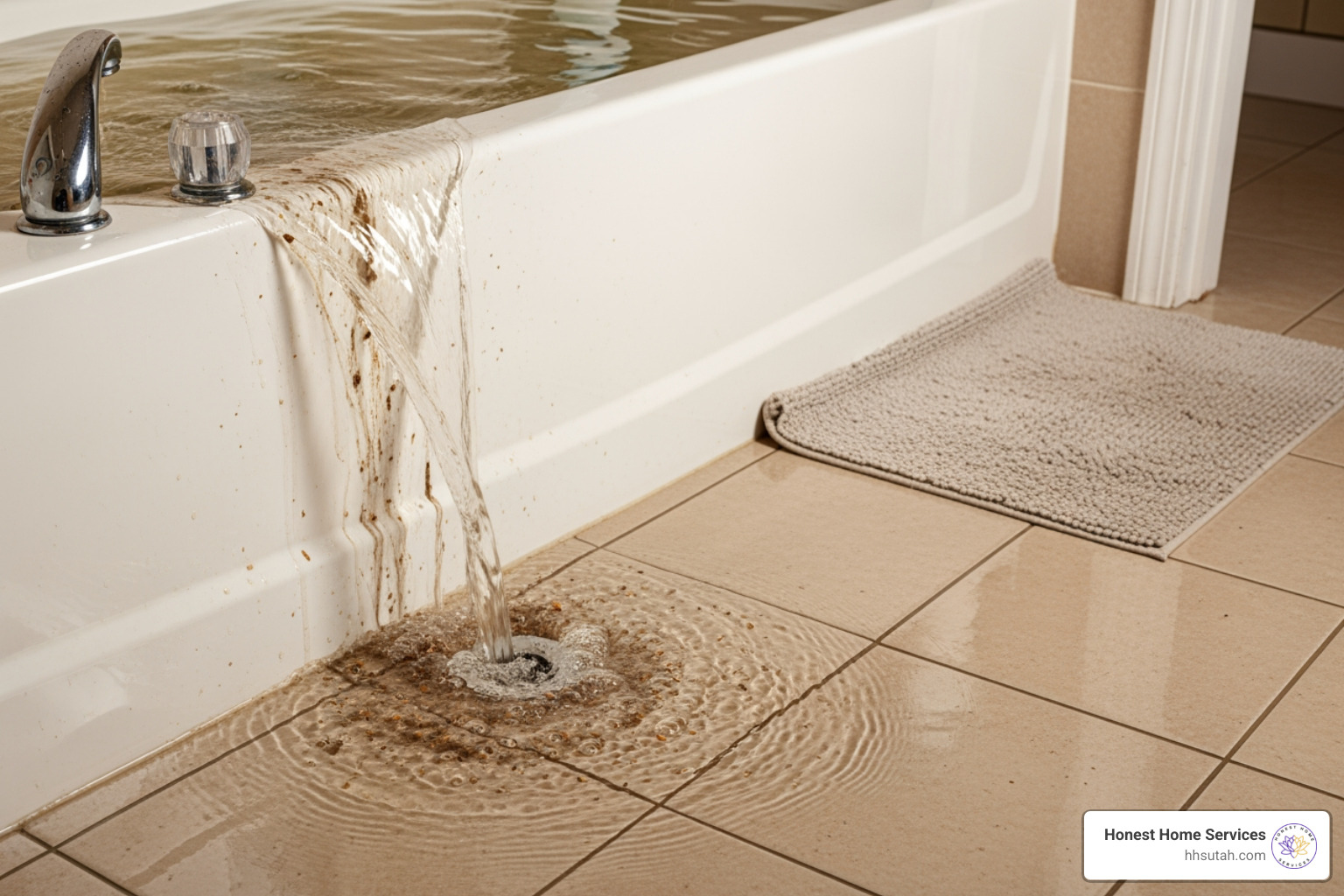
- Sewage Smell in Yard or Basement: A persistent, foul sewage odor from your yard, basement, or cleanout pipe is a red flag. It indicates sewage isn’t flowing freely and may be backing up or leaking.
- Floor Drain Backups: In Northern Utah homes with basements, sewage coming up from floor drains means your main line is overwhelmed. These drains are escape routes for excess water, so a backup is a definitive sign of a main line clog.
- Unusually Lush Green Patches in Your Yard: An isolated patch of unusually green, lush grass can signal a leaking underground pipe. The nutrient-rich wastewater is acting as fertilizer.
If you’re noticing any of these symptoms, it’s time to call in the professionals. Ignoring these signs can lead to more extensive damage and significantly higher repair costs down the line. Learn more about when to seek professional help for your drains by visiting our guide on Signs You Need Professional Drain Cleaning.
Understanding the Main Sewer Line Clog Repair Cost Breakdown
The average main sewer line clog repair cost ranges from $1,000 to $4,000 for general repairs, but just clearing a clog typically costs $200 to $600 in Northern Utah. This wide range is why quotes can feel like a “gut punch.” The final price depends on the clog’s severity, the repair method, and factors unique to your home.
As Forbes aptly puts it, The cost of your sewer line repair or replacement will vary based on several different factors, including the severity of the problem. Let’s break down the key components that influence the final price.
Average Main Sewer Line Clog Repair Cost by Method
The approach your plumber takes to clear your main sewer line clog will be the biggest driver of the initial cost. Here’s a look at the most common methods and their associated expenses:
| Method | Description | Typical Cost Range |
|---|---|---|
| Snaking (Augering) | Uses a long, flexible cable with a cutting head to break through or retrieve blockages. Best for simple clogs like hair or minor debris. | $100 – $250 |
| Hydro Jetting | Employs high-pressure water streams to blast away stubborn clogs, grease buildup, and tree roots, thoroughly cleaning the pipe walls. | $350 – $600 |
| Root Removal | Often done in conjunction with snaking or hydro jetting when tree roots have infiltrated the sewer line. | $100 – $600 (often part of snaking/hydro jetting cost) |
| Clog Removal (General) | For severe or hard-to-access clogs, this can combine methods and require more time. | $200 – $1,000+ |
- Snaking a Drain: Snaking is the most budget-friendly option for simple blockages. Our technicians use a drain snake or auger to clear obstructions, usually in one to two hours. This service typically costs between $100 and $250.
- Hydro Jetting: When snaking isn’t enough, hydro jetting uses high-pressure water to clear grease, sludge, and tree roots. This service costs between $350 and $600. It’s a thorough cleaning that prevents future clogs, making it a valuable investment for recurring issues. If you have slow drains or frequent backups, see our guide on 5 Signs You Need Hydro Jetting for Your Drains.
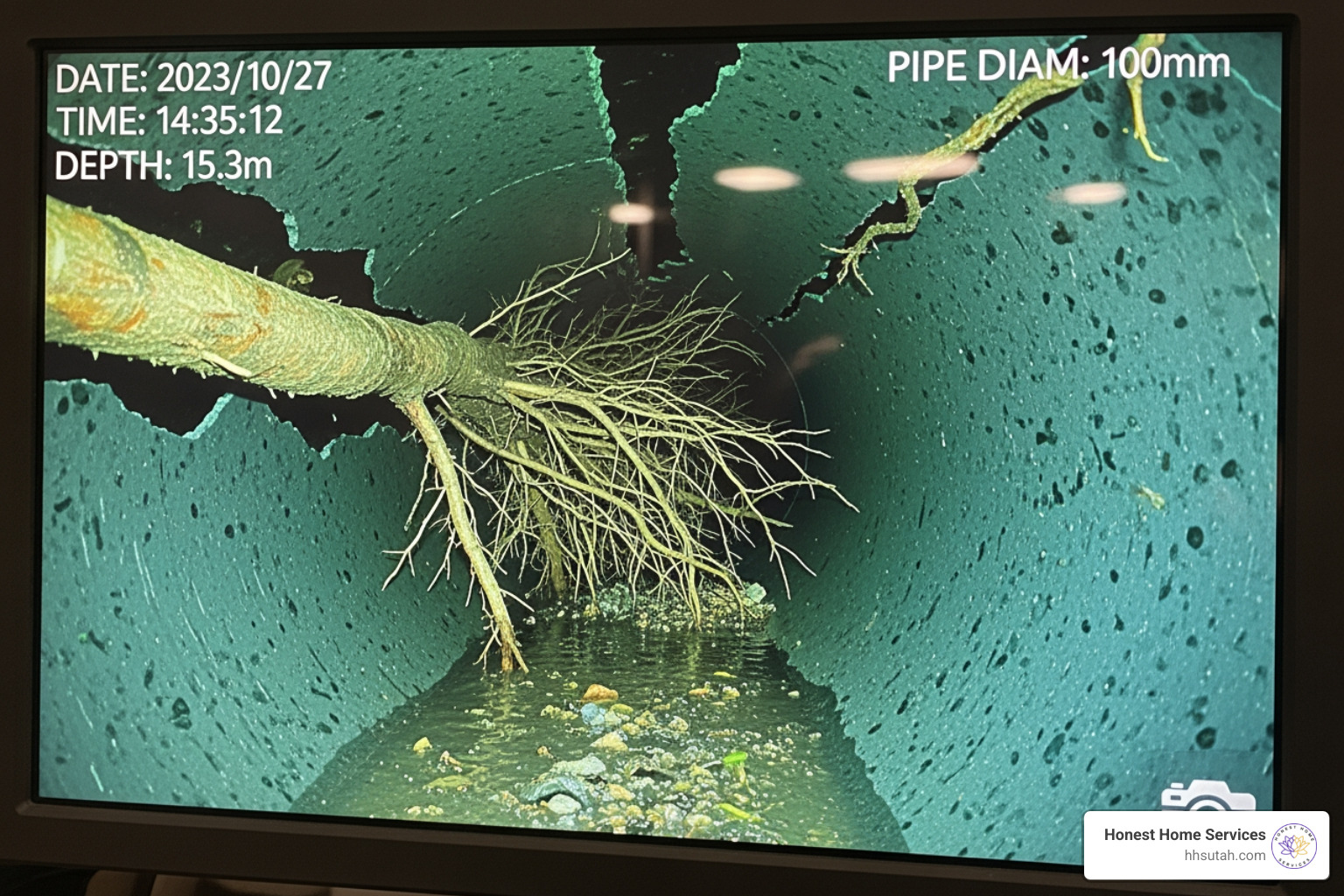
- Root Removal: Tree roots are a common cause of main line clogs in Northern Utah, as they seek moisture and infiltrate pipes. Root removal costs range from $100 to $600, often included with snaking or hydro jetting. The complexity of the root intrusion determines the final price.
- Complexity of the Clog: A complex clog requires more time and equipment, increasing the main sewer line clog repair cost. A simple grease buildup is a quick fix, but a foreign object or extensive tree roots will cost more. A tough clog can double the labor hours, pushing the cost toward the higher end of the $1,000+ range.
The Role and Cost of a Sewer Camera Inspection
A camera inspection is a critical first step for diagnosing main sewer line clogs. It allows a technician to see the problem instead of guessing.
- Why Inspection is Critical: A sewer camera inspection lets our technicians visually identify the exact cause and location of a clog—be it roots, grease, or a foreign object. It also reveals serious issues like cracked or collapsed pipes. This diagnostic step prevents guesswork, ensures the correct solution is used, and helps avoid unnecessary work for a lasting repair.
- Cost of a Camera Inspection: A sewer camera inspection typically costs $100 to $500, but can be more depending on line length and complexity. While an added expense, this upfront cost can save you thousands by preventing misdiagnoses and ineffective repairs. It’s an investment in getting the job done right the first time. Learn more about regular check-ups on our page about The Benefits of Regularly Scheduled Plumbing Inspections.
Key Factors That Influence the Main Sewer Line Clog Repair Cost
Beyond the repair method, several other factors influence the final main sewer line clog repair cost. Understanding these helps you gauge a quote’s fairness.
- Pipe Material: Your sewer line’s pipe material affects repair ease and cost. Older Northern Utah homes may have challenging cast iron, clay, or Orangeburg pipes. Newer homes often use PVC or ABS, which are easier and cheaper to repair. Depending on the material, repairing a main sewer line can cost $50 to $250 per linear foot.
- Pipe Location and Accessibility: Where your main sewer line is located profoundly impacts accessibility and, therefore, cost.
- Under a Concrete Slab: If your sewer line is under a foundation or concrete slab (driveway, patio), access is more complex and expensive. Repairs under a slab can cost $300 to $350 per linear foot, as it involves breaking and repairing the concrete. Accessing a pipe under a driveway can add $400 to $1,200 for excavation alone.
- Depth of the Line: Residential sewer lines in Northern Utah are typically buried 5 to 6 feet deep, but they can be deeper in colder climates to prevent freezing. Deeper lines require more extensive excavation, increasing labor and equipment costs.
- Landscaping and Hardscaping: If the line runs under mature landscaping, trees, or other hardscaping features, additional costs for their removal and restoration will apply.
- Labor Rates: Plumber hourly rates range from $45 to $200, often with a minimum service fee around $200. Total labor cost depends on the clog’s complexity and time to resolve. Tough clogs can double the labor hours compared to average ones.
- Permit Costs: Permits aren’t usually needed for just cleaning a clog, but are often required for repairs or replacements involving excavation. In Northern Utah, permits for extensive repairs can range from $400 to $1,600, depending on location and scope. This is an important “additional cost” to consider if your clog requires a repair.
Understanding these variables is key to evaluating any main sewer line clog repair cost. For more detailed insights into these factors, Angi’s guide on How Much Does Main Sewer Line Clog Repair Cost? [2025 Data] offers a great breakdown.
Beyond the Clog: When Repair Becomes Replacement
Sometimes, a simple clog isn’t the whole story. What starts as a blockage can reveal deeper, more structural problems with your main sewer line, meaning a repair might be insufficient, and a full replacement becomes necessary. This is where the main sewer line clog repair cost can jump significantly.
Here are situations where a full replacement, or at least a substantial repair, is usually required:
- Collapsed Pipes: This is a severe issue. If a section of your sewer line has collapsed, wastewater flow is completely obstructed. A collapsed line often requires excavation and replacement of the damaged section, costing $50 to $250 per linear foot.
- Severe Cracks or Breaks: While minor cracks can sometimes be repaired, severe or multiple cracks, especially those allowing significant root intrusion or soil infiltration, often necessitate replacement. Repairing a broken or cracked sewer pipe costs between $600 and $1,050. However, if the pipe is old or has multiple points of failure, a full replacement may be more cost-effective in the long run.
- Old Pipe Material: As pipes age, they become brittle and prone to damage. Older materials like clay, cast iron, or Orangeburg pipes (common in older Northern Utah homes) have a finite lifespan, typically 50 to 100 years. If your pipes are nearing the end of their life and suffering from frequent issues, a full replacement can prevent ongoing, costly repairs.
- Bellied Pipe (Sagging): A “belly” in a pipe occurs when a section of the sewer line sinks due to shifting soil, creating a low spot where water and solids collect. This causes chronic clogs and blockages. A bellied pipe usually requires excavation to correct the grade and often involves replacing the affected section.
Cost of Repair vs. Replacement:
Generally, repairing a main sewer line is less expensive than replacing it. Simple repairs for minor damage can range from $1,000 to $4,000. However, a full main sewer line replacement is a more substantial investment, typically costing between $3,000 and $7,000, with an average around $5,000. The cost to hire a plumber for a full sewer line replacement can range from $150 to $500 an hour, reflecting the complexity and labor involved.
Replacement Methods:
- Trenchless Repair Methods: If available for your specific situation and property in Northern Utah, trenchless methods can be less disruptive, though sometimes comparable in cost to traditional excavation. These include:
- Cured-in-Place Pipe (CIPP) Lining: This involves inserting a resin-coated liner into the existing pipe, which then cures to form a new, seamless pipe within the old one. CIPP lining costs $90 to $250 per linear foot.
- Pipe Bursting: This method uses a new pipe to break apart the old one as it’s pulled through the existing line. Pipe bursting costs $60 to $200 per linear foot.
Trenchless replacements can cost between $60 and $250 per linear foot, including materials and labor.
- Traditional Excavation: This involves digging a trench to expose the damaged sewer line, removing the old pipe, and installing a new one. Traditional excavation costs between $50 and $250 per foot for the pipe work itself, plus additional excavation costs ranging from $30 to $70 per cubic yard for digging. A repair involving trenching can add $4 to $12 per linear foot on top of the replacement cost, not to mention potential costs for restoring landscaping or driveways.
For more information on balancing repair versus replacement, Angi’s guide on Sewer Line Replacement or Repair Costs provides useful context.
How to Save Money on Your Sewer Line Repair
Nobody wants to deal with a main sewer line clog, let alone the unexpected expense. But there are proactive steps you can take to potentially save money on main sewer line clog repair cost or avoid them altogether.
- Preventative Maintenance is Your Best Friend: Regular maintenance is the single most effective way to extend the life of your sewer line and prevent costly emergencies. This includes annual inspections and professional drain cleanings, especially if your home is older or has mature trees nearby. Our team offers preventative drain cleaning tips every homeowner should know, which you can find on our guide: Preventative Drain Cleaning Tips Every Homeowner Should Know.
- Watch What You Flush/Pour: This seems obvious, but it’s a leading cause of clogs. Avoid flushing anything other than human waste and toilet paper. Never pour grease, coffee grounds, or harsh chemicals down your drains. These substances can build up over time and create stubborn blockages that require professional intervention.
- Regular Inspections: Even without an active clog, regular plumbing inspections can catch minor issues before they escalate. A video inspection can identify tree root infiltration or small cracks early, allowing for targeted repairs that are far less expensive than dealing with a collapsed pipe or major backup.
- Getting Multiple Quotes: When faced with a significant repair or replacement, always get at least three quotes from reputable plumbing companies in Northern Utah. This allows you to compare pricing, understand different proposed solutions, and ensure you’re getting a fair deal. Be wary of quotes that are significantly lower or higher than others, and always ask for a detailed breakdown of costs.
- Know When to DIY and When to Call a Pro: For minor, localized clogs (like a slow bathroom sink), simple DIY methods like plungers or enzymatic drain cleaners might work. However, for a suspected main sewer line clog, professional help is almost always required. Home remedies are rarely powerful enough to reach or clear deep main line obstructions. Attempting to DIY a main line clog can often worsen the problem, push the blockage further, or even damage your pipes, leading to a much higher main sewer line clog repair cost. Our guide, DIY Plumbing: When to Tackle It Yourself and When to Call a Pro, can help you make that crucial decision.
Frequently Asked Questions about Main Sewer Line Clogs
Is a main sewer line clog considered an emergency?
Absolutely. A main sewer line clog is a serious plumbing emergency that demands immediate attention. When your main sewer line is blocked, wastewater has nowhere to go, leading to sewage backing up into your sinks, tubs, toilets, or even your basement. This poses significant risks:
- Water Damage Risk: Sewage overflowing into your home can cause extensive and costly water damage to floors, walls, and personal belongings.
- Health Hazards: Raw sewage contains harmful bacteria, viruses, and other pathogens that can cause severe illness. Proper cleanup of sewage in living spaces is crucial due to these health risks.
- Structural Damage: Ignoring a persistent sewer line problem can lead to foundational damage to your home over time due to pooling water or shifting soil.
Because of these immediate dangers, a main sewer line clog is definitely an emergency. At Honest Home Services, we provide 24/7 emergency support across Northern Utah for just these situations. Learn more about how we handle these urgent issues on our page about Emergency Plumbing in Salt Lake City: What You Need to Know.
Does homeowners insurance cover main sewer line clog repair?
Generally, standard homeowners insurance policies do not cover main sewer line clog repair cost or damage unless the issue is caused by a sudden, accidental, and covered peril. This means:
- What’s Usually NOT Covered: Damage resulting from normal wear and tear, poor maintenance, tree root infiltration, faulty construction, floods, or gradual deterioration is typically excluded. If your clog is due to years of grease buildup or invasive tree roots, your standard policy likely won’t cover it.
- Optional Add-ons: Some insurance providers offer optional endorsements or riders for “water backup and sump pump overflow” or “service line coverage.” These add-ons can provide coverage for damage caused by sewer backups or for the repair/replacement of the sewer line itself. We highly recommend checking with your insurance provider in Northern Utah to see if these options are available and if they make sense for your home.
- Sudden Events: If a sewer line is damaged suddenly and accidentally by an event like a fallen tree, lightning, or vandalism, it might be covered up to your policy’s limits.
It’s always best to review your specific policy or speak with your insurance agent to understand what is and isn’t covered.
How long does it take to repair a main sewer line clog?
The time it takes to repair a main sewer line clog can vary widely based on the complexity of the clog and the required repair method:
- Simple Snaking: For a straightforward clog that can be cleared with a drain snake, the process usually takes one to two hours. This is often for blockages caused by common household debris closer to the access point.
- Hydro Jetting: If the clog is more stubborn, like heavy grease buildup or extensive tree roots, hydro jetting might be needed. While the actual jetting process can be efficient, the overall job might take two to four hours or more, especially if a camera inspection is performed beforehand to pinpoint the issue.
- Repair vs. Replacement Timeline: If the clog reveals a more significant structural problem requiring a section of pipe repair or replacement, the timeline extends dramatically.
- Minor Repair: A localized pipe repair (e.g., patching a small crack) could take a few hours to a full day, depending on accessibility.
- Major Repair/Replacement (with excavation): This is the most time-consuming scenario. Digging up and replacing a section or the entire main sewer line can take anywhere from one to several days, sometimes longer, depending on the length of the pipe, depth, soil conditions, and the need for permits and site restoration. Trenchless methods, while less disruptive to your yard, still require significant preparation and execution time.
Our technicians will always provide an estimated timeline after diagnosing the problem, so you know what to expect.
Conclusion: Getting a Fair and Honest Assessment in Northern Utah
Navigating main sewer line clog repair cost can feel overwhelming, but armed with the right information, you can ensure you’re getting a fair and honest assessment. We’ve seen that costs are influenced by the method of clearing (snaking vs. hydro jetting), the necessity and cost of a camera inspection, and crucial factors like pipe material, location, accessibility, labor rates, and permit requirements.
The initial quote for a simple clog might be a few hundred dollars, but if underlying issues like tree root damage, cracked pipes, or a collapsed line are finded, the costs can quickly escalate into thousands for more extensive repairs or even a full replacement.
The key takeaway is the importance of a professional diagnosis. Don’t let uncertainty lead to overpaying or, worse, delaying a critical repair that could cause more damage. At Honest Home Services, we pride ourselves on providing honest, reliable, and affordable plumbing services to our neighbors across Northern Utah, including Salt Lake City, Davis County, and many other communities. Our local, expert technicians are committed to fair pricing and guaranteed customer satisfaction. We’ll thoroughly assess your main sewer line clog, explain your options clearly, and provide transparent pricing, so you can make an informed decision without feeling pressured.
If you suspect a main sewer line clog or need a professional assessment, don’t hesitate to reach out to us. We’re here to help keep your plumbing flowing smoothly. For all your sewer line needs in the area, visit our dedicated page for Salt Lake City Sewer Mainline Repair.