

Understanding Your Water Heater Repair Investment
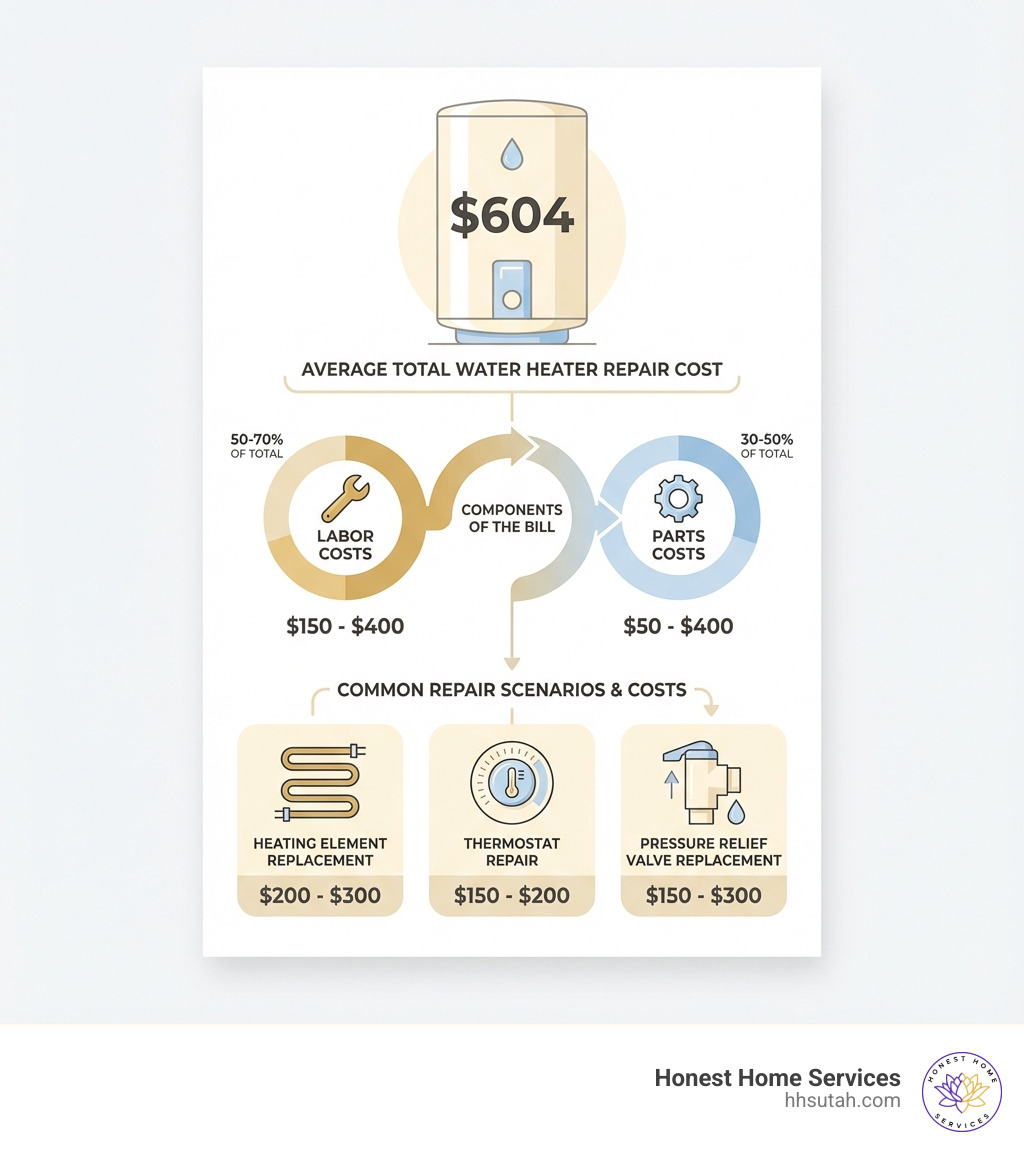
Hot water repair cost typically ranges from $222 to $987, with the national average sitting at $604 in 2025. However, your specific bill depends on several key factors:
- Minor repairs (thermostat, pilot light): $100 – $300
- Mid-range repairs (heating element, pressure relief valve): $200 – $400
- Major repairs (gas control valve, tank leak): $300 – $700+
- Labor rates: $45 – $150 per hour
- Emergency service: Add 25-50% surcharge
When your shower suddenly turns cold or you notice a puddle forming under your water heater, one question immediately comes to mind: How much is this going to cost me? Understanding hot water repair cost before calling a plumber helps you budget appropriately and spot fair pricing from inflated quotes.
The truth is, water heater repairs can range from a simple $100 fix to a $1,500+ replacement recommendation. Some issues like a tripped breaker or relighting a pilot light cost almost nothing. Others, like a leaking tank or failed heating element, require professional intervention and can significantly impact your wallet.
Several warning signs indicate your water heater needs attention:
- Leaks around the base or connections
- Strange noises like popping, rumbling, or hissing
- Rusty or discolored water from hot taps
- Inconsistent temperature or lukewarm water
- Complete loss of hot water
This guide breaks down the real costs you’ll face, what influences your final bill, and when repair makes sense versus replacement. We’ll cover everything from common repair prices to regional cost differences, helping you make informed decisions about your home’s hot water system.
At Honest Home Services, we’ve spent over 20 years helping Northern Utah homeowners steer hot water repair cost decisions with transparent pricing and reliable solutions. Our team understands that unexpected repair bills create stress, which is why we focus on clear explanations and honest assessments of what your water heater truly needs.
Average Water Heater Repair Costs in 2025
As of 2025, the national average hot water repair cost is around $604. Most homeowners can expect to pay between $222 and $987 for typical repairs. This broad range highlights that while some fixes are quick and affordable, others require more extensive work, skilled labor, and pricier parts. For minor issues, you might see costs as low as $90, but for more significant problems, the bill could climb to $1,775 or more. These figures represent national averages, and here in Northern Utah, we strive to provide fair and transparent pricing that reflects our local expertise and commitment to quality service.
Common Problems and Their Price Tags
When your water heater acts up, it’s usually due to a few common culprits. Knowing these issues and their typical repair costs can help you anticipate expenses and decide whether to repair or replace. Here’s a breakdown of common water heater problems and their associated costs, including a comparison of DIY part costs versus professional repair:
| Repair Item | DIY Part Cost | Professional Repair Cost (Parts & Labor) |
|---|---|---|
| Thermostat Replacement | $20 – $400 | $150 – $250 |
| Heating Element (Electric) | $15 – $80 | $200 – $300 |
| Pressure Relief Valve (T&P Valve) | $20 | $150 – $300 |
| Anode Rod | $20 – $75 | $250 – $300 |
| Gas Control Valve | $70 – $200 | $300 – $500 |
| Thermocouple | $20 | $100 – $200 |
| Dip Tube | $10 – $25 | $150 |
| Tank Flushing/Cleaning | Minimal (tools) | $100 – $200 |
| Pilot Light Fix | Minimal | $50 – $150 (service call) |
| Flue Pipe Replacement | $50 – $100 | $100 – $350 |
(Costs are estimates and can vary based on specific parts, labor rates, and complexity.)
Let’s explore some of the most frequent issues and what you can expect:
-
No Hot Water / Insufficient Hot Water: This is perhaps the most frustrating problem. For electric heaters, it often points to a faulty heating element or thermostat. Replacing a heating element typically costs between $200 and $300, while a thermostat replacement is usually $150 to $200. For gas heaters, it could be a pilot light issue, a failing thermocouple, or a bad gas control valve. A pilot light fix or thermocouple replacement is often $100 to $200, but a gas control valve can run $300 to $500.
-
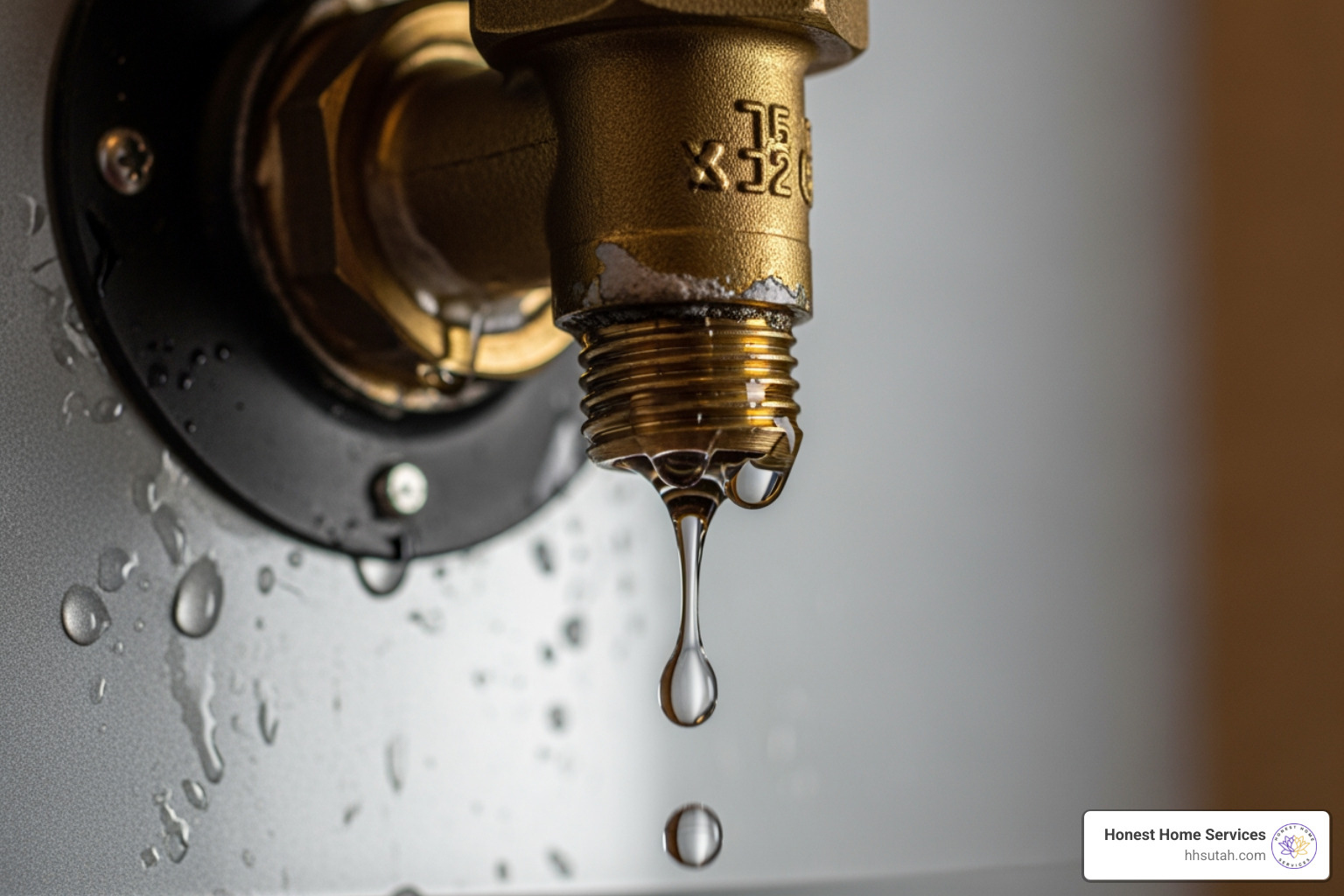
Leaking Tank: A leak can be a minor annoyance or a catastrophic failure. If the leak is from connections or the pressure relief valve, it might be a simple fix. A pressure relief valve replacement can cost $150 to $300 professionally. However, if the tank itself is leaking, it usually signals internal corrosion or damage, which often means a full replacement is needed, not a repair. This is one of the Common Water Heater Problems that can quickly escalate in cost.
-
Strange Noises (Popping, Rumbling, Hissing): Heard a sound like popcorn popping or a tea kettle whistling from your water heater? Popping or rumbling usually indicates sediment buildup at the bottom of the tank. This sediment traps water, which boils and causes noise. A professional tank flushing and cleaning can cost $100 to $200 and often resolves this. Hissing or sizzling could mean water is dripping onto a hot surface, possibly from a slow leak. Screeching or whistling often points to restricted water flow or a malfunctioning T&P valve, which requires immediate attention for safety.
-
Bad Smelling Water / Rusty Water: If your hot water smells like rotten eggs, it’s often due to a corroded anode rod. The anode rod is designed to sacrifice itself to protect the tank from rust. Replacing it can cost $250 to $300. Rusty or discolored water also suggests tank corrosion or an expired anode rod, indicating it’s time for a replacement.
Gas vs. Electric: How Repair Costs Differ
The type of water heater in your Northern Utah home significantly impacts its hot water repair cost.
-
Electric Water Heaters: These units tend to be simpler in design with fewer complex parts. Common issues like a faulty heating element or thermostat are typically straightforward to diagnose and repair. Electric heater repairs usually range from $200 to $500. While some basic electrical work can be done by a homeowner, we always recommend caution and professional assessment for safety.
-
Gas Water Heaters: Gas water heaters are more complex, involving gas lines, pilot lights, thermocouples, and gas control valves. Repairs often require specialized knowledge and tools, and due to the inherent safety risks associated with gas, professional intervention by a certified plumber is almost always necessary. Gas water heater repairs typically cost between $150 and $500, but can go higher for issues like a gas control valve replacement ($300-$500). The added complexity and safety considerations often mean higher labor costs compared to electric units.
Key Factors That Influence Your Final Bill
Beyond the specific problem, several other factors can influence the overall hot water repair cost. Understanding these cost variables can help you budget for potential extras and ensure you’re getting a fair price for the work done in your Salt Lake City, Layton, or West Valley home.

Labor Rates and Regional Pricing
Labor is a significant portion of any water heater repair bill. Plumber hourly rates typically range from $45 to $150 per hour nationally. However, in regions like Northern Utah, these rates can vary. Our local expert technicians at Honest Home Services ensure our pricing is competitive and transparent for our communities, from Kaysville to Murray.
- Service Call Fees: Most plumbers charge a service call fee, often between $50 and $120, just to come to your home and diagnose the issue. This fee is frequently waived or applied towards the total repair cost if you proceed with the work.
- Emergency Fees: If your water heater breaks down in the middle of the night or on a weekend, you might face an emergency service surcharge, which can add 25% to 50% to the total cost. That’s why we offer 24/7 emergency support, understanding that some issues simply can’t wait.
- Local Expertise: Our technicians are familiar with the specific water quality (often hard water) and common issues faced by homeowners in places like Bountiful, Draper, and Tooele, allowing for efficient and effective repairs. We base our pricing on tasks rather than hourly rates, meaning the price we quote is the price you pay, regardless of how long the job takes. For more insights into labor costs, you can explore data from sources like the Occupational Employment and Wage Statistics.
Understanding the Additional hot water repair cost
Sometimes, the repair itself isn’t the only expense. There are other potential costs to consider:
- Permits: Depending on the repair, particularly if it involves replacing major components or altering gas/electrical lines, a permit from your local municipality might be required. Permit costs can range from $100 to $900, ensuring the work complies with safety codes and local regulations.
- Accessibility Issues: Is your water heater tucked away in a cramped closet, a tight crawl space, or an attic? Difficult accessibility can increase labor costs because it takes more time and effort for technicians to access, work on, and move equipment.
- Flue Pipe Replacement: For gas water heaters, the flue pipe safely vents exhaust gases. If this pipe is damaged or needs upgrading, its replacement can add $100 to $350 to your bill. Ensuring proper venting is crucial for safety.
- Emergency Water Heater Repairs: While we strive for fair pricing, emergency services outside of standard business hours may incur additional fees. It’s an important consideration when dealing with urgent breakdowns that can’t wait.
Repair or Replace? Making the Smart Financial Decision
Deciding whether to repair your water heater or replace it entirely is a common dilemma for homeowners in Salt Lake County and beyond. It’s not just about the immediate hot water repair cost; it’s about long-term value, energy efficiency, and peace of mind.
Most conventional storage tank water heaters have a lifespan of 8 to 12 years. If your unit is approaching or has exceeded this age, and you’re facing a significant repair, replacement often makes more sense. Frequent breakdowns, even minor ones, can signal that the unit is nearing the end of its functional life. A leaking tank, in particular, is rarely repairable and almost always necessitates a full replacement.
The 50% Rule and Other Signs It’s Time for a New Water Heater
A good rule of thumb is the “50% rule”: if the cost of the repair is 50% or more of the cost of a brand new unit, it’s usually more cost-effective to replace. For example, if a new water heater costs $1,500 and the repair is $800, replacement is the smarter choice. This is especially true for older units.
Other clear signs it’s time to consider a New Water Heater include:
- Rising Energy Bills: If your utility bills are steadily increasing without a change in usage, your water heater might be losing efficiency, working harder to heat water.
- Corrosion on the Tank or Water: Rusty water coming from your taps or visible rust on the water heater itself indicates internal corrosion, which is a precursor to leaks and tank failure.
- Inconsistent Performance: If you’re constantly running out of hot water, or the temperature fluctuates wildly, your unit may no longer be able to keep up with your household’s demand.
- Frequent Repairs: If you’re calling us for repairs every few months, the cumulative cost can quickly outweigh the investment in a new, reliable system.
The Long-Term Advantages of Water Heater Replacement
While the upfront cost of replacement can seem daunting, there are significant long-term Advantages of Water Heater Replacement:
- Energy Efficiency: Modern water heaters are significantly more energy-efficient than older models. Tankless water heaters, for instance, can be 24-34% more efficient than traditional tank units for households using up to 41 gallons of hot water daily, leading to substantial savings on utility bills. Heat pump water heaters also offer excellent efficiency.
- Lower Utility Bills: The improved efficiency directly translates to lower monthly energy costs. This saving can help offset the replacement cost over time.
- Reliability and Peace of Mind: A new water heater means fewer worries about unexpected breakdowns, cold showers, or potential water damage from leaks.
- New Warranties: New units come with fresh warranties, covering parts and sometimes labor, protecting you from unexpected repair costs for years to come.
- Water Heater Upgrade: Replacement is an opportunity to upgrade to a more advanced system, such as a tankless or heat pump model, which can offer better performance and even greater energy savings. Many energy-efficient models may even qualify for federal tax credits or local utility rebates.
How to Save Money and When to Call a Pro
Managing your hot water repair cost involves a combination of proactive maintenance, smart decision-making, and knowing when to trust a professional. Safety should always be your top priority.
Is DIY Water Heater Repair a Safe Option?
For some homeowners, tackling minor water heater issues themselves might seem like a way to save money. And for very simple tasks, it can be.
-
Simple Tasks for DIYers:
- Flushing the Tank: Draining and flushing your water heater annually to remove sediment can prolong its life and improve efficiency. You just need a garden hose and a bucket.
- Relighting a Pilot Light: If you have a gas water heater and the pilot light goes out, you might be able to relight it by following the instructions on the unit.
- Resetting a Tripped Breaker: For electric water heaters, a sudden loss of hot water might just be a tripped circuit breaker, which you can reset at your electrical panel.
-
When to Call a Pro:
- Gas Line Work: Any repairs involving gas lines or components of a gas water heater (like a gas control valve) should always be handled by a certified plumber due to significant safety risks.
- Major Electrical Work: For electric water heaters, complex electrical issues or replacing heating elements are best left to professionals to avoid electrocution or further damage.
- Leaks from the Tank: If the tank itself is leaking, it’s usually irreparable and requires replacement. A professional can quickly diagnose the source of the leak and advise on the best course of action.
- Complex Diagnostics: If you’re unsure about the problem, or the issue persists after basic troubleshooting, a professional can accurately diagnose the root cause. As the research indicates, “Most water heater repairs aren’t DIY friendly because they require knowledge of plumbing, electrical, or gas.” Incorrectly repairing your water heater can make it less efficient and, especially with gas, dangerous.
At Honest Home Services, we encourage homeowners in Layton, Farmington, and South Jordan to be informed, but we also emphasize the importance of safety and expertise. When in doubt, call us.
Pro Tips for Reducing Your hot water repair cost
Beyond knowing when to call a professional, there are several ways to proactively reduce your water heater repair costs:
- Regular Maintenance: This is your best defense against costly repairs.
- Annual Flushing: Flush your tank at least once a year (or twice in hard water areas like much of Northern Utah) to remove sediment buildup. This prevents noises, improves efficiency, and extends lifespan.
- Anode Rod Checks: Inspect your anode rod every 3-5 years and replace it if significantly corroded. This sacrificial rod protects your tank from rust.
- T&P Valve Test: Test your temperature and pressure relief valve annually to ensure it’s functioning correctly and preventing dangerous pressure buildup.
- Energy Efficiency Tips: These not only save on monthly bills but also reduce wear and tear on your unit.
- Insulate Your Tank and Pipes: Wrapping your water heater in an insulating blanket and insulating the first six feet of hot and cold water pipes can reduce heat loss.
- Set Thermostat to 120°F: This temperature is usually sufficient for most households and reduces energy consumption and the risk of scalding.
- Water Softener: In areas with hard water, like Salt Lake City and surrounding communities, installing a water softener can significantly reduce mineral buildup, protecting your water heater and other appliances. For more energy-saving tips and information on tax credits, check out resources like Energy.gov.
- Get Multiple Quotes: For any significant repair or replacement, always get at least two to three quotes from reputable plumbers. This helps ensure you’re getting a fair price for the work.
- Check Warranties: Before agreeing to repairs, check your water heater’s manufacturer warranty. Many units come with 6-12 year warranties that might cover parts. Also, if you have a home warranty, check its terms for coverage.
- Avoid Emergency Hours: Unless it’s an emergency that threatens safety or significant property damage, try to schedule repairs during regular business hours to avoid higher emergency service fees.
Frequently Asked Questions about Water Heater Repairs
We often hear similar questions from homeowners across West Jordan, Herriman, and Park City when their water heaters start acting up. Here are some of the most common ones:
Is it worth repairing a 10-year-old water heater?
It depends. If your water heater is 10 years old or older, we generally recommend considering replacement over major repairs. The “50% rule” is a good guide here: if the hot water repair cost is 50% or more of the cost of a new unit, replacement is likely the more economical choice in the long run.
However, if the issue is minor (e.g., a simple thermostat replacement) and the repair cost is under $300, it might be worth it to squeeze a few more years out of the unit, provided there are no signs of tank corrosion or other imminent failures. For older units, repeated repairs can quickly add up, making a new, more efficient model a better investment.
What is the most common water heater repair?
For electric water heaters, the most common repair is the replacement of a faulty heating element or thermostat. These parts are essential for heating the water and tend to wear out over time.
For gas water heaters, issues with the thermocouple or pilot light are very common. The thermocouple is a safety device that senses if the pilot light is lit. If it fails, the gas supply to the burner is cut off, preventing the water heater from heating.
These repairs are generally on the lower end of the cost spectrum, usually ranging from $100 to $300, making them worthwhile fixes for units that are still relatively young.
How can I tell if my water heater is going bad?
Your water heater will often give you clear warning signs before it completely fails. Look out for these indicators:
- Age Over 10 Years: If your conventional water heater is older than 10 years, it’s living on borrowed time. Tankless units can last 20+ years.
- Rusty or Discolored Water: Brownish or reddish water coming from your hot taps can indicate rust inside the tank or on the anode rod.
- Rumbling or Popping Noises: Loud noises usually mean there’s a buildup of sediment at the bottom of the tank, reducing efficiency and eventually causing damage.
- Leaks Around the Base of the Tank: Any water pooling around the unit is a serious red flag. Minor leaks from fittings might be fixable, but a leak from the tank itself typically means it needs replacement.
- Water Taking Longer to Heat Up / Inconsistent Hot Water: If your water isn’t getting as hot as it used to, or you’re running out of hot water much faster, the heating elements or burner might be failing.
Get an Honest Assessment for Your Water Heater
Understanding hot water repair cost is about more than just numbers; it’s about making informed decisions for your home and budget. From minor fixes like a new thermostat to major replacements due to a leaking tank, the factors influencing your final bill are numerous. Labor rates, the type of water heater, accessibility, and potential permits all play a role.
Don’t delay repairs when you notice a problem. Addressing issues early can prevent them from escalating into more costly and complex situations. For residents in Northern Utah, getting a fair and reliable quote is crucial.
At Honest Home Services, we pride ourselves on providing transparent pricing and expert service for all your water heater needs, from Clearfield to Lehi. Our local, expert technicians are ready to provide an honest assessment, helping you understand your options without any surprises.
Ready for reliable hot water again? Contact us for Salt Lake City Water Heater Repair or anywhere in our Northern Utah service area today! We’re here to help you get the hot truth about your water heater.