
What Is a Plumbing Main Line Clog and Why Should You Care?
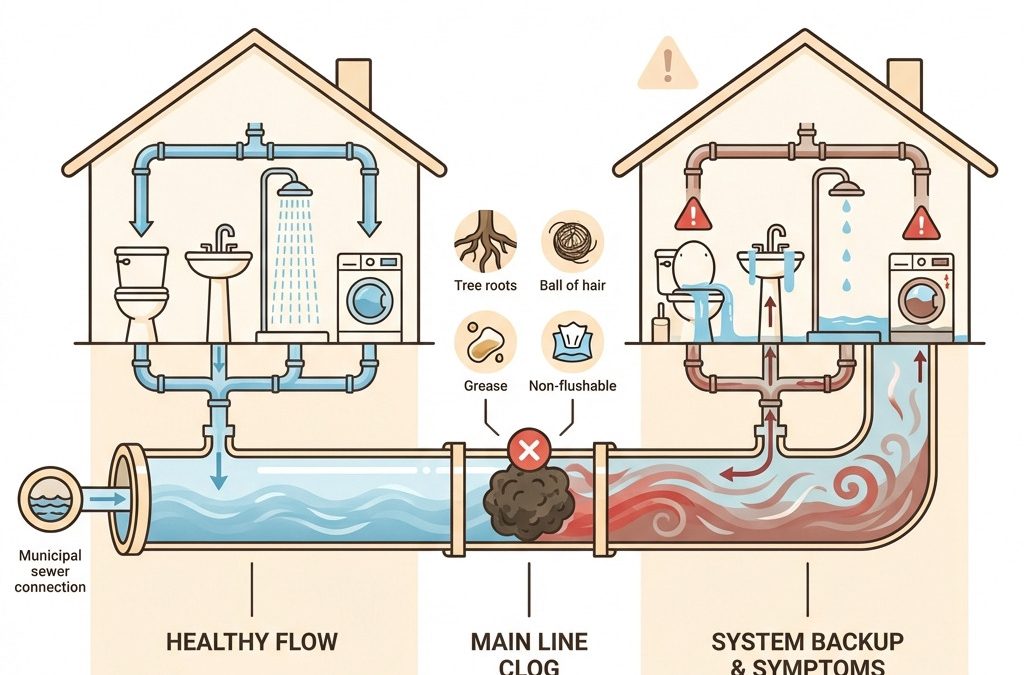
A plumbing main line clog is a blockage in the primary pipe carrying all wastewater from your home to the city sewer or septic tank. Unlike a single drain clog, a main line clog impacts your entire plumbing system, causing backups, foul odors, and potentially thousands of dollars in damage if left untreated.
Quick Answer: Signs of a Main Line Clog
- Multiple drains backing up at the same time
- Gurgling sounds from toilets or drains when water runs
- Sewage backing up into floor drains or lowest fixtures
- Foul odors coming from drains throughout your home
- Water level changes in toilet bowls when using other fixtures
A clog in your plumbing often affects a single fixture, but if more than one is backed up, you’re likely dealing with a main drain line problem. The main sewer line is the artery of your home’s plumbing system—when it gets blocked, wastewater has nowhere to go and backs up into your home through the lowest drains first.
Why This Matters Now
The average repair cost ranges from $1,000 to $4,000, with severe cases reaching $10,000. Leading causes include tree roots, grease buildup, and flushing non-flushable items. Understanding the warning signs and acting quickly can save you money and prevent serious water damage.
For over 20 years, Honest Home Services has helped Northern Utah homeowners with main line clogs. Our licensed team knows that early detection and proper maintenance can prevent a minor issue from becoming a costly disaster.
Spotting the Signs: Is It a Main Line Clog or Just One Drain?
When water flows poorly, it’s hard to know if you have a simple drain issue or a serious plumbing main line clog. The key is the scope of the problem. A main line clog affects your entire drainage system. Multiple fixtures backing up, slow drains throughout the house, or gurgling noises are all signs to watch for.
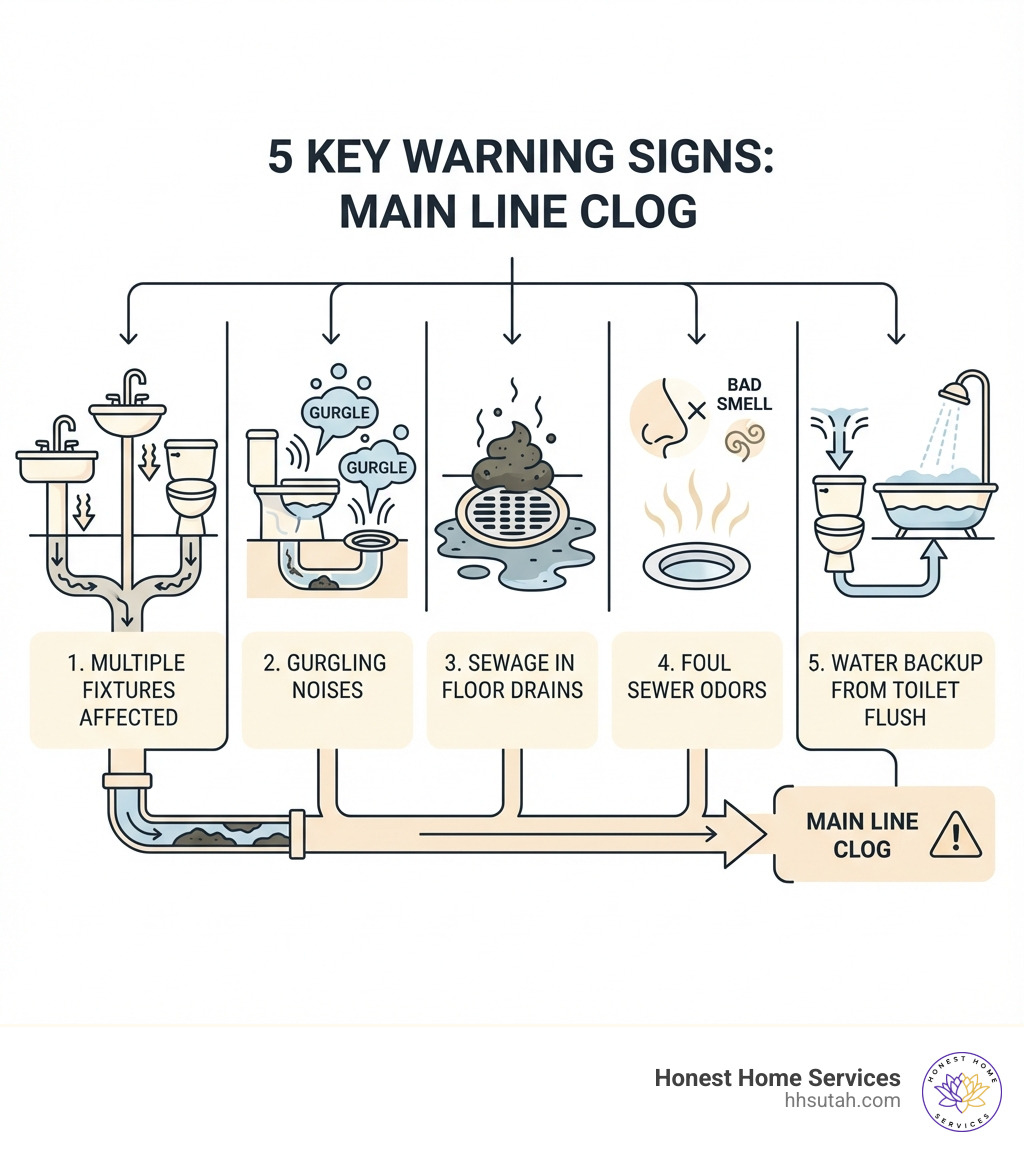
Here are the main signs that scream “main line clog”:
- Multiple Fixtures Clogged: The most telling sign. If your toilet, shower, and sink are all slow to drain, or one backs up when you use another, it’s likely a main line issue.
- Slow Drains Everywhere: One slow drain is a local issue. If all your drains are sluggish, the problem is likely in the main line where they converge.
- Gurgling Noises: Strange gurgling from toilets or drains when water runs elsewhere is caused by trapped air escaping past a blockage. Your plumbing is signaling a problem.
- Foul Odors: Sewer smells from drains or in your yard indicate a blockage. Wastewater can’t flow out, allowing gases to escape back into your home.
- Sewage Backup: The most alarming sign, requiring immediate professional help. Sewage backing up into floor drains (especially in the basement) or the sewer cleanout pipe confirms a major plumbing main line clog.
For more detailed insights into identifying serious issues, check out our guide on Signs You Need Professional Drain Cleaning. Don’t let these Clogged Drains become a bigger headache!
Main Line Clog vs. Single Drain Clog
Knowing the difference between a single drain clog and a plumbing main line clog is crucial. A single clog is localized and often a DIY fix. A main line clog affects your entire home.
Here’s a quick comparison:
| Symptom | Single Drain Clog | Main Line Clog |
|---|---|---|
| Affected Fixtures | Only one sink, toilet, tub, or shower. | Multiple fixtures (e.g., toilet, shower, kitchen sink) are slow or backed up, especially on lower floors. |
| Water Backups | Water backs up only in the affected fixture. | Water backs up in other fixtures when one is used (e.g., toilet flush causes tub backup, washing machine causes sink overflow). |
| Noises | Minimal or no unusual sounds. | Gurgling or bubbling sounds from drains or toilets when water is used elsewhere. |
| Odors | May have a slight localized odor. | Strong, foul sewer odors emanating from multiple drains. |
| Location of Backups | Isolated to the specific drain opening. | Often appears in the lowest drains first (e.g., basement floor drains, showers, bathtubs). |
| Underlying Cause | Hair, food scraps, small objects. | Tree roots, grease buildup, foreign objects, pipe damage. |
When multiple fixtures are acting up, it usually signals that the problem is beyond a simple hairball. For more information on common issues your home’s plumbing might face, refer to our article on Common Issues with Residential Plumbing.
Alarming Symptoms You Can’t Ignore
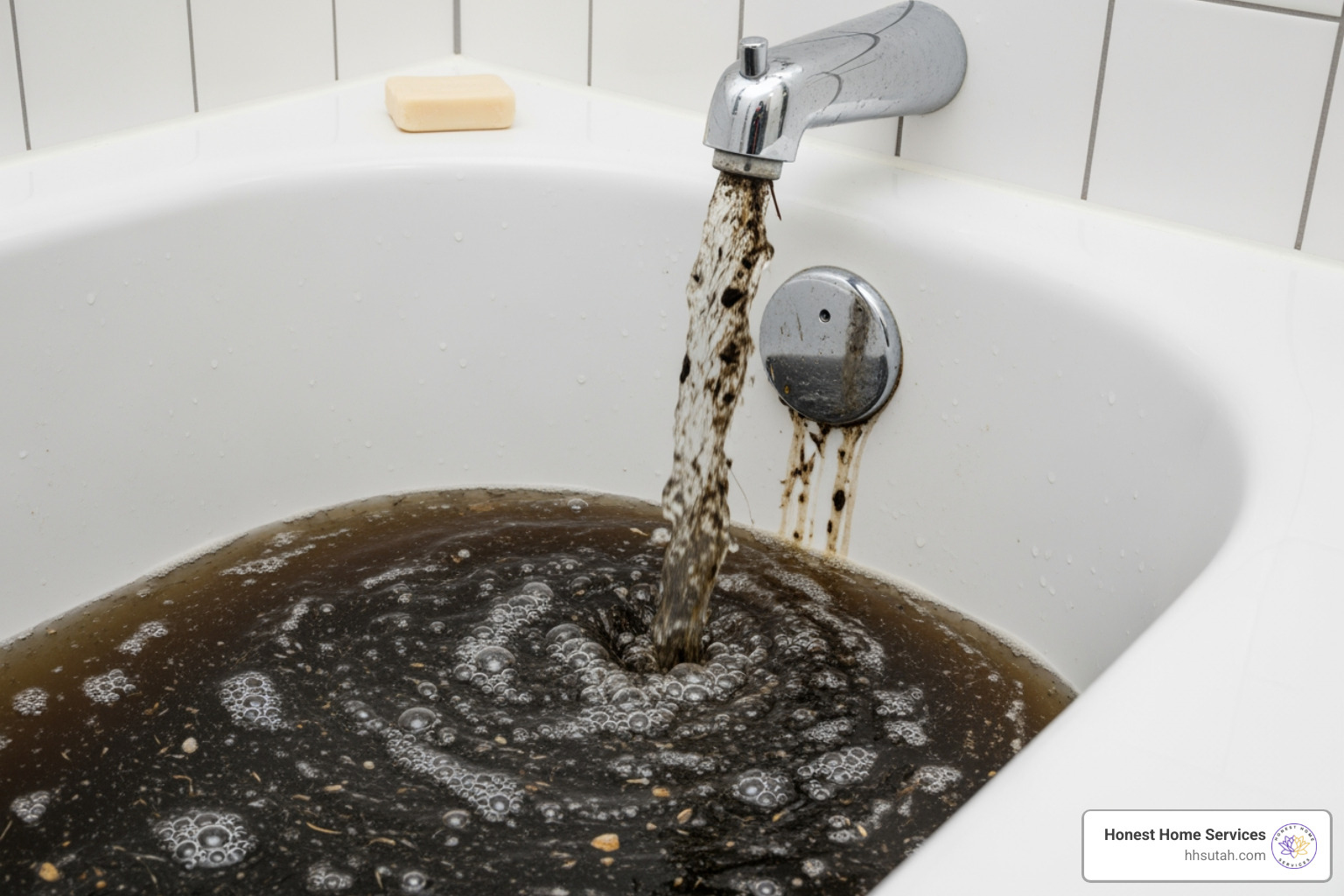
Some signs of a plumbing main line clog are urgent and require immediate attention to prevent significant water damage and health hazards.
- Sewage in Floor Drain: Sewage backing up from a floor drain or sewer cleanout confirms a main line clog. Wastewater is escaping where it can.
- Toilet Water Level Fluctuations: Unexpected changes in your toilet’s water level can signal air pressure shifts from a main line clog.
- Washing Machine Causing Overflows: A washing machine releases a large volume of water. If it causes other fixtures to overflow, your main line can’t handle the flow.
- Water Backing Up in Bathtub or Shower When Toilet Flushes: A classic sign of a main line clog. The toilet has a direct path to the main line, and the tub/shower is often the lowest fixture, so backed-up water appears there first.
These are not just minor inconveniences; they are clear indicators of significant Plumbing Problems that require prompt professional intervention.
The Root of the Problem: Causes of a Plumbing Main Line Clog
Understanding the causes of a plumbing main line clog is key to prevention. Main line blockages are more complex than simple drain clogs and develop over time.
Here are the most common culprits we encounter in Northern Utah homes:
- Tree Root Intrusion: A leading cause of sewer clogs. Tree roots seek moisture and nutrients in sewer pipes, infiltrating through tiny cracks or loose joints. Inside, they grow into dense masses that catch debris and block the line.
- Grease Buildup: Never pour fats, oils, and grease (FOG) down the drain. FOG solidifies in pipes, creating a sticky layer that catches debris and eventually causes a severe blockage.
- Foreign Objects: Non-flushable items like “flushable” wipes, paper towels, feminine hygiene products, and dental floss don’t break down in pipes. They snag and accumulate, creating large clogs.
- Sagging Sewer Lines (Bellies): Shifting soil or poor installation can cause a sewer line to sag, creating a low spot or “belly.” This area collects waste, leading to frequent clogs.
- Pipe Deterioration or Collapse: Older homes may have pipes made of clay or cast iron that are prone to corrosion, cracks, and collapse. Damaged pipes snag debris or collapse entirely, causing a complete blockage.
Many of these issues are exacerbated in Common Plumbing Problems in Older Homes and How to Fix Them. Knowing these common Plumbing Issues is the first step to avoiding them.
How Tree Roots Invade Your Pipes
Tree roots are powerful and persistent, naturally seeking the water and nutrients in your sewer line.
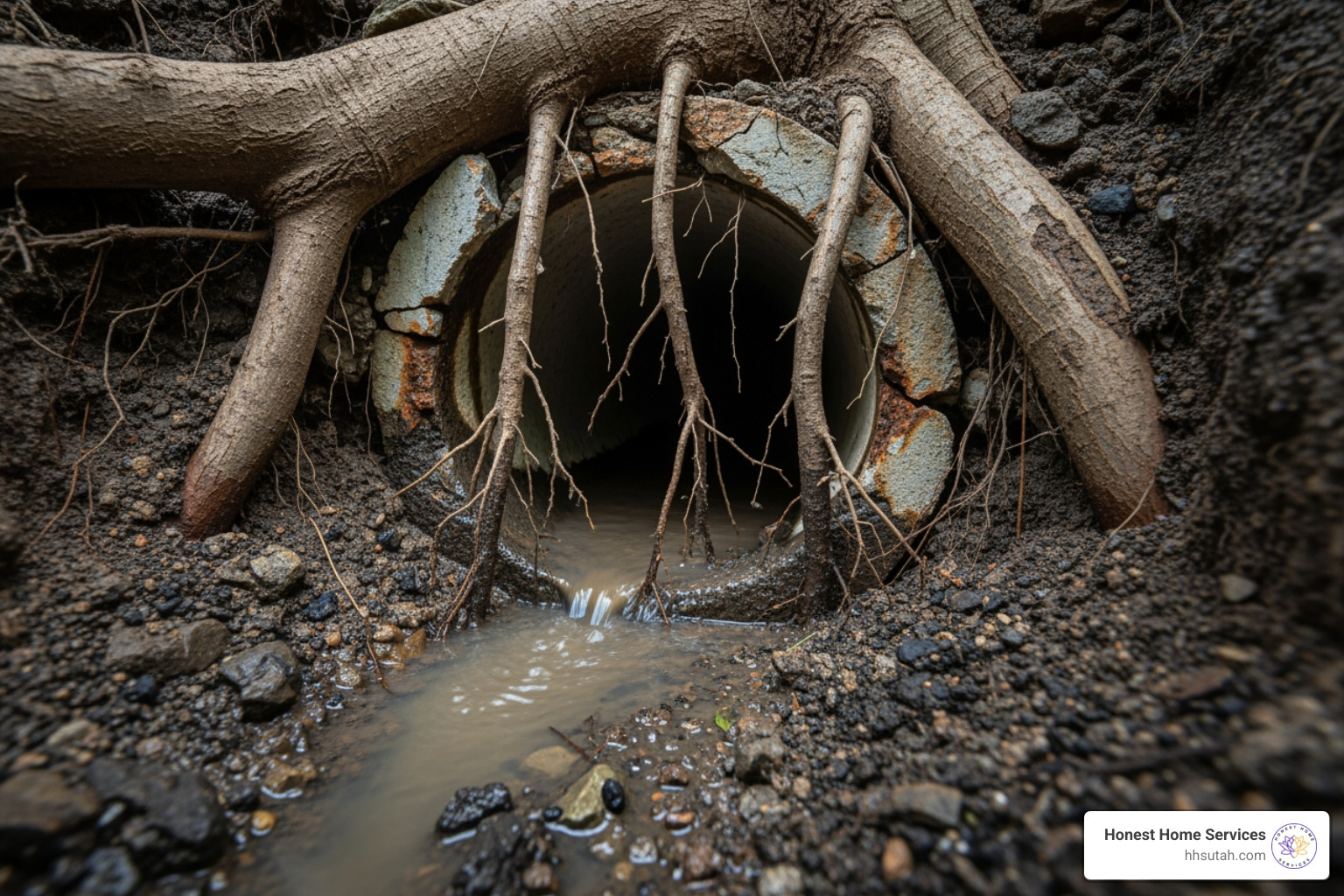
- Vapor Attraction: Tiny cracks release water vapor, attracting roots.
- Small Cracks and Joints: Roots penetrate hairline cracks or loose joints in older pipes.
- Growth Within: Inside, roots thrive on wastewater, forming a dense network that catches debris.
- Pipe Damage and Collapse: Expanding roots exert pressure, cracking or collapsing the pipe. A collapsed pipe requires extensive, often excavated, repair.
For homes with mature trees in their yard, regular inspections are crucial to prevent this silent destroyer. If you suspect tree roots are causing issues, our Pipe Repair Salt Lake City services can help.
The Risks of Ignoring a Clogged Sewer Line
Ignoring a plumbing main line clog can have severe consequences, including property damage, health risks, and high costs.
- Extensive Water Damage: Sewage backing up into your home is the most immediate risk. It can flood rooms, damaging floors, walls, and furniture. The longer you wait, the more costly the damage.
- Health Hazards: Raw sewage contains harmful bacteria and viruses, posing serious health risks. Exposure can cause illness, and cleanup requires specialized equipment.
- Foundation Damage: Persistent leaks can saturate soil around your foundation, leading to cracks and structural instability over time.
- Costly Repairs: Repair costs average $1,000 to $4,000 but can exceed $10,000, especially if excavation is needed. Ignoring warning signs guarantees a more expensive repair.
- Persistent Pest Problems: Backups and slow drainage create damp areas that attract rodents and insects, causing further health concerns.
Don’t let a minor gurgle turn into a major gush. Addressing Plumbing Repairs promptly is always the most cost-effective solution.
First Response: Immediate Steps & Safe DIY Attempts
If you suspect a plumbing main line clog, don’t panic. Before calling a professional, take these immediate steps to minimize damage.
- Stop Using Water Immediately: This is crucial. Any water sent down a drain will add to the backup. Stop using all water and water-using appliances.
- Turn Off the Main Water Supply (If Necessary): If water is overflowing, turn off your home’s main water supply valve, usually located near the water meter. This stops more water from entering the system.
- Locate Your Sewer Cleanout: This capped pipe provides direct access to your main sewer line. It’s a 3- to 4-inch pipe with a screw-on cap, often in the basement, crawlspace, or outside near the foundation. Its location is vital for any repair.
- Safety Precautions: Sewer lines are hazardous. Wear heavy-duty gloves, safety glasses, and old clothes. Ensure the area is well-ventilated.
For a comprehensive guide on handling unexpected issues, refer to What to Do in a Plumbing Emergency. When in doubt, it’s always safer to err on the side of caution and call a professional. But for those moments when you need immediate guidance, knowing these Emergency Plumbing steps can be a lifesaver.
How to Address a Plumbing Main Line Clog Yourself
If there’s no sewage overflow, you can try to clear a minor plumbing main line clog yourself. Exercise caution and know your limits.
Here’s a list of essential tools you’ll need:
- Plumbing Auger (Drain Snake): For a main line, you’ll need a heavy-duty auger with a cable at least ¾ inch to 1 inch in diameter, possibly with an electric motor. These can be rented from hardware stores.
- Adjustable Wrench or Pliers: To remove the cleanout cap.
- Heavy-Duty Gloves and Safety Glasses: Protection is paramount.
- Large Bucket and Tarp: To catch any overflowing water or debris.
- Garden Hose: For flushing the line after clearing.
Step-by-Step Guide:
- Access the Sewer Cleanout: Wearing safety gear, locate the cleanout and place a bucket and tarp underneath.
- Carefully Remove the Cleanout Cap: Slowly loosen the cap with a wrench. Stand clear, as pressurized water may gush out. If water flows out, replace the cap and call a professional immediately.
- Use a Plumbing Auger (Drain Snake):
- Feed the auger cable into the cleanout.
- Push until you feel resistance, which is the clog.
- Turn the auger handle clockwise to bore into the blockage. Don’t force it, to avoid pipe damage.
- Work the cable back and forth to break up the clog.
- Continue until the resistance is gone.
- Flush the Line: Once the clog seems clear, loosely replace the cap and test a low-level drain. If it drains properly, remove the cap and flush the line with a garden hose for several minutes to clear remaining debris.
- Test Your Drains: Securely tighten the cleanout cap. Test all drains, starting with the lowest, to ensure they flow freely.
Working on a sewer line can be hazardous. Before beginning any DIY project to unclog a sewer line, always prioritize safety. For more general fixes, check out our DIY Plumbing Fixes Every Homeowner Should Know.
What NOT to Do: The Dangers of Chemical Drain Cleaners
While tempting for a stubborn clog, chemical drain cleaners are a bad idea for a plumbing main line clog.
- Pipe Corrosion: Harsh chemicals can corrode pipes, especially older ones, leading to leaks or failure.
- Ineffectiveness on Major Clogs: These cleaners are for small, local clogs, not dense main line blockages like roots or grease. The chemicals often sit on top of the clog, making a plumber’s job harder and more dangerous.
- Health Risks: Toxic fumes can cause respiratory issues, and contact can cause severe skin and eye burns.
- Environmental Impact: These chemicals harm the environment when flushed into the water supply.
Before using any chemicals, always check your local guidelines on hazardous household waste. For serious clogs, leave the chemicals on the shelf. When it comes to DIY Plumbing: When to Tackle It Yourself and When to Call a Pro, chemical drain cleaners for a main line clog fall firmly into the “call a pro” category.
Calling in the Cavalry: Professional Solutions for Stubborn Clogs
When DIY efforts fail or the clog is too severe, it’s time to call a professional. The Honest Home Services team has the expertise and tools to handle stubborn main line blockages throughout Northern Utah.
You should always call a professional plumber if:
- DIY Attempts Fail: If an auger doesn’t work or water still backs up, the clog is beyond a DIY fix.
- Recurring Clogs: Constant clogs indicate an underlying problem like pipe damage or roots that needs a professional diagnosis.
- Suspected Pipe Damage: Wet spots in the yard, outdoor sewage odors, or foundation cracks suggest damaged pipes that need an expert.
- Tree Root Blockage: Roots are difficult to remove completely without professional equipment and advice on prevention.
- Sewage Backups: Raw sewage in your home is an emergency requiring immediate professional help to protect your health and property.
Don’t wait until a small issue becomes a costly mess. Knowing When to Call an Emergency Plumber can save you time, money, and headaches. For reliable Professional Drain Cleaning services, we’re always here to help.
When to Call a Professional for a Plumbing Main Line Clog
A professional plumber diagnoses the root cause of a plumbing main line clog to prevent it from happening again.
One of our most valuable tools is a video camera inspection. We feed a small, high-resolution camera into your sewer line, allowing us to:
- Locate the Clog Precisely: We can pinpoint the exact location and nature of the blockage, whether it’s roots, a grease “fatberg,” or a foreign object.
- Assess Pipe Condition: The camera reveals the overall health of your pipes, identifying cracks, corrosion, sagging sections (bellies), or collapsed areas.
- Determine the Best Solution: With a clear picture of what’s happening inside your pipes, we can recommend the most effective and least invasive solution.
This diagnostic step is crucial for an effective and lasting repair. For more details on this process, check out 6 Telltale Signs You Need a Camera Drain Inspection. Regular Plumbing Inspection can catch these issues before they escalate.
Advanced Solutions: Hydro-Jetting and Root Removal
After diagnosis, a professional uses advanced tools to clear your plumbing main line clog.
- Hydro-Jetting: This technique uses high-pressure water (up to 4,000 PSI) to scour pipe interiors. Unlike a snake, which just pokes a hole, hydro-jetting cleans the entire pipe, removing grease, sludge, and even roots. It restores the pipe’s full diameter for a longer-lasting solution. It’s safe for most pipes, but we always perform an inspection first to prevent damage to older lines. Learn more on our hydro-jetting page and see these 5 Signs You Need Hydro-Jetting for Your Drains. We also have more information on Hydro Jetting Salt Lake.
- Mechanical Root Removal: For severe root intrusion, we use specialized root-cutting tools on our drain augers. These cut through dense root masses, which are then flushed away. Hydro-jetting often follows to clear remaining fragments and clean the pipe walls.
- Pipe Repair or Replacement: If a camera inspection reveals significant pipe damage, clearing the clog isn’t enough. We offer trenchless pipe repair solutions (like pipe lining or bursting) to repair or replace sewer lines with minimal digging, saving your yard and driveway.
Our licensed plumbers are experts in determining the best course of action for your specific situation, ensuring a reliable and lasting fix for your plumbing main line clog.
Future-Proofing Your Pipes: How to Prevent Main Line Clogs
Prevention is key for avoiding a plumbing main line clog. While some issues are out of your control, mindful habits and regular maintenance can mitigate many common causes and reduce your risk of a costly backup.
- Proper Disposal: Be vigilant about what goes down your drains and toilets.
- What Not to Flush: The toilet is not a trash can.
- Grease Management: Never pour fats, oils, or grease down your kitchen drain.
- Drain Strainers: Use strainers in all your sinks and shower drains to catch hair, food particles, and other debris.
- Regular Maintenance: Implement a routine schedule for drain care and professional inspections.
These preventative measures are key to keeping your plumbing system healthy. Our Preventative Drain Cleaning Tips Every Homeowner Should Know offers more great advice, and you can find comprehensive information on general Plumbing System Maintenance on our site.
10 Things to Never Put Down Your Drains
This list covers common household items that cause main line clogs and should be kept out of your drains:
- “Flushable” Wipes: Despite the label, they don’t break down and are a top cause of clogs. Throw them in the trash.
- Paper Towels: They don’t dissolve easily and create blockages.
- Feminine Hygiene Products: They expand and are a guaranteed clog risk.
- Grease and Oil: These solidify in pipes. Pour cooled grease into a disposable container and trash it.
- Coffee Grounds: They clump together and form dense clogs.
- Eggshells: Their sharp edges catch debris and cause buildup.
- Large Food Scraps: Even with a disposal, large or fibrous scraps can cause clogs.
- Dental Floss: This non-biodegradable string tangles with other debris.
- Cotton Swabs/Balls: They don’t break down and easily start clogs.
- Medications: Don’t flush them; they contaminate the water supply.
For more tips on keeping your drains clear, read our article Say Goodbye to Clogged Drains with These Effective Drain Cleaning Tips.
The Value of Routine Plumbing Inspections
Besides daily habits, regular professional plumbing inspections are one of the most effective ways to prevent a major plumbing main line clog.
- Early Detection: Inspections let our plumbers find potential issues like minor root intrusion, grease buildup, or small pipe cracks before they become expensive problems.
- Preventing Emergencies: Addressing minor problems early reduces the chance of a messy plumbing emergency, saving you stress and money.
- Older Homes: For older homes in the Salt Lake City area, inspections are crucial for monitoring aging pipes that are more susceptible to deterioration.
- Homes with Large Trees: If you have large trees near your sewer line, annual inspections are recommended to check for root intrusion.
We recommend a professional inspection every 2-3 years, or annually for older systems or homes with previous issues. This small investment provides peace of mind. Learn more about The Benefits of Regularly Scheduled Plumbing Inspections and check out The Ultimate Guide to Plumbing Maintenance in Your Home for a complete overview.
Conclusion
A plumbing main line clog is a stressful experience. By understanding the warning signs, acting quickly, and using preventative measures, you can protect your home and wallet.
Multiple slow drains, gurgling, odors, and sewage backups are clear signs your main line needs attention. While some clogs are DIY-friendly, don’t underestimate complex blockages or use harsh chemicals.
At Honest Home Services, we believe in honest, reliable, and affordable solutions for our Northern Utah community, including Salt Lake City, Davis County, and surrounding areas. Our local, expert technicians are available 24/7 for emergency support, guaranteeing customer satisfaction with every service call.
Don’t let a gurgle turn into a gush. For expert diagnosis, professional clearing, and reliable solutions for your main line, don’t hesitate to reach out. Schedule your Salt Lake City Sewer Mainline Repair today!