
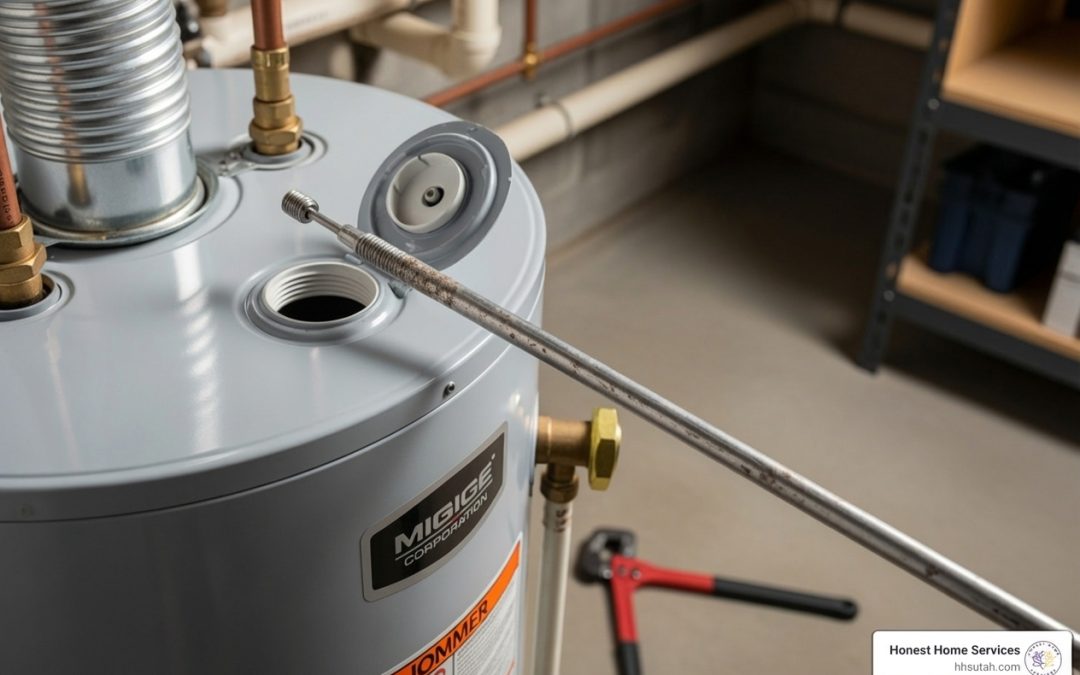
The Unsung Hero Inside Your Water Heater
Gas water heater anode rod replacement is a simple maintenance task that can add years to your water heater’s life and save you thousands of dollars in replacement costs. Here’s what you need to know:
Quick Answer: Gas Water Heater Anode Rod Replacement
- Frequency: Inspect annually, replace every 2-3 years (sooner in hard water areas)
- Time Required: 1-2 hours for most homeowners
- Cost: $20-40 for the rod (DIY) or $150-300 with professional installation
- Key Steps: Turn off gas and water → Drain partial tank → Remove old rod with 1 1/16″ socket → Install new rod with sealant
- When to Replace: Rod is less than 1/2 inch thick, shows exposed steel wire, or has heavy calcium buildup
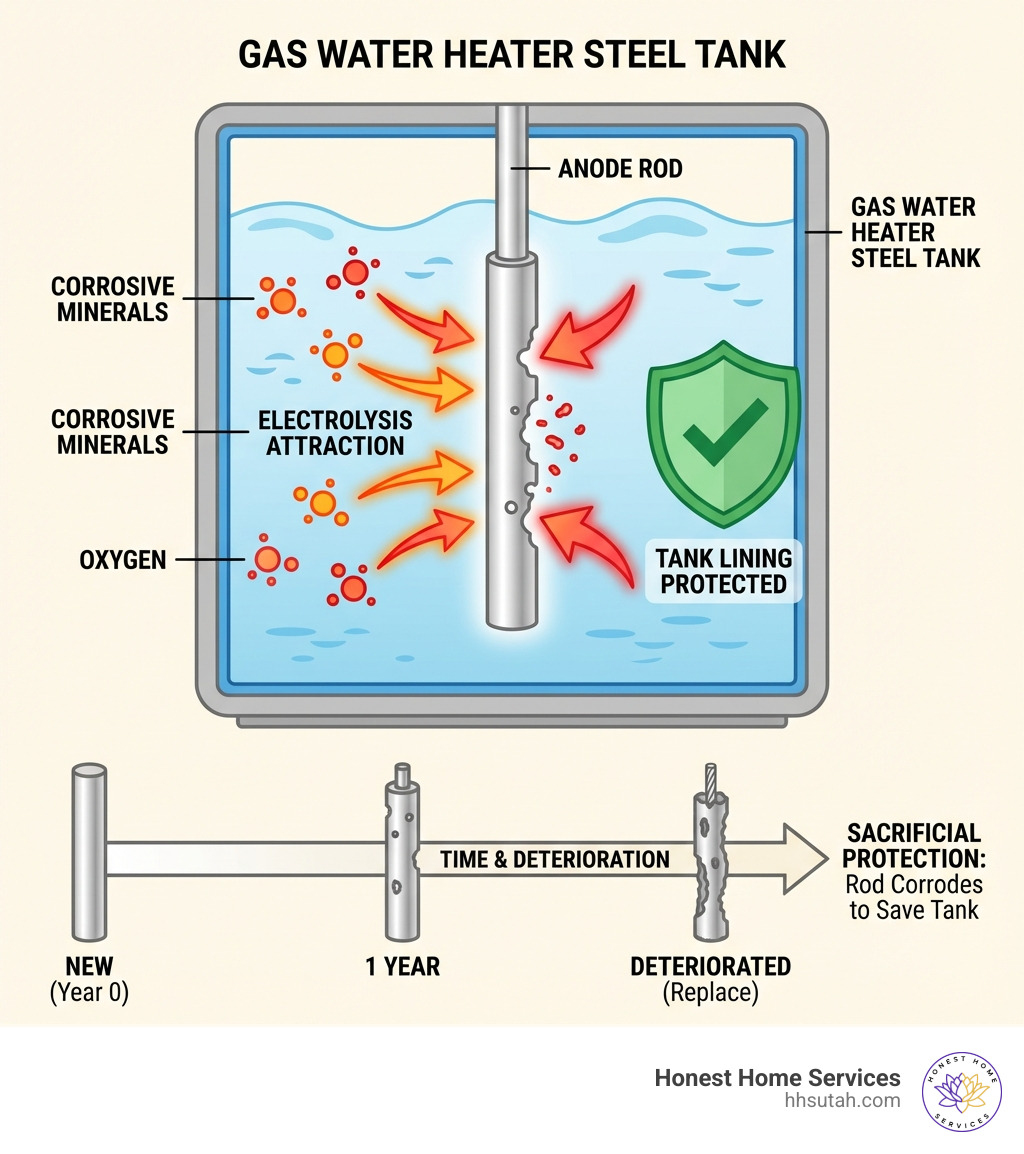
The anode rod is your water heater’s sacrificial protector. It’s designed to corrode so your expensive steel tank doesn’t. Through a process known as galvanic corrosion, the more reactive metal of the anode rod attracts corrosive elements to itself, slowly dissolving over time while your less reactive steel tank stays intact.
Without a functioning anode rod, your tank’s interior begins to rust. That rusty, brownish hot water you might notice? It’s often a sign the anode rod has completely deteriorated and your tank is now corroding. Once that starts, you’re looking at a full water heater replacement, not just a simple part swap.
Most water heaters fail prematurely because homeowners don’t know the anode rod exists. Manufacturers recommend checking it yearly, but most people never do—until they’re dealing with a flooded basement or a cold shower on a winter morning.
At Honest Home Services, we’ve performed countless gas water heater anode rod replacements across Northern Utah over our 20+ years in business, helping homeowners extend their water heater lifespan by 5-10 years. Whether you tackle this DIY project yourself or need professional help with a stuck or hard-to-reach rod, this guide will walk you through everything you need to know.
Signs You Need a New Anode Rod & Tools for the Job
Your water heater works tirelessly behind the scenes, providing us with the comfort of hot water day in and day out. But like any appliance, it needs attention to stay in top shape. The anode rod, in particular, is a critical component that silently protects your investment. Knowing the signs of its deterioration is key to preventing costly damage.
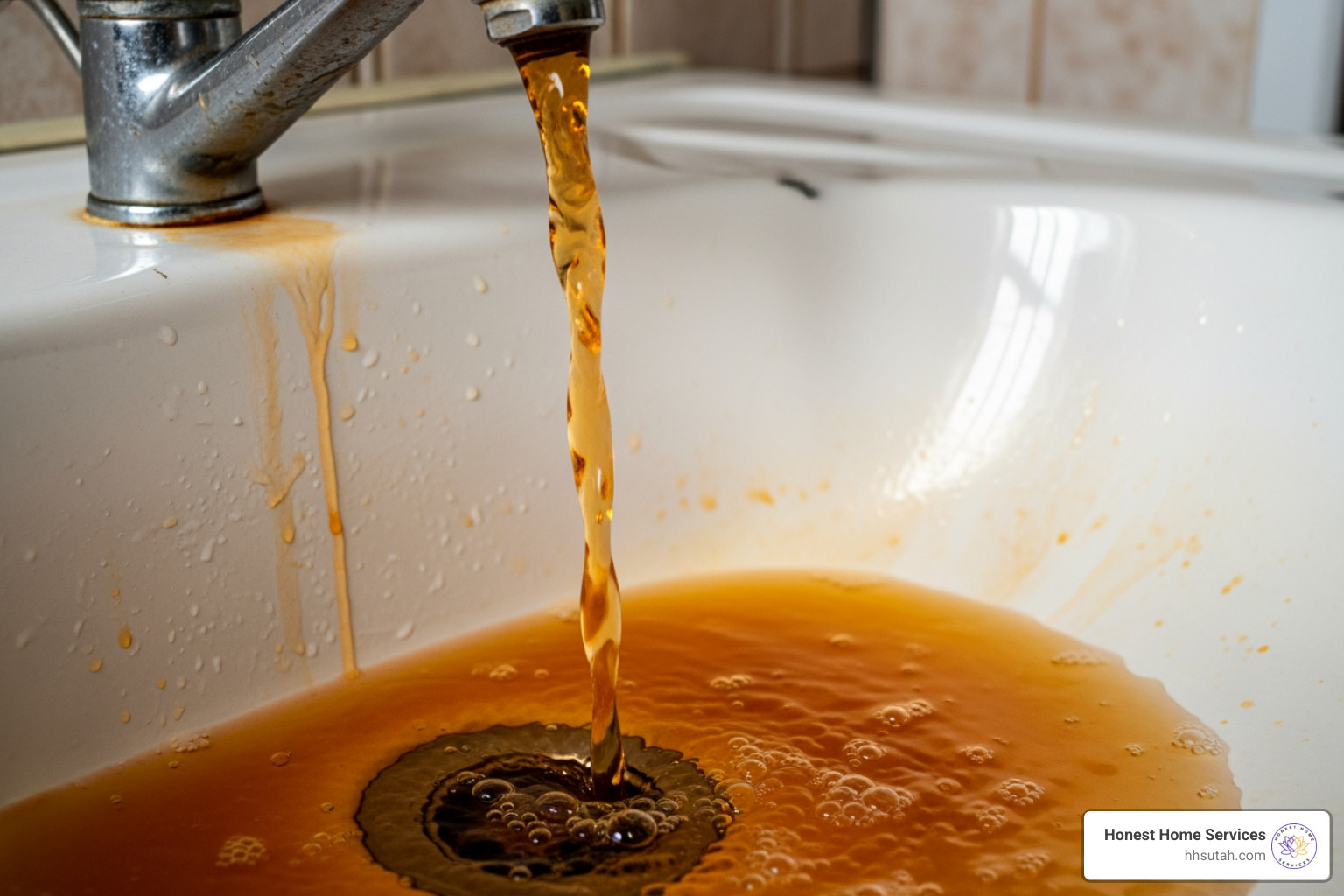
One of the most obvious indicators that your anode rod might be failing is the quality of your hot water. If you notice rusty or brownish water coming from your tap, it’s a huge red flag. This isn’t just an aesthetic issue; it means your anode rod has likely expired, and your water heater’s steel tank is now actively corroding. A rusty tank not only makes your hot water look and taste foul but also makes it highly susceptible to failure. Just like an old, rusted car, it’s only a matter of time before the tank itself begins to leak.
Beyond discolored water, other subtle clues can hint at an anode rod in distress. If your hot water takes an unusually long time to heat up, or if it’s consistently lukewarm instead of hot, it could indicate sediment buildup, which often goes hand-in-hand with a neglected anode rod. Popping or knocking noises from your water heater are another classic symptom of sediment accumulation at the bottom of the tank. This sediment can accelerate corrosion, putting extra strain on your anode rod and eventually your tank.
The anode rod is truly “sacrificial” – its job is to corrode so your tank doesn’t. If it’s corroding, it means it’s doing its job. But once it’s gone, your tank is next. Regular inspection is the best defense.
When to Inspect and Replace Your Anode Rod
So, how often should you inspect and replace this unsung hero? We recommend an annual inspection of your anode rod. This is a crucial step in proactive water heater maintenance. However, the frequency of actual replacement can vary.
You should consider replacing your anode rod if you observe any of the following:
- Visible steel core wire: This is a clear sign that the sacrificial metal has largely dissolved, leaving only the central steel wire. At this point, it’s no longer protecting your tank.
- Less than half an inch thick: If the rod’s diameter has shrunk to less than half an inch, it’s severely depleted and nearing the end of its protective life.
- Heavy calcium buildup: While some buildup is normal, excessive calcium deposits can hinder the rod’s ability to attract corrosive elements, making it less effective.
- Rusty hot water: As mentioned, this is a strong indicator that the anode rod has completely deteriorated, and the tank itself is starting to rust.
While annual inspections are a good rule of thumb, a typical anode rod lasts between 2 to 3 years. However, factors like water quality significantly impact its lifespan. If you live in an area of Northern Utah with particularly hard water (high mineral content), your anode rod might deplete faster and require replacement every 1 to 2 years. The more corrosive elements in your water, the harder your anode rod works, and the quicker it sacrifices itself.
Choosing the Right Anode Rod
Not all anode rods are created equal. They come in different materials, each with specific properties that make them suitable for various water conditions. Understanding these differences can help you choose the best replacement for your gas water heater.
Here’s a comparison of the most common types:
| Anode Rod Type | Material Composition | Best Suited For | Pros | Cons |
|---|---|---|---|---|
| Magnesium Rods | Magnesium | Soft to moderately hard water | Excellent corrosion protection; Ideal for most water conditions | Can produce a “rotten egg” smell (sulfur) in some water conditions, especially with soft water. |
| Aluminum Rods | Aluminum | Hard water; Water with sulfur smell; Moderately soft water | Good corrosion protection; Less prone to sulfur smell than magnesium; Cost-effective | May be less effective in very hard water than magnesium; Some concern over aluminum in drinking water (though typically minimal). |
| Zinc-Aluminum Rods | Zinc (9-10%) and Aluminum (90%) | Water with sulfur odor; Well water; Hard water | Effectively combats sulfur smell; Good corrosion protection | More expensive than pure aluminum or magnesium; Not always necessary if sulfur isn’t an issue. |
For most homes in Northern Utah, where water hardness can vary, a magnesium or aluminum rod is often a good choice. If you’ve previously experienced a “rotten egg” smell (caused by a reaction between magnesium, sulfates in the water, and bacteria), an aluminum or zinc-aluminum rod might be a better option for your gas water heater anode rod replacement. Always check your water heater’s manual or consult with a professional from Honest Home Services if you’re unsure which type is best for your specific water conditions.
Essential Tools for a Gas Water Heater Anode Rod Replacement
Before you dive into the replacement process, gathering the right tools will make the job much smoother and safer. Here’s what we recommend having on hand for your gas water heater anode rod replacement:
- 1 1/16-inch Socket: This is the most common size for anode rod hex heads. Make sure it’s a deep-well socket to properly fit over the rod.
- Breaker Bar: An anode rod can be incredibly tight, often factory-torqued. A long breaker bar provides the leverage you’ll need to loosen it.
- Ratchet Wrench: Once the rod is loosened by the breaker bar, a ratchet wrench will help you quickly spin it out.
- Garden Hose: Essential for draining water from the tank.
- Pipe Thread Sealant (or PTFE/Teflon Tape): To ensure a watertight seal when installing the new anode rod. Apply it to the threads of the new rod.
- Bucket: To catch any residual water when removing the old rod or if there are minor spills.
- Adjustable Wrench or Pliers: Useful for general plumbing connections, though not strictly for the anode rod itself.
- Wire Brush: To clean any debris from the anode rod opening before installing the new one.
- Old Towels/Rags: For cleanup.
- New Anode Rod: Make sure it’s the correct type and length for your water heater. Flexible anode rods are available for installations with limited overhead clearance.
Having these tools ready will ensure your gas water heater anode rod replacement project goes as efficiently as possible.
Your Step-by-Step Guide to Gas Water Heater Anode Rod Replacement
Replacing the anode rod in your gas water heater might seem like a daunting task, but with the right preparation and a clear understanding of the steps, it’s a DIY project many homeowners can tackle. However, safety is paramount, especially when working with gas appliances. Always proceed with caution.
Step 1: Safety and Preparation
Before you touch anything, prioritize safety. This step is non-negotiable for a gas water heater anode rod replacement.
- Turn off the Gas Supply: Locate the gas shut-off valve on the gas line leading to your water heater. Turn the handle to the “OFF” position. It’s also a good practice to turn off the gas supply at the main gas meter for added safety, especially if you’re uncomfortable.
- Extinguish the Pilot Light: For gas water heaters, you must extinguish the pilot light. Follow the instructions on your water heater’s label for safely doing this. This prevents the burner from igniting while you’re working.
- Shut Off the Cold Water Inlet: Find the cold water shut-off valve located on the cold water supply line entering the top of your water heater. Turn it clockwise until it’s completely closed. This stops new water from entering the tank.
- Relieve Tank Pressure: To prevent a vacuum and ensure water drains properly, open a hot water faucet (like in a nearby sink or tub) in your home. Let it run until the water stops flowing, indicating the pressure has been relieved. Leave the faucet open during the draining process.
- Drain Some Water from the Tank: Attach a garden hose to the drain valve located at the bottom of your water heater. Direct the other end of the hose to a floor drain or outside where it can safely discharge hot water. Open the drain valve and allow about 5-10 gallons of water to drain out. This lowers the water level below the anode rod opening, preventing a flood when you remove the old rod. You don’t need to completely drain the tank for an anode rod replacement, just enough to get below the top.
Step 2: Locating and Removing the Old Rod
With safety measures in place and some water drained, you’re ready to access the anode rod.
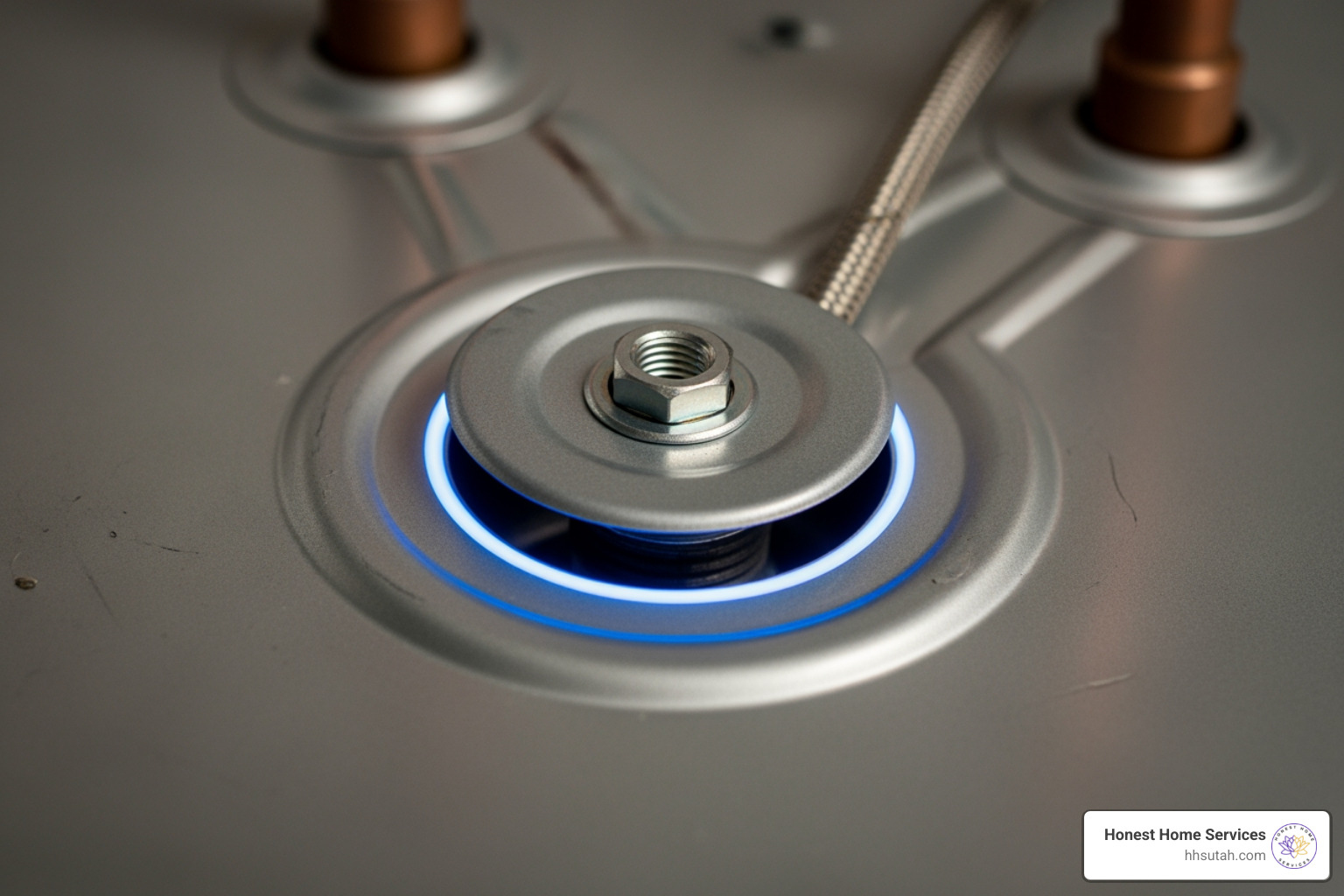
- Locate the Anode Rod: On most gas water heaters, the anode rod is located under a hex head bolt on the top of the tank. It might be clearly visible or hidden under a plastic cap or insulation. You might need to carefully remove a top plate or some insulation to expose it. The hex head is typically 1 1/16-inch.
- Loosen the Rod: This is often the trickiest part, as anode rods are usually factory-torqued very tightly. Place your 1 1/16-inch socket onto the hex head bolt. Attach your breaker bar for maximum leverage. Apply steady, counter-clockwise pressure. You might need to use significant force. If it’s extremely stubborn, a few taps with a hammer on the end of the breaker bar (while applying pressure) can sometimes help break the seal, but be careful not to damage the tank.
- Remove the Old Rod: Once the rod is loosened, you can switch to a ratchet wrench to unscrew it the rest of the way. As you pull the rod out, be cautious – it might be long and heavy, and there could be some residual water dripping. Have your bucket and towels ready. Inspect the old rod: Is it mostly gone, less than half an inch thick, or showing exposed steel wire? This confirms it was time for a gas water heater anode rod replacement.
What if the rod is stuck or integrated? If the rod is incredibly difficult to remove, or if you find it’s integrated directly into the hot water outlet (a less common but possible design), it might be time to call in the professionals. We at Honest Home Services have specialized tools and expertise for tackling even the most stubborn anode rod removals.
Step 3: Installing the New Anode Rod
With the old, depleted rod out, it’s time for the new sacrificial protector to take its place.
- Compare and Prepare the New Rod: Before inserting, compare your new anode rod to the old one to ensure it’s the correct length and type. If you have limited overhead clearance (e.g., in a tight utility closet), consider using a flexible (segmented) anode rod, which can be bent to fit through the opening.
- Apply Pipe Thread Sealant: Wrap the threads of the new anode rod with pipe thread sealant (Teflon tape) or apply a liquid pipe thread compound. This is crucial for creating a watertight seal and preventing leaks.
- Insert and Tighten: Carefully lower the new anode rod into the tank opening. Once seated, hand-tighten it clockwise. Then, use your ratchet wrench and finally the breaker bar to tighten it securely. Do not overtighten, as this can damage the tank threads. Aim for a snug, firm fit that prevents leaks.
Troubleshooting and Post-Installation Checks
You’ve successfully completed your gas water heater anode rod replacement! Now, it’s time to bring your water heater back online and ensure everything is working correctly. A few checks will confirm your hard work paid off.
What If the Anode Rod is Stuck or Broken?
Sometimes, things don’t go as smoothly as planned. Anode rods can become incredibly corroded and fused to the tank, making them extremely difficult to remove. If you find yourself wrestling with a stubborn rod, here’s what to consider:
- Impact Wrench: For exceptionally stuck rods, a high-torque impact wrench can sometimes break the corrosion bond where a breaker bar fails. However, this tool requires experience to use safely on a water heater.
- Penetrating Oil: Applying a good quality penetrating oil and letting it sit for several hours (or even overnight) can help loosen seized threads.
- Broken-Off Rod: If the hex head snaps off or the rod breaks during removal, you’ve got a bigger problem. Trying to extract a broken piece from inside the tank can be very challenging and risks damaging the tank further.
- Integrated Rods: As mentioned earlier, some water heaters have anode rods integrated into the hot water outlet nipple. These require a different approach and often specialized tools for removal and replacement.
If you encounter any of these difficult situations, or if the job simply feels too big or too risky, it’s always best to contact a professional plumber. We at Honest Home Services are experts in gas water heater anode rod replacement and can handle even the most challenging removals in Salt Lake City, Salt Lake County, Davis County, and throughout Northern Utah. Don’t risk damaging your water heater or causing a gas leak – our local, expert technicians are here to help.
What to Do After Your Gas Water Heater Anode Rod Replacement
Once the new anode rod is securely in place, you can reverse the process to get your water heater back in action.
- Restore Water Supply: Close all hot water faucets you opened earlier. Slowly open the cold water inlet valve on top of your water heater. Listen as the tank fills. Once the tank is full, open a hot water faucet at a nearby sink to purge any air from the lines until a steady stream of water flows.
- Check for Leaks: Carefully inspect around the new anode rod connection for any signs of leaks. A tiny drip might be resolved by slightly tightening the rod, but if it persists, you might need to re-apply thread sealant.
- Relight the Pilot Light: Refer to your water heater’s instruction label and safely relight the pilot light. Once the pilot is lit, turn the gas control knob to the “ON” position.
- Monitor Performance: Over the next few hours, check your hot water temperature and listen for any unusual noises. Everything should operate normally, with your water heater now protected by its fresh sacrificial anode.
Frequently Asked Questions about Anode Rods
We often get questions about anode rods and their importance. Here are some of the most common ones we hear from homeowners in Northern Utah.
What are the consequences of not replacing a worn-out anode rod?
Neglecting your anode rod is like neglecting your car’s oil changes – it leads to premature failure and costly repairs. The consequences of not replacing a worn-out anode rod are severe:
- Premature Tank Failure: This is the biggest and most expensive consequence. Without its sacrificial protector, your water heater’s steel tank will begin to corrode from the inside out. Once the tank rusts through, it cannot be repaired and must be replaced.
- Expensive Water Heater Replacement: A new water heater is a significant investment, often costing thousands of dollars for the unit and installation. A simple gas water heater anode rod replacement costs a fraction of that.
- Water Damage: A rusted-through tank will eventually leak, potentially causing extensive water damage to your home, flooring, walls, and belongings. This can lead to even higher repair bills and the headache of cleanup.
- Rusty Water: As discussed, discolored hot water is a sign that your tank is actively corroding. Not only is this unappealing for showering and laundry, but it can also stain fixtures.
- Reduced Efficiency: Sediment buildup, often accelerated by a corroding tank, can reduce your water heater’s efficiency, leading to higher energy bills.
A neglected anode rod significantly shortens the lifespan of your water heater, turning a relatively minor maintenance task into a major financial burden.
How does this process differ for a gas vs. an electric water heater?
While the core concept of anode rod replacement is similar for both gas and electric water heaters, the initial safety steps differ significantly due to their power sources.
- Safety Shut-off:
- For a gas water heater anode rod replacement, you must turn off the gas supply and extinguish the pilot light, as detailed in Step 1 of our guide.
- For an electric water heater, you would instead turn off the power to the unit at your home’s electrical breaker panel. This ensures no electricity is flowing to the heating elements or controls while you work.
- Heating Elements: Electric water heaters have internal heating elements. While these usually don’t interfere with anode rod access (which is typically from the top), if you were to fully drain the tank, you’d need to ensure the elements remain submerged to avoid damage if the power was accidentally restored.
- Access: The location of the anode rod (usually on top) and the general method of removal and installation are largely the same for both types. Some electric models might have the anode rod integrated into the hot water outlet, similar to some gas models, which can complicate removal.
Aside from these power-source-specific safety precautions, the overall process of draining some water, loosening and removing the old rod, and installing the new one is quite similar for both gas and electric water heaters.
What is the average cost to replace an anode rod?
The cost of an anode rod replacement can vary depending on whether you choose to do it yourself or hire a professional.
- DIY Cost: If you undertake the gas water heater anode rod replacement yourself, your primary cost will be the new anode rod itself. These typically range from $20 to $50, depending on the material (magnesium, aluminum, zinc-aluminum) and whether it’s a standard or flexible rod. Add a few dollars for pipe thread sealant or Teflon tape if you don’t already have it. Your main investment here is your time and effort.
- Professional Replacement Cost: Hiring a professional plumber from Honest Home Services for an anode rod replacement will include the cost of the rod, labor, and a service call fee. This typically ranges from $150 to $300. While this is more than the DIY cost, it includes the peace of mind of having a licensed, experienced technician handle the job safely and correctly, especially if the rod is stuck or you’re uncomfortable working with gas appliances. For homeowners in Salt Lake City, Layton, Kaysville, or any of our Northern Utah service areas, we offer fair pricing and guaranteed customer satisfaction for all our plumbing services.
Can a homeowner replace the anode rod themselves, or is it a job for a professional? Yes, many homeowners can successfully replace an anode rod by following the steps outlined in this guide. However, if you’re uncomfortable working with gas, don’t have the proper tools, or encounter a particularly stubborn or integrated anode rod, calling a professional is always the safest and often most efficient option.
Conclusion: Protect Your Investment with Proper Maintenance
Your water heater is one of the most hardworking appliances in your home, and its longevity largely depends on consistent, preventative maintenance. The gas water heater anode rod replacement might be a small task, but its impact on extending your water heater’s life and preventing costly repairs is immense. By regularly inspecting and replacing this sacrificial component, you’re not just swapping a part; you’re safeguarding your investment, ensuring a reliable supply of hot water, and avoiding the headache and expense of premature tank failure and water damage.
While tackling a DIY project like an anode rod replacement can be incredibly satisfying, we understand that not everyone has the time, tools, or comfort level to perform this type of maintenance, especially when it involves gas appliances. That’s where we come in. At Honest Home Services, we provide honest, reliable, and affordable plumbing, heating, and AC services, including 24/7 emergency support, to Northern Utah. Our local, expert technicians are always ready to assist you with any water heater maintenance or repair needs, from routine anode rod replacements to complex system diagnostics. We pride ourselves on guaranteed customer satisfaction and fair pricing, ensuring your home’s comfort system is in the best hands.
Don’t wait for rusty water or a cold shower to realize your anode rod has given its all. Proactive maintenance saves you money and stress in the long run. If you’re in Salt Lake City or the surrounding areas and need professional assistance with your water heater, don’t hesitate to reach out.