
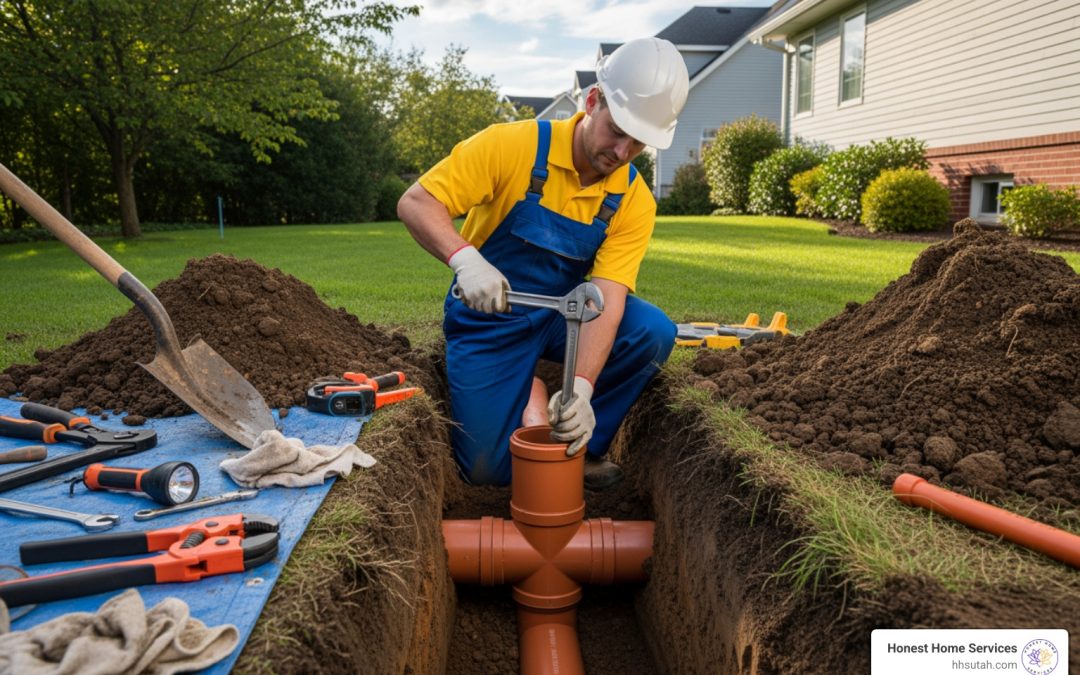
Why Understanding Sewer Repair Costs Matters for Utah Homeowners
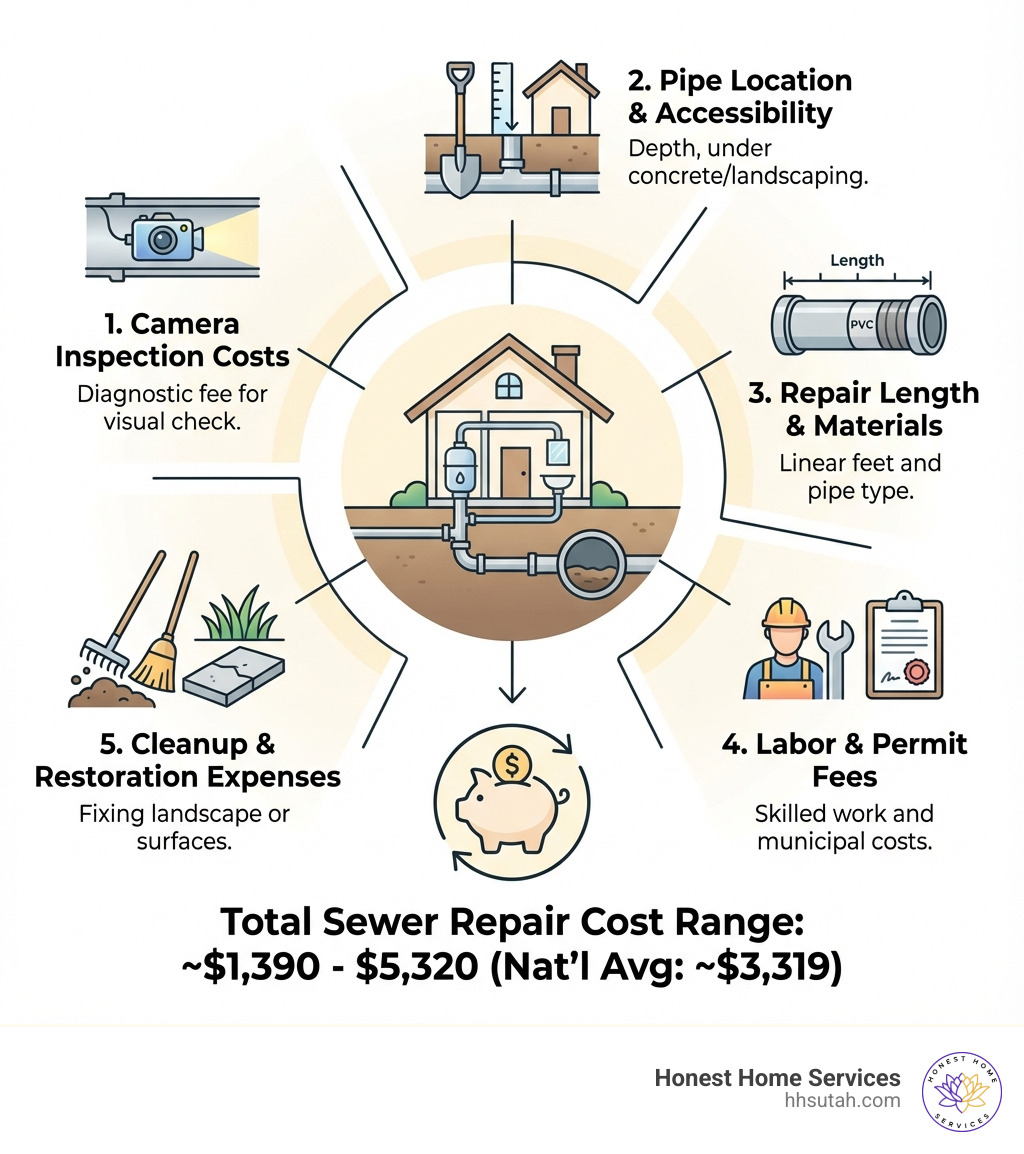
Sewer repair cost can range dramatically depending on your specific situation, but most homeowners should expect to pay between $1,390 and $5,320, with a national average around $3,319. Here’s what you need to know:
- Minor repairs (small clogs, root removal): $650 – $4,000
- Major repairs or replacement: $3,000 – $7,000+
- Cost per linear foot: $50 – $250
- Trenchless methods: $60 – $250 per foot
- Traditional excavation: $50 – $200 per foot
Your home’s sewer line carries wastewater to the municipal system or a septic tank. When it fails, you face an unpleasant, significant, and often unexpected expense.
Understanding these cost drivers helps you budget and avoid overcharges. The total price depends on the damage’s extent and location, the repair method, affected pipe length, and whether you need a simple repair or full replacement.
As Honest Home Services, we’ve helped countless Northern Utah homeowners steer sewer line issues over our 20+ years in business, and we understand how stressful unexpected Sewer repair cost concerns can be. We’re here to break down exactly what you should expect to pay and why, so you can make informed decisions about your home’s plumbing system.
Telltale Signs Your Sewer Line Needs Attention
Imagine this: you’re doing dishes, and the sink won’t drain. You try the toilet, and it gurgles ominously. These aren’t just minor inconveniences; they’re often the first whispers of a much larger problem lurking beneath your home: a damaged sewer line. Catching these signs early can save you a world of trouble and potentially reduce your overall sewer repair cost.
Here are the key indicators that your sewer line might be crying for help:
- Multiple Slow Drains or Backups: If multiple fixtures in your home—sinks, tubs, toilets—are draining slowly or backing up at the same time, it often points to a main sewer line blockage.
- Gurgling Noises from Pipes: Strange gurgling sounds coming from your drains, especially after flushing a toilet, usually mean air is trapped in the plumbing system due to a blockage.
- Foul Sewage Odors: A persistent, unpleasant smell of sewage from drains, your yard, or your basement can indicate a leak or blockage that is allowing sewer gases to escape.
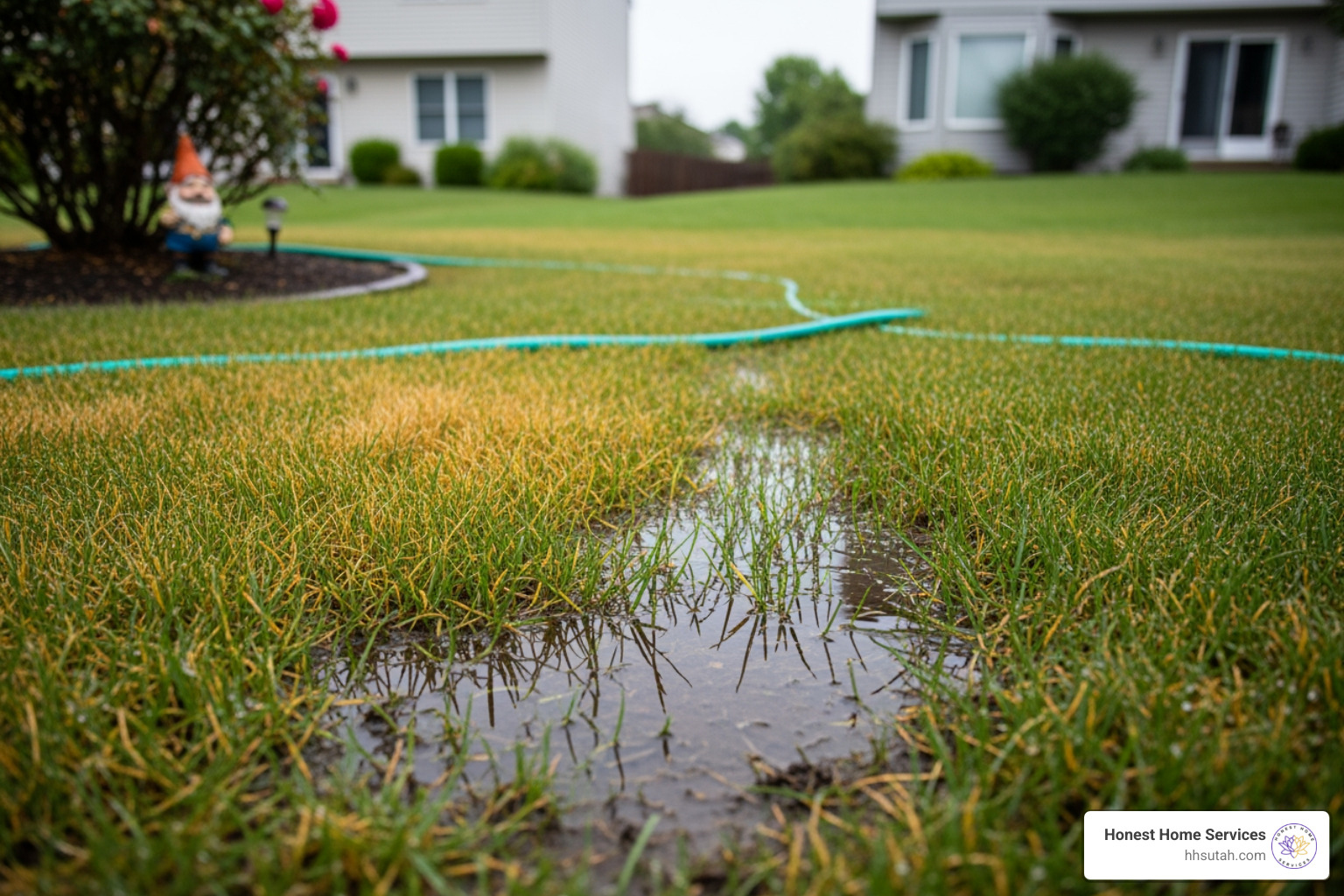
- Unexplained Wet Spots or Lush Patches on Your Lawn: Unusually green, lush patches of grass, or soggy, sunken areas in your yard near where the sewer line runs, may signal a leaking or broken pipe enriching the soil with wastewater.
- Foundation Cracks or Mold: When seen along with other symptoms, new foundation cracks or sudden mold and mildew growth can point to sewer leaks causing soil movement or excess moisture around your home.
- Pest Infestations: A spike in rodents or insects around your home can sometimes be tied to sewer issues, as pests are attracted to the damp conditions and food sources that leaky sewer lines create.
Ignoring these signs can lead to more severe and costly issues, like sewage backing up into your home or even foundational damage. When you spot any of these warning signals, it’s time to call in the professionals. For more on when to seek expert help, visit our guide on When to Call a Professional Plumber.
Breaking Down the Main Sewer Repair Cost Factors
When dealing with a sewer line problem, “how much will this cost?” is usually the first question. The truth is, there’s no one-size-fits-all answer. The sewer repair cost is a combination of many factors, each adding its own piece to the final bill. Understanding these factors is crucial for any Northern Utah homeowner.
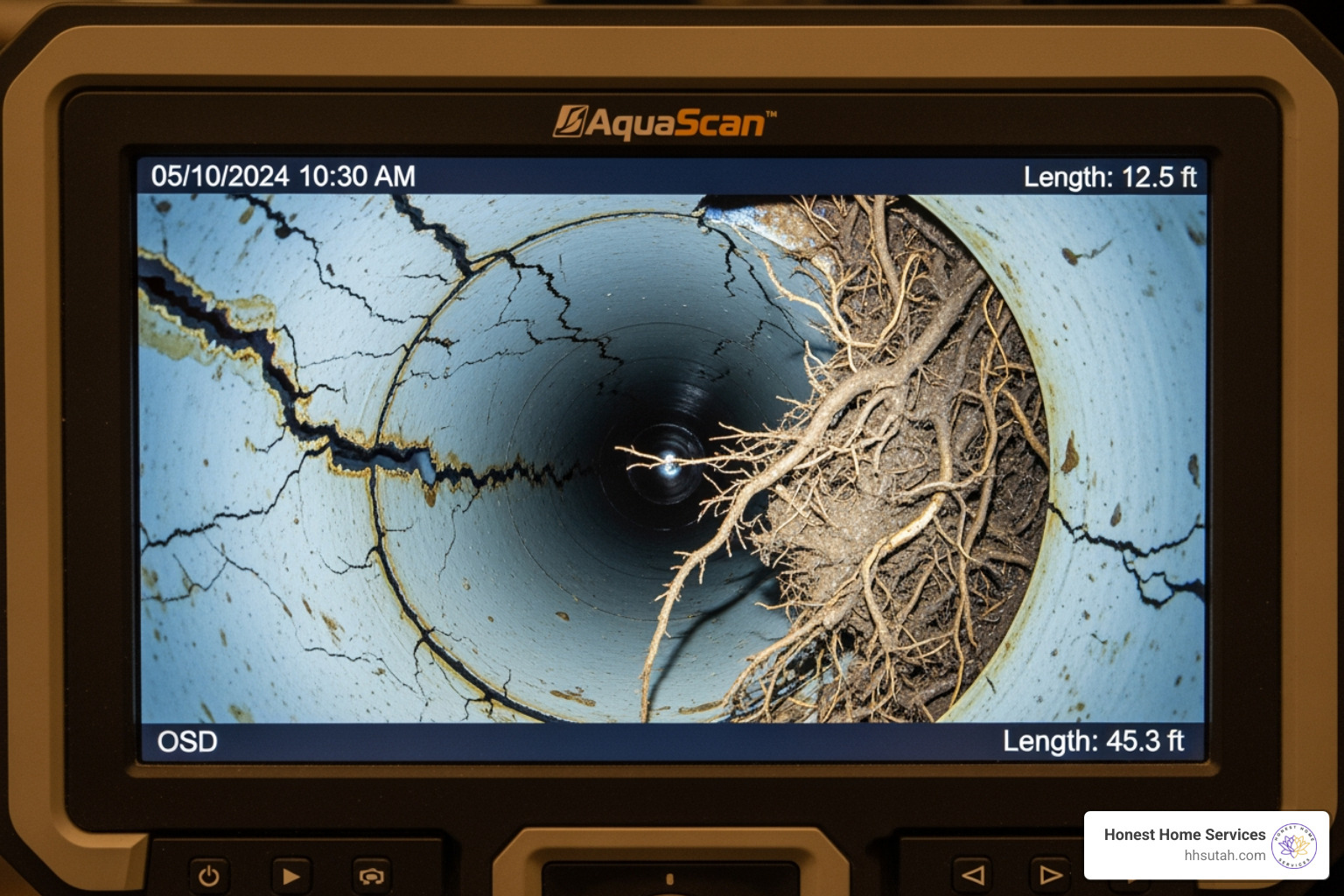
The initial diagnosis is paramount. Without accurately identifying the problem, you could end up paying for unnecessary work or a temporary fix that doesn’t address the root cause. As Forbes notes, The cost of your sewer line repair or replacement will vary based on several different factors, including the severity of the problem. That is why we emphasize thorough inspections, often starting with specialized tools like sewer cameras. For expert diagnostic services, you can rely on our Salt Lake City Leak Detection team.
The Role of a Camera Inspection
Before any digging or repair work begins, a camera inspection is your best friend. This diagnostic tool involves running a high-definition, waterproof camera through your sewer line to visually assess its condition.
- Purpose: A camera inspection allows us to pinpoint the exact location and nature of the damage—whether it is a crack, a collapse, tree root intrusion, or a stubborn clog. It also helps identify the pipe material and overall health.
- Average Cost: In Northern Utah, a sewer line camera inspection typically costs between $100 and $500. While this is an upfront expense, it is an investment that often saves money in the long run.
- How it Saves Money: By accurately diagnosing the problem, a camera inspection can prevent unnecessary excavation, ensure the correct repair method is chosen, and help avoid guesswork. This precise approach ultimately cuts down on the overall sewer repair cost. To learn more about this crucial step, check out 6 Telltale Signs You Need a Camera Drain Inspection.
Pipe Location and Accessibility
Where your sewer line problem is located has a major impact on the repair cost. A pipe running under an open lawn is far easier and cheaper to access than one buried beneath a concrete driveway, patio, or your home’s foundation.
- Under Yard vs. Under Driveway/Slab: If the pipe is under soil or sod, traditional excavation is relatively straightforward. If it is under hardscaping like concrete or asphalt, specialized tools are needed to break through these structures.
- Concrete Removal Costs: Breaking through concrete can add $3 to $8 per square foot to the cost. If the repair is under a concrete slab, expect an additional $300 to $350 per linear foot just for access.
- Pipe Depth Impact: Sewer lines are typically buried 5 to 6 feet deep in residential areas, but can be deeper in colder climates to prevent freezing. The deeper the pipe, the more complex and time-consuming the excavation, which translates to higher labor and equipment costs.
Accessibility challenges significantly increase the complexity and, by extension, the sewer repair cost. Our team at Salt Lake City Pipe Repair is experienced in navigating these challenges efficiently.
Length of the Repair and Pipe Materials
It stands to reason that a longer repair will cost more, but the type of pipe material also plays a major role.
- Cost per Linear Foot: For the actual pipe work, homeowners can expect to pay anywhere from $50 to $250 per linear foot, depending on the severity of the damage and the method used. The average length of sewer line repairs is often between nine and 33 linear feet.
- Material Costs: The material of your existing pipe and the replacement material chosen will affect the price.
- PVC (Polyvinyl Chloride): Common and affordable, costing around $3 to $8 per linear foot for materials, or $120 to $320 for 40 linear feet.
- ABS (Acrylonitrile Butadiene Styrene): Similar to PVC, ABS pipes typically cost $3 to $11 per linear foot and perform well in cold climates.
- Cast Iron: Common in older homes, cast iron pipes are durable but prone to rust and corrosion over time. Materials cost around $20 to $75 per linear foot, or $800 to $3,000 for 40 linear feet.
- Copper: Less common for main sewer lines due to cost, copper pipes are lightweight and durable but sensitive to acidic water. Materials can cost $30 to $80 per linear foot, or $1,200 to $3,200 for 40 linear feet.
- Orangeburg and Clay: These older materials have a shorter lifespan and are more susceptible to damage. Replacing them is often necessary in older homes.
Understanding these material differences is key, especially for older homes in Northern Utah. We often help homeowners address Common Plumbing Problems in Older Homes and How to Fix Them.
Additional Expenses to Budget For
Beyond the actual pipe work, several other costs can contribute to the final sewer repair cost.
- Labor Costs: Plumbers typically charge between $75 and $150 per hour, though for specialized sewer work this can range higher. The total labor cost depends on the complexity and duration of the job, which can take anywhere from 1 to 5 days on average for repair or replacement.
- Permit Fees: Sewer line work often requires permits from your local municipality due to sanitation concerns and biohazard risks. These fees vary by location and project scope, but homeowners can expect to pay anywhere from $30 to $500, with an average of about $200.
- Cleanup and Restoration: This is often an overlooked but significant cost. If traditional excavation is used, your yard, landscaping, or hardscaping will be disrupted.
- Landscaping: Restoring your lawn can cost $4 to $12 per square foot, while sod installation is about $1 to $2 per square foot.
- Tree and Stump Removal: If tree roots are the culprit, you might need tree removal ($150 to $2,000) and stump removal ($100 to $400).
- Driveway/Patio Repair: Repairing a concrete or asphalt driveway can range from $100 to $400 for minor repairs or $600 to $3,000 for major repairs.
- Sewage Backup Cleanup Costs: In the event of a sewage backup into your home, cleanup and remediation can range from $500 to $10,000, depending on the extent of the damage. Addressing issues promptly is crucial, as highlighted in our guide on Plumbing Emergency.
Repair vs. Replacement: A Cost & Necessity Breakdown
When faced with a sewer line problem, one of the biggest decisions is whether to repair a section or replace the entire line. This choice significantly impacts the sewer repair cost and the longevity of your plumbing system.
When is Repair Sufficient?
Repair is generally sufficient for minor, localized problems in an otherwise healthy and relatively young pipe. This could include a small crack, a clog that can be cleared, or a short section damaged by tree roots that has not compromised the pipe’s overall integrity. If your pipe is still relatively young and a repair is expected to prolong its life for many years, it often makes financial sense.
When is Replacement Necessary?
Full replacement becomes necessary when the sewer line has extensive damage, has reached the end of its lifespan, or experiences frequent, recurring issues. Collapsed sections, widespread corrosion, multiple major breaks, or persistent tree root intrusion across a significant portion of the pipe usually warrant replacement. Older homes in Northern Utah with original cast iron, clay, or Orangeburg pipes often benefit from replacement, as these materials have a shorter lifespan and are prone to more issues.
Benefits of Investing in Repair or Replacement
While the cost can be daunting, investing in sewer line repair or replacement offers significant benefits:
- Improved Home Efficiency: A properly functioning sewer line ensures waste is efficiently removed, helping prevent backups and keeping a healthier home environment.
- Improved Property Value: A new, reliable sewer line is a major selling point and a worthwhile investment in your home’s infrastructure.
- Peace of Mind: Knowing your sewer system is sound reduces worries about unpleasant and potentially damaging sewage backups.
- Long-Term Savings: Addressing issues promptly and comprehensively helps prevent more extensive damage and avoids repeated, costly temporary fixes.
If you’re wondering whether your existing pipes are due for an overhaul, our team can help you determine Does Your Salt Lake Home Need a Re-Pipe?.
Comparing the Average Sewer Repair Cost
The cost of repairing a sewer line can vary widely based on the specific issue and its severity.
- Minor Repair Range: Basic sewer line repairs can begin around $650 and range up to several thousand dollars, with an average cost of around $4,000 for more involved work.
- Root Removal Cost: Tree roots are a common culprit for sewer line damage. The cost to remove tree roots from a sewer line typically ranges between $100 and $600. If the roots have caused significant damage, you might also need partial or full pipe replacement.
- Clog Removal Cost: Clearing a sewer line clog can cost between $200 and $800, depending on severity and access. Methods like snaking usually cost $150 to $500, while hydro jetting, a more powerful cleaning technique, costs between $250 and $800. For comprehensive drain solutions, explore our Salt Lake City Drain Cleaning services.
Understanding the Cost of Full Replacement
A full sewer line replacement is a more extensive project, and its sewer repair cost reflects that.
- National Average: Replacing a sewer line is estimated to cost between $3,000 and $7,000, with many homeowners paying an average of about $5,000. Our research shows a national average of $3,319, with typical ranges falling between $1,390 and $5,320.
- Cost per Foot: On average, sewer line replacement costs $50 to $250 per linear foot. For a 40-linear-foot sewer line, this typically translates to $2,000 to $10,000.
- Factors: As discussed, the total cost is heavily influenced by the length of the line being replaced, the type of pipe material chosen, and the replacement method (traditional vs. trenchless). For more information on upgrading your home’s plumbing system, see our page on Plumbing System Re-Piping.
Traditional vs. Trenchless Methods: A Cost and Disruption Comparison
One of the biggest decisions affecting both the sewer repair cost and the impact on your property is the choice between traditional excavation and modern trenchless methods. Each has pros and cons, and the best choice depends on your specific situation.
| Feature | Traditional Excavation | Trenchless Methods |
|---|---|---|
| Cost per Linear Foot | $50 – $200 | $60 – $250 |
| Total Average Cost | $4,000 – $13,000 (can reach higher with extras) | $6,000 – $12,000 (small-scale pipe lining $3,000 – $4,000) |
| Disruption | High (large trenches, significant landscape damage) | Low (minimal digging, small access points) |
| Time | 2-5 days (plus restoration time) | 1-3 days (often faster due to less digging) |
| Best Use Cases | Shallow pipes, collapsed sections, full pipe replacement, or when trenchless is not an option due to severe damage or pipe type. | Deeper pipes, longer pipes, pipes under hardscaping, and when preserving landscaping is a priority for minor-to-moderate damage. |
Traditional Excavation Costs
Traditional sewer repair involves digging a trench to expose the damaged pipe, removing the old section, and installing a new one.
- Process: This method requires excavating a portion of your yard, creating a trench from your home to the point of damage or the city main.
- Cost per Foot: Traditional excavation costs typically range from $50 to $200 per linear foot.
- Additional Costs: The biggest drawback of traditional excavation is the damage to your property, which leads to restoration costs. This can include:
- Landscaping: Restoring your yard can cost $4 to $12 per square foot.
- Sod Installation: If new sod is needed, factor in $1 to $2 per square foot.
- Driveway/Patio Repair: Repairing damaged hardscaping can add anywhere from $100 to $3,000.
- Tree/Stump Removal: If trees are in the way, expect $150 to $2,000 for tree removal and $100 to $400 for stump removal.
- Best For: Traditional methods can be more cost-effective for shallow pipes or when the pipe is severely collapsed and requires complete removal and replacement of a section.
Trenchless Sewer Repair Cost and Methods
Trenchless sewer repair methods allow us to fix or replace sewer lines with minimal disruption to your property.
- Process: Instead of digging a long, open trench, trenchless methods typically require only one or two small access points (pits) to perform the repair or replacement.
- Pipe Lining (Cured-in-Place Pipe – CIPP): This method involves inserting a flexible, resin-coated tube into the existing damaged pipe. The tube is then inflated and cured, creating a new, seamless “pipe within a pipe.”
- Cost: CIPP lining costs between $80 and $250 per linear foot. Small-scale pipe lining can be $3,000 to $4,000.
- Pipe Bursting: This technique involves pulling a new pipe through the old, damaged one. A conical bursting head breaks apart the old pipe as the new pipe is simultaneously pulled into its place.
- Cost: Pipe bursting typically costs between $60 and $200 per linear foot.
- Benefits:
- Saves Landscaping: The primary advantage is preserving your lawn, garden, driveways, and other hardscaping, which can significantly reduce restoration costs.
- Faster: With less digging, trenchless repairs are often completed much quicker, usually within 1 to 3 days.
- Less Invasive: Less heavy machinery means less noise and disruption to your daily life.
- Durable: The new pipes or liners installed are often more resistant to tree roots and corrosion than the original pipes.
While hydro jetting is a powerful cleaning method, not a repair method, it often works in conjunction with trenchless repairs by clearing the pipe before lining or bursting. You can learn more about its benefits on our Hydro Jetting page. Trenchless methods are often a cost-effective solution for deeper and longer pipes, potentially saving homeowners thousands of dollars in cleanup and restoration costs compared to traditional digging.
Frequently Asked Questions about Sewer Line Repair
How can I save money on sewer line repairs?
We know that unexpected sewer line issues can be a financial strain. Here are our top tips for Northern Utah homeowners to save money on sewer repair cost:
- Get Multiple Quotes: Always obtain at least three in-person estimates from reputable, licensed, and insured sewer service companies. This allows you to compare pricing, methods, and warranties to ensure you’re getting a fair deal.
- Consider Trenchless Methods: If your pipe damage allows for it (i.e., not a complete collapse), trenchless repair can significantly reduce overall costs by minimizing landscape disruption. These methods can save 30% to 40% compared to traditional digging and subsequent restoration expenses.
- Schedule Regular Maintenance and Inspections: An ounce of prevention is worth a pound of cure! Annual camera inspections ($100 to $500) can catch small problems before they escalate into major, costly disasters. Preventative maintenance, like planting trees away from sewer lines and being mindful of what goes down your drains, also extends pipe lifespan. Learn more about The Benefits of Regularly Scheduled Plumbing Inspections.
- Proactive Care: Avoid flushing anything but toilet paper, and use compost pails for food scraps and grease. Consider installing a sewer cleanout ($500 to $2,000) to make future clog removals easier.
- Book During Off-Season: If your repair isn’t an emergency, consider scheduling it during slower seasons (like late fall or winter) when demand for plumbers might be lower, potentially leading to better rates.
Does homeowners insurance cover sewer line replacement?
This is a common and critical question for homeowners. The short answer is: typically, not entirely, but it depends on your specific policy and the cause of the damage.
- Standard Policy Limitations: Most standard homeowners insurance policies do not cover damage caused by wear and tear, neglect, or lack of maintenance. This means if your sewer line fails due to old age, corrosion, or tree roots that have been growing for years, your basic policy likely won’t cover the sewer repair cost.
- Add-on Coverage Options: Many insurance companies offer specific endorsements or add-on policies for sewer line coverage, sometimes called “service line coverage.” These can cover damage from various causes, including tree roots, blockages, or utility line failures. It’s highly recommended to review your policy or speak with your insurance provider about these options.
- Damage from Accidents vs. Neglect: Your policy might cover damage from sudden and accidental events, such as a fallen tree unexpectedly crushing your sewer line, vandalism, or an explosion. However, damage resulting from issues like poor upkeep, faulty construction, floods, pests, and earthquakes is typically not covered.
It’s always best to thoroughly review your policy and consult with your insurance provider to understand what is and isn’t covered.
Who is responsible for the sewer line—the homeowner or the city?
Understanding who owns what is crucial when a sewer problem arises. In most cases, responsibility is divided:
- Homeowner’s Lateral Line Responsibility: As a homeowner in Northern Utah, you are typically responsible for the sewer line that runs from your home’s foundation to the city’s main sewer line (often located under the street). This section is called the “sewer lateral.” Any repairs or replacements needed on this portion, including issues caused by tree roots originating from your property, are usually your financial responsibility.
- City Main Line Responsibility: The city or municipality is responsible for the main sewer line that collects waste from multiple properties. If the problem is determined to be within this public main line, then the city is responsible for the repair.
- How to Determine Where the Problem Is: A professional camera inspection is the most effective way to determine whether the issue lies on your property’s lateral line or within the municipal main. The camera can travel the length of your pipe to the connection point, clearly identifying the location of the problem.
Conclusion: Your Next Steps for a Healthy Sewer System
Navigating the complexities and potential expenses of sewer line issues can feel overwhelming, but understanding the factors that influence sewer repair cost empowers you to make informed decisions. We’ve explored everything from the telltale signs of a problem to the detailed breakdown of costs for inspections, repairs, replacements, and cleanup, differentiating between traditional and trenchless methods.
The key takeaway is clear: prompt action and professional diagnosis are paramount. Ignoring the warning signs of a sewer problem will almost always lead to more extensive damage and significantly higher costs down the line.
At Honest Home Services, we believe in transparent pricing, reliable service, and guaranteed customer satisfaction. Our local, expert technicians are here to serve homeowners across Salt Lake City, Salt Lake County, Davis County, and throughout Northern Utah, providing the honest advice and quality workmanship you deserve. Don’t let a sewer line problem flush your budget down the drain.
For a professional diagnosis and an honest estimate, Contact us for a professional Salt Lake City Sewer Mainline Repair estimate today. We’re ready to help you keep your home’s plumbing system healthy and your peace of mind intact.