

The Unseen Damage of Tree Roots
Tree root removal is often necessary when underground root systems cause significant damage to your home’s foundation, plumbing, driveways, or sidewalks. Whether you’re dealing with roots from a tree that’s been cut down or managing invasive roots from a living tree, understanding your removal options is critical to protecting your property.
Quick Answer: Tree Root Removal Methods
- After tree removal: Stump grinding (most effective, $175-$516), chemical treatment with potassium nitrate (4-6 weeks), or natural decay (3-10 years)
- From living trees: Root pruning (cut only 15% at once, minimum distance of 5x trunk diameter)
- From plumbing: Professional hydro jetting or rooter service, drain camera inspection recommended first
- DIY approaches: Manual digging with saws/loppers for small roots, rock salt treatment for stumps
- Prevention: Plant large trees 12+ feet from structures, install root barriers
Tree roots cause damage in several ways. They dry out soil around foundations, creating voids that lead to cracks. They infiltrate sewer lines through small cracks or joints, especially in older clay pipes. And they heave concrete surfaces like sidewalks and driveways as they expand. According to research, most root damage occurs within 6 feet of the tree trunk, but some species can spread roots extensively.
The key is knowing when to act and which method to use. Cutting roots improperly can kill a tree or make it unstable. Using the wrong chemical can harm your soil. And ignoring roots in your plumbing will only lead to more expensive repairs down the line.
As Honest Home Services, we’ve spent over 20 years helping Northern Utah homeowners tackle complex plumbing issues, including tree root removal from sewer lines and drain systems. We combine camera inspections, hydro jetting, and professional expertise to clear roots safely and prevent future intrusions.

Identifying Problematic Tree Roots and Their Impact
Imagine waking up to a cracked driveway or a perpetually gurgling drain. These aren’t just minor annoyances; they’re often flashing red lights indicating a deeper problem: invasive tree roots. Identifying these issues early can save you significant time, money, and stress down the line.
Why Root Systems Matter: Aggressive vs. Non-Aggressive Species
Not all tree roots are created equal. Some trees are notorious for their aggressive, far-reaching, and shallow root systems, while others are more considerate neighbors. Understanding this distinction is crucial for both prevention and removal strategies.
-
Aggressive Roots: These are the opportunists, actively seeking out water and nutrients, and often growing close to the surface or spreading far from the tree’s canopy. They can cause significant damage to property. Even after a tree is removed, aggressive species can continue to sprout new shoots (suckers) from their remaining root systems.
- Poplar trees: Roots can spread 160-450 feet, two to three times the tree’s height, causing sewer and foundation issues.
- Willow trees: Moisture-seeking roots can spread up to three times the tree’s length, making them a plumbing menace.
- Silver Maple: Fast-growing, shallow roots are known to crack sidewalks and driveways.
- Black Locust: Has a reputation for quick, aggressive root growth.
- Elm and Oak: Both have extensive root systems that can threaten structures.
-
Non-Aggressive Roots: These trees typically have deeper, less expansive root systems that are less likely to cause structural damage. Their roots tend to decay naturally after the tree is removed, without producing suckers.
- Japanese Maple: A popular choice for smaller yards, growing only two to three meters tall with a less invasive root system.
- Eastern Redbud: Grows up to 20 to 32 feet, generally well-behaved.
- Pagoda Dogwood: Reaches a maximum of 20 feet, making it a good option for planting closer to homes.
Assessing Damage to Your Property
When tree roots start to interfere with your property, the signs are often clear, though sometimes subtle at first. We’ve seen it all across Northern Utah, from Salt Lake City to Layton.
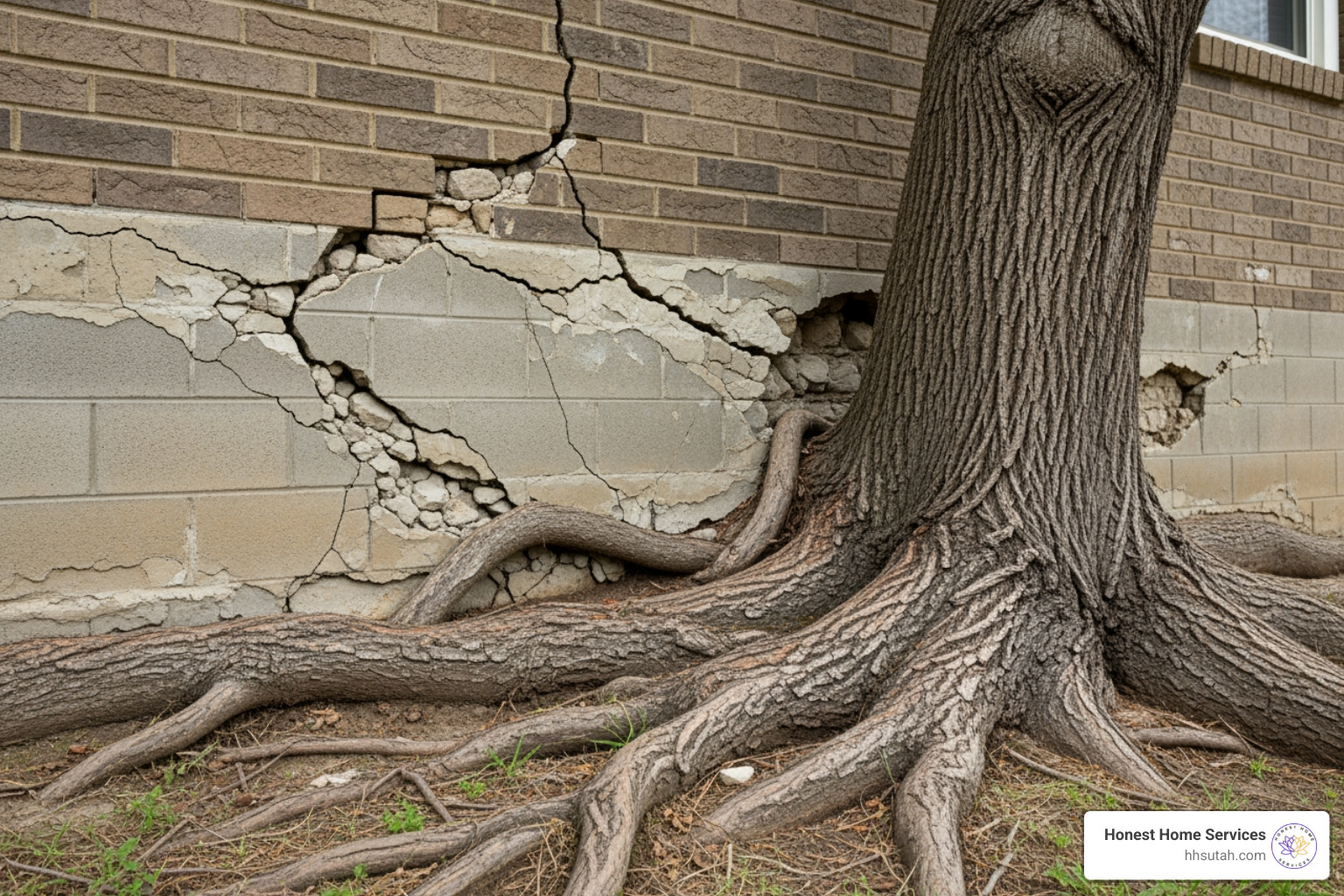
- Foundation Damage: Roots dry out soil near foundations, causing it to shrink and create voids. This leads to foundation movement and cracks. Look for visible cracks in floors/walls, uneven surfaces, and doors/windows that stick. For more insights, Purdue University’s extension offers valuable research on how tree roots can impact a home’s foundation.
- Driveway and Patio Damage: Expanding roots can lift and crack concrete surfaces like driveways and patios, creating tripping hazards and expensive repairs.
- Plumbing Problems: This is where we at Honest Home Services often come in. Roots are drawn to the moisture in sewer pipes, infiltrating through tiny cracks or loose joints. Signs include:
- Slow or gurgling drains.
- Recurring clogs that a plunger can’t solve.
- Unpleasant drain odors.
- Green, lush patches of grass above your sewer line.
- A sudden increase in rodents or insects.
- If you’re noticing these symptoms, it’s time to investigate. Our guide on Signs You Need Professional Drain Cleaning can help you determine the severity.
- For deeper insights, a camera inspection is invaluable. Our article on 6 Telltale Signs You Need a Camera Drain Inspection explains why this is often the first step in diagnosing plumbing issues caused by roots.
A Complete Guide to Tree Root Removal Methods
Once you’ve identified that tree roots are indeed causing problems, the next step is to choose the right removal method. This choice often depends on whether the tree is still living, the size of the roots, and the extent of the damage.
After a Tree is Removed: Dealing with the Stump and Roots
When a tree has been cut down, you’re left with a stump and an extensive underground root system. How you deal with these remnants can impact your landscape for years to come.
| Method | Cost (approx.) | Time to See Results | Effort Level (DIY) | Pros | Cons |
|---|---|---|---|---|---|
| Stump Grinding | $175 – $516 | Immediate | Moderate (rent) | Quick, effective, leaves wood chips (mulch), allows replanting. | Can be noisy, may not remove all deep roots, requires heavy machinery. |
| Chemical Removal | Low | 4-6 weeks to several months | Low | Relatively easy, can kill roots to prevent regrowth. | Slow, requires careful chemical handling, potential harm to surrounding plants/soil. |
| Natural Decay | Free | 3-10 years | Very Low | No cost, no effort. | Very slow, stump can be a tripping hazard, attracts pests, can re-sprout (aggressive species). |
- Stump Grinding: The most popular method, a machine grinds the stump below ground level. It’s fast and allows for replanting, leaving useful wood chips. Professional service is recommended for safety and effectiveness with large stumps, costing between $175 and $516.
- Chemical Removal: This accelerates decomposition.
- Potassium Nitrate: Drill holes in the stump, fill with the chemical and water. It softens the stump in 4-6 weeks for easier removal.
- Glyphosate: An herbicide (41%+ concentration) applied to fresh cuts can kill the root system in about two weeks. Use with extreme caution to avoid harming other plants. For more information, refer to the National Pesticide Information Center’s factsheet on glyphosate.
- Natural Decay: The free, no-effort option is to let the stump rot, which can take 3-10 years. However, it can be an eyesore, a tripping hazard, and attract pests.
Managing Roots from a Living Tree: Root Pruning
Sometimes, you love your tree, but hate its roots. When roots from a living tree are causing problems, root pruning might be an option. However, this is a delicate procedure that carries significant risks to the tree’s health and stability.
- Risks to Tree Health: Cutting major roots can introduce disease, reduce nutrient uptake, and compromise the tree’s stability, potentially causing it to fall. Improper pruning can kill a tree.
- Best Time to Prune: Prune roots in winter or early spring when the tree is dormant.
- Safe Cutting Distance (DBH Rule): This is crucial for tree survival.
- The minimum cutting distance from the trunk should be 5 to 6 times the tree’s diameter at breast height (DBH). For a 12-inch diameter tree, cut no closer than 5-6 feet.
- If cutting on only one side, the distance can be 3 times the DBH.
- Avoid cutting roots larger than two inches in diameter.
- Never remove more than 15% of the root system at once, and allow 2-3 years for recovery before more pruning.
- For detailed guidelines, consult the University of Florida’s Root pruning guidelines.
Steps for Safe Root Pruning (When Absolutely Necessary):
- Assess the Tree: Evaluate the tree’s health, species, and lean. Avoid pruning roots on leaning trees.
- Identify the Root: Trace the problem root back toward the trunk to assess its size.
- Mark the Cut: Use the DBH rule to determine a safe cutting point as far from the trunk as possible.
- Expose the Root: Dig a trench to expose the root for a clean cut.
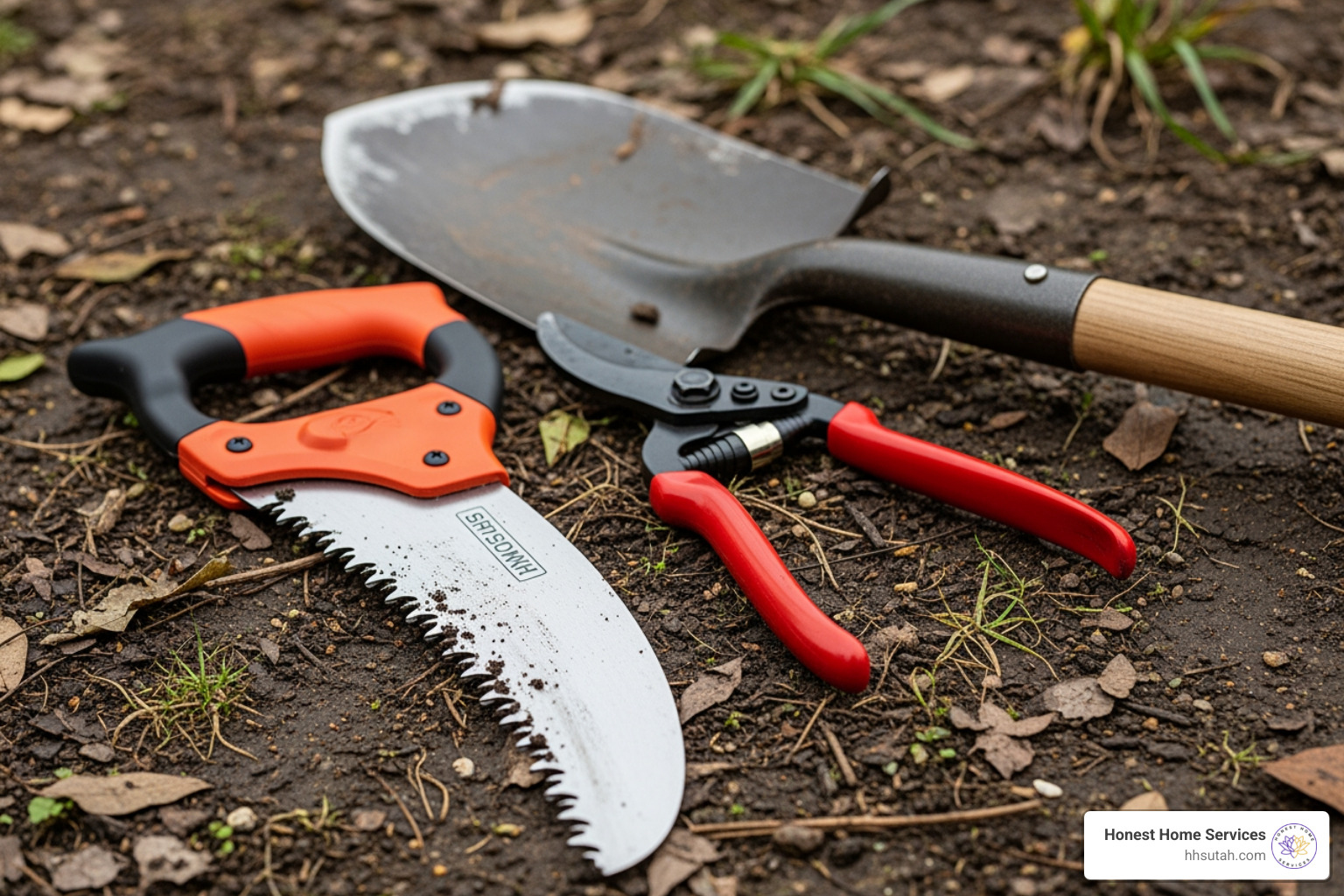
- Cut Cleanly: Use a sharp root saw or loppers. A clean cut heals faster.
- Protect Fine Roots: If preserving nearby fine roots, cover them with damp burlap to prevent them from drying out.
- Refill and Mulch: Backfill the trench with soil and apply mulch to conserve moisture.
- Monitor the Tree: Watch for signs of distress (wilting, yellowing leaves) and provide adequate water.
Tree Roots in Your Plumbing: A Homeowner’s Nightmare
A clogged drain caused by a tree root is a common and frustrating problem, especially in Northern Utah homes with mature trees and older plumbing.
Roots seek the moisture and nutrients in your sewer pipes, infiltrating them through tiny cracks, loose joints, or even microscopic pores. Once inside, they form dense masses that trap debris and cause blockages. This is a frequent issue in older homes, as detailed in our guide on Common Plumbing Issues in Older Homes and How to Address Them.
Professional Tree Root Removal from Pipes
When roots invade your plumbing, it’s time to call in the experts. At Honest Home Services, we have the tools and experience to tackle even the most stubborn root intrusions.
- Camera Inspection: This is always our first step. We insert a high-definition camera into your sewer line to pinpoint the exact location of the roots, assess the extent of the blockage, and check the overall condition of your pipes. This critical step prevents guesswork and ensures we choose the most effective and safest removal method.
- Drain Snaking (Rooter Service): For dense, woody root masses, a traditional rooter service (snaking) is often used. A long, flexible cable with a cutting blade on the end is sent down the pipe. The blade spins, cutting through the roots and clearing a path for water to flow. This is excellent for immediate blockage removal.
- Hydro Jetting: This is our preferred method for a thorough, long-lasting clean. Hydro jetting uses a high-powered stream of water (up to 4,000 PSI!) to flush pipes. A multi-directional nozzle is sent down the drain, washing away sludge, grease, mineral scale, and any remaining root hairs from the inside out. It’s like a pressure washer for your pipes, restoring them to their original diameter.
- Hydro jetting is powerful enough to clear tree roots from sewer lines and is safe for most pipes (plastic, steel, copper) as long as they are structurally sound. We perform a camera inspection first to ensure your pipes can handle the pressure.
- Want to see it in action? Check out this video explaining What is Pipe Jetting?.
- Sewer Mainline Repair: In cases of severe root damage where pipes are cracked or collapsed, simple removal won’t suffice. We offer comprehensive Salt Lake City Sewer Mainline Repair services, including trenchless options that minimize disruption to your yard.
DIY vs. Professional Tree Root Removal for Plumbing
We understand the DIY spirit, but when it comes to roots in your plumbing, it’s often a job best left to professionals.
- Chemical Root Killers: Foaming root killers are easy to apply but can be slow, ineffective on large root masses, and harsh on pipes or the environment. They are a temporary fix.
- Rock Salt Method: This inexpensive DIY method involves pouring rock salt down the toilet to dehydrate roots. However, it requires large amounts, can harm septic systems and surrounding soil, and is generally only effective on small roots.
- Risks of DIY: Without a camera inspection, you’re working blind. You risk damaging pipes, worsening the clog, or using harmful chemicals.
- When to Call a Professional: For recurring clogs or suspected main line issues, call a professional. Our technicians in Northern Utah have the specialized equipment to diagnose the problem accurately and provide a lasting solution, saving you from more expensive repairs later. Learn more about When to Hire Professional Plumbing: Why They’re Worth It.
Prevention: Smart Planting and Root Management
The best defense against problematic tree roots is a good offense: thoughtful planning and proactive management. By making smart choices about what and where you plant, you can significantly reduce the risk of future root-related headaches.
- Choosing the Right Tree: As we discussed, some trees are simply more aggressive with their root systems. When planning your landscape in Northern Utah, opt for species known for their well-behaved roots, especially near structures.
- Best Trees for Small Yards/Near Homes: Japanese Maple, Eastern Redbud, and Pagoda Dogwood are excellent choices as they typically have less invasive root systems and don’t grow to massive sizes.
- Worst Trees for Planting Near Homes: Avoid planting Silver Maple, White Ash, Poplar, Black Locust, Elm, Weeping Willow, and Oak trees too close to your home or utility lines due to their aggressive, shallow, or extensive root systems.
- Planting Distance from Home: Give your trees (and your home) plenty of space to grow. A general guideline for planting distance from your house:
- Small trees (less than 30 feet tall at maturity): Plant 8-10 feet away.
- Medium trees (less than 70 feet tall at maturity): Plant about 15 feet away.
- Large trees (over 70 feet tall at maturity): Plant at least 20 feet away.
- Watering During Drought: Tree roots seek moisture. During dry spells in Northern Utah, if your trees aren’t getting enough water, their roots are more likely to extend aggressively towards reliable water sources – like your plumbing pipes or the moist soil around your foundation. Regular, deep watering of your trees can help keep their roots from wandering.
- Consider Site Conditions: Match the tree species to your soil type and drainage. Poorly suited trees will struggle and may develop more aggressive root systems in search of resources.
For more comprehensive advice on preventing aggressive root issues, the Tree Care Industry Association offers excellent guidance on How to Correct Aggressive Tree Roots.
Installing Root Barriers to Protect Your Property
Root barriers are physical or chemical obstacles designed to redirect or inhibit root growth, protecting nearby structures and utility lines.
- Types of Root Barriers:
- Linear Barriers: Solid panels installed vertically in the ground to block roots from reaching a structure like a foundation or pipe.
- Surrounding Barriers: Encircle a tree to direct roots downward, useful in tight spaces.
- Biobarriers: Fabric infused with a slow-release herbicide that stops root tip growth without harming the tree.
- Installation Process: Installation is a major project, often best left to professionals. It involves digging a deep trench (30-60 inches), placing the barrier vertically with a small portion above ground, and backfilling the trench tightly.
- Protecting Infrastructure: Root barriers are a highly effective preventative measure for protecting foundations and utility lines from invasive roots.
Proactive measures like these are an integral part of maintaining your home’s integrity. For a broader perspective on home maintenance, including plumbing, refer to The Ultimate Guide to Plumbing Maintenance in Your Home.
Frequently Asked Questions about Tree Root Removal
We often hear similar questions from homeowners in Northern Utah dealing with tree root issues. Here are some of the most common, along with our expert answers.
What is the fastest way to get rid of tree roots?
The fastest method depends on the situation:
- After tree removal: Stump grinding provides immediate results.
- In plumbing: Professional hydro jetting or rooter service can clear pipes within hours.
- From a living tree: Root pruning offers immediate removal of a specific problem root.
- Chemicals: These are slower, taking 2-6 weeks to work.
For complex issues, professional services are the fastest and most effective solution.
How much does professional tree root removal cost?
The average cost is around $550, with a typical range of $300 to $800. The final price depends on the size and accessibility of the roots, the method used, and your location. Professional stump removal alone can range from $175 – $516. For an accurate estimate specific to your situation in Northern Utah, we recommend you Get a Quote from us.
Can you kill tree roots with salt or boiling water?
Yes, but these methods have significant risks and are not recommended for large-scale problems.
- Salt (Rock or Epsom): While inexpensive, salt can kill surrounding plants, contaminate soil, and is only effective on small roots.
- Boiling Water: This non-chemical option only works on small, exposed roots and is a temporary fix that poses a burn risk.
Due to their limited effectiveness and potential for harm, professional methods are a safer and more reliable choice.
Get to the Root of the Problem for Good
Dealing with invasive tree roots can feel like an uphill battle, but with the right knowledge and approach, you can protect your home and property effectively. From identifying aggressive species to choosing the best removal methods and implementing preventative measures, proactive management is key.
Ignoring problematic roots won’t make them disappear; it will only lead to more significant expenses and headaches down the road. Whether it’s a cracked foundation, a damaged driveway, or a persistent plumbing blockage, early intervention is always the most cost-effective solution.
At Honest Home Services, we’re dedicated to providing reliable, honest, and affordable solutions for homeowners across Northern Utah, including Salt Lake City, West Valley City, and Murray. Our local, expert technicians are equipped with state-of-the-art tools and the knowledge to handle all your plumbing needs, including stubborn tree root removal from your sewer lines. We guarantee your satisfaction because we believe in doing the job right the first time.
Don’t let unseen invaders compromise your home’s integrity. When you’re ready to tackle those troublesome roots, or if you’re experiencing any plumbing issues, you know When It’s Time to Call a Plumber. For stubborn roots clogging your pipes in the Salt Lake City area, trust the experts to clear them safely and effectively with professional drain cleaning services. We’re here to help you get to the root of the problem for good.