

Why Your Sewer Line Deserves a Second Look
A sewer pipe repair sleeve is a trenchless solution that creates a new, durable pipe inside your existing damaged sewer line—without digging up your yard. Here’s what you need to know:
What It Is:
- A flexible liner coated with epoxy resin, or a stainless steel expandable sleeve
- Installed inside the damaged pipe through existing access points
- Cures or expands to form a watertight, structural “pipe-within-a-pipe”
Key Benefits:
- No excavation – preserves landscaping, driveways, and foundations
- Fast installation – typically completed in hours, not days
- Long-lasting – 50 to 100-year lifespan when properly installed
- Cost-effective – eliminates excavation and restoration expenses
Best For:
- Cracked or corroded pipes
- Infiltration and leaking joints
- Root intrusion damage
- Cast iron, clay, PVC, or concrete sewer lines
Most Northern Utah homeowners don’t think about their sewer line until something goes wrong. A soggy patch in the yard. Slow drains throughout the house. A foul smell near the foundation. These warning signs often point to cracked, corroded, or failing underground pipes.
The traditional fix? Dig up your entire yard, demolish your driveway, and replace the pipe section by section. It’s disruptive, expensive, and time-consuming.
But there’s a better way.
Modern trenchless technology uses sewer pipe repair sleeves to fix damaged pipes from the inside—no digging required. These sleeves act as a patch or a complete new lining, sealing cracks, stopping leaks, and restoring structural integrity. The process is faster, cleaner, and often more affordable than traditional replacement.
At Honest Home Services, our team has over 20 years of experience helping Salt Lake area property owners solve urgent sewer problems using advanced techniques like sewer pipe repair sleeve installation. We specialize in trenchless solutions that protect your property while delivering long-lasting results.
Before we dive deeper, let’s consider the signs that indicate your sewer pipe might need attention. Ignoring these can lead to more significant, costly problems down the line. If you notice strange gurgling noises from toilets, a lack of water in toilet bowls, persistent sewer odors in your yard or basement, or unusually green patches of grass near your sewer line, it’s time to call in the professionals. Even foundation cracks, settlement, sinkholes, or rodent and insect infestations can be tell-tale signs of a failing sewer system. For more information on when to call a professional, visit our guide on When to Call a Professional Plumber for Your Salt Lake Property.
What is a Sewer Pipe Repair Sleeve and How Does It Work?
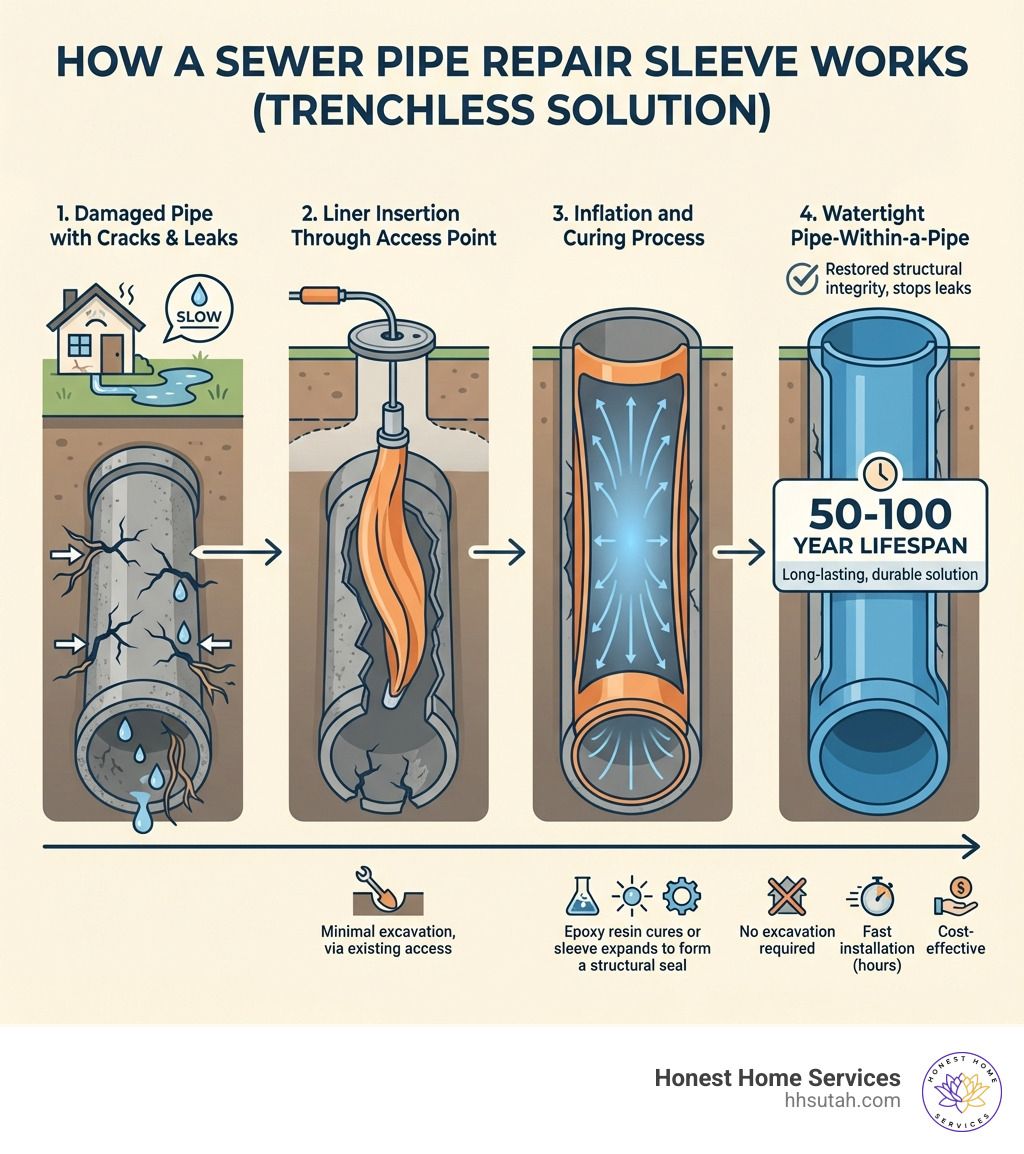
A sewer pipe repair sleeve is a cutting-edge trenchless solution designed to rehabilitate damaged sewer lines without the need for extensive excavation. Imagine giving your old, failing pipe a brand new, durable inner lining, effectively creating a “pipe-within-a-pipe.” This ingenious approach uses the existing pipe as a host for the new, stronger structure.
The core idea behind a sewer pipe repair sleeve is to provide structural reinforcement and a watertight seal from the inside. Instead of digging a long trench to replace a section of pipe, our technicians access the damaged area through existing entry points, such as manholes or small access pits. This “no-dig” method significantly reduces disruption to your property, preserving your landscaping, driveways, and other structures.
Whether we’re dealing with localized cracks, holes, or even minor root intrusion, a sewer pipe repair sleeve works by sealing these imperfections and restoring the pipe’s integrity. It prevents further infiltration of groundwater into the sewer system and exfiltration of sewage into the surrounding soil, protecting both your property and the environment. This technology often falls under the umbrella of Cured-in-Place Pipe (CIPP) lining or sectional point repair, specifically targeting compromised sections of the pipe.
How a Sleeve Creates a New, Seamless Pipe
The installation process for a sewer pipe repair sleeve is a meticulous, multi-step operation that ensures a durable, seamless repair.
- CCTV Inspection: First, we conduct a thorough video inspection using specialized CCTV cameras. This allows us to pinpoint the exact location and nature of the damage within the pipe. This visual assessment is crucial for determining the appropriate type and length of the sleeve needed.
- Pipe Cleaning and Descaling: Before any sleeve can be installed, the host pipe must be carefully cleaned. We use high-pressure water jetting and descaling tools to remove any debris, roots, grease, or corrosion buildup. A clean pipe is essential for the sleeve to adhere properly and create a strong bond.
- Liner Preparation: Depending on the type of sleeve, a flexible liner (often made of felt or fiberglass) is saturated with a specialized epoxy resin. For some systems, like stainless steel sleeves, the material is prepared for expansion.
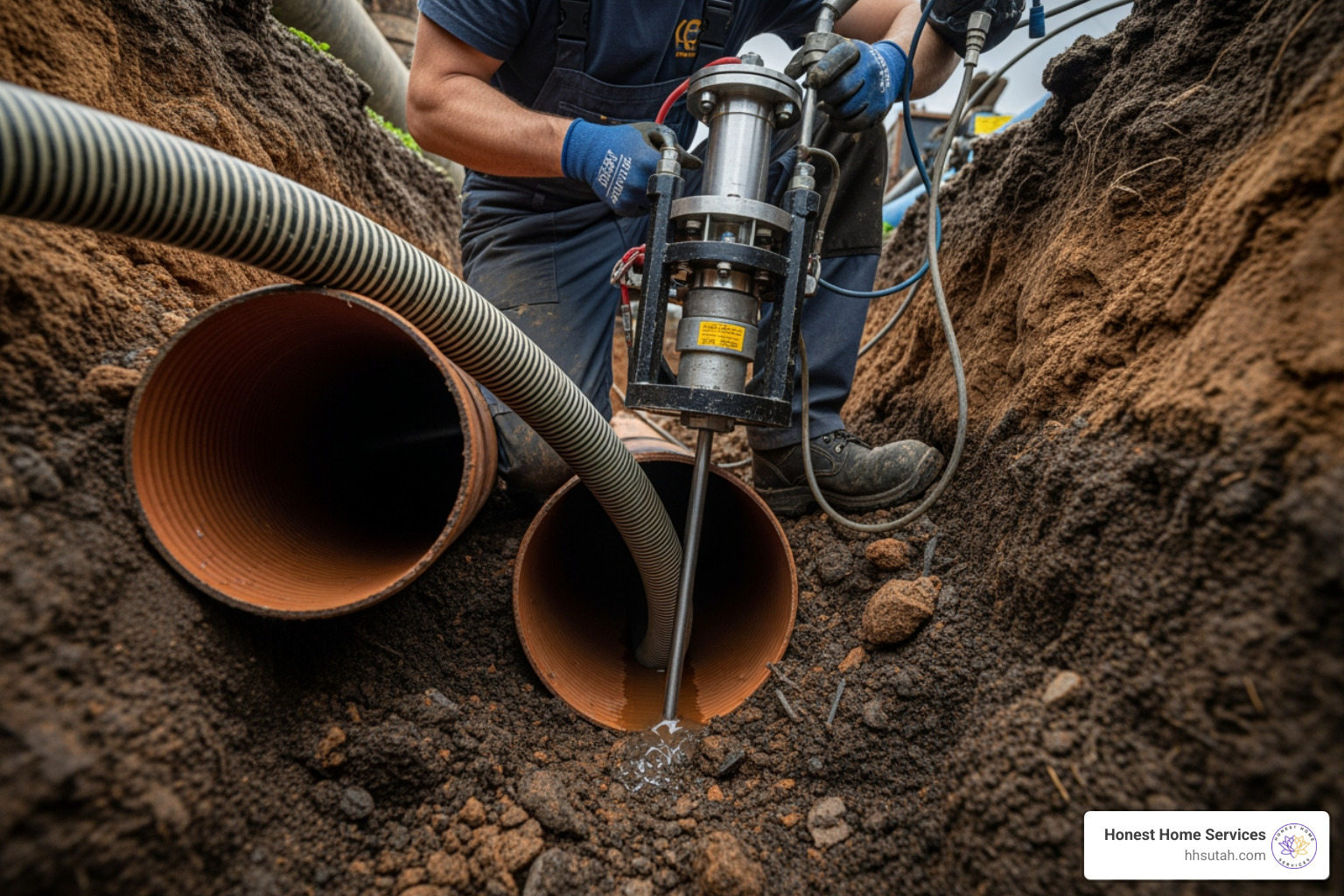
- Liner Insertion: The resin-saturated liner or the expandable sleeve is then carefully inserted into the damaged pipe. This is typically done through an existing access point and guided precisely to the damaged section using an installation plug and the CCTV camera.
- Inflation and Curing: Once positioned, an internal bladder is inflated, pressing the resin-saturated liner firmly against the inner walls of the host pipe. For resin liners, the resin then cures and hardens, often with the aid of hot steam or UV light, to form a rigid, new pipe. For expandable sleeves, the mechanical expansion locks it into place.
- Watertight Seal and Restored Flow: After curing, the bladder is deflated and removed, leaving behind a smooth, seamless, and structurally sound “pipe-within-a-pipe.” This new inner pipe not only seals all cracks and holes but also often improves the flow efficiency due to its smooth surface, preventing future blockages.
The entire process is designed for precision and minimal impact. For more information on our specific services, explore our Salt Lake City Pipe Repair offerings.
Types and Materials: A Closer Look at Sewer Sleeves
When it comes to repairing your sewer line with sleeves, you’ll encounter different types designed for specific situations. The primary distinction often lies between “sectional” and “continuous” liners. Sectional sleeves, also known as spot repairs, target isolated areas of damage, such as a single crack or a leaking joint. Continuous liners, or full relining, extend the entire length between two access points, essentially rehabilitating a whole section of the sewer line.
The choice between these applications depends heavily on the extent and nature of the damage. A sectional sewer pipe repair sleeve is ideal for localized issues, offering a precise and economical fix. Full relining is better suited for pipes with widespread deterioration, multiple cracks, or significant root intrusion along a longer stretch. Each type offers variations in application and performance, custom to specific pipe conditions and project requirements.
Common Materials Used for a Sewer Pipe Repair Sleeve
The durability and effectiveness of a sewer pipe repair sleeve largely depend on the materials used. We rely on high-quality, robust materials to ensure long-lasting repairs for our Northern Utah clients.
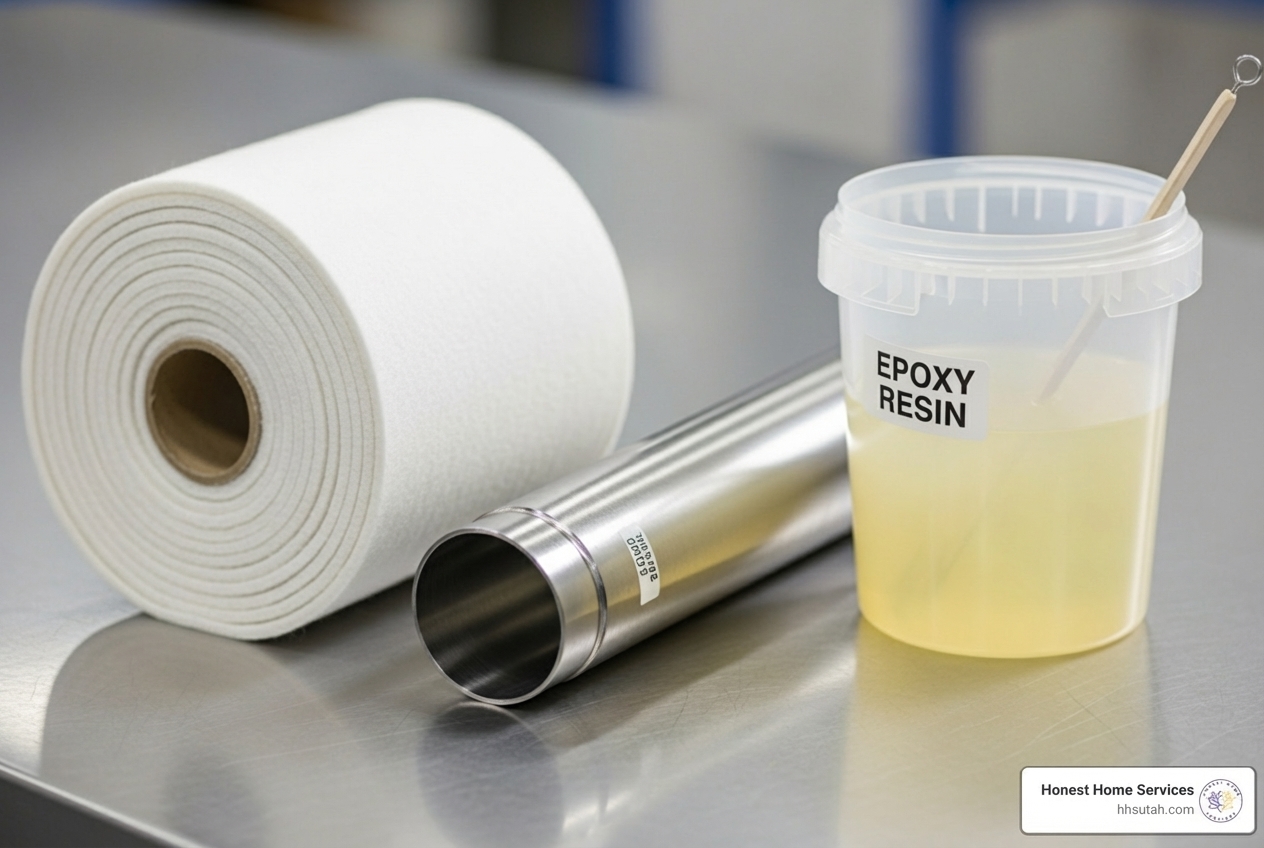
- Epoxy-Saturated Felt Liners: These are perhaps the most common for CIPP applications. A flexible felt material is saturated with thermosetting epoxy resin (such as polyester, vinyl ester, or pure epoxy). Once cured, this forms a hard, impermeable, and structurally sound pipe. Epoxy offers excellent chemical resistance and creates a strong bond with the host pipe.
- Fiberglass Liners: Similar to felt liners but utilizing fiberglass material, these can offer improved strength and rigidity. They are also saturated with resin and cured in place.
- Stainless Steel Expandable Sleeves: Products like the Grouting Sleeve™ or Sewer Sealer™ from Link-Pipe use stainless steel (often 316 grade) for their expandable cover. These sleeves are covered with a sealing material or supported by a sealing rubber core, or expanded sealant grout. They are corrosion-resistant and are mechanically expanded to press against the pipe walls, often with a variable diameter locking mechanism to accommodate slight variations in pipe size. They are known for quick installation and can be installed in live sewer conditions.
- Neoprene Sleeves: Often used in conjunction with stainless steel clamps, neoprene sleeves are highly resistant to various chemicals found in wastewater. They provide a protective layer inside the old pipe, bridging cracks and sealing damaged areas.
These materials are chosen for their properties, including high chemical resistance, exceptional durability, and flexibility during installation, which allows them to conform to the existing pipe’s shape. For more information on how we address various pipe issues, visit our Pipe Repair page.
Compatibility with Different Pipe Types
One of the great advantages of sewer pipe repair sleeve technology is its versatility across a wide range of pipe materials commonly found in Northern Utah homes and infrastructure.
- Cast Iron Pipes: These pipes, with a lifespan typically ranging from 30 to 50 years, are highly susceptible to corrosion and rust, leading to narrowing, weakening, and eventually cracks or collapses. Sleeves are an excellent solution for repairing cast iron pipes, addressing these issues without the need for destructive excavation. Neoprene sleeves secured with stainless steel clamps, or epoxy linings, are particularly effective. For understanding issues in older homes, check out our insights on Old Plumbing Pipes.
- Clay Pipes: Older clay pipes are prone to cracking, root intrusion at joints, and shifting due to ground movement. Sleeves can effectively seal these cracks and reinforce the pipe structure.
- PVC Pipes: While more modern, PVC pipes can still suffer from cracks due to ground shifts, heavy loads, or improper installation. Sleeves provide a robust repair for these damages.
- Concrete Pipes: Concrete pipes can deteriorate over time, leading to erosion, cracks, and infiltration. Sleeves offer a way to create a new, smooth, and watertight interior surface.
Sleeve technology is compatible with major types of drainage piping materials including clay, concrete, metal, iron, steel, plastic, and fiberglass. This broad compatibility makes it a go-to solution for many of the common pipe problems we encounter in the Salt Lake City area.
The Trenchless Advantage: Why Sleeves Beat Traditional Digging
The shift towards trenchless repair methods, particularly the use of a sewer pipe repair sleeve, represents a significant leap forward in plumbing technology. The advantages over traditional “dig and replace” methods are compelling, offering benefits in terms of disruption, time, cost, longevity, and environmental impact.
- Minimal Disruption: The most immediate and obvious benefit is the lack of extensive excavation. This means your landscaping, driveway, patio, and other exterior structures remain largely untouched. For homeowners in Salt Lake City, this saves not only money but also the headache of dealing with a torn-up yard.
- Time Savings: Traditional sewer line replacement can take days, or even weeks, depending on the length and depth of the pipe. Trenchless repairs, especially for sectional sleeves, can often be completed in just a few hours. Even full relining can be completed much faster than traditional methods, minimizing downtime and inconvenience. For example, some sleeve repairs take about 20 minutes when the pipe is clean and unobstructed.
- Cost-Effectiveness: While the upfront cost of trenchless technology can sometimes seem comparable to traditional methods, the overall savings are substantial. Eliminating excavation means no costly landscaping or concrete restoration. Reduced labor hours also contribute to significant savings.
- Longevity: A properly installed sewer pipe repair sleeve is not a temporary fix. These repairs are designed to last, with many products boasting a 50-year or even 100-year design service life for city gravity sewers conveying domestic sewage. This means you’re investing in a long-term solution.
- Environmental Benefits: Trenchless methods cause less disturbance to the environment and surrounding areas. They reduce the amount of waste generated, minimize noise and air pollution from heavy machinery, and protect local ecosystems by preventing sewage leaks into the soil. The EPA’s Trenchless Sewer Rehabilitation fact sheet highlights these advantages, noting how these methods require less restoration and cause less environmental degradation. You can learn more about general trenchless rehabilitation concepts in this trenchless technology overview.
Cost Comparison: Sleeve Repair vs. Full Replacement
When faced with sewer line issues, the cost is often a primary concern for homeowners. While it’s impossible to give exact figures without an on-site assessment, we can offer a general comparison between using a sewer pipe repair sleeve and traditional pipe replacement.
| Feature | Sewer Pipe Repair Sleeve (Trenchless) | Traditional Pipe Replacement (Excavation) |
|---|---|---|
| Excavation | Minimal to none (small access points) | Extensive digging, large trenches |
| Restoration | Little to no cost for landscaping, concrete, or driveway repair | Significant costs for restoring yard, driveway, landscaping |
| Labor Hours | Typically fewer labor hours, specialized technicians | More labor-intensive, requires more crew members |
| Equipment Fees | Specialized trenchless equipment (CCTV, lining equipment) | Heavy excavation equipment (backhoes, trenchers) |
| Installation Time | Hours to a couple of days | Days to weeks |
| Disruption | Minimal impact on property and daily life | High disruption, property inaccessible, noise, dirt |
| Overall Cost | Often more economical due to reduced restoration and labor costs | Can be higher due to extensive excavation and restoration expenses |
| Lifespan | 50-100 years | Can vary, but new pipes have similar lifespans |
The “economical benefit” of a sewer pipe repair sleeve comes from repairing only the damaged area while the sewer pipe remains in service, eliminating all costs associated with full relining or replacement. Trenchless technology can be done at a fraction of the cost of traditional pipe repair when all factors are considered. For a precise estimate for your Salt Lake City property, we offer transparent pricing after a thorough assessment. For more information on effective leak repair, visit our Effective Pipe Leak Repair in Salt Lake City page.
Sleeve Repair vs. Other Trenchless Methods
“Trenchless” isn’t a single solution, but a category of advanced repair techniques. While a sewer pipe repair sleeve (often a form of CIPP or sectional repair) is a fantastic option, there are other trenchless methods, each suited for different scenarios. Understanding these options helps us choose the best approach for your specific needs in Northern Utah.
- Pipe Bursting: This method is used for severely damaged pipes or when an increase in pipe diameter is desired. A new pipe is pulled through the old one while a bursting head simultaneously fractures and expands the old pipe. It essentially replaces the entire pipe with a new one of the same or larger diameter. This differs from a sleeve, which rehabilitates the existing pipe by lining its interior.
- Sliplining: During this process, a new liner of a smaller diameter is pulled into the existing pipe. The annular space between the old pipe and the new, smaller pipe is then typically grouted to provide structural integrity. While it creates a new pipe, it reduces the internal diameter of the sewer line, which can sometimes impact flow capacity.
- Internal Pipe Coating: This involves spraying a thick epoxy coating onto the inside of the pipes. This coating seals leaks and cracks, providing a durable new surface. It’s often used for smaller diameter pipes or when the pipe’s structural integrity is still largely intact, but leaks or minor corrosion are present.
Each method has its unique application scenarios. Pipe bursting is for full replacement without excavation, sliplining is for full replacement with a slight diameter reduction, and internal coating is more of a sealing and strengthening method. A sewer pipe repair sleeve typically falls between these, offering structural repair and sealing for specific sections or full lengths without reducing diameter significantly (as with CIPP) or requiring full replacement (as with bursting). For more on comprehensive pipe solutions, see our Plumbing System Re-Piping services.
When is a Sewer Pipe Repair Sleeve the Best Choice?
A sewer pipe repair sleeve is not a one-size-fits-all solution, but it is an incredibly effective and often preferred method for a wide range of sewer line problems. It excels in situations where:
- Localized Cracks and Holes: If you have specific points of damage, like a single crack, a small hole, or a leaking joint, a sectional sleeve provides a precise and efficient repair.
- Infiltration and Exfiltration: Sleeves create a watertight barrier, effectively stopping groundwater from entering your sewer system (infiltration) and preventing sewage from leaking out (exfiltration).
- Joint Misalignment: Minor offsets or misalignments at pipe joints can be stabilized and sealed by a sleeve, restoring the pipe’s smooth interior.
- Minor Root Intrusion: While major root blockages need to be cleared, a sleeve can prevent future root intrusion by sealing entry points and creating a smooth, root-resistant surface.
- Preserving Property: When the damaged pipe is located under valuable landscaping, a mature tree, a driveway, or a foundation, the no-dig nature of sleeve repair makes it the ideal choice.
However, it’s crucial to understand the limitations. A sewer pipe repair sleeve may not be the most effective solution if:
- The Pipe is Severely Collapsed: If a significant section of the pipe has completely collapsed, a sleeve cannot form a new structural pipe.
- Severely Offset Pipes: While minor offsets can be addressed, a pipe with a large, abrupt offset may require more extensive repair or replacement.
- Extensive Structural Failure: If the pipe is beyond repair, meaning it has lost most of its structural integrity over a long stretch, a full replacement (possibly via pipe bursting) might be necessary.
A professional plumbing inspection is always the first step to determine the most effective solution for your specific sewer line issue. We provide detailed Plumbing Inspection services to accurately diagnose problems.
Frequently Asked Questions about Sewer Pipe Sleeves
We often hear similar questions from our clients in the Salt Lake City area about sewer pipe repair sleeves. Here are some of the most common ones:
Can you put a sleeve in a cast iron sewer pipe?
Absolutely, yes! Sleeving is a common and highly effective method for repairing cast iron sewer pipes. These pipes, often found in older homes, are particularly susceptible to corrosion, rust, and cracking. A sewer pipe repair sleeve can be inserted into the damaged section, acting as a durable patch or a complete new lining. This extends the life of the pipe significantly by providing a protective barrier against further corrosion and sealing existing damage. Materials like neoprene or epoxy-saturated liners, secured with stainless steel clamps, are commonly used for this purpose. It’s a fantastic way to address common plumbing problems in older homes, as discussed in our article Common Plumbing Problems in Older Homes and How to Fix Them.
How long does a sewer pipe repair sleeve last?
The durability of a sewer pipe repair sleeve is one of its most impressive benefits. When properly installed using high-quality materials, these repairs are designed for exceptional longevity. Many manufacturers and industry standards indicate an expected lifespan of 50 years, with some even offering a 100-year design service life for city gravity sewers conveying domestic sewage. This makes a sleeve repair a long-term investment, essentially creating a new, structural pipe within your old one that can last for generations. Minimal maintenance is typically required for these repaired pipes, beyond standard plumbing system care. Regular Plumbing System Maintenance can help ensure the longevity of your entire plumbing system.
Is installing a sewer sleeve a DIY project?
Definitely not. Installing a sewer pipe repair sleeve is a highly specialized task that requires professional expertise, specific training, and sophisticated equipment. It is not a do-it-yourself project. The process involves:
- Specialized Equipment: This includes CCTV cameras for precise inspection and guidance, high-pressure water jetters for thorough pipe cleaning, and inflation packers or mechanical expansion tools for accurate sleeve placement and curing.
- Professional Expertise: Our technicians undergo extensive training to correctly diagnose the problem, select the right sleeve material and size, and execute the installation process with precision. Improper cleaning, incorrect resin saturation, or faulty curing can lead to premature failure of the repair.
- Risk of Improper Installation: An improperly installed sleeve can lead to ongoing leaks, blockages, or even structural failure, potentially costing more in the long run than hiring a professional.
For these reasons, it’s crucial to trust an Experienced Plumber like those at Honest Home Services for any sewer pipe repair involving sleeves.
Your Modern Solution for Sewer Line Problems
The advent of the sewer pipe repair sleeve has revolutionized how we approach damaged sewer lines. It offers Northern Utah homeowners a powerful, non-invasive alternative to traditional excavation, delivering a permanent fix that protects both your property and your wallet. The trenchless benefits are clear: minimal disruption, faster completion times, significant cost savings by avoiding extensive restoration, and a long-lasting, durable solution.
Choosing a sewer pipe repair sleeve is a smart investment in the health and longevity of your home’s plumbing infrastructure. It ensures long-term reliability for your sewer system, preventing future headaches and potential environmental contamination. For expert assessment and reliable trenchless sewer repair solutions in Salt Lake City and the surrounding Northern Utah areas, look no further than Honest Home Services. We’re here to provide honest, reliable, and affordable services, ensuring your complete satisfaction.
Contact us today for a comprehensive evaluation of your sewer line and to learn more about how a sewer pipe repair sleeve can be your modern solution. We’re ready to help with your Salt Lake City Sewer Mainline Repair needs.