

Furnace Installation Costs Start With the Right System Design
For a safe, reliable furnace installation, start with an in-home load calculation, choose a furnace that matches your fuel source and ductwork, and get a written scope that includes permits, venting, electrical work, removal, and final safety testing. The lowest equipment price is not always the lowest total cost if the system is oversized, poorly vented, or installed without proper commissioning.
A new high-efficiency furnace can improve comfort and reduce energy use, but its real performance depends on correct sizing, airflow, drainage, and combustion setup. In Northern Utah, homeowners should also consider cold-weather heating demand, available natural gas or electric service, and whether existing ducts can support the new equipment.
Honest Home Services has more than 20 years of experience serving Utah homes and businesses with heating, air conditioning, and plumbing work. Our licensed and insured team helps customers make informed furnace installation decisions that protect comfort, safety, and their budget.
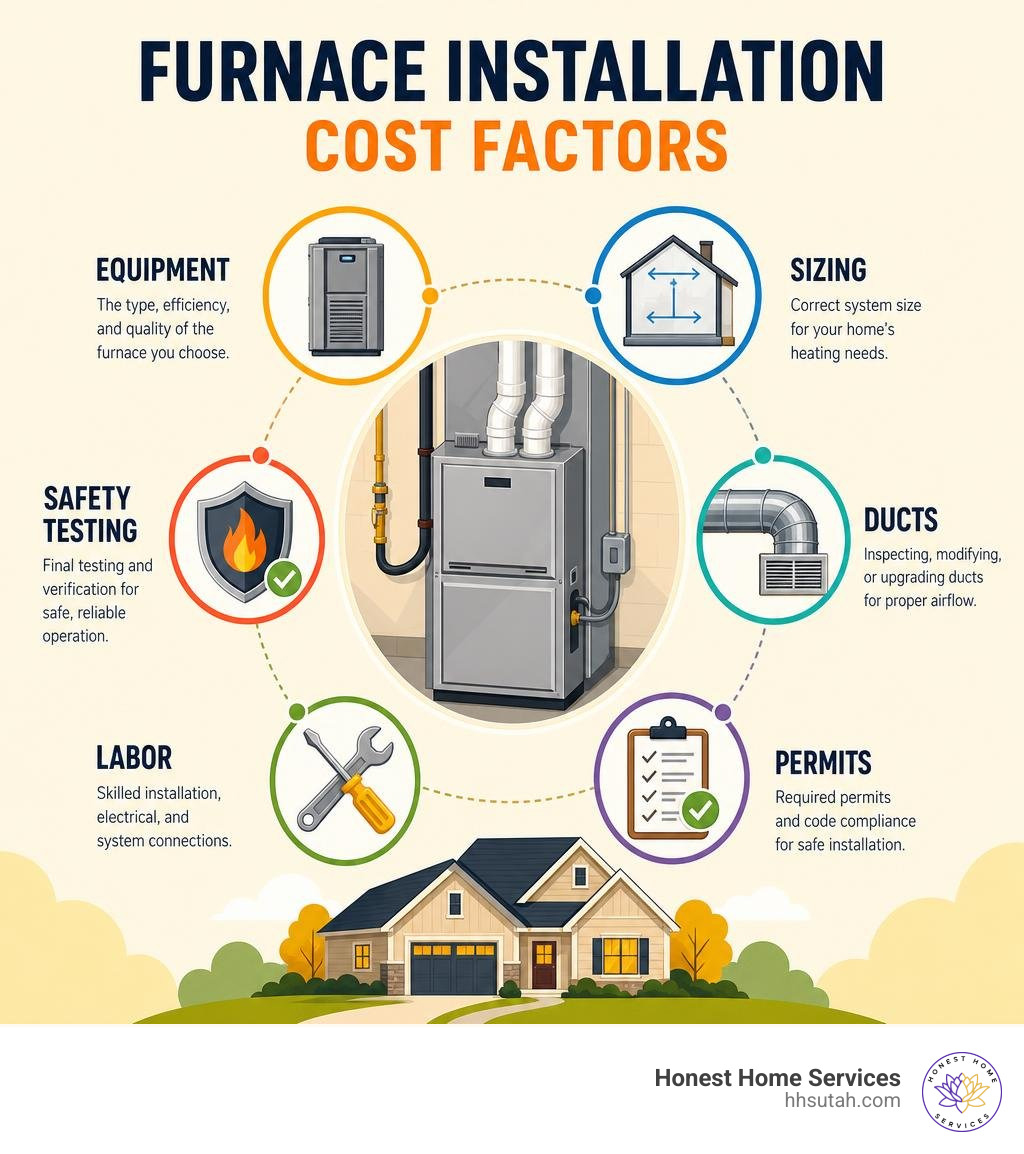
Key Factors That Impact Furnace Installation Pricing
Investing in a new heating system involves far more than simply selecting a unit from a catalog. A heating system is an integrated mechanical assembly that connects to your home’s structural framing, duct network, fuel supply, and electrical infrastructure. Every architectural layout presents unique demands, meaning that installation requirements vary significantly from one property to another.
When assessing your home’s heating needs, several primary mechanical variables dictate the overall scope of the project:
- System Sizing and Output: Sizing must match the actual thermal losses of the building envelope rather than guessing based on square footage.
- Energy Efficiency Tier: Units carry standard or high-efficiency ratings that require completely different venting and drainage setups.
- Fuel Infrastructure: Connecting to existing natural gas, converting to liquid propane (LP), or configuring an all-electric system dictates the required gas line piping, valves, and electrical service.
- Structural Layout: Navigating tight mechanical rooms, crawlspaces, or high-altitude considerations across regions like Salt Lake City, Draper, and Park City impacts labor complexity.
- System Health: Deciding whether you need a few minor component repairs or a full equipment overhaul often comes down to knowing how to know if its time for furnace replacement.
Sizing and Efficiency in Furnace Installation
One of the most common pitfalls in residential heating is installing an improperly sized unit. If a system is oversized, it heats the living space too quickly, leading to rapid on-off cycling. This “short cycling” causes wide temperature swings, uneven room heating, excessive mechanical wear on the igniter and heat exchanger, and high electrical spikes. Conversely, an undersized furnace runs continuously during freezing Wasatch Front winter nights without ever reaching your thermostat’s setpoint.
To establish precise heating capacity, a technician performs an ACCA Manual J load calculation. This engineering assessment accounts for your home’s total square footage, ceiling heights, window insulation values, directional sun exposure, and local climate extremes.
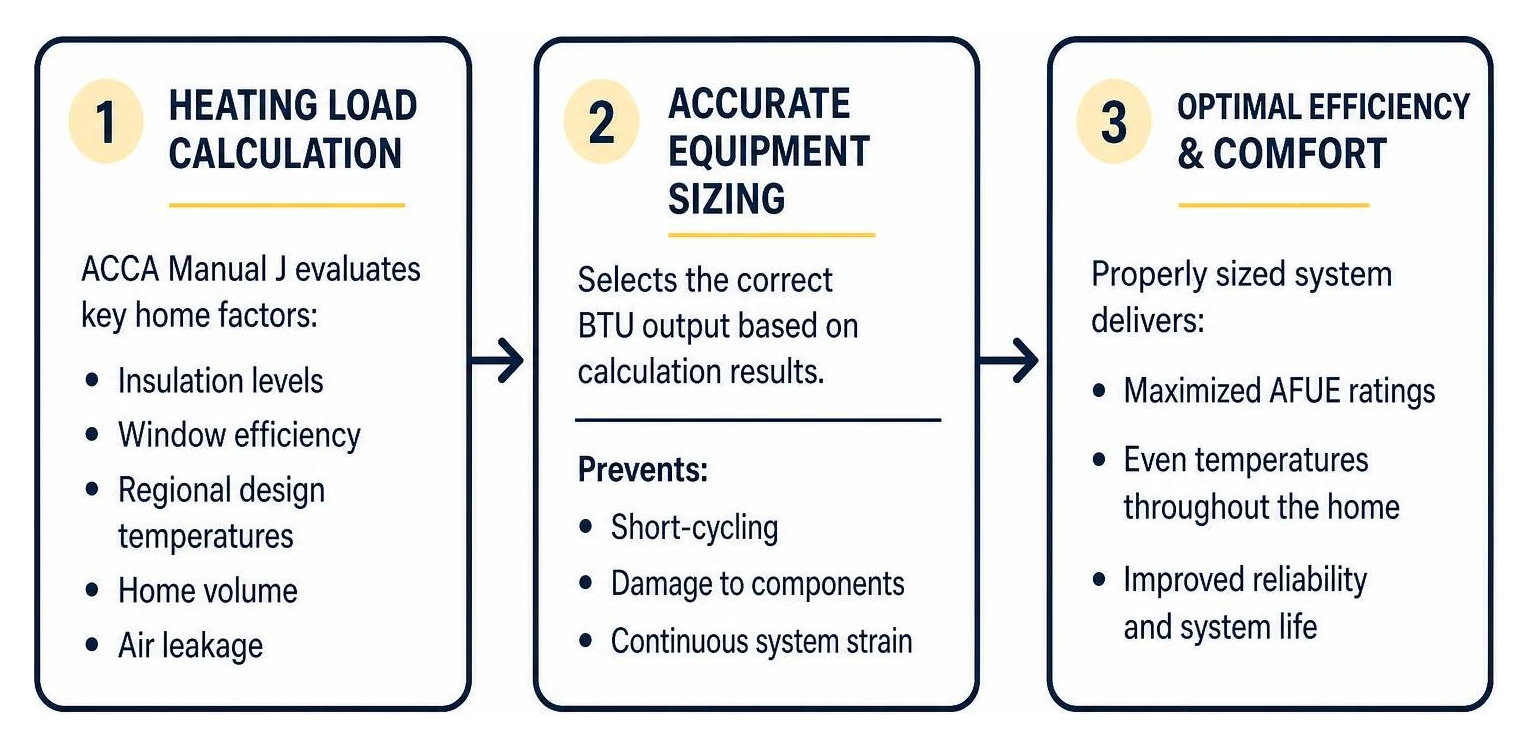
Efficiency is measured by the Annual Fuel Utilization Efficiency (AFUE) rating. Standard-efficiency furnaces (Category I) operate around 80% AFUE, discharging substantial heat out through a metal chimney flue. High-efficiency condensing units (Category IV) operate between 90% and 98% AFUE. These systems utilize a primary and secondary heat exchanger to extract heat from combustion gases until water vapor condenses into liquid. According to condensing gas furnace technical specifications, capturing this latent heat requires dedicated PVC or polypropylene venting routed through an exterior wall, as well as dedicated condensate drainage lines.
Ductwork Modifications and System Compatibility
A modern high-efficiency furnace cannot deliver its rated performance if the duct system restricts airflow. Condensing furnaces generally require higher airflow volumes (measured in cubic feet per minute, or CFM) compared to older units. If existing ductwork is undersized, poorly routed, or obstructed, it causes high external static pressure (ESP).
High static pressure places extreme stress on the variable-speed blower motor, leading to:
- Noisy airflow whistling through vents
- Premature motor failure and control board errors
- Blower vibration throughout the house
- Tripped high-limit safety switches due to trapped heat
To achieve balanced airflow, our technicians often fabricate custom sheet metal transitions, such as tapered return drops and supply plenums. Installing radius throat elbows and internal turning vanes helps smooth incoming return air, significantly lowering static pressure before air reaches the filter cabinet. Ensuring comprehensive heating performance always requires evaluating the distribution ducts alongside the central mechanical equipment.
DIY vs. Professional Heating Replacement: Cost and Risk Breakdown
With heating equipment widely available across digital storefronts, some property owners consider tackling heating replacement as a do-it-yourself weekend project. While buying equipment online might appear economical initially, a furnace is not a plug-and-play appliance. It relies on combustion chemistry, pressurized combustible gas lines, high-voltage electrical circuits, and dangerous carbon monoxide exhaust management.
Understanding the balance between up-front equipment savings and long-term operating safety is crucial before deciding on a replacement path.
| Consideration | DIY Installation | Professional Installation |
|---|---|---|
| Initial Equipment Sourcing | Direct-to-consumer online retail | Factory-authorized commercial distributor |
| Specialized Tooling Required | High out-of-pocket tool purchase (manometer, combustion analyzer, sheet metal brakes) | Fully equipped certified service vehicle |
| Permits & Code Compliance | Homeowner must self-pull permits, coordinate city inspections, and know local building codes | Contractor pulls mechanical/gas permits and manages municipal inspection |
| Safety Testing | Limited to visual checks and basic soap bubble solutions | Digital combustion analysis, carbon monoxide verification, and static pressure testing |
| Factory Warranty Status | Frequently voided or reduced if not installed by a licensed technician | Full manufacturer parts warranty and contractor labor guarantee |
| Labor & Time Investment | Significant personal research, tool acquisition, and multi-day physical labor | Completed safely in 1–2 days by trained professionals |
Comparing Professional vs DIY Furnace Installation Costs
When attempting a self-installation, the perceived savings often erode quickly once you account for mandatory installation materials, specialized tools, and local permitting fees. Connecting sheet metal requires hand seamers, aviation snips, cleat benders, foil mastic tapes, and brush-on sealants. Gas work requires rigid black iron pipe, pipe threaders, gas-rated thread sealants, and calibrated gas leak detectors.
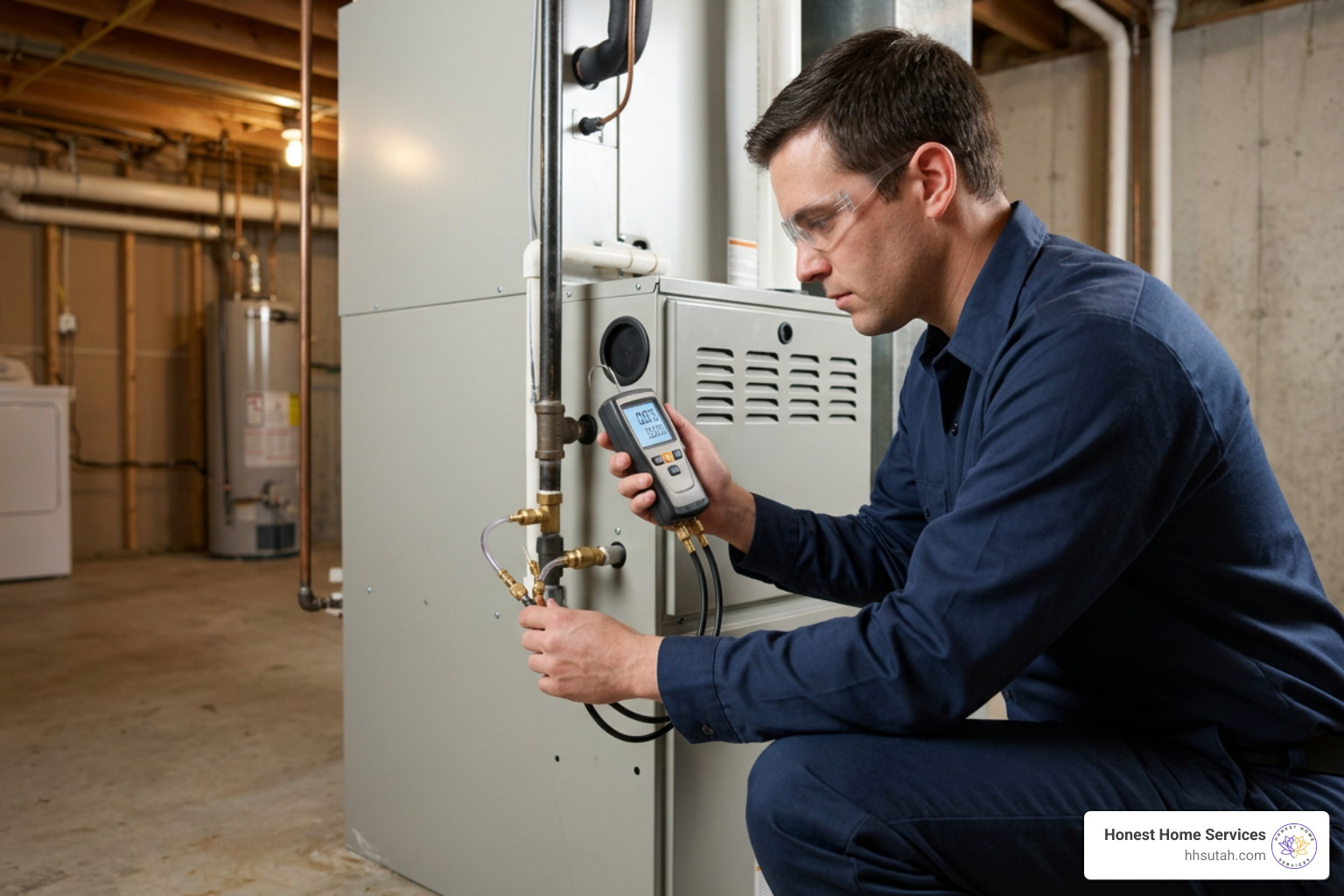
Furthermore, fine-tuning the system requires specialized testing instruments that most homeowners do not own:
- Dual-Port Digital Manometers: Used to measure manifold gas pressure and ensure incoming fuel supply matches factory nameplate specs.
- Combustion Gas Analyzers: Measure carbon monoxide levels, oxygen percentages, and combustion efficiency within the flue exhaust.
- Static Pressure Probes: Verify that total external static pressure remains within the unit’s engineered limits.
For homeowners looking for predictable, stress-free budget management, exploring flexible financing options through a professional installer often provides access to premium, high-efficiency equipment without the upfront capital strain or safety risks of self-installation.
Essential Safety Hazards and Warranty Implications
Heating equipment relies on active combustion. Mistakes during installation introduce severe life-safety risks to your home:
- Carbon Monoxide Poisoning: Carbon monoxide (CO) is an odorless, colorless, and toxic gas. Incomplete combustion caused by incorrect manifold gas pressure, improper burner air shutter adjustment, or cracked heat exchangers can push lethal amounts of CO into your living spaces.
- Fuel Gas Leaks: Improperly sealed threaded black iron pipe or incorrectly flared Corrugated Stainless Steel Tubing (CSST) can seep natural gas or propane, creating an immediate fire and explosion hazard.
- Corrosive Condensate Water Damage: High-efficiency condensing furnaces produce acidic condensate (pH 3 to 5). If drain lines lack proper trap priming, have improper slope, or freeze during winter, acidic water can leak into your home, corroding the furnace chassis and causing structural water damage.
- Electrical Hazards: Incorrect line-voltage wiring or failing to properly ground control boards can destroy sensitive integrated circuit boards through electrostatic discharge (ESD).
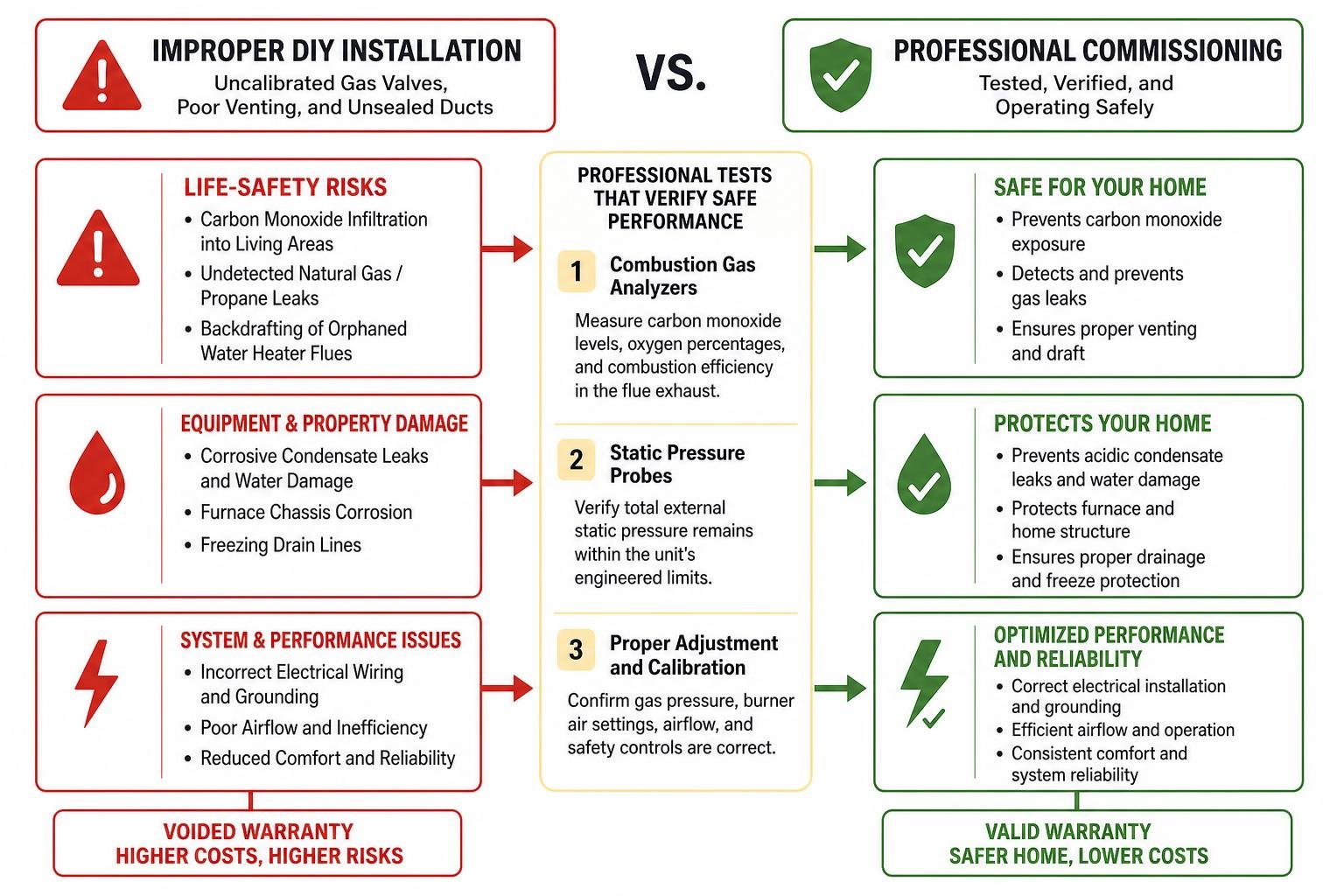
In addition to safety concerns, equipment manufacturers strictly protect their warranty terms. Many major HVAC brands explicitly state that warranties are only valid when equipment is installed and commissioned by a licensed, certified mechanical contractor. Industry guidelines, including technical guidelines for condensing furnace installation, emphasize that improper installation can reduce real-world performance by up to 30%, quickly canceling out the theoretical efficiency gains of the new unit.
The Step-by-Step Technical Installation and Commissioning Process
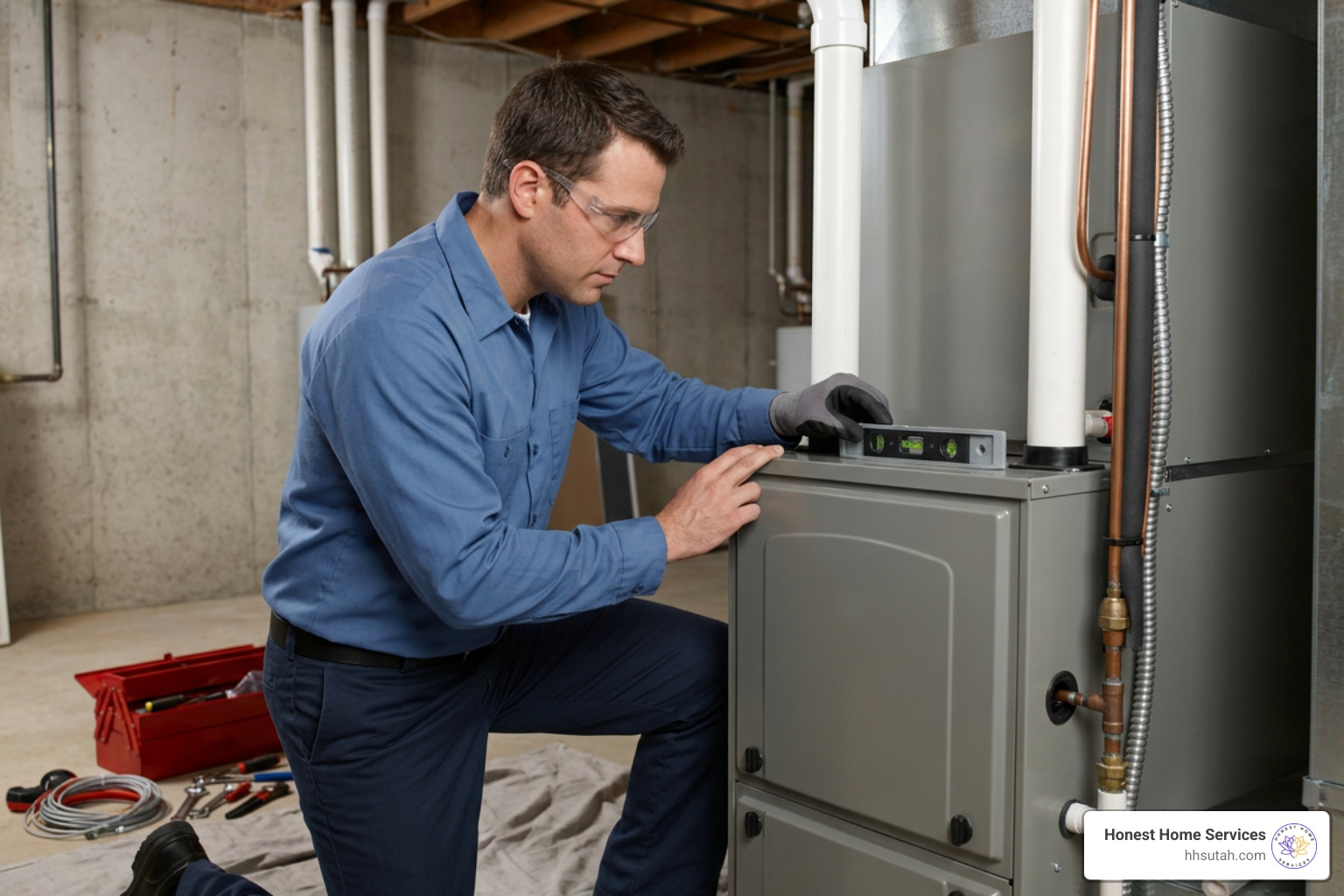
Professional installation involves a rigorous mechanical workflow designed to maximize safety, equipment lifespan, and thermal output. When our technicians arrive at your home in Salt Lake County, Davis County, or nearby communities like Sandy, West Jordan, or Layton, we follow a detailed, multi-step process:
- Site Protection and Safe Decommissioning: We lay drop cloths, turn off electrical power at the main breaker, shut down the main gas cock, disconnect low-voltage thermostat controls, and safely extract the old heating equipment.
- Duct and Plenum Fabrication: We inspect existing supply and return trunks, fabricate new custom-fit sheet metal transitions, and seal every joint using mastic paste or aluminum foil tape.
- Venting and Combustion Air Routing: We route solid schedule 40 PVC or CPVC pipe directly through exterior walls for sealed two-pipe combustion air intake and exhaust, ensuring all pipe joints are solvent-welded.
- Gas Line and Electrical Integration: We fit rigid gas piping with an accessible shutoff valve and sediment trap (drip leg), run line-voltage power through dedicated metallic conduit, and connect the multi-conductor thermostat harness.
- Commissioning and Testing: We perform dynamic system startup checks, including combustion analysis, static pressure verification, temperature rise calculation, and gas pressure adjustments.
Mechanical Placement and Condensate Management
High-efficiency furnaces must be carefully leveled and positioned on stable surfaces. Condensing models require a slight forward pitch (typically 1/4 inch to 1/2 inch) to direct acidic condensate forward into the internal drainage collection pan rather than letting it pool against internal steel panels. If placed in an unconditioned garage, the burner assembly must be mounted at least 18 inches above the floor to comply with National Fuel Gas Code standards.
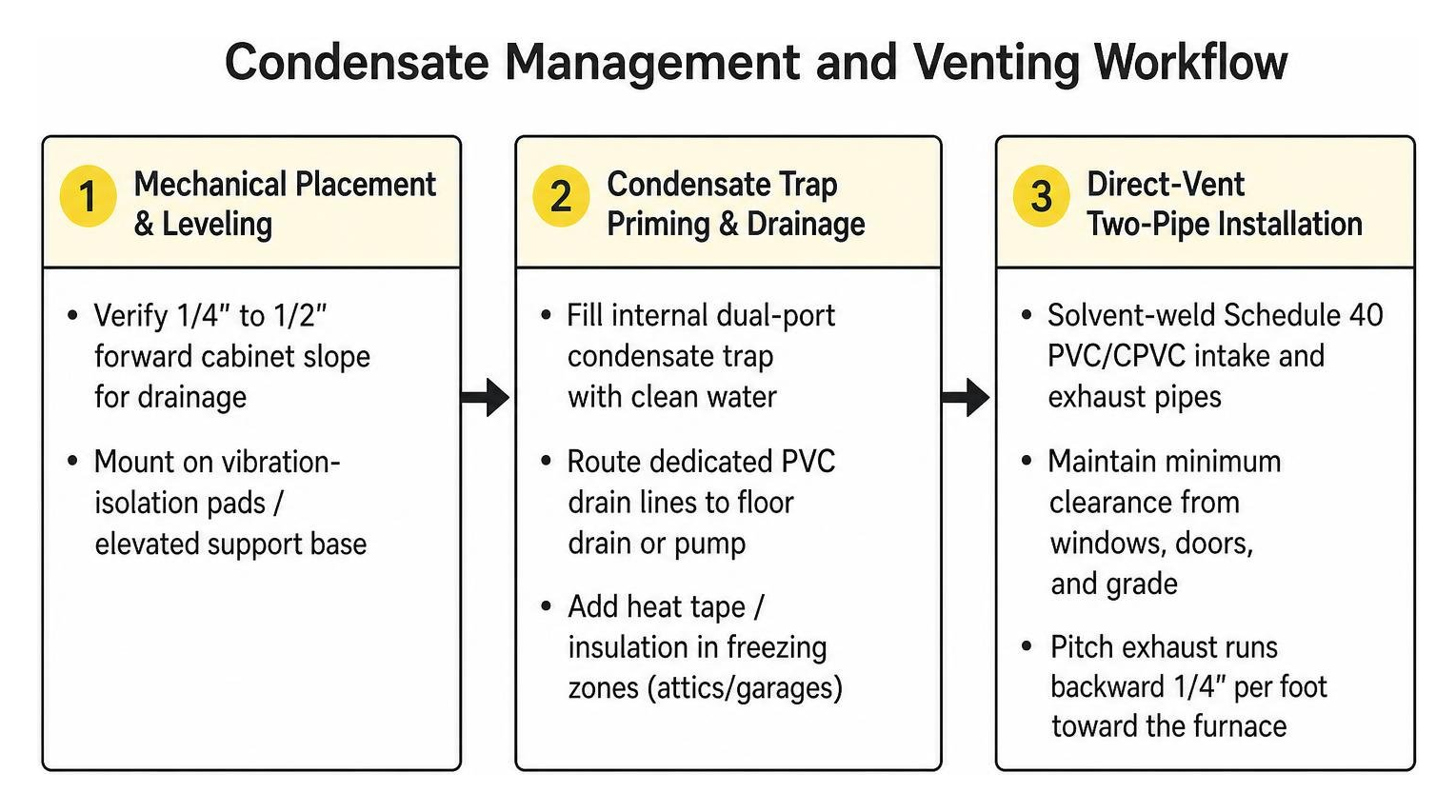
Before firing up the equipment, the internal condensate trap must be fully primed with water. Operating a dry trap allows flue gases to escape into the blower cabinet and causes internal pressure switches to trip, preventing the furnace from running. When drain lines pass through unheated spaces such as attics or crawlspaces, self-regulating heat trace tape or pipe insulation is added to prevent freeze-ups during sub-zero Utah winter storms.
Fuel Integration, Wiring, and Safety Commissioning
After securing the mechanical cabinet, we connect the gas supply using black iron pipe, incorporating a dirt leg to catch debris before it enters the gas valve. All threaded connections are treated with gas-rated thread sealant and tested for micro-leaks using commercial bubble solutions and electronic combustible gas detectors.
Next, electrical wiring is integrated with the low-voltage control terminal board. If the furnace features a two-stage gas valve or a modulating burner, we pair it with matching multi-conductor wiring and modern smart thermostats so the equipment can automatically shift between low and high heat modes based on real-time indoor demand.
Finally, we perform complete safety commissioning:
- Clocking the Gas Meter: Verifies that total BTU fuel consumption matches the manufacturer’s nameplate input.
- Measuring Temperature Rise: We check the temperature differential between the return air intake and the supply plenum to ensure air absorbs heat within the rated range (typically between 35°F and 65°F).
- Draft Spillage and Flue Analysis: Verifies that exhaust gases are completely discharged outdoors without backdrafting into the home’s mechanical space.
Frequently Asked Questions About Heating System Replacement
How long does a typical furnace replacement take?
A standard, like-for-like residential furnace replacement usually takes 1 to 2 days to complete. This timeline allows our technicians to safely remove the existing equipment, make custom sheet metal adjustments, run dedicated PVC venting pipes, wire electrical controls, and conduct full safety testing.
If your project requires extensive new duct installation, conversion from an electric baseboard system to central gas, gas line extensions, or multi-zone damper setups, the work may require 3 to 5 days. We coordinate every phase to minimize heating downtime during colder months.
Can an improperly installed furnace void the manufacturer warranty?
Yes. Most leading heating equipment manufacturers stipulate in their product documentation that warranty protections apply only when the system is installed by a licensed, certified HVAC professional in accordance with local building codes.
If a self-installed unit fails due to improper airflow, poor gas valve calibration, unprimed condensate traps, or incorrect venting, the manufacturer will typically deny warranty claims for replacement parts like cracked heat exchangers or failed circuit boards. Professional installation ensures proper warranty registration and provides labor guarantees that protect your investment.
How much can a high-efficiency unit reduce annual heating bills?
Upgrading from an older, standard-efficiency system (around 70% to 80% AFUE) to a modern condensing furnace operating at 96% AFUE can lower annual heating energy usage by 15% to 30%. Because the system extracts nearly all usable heat from the fuel rather than venting it outside, less fuel is required to keep your living spaces comfortable.
To maintain these energy savings year after year, scheduling regular furnace tune-up maintenance is essential for keeping the burners clean, testing electrical components, and ensuring peak operating efficiency.
Conclusion
Replacing your home’s heating system is one of the most important investments you can make in your property’s comfort, efficiency, and long-term safety. While evaluating equipment features and efficiency ratings is an important starting point, the quality of the installation directly determines how well the system performs, how long it lasts, and how safe it is to operate.
At Honest Home Services, we are committed to delivering reliable, high-quality heating solutions across Northern Utah. Whether you live in Salt Lake City, Layton, Bountiful, South Jordan, Herriman, Lehi, or Saratoga Springs, our licensed and certified technicians handle every step of your installation with care—from precise load calculations and custom duct adjustments to thorough combustion testing.
Contact us today to schedule your consultation and get a clear, detailed estimate for your home’s furnace installation.