
Understanding the True Cost of Water Main Line Repair
Water main line repair cost can be a significant and unexpected expense for homeowners, but understanding the pricing upfront helps you prepare and make informed decisions. Whether you’re dealing with a sudden leak or noticing warning signs of deterioration, knowing what to expect financially is the first step toward resolving the issue quickly and effectively.
Quick Answer: What Does Water Main Line Repair Cost?
- Average Repair Cost: $950 – $1,025
- Typical Range: $350 – $1,700
- Minor Repairs (valves, accessible leaks): $150 – $700
- Major Repairs (broken/corroded pipes): $500 – $5,000
- Full Replacement: $2,000 – $5,000+
- Labor Costs: $70 – $150 per hour
- Permits: $25 – $500
The final price depends heavily on factors like the location of the damage, pipe material, accessibility, and whether you need trenching or can use trenchless methods. Repairs under driveways, concrete slabs, or in areas with difficult access will cost more due to increased labor and potential restoration work.
At Honest Home Services, we’ve spent over 20 years helping Northern Utah homeowners steer plumbing emergencies, including complex water main line repair cost challenges. Our team provides transparent pricing and expert diagnostics to ensure you understand exactly what you’re paying for before any work begins.
What Are the Signs of a Damaged Water Line?
Finding a problem with your main water line can feel like a homeowner’s nightmare. But before you panic, knowing the early warning signs can help you catch issues before they escalate into costly catastrophes. We’ve seen it all in Northern Utah, from subtle changes to undeniable disasters, and these are the top indicators that your water line might need attention.
Keep an eye out for:
- Puddles or wet spots in your yard: Especially if it hasn’t rained recently, unexplained soggy patches or even small sinkholes can point to an underground leak.
- Unexplained high water bills: A sudden spike in your water usage without a change in habits is a classic sign of a hidden leak.
- Reduced water pressure: If your showers feel weaker or your faucets run slower, it could be a sign of a leak in the main line.
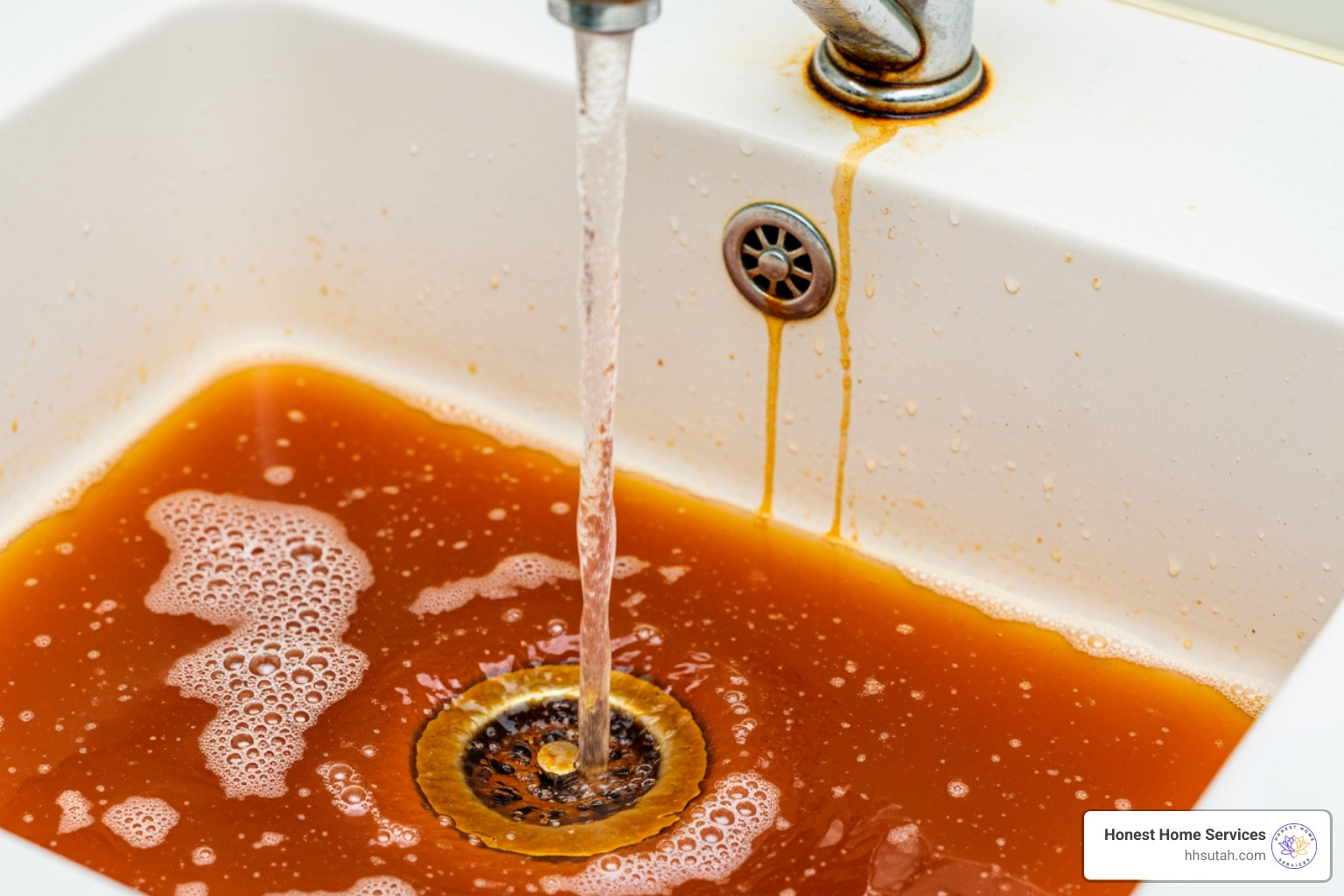
- Discolored or rusty water: Water that looks brown, yellow, or otherwise off-color often indicates corrosion within your pipes.
- Whistling or bubbling sounds: Strange noises coming from your plumbing system when no water is actively being used can signal a leak.
- Foundation cracks: Persistent leaks can saturate the soil around your home, leading to foundation movement and cracks.
- Musty odors: A damp, earthy smell in your basement or crawl space could indicate a hidden water leak.
If you suspect a leak, don’t wait! Early detection can save you significant headaches and expenses down the road. Our team offers expert Salt Lake City Leak Detection services to pinpoint the problem quickly.
Low Water Pressure
A noticeable drop in water pressure is one of the most common and frustrating signs of a main water line issue. This can manifest as a gradual decrease over time or a sudden, dramatic change. If multiple fixtures in your home are affected simultaneously, it strongly suggests a problem with the main line rather than an isolated faucet or showerhead. A leak allows water to escape before it reaches your home, reducing the overall pressure. This isn’t just an inconvenience; it’s a clear signal that something needs to be investigated.
Unexplained High Water Bills
Nobody likes an unexpectedly high bill, especially when you haven’t changed your water usage habits. If you’re consistently seeing higher charges on your monthly water statement, and you can’t attribute it to extra laundry, watering the lawn more, or filling a pool, then a hidden leak in your main water line is a very likely culprit. Even a small, slow leak can waste hundreds or thousands of gallons of water over a month, leading to a significant increase in your bill. Comparing your current bills to previous months or similar periods can help confirm this suspicion.
Puddles or Wet Spots in the Yard
Perhaps the most visible sign of a main water line leak is water appearing where it shouldn’t be in your yard. This could be anything from consistently soggy patches of grass, even during dry spells, to actual puddles forming. In more severe cases, you might even notice small sinkholes or unusually lush, green areas of grass directly above the leaking pipe, as the escaping water acts as an unintended irrigation system. If you see water bubbling up from the ground, that’s a pretty clear sign you have an active leak and need immediate attention.
Key Factors That Influence Water Main Line Repair Cost
When we talk about the water main line repair cost, it’s rarely a one-size-fits-all situation. Many variables can significantly impact the final price. Understanding these factors will help you prepare for the investment and make informed decisions with your plumbing professionals.
Accessibility and Location of the Damage
This is often one of the biggest cost drivers. Where the damaged pipe is located directly influences the labor and equipment needed to access it.
- Depth of the pipe: Water mains are typically buried between 1 to 3 feet deep, but in colder climates like Northern Utah, they might be deeper to protect against freezing. Deeper excavations require more time, labor, and potentially larger equipment, increasing costs.
- Under hardscaping: If the leak is beneath a concrete slab, driveway, patio, or even your home’s foundation, the cost will jump significantly. We’ll need to break through these structures, and then there’s the added expense of repairing or replacing them afterward.
- Tree root intrusion: Tree roots naturally seek out water sources, and your main line is a prime target. Roots can wrap around and even penetrate pipes, causing cracks and blockages. Navigating around extensive root systems or removing sections of them adds complexity and time to the repair. Our pros always dig around roots and rocks rather than through them to minimize further damage.
- Ease of access for equipment: If the damaged section is in a tight spot, like between two buildings or in a heavily landscaped area, it might limit the type of equipment we can use, potentially making the process more manual and time-consuming.
These accessibility challenges can lead to higher labor hours and specialized equipment needs, directly impacting your overall water main line repair cost. If you have a plumbing emergency, our Emergency Plumber team is ready to respond, no matter the access challenge.
Pipe Material and Condition
The material of your existing water line and its overall condition play a crucial role in determining whether a repair is feasible and how much it will cost. Different materials have different lifespans, repair methods, and material costs:
- PEX (Cross-linked Polyethylene): Costing around $0.40 to $2 per linear foot, PEX is a flexible plastic pipe that’s resistant to corrosion and bursting. It has a lifespan of 30 to 50 years. Repairs are generally straightforward due to its flexibility.
- PVC (Polyvinyl Chloride): Priced from $0.50 to $5 per linear foot, PVC is durable and can last 100+ years, but it’s not suitable for hot water and can become brittle in cold temperatures.
- Copper: Ranging from $2 to $8 per linear foot, copper is highly durable, corrosion-resistant, and has a lifespan of 50 to 100+ years. Repairs can be more complex, often requiring soldering. Modern copper mains are more expensive to repair than some other materials.
- Galvanized Steel & Cast Iron: These older materials (costing $2 to $10 per linear foot) are prone to corrosion and can have a shorter lifespan. Repairs can be difficult, and often, replacement with a modern material is recommended due to their age and propensity for recurring issues.
- Lead Pipes: If your home was built before the late 1980s, you might have lead pipes. The Environmental Protection Agency (EPA) Lead is a toxic heavy metal has set the maximum contaminant level goal for lead in drinking water at zero, emphasizing that there is no safe level of lead exposure. We cannot legally repair lead lines; they must be replaced, typically with copper or PEX, which significantly impacts the water main line repair cost (or rather, replacement cost).
The age and extent of corrosion or damage to the pipe material heavily influence whether a repair is possible or if a full replacement is the more prudent, long-term solution.
Labor, Permits, and Additional Expenses
Beyond the actual pipe work, several other costs contribute to the overall water main line repair cost:
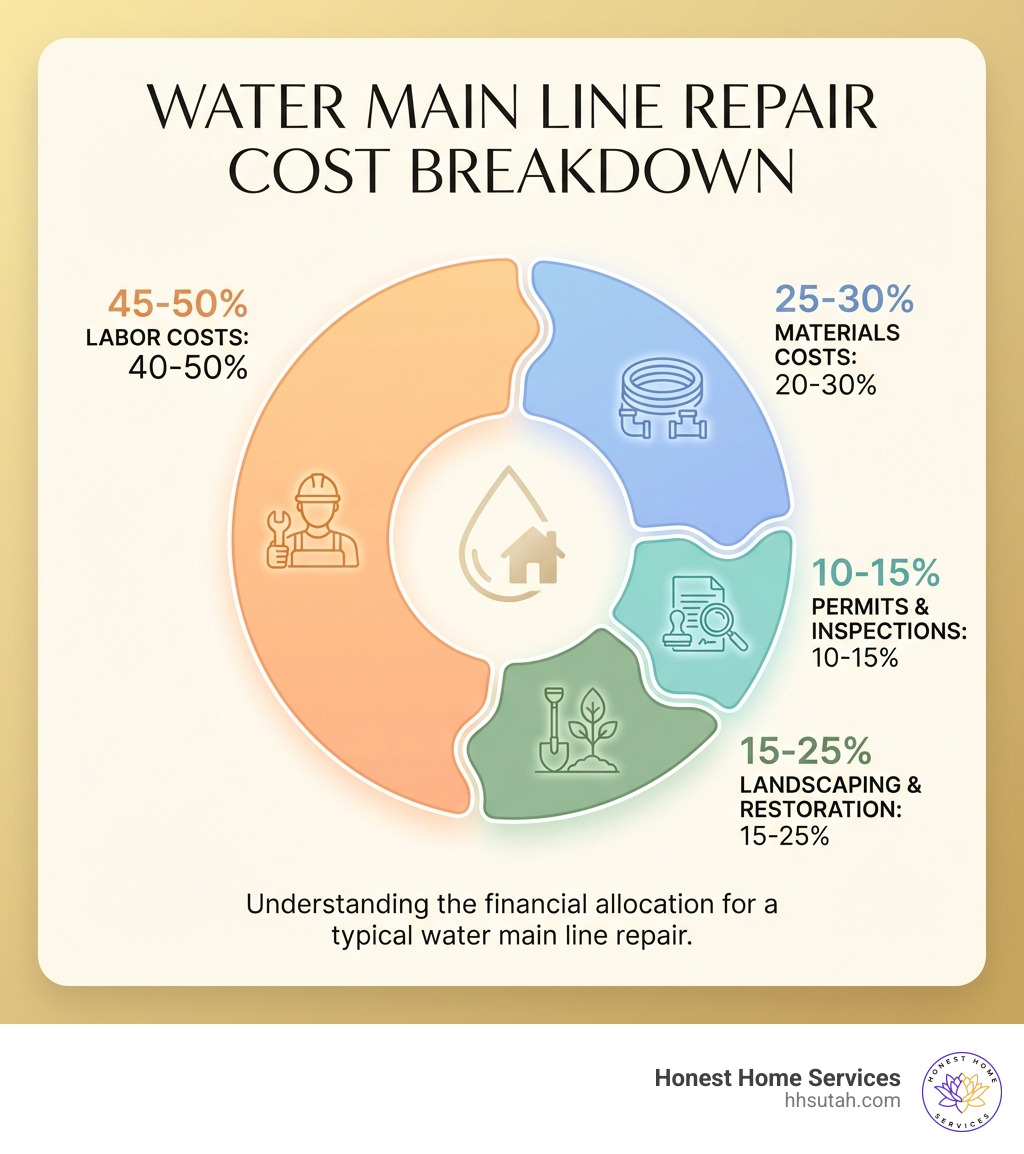
- Labor Rates: Plumbers typically charge between $70 and $120 per hour for water line repairs. If excavation is needed, an excavator operator might charge $120 to $150 per hour. Labor can account for a significant portion, often 40-50%, of the total cost.
- Municipal Permits: Most municipalities in Northern Utah require a permit to alter or install a new water line. These permits can range from $25 to $500, ensuring the work meets local codes and standards. We can help you steer the permit process.
- Inspection Fees: In addition to permits, inspections might be required at various stages of the repair to ensure compliance. These can cost between $100 and $500.
- Landscaping Restoration: If excavation is necessary, your yard will be disturbed. Restoring landscaping can cost between $1,200 and $6,300, depending on the extent of the damage and your desired aesthetic.
- Concrete/Driveway Repair: If the pipe runs under hardscaping, you’ll incur costs for concrete removal ($3 to $8 per square foot) and potentially driveway repair ($100-$400 for small areas, $600-$3,000 for larger repairs).
- Calling 811: Before any digging begins, it’s crucial to call 811. This free service marks underground utility lines, preventing accidental damage to water, sewer, gas, or electrical lines. Always call the dig line before you dig!
- Emergency Service Fees: If you need immediate repair outside of normal business hours, emergency service calls can sometimes double or triple the standard hourly rates.
Average Costs for Different Types of Water Line Repairs
The average water main line repair cost varies widely based on the specific issue at hand. While the overall average to repair a main water line is around $950 to $1,025, with a typical range of $350 to $1,700, specific problems fall into different pricing tiers. Our team handles all types of Pipe Repair Salt Lake City, from minor fixes to major overhauls.
Minor Leaks and Valve Replacements
For less severe issues, the costs are generally lower:
- Minor Leaks: If a leak is small and easily accessible, such as near the house foundation or in an exposed area, repairs can cost between $150 and $500. These are often quick fixes that prevent bigger problems.
- Valve Replacement: A faulty shut-off valve can be a simple yet critical repair. Replacing a main water shut-off valve typically costs between $150 and $300 for parts and labor, but can go up to $700 depending on accessibility and the type of valve. This is an important component, as it controls all water flow into your home.
These minor repairs are usually completed within a few hours and can save you from more extensive damage if addressed promptly.
The Typical Water Main Line Repair Cost for Pipe Sections
When the pipe itself is damaged, the water main line repair cost increases due to the need for excavation and replacement of sections.
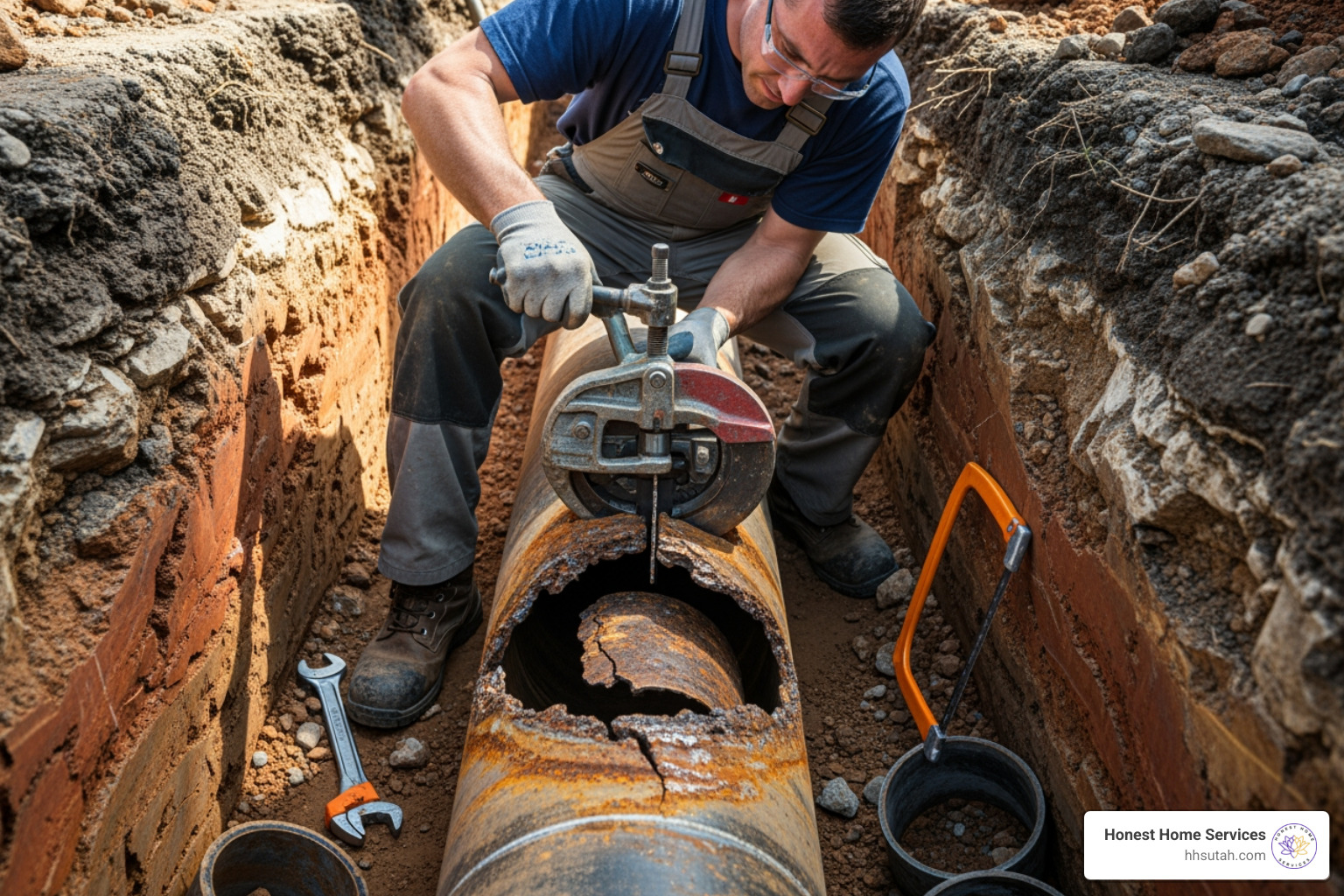
- Cracked Pipe Repair: A cracked pipe, often caused by shifting soil or freezing, can cost between $500 and $1,000 to repair. This typically involves isolating the section and replacing it.
- Broken Pipe Repair: A more severe break can range from $500 to $5,000, depending on the extent of the damage and accessibility. A complete rupture will require more extensive work.
- Corroded Pipe Repair: For pipes suffering from corrosion, especially older galvanized steel or cast iron lines, repairs can range from $600 to $5,000. Sometimes, corrosion is widespread, making repair less economical than replacement.
- Cost per Linear Foot: Replacing sections of broken or corroded pipe generally costs $50 to $250 per linear foot. So, a 10-foot section could cost anywhere from $500 to $2,500 just for the pipe and installation, not including excavation or restoration.
Repair vs. Full Replacement Costs
Deciding whether to repair a section of your water line or opt for a full replacement is a critical decision that impacts both immediate costs and long-term expenses.
When to Repair:
- Isolated Damage: If the damage is confined to a small, easily accessible section of an otherwise sound, relatively new pipe (less than 40 years old), a repair is often the most cost-effective option.
- Specific Faulty Component: A leaky valve or a single, small crack might warrant a targeted repair.
When to Replace:
- Extensive Damage: If there are multiple leaks, widespread corrosion, or significant structural damage along a large portion of the line, replacement becomes more economical.
- Old Pipes: Water lines typically last 40 to 70+ years. If your pipes are approaching or past this age, or made of outdated materials like lead, a full replacement is a wise investment to avoid recurring problems.
- Material Upgrade: Replacing an old, problematic pipe with a modern, durable material like PEX or copper can increase your home’s value and prevent future headaches.
- Long-Term Value: While the upfront water main line repair cost for a full replacement is higher, it often provides better long-term value by eliminating future repair needs and improving water quality and pressure.
Here’s a comparison to help illustrate the difference:
| Feature | Water Main Line Repair | Water Main Line Replacement |
|---|---|---|
| Average Cost | $350 – $1,700 (Average $950 – $1,025) | $2,000 – $5,000+ (Can reach $10,000 for complex jobs) |
| Scope | Fixes a specific leak or damaged section | Replaces the entire water line from meter to home |
| Duration | 4-8 hours for simple repairs, possibly longer for complex | Several days to over a week, depending on length and access |
| Lifespan | Extends life of existing line, but other sections may fail | Provides a brand new line, lasting decades (50-100+ years) |
| Disruption | Localized digging | More extensive digging, potentially across entire yard |
| Long-Term Value | Good for isolated issues; may lead to future repairs if pipes are old | Better for old, corroded, or frequently leaking lines; long-term peace of mind |
For significant issues, we often recommend full replacement as a more robust and cost-effective solution in the long run.
Understanding the Repair Process: Trench vs. Trenchless Methods
When it comes to fixing or replacing your main water line, the method used can significantly impact the water main line repair cost, the timeline, and the disruption to your property. We primarily use two approaches: traditional trenching and trenchless methods. Our goal is always to choose the most efficient and least disruptive option for your specific situation.
Traditional Trenching Repair
This is the conventional method, and as the name suggests, it involves digging an open trench to expose the entire length of the damaged water line.
- Excavation Process: Heavy equipment, like excavators, are used to dig a trench from your water meter to your home’s foundation.
- Labor Intensive: This method is more labor-intensive due to the extensive digging and backfilling required.
- Higher Landscape Restoration Costs: The most significant downside is the disruption to your yard, landscaping, and potentially driveways or sidewalks. Restoring these areas afterward adds to the overall water main line repair cost.
While it’s often seen as the more intrusive option, traditional trenching can be necessary for severely damaged pipes, pipes that need significant re-routing, or in situations where trenchless methods aren’t feasible due to pipe material or ground conditions.
Trenchless Repair Methods
Trenchless technology offers a less invasive alternative, minimizing the disruption to your property. These methods require only a few small access points rather than an open trench.
- Pipe Bursting: This method involves pulling a new pipe through the old one, simultaneously breaking apart the old pipe.
- Pipe Lining: A resin-coated liner is inserted into the existing pipe, creating a new pipe within the old one.
- Directional Boring: This technique uses a steerable boring machine to drill a pilot hole along a designed path, then pulls the new pipe through.
Benefits of Trenchless:
- Minimal Digging: Only small access holes are needed, preserving your landscaping, driveway, and other features.
- Less Disruptive: The repair process is typically faster and causes less mess.
- Potentially Higher Upfront Cost: While trenchless methods can be more expensive upfront than traditional trenching, they often lead to lower overall costs by avoiding extensive landscaping and hardscaping restoration expenses. This can be a significant saving for homeowners in Northern Utah with beautifully maintained yards.
For many of our clients, particularly those concerned about their property’s aesthetics, trenchless methods are an excellent choice. We’re experts in both, and we’ll help you determine the best approach for your specific Plumbing Repairs.
How Long Does a Typical Water Line Repair Take?
The duration of a water line repair can vary significantly, from a few hours to several days, depending on the complexity of the job.
- Simple Repairs: For minor leaks, valve replacements, or easily accessible pipe sections, repairs can often be completed within 4 to 8 hours. These typically don’t involve extensive digging or difficult pipe access.
- Complex Repairs: If the damage is extensive, located deep underground, or requires navigating around obstacles like tree roots or concrete, the repair can take one to three days.
- Multi-Day Projects: Full water line replacements, especially those requiring significant excavation or trenchless installations over a long distance, can sometimes extend to several days to a week or more, particularly if permits and inspections add to the timeline.
Factors like the extent of the damage, the accessibility of the pipe, the chosen repair method (trenching versus trenchless), and weather conditions can all impact the duration. We always provide an estimated timeline during our assessment so you know what to expect.
Frequently Asked Questions about Water Main Line Repair
We understand that dealing with a main water line issue brings up a lot of questions. Here are some of the most common ones we hear from homeowners in Northern Utah:
Does homeowners insurance typically cover water line repairs?
This is a crucial question, and the answer is usually no. Most standard homeowners insurance policies do not cover the water main line repair cost for the pipe running from your house to the city’s water main. This is because these issues are often considered:
- Wear and Tear: Insurance typically excludes damage from gradual deterioration, corrosion, or normal wear and tear, which are common causes of main water line leaks.
- Off-Premises: The main water line is often considered outside the primary structure of your home, and some policies have limitations for off-premises damage.
However, there are exceptions:
- Sudden and Accidental Damage: If the damage is caused by a sudden, unforeseen event, like a pipe bursting due to extreme freezing (not just slow corrosion), your policy might offer some coverage.
- Service Line Coverage Add-on: Many insurance companies offer an optional “service line coverage” endorsement for an additional annual premium (often $40 to $100). This add-on specifically covers the cost of repairing or replacing exterior utility lines, including your main water line, in case of a break or leak.
We always recommend reviewing your specific policy or contacting your insurance provider to understand your coverage options before a problem arises.
How long does a main water line last?
The lifespan of a main water line varies significantly depending on the material, installation quality, soil conditions, and climate. On average, a main water line can last 40 to 70+ years. Here’s a breakdown by common materials:
- Copper Piping: Known for its durability and corrosion resistance, copper lines can last 50 to 100+ years.
- PEX Piping: This flexible plastic pipe typically has a lifespan of 30 to 50 years.
- PVC Piping: PVC can be very long-lasting, often exceeding 100 years in ideal conditions, though it’s less flexible and can be susceptible to damage from extreme temperatures or shifting ground.
- Galvanized Steel/Cast Iron: Older lines made of these materials generally have a shorter lifespan, often exhibiting significant corrosion after 40-50 years, leading to reduced flow and leaks.
In Northern Utah, factors like our freeze-thaw cycles and varying soil compositions can influence these lifespans. Regular inspections and proper maintenance can help extend the life of your water main.
Should I repair or replace my water line?
This is one of the most common questions we’re asked, and the answer depends on several key factors. We always provide an honest assessment to help you make the best decision for your home and budget.
Consider Repair When:
- Minor, Isolated Damage: If the leak is small, easily accessible, and confined to a single section of pipe, a repair can be a quick and cost-effective solution.
- Newer Pipes: If your water line is relatively new (e.g., less than 40 years old) and made of a durable material, repairing a specific fault makes sense.
- Budget Constraints: Sometimes, an immediate repair is necessary due to budget limitations, even if a replacement might be ideal down the line.
Consider Replacement When:
- Old or Deteriorating Pipes: If your water line is old, frequently leaking, or made of outdated materials like lead or heavily corroded galvanized steel, replacement is usually the better long-term investment. The risk of future leaks in other sections is high.
- Extensive Damage: Multiple leaks, widespread corrosion, or significant structural damage over a long section often make replacement more economical than repeated repairs.
- Improving Performance: A new water line can improve water pressure, eliminate discolored water, and ensure reliable service for decades.
- Selling Your Home: A new water line can be a significant selling point, assuring buyers of a sound plumbing infrastructure.
The decision balances the immediate water main line repair cost against the long-term benefits and potential future expenses. We’ll always discuss the pros and cons of both options, considering the material, age, and extent of damage to your line.
Conclusion
Navigating the water main line repair cost can seem daunting, but with the right information and a trusted partner, it doesn’t have to be. We’ve covered the common signs of damage, the various factors that influence costs, the average price ranges for different repairs, and the methods used to get the job done.
Early detection and prompt action are key to minimizing costs and preventing further damage to your property. Whether it’s a minor leak or a full line replacement, understanding the process and the financial implications empowers you to make confident decisions.
For homeowners in Northern Utah, getting a clear and honest assessment is crucial. Honest Home Services provides expert diagnostics and fair pricing for all Plumbing Issues. We pride ourselves on transparent communication, ensuring you understand every step and every cost involved before we start any work. Don’t let a water main problem turn into a flood of worries.
Contact us for a professional assessment of your Salt Lake City sewer and water mainline repair needs. We’re here to provide honest, reliable service when you need it most.